History History 5 min read

Origin stories

This U.S. state shares a name with a mythical island rich in gold
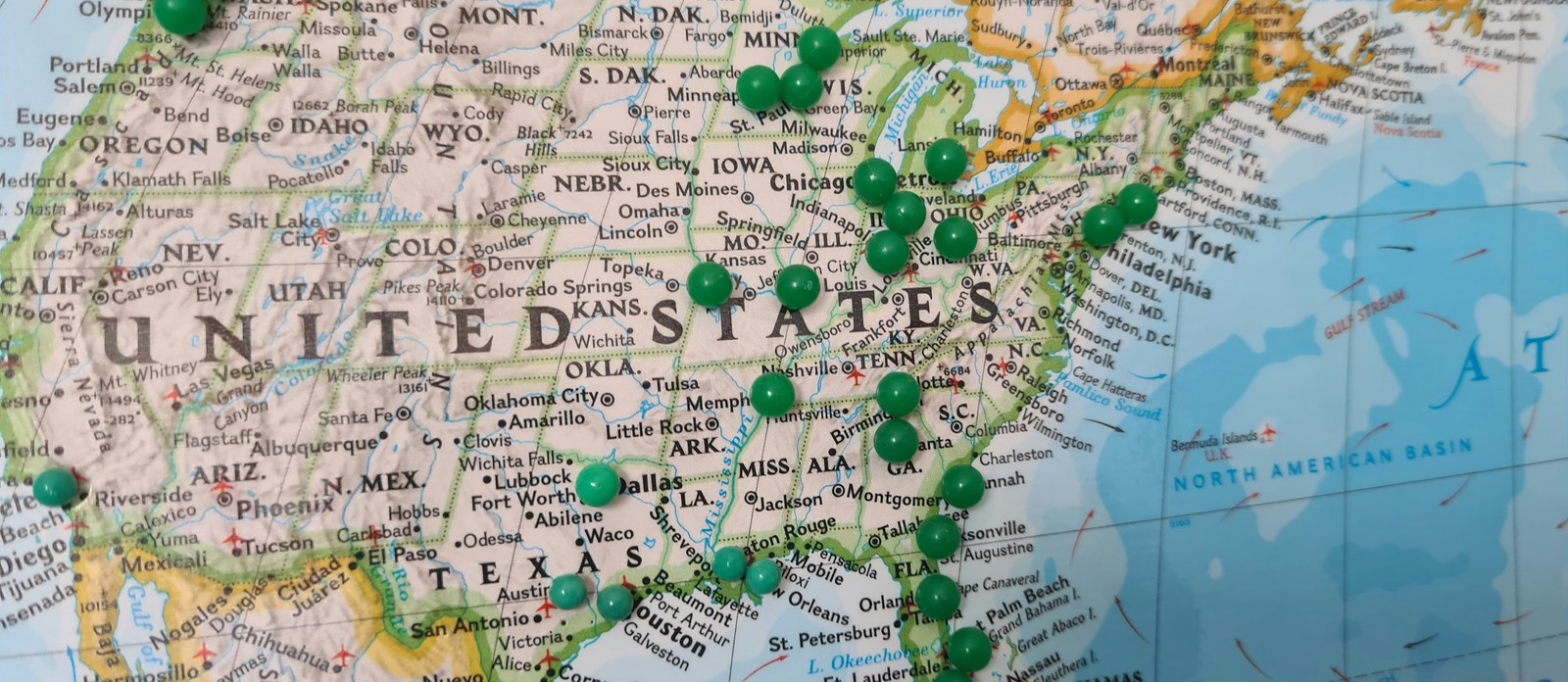
Image: Nico Smit

Twenty-six of our 50 states were once Spanish or French territory, or both. So it’s no wonder that Spanish and French culture permeates American traditions, food, customs — and state names, too. Here are 10 state names with French or Spanish origins.

1
California
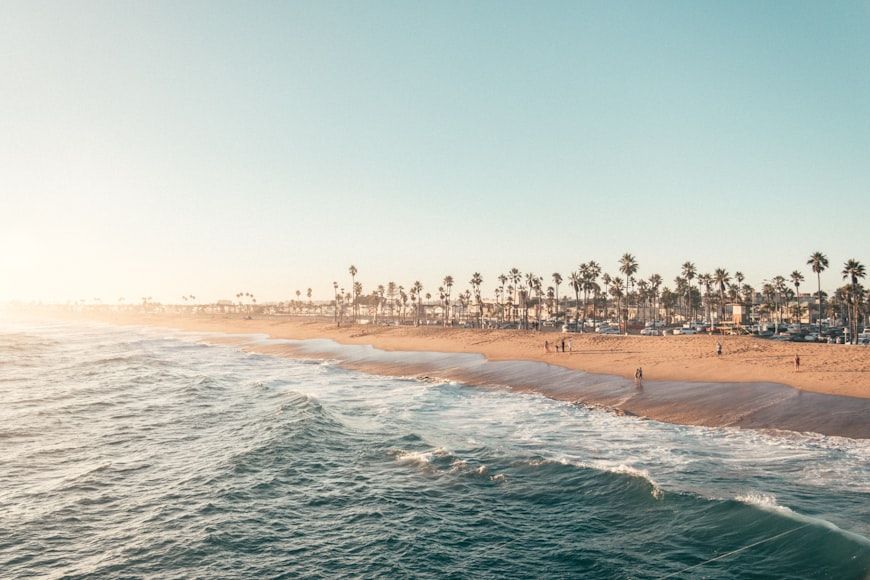
Image: Gustavo Zambelli

All across the Americas, we can find places named after fictional and mythical locations, a result of the arrival of European explorers on the unknown continents. In 1533, Hernán Cortés arrived in what is now Baja California, Mexico. Mistakenly believing that the peninsula was an island, coupled with the arid landscape and the rumor of abundant gold, he named it after an island from the book Las Sergas de Esplandián (The Adventures of Esplandián).

This novel, written by Garci Rodríguez de Montalvo in 1510, features the island of California , governed by the queen Calafia (a play on the Arab calipha , a title given to leaders and rulers). The fictional California is rich in gold and is described as a terrestrial paradise near the Indies, so, despite not being an island, the real California was aptly named.

2
Louisiana
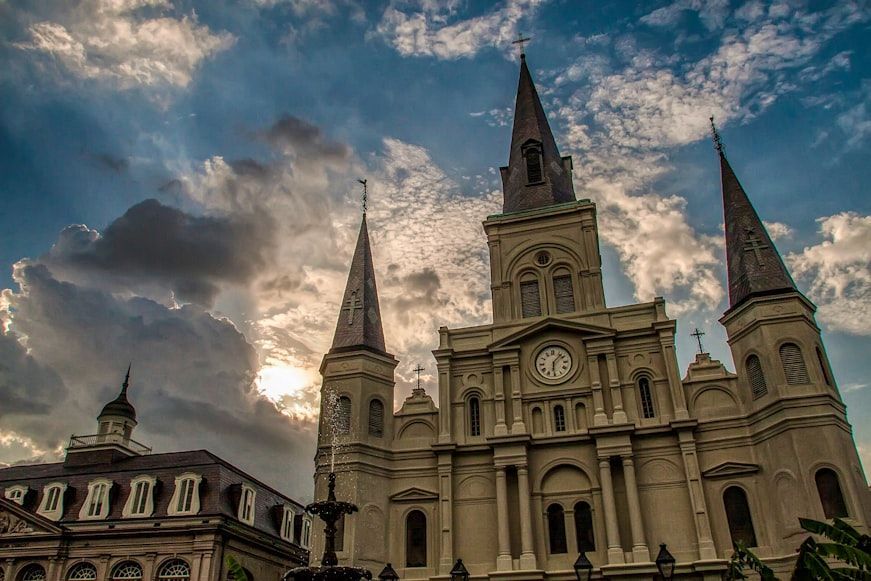
Image: Mick Haupt

Before being the name of a state, Louisiana designated all the French territories west of the Mississippi River , covering either the whole or part of 15 current U.S. states, including Arkansas, Iowa, Nebraska, Oklahoma, and Missouri, among others. Originally named La Louisiane (‘the land of Louis’), the name was given to the Mississippi basin by the French explorer René-Robert Cavelier in 1682.

Who was Louis? Sixteen kings of France had the name Louis, but this territory was named after Louis XIV, also known as "The Sun King" . During his 72-year-long reign, still the longest of any monarch in history, France greatly expanded its colonial territories, among which was Louisiana. After the Louisiana Purchase in 1803, the anglicized name remained, but only for a much smaller portion of land, which gained statehood in 1812.

3
Florida
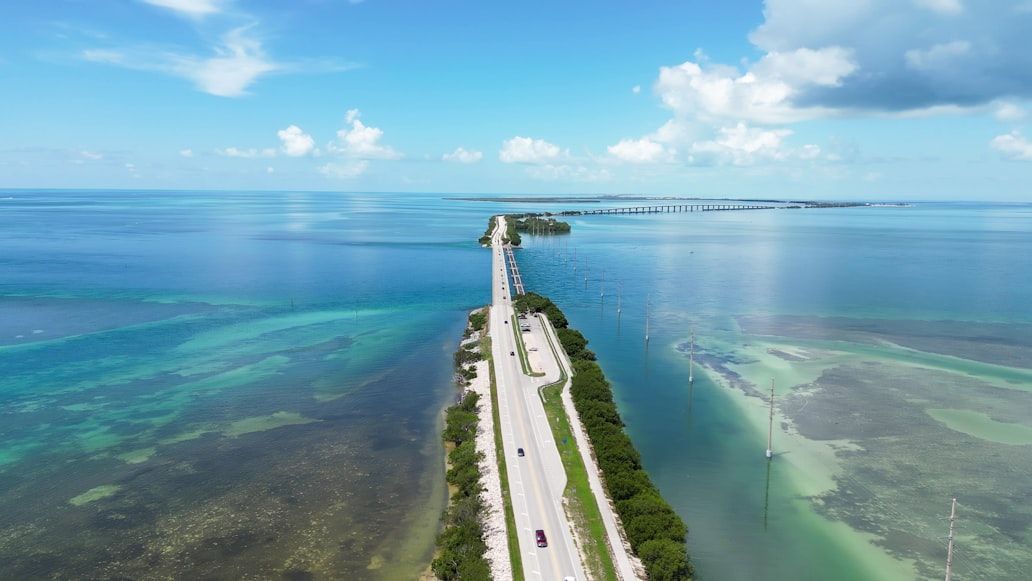
Image: Julius Hildebrandt

One of the European strategies for naming territories was to reference the day of arrival, a practice often used by the Spanish , and evidenced by the many places named after Catholic saints. Florida is an example of this custom.

Spanish explorer Juan Ponce de León arrived in the territory around the time of Easter while looking for the mythical fountain of youth. In Spanish, Easter is sometimes called La Pascua florida (‘the flowery Easter’) because it usually falls in spring, which led Ponce de León to name the territory La Florida .

4
Maine
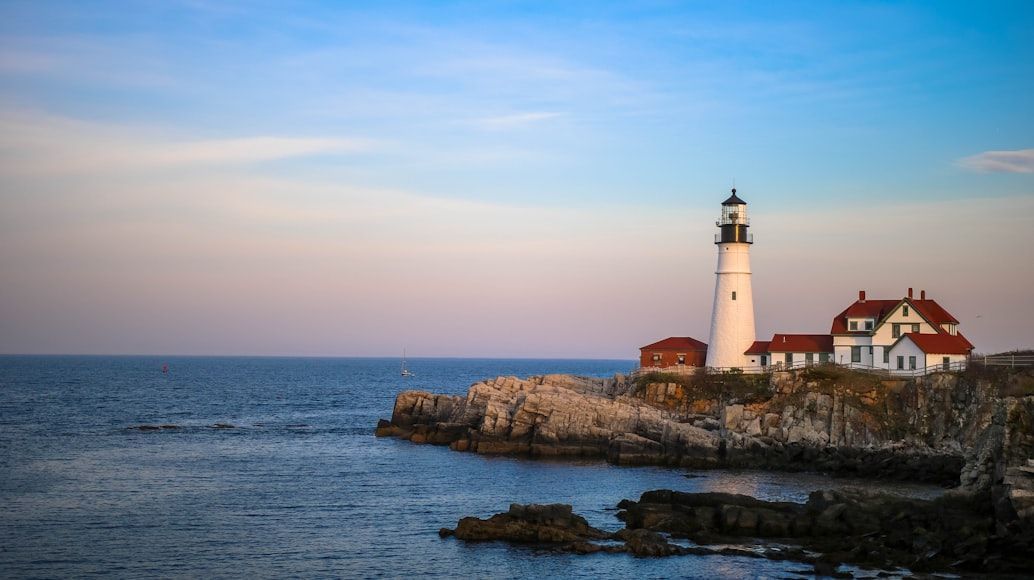
Image: Mercedes Mehling

There is more than one theory for the origin of Maine, and there is no certain answer. While many claim that ‘Maine’ is derived from ‘main land’, there is another widely supported theory that makes a connection with a French province, and that is backed up by the enormous influence of Acadian French people in the state of Maine .

According to this theory, the Maine territory was named after a French province of the same name —nowadays the region of Sarthe and Mayenne— in turn named after the ancient Cenomani Gaulish tribe.

5
Vermont
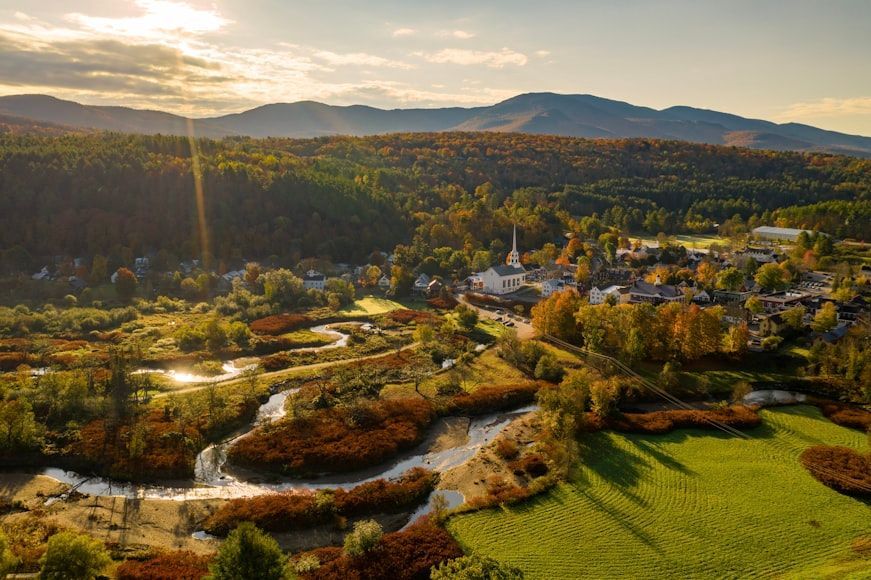
Image: Jeffrey Clayton

Although the Vermont territory was initially explored by the French, it might come as a surprise to know that its French name was given by an English-speaking American . In 1777, the territory declared independence from Britain and constituted a new republic. At first called ‘New Connecticut’, it adopted the name ‘Vermont’ by suggestion of physician and scholar Thomas Young.

Young came up with the name, meaning ‘green mountains’, inspired by a local militia known as ‘the Green Mountain Boys’. However, be it ignorance or poetry, the translation was made into a correct but archaic French. While Vermont does mean ‘green mountain’, the most accurate translation would have been montagne verte .

6
Colorado
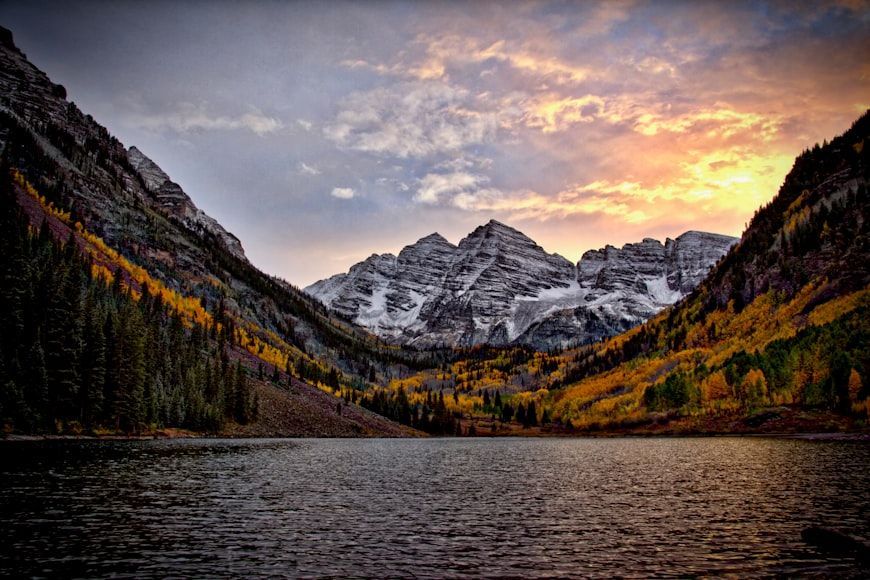
Image: Mike Scheid

Originally, Colorado referred to the Colorado River, named by the Spanish during the 16th century. The area under that name was acquired by the U.S. in the Louisiana Purchase and through the Treaty of Guadalupe Hidalgo , with the Territory of Colorado officially established in 1861 and named after the river.

Why was the river named this way? In Spanish, colorado means ‘red colored’ or ‘ruddy colored’. During the spring thaw, the melted mountain snow would mix with reddish-brown silt , giving the river a red hue.

7
Montana
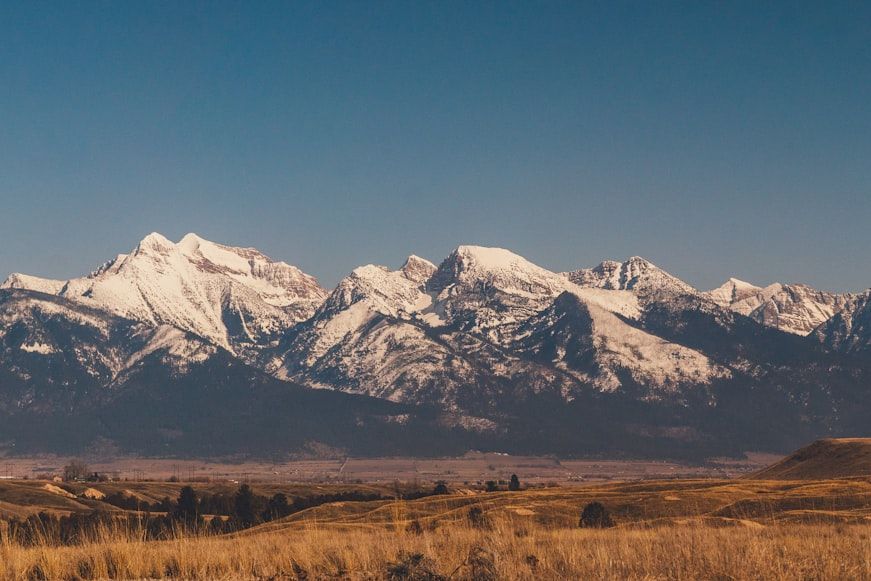
Image: Nic Y-C

This one is another case of a name chosen by English speakers. The word ‘Montana’ is an anglicized version of the Spanish montaña, ‘mountain’. But while there certainly are mountains in Montana, part of the territory consists of plains. Why name it so, then?

The Spanish had named the western mountainous region Montaña del Norte (Northern Mountain). When the Montana Territory was created in 1864, the name was suggested as a tribute to the Rocky Mountains . Some complaints arose in defense of the plains, and the alternative name ‘Jefferson’ was proposed, but Montana won in the end.

8
Nevada
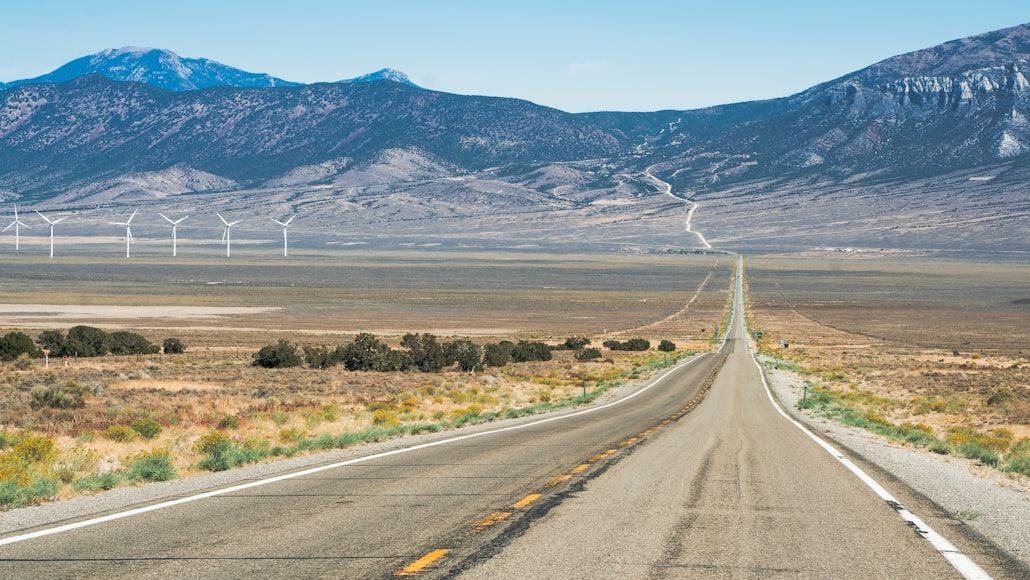
Image: Abhi Verma

The majestic Sierra Nevada mountain range is one of the natural wonders of the Western United States, so it makes sense that a territory would be named in its honor. Named Sierra Nevada or ‘snowy peak’ by the Spanish, the first record of the name dates back to 1776 , and was most likely inspired by a Spanish range of the same name.

In 1861, the Territory of Nevada was officially established, and most sources agree that it was named after the mountain range. However, the main part of the Sierra Nevada range belongs to California, with only the Carson Range being in the Nevada territory.

9
Arizona
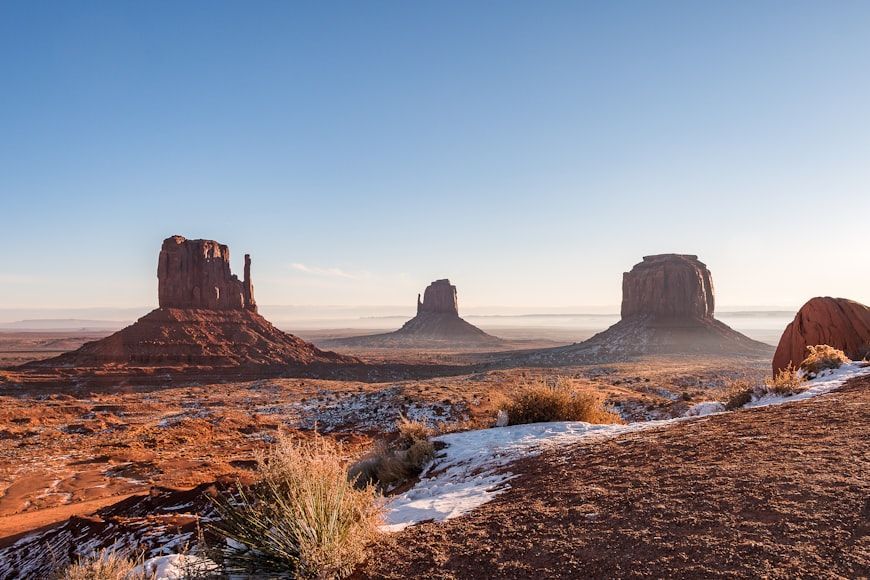
Image: Cayetano Gil

The origin of ‘Arizona’ is disputed, with theories pointing towards it being the Spanish version of a Native American name. However, other theories disagree, claiming that it is a Basque name, haritz ona , meaning ‘good oak, given by Spanish settlers who came from the Basque region.

There is a final theory which, although heavily disputed, is supported by popular stories. This theory claims that the original name was Árida zona (‘arid zone’) , a description of the desert climate.

10
Oregon
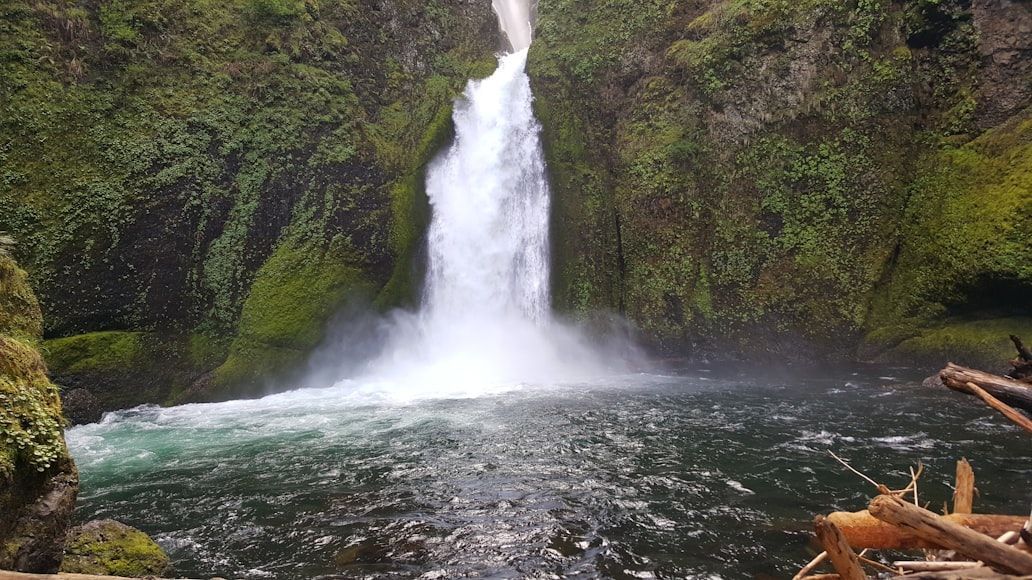
Image: Peter Robbins

No one really knows what ‘Oregon’ means, but everyone has a theory. Although there are stories that link it to Native American names or spelling errors, the first record of the name is from a 1598 Spanish chronicle, which refers to the territory as ‘_Orejón_’ (‘big-eared’) . Whose ears were being described is unclear.

An alternate theory links the name to French instead of Spanish, based on a 1765 petition by a British explorer that calls the area ‘ Ouragon’, a possible corruption of the French ouragan , ‘hurricane ’, in reference to the turbulent waters of the Columbia River.

History History 5 min read

Exploring local folklore

American Bestiary: 10 famous mythical creatures to fear

Image: Jon Sailer

Welcome to the fascinating world of mythological creatures! This article is a celebration of the human imagination and the stories that have captivated us for generations. This time around, we invite you to explore the most amazing beings American folklore has ever created . From the popular Bigfoot to the mighty Wendigo, dive into these startling legends and uncover the mysteries surrounding them.

1
Bigfoot

Image: Jon Sailer

Legend and cultural icon, Bigfoot— also known as Sasquatch— has fueled our imaginations since at least the mid-20th century. This mythical creature, which appears in both American and Canadian folklore, is believed to inhabit the forests of the Pacific Northwest.

Its origin is not entirely clear, but it likely stems from a blend of stories brought by European immigrants and tales from North American indigenous cultures. Many people throughout history claim to have seen Bigfoot and describe it as a 6- to 9-foot, half-human, half-ape creature covered in dark hair. Others have only found its large 24-inch footprints, which has certainly helped keep the legend alive.

2
Pukwudgie

Image: Johannes Plenio

Pukwudgies are mythical creatures from Native American folklore, more precisely from the New England region. They are described as small, humanoid beings, about 2 to 3 feet tall, with grayish skin, pointed ears, and spines on their back.

According to Wampanoag legends, Pukwudgies are considered guardians of the forest. They are mischievous creatures with the ability to disappear and move swiftly through the forest. In addition, they are known to cast spells and curses on those who offend them or cross their path. So now you know, if you ever travel to these lands, remember to be respectful and honor nature to avoid being punished by these protective little monsters.

3
The Jersey Devil

Image: Belinda Fewings

There are not as many sightings of the Jersey Devil as there are of other creatures on this list. However, some people claim to have found traces of claw prints made by a two-legged creature. The few eyewitnesses who were able to catch a glimpse describe the Jersey Devil as a bizarre assortment of different animal parts, resembling everything from kangaroos and dogs to horses and even reptiles.

This creature theoretically inhabits an area in South Jersey known as the Pine Barrens. It is linked to a local legend from 1735, which claims that a woman nicknamed Mother Leeds allegedly cursed her thirteenth unborn child. The baby eventually became a demon who murdered the entire family and fled to the woods to steal livestock and terrify unwary travelers to the end of times.

4
Urayuli

Image: osensei

Very similar to Bigfoot, the Urayuli, or "hairy men," are a mythical race of creatures that live in the woodlands of southwestern Alaska, near Lake Iliamna. Those who claim to have seen the Urayuli describe them as being 10 feet tall, with shaggy hair, luminescent eyes, and long arms stretching down to their ankles.

According to lore, the Urayuli are said to be transformed children who got lost in the forest, therefore they are considered peaceful creatures. Taking this into consideration, it is very likely that this legend was born as a cautionary tale to prevent children from wandering out alone at night.

5
Wendigo

Image: DGSstudios

One of the most terrifying creatures in Native American mythology is the Wendigo. According to legends originating in Algonquian folklore, the Wendigo is an evil spirit that feeds on human flesh. This creature is believed to have the ability to possess people, turning them into starving monsters who cannot help but devour other humans.

The Wendigo has been depicted in various forms throughout history but is generally described as a slender, skeletal giant with glowing eyes and sharp fangs. This malevolent, cannibalistic, and supernatural being is usually associated with cold winters, as well as with greed and gluttony.

6
Wampus Cat

Image: Peter .

The Wampus cat is usually described as a fierce, bipedal creature with a humanoid body and a feline head. This spectral, panther-sized beast has been reported across the American Southeast for centuries, with numerous legends about its origins varying by region.

One of the most famous stories has its roots in Alabama and comes from a Native American tradition. According to this story, a Cherokee woman disguised herself in the skin of a mountain lion to secretly follow her husband on a hunting trip. When the men gathered around the fire to share stories forbidden to women discovered her, they cursed her to spend eternity as a half-woman, half-mountain lion.

7
Florida Skunk Ape

Image: RyanMcGuire

Florida, the Sunshine State, has its own version of Bigfoot: the Skunk Ape. This creature is said to resemble an orangutan more than the gorilla-like Sasquatch. This particular being got its name for the pungent odor that announces its presence and was seen many times lurking around the Florida swampland during the 1960s and 1970s.

Sightings were so common during that time that, in 1977, the state legislature had to introduce a bill to protect the elusive man-ape. Although the bill was never passed and Florida wildlife officials deny the existence of the Skunk Ape, many people continue to report sightings of the black, hairy creature to this day.

8
Champ

Image: GregMontani

If you thought Scotland had the only lake monster, you haven't met Champ yet. Lake Champlain, a freshwater lake in New York, is said to be home to America's most famous lake monster. Since the early 19th century, there have been accounts of Europeans claiming to have seen a seahorse-headed creature emerging from the water. However, the local Native Americans, the Abenaki, and the Iroquois, had stories of a horned serpent called Tatoskok dating back much earlier.

Over the years this beast has manifested itself to numerous people. In fact, in 1977, a woman named Sandra Mansi claimed to have taken a photo showing a creature with a small head and a long neck, which—let's be honest—looks suspiciously similar to the Loch Ness Monster.

9
Menehune

Image: Timothy Dykes

The Menehune are a mythological race of little people in Hawaiian tradition that only appear at night. For the most part, these two-foot-tall creatures are harmless, although they can become angry if disturbed. It is believed that these supernatural beings may have originated from ancient ancestors who populated the Pacific region, eventually evolving into folklore.

The Menehune are said to be builders, gifted with great strength and architectural skill. They construct stone structures such as dams, roads, and sacred worship sites known as heiau . They work when nobody is watching, so beware—never interrupt them, or they will vanish.

10
Beast of Busco

Image: Pascal Mauerhofer

In this article, we have explored a wide array of mythological creatures resembling apes, cats, birds, serpents, and even humanoids. However, you probably won't guess what kind of creature the Beast of Busco is. In 1898 a farmer from Churubusco, Northern Indiana, claimed to have spotted an enormous turtle in Fulk Lake.

His story was corroborated fifty years later by two fishermen who reported seeing a giant turtle weighing at least five hundred pounds and with a shell as big as the roof of a car. Such was the commotion that the lake’s owner at the time went so far as to drain it in order to catch the creature, which proved to be impossible. Since then, every June, the town of Churubusco celebrates Turtle Days festival, which includes a carnival, a parade, and—wait for it—turtle races.

Geography Geography 4 min read

Unforgettable towns

“Hell is a Place on Earth” and other quirky town mottos!

Image: James Lee

Have you ever received a postcard from Hell? Well, you might have. After all, it’s "a Place on Earth." Those who live in small towns with the quirkiest of names , like Hell, Boring, or Why, haven’t wasted any time coming up with fitting mottos. What tagline would you assign to a town called "Coward"? And what about "Happy"? Let’s read some of the funniest town mottos out there and discover the stories behind them!

1
"Yes, Hell is a Place on Earth"

Image: Peter Leong

People driving from Lansing to Ann Arbor can take a slight detour and "go through Hell." And Hell lives up to its name, playfully. Founded in Michigan in the 1830s (legend has it that one of the settlers said, "Call it Hell, for all I care!"), this tourist hotspot leans into the joke.

You can "get married in Hell," mail postcards from the Hell Post Office , or grab a souvenir from the Hell Hole Diner. The town even freezes over in winter—because, of course, Hell can freeze over.

2
"Because!"

Image: Danika Perkinson

Why’s name comes from a nearby Y-shaped intersection , but its motto takes full advantage of the pun.

Originally called "Y," this Arizona town had to add an "H" to comply with the state’s three-letter minimum for place names. Today, Why (population: around 160) is a desert oddity whose motto says it all: Because. That’s the only explanation it’s willing to give.

3
"The Town Too Tough to Die"

Image: Andreas Rasmussen

That’s the nickname of Tombstone, Arizona. This Wild West legend earned its motto after surviving fires, shootouts, and near abandonment. Founded in 1879 as a silver boomtown, Tombstone soon became infamous for the gunfight at the O.K. Corral.

When the mines dried up, the town rebranded itself as a living museum of cowboy lore . Today, actors reenact gunfights daily, and the Bird Cage Theatre—once called "the wickedest nightspot between Basin Street and the Barbary Coast"—still stands.

4
"The Town That Was"

Image: Colin Lloyd

Few mottos are as haunting as that of Centralia, Pennsylvania. In 1962, a coal mine fire ignited beneath the town and has burned ever since, turning streets into smoke-filled cracks and forcing nearly everyone to leave.

Today, fewer than ten residents remain in this near-ghost town , where graffiti-covered Route 61—the "Graffiti Highway"—attracts urban explorers. It’s said that the underground fire could continue burning for another 250 years.

5
"The Most Exciting Place to Live"

Image: ALEKSEY KUPRIKOV

Don’t be fooled by the name of Boring, Oregon—its motto is a cheeky nod to its reputation, but the town was actually named after 19th-century settler William Boring .

Every year, the town hosts the "Boring Fest" and sells "Boring, OR" merch. Ironically, the surroundings of Boring are anything but dull: you’ll find stunning trails and ski resorts to explore near Mt. Hood!

6
"No Fear Here"

Image: Jon Tyson

Coward, South Carolina, would like everyone to know they’re no scaredy-cats. Named after a railroad official , the town has embraced its ironic potential with a motto that flips the script.

Located along the "Old Stage Coach Road," Coward is now a quiet pit stop with a sense of humor. No cowards here—just a town that knows how to laugh at itself.

7
"A Nice Place to Live"

Image: Sterling Lanier

In the heart of Amish Country, Intercourse , Pennsylvania, gets its eyebrow-raising name from an old term for " crossroads ." The town leans into the jokes (yes, they sell T-shirts) but keeps it wholesome with a motto that highlights its quiet charm.

Visitors come for the buggy rides, homemade jam, and, of course, the chance to say they’ve been to Intercourse.

8
"Not What You Expected"

Image: Jason Leung

A fitting motto for Surprise, Nebraska. Founded in the 1880s, the town’s origin story has been lost to time , and with a population of around 40, it’s a surprise it’s still on the map at all. That’s exactly what the motto jokes about.

9
"The Town Without a Frown"

Image: Yuyang Liu

Happy, Texas, boasts one of the most wholesome town names—and a matching motto. This Panhandle town of 600 lives up to its name with a smiley-face water tower and an annual "Happy, Texas Day" celebration.

Founded in the 1890s, Happy got its name from cowboys who found water here after a drought.

10
"The Last Word in Hospitality"

Image: vamshi vanaparthi

How do you pronounce Zzyzx, a town in California? It’s "Zye-zix." This Mojave Desert spot was once a health spa run by a self-proclaimed "doctor" who invented the name to be the last word in the dictionary.

Today, it’s a research center—and yes, it remains the last alphabetical town in the US, just as intended.

11
"High and Dry Since 1854"

Image: Aleksandra Sapozhnikova

That’s funny! But irony alert: Waterproof, Louisiana, is ironically prone to flooding. Named after a local plantation owner’s boast that his land was "waterproof," the town’s motto leans into the joke. After multiple floods, the residents have learned to take it in stride.

12
"A Beautiful Mistake"

Image: Sarah Kilian

Finally, we have the quaint town of Accident, located in Maryland. Founded in 1774 after a land surveyor "accidentally" marked the wrong spot , Accident embraces its quirky origin story.

Today, it’s a charming Appalachian town, best known for its humorous name.

Explore more American facts

Choose your favorite category!

General
General

As American as apple pie—the very best America has to offer!

Culture
Culture

Delve into the astounding richness of American lore.

Geography
Geography

Hop in and explore vast and diverse American landscapes.

History
History

Discover the key moments that shaped the United States.