History History 4 min read

Nature’s wrath unleashed

The comet that sparked a wildfire and 9 more tales of nature's might

Image: Greg Johnson

America’s vast territories and diverse landscapes make it a hotspot for some of the world’s most remarkable weather and natural phenomena . From raging tornadoes to volcanic eruptions, the U.S. is no stranger to extreme natural events. While some of these events have left deep scars on the nation’s collective memory, many have also driven significant advancements in prevention and disaster response protocols, helping to mitigate the impact of future occurrences. Here’s a look at 10 of the most powerful natural events in American history.

1
Tri-State tornado

Image: Greg Johnson

In 1925, the Tri-State Tornado carved a path of destruction across Missouri, Illinois, and Indiana. With winds exceeding 300 mph, it remains the deadliest tornado in U.S. history, claiming more than 700 lives and leaving thousands homeless.

This record-breaking F5 tornado—classified as such by modern standards—traveled over 200 miles in just three and a half hours, leveling entire towns. Its unprecedented speed and longevity exposed the limitations of early warning systems, prompting significant advancements in tornado research and forecasting.

2
The Dust Bowl

Image: Sophia Simoes

The 1930s Dust Bowl was a man-made disaster exacerbated by a severe drought across the Great Plains. Decades of over-plowing and unsustainable farming practices had left the farmland highly vulnerable to erosion.

When the drought struck, winds swept loose soil into colossal clouds that darkened cities and devastated remaining crops. These massive dust storms, known as "Black Blizzards," choked the skies and forced thousands of families to abandon their homes . Eventually, the disaster led to significant agricultural reforms under the New Deal.

3
Lake Michigan's seiche wave

Image: Silas Baisch

On the morning of June 26, 1954, a 10-foot-high seiche wave crashed onto the Chicago shoreline , sweeping away eight people and injuring many others. But what exactly is a "seiche wave"?

According to researchers, seiche waves are large, sudden standing waves that form in enclosed bodies of water due to extreme atmospheric changes, such as abrupt shifts in air pressure or strong winds. This rare event shocked the Midwest and prompted scientists to study lake oscillations and their connection to storm systems.

4
Great Alaska earthquake

Image: Joris Beugels

In 1964, Alaska was struck by a devastating earthquake with a magnitude of 9.2, making it the most powerful ever recorded in North America and the second most powerful worldwide. Lasting four minutes and thirty-eight seconds, the earthquake triggered massive tsunamis and landslides across the state, along with significant geographic changes —some coastlines sank while others rose dramatically.

The destruction it caused led to major updates in seismic safety protocols and infrastructure standards throughout the U.S. This event emphasized the need for better preparedness and stricter building codes , to handle similar future events, especially in earthquake-prone areas.

5
Hurricane Katrina
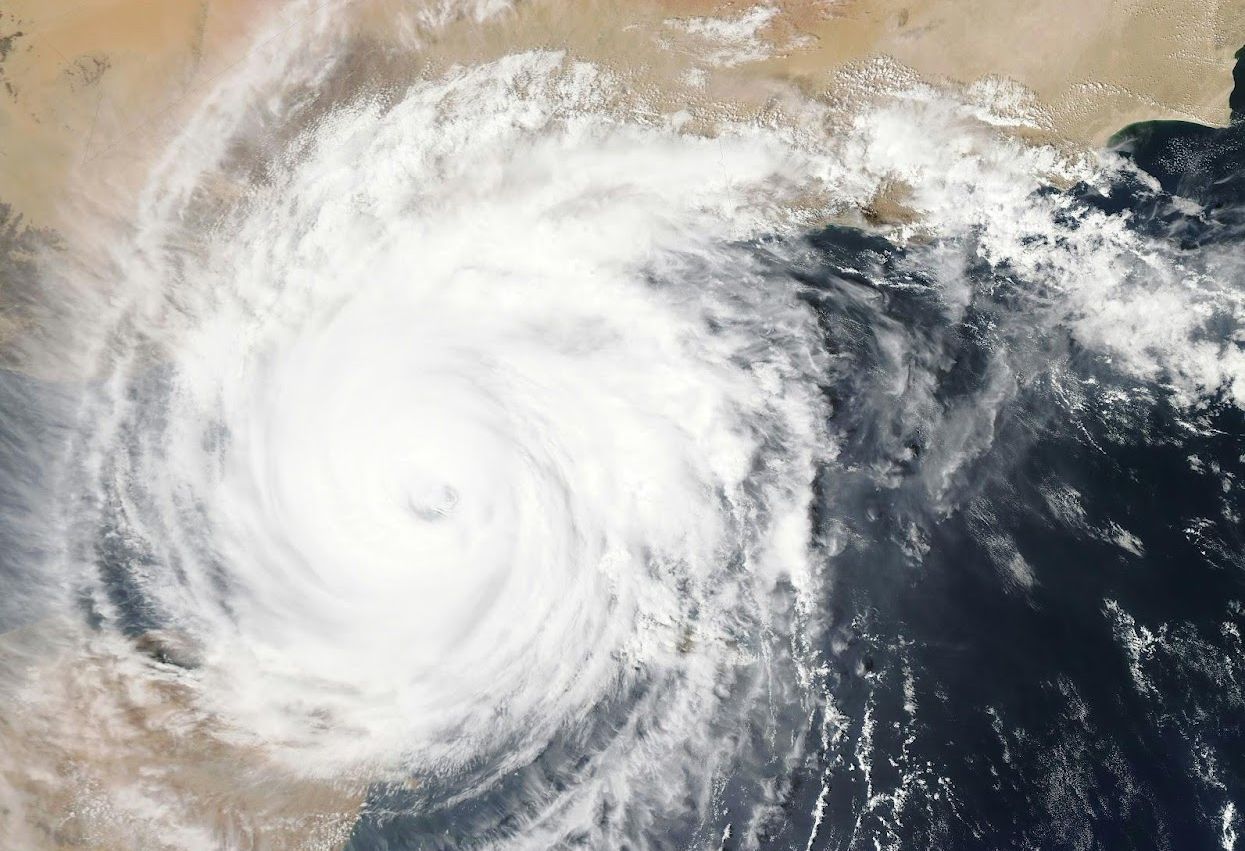
Image: NASA

In 2005, Hurricane Katrina ravaged New Orleans and the Gulf Coast, claiming more than 1,300 lives and leaving millions homeless, sparking an urgent humanitarian crisis. The storm caused an estimated $125 billion in damages, making it one of the costliest hurricanes in history , tied with Hurricane Harvey in the Atlantic basin.

Katrina exposed critical flaws in the region's levee systems and emergency response efforts, prompting widespread criticism and driving essential reforms in disaster preparedness and infrastructure.

6
The Peshtigo firestorm

Image: Tim Mossholder

On the same day as the Great Chicago Fire of 1871, a catastrophic firestorm near the small town of Peshtigo, Wisconsin, scorched approximately 1.2 million acres, making it the deadliest wildfire in recorded history . The uncontrolled blaze claimed over 1,500 lives, though the exact number of fatalities remains uncertain.

Since 1883, there has been speculation that the simultaneous outbreaks of major fires across Illinois, Michigan, and Wisconsin, including the Peshtigo and Chicago fires, were not coincidental but caused by burning fragments from Biela's Comet . However, this theory remains unproven.

7
Superstorm Sandy

Image: Matt Hardy

Nicknamed "Superstorm" by the media, Hurricane Sandy wreaked havoc on the Caribbean and the coastal Mid-Atlantic region of the United States in late October 2012. While it affected 24 states, the most severe damage was concentrated in New Jersey and New York .

The storm caused an estimated $70 billion in damages, flooding New York City's subway system and displacing thousands of residents. It also ignited a nationwide debate about the role of man-made climate change in amplifying the intensity of seasonal storms.

8
Death Valley heatwave

Image: Johannes Plenio

Death Valley recorded the world’s hottest temperature —134°F—in 1913. A testament to America’s climatic extremes, the region’s unique topography traps heat, effectively turning it into a natural furnace.

While the record remains a point of fascination for meteorologists and tourists alike, some recent researchers have challenged the accuracy of the 1913 measurement. Regardless, the region has come close to this temperature in recent years, indicating that a new record-breaking summer may be in the cards.

9
The Great Blizzard of 1888

Image: Jan Canty

The "White Hurricane" of 1888 buried the Northeast under as much as 55 inches of snow, crippling major cities and resulting in over 400 fatalities. Railroads were shut down, and many residents were confined to their homes for up to a week.

As one of the most severe blizzards in American history , the storm compelled New York City to bury power lines and redesign its transportation systems to better withstand future extreme weather events.

10
Mount St. Helens eruption

Image: Tetiana Grypachevska

On May 18, 1980, Mount St. Helens erupted in Washington, triggering massive landslides and pyroclastic flows, killing 57 people and causing over $1.1 billion in damages. The violent blast also reduced the mountain’s height by more than 1,300 feet and sent a plume of ash 80,000 feet into the atmosphere, disrupting air travel for weeks.

This volcanic event, the first in the contiguous United States since the much smaller 1915 eruption of Lassen Peak in California, is considered one of the most disastrous volcanic eruptions in U.S. history. Its aftermath raised awareness of volcanic hazards and underscored the importance of geological research in the country.

General General 4 min read

QUIRKY FRIENDS

America's most beloved characters: 10 mascots we all love

Image: Jacob Rice

Few things are more American than identifying your favorite sports team or favorite breakfast cereal with a beloved mascot. Marketing has found a great way to make consumers feel attached to specific brands and identify with their products and characters. Who doesn’t love Tony the Tiger or our fluffy friend, the Pillsbury Doughboy? They have found their way into our homes and hearts! In this article, we’ll talk about 10 of our favorite American mascots. Read on and enjoy!

1
Rich Uncle Pennybags

Image: Maria Lin Kim

Board games are popular, at least some of them. Clue, Pictionary, Monopoly—we’ve all played at least one of these. But Monopoly’s popularity is something else. And it’s not just the game’s popularity but the fine man who is the face of the brand.

Rich Uncle Pennybags was introduced in 1936 and is widely known as Mr. Monopoly. This rich guy, dressed in a smart tuxedo, turned out to be so popular that he’s been incorporated into the brand’s logo altogether.

2
Tony the Tiger

Image: Franki Chamaki

Introduced in 1951, Tony the Tiger has been a fixture in, possibly, every single household in the United States and many more countries around the world.

With his classic blue background, Tony the Tiger successfully helped Kellogg’s skyrocket as a brand and made not only the mascot but the cereal truly unforgettable. In spite of being a tiger, Tony is known for his courageous messages and friendly smile that invites consumers to take a scoop of cereal and be ready to face the day. Who doesn’t need this shot of inspiration every morning? We can definitely count on Tony the Tiger for that!

3
Pillsbury Doughboy

Image: Kelsey Todd

This fluffy, adorable mascot, affectionately known as Poppin’ Fresh has been making kitchens a little brighter since 1965.

His real name is the Pillsbury Doughboy, and he is famous for his infectious laugh that erupts whenever someone pokes his belly. Dressed in his signature white chef’s hat and scarf, this giggling, chubby fella is the best company one can have when baking. If you have any doubts, you can ask this baking master!

4
Gritty

Image: Lynda Sanchez

If chaos had a face, it would definitely be Gritty! This wild-eyed, orange furball took the world by storm as the official mascot of the Philadelphia Flyers NHL team.

He made his debut in 2018 and soon became a favorite thanks to his unpredictable antics and meme-worthy expressions, which you are surely familiar with!

Both his personality and his color are quite loud, making him quite unforgettable, as orange is also the color of the team. It represents their essence: unapologetically weird and proud of it!

5
Smokey Bear

Image: Brian Wangenheim

Nature is truly a wonder, but in order to keep it that way, we need to protect it. Now, when it comes to this, warning messages have effectively prevented people from accidentally starting wildfires, thanks to a strong brown bear with a powerful message "Only you can prevent wildfires."

The campaign started in 1944 when Smokey Bear was introduced to the nation to spread the message across radio, TV, and print media. In no time, he became a success and a mighty figure of environmental protection.

6
Mr. Met

Image: Lesly Juarez

The spring of 1963 must be a loving memory for Mets fans: that’s when their mascot, Mr. Met, was born. And he came to this world with only one purpose, to cheer the New York Mets for life, and oh-boy did he accomplish it!

For over four decades, and with a partner in crime who joined the family in the mid-1960s, Lady Met, this baseball-loving mascot with a giant baseball for a head, has not only been a mascot but has also become part of the family. Is he a part of yours?

7
Kool-Aid Man

Image: Reba Spike

This brand is one of the most consumed in America and, even though they didn’t need a mascot to be successful, the Kool-Aid man surely brought around a fair dose of cuteness and good marketing.

Originally known as Pitcher Man, which made sense since he is the drawing of a pitcher, he was later renamed Kool-Aid Man with a clear target audience: children. Once again, the brand mascot made it an undeniable success, and it soon became a cultural icon with an iconic "Oh, Yeah!" catchphrase that can make you thirsty just from reading it! Thank goodness we have the Kool-Aid man to assist us there!

8
The Laughing Cow

Image: Kenny Eliason

This brand has a namesake mascot which, ever since it was created in 1921, has undergone quite an evolution! The cheerful cow, known as the Laughing Cow, first appeared to promote high-quality dairy products when packaged cheese was a novelty.

The character, highly recognizable for its red color, has graced all kinds of the company’s product packages and has become a synonym for quality dairy products, so much so, that it continues to be the logo of the brand today!

9
Big Tex

Image: Ray Shrewsberry

If you are from Texas, or if you have attended its State Fair, you are probably familiar with this 55-foot-tall state mascot. Big Tex, the official mascot of the State Fair of Texas was introduced in 1952 as a repurposed Santa Claus figure!

At the time, he was completely transformed into the towering cowboy we all know today. With his classic cowboy hat and his iconic greeting "Howdy, folks!" However, it’s not entirely fair to call him just a mascot, as he actually serves as a cultural ambassador for everyone who visits the State Fair.

10
Cy the Cardinal

Image: Jacob Rice

Cereal, cleaning products, sports teams—mascots are everywhere. And universities also have their furry friends. In the case of Iowa State University, Cy the Cardinal is the one and he has been ever since 1954.

Born from a student contest to create a mascot that embodied the school pride, Cy was inspired by the university’s nickname, the Cyclones. He is characterized by his vibrant red plumage and his big smile, which is key to rallying fans at any sporting event. Isn’t he fierce?

General General 3 min read

Ghost in the machine?

12 warning signs that can reveal a virus in your computer

Image: Michael Geiger

Computer viruses can be sneaky, as they attempt to go as undetected as possible while their nasty work is being accomplished. They can be picked up by clicking on malicious attachments or links, or they may be installed on your computer without your knowledge. Fortunately, most antivirus programs today can handle these threats, but it’s always wise to be aware of these 12 warning signs—just in case.

1
Too slow

Image: Milad Fakurian

If your computer suddenly starts running much slower than usual, this could be a virus infection giveaway, since viruses can cause a computer to perform significantly worse than usual by consuming a lot of resources .

2
Too hot

Image: Artur Solarz

If your computer's fan suddenly becomes unusually loud, this could be a virus warning. If this happens, the computer is being pushed to its limits by some software , possibly a virus, causing the CPU to heat up.

3
Increased random pop-ups

Image: KOBU Agency

Pop-ups are a common nuisance on the internet. However, if you notice a sudden increase in random pop-ups, it could indicate that your computer is infected with a virus. Some pop-up ads contain malware that, if clicked, can install itself on your computer and run without your knowledge. These pop-ups may appear as error messages, or even messages claiming your computer has a virus .

4
Repeated crashes and freezes

Image: Joshua Hoehne

A computer may crash or freeze when running a resource-intensive program or app. However, if it crashes or freezes frequently without any demanding programs running , it could be a sign of a virus infection .

5
Browser homepage changes

Image: Nathana Rebouças

A browser’s homepage should not change unless the user modifies it. At most, it may open a separate tab after an update, but it won’t alter the homepage. If your browser’s homepage unexpectedly switches to a different website , your computer may be infected with a virus .

6
Unknown programs

Image: KOBU Agency

An unknown program or app appearing on a computer could be an indicator of virus presence. A hidden virus may be launching programs that the user did not download .

7
Computer battery draining

Image: Roberto Sorin

As we’ve learned, viruses consume a lot of resources, and a computer’s battery is no exception . When a computer’s battery life quickly drops, this could mean a virus is running in the background and spreading to affect the system.

8
Missing files and corrupted data

Image: Markus Spiske

Missing or corrupted files can also indicate a virus infection on a computer. Heuristic viruses often target files, causing them to disappear or become unreadable . This not only disrupts the workflow but also poses a significant threat to personal and professional information, such as important documents, cherished photos, or critical work files.

9
Unfamiliar files and folders

Image: Cookie the Pom

Computer viruses not only make files disappear but also create files and folders to disguise their presence. Some viruses modify files on a computer by giving them almost identical names, allowing them to blend in with the rest of the documents.

10
Disabled security tools

Image: Ed Hardie

Antivirus programs and security tools are some of our best allies against computer viruses. That’s why, when a virus infects a computer, it often disables security features to make its job easier. Some viruses are specifically designed to disable security tools, giving them access to the computer’s data and private information. If an antivirus program has been disabled, it could be a sign that a virus has shut it down.

11
Unknown emails in the Sent folder

Image: Justin Morgan

Checking the Sent messages folder in one’s Inbox every once in a while is a smart thing to do. Some viruses gain access to a target’s contact list and send emails from their address , spreading malware to other recipients.

12
Unable to access the computer or accounts

Image: Simon Hattinga Verschure

A computer virus may completely block a genuine user’s access . If you realize that you can’t access your online accounts or your entire computer, this can be a sure sign that a virus is running on your computer.

Explore more American facts

Choose your favorite category!

General
General

As American as apple pie—the very best America has to offer!

Culture
Culture

Delve into the astounding richness of American lore.

Geography
Geography

Hop in and explore vast and diverse American landscapes.

History
History

Discover the key moments that shaped the United States.