History History 5 min read

Spirits in the halls

The White House After Dark: Whose spirits linger in the Mansion?
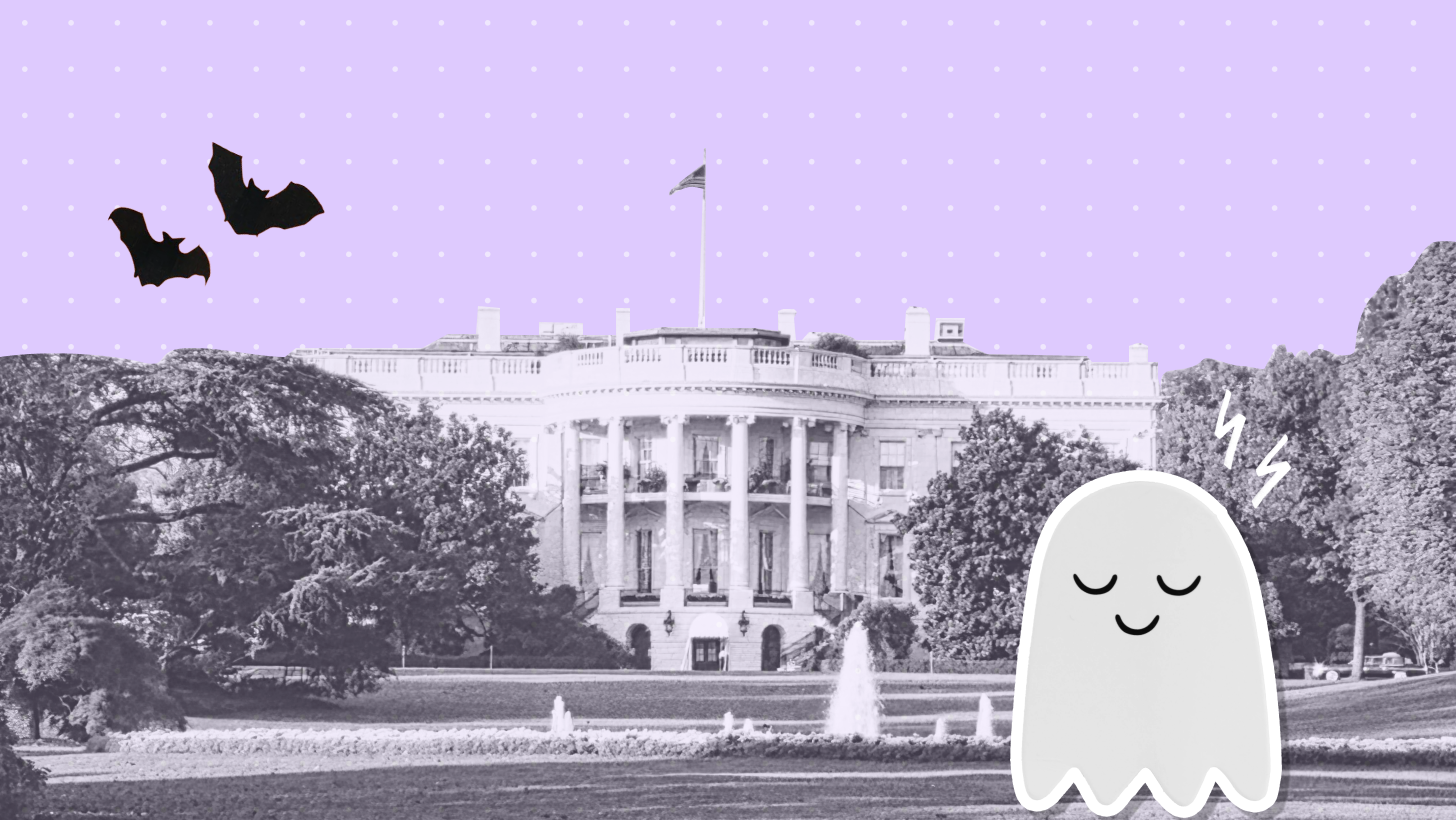
Image: Tom Fisk / Photo By: Kaboompics.com

The White House was completed in the 1800s and has served as the home to every US president since. Just imagine the countless people, events, conversations, and even incidents that have taken place there. With six floors and 132 rooms, it's no surprise that the White House has a good dose of paranormal stories. From creepy footsteps and noises to the apparitions of presidential ghosts, the iconic mansion at 1600 Pennsylvania Avenue is full of supernatural tales that will give you goosebumps!

1
Abraham Lincoln

Image: Girma Nigusse

One of the most famous ghosts in the White House is none other than that of Abraham Lincoln. But this is nothing new. Shortly after the president's passing, employees of the Mansion began reporting sightings of a tall, shadowy figure dressed in a black suit. Several First Ladies, including Eleanor Roosevelt and Grace Coolidge, also claimed to have encountered Lincoln's spectral figure.

One of the best stories about his ghost involves a famous statesman from another country: Winston Churchill. During WWII, Churchill visited the White House. The story goes that after a night shower, he encountered Lincoln's ghost standing by the fireplace. Churchill greeted him calmly, saying, "Good evening, Mr. President. You seem to have me at a disadvantage."

2
Andrew Jackson

Image: Peter Oswald

Andrew Jackson, 7th President of the US, was famous for his strong, commanding personality. Perhaps it was this aspect of his character that gave rise to the tales of his loud –some say "angry"– ghost haunting the White House.

Jackson's ghost was said to appear regularly during Theodore Roosevelt's administration. Stories describe his presence as impossible to ignore, with loud footsteps and objects inexplicably falling. Another famous anecdote narrates a dinner party held by President Harry S. Truman at the White House. Many guests allegedly saw Jackson's figure standing in one of the hallways, appearing and disappearing right in front of them.

3
Thomas Jefferson

Image: Dominik Scythe

Thomas Jefferson was not only a Founding Father, the main author of the Declaration of Independence, the 3rd President of the United States, and the man behind the Louisiana Purchase. He was also a skilled violinist.

As a polymath, Jefferson was a wise, educated man with many talents. He played several instruments, but his favorite was the violin. Over the years, several stories have emerged about staff members and even other presidents hearing the haunting sound of a violin, seemingly coming from the Yellow Oval Room.

4
Dolley Madison and the Rose Garden

Image: KaLisa Veer

But paranormal stories aren't just about presidents; First Ladies also star in similar anecdotes.

One such tale is about Dolley Madison, First Lady to James Madison, who lived in the White House from 1809 to 1817 during his two terms. Dolley Madison was known to spend long hours in the gardens during her time at the House, particularly in the Rose Garden, which she loved. After her passing in 1849, many reported seeing a ghostly figure in the Rose Garden, hearing a woman's voice, or feeling as if they were being watched.

5
Abigail Adams

Image: Hugo

John Adams was the first president to ever live in the White House. He was there with his wife, Abigail Adams, during the last year of his term (1800-1801).

After Abigail's passing, many people working in the White House reported sightings of her ghost in the East Room, where she was said to hang laundry. Even today, some staff members claim to smell wet laundry near that room.

6
John Tyler

Image: Madara

Another of the haunted rooms in the White House is the Blue Room, apparently visited by the ghost of President John Tyler.

Tyler married his second wife, Julia Gardiner, in 1844 while still in office. As the story goes, the president had proposed to Julia on several occasions before she finally said yes. Over the years, reports emerged about the Blue Room of the White House, where it is suggested that footsteps are heard, and a man's voice seemingly declaring love or proposing marriage.

7
David Burnes
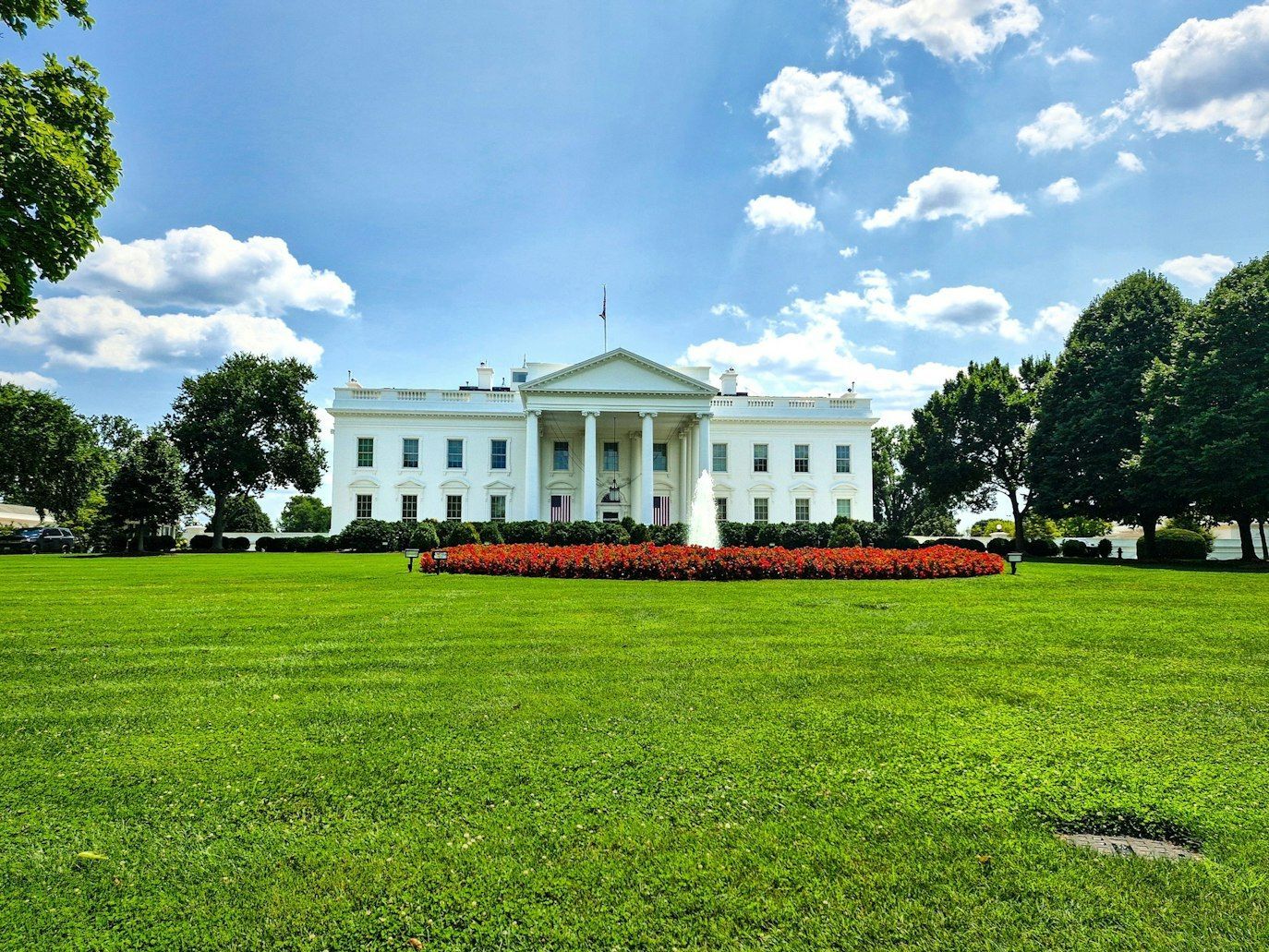
Image: Vihan Dalal

The White House has stood at 1600 Pennsylvania Avenue since 1800. But before that, the land it occupies belonged to someone else.

David Burnes was one of the original landowners, living there before the government purchased it. Legend has it that he wasn't totally pleased with the sale of his land. After his death, several residents –including Abigail Adams– reportedly saw a figure resembling Burnes walking near the house, often watching it from a distance.

8
William Henry Harrison

Image: Peter Herrmann

It seems ghosts might be lurking in every corner of the White House. As we've seen, several rooms and even the gardens have been the setting for various paranormal tales. But that's not all: The attic holds its secrets, too.

This story involves William Henry Harrison, the 9th president of the US and the first to pass away during his time in the White House. It's said that his spirit now haunts the attic of the mansion, where footsteps and a wailing voice can be heard at times.

9
The Thing

Image: Steinar Engeland

Legend has it that a mysterious entity has been haunting the White House for some time, one not tied to any known historical figure.

Several members of the White House staff have reported strange experiences attributed to "the Thing." That's the name given to this presence that makes those nearby feel as if they are being watched. But here's the creepiest part: Several employees reported feeling pressure on their shoulders as if someone was lightly leaning on them.

10
The Demon Cat

Image: Abdu Rahman

Now, it's time for a ghost that doesn't take human form. It's the well-known " Demon cat" (or "DC"), a spectral black cat said to haunt several government buildings in Washington, DC.

According to legend, cats were brought to the city to control the rat population in the 19th century. But one of those cats never left. It's now a ghost haunting landmarks like the White House and the US Capitol. Some people say the ghostly cat appears small at first but grows to a creepy large size as it approaches. Some even describe it as reaching the size of a "huge tiger."
Culture Culture 4 min read

Ominous Hollywood

Is your favorite on this list? 10 iconic apocalyptic movies

Image: Max Ovcharenko

Alien invasions, nuclear accidents, or major natural disasters… The end of the world has been depicted countless times in cinema. Whether for their spectacular visuals or their realistic portrayal of humanity’s demise, some of these films have become icons that most of us have likely seen and remember vividly. Join us as we explore the most popular American apocalyptic films.

1
Independence Day

Image: Jason W

Nothing beats a classic apocalyptic alien invasion, where extraterrestrials arrive to destroy the planet, but encounter a group of humans willing to give everything to save humanity. This is the premise of Independence Day (1996), one of the most famous disaster films. Starring Will Smith, the movie marked a turning point in science fiction, showcasing visual effects that, although they may not be as surprising today, set a new standard at the time.

2
Armageddon

Image: Javier Miranda

It’s hard to keep track of how many explosions light up the screen in Armageddon (1998), but rest assured, there are a lot of them. This film follows the classic natural disaster formula: a massive asteroid threatens Earth, and the only hope for survival is to destroy it. When the planet’s at risk, who better to call than Bruce Willis? Alongside Ben Affleck, he steps up to risk everything in a race against time.

Do you also remember this movie every time you hear Aerosmith's "I Don't Wanna Miss a Thing"? You are one of us!

3
The Day After Tomorrow

Image: Mason Mulcahy

A new Ice Age threatens humanity after a series of devastating storms strike the planet in The Day After Tomorrow (2004), a film that takes climate change and pushes its possible consequences to the extreme. With spectacular disaster sequences and visuals, the movie became a total box office success worldwide.

4
I Am Legend

Image: Natalya Letunova

Imagine waking up one day and realizing that you are, as far as you can tell, the last survivor in the city. This is what happens to scientist Robert Neville, played by Will Smith, in I Am Legend (2007). The now-classic apocalyptic theme is a deadly virus that has devastated humanity, and it is Dr. Robert Neville who appears to be the only one capable of doing something to reverse the effects of this.

5
Interstellar

Image: Guillaume Le Louarn

In 2014, we saw one of the most exciting movies to hit the big screen: Christopher Nolan's Interstellar . Acclaimed by audiences and critics alike for its visual effects and its complex and thrilling plot, this film is one of those you’ll find hard to forget. Set on an Earth that is becoming uninhabitable, Matthew McConaughey plays Cooper, a former NASA pilot who joins a mission to travel through a wormhole near Saturn in search of a new place for humanity.

Fun fact: It’s not surprising that it has been well received even by the scientific community, since a Nobel Prize–winning physicist collaborated on the script.

6
Planet of the Apes

Image: Mateusz Suski

In the original Planet of the Apes (1968), the story takes us to a distant future planet where chimpanzees, gorillas, and orangutans have evolved to possess human-like intelligence and social structures, dominating that world while humans are reduced to an oppressed species. Featuring one of the most shocking and unforgettable plot twists in cinema history, the film stands as an essential classic of dystopian science fiction.

7
Night of the Living Dead

Image: Daniel Jensen

We couldn’t leave Night of the Living Dead off this list, the 1968 film that changed cinema forever. While the concept of "zombies" may feel familiar today, this George A. Romero’s film was the first to present the idea of the dead rising again and becoming a real threat to the living.

8
12 Monkeys

Image: Liam Andrew

Bruce Willis is once again called upon to help humanity (or what remains of it) in the 1995 film 12 Monkeys , this time alongside none other than Brad Pitt, who earned an Oscar nomination for this role. Set in a dark future, most of humanity has been wiped out by a deadly virus, and Willis’s character must travel back in time to gather information about its origins and help find a way to stop it.

9
Dawn of the Dead

Image: airci K

Of course, George A. Romero wasn’t going to appear just once on this list. In 1978, Dawn of the Dead was released, once again portraying the end of the world brought on by the return of the undead. A group of survivors takes refuge in a shopping mall, but human conflicts soon emerge as a threat equal to, or even greater than, that posed by the zombies themselves.

10
The Day the Earth Stood Still

Image: Michael Herren

The Day the Earth Stood Still (1951) is definitely a science fiction classic. Unlike the other films on this list, its catastrophe is not inevitable; disaster can still be avoided. Rather than centering on spectacular destruction, the film delivers a philosophical warning to humanity. An alien visitor arrives on Earth to deliver a stark message: abandon nuclear violence, or face devastating consequences.

Culture Culture 6 min read

Geniuses at work

We're here today because of them! Meet 10 Americans who changed history

Image: Quino Al

The United States is a land of progress and innovation, so it makes sense that many of the world's most important inventors and scientists are Americans. From breakthroughs like the lightning rod and the light bulb to advancements in the world of medicine, biology, and astronomy, there have been many men and women who, from different fields of study, have contributed to the scientific progress of our country and the entire world. Join us as we review these 10 American inventors and scientists who changed history!

1
Thomas Edison

Image: Call Me Fred

When it comes to inventors, we can't fail to mention the incredible Thomas Alva Edison.

Edison was born on February 11, 1847, in Milan, Ohio, and since he was a child, he showed his interest and talent in mechanics and electricity. At the age of 11, he set up his first laboratory in his parents' home, and by the age of 12, he ran his own business: a newspaper he designed, printed, and sold himself.

Creator of the phonograph (the first device capable of recording and reproducing sounds) and a fundamental part in the development and popularization of inventions such as the electric light bulb and the motion picture camera, Edison patented more than 1000 creations during his lifetime. Impressive!

2
Benjamin Franklin

Image: Dan Mall

Born in Boston, Benjamin Franklin was one of our Founding Fathers, the men whose principles, values, and ideas shaped America. But as if that weren't enough, Franklin was also a renowned scientist, inventor, and polymath.

A pioneer in the field of electricity, he's remembered for his famous kite experiment, which demonstrated the electrical nature of lightning and led to the invention of nothing less than the lightning rod. In addition, he's also credited with iconic inventions such as the first efficient wood-burning stove (later known as "the Franklin Stove"), the bifocal glasses, and the glass armonica.

3
Samuel Morse

Image: The New York Public Library

Unlike other scientists and inventors on this list, Samuel Morse began his journey in a completely different field: art.

Morse studied at Yale, where he completed his studies in 1810. He then embarked on a trip to Europe to continue his artistic education, but this trip awakened another peculiar interest in him. Frustrated by the communication methods of his time, Morse focused his creativity on finding ways to transmit information over long distances using electrical signals. Thus, the revolutionary telegraph was born, along with its way of communication, the Morse code.

4
The Wright Brothers

Image: Simon Fitall

The Wright Brothers were the famous siblings who, in the 20th century, achieved a goal long sought by humanity: flight.

Wilbur and Orville Wright are credited with inventing, building, and flying the world's first successful airplane. As you probably know, on December 17, 1903, they made the first sustained flight in history using the Wright Flyer, their iconic invention.

On that December morning, the brothers flipped a coin, letting fate decide who would be the first to test the aircraft. Although Wilbur won, that first attempt failed. So it was Orville who flew for 12 seconds, traveling 120 feet over Kitty Hawk, North Carolina.

5
George Washington Carver

Image: Tom Hermans

George Washington Carver was born in the 1860s in Diamond, Missouri. In the 1890s, his intelligence and hard work enabled him to enter Iowa State College (now Iowa State University), where he earned a master's degree in agricultural sciences. In 1896, he became the head of the agriculture department at Tuskegee Institute in Alabama, where his career as a professor and a researcher took off.

Thanks to his investigations and tests, George Washington Carver made major contributions to agriculture, including his innovative techniques for crop rotation . In addition, he developed many and varied peanut products, such as oil, flour, soap, and ink, helping to make this crop one of the key products of the country's economy.

6
Carl Sagan

Image: Vaibhaw Kumar

The stars and the mysteries of the universe captivated the famous Carl Sagan from an early age. Born in Brooklyn, New York, in 1934, Sagan studied at the University of Chicago, where he earned degrees in physics, astronomy, and astrophysics, eventually working and collaborating with NASA.

His contributions to the field of astronomy earned him a position in projects such as the Mariner, Viking, Voyager, and Galileo missions, thanks to which we have learned a lot about Venus, Mars, and Jupiter. The famous high temperatures of Venus, for example, were confirmed thanks to his work.

Additionally, his book and series Cosmos attracted the public's interest in astronomy, inspiring many others to follow in his footsteps.

7
Grace Hopper

Image: Museums Victoria

While computer programming may seem like a modern issue, the pioneers of this field were already working as early as the 1940s.

Grace Hopper graduated in mathematics and physics in 1928 and obtained a master's degree and a Ph.D in mathematics from Yale University in 1934. Famous as a pioneer in the world of programming, Hopper's work began during World War II when she joined the US Naval Reserve. There, she worked on the earliest electromechanical computers and developed extensive and complex manuals to operate them.

Her greatest contribution came from her work with mathematical codes, which she translated and adapted into innovative machine-readable language. That innovation led to the creation of the first high-level programming languages.

8
Jonas Salk

Image: Олег Мороз

Jonas Salk is none other than the mind behind a medical milestone: the polio vaccine.

In the 1940s, Salk was beginning his career in medical research. While working at the University of Michigan, his work was crucial in developing the first successful influenza vaccine for the military during WWII. This event marked his later study of the poliovirus.

Polio was devastating during the first decades of the 20th century, but that changed dramatically thanks to Salk's work. The scientist led a team that succeeded in developing the first safe and effective injectable inactivated poliovirus vaccine (IPV) in 1955, and the rest is history.

9
Barbara McClintock

Image: digitale.de

Although her name may not be as instantly recognizable as some others on this list, her work definitely is. Barbara McClintock has undoubtedly made one of the most significant contributions to medicine and genetics.

In the 1940s and 1950s, she worked with chromosomes, investigating their role in inheritance, which led to discoveries that forever changed our understanding of genes.

Before her, genes were believed to be fixed and immutable. But McClintock came to change that idea with her most famous contribution: the discovery of transposable elements, aka "jumping genes." She demonstrated that jumping genes are present in multiple organisms, including humans, and play an essential role in genetic evolution.

10
Alexander Graham Bell

Image: Misho Tektumanidze

Alexander Graham Bell became interested in sound and communication at a young age, something that led to his greatest and most remembered contribution: the telephone.

Although born in 1847 in Edinburgh, Scotland, Alexander Graham Bell settled in the United States in 1871 and became an American citizen years later. It was here that he developed most of his experiments and research.

After years of experimenting with methods to transmit sound through electrical currents, Bell finally spoke into his invention on March 10, 1876, saying to his assistant, "Mr. Watson, come here. I want to see you." That was the first successful telephone call in history.

Explore more American facts

Choose your favorite category!

General
General

As American as apple pie—the very best America has to offer!

Culture
Culture

Delve into the astounding richness of American lore.

Geography
Geography

Hop in and explore vast and diverse American landscapes.

History
History

Discover the key moments that shaped the United States.