Geography Geography 3 min read

Carved in stone

The Secret Room and 10 Secrets about Mount Rushmore
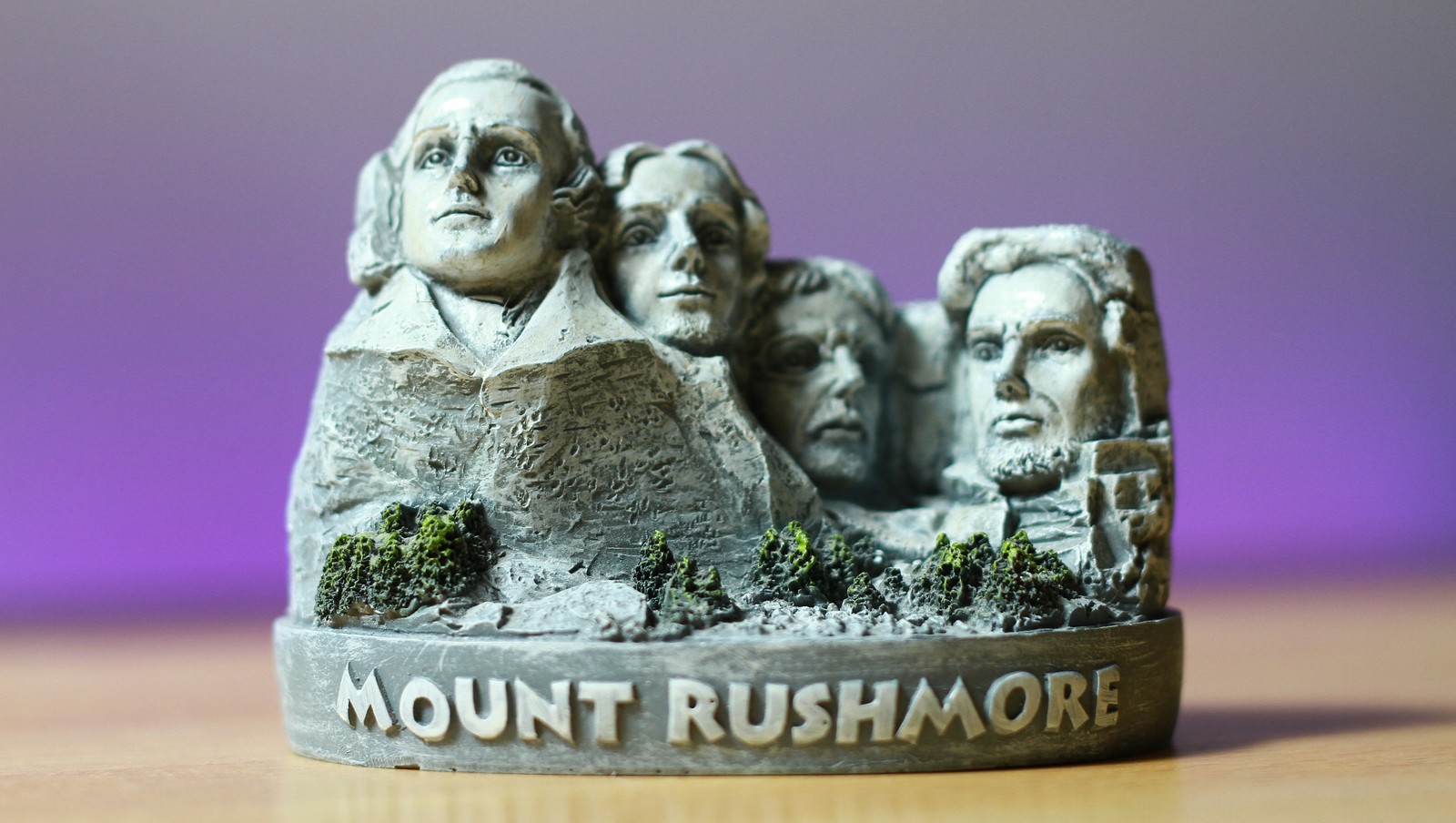
Image: Takefreebies

We've all seen Mount Rushmore, whether in person or on screen. But this monumental landmark is more than just four giant heads carved into granite. If you want to discover some surprising facts they don't teach in schools, read on!

1
A tough decision

Image: Spencer James Lucas

While the first three figures —Washington, Jefferson, and Lincoln— were almost unanimously agreed upon, there was some debate over who should be the fourth face on Mount Rushmore. Gutzon Borglum, the sculptor, advocated for Theodore Roosevelt, but others believed Woodrow Wilson should be included. In the end, Borglum stuck with his original choice, and that's why today we see Teddy Roosevelt up there on America's Shrine of Democracy.

2
The original plan

Image: Jon Sailer

While it's hard to picture the Black Hills without the iconic faces of Washington, Jefferson, Roosevelt, and Lincoln, the original idea for Mount Rushmore was actually quite different. At first, Sculptor Gutzon Borglum envisioned a more complex job (yes, even more complicated than it already is!) In his original plan, he imagined not just the presidents' heads but their upper bodies as well! There was even talk of including other key figures from American history, like explorers Lewis and Clark.

3
14 long years

Image: piotr sawejko

We can assume that carving the giant heads of 4 presidents into the granite was no easy task. But do you know how long it took to complete the monument we see today? 14 years! That's right; 14 years of hard work, 400 men, and a whole lot of dynamite went into bringing this colossal project to life.

4
The first

Image: Spencer James Lucas

As the first President of the United States and widely known as the "Father of His Country," George Washington was a must for this incredible monument. In fact, his face was the first to be completed and was officially dedicated in a grand ceremony. In addition, as part of the powerful symbolism behind the work, Washington's sculpture is also the most prominent.

5
Starting over

Image: Raimund Schlager

One of the many unexpected construction challenges involved the placement of Thomas Jefferson's sculpture.

The original plan was to place Jefferson's face to the left of Washington. However, when the dynamiting process began, they found quartz beneath the surface, which made it impossible to continue carving in that spot. After 18 months of work, they "erased" (yes, again, with dynamite) what they had of Jefferson and started over to the right of Washington, where it is today.

6
The secret door

Image: Tommy Bond

Did you know there's a secret room hidden behind the 60-foot-tall heads on Mount Rushmore? The sculptor had big plans for the monument, including a Hall of Records carved into the mountain to store important national documents like the Constitution. And he started to build it! However, when Congress found out that part of the budget was set aside for the Hall of Records, they asked Borglum to focus solely on carving the heads.

7
The last one

Image: caleb weiner

After Washington's, the other faces followed: Jefferson's was dedicated second, and Lincoln's was officially unveiled in 1937. So, which one came last? That's right! The last to be completed was Theodore Roosevelt's, with his iconic mustache included! Of course, members of the Roosevelt family attended the big ceremony.

8
The legacy

Image: Ashim D’Silva

Building Mount Rushmore took many years. Unfortunately, Gutzon Borglum, the mind behind the project, didn't get to see it fully completed, as he passed away just a few months before the work officially ended. However, it was his son Lincoln who stepped in to complete the great work his father had started.

9
An extra foot

Image: Andrew Ling

Borglum believed this monument should stand the test of time, built to inspire and be admired for thousands of years to come. So, how did he achieve that? Some historical sources suggest one of Borglum's techniques was adding extra material to certain angled areas of the sculpture, like Washington's nose, for example. That's right! It's believed that the author added an extra foot to George Washington's nose to help it better withstand erosion over time.

10
The man behind the name

Image: Pamela Huber

Long before the presidents were carved into the Black Hills, a New York lawyer paid a visit to the area, and that visit wouldn't go unnoticed. In 1885, attorney Charles E. Rushmore was at the site for business, and he asked for the name of a particular peak. When they told him it didn't have a name, he jokingly suggested they could call it "Rushmore Peak." Charles E. Rushmore was actually the first person to make a private donation to get the project started: $5,000! And so it was that his name stuck.
General General 3 min read

Only ours

Wait... doesn't everyone do that? 10 US traditions that confuse the world

Image: Courtney Hedger

If you're from the United States, there are plenty of things we do every day that feel completely normal... until you leave the country. From the legal drinking age of 21 to eating dinner very early, many familiar American customs leave foreigners scratching their heads. Want to know what makes us stand out? Here are 10 uniquely American traditions that the rest of the world finds strange!

1
Legal drinking age

Image: Elevate

When was the first time you tried a beer? Probably at 21 or later. While that's completely normal here in the US, it can seem a bit strange to people in other parts of the world. Why? In America, you can vote, serve on a jury, and even get married in some states at 18, but you still can't legally buy alcohol until you're 21. In many other countries, the legal drinking age is 18—or even younger—and that's why they find our law unusual.

2
The faces of real estate agents

Image: Tierra Mallorca

We're used to walking through a neighborhood and seeing signs with real estate agents' faces in front of homes for sale. But in other countries, that's pretty unusual! In many places, real estate transactions are more impersonal; you deal with an agency, not a specific person. Here in the US, we like to put a face to the name. Getting to know the person helping you buy or sell a home feels more personal and trustworthy. It makes sense, right?

3
Our coins

Image: Shot by Cerqueira

Many of us don't even notice this until we travel abroad, but some of our coins don't actually show their value! Sure, you'll see words like "Five Cents," "One Cent," or even "One Dime," but there's no actual number printed on them. When you think about it, that's kind of strange, right? Especially when most countries display the value on their coins using numbers.

4
American flag everywhere

Image: camera obscura

In many countries, their national flag is used only for formal or official purposes, but that's not the case in the US. We tend to see the American flag literally everywhere, not just at official functions or holiday celebrations, but also on all kinds of products and imagery. From T-shirts and caps to food packaging and even swimsuits, our flag is a constant presence in everyday life.

5
No bad words on TV

Image: Kevin Woblick

If you're in America and turn on your TV right now, you'll find everything from romantic scenes to shows about zombies or violent crimes, but you'll rarely hear any bad language. Our television generally doesn't include insults or swear words, while in other countries they often do, even in shows that air during times when children might be watching.

6
Dinner before 8 PM

Image: Or Hakim

Depending on the region, dinner in the United States is often served before 8 p.m., and sometimes even before 7 p.m. But in many other countries, that's considered too early. In Latin America, for example, most people eat dinner between 8 and 11 p.m.!

7
The Imperial System

Image: Jarosław Kwoczała

We Americans use miles, feet, pounds, and degrees Fahrenheit, but this is often very confusing for visitors from other parts of the world. We are totally used to the Imperial System, but in most countries, the Metric System reigns supreme, with everything measured in meters, kilometers, kilograms, and degrees Celsius.

8
Big portions

Image: mafe estudio

Large portions are deeply ingrained in our daily lives. Whether it's restaurant meals, snack packs, or soft drinks, everything tends to be bigger in America. This can be surprising for foreigners who come here and order food, since in many other countries, dishes are smaller, and the custom of taking leftovers home after eating at a restaurant isn't as common as it is in the US.

9
Turkey pardon

Image: Tyler Donaghy

The pardoning of the turkey by the US president is a big event for many Americans. But in other parts of the world, where Thanksgiving isn't celebrated, it can come as a surprise. To foreigners, this formal ceremony involving a turkey might seem quite strange. Since Thanksgiving traditions aren't part of their history, this custom is uniquely American.

10
Alumni homecoming

Image: Carol Highsmith's America

Perhaps you've had the chance to participate in Homecoming, the annual event that celebrates university spirit with parties, sports games, and other activities for students returning to campus. While it's a big part of our college tradition and communities are deeply involved, it's quite different in other parts of the world, where the return to school usually happens with little fanfare.

General General 4 min read

Enlightening comparisons

How many elephants fit in a cloud? Wild comparisons you won’t believe

Image: David Yu

How much does a cloud weigh? How powerful is the flow of Niagara Falls? How deep is the deepest point of the Grand Canyon? And how far away is the Moon from Earth? Sure, we could give you the straight numbers. Or we could find fun and illustrative ways to put these measurements into perspective, like using basketballs, cars, elephants, and electric toasters. Read on to learn some down-to-earth comparisons of outstanding things!

1
Alaska is so big, it could fit Texas inside twice

Image: Paxson Woelber

Sure, everything’s bigger in Texas… but where does that leave Alaska? The Last Frontier spans about 663,000 square miles , while the Lone Star State covers roughly 268,000 square miles. So yes, you could comfortably fit Texas inside Alaska twice, and still have room left over for California.

2
You could stack 10 Washington Monuments inside the Grand Canyon’s depth

Image: Sonaal Bangera

At its deepest point, the Grand Canyon plunges more than 6,000 feet. That’s more than a mile of height, to give you an idea. To put that in perspective, the 555-foot-tall Washington Monument could fit inside the canyon roughly ten times from top to bottom.

3
The Statue of Liberty’s sandal is the size of a small car.

Image: A n v e s h

Have you ever paid attention to the Statue of Liberty’s feet? Yes, they are visible, right next to the broken shackles at her base. You can’t stand next to the feet, of course, but if you could, you’d see that each sandaled foot measures about 25 feet long , which is a bit over the length of a Chevy Suburban.

4
The Empire State Building was built faster than a modern kitchen remodel

Image: Kit Suman

Did you know that one of the most famous buildings in the world was pretty much speed-built? Construction took just 410 days , starting in 1930 and finishing in 1931. This rapid progress was possible thanks to prefabricated steel parts and a workforce of roughly 3,400 workers each day. Nowadays, your average kitchen renovation takes 6 months to a year.

5
If the Earth were the size of a basketball, the Moon would be a tennis ball 24 feet away

Image: Anne Nygård

This is a fun way to illustrate the relationship between our planet and its satellite. If Earth were the size of a basketball (about 9.5 inches in diameter), the Moon would be roughly the size of a tennis ball (about 2.5 inches).

But they would be a whopping 24 feet away, about the length of a stretch limousine (or a Statue of Liberty sandal). This scale model helps explain just how far apart and disproportionate they really are!

6
A single cloud can weigh as much as 90 elephants

Image: Volodymyr Dobrovolskyy

Clouds may not look heavy, but these giant beauties are surprisingly massive. Scientists estimate that an average fluffy cumulus cloud contains about 1.1 million pounds of water, which is roughly the weight of 90 adult African elephants .

7
You could fit 7 Yankee Stadiums inside the Mall of America

Image: David Vives

With over 5.6 million square feet, the Mall of America is one of the largest indoor spaces in the country . Imagine trying to meet your friends in just one of its 500+ stores!

The mall also features an indoor amusement park and an aquarium. To give you an idea, Yankee Stadium covers roughly 800,000 square feet. You could fit about seven of them within the Mall of America.

8
A hummingbird flaps its wings faster than a car engine runs

Image: James Wainscoat

Hummingbirds beat their wings between 50 and 80 times per second , roughly eight times faster than the revolutions per second of a typical V8 engine at idle. No wonder they have enough force to seemingly fly in place!

9
Comparing lightning bolts with defibrillator shocks

Image: chutipon Pattanatitinon

The energy in lightning bolts can vary, but it’s not uncommon for them to unleash 5 billion joules . Roughly, a biphasic defibrillator delivers about 200 joules in a single shock. And, to give you an idea, it takes roughly 50,000 joules to toast a single slice of bread.

10
Yellowstone sits on top of a supervolcano the size of Rhode Island

Image: Denys Nevozhai

You might have heard of Yellowstone’s supervolcano and how tourists leave mesmerized by the geysers, hot springs, and wildlife.

But the size of its caldera is even more astonishing: it stretches 20 by 45 miles , covering nearly 1,350 square miles. That’s roughly the same area as Rhode Island, the smallest U.S. state.

11
Niagara Falls could fill an Olympic pool in less than a second

Image: Hadi Yazdi Aznaveh

A standard Olympic-size swimming pool holds about 660,000 gallons. Niagara Falls, however, pours roughly 700,000 gallons of water every second, meaning it could fill a pool in under one second, approximately 0.94 seconds to be exact.

If you were filling the same pool with a standard hose, it could take about 19 days .

Explore more American facts

Choose your favorite category!

General
General

As American as apple pie—the very best America has to offer!

Culture
Culture

Delve into the astounding richness of American lore.

Geography
Geography

Hop in and explore vast and diverse American landscapes.

History
History

Discover the key moments that shaped the United States.