Geography Geography 6 min read

Take note: These 12 US bridges are road trip worth it!

Image: Joseph Corl

Bridges aren’t just structures of stone and steel—they’re storytellers in their own right. Each one holds a legend, whether of a nation’s earliest days or a bold leap in engineering. Some rise like monuments that mark the passage of time, while others capture the imagination with elegance or daring design. From quiet covered spans in New England to soaring marvels out West, every bridge reveals a chapter of America’s journey. Let’s explore 12 structures that stand out for their legacy and grandeur.

1
Frankford Avenue Bridge, Philadelphia, Pennsylvania
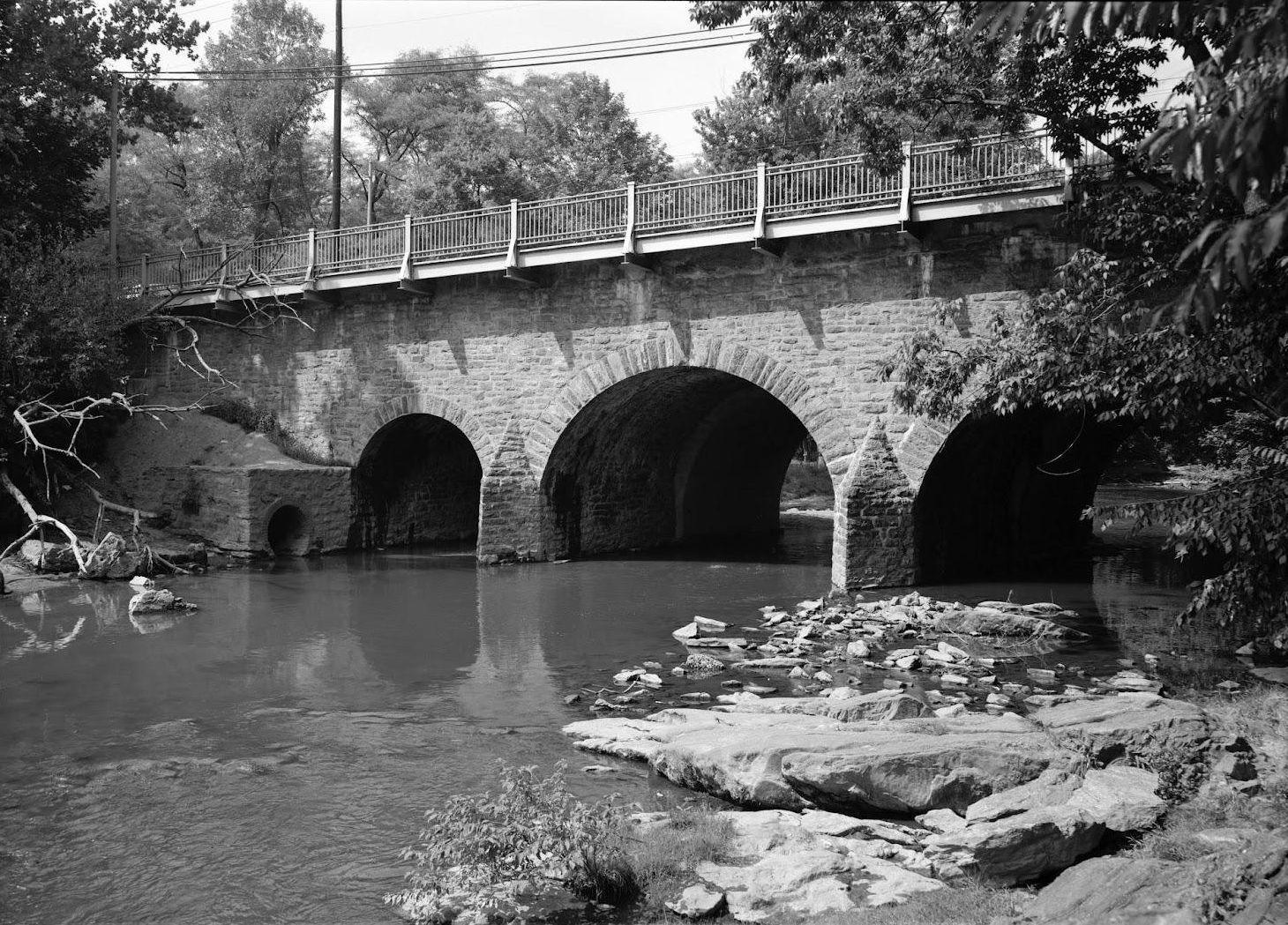
Image: See page for author, Public domain, via Wikimedia Commons

Long before America declared independence, a bridge was already standing strong in Philadelphia. Built in 1697, the Frankford Avenue Bridge holds the title of the oldest bridge still in use in the United States. Picture stagecoaches rattling across its stone arches, carrying passengers between Philadelphia and New York. Today, cars hum across the same path, hardly noticing they’re rolling over a structure that has endured for more than three centuries —a quiet survivor of colonial times still woven into modern city life.

2
Golden Gate Bridge, San Francisco, California
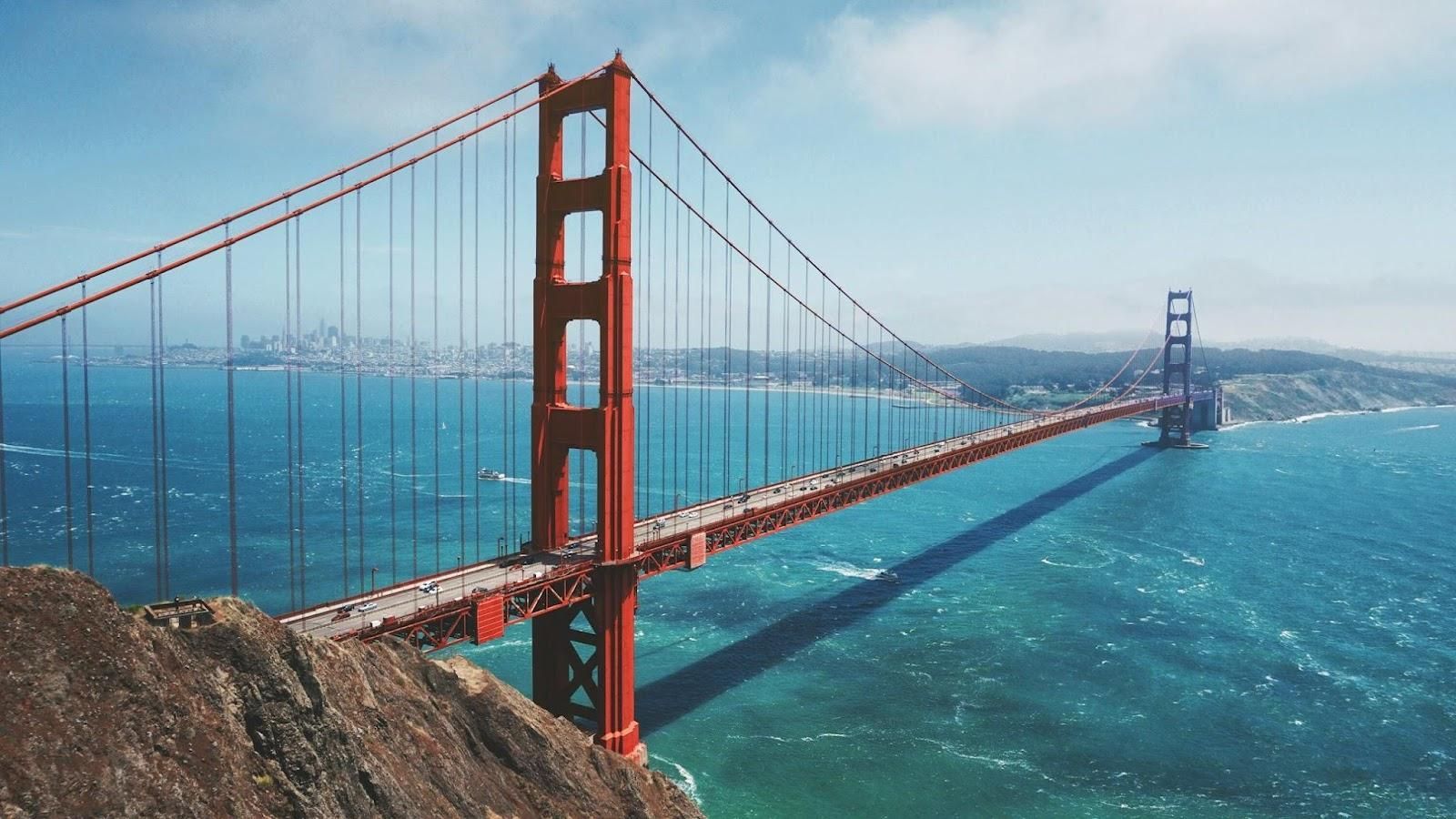
Image: Maarten van den Heuvel

What if we told you that a bridge once called "impossible" now defines an entire city? When it opened in 1937, the Golden Gate spanned an incredible 4,200 feet, a record that stunned engineers across the globe. Its sweeping cables and graceful towers are much more than just steel —it’s poetry over water. Painted in its famous "international orange," this bridge doesn’t just stand tall against the fog, it glows through it, serving as both a practical crossing and a proud emblem of San Francisco’s scenic location.

3
Sunshine Skyway Bridge, Tampa Bay, Florida

Image: Joseph Corl

Reaching gracefully across 4.1 miles of Tampa Bay, the Sunshine Skyway Bridge rises like a fleet of white sails frozen in motion. Finished in 1987, it was designed to do more than just connect two shores—it was built to inspire. Its towering piers and broad cables give it the look of a ship setting out to sea, a fitting image for Florida’s sunlit coast. On bright days, motorists often describe the drive as more than a commute; it feels like gliding above the Gulf itself, where the horizon stretches endlessly and the water sparkles below like glass.

4
Brooklyn Bridge, New York, New York
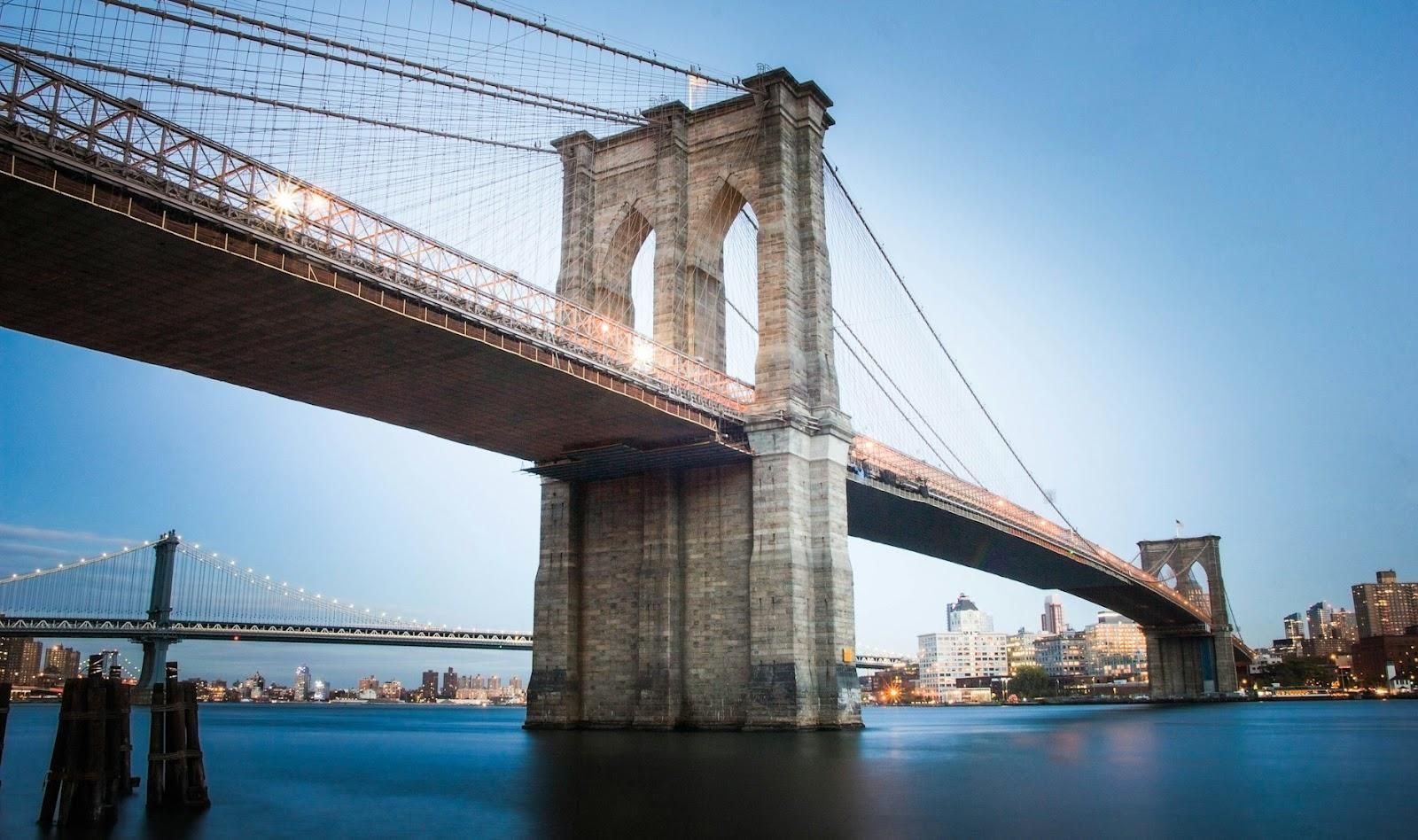
Image: Alexander Rotker

Here’s a tale worth telling: when the Brooklyn Bridge first opened in 1883, many New Yorkers doubted its strength. To calm their fears, showman P. T. Barnum led 21 elephants across the span, proving once and for all that the monumental structure could hold far more than horse-drawn carriages. With its stone Gothic towers rising like cathedrals and its web of cables fanning out in graceful arcs, the Brooklyn Bridge is both an engineering triumph and a work of art. More than a century later, it still stands as a symbol of American ingenuity.

5
Memorial Bridge, Washington, D.C.
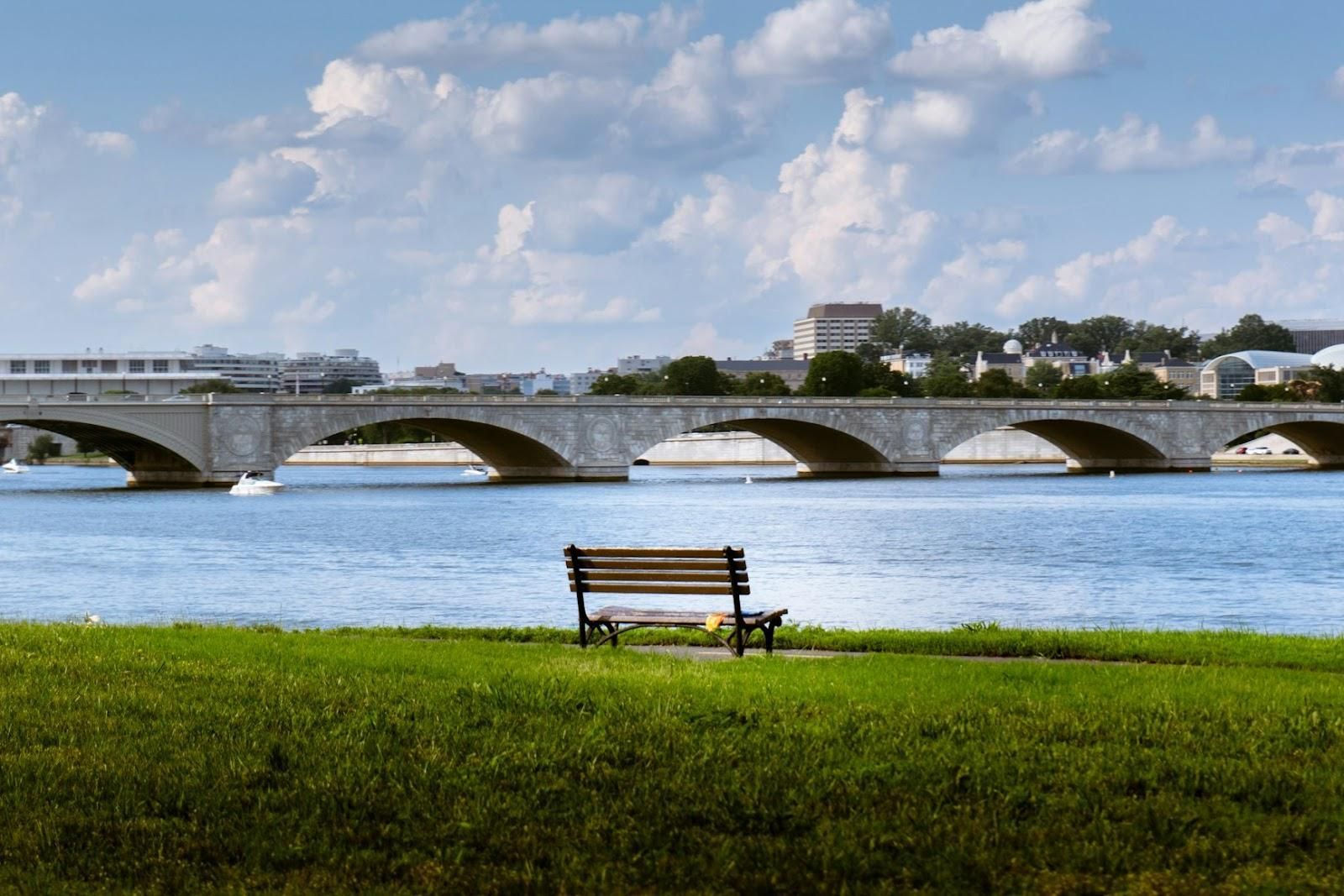
Image: Devansh Bajaj

Picture this: a bridge that doesn’t just link two shores, but two chapters of American history. The Arlington Memorial Bridge, completed in 1932, was designed to align the Lincoln Memorial with Arlington House, symbolizing a nation healing after the Civil War. Its central span works like an enormous see-saw—an elegant bascule that tips upward, heavy as a freight train, to open the way for ships on the Potomac. More than steel and stone, it’s a gesture of reconciliation and remembrance.

6
Tunkhannock Creek Viaduct, Nicholson, Pennsylvania
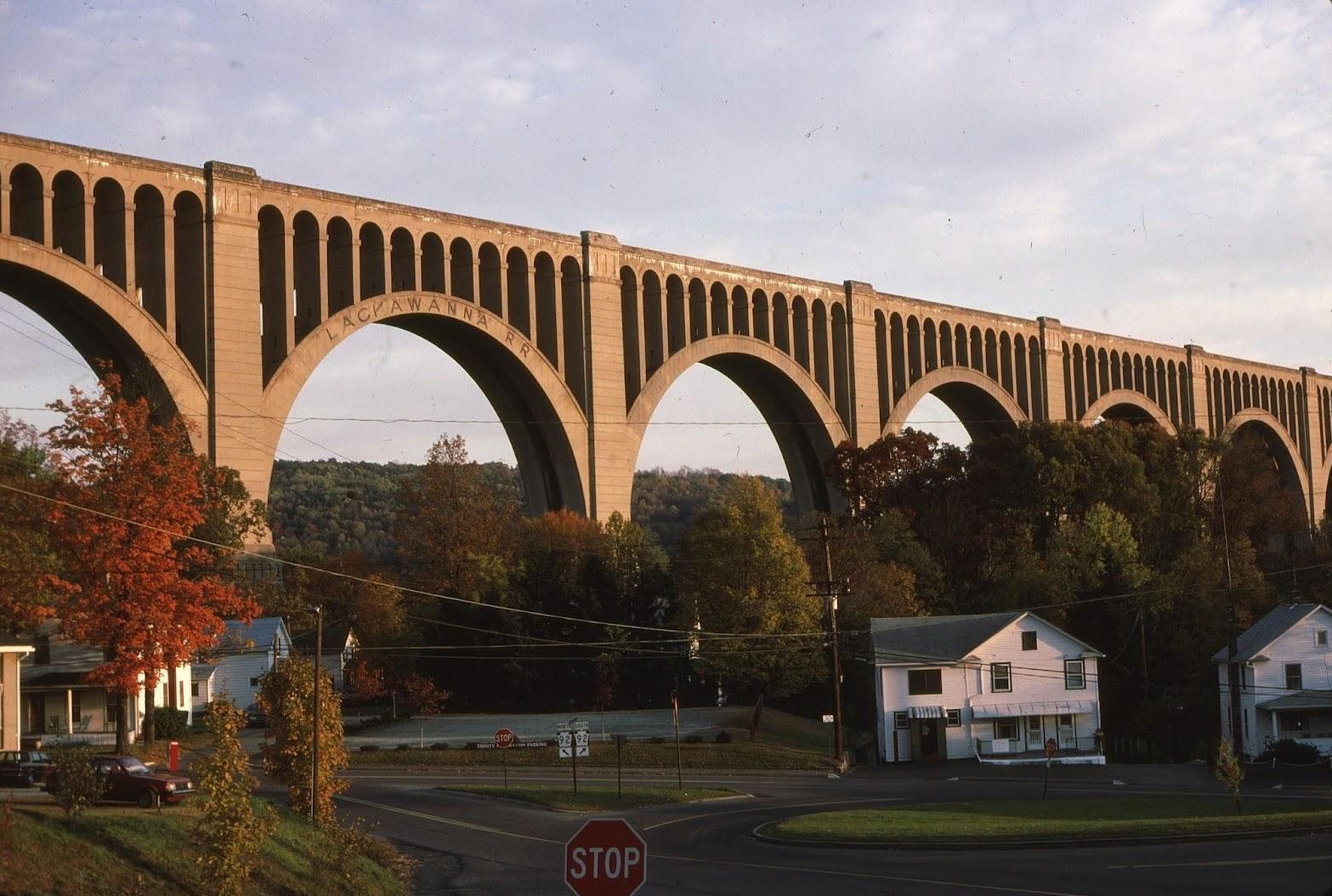
Image: WallyFromColumbia at English Wikipedia, Public domain, via Wikimedia Commons

Imagine standing at the foot of a concrete wall as high as a 20-story tower, stretching farther than the eye expects a bridge could go. That’s what people experienced in 1915 when the Tunkhannock Creek Viaduct—better known as the Nicholson Bridge—first appeared on the Pennsylvania landscape. Spanning 2,375 feet with arches rising 240 feet above the valley, it was the largest concrete bridge in the world at its completion. More than a century later, trains still roll across its 12 arches, looking like miniature toys against the bridge’s sheer immensity.

7
Roebling Suspension Bridge, Cincinnati, Ohio
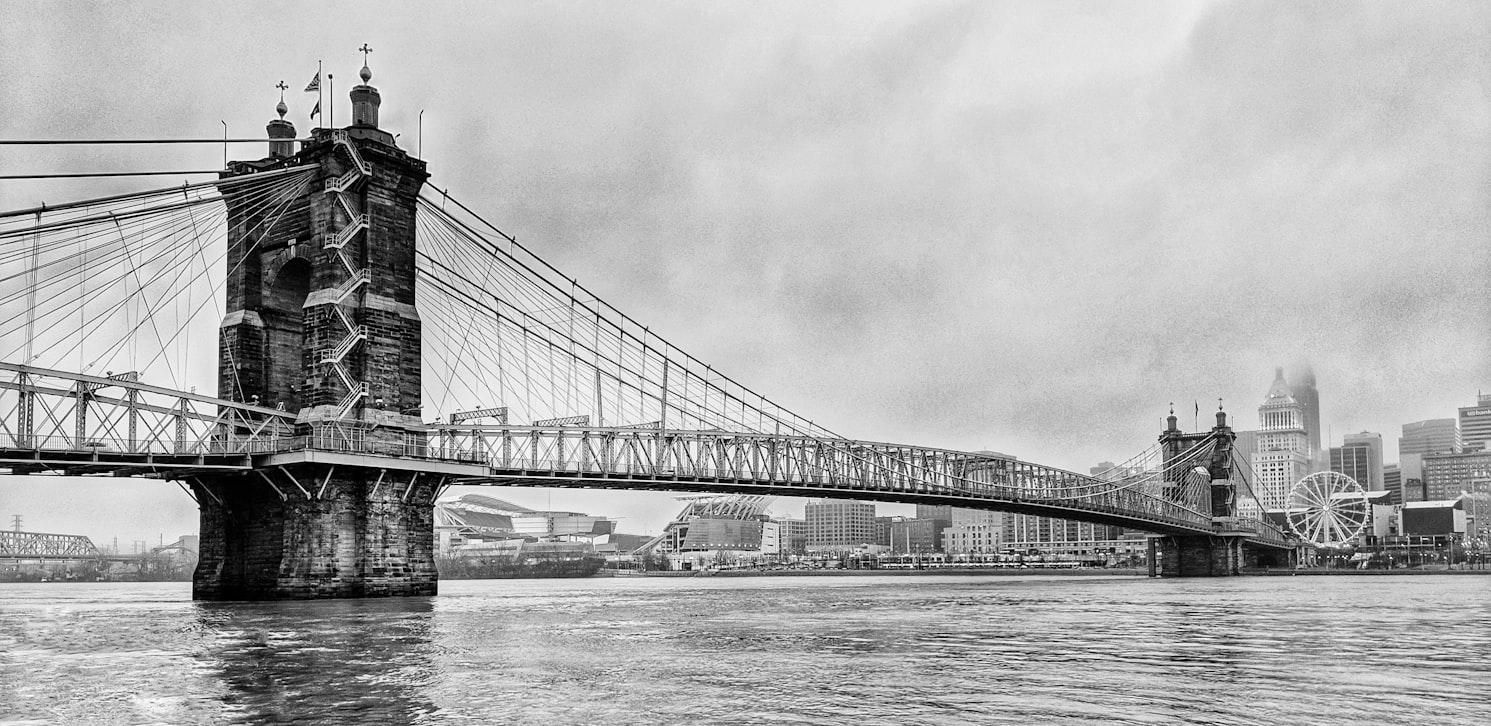
Image: Thomas Rupp

If the Brooklyn Bridge impressed you, the Roebling Suspension Bridge in Ohio will blow your mind, as it was built years earlier by the same man. When it opened in 1867, it set a world record as the longest suspension bridge, stretching an impressive 1,057 feet across the Ohio River. It was John A. Roebling’s first marvel, only overtaken by his own later New York landmark. For the people of Cincinnati, the bridge was proof that American engineering could rival anything in the world, a daring leap that linked two cities and paved the way for future icons.

8
North Bridge, Concord, Massachusetts
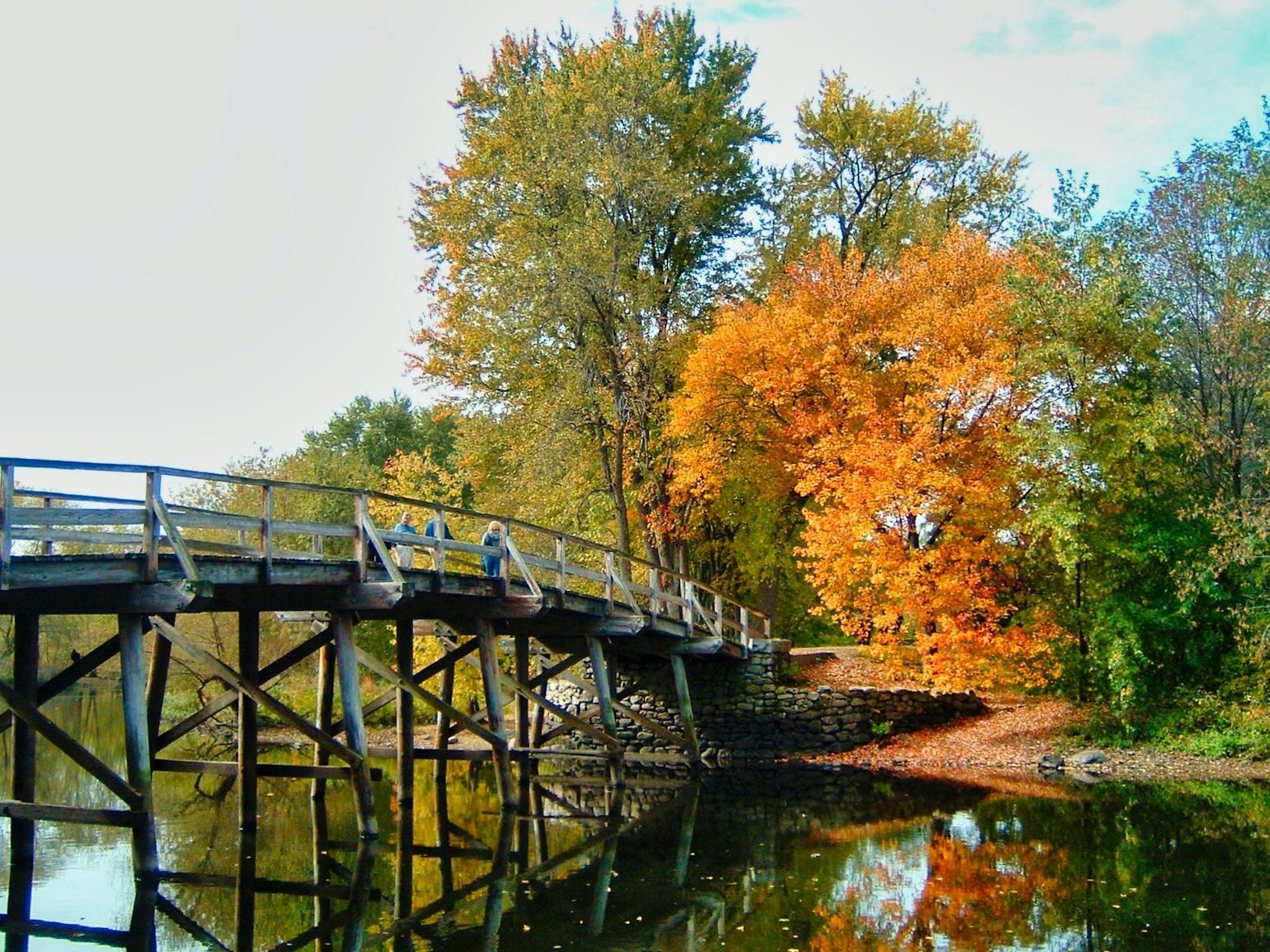
Image: Christopher Ryan

Set foot on the North Bridge in Concord and you’re not just crossing the Concord River—you’re walking into the pages of history. It was in this exact place that, in April 1775, a musket fire rang out, sparking the first battle of the American Revolution and changing the course of a nation forever. The bridge visitors see today is a careful 1956 reconstruction, built to honor the original. Yet, the setting remains almost the same: the quiet river below, the fields beyond, and the sense that this unassuming wooden span still carries the echoes of liberty’s first call.

9
Middle Covered Bridge, Woodstock, Vermont
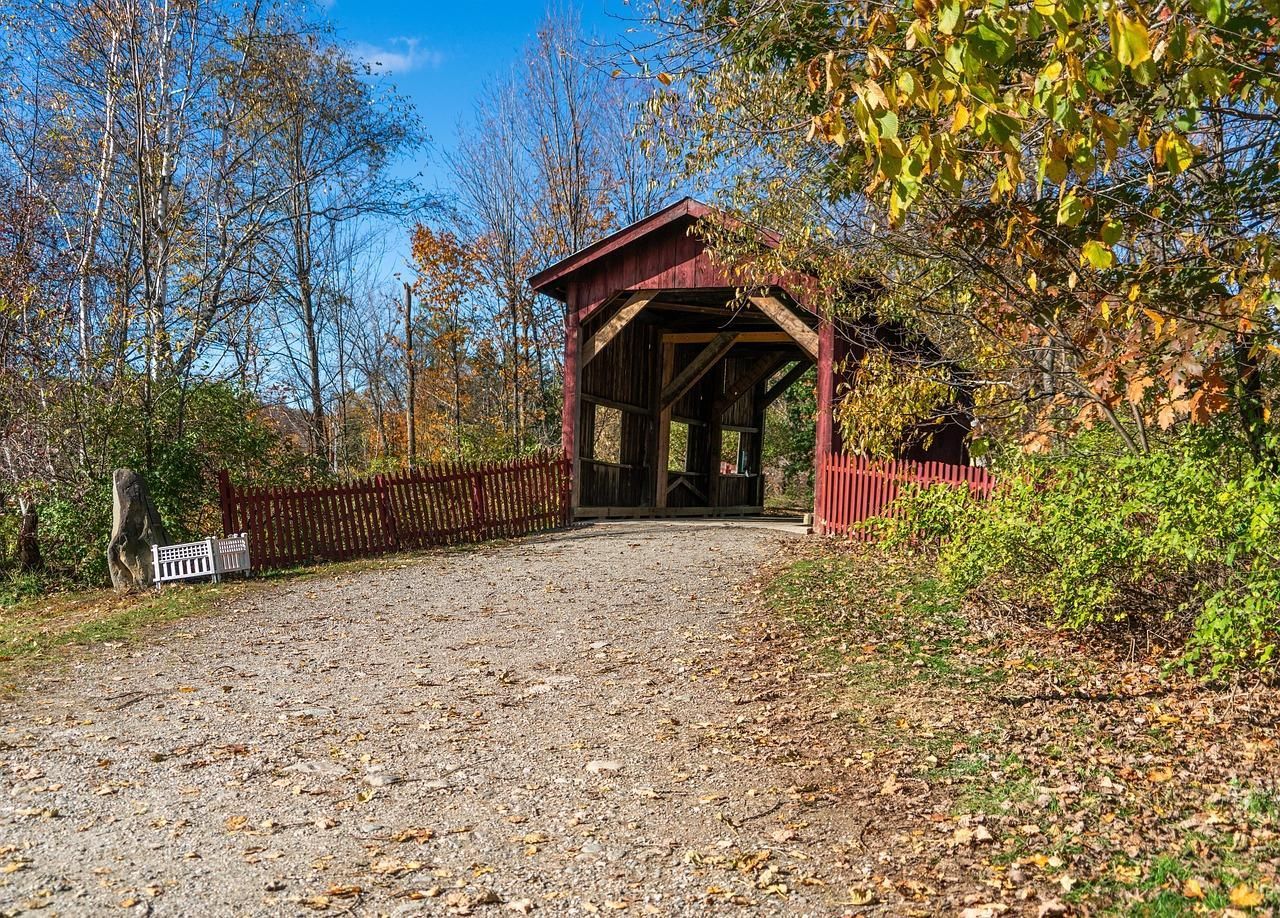
Image: Michelle_Pitzel

There’s a certain mystique about covered bridges, and Woodstock’s Middle Bridge feels like it was lifted straight from a storybook. Though built in 1969, it was crafted with traditional techniques, giving it the spirit of a much older landmark. Stretching 135 feet across the Ottauquechee River, its peaked wooden roof frames a perfect New England scene —red barns, rolling hills, and the steady flow of water beneath. Beyond its whimsical charm, the roof serves a purpose: protecting the bridge’s sturdy timbers from Vermont’s long, snowy winters so it can stand strong for generations.

10
New River Gorge Bridge, Fayetteville, West Virginia
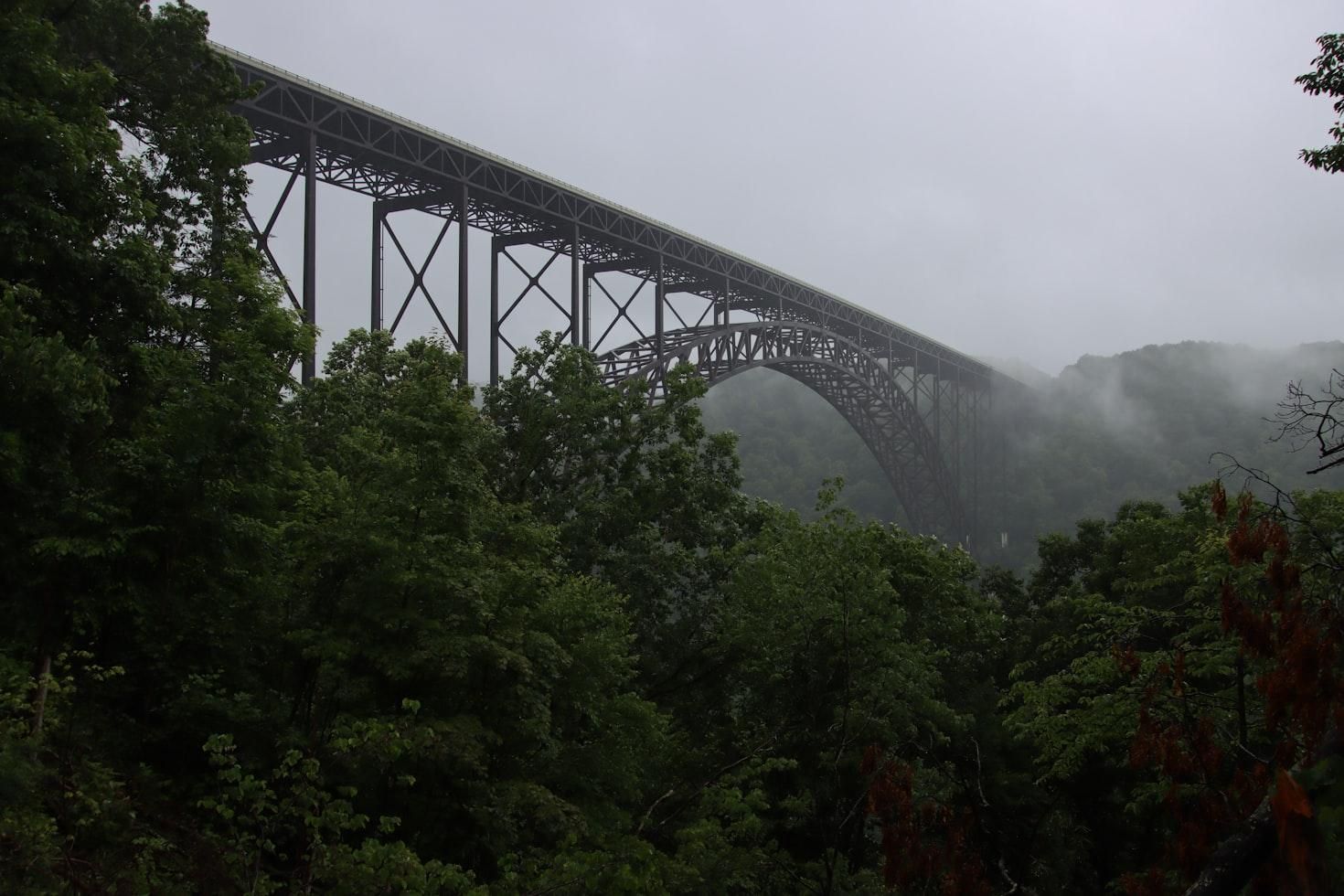
Image: Ian Pearthree

From a distance, the New River Gorge Bridge might seem like any other stretch of highway. But step onto it, and it’s a different story. Opened in 1977, this steel arch rises 876 feet above the rushing waters below—higher than stacking two Statues of Liberty end to end. It is a symbol of West Virginia’s rugged beauty, celebrated each October during "Bridge Day," when traffic halts, and the bridge transforms into a stage for daring jumps, local crafts, and awe-struck visitors soaking in one of the most breathtaking views in America.

11
Bow Bridge, Central Park, New York, New York
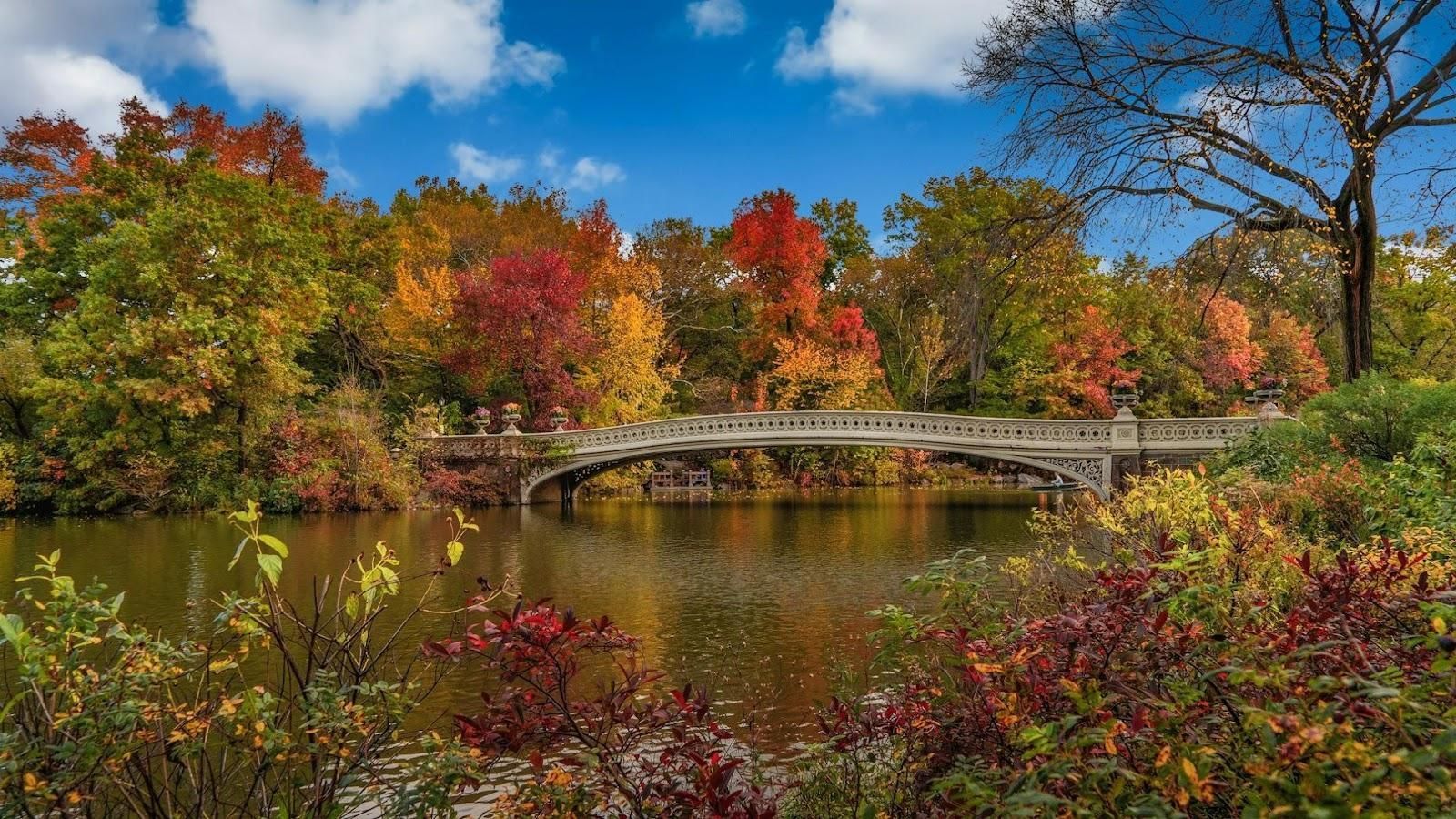
Image: Pierre Blaché

As light as lace yet forged from iron, Bow Bridge sweeps in a gentle curve across Central Park’s shimmering lake. Completed in 1862, it quickly became more than a passage—it turned into a stage for the city’s daily rhythms. Artists set up easels to capture its elegance, photographers frame it against the water, and couples linger at its railings, savoring the view. Street musicians often fill the air with music, while beyond the trees, New York’s skyline stretches high. Amid the steel and stone of the metropolis, Bow Bridge endures as a quiet piece of poetry shaped in metal.

12
Harbor Bridge, Corpus Christi, Texas
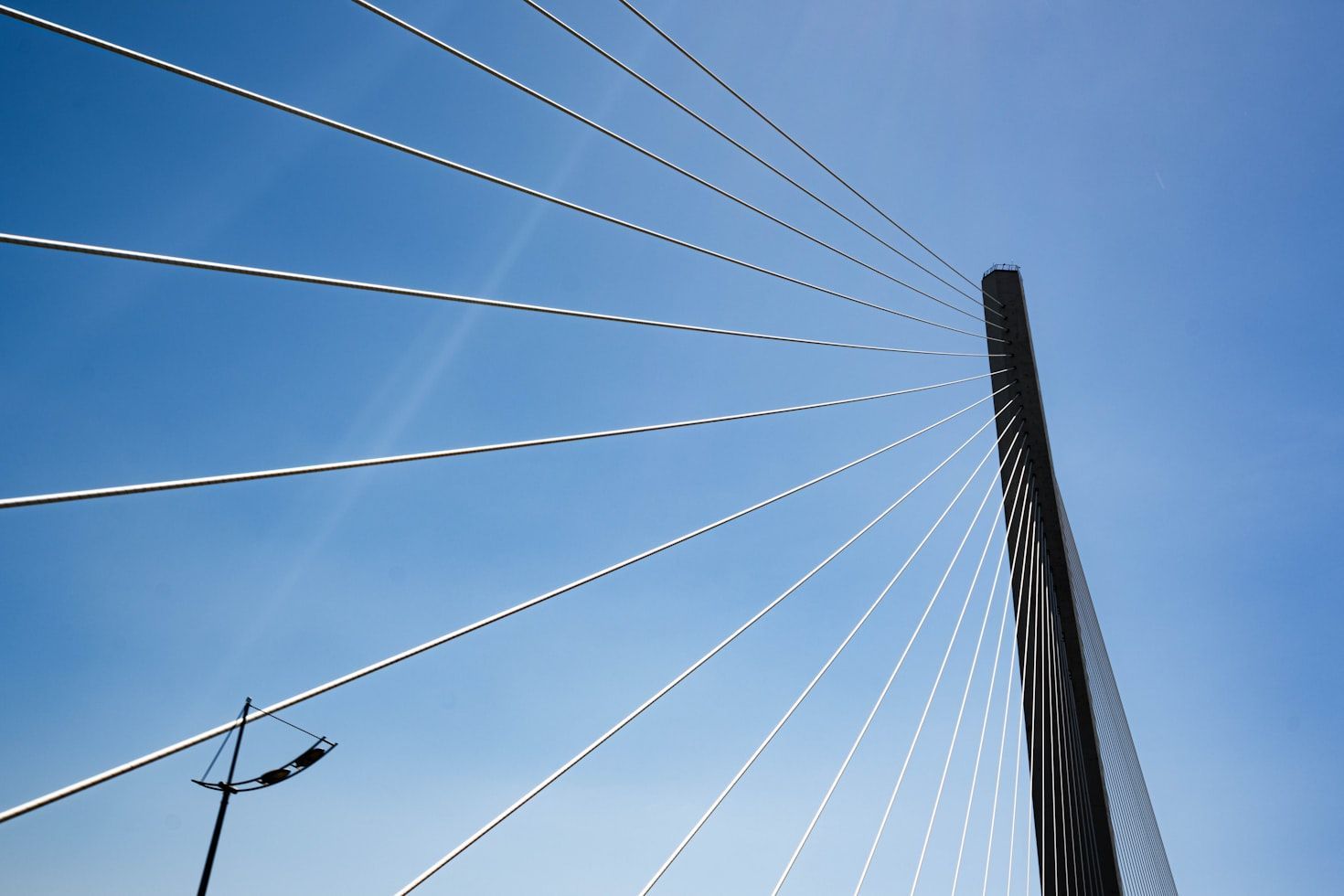
Image: Vladislav Osterman

You now know what the oldest bridge in America is, but what about the newest? Unveiled in 2025, the new Harbor Bridge in Texas was designed to last up to 170 years. Its sleek towers and graceful cables rise 205 feet above the water, high enough for massive cargo ships to glide underneath without pause. By day, it’s a marvel of modern engineering, but when night falls, it completely transforms. A sophisticated computer system of LED lights ripples across its frame, painting Corpus Christi’s shoreline in vivid colors. More than a crossing, it’s a staple of economic growth.

General General 4 min read

Wave them with pride

Honoring the states: learn about the history of 10 state flags

Image: Tina Chelidze

From the 13 colonies to the consolidation of the 50 states, America’s journey of growth and unity is remarkable. Each state is unique, with distinctive features, mottos, and, of course, flags. Each flag tells a story and honors the rich history and heritage of the state it represents. Among the 50 state flags, we’ve chosen 10 state flags to learn about their design, elements, and the history they represent.

1
New York

Image: Clker-Free-Vector-Images

New York was one of the 13 original colonies and is one of the most populated states today. Its flag, with a vibrant blue in the background, features a sun symbol, one supporter on each side, and the state’s inspiring motto "Excelsior," meaning "ever upward."

The scene in the coat of arms paints a picture of the Hudson River flanked by Liberty on the left, and Justice on the right. Topping it all off is a bald eagle, always majestic, perched atop the world. Powerful, isn’t it?

2
California

Image: Clker-Free-Vector-Images

California was the 31st state to be admitted to the Union (1850) and the history behind its flag has elements present in previous models of banners used by what we know today as Mexico.

This flag was first hoisted in 1846 after American settlers in the territory fought for its independence. Finally, it was recognized as official in 1911.

The flag depicts a grizzly bear —also the official state animal— and a lone red star symbolizing previous attempts to gain independence.

3
Indiana

Image: Clker-Free-Vector-Images

Indiana’s flag was designed by Paul Hadley and approved as the state flag in 1917 after the Daughters of the American Revolution held a flag design contest.

Over the dark blue flag stands a golden torch surrounded by 19 stars . The 13 stars on the outer circle represent the 13 original colonies, while the five stars in the inner circle were added to symbolize the next five states that joined the union, Indiana being the 19th.

The torch? You guessed it right, it represents liberty and enlightenment.

4
Louisiana

Image: Clker-Free-Vector-Images

Blue background abounds among the official state flags and it’s no surprise since it’s one of the national colors. Louisiana’s flag is not the exception.

This flag is the only one to depict a pelican nurturing its offspring in a nest. What is curious about it is that the pelican, an animal that symbolizes devotion to progeny, is crying tears of blood, which represents sacrifice. Underneath, belted in a white ribbon, the state’s motto: "Union, Justice, and Confidence".

5
New Jersey

Image: Clker-Free-Vector-Images

New Jersey’s flag is the only state flag to have a buff background , although it is wrongly depicted as yellow most times. This background color represents the uniform worn by soldiers from New Jersey’s regiments in the Revolutionary War.

In the center of the flag, there is a coat of arms supported by Liberty and the goddess Ceres, representing agriculture. Above the coat of arms, a horse’s head that stands for strength, and, below it, a helmet that symbolizes sovereignty.

6
Arkansas

Image: Clker-Free-Vector-Images

Arkansas’s flag depicts a complex symbolism using well-known elements: a diamond shape, with 25 stars on the outer part, the state’s name in the middle, one star above, and three stars below.

Arkansas was the 25th state to join the union, hence the stars around the diamond. The star over the word "Arkansas" represents the Confederacy to which it was admitted in 1861. The three stars below represent different things: the nations Arkansas belonged to, the Louisiana Purchase, and the fact that it was the third state formed after such purchase. A simple design, yet a complex meaning, don’t you think?

7
Colorado

Image: Clker-Free-Vector-Images

Colorado’s flag is quite simple in its design, although it represents many state elements . For example, the name, a Spanish word that means "red", is symbolized by the red C in the middle. But that’s not all, the letter C also means "columbine" the state flower, represented by the colors blue, yellow, and white. These two last colors also stand for the gold and silver present in the area.

Last, but not least, the letter C stands for "Centennial State" as Colorado became a state in 1876, when the nation was celebrating a century of its independence.

8
Washington

Image: Clker-Free-Vector-Images

Washington is the only state to have a flag with a green background. At the same time, it is the only one to depict a real person . George Washington’s picture is surrounded by a golden ring that reads "The Seal of the State of Washington 1889," the year in which the territory became a state.

The background color refers to the "Evergreen State" while the golden ring represents the wheat areas of the Eastern part of the state.

9
Wyoming

Image: Clker-Free-Vector-Images

This flag was also chosen during a flag design competition held in 1916. It consists of a dark blue background bordered by white and red and, in the center, the silhouette of a bison with the state seal that reads "Great Seal of the State of Wyoming."

Within the seal, the state motto "Equal rights," since Wyoming was the first state to grant women the right to vote. Below the ribbon, a farmer and a cowboy, the main occupations in the state, and two pillars that read "Livestock, mines, grain, oil." And that’s not all, at the bottom, a bald eagle and a star with the number 44, the order of admission to the union.

10
New Mexico

Image: Clker-Free-Vector-Images

Let’s finish this list with what may be the simplest flag of all the 50 states: New Mexico’s. With colors that symbolize the Spanish ruling over the territory, this state flag was adopted in 1925 and it consists of a yellow background with the Zia sun in the center.

The Zia sun is an ancient interpretation of the sun and its design consists of four rays, a sacred number of the Zia. Beautiful, isn’t it?

History History 4 min read

Olympic legacy

United States at the Olympics: Gold, Glory and Greatness

Image: Anna Shvets

Team USA has dominated the Olympics for over a century. Our athletes have racked up medals, broken records, and hosted the most events. From teen champions (do you know how old the youngest athlete was?) to historic gold medal sweeps, American athletes have made their mark. From swimmers to gymnasts to track stars, they have brought speed, skill, and power to the Olympic Games. We're here to explore some of the coolest records and achievements that make the US an Olympic powerhouse!

1
The US: The ultimate Olympic host

Image: Obed Hernández

If hosting the Olympics were a sport, the US would take home the gold medal, as America has welcomed the Games eight times —more than any other country.

The Summer Olympics have taken place in St. Louis (1904), Los Angeles (1932, 1984), and Atlanta (1996), while the Winter Olympics have been held in Lake Placid (1932, 1980), Squaw Valley (1960), and Salt Lake City (2002).

And that’s not the end—Los Angeles is gearing up for 2028, so it’s safe to say the torch never stays away for too long!

2
Winning more medals than anyone else

Image: Ethan Wilkinson

If there’s one thing Team USA knows how to do, it’s win medals—a lot of them. As of 2024, the US has claimed a staggering 2,765 Summer Olympic medals (including 1,105 golds) and 330 Winter Olympic medals . No other country even comes close.

Whether on the track, in the pool, or on the ice, American athletes have consistently outperformed the competition.

3
Dominating track, field, and the pool

Image: Austris Augusts

Certain sports just seem to bring out the best in American athletes . From Jesse Owens on the track to Katie Ledecky in the pool to Carl Lewis soaring through the air, American athletes have rewritten the record books time and time again.

In track and field, for example, the US holds the record for the most gold medals, with over 400.

When it comes to swimming, Team USA has made an even bigger splash, earning more than 570 total Olympic medals—the most in any single sport.

4
Michael Phelps: The GOAT of the Olympics

Image: Braden Egli

Speaking of rewriting the record books, we need to talk about Michael Phelps—the most decorated Olympian of all time.

With 28 medals (23 gold, 3 silver, 2 bronze) , the legendary swimmer dominated the pool across five Olympic Games. His eight gold medals at Beijing 2008 were a record-breaking feat, proving that when it comes to Olympic greatness, no one comes close. Phelps didn’t just set records—he shattered them, leaving behind a legacy that may never be topped.

5
Winter Games greatness: Apolo Ohno’s record run

Image: Filip

While the Summer Olympics have clearly brought in the most medals, the US has had its fair share of Winter Olympic heroes.

The most decorated of them all? Apolo Ohno , the short-track speed skating sensation. Ohno raced to eight Olympic medals, cementing his place as America’s greatest Winter Olympian. You simply had to watch him dodge crashes, make last-second moves, and celebrate with his signature goatee.

6
When the US brought home 83 golds in one year

Image: Viktor Forgacs

The 1984 Los Angeles Olympics marked a golden era for Team USA—and we mean that quite literally.

With the Soviet Union and several other countries boycotting the Games, American athletes dominated, winning 83 gold medals —the most ever at a single Summer Olympics.

7
The only time the US won just one gold

Image: Matthew Fournier

But it wasn’t always like that—there were times when the story went differently for Team USA. While 1984 was all about collecting golds, 1980 was a different story.

That year, Team USA won only one gold medal… but what a gold it was! The US men’s hockey team, made up of young college players, pulled off the famous "Miracle on Ice , " defeating the heavily favored Soviet team before going on to win gold. One gold medal? Sure. But it was one of the greatest moments in Olympic history.

8
A medal sweep like no other

Image: Mia de Jesus

The 1904 St. Louis Olympics were unlike any other—and not just because it was the first time the Games were held in the US.

Due to travel difficulties and a lack of international participation, Team USA won over 80% of all medals awarded . While it wasn’t exactly a fair fight, it still stands as the biggest medal sweep in Olympic history. Sometimes, just showing up is half the battle, you know?

9
Youngest US champion: A 13-year-old diving prodigy

Image: Austrian National Library

Most Olympic champions train for years before making their mark—but that wasn’t the case for Marjorie Gestring , who won a gold medal in diving at just 13 years and 268 days old at the 1936 Berlin Olympics. While most kids her age were just starting middle school, she was standing atop the Olympic podium. To this day, she remains the youngest US Olympic champion ever.

10
Simone Biles: The queen of US gymnastics

Image: Brian Wangenheim

When it comes to American gymnastics, Simone Biles is in a league of her own. With 11 Olympic medals (7 gold, 2 silver, 2 bronze), she is the most decorated US female gymnast in history.

Her powerful routines, gravity-defying skills, and unmatched mental toughness have made her an icon, inspiring future generations of gymnasts. Whether she’s flipping, twisting, or making history, Biles continues to raise the bar—literally.

Explore more American facts

Choose your favorite category!

General
General

As American as apple pie—the very best America has to offer!

Culture
Culture

Delve into the astounding richness of American lore.

Geography
Geography

Hop in and explore vast and diverse American landscapes.

History
History

Discover the key moments that shaped the United States.