History History 5 min read

Stages that made history

Were you there? 10 legendary music concerts held in the U.S.

Image: Johannes Havn

Some performances stay with us forever. Moments like Jimi Hendrix setting his guitar on fire, Prince playing Purple Rain in the pouring rain, or The Beatles being drowned out by the roaring crowd at Shea Stadium are etched in the minds of millions. Some people witnessed them live, while others saw them in documentaries or YouTube videos that continue to amass views decade after decade. Regardless of the medium, generations agree that these 10 performances are among the most unforgettable shows ever staged in the US.

1
The Beatle’s Shea Stadium Concert

Image: Fedor

The Beatles couldn’t hear themselves over the overwhelming roar of the crowd during their first U.S. performance. The concert that the band from Liverpool gave at Shea Stadium in the summer of 1965 made history. It drew 55,000 fans—the largest rock concert audience at the time—and marked the first time a rock band played in a large stadium.

This event set a new standard for live music performances, highlighting the need for stadium sound systems capable of supporting massive concerts—since the one used that day was rudimentary. Though the band arrived by helicopter, sparked a frenzy of Beatlemania hysteria, and delivered a performance that would be rewatched for decades, they played only 12 songs in just 30 minutes .

2
1985’s Live Aid

Image: Andreas Talseth

Did you know that Phil Collins insisted on performing at both the U.K. and U.S. venues on the same day for 1985’s Live Aid? He boarded a Concorde jet to fly from Wembley Stadium to JFK Stadium in Philadelphia, where the U.S. leg of the famine relief fundraiser for Ethiopia was taking place.

The event was broadcast in 150 countries and reached nearly 1.9 billion people. The U.S. stage of Live Aid raised over $125 million and set the standard for large-scale charity concerts, inspiring similar events in the years that followed. Madonna, Bob Dylan, Mick Jagger with Tina Turner, Duran Duran, and Eric Clapton were just a few of the stars who performed that day.

3
Bob Dylan at Newport Folk Festival

Image: Nikoloz Gachechiladze

The 1965 Newport Folk Festival will always be remembered as the day Bob Dylan "went electric." His decision was controversial—he had long been associated with folk and blues, and his unexpected leap into rock divided the audience, with some cheering and others booing. Some believe the booing was directed at the poor sound quality rather than his choice to go electric. Regardless, Dylan left the stage after just three songs .

This moment is seen as a pivotal merger of folk and rock music. Afterward, Dylan fully embraced rock, releasing albums that included his hit "Like a Rolling Stone."

4
Simon & Garfunkel’s Concert in Central Park
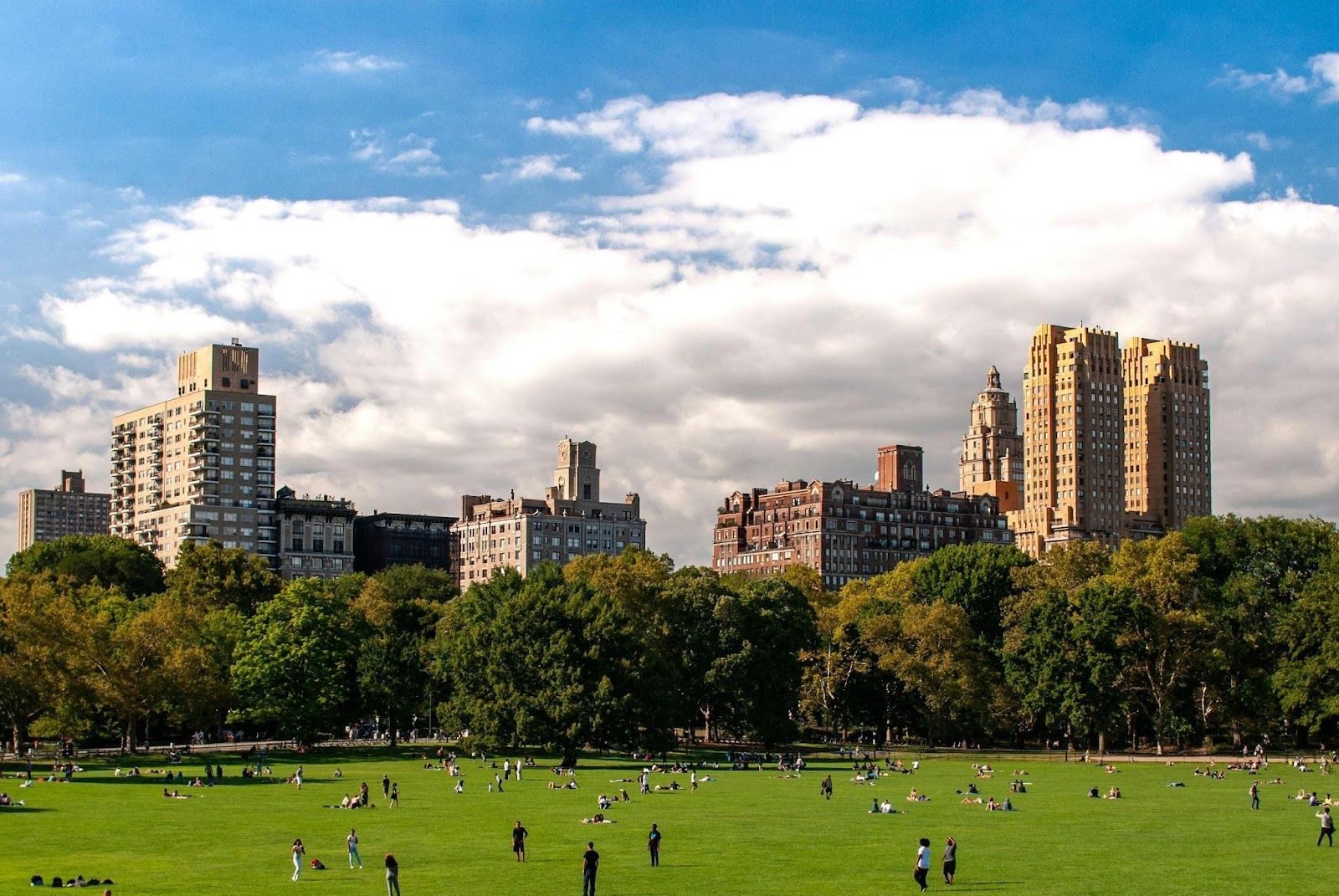
Image: David Vives

In September 1981, Simon & Garfunkel reunited at Central Park in New York for their first performance together in over a decade. The duo had publicly announced their breakup in 1970, after friction and disagreements that had forced them apart. Their immense popularity drew a crowd of half a million people to Central Park to witness the event.

The duo performed some of their biggest hits along with a few of Paul Simon’s solo songs. The concert was a benefit to raise funds for the park’s restoration. It was broadcast live, and the recording was later released as a live album . The event reignited their popularity and led to a successful reunion tour.

5
The Allman Brothers Band’s Fillmore East Concerts

Image: Pixabay

During the spring of 1971, The Allman Brothers Band performed for three nights at the Fillmore East in New York City. These performances were recorded and released as the live album At Fillmore East , which became one of the greatest live albums in rock history.

What made these recordings particularly compelling for fans was the inclusion of extended jam versions of songs like "Whipping Post," "You Don't Love Me," and "In Memory of Elizabeth Reed." The band’s improvisational skills and seamless fusion of blues, jazz, and rock made this weekend in New York a legendary and widely acclaimed performance.

6
Johnny Cash at Folsom Prison

Image: M Shiva

In 1968, Johnny Cash made a decision that would revive his career and solidify his image as both empathetic and rebellious. Following a decline in popularity and struggles with addiction, he arranged a performance for the inmates at California’s Folsom Prison, about which he had written the hit Folsom Prison Blues years earlier.

Cash had played in prisons before, but this time, he chose to record it. The resulting album captured the raw energy of his direct engagement with the audience. At Folsom Prison became a massive success, marking the first in a series of prison concerts that would go on to become some of his best-selling records .

7
The Last Waltz of The Band

Image: William Krause

The Last Waltz was billed as The Band’s farewell concert , designed as a celebration of their remarkable career. Filmed by Martin Scorsese, the event featured an all-star lineup of guest musicians, including Bob Dylan, Joni Mitchell, Van Morrison, Muddy Waters, and Ringo Starr—just to name a few.

Held in 1976 at San Francisco’s Winterland Ballroom, the concert was later released as a documentary film , becoming one of the greatest concert films of all time. With its chandeliers and grand ballroom atmosphere , The Last Waltz set a new standard for farewell concerts.

8
Prince’s Super Bowl Halftime Show

Image: Daniel Robert Dinu

Many will always remember when Prince performed "Purple Rain" in the pouring rain during the 2007 Super Bowl Halftime Show . Despite the adverse weather, he commanded the "P"-shaped stage at Miami’s Dolphin Stadium during the break in the game between the Colts and the Bears.

He opened with his anthem "Let's Go Crazy" and included covers of songs by Bob Dylan and Foo Fighters. Legend has it that before the show, Prince was asked if he was worried about performing in the rain. His alleged response? A playful, " Can you make it rain harder ?" He then stepped out and delivered one of the greatest halftime shows in history.

9
Jimi Hendrix at the Monterey Pop Festival

Image: mirkosajkov

Until the Monterey Pop Festival in 1967, Jimi Hendrix had yet to break through in the US. It was none other than Paul McCartney who convinced organizers that the festival would be incomplete without the rising star.

American audiences were introduced to Hendrix’s guitar wizardry at this concert, where he showcased his newly released album Are You Experienced. The moment that cemented him as a force to be reckoned with came during a dramatic rendition of "Wild Thing," when he set his guitar on fire before smashing it.

10
Woodstock Music and Art Fair

Image: PeterKraayvanger

Finally, we can’t overlook the legendary Woodstock Music and Art Fair, forever known simply as "Woodstock." Held on a dairy farm in Bethel, New York, the festival became a symbol of the 1960s counterculture . Nearly half a million people gathered for this three-day event, which was originally planned as a profit-making venture but turned into an open festival when the crowds became overwhelming.

The lineup featured many stars who became emblems of the era, including Jimi Hendrix, Janis Joplin, The Who, Santana, and Joe Cocker, among others. Despite its iconic status today, Woodstock faced challenges such as food and water shortages, heavy rain, and overwhelmed medical services. Although the festival initially resulted in a financial loss , the costs were eventually recovered through profits from the film and soundtrack releases.

General General 5 min read

BEHOLD OLD GLORY

History of the American flag: 10 fascinating facts you never knew

Image: Paul Weaver

A symbol of freedom, courage, and justice, the United States flag is one of the most iconic emblems in the world . No matter where it’s flying, everyone can recognize it from miles away. But it's not just a piece of fabric: its history, what its stripes, stars, and colors represent, is full of fascinating stories you should learn about. Read on to discover 10 fun and interesting facts about the American flag you probably didn’t know.

1
The American Flag has a special day

Image: Pramod Kotipalli

Every June 14 in the United States we celebrate Flag Day by hanging the flag outside our homes and participating in parades and other patriotic events. It was on this same day in 1777 that the Second Continental Congress officially adopted our flag as America's national symbol.

The first Flag Day was celebrated in 1877, 100 years after the Continental Congress. However, it was President Woodrow Wilson who finally issued a presidential proclamation establishing June 14 as Flag Day in 1916. A few years later, in 1949, President Harry Truman officially made it a national observance .

2
Colors have meaning

Image: Joshua Hoehne

Have you ever thought about why our flag is red, blue, and white? Yes, we’ve originally taken the colors from the British flag, and although they didn’t have a special meaning in the beginning, over time they took on new significance .

In 1782, Charles Thomson, Secretary of the Continental Congress, presented a proposed U.S. seal. He suggested that each of the colors of the American flag represented something different : white for purity and innocence, blue for perseverance and justice, and red for bravery and valor.

3
The first flag

Image: Gerard Avril

As the colonies seceded from Great Britain, it became necessary to have a flag to represent the patriotic cause. It is a popular belief that the first American flag was created in 1776 by a seamstress known as Betsy Ross at the request of George Washington, Robert Morris, and George Ross. However, there is no conclusive historical evidence to confirm this theory.

What is certain is that a year later, on June 14, 1777, Congress approved the first official flag composed of 13 red and white stripes representing the American colonies and 13 stars over a blue field symbolizing a constellation.

4
Twenty-seven versions

Image: Dan Parlante

Since that first 1777 version of 13 stripes and 13 stars, the flag of the United States has undergone numerous changes. In fact, over the years, there have been 27 versions of the American flag .

Each time a state was incorporated into the Union, a star was added to the flag. Of the 27 versions, some flew for only a short time, a clear sign of the nation’s rapid expansion. Our current flag has 50 stars representing the 50 states that make up the United States today, but to know the story behind this particular flag you’ll have to keep on reading.

5
Designed by a school student?

Image: Luke Michael

The history of great nations is also based on much-needed myths of origin. For many years it was believed that our current flag, one of the most recognizable symbols in the world, had come out of the creative mind of a teenager . According to this version, 17-year-old Robert G. Heft of Lancaster, Ohio had won a contest in 1958 for creating a new flag that represented the growth of the country.

However, this legend was refuted in 2022 by writer Alec Nevala-Lee. The truth is that the 50-star flag we use today was made official in 1960 with the addition of Alaska and Hawaii. The final design was selected by President Dwight D. Eisenhower from among 1500 contenders. At the time, credit for this design was given by the executive department to the United States Army Institute of Heraldry.

6
Our flag has a nickname

Image: Thomas Ashlock

Well, actually, it has a few. Over the years the American flag has received many monickers , including Stars and Stripes and Star-Spangled Banner . But perhaps the most known nickname for our red, white, and blue flag is Old Glory . This name derives from a flag owned by the 19th-century American sea captain William Driver who proudly flew it on his ship throughout his career.

According to historical reconstructions, this flag was sewn by Driver's mother and other women in 1824 and given to him as a gift when he was granted his own ship. It is believed that the Captain, before sailing to China and other places in Asia and the Pacific, uttered the following words, "Behold Old Glory." This flag was preserved and is now part of the collection of the Smithsonian Institution, and can be visited at the National Museum of American History.

7
Backward flag

Image: Jessica Radanavong

Did you know that the American flag must be displayed backward on military uniforms ? This tradition dates back to the early days of the Army. During the Civil War, both cavalry and infantry units had a bearer who was responsible for carrying the standard in combat. After launching an offensive, the impulse would cause the flag to be raised backward.

Since then, the Stars and Stripes have been placed in such a way that the section with the blue field stands on the right. This location makes it possible to create an effect as if the flag were waving before combat.

8
Say goodbye with dignity

Image: Anthony Garand

Although some may consider it disrespectful, the proper way to dispose of an American flag is to burn it . If the flag can no longer be washed or repaired, ceremonial burning is the correct and respectful way to discard a damaged flag.

It is believed to be illegal to set the flag on fire. As a matter of fact, according to the First Amendment to the United States Constitution, it is unconstitutional for any government to prohibit the cremation of a flag if it was made as a cultural or political statement, due to its status as "symbolic speech."

9
To the Moon and back

Image: NASA

The U.S. flag has flown everywhere the nation has conquered, even the Moon. Probably one of the most iconic images of the 20th century is that of astronaut Buzz Aldrin saluting the American flag during the Apollo 11 mission. It was quite an achievement: in order to get the flag to fly and stay upright in the airless lunar environment, NASA technicians had to design a special mechanism .

In the following three years, 5 other flags were planted on the Moon . But the flag left by Apollo 17 is the most special. It is a piece that had traveled on Apollo 11 and had returned to Earth. It was kept at Mission Control until it was time to return to the place it was destined for: the Moon.

10
Capitol Flag Program

Image: Adam Michael Szuscik

You probably didn't know this: you can own a flag that has flown over the Capitol . Amazing, right? The Capitol Flag Program began in 1937 and allows citizens to have access to an official flag through the offices of the members of the United States Senate and the House of Representatives.

Flags flown every day on Capitol Hill —except Thanksgiving Day, Christmas Day, and New Year's Day— receive a certificate of authenticity before they are delivered. There are currently about 100,000 orders for flags from members of Congress and the number is increasing each year. So now you know, if you want your official capitol flag just contact your local representative or senator!

History History 5 min read

EXPLORING OUR ICONS

Did you Know These 10 Facts about the Statue of Liberty?

Image: Gautam Krishnan

The Statue of Liberty, a symbol of freedom and democracy, has stood proudly in New York Harbor since 1885. This monumental statue was gifted by France to the United States and it is so much more than just an impressive landmark! It is a beacon of hope and an emblem of friendship between two nations.

Beyond its symbolic significance, the Statue of Liberty is steeped in fascinating history and intriguing details that many people might not know, like how long it took to arrive or what her real name is.

This article will explore ten interesting facts about the symbolism behind this iconic national figure so that you can deepen your appreciation for this significant Statue.

1
Her Real Name

Image: Gautam Krishnan

You might have always known it as the Statue of Liberty, and you wouldn’t be wrong. After all, that is, in fact, her name. However, that is not her only name.

Her official name is "La Liberté éclairant le monde", which is French for "Liberty Englightning the World."

The meaning is clear and it was a name given by its designers and builders. The nickname "Statue of Liberty" has become widely and universally popular, but the full title highlights the deeper meaning and global significance of this monument.

2
The Tallest Structure of America

Image: Annie Spratt

Back in 1886, after the statue was finally completed, it didn’t just become a symbol of democracy, it was an engineering marvel that claimed the title of tallest structure in the United States. Standing at an impressive 151 feet, 1 inch tall, Lady Liberty dominated the skyline.

If you’ve never been able to fully grasp how tall it is, imagine a 15-story building. Now, add the pedestal and you’ll get the towering presence it embodies in New York today.

How was this possible? Thanks to the innovative use of iron framework and copper sheathing and the brains of Frederic Auguste Bartholdi and Gustave Eiffel. Yes, you got the latter right, and here comes our third fact.

3
It was designed by Gustave Eiffel

Image: Dmitrii Eliuseev

The genius behind the Statue of Liberty is the same behind the Eiffel Tower, in Paris. Talk about a creative mind, huh?

Eiffel designed the statue’s "spine" , an internal framework that supports the entire structure. Inside the statue, four massive iron columns form the backbone, holding up the intricate metal frame that supports the thin copper skin. This innovative design not only provided the necessary stability for the statue but also allowed it to withstand strong winds and harsh weather conditions.

Naturally, Eiffel’s expertise in structural engineering was pivotal in bringing Lady Liberty to life, ensuring she would stand tall for centuries to come.

4
Red or Green? Actually, Both

Image: Oleg Chursin

When the Statue of Liberty was unveiled**, it wasn’t the green-blue color we know and love today**. Instead, it gleamed with a shiny reddish-brown hue, much like a newly American penny. Made entirely of copper, the statue initially dazzled spectators with its vibrant metallic sheen.

Then, over the course of the next two decades, Lady Liberty underwent a dramatic transformation. The Statue gradually turned green as the copper oxidized and formed a protective layer known as patina . Considering this is the natural weathering process of copper, this was hardly a surprise, but the visual change was nonetheless striking. The patina not only gives the statue its iconic color, it also works as a protective coat from further corrosion.

5
Motherly Inspiration

Image: Tory Bishop

The Statue, designed also by the French sculptor Auguste Bartholdi, carries a touching personal tribute within its grand design. Bartholdi modeled the face of Lady Liberty after his mother, Charlotte.

This heartfelt gesture essentially makes the Statue of Liberty one of the most monumental Mother’s Day gifts ever. By immortalizing his mother’s likeness in such an iconic figure, Bartholdi not only honored her but also ensured that her image would forever be associated with the ideals of freedom and hope. Can you top that?

6
One-way Ticket to America

Image: ALEJANDRO POHLENZ

We all know this American landmark was a gift from the French to the Americans, right? Now, the gift took over a year to get where it is today.

The Statue was completed and presented to the U.S. ambassador in France on July 4th, 1884. But it didn’t get to America until a year later, in 1885. It was then disassembled into 300 pieces, carefully packed into 214 crates, and shipped across the Atlantic Ocean to be put together again.

The voyage took a week longer than expected, and the vessel carrying the one-ton statue nearly sank during a fierce storm. Despite the challenges, Lady Liberty safely arrived in New York, where it was reassembled and unveiled to the public, marking the beginning of its iconic presence in American history.

7
The Lady’s Tablet

Image: Koushalya Karthikeyan

One of the most distinctive features of the Statue of Liberty is the tablet she holds in her left hand. This tablet is not just a symbolic object, it carries a significant inscription that connects the statue to the core of American history . Crafted from copper, the tablet bears the inscription "JULY IV MDCCLXXVI," the Roman version of July 4, 1776.

This is of course the date that marks the adoption of the American Declaration of Independence, so the inscription serves as a constant reminder of the nation’s fight for independence and the values of democracy.

Is there a reason this is a tablet? Yes, it symbolizes the lay and the founding principles.

8
Changes in the Torch

Image: Mateus Maia

The Statue of Liberty wasn’t only a symbolic figure, in the beginning, it also served a practical purpose: It was a lighthouse. This was its original intent. Off to a rocky start, and considering how new the electrical systems were, the lighthouse only became operational by the end of 1886.

Between 1886 and 1901, the torch would guide ships safely into New York Harbor. However, the lighthouse function was short-lived as it was deemed "useless for navigation purposes." Despite the noble intentions behind the initiative, control of the Lighthouse was given to the War Board, and, by 1902, the Lighthouse became extinguished.

Today, the torch is nothing less than a 24K gold flame standing tall and iconic.

9
Seven Spikes

Image: Erik Lindgren

Have you ever noticed the crown? Of course, you have, but have you ever considered that the seven spikes were intentional ? Not a single thing in the design of the Statue of Liberty was random.

These seven spikes have a profound meaning: they represent the seven seas in the world. Now, even if this was a gift to America for its independence, the Statue represents universal freedom. Therefore, the welcoming aura of the crown and the seven spikes stand for a global search for liberty, freedom, and equality.

10
One Step in the Path of Freedom

Image: A n v e s h

If you pay close attention to the Lady’s feet, you will notice that her right foot is raised. Now, if we could lift the dress just a tad, we would notice that she walks among broken shackles and chains.

This powerful imagery symbolizes the statue’s message of moving forward from oppression and toward freedom. The broken chains also represent the end of servitude, highlighting the statue’s role as a beacon of hope for those seeking a new beginning. She is not standing still, she is taking a step forward, always in a continuous journey. Quite a picture to welcome the visitors, right?

Explore more American facts

Choose your favorite category!

General
General

As American as apple pie—the very best America has to offer!

Culture
Culture

Delve into the astounding richness of American lore.

Geography
Geography

Hop in and explore vast and diverse American landscapes.

History
History

Discover the key moments that shaped the United States.



