History History 4 min read

Lands that were only dreams

Superior, Transylvania, Sequoyah, and other states that never were
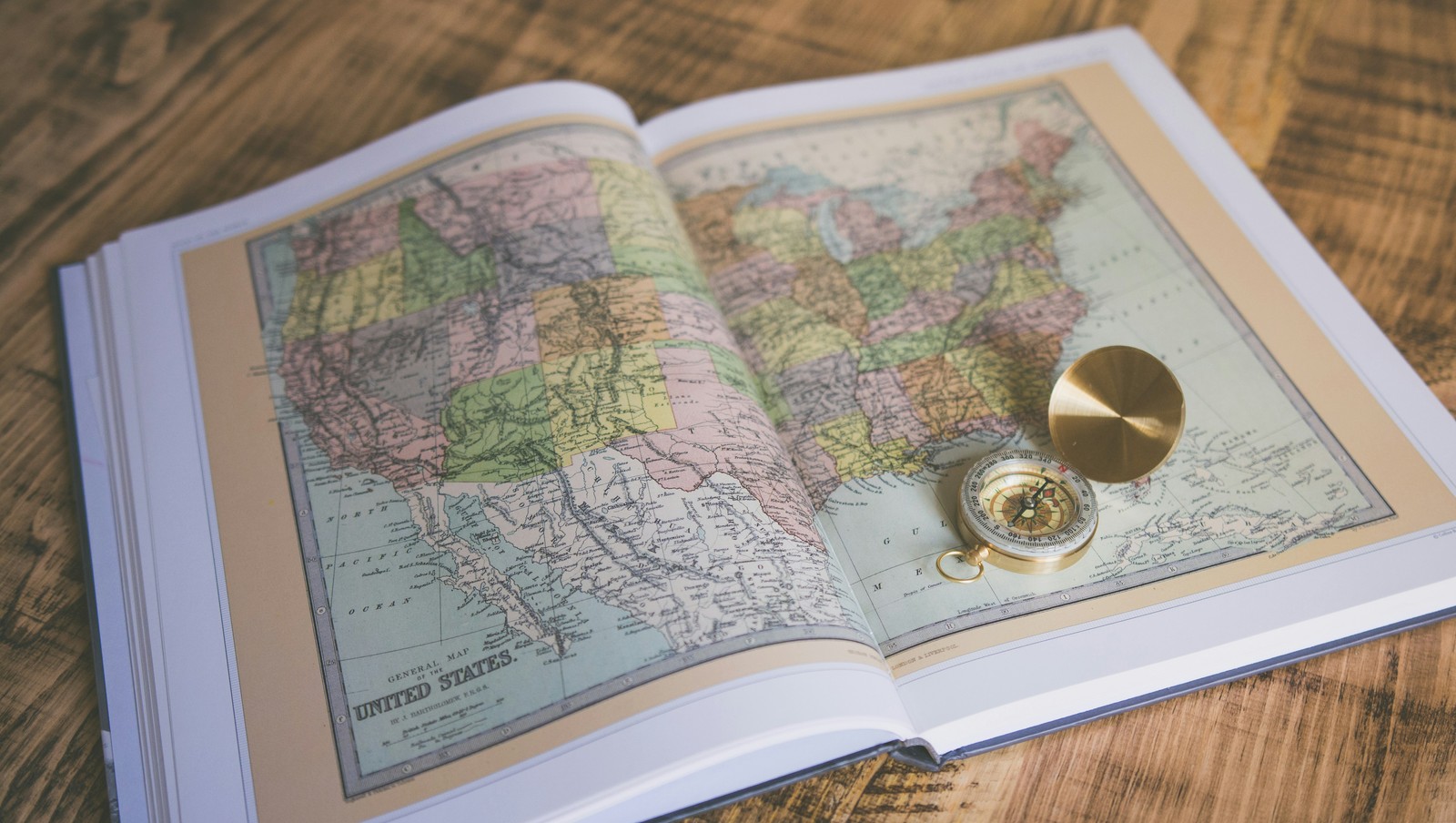
Image: Chris Lawton

The map of the United States could have looked very different—perhaps with around 70 states, each having its own capital and constitution. For example, have you ever heard of the proposed states of Franklin or Westsylvania? And can you guess where Superior was supposed to be located? Let’s dive into 13 states that almost—but never—found a place on the map.

1
Superior

Image: Brian Beckwith

As we know, Michigan is divided into the Upper and Lower Peninsulas. The discussion about whether the Upper Peninsula should become its own state dates back as far as 1858.

During the 19th and 20th centuries, residents of the region proposed creating the State of Superior , named after the Great Lake that defines the region. Although the movement never gained enough traction, some people still support the idea today, even though Superior would become the state with the smallest population.

2
Jefferson

Image: Kirk Thornton

Jefferson was a proposed state, much like Washington was before it became a state. Picture this: a state straddling Northern California and Southern Oregon, rich in timber and minerals. This was the vision for Jefferson , first proposed in the mid-19th century and revived in 1941.

Residents even declared a symbolic "secession" and distributed pamphlets proclaiming their independence. However, World War II shifted priorities , and the movement eventually fizzled out.

3
Deseret

Image: Wolfgang Hasselmann

Mormon settlers had big dreams in 1849—they proposed Deseret , a massive theocratic state . The name, meaning "honeybee" in the Book of Mormon , symbolized industry and cooperation. But Congress wasn’t exactly buzzing with enthusiasm.

Instead, Congress created the smaller Utah Territory , which at the time included present-day Utah as well as parts of Nevada, Colorado, and Wyoming.

4
Sequoyah

Image: Nina Luong

In 1905, Native American tribes in eastern Oklahoma proposed the State of Sequoyah , named after the Cherokee scholar who created the Cherokee syllabary .

It was a bold move to create a Native-majority state. However, Congress chose instead to merge the area with Oklahoma Territory to form the state of Oklahoma . The constitution drafted for the proposed State of Sequoyah went on to influence the final Constitution of Oklahoma.

5
Lincoln

Image: Clark Van Der Beken

The proposed State of Lincoln had multiple identities. One version placed it in eastern Washington and northern Idaho. Although the name was intended to honor Abraham Lincoln, other names, such as Columbia and Eastern (East) Washington , were also considered.

Another proposal envisioned Lincoln in southern Texas. This version reportedly had a prepared constitution and a distinctive red flag featuring Lincoln’s face inside a yellow circle.

6
East and West Jersey

Image: Nick Fewings

Can you imagine two New Jerseys? Back in 1674, when the area was still a British province, New Jersey was divided into East Jersey and West Jersey , each with its own government and constitution.

But the separation lasted only 28 years . The territories were rejoined in 1702, and the first New Jersey state constitution wasn’t adopted until 1776, following independence from Britain.

7
Franklin

Image: Dan Mall

The State of Franklin was another plan, except this one worked, for a while. In 1784, settlers in eastern Tennessee had had enough with what they saw as North Carolina’s neglect. They declared independence and formed the State of Franklin , named after Benjamin Franklin, of course.

For four years, Franklin operated as a de facto state , complete with its own constitution and government. However, Congress refused to recognize it, and by 1788, the State of Franklin ceased to exist.

8
Transylvania

Image: Julia Volk

Transylvania (from the Latin for "beyond the woods" ) is more than just a remote land of vampire legends—it was also nearly the name of a short-lived American colony in what is now mostly Tennessee and parts of Kentucky.

In 1775, land speculator Richard Henderson struck a deal with the Cherokee to create the Colony of Transylvania , in parts of Kentucky, Tennessee, and Virginia. But Virginia and North Carolina declared the venture illegal. Still, the name lives on today in Transylvania University in Lexington, Kentucky.

9
Nickajack

Image: lauren barton

During the Civil War, Union sympathizers in northern Alabama, northern Georgia, and eastern Tennessee proposed the creation of the State of Nickajack . The name came from a Cherokee village, but the idea never gained much traction.

Today, the Nickajack Dam and Nickajack Lake reservoir mark areas that would have fallen within the boundaries of this proposed state.

10
Absaroka

Image: Mohan Nannapaneni

Have you ever heard of Absaroka ? During the Great Depression, residents of parts of Wyoming, South Dakota, and Montana proposed the creation of the State of Absaroka , named after the Crow Nation’s word for "children of the large-beaked bird."

The movement was largely a symbolic protest against federal neglect. Absaroka even had its own license plates and a self-declared "governor," but the state never came to fruition.

11
Westsylvania

Image: Isaac Wendland

Yet another -vania . In the late 18th century, settlers west of the Appalachian Mountains proposed the creation of the State of Westsylvania . Frustrated by neglect from eastern state governments—especially Virginia and Pennsylvania—they wanted a state of their own.

But like many other separatist efforts, the proposal was rejected by Congress and never became a reality.

12
Madison

Image: Library of Congress

Another president nearly had a state named after him—but didn’t. The name of the fourth U.S. president, James Madison, was once proposed for the area that is now part of the Dakotas.

In the late 19th century, residents of what is now southwestern North Dakota proposed the creation of the State of Madison . However, the idea faced a major hurdle: Congress was already considering dividing the Dakota Territory into two separate states. In 1889, North and South Dakota were admitted to the Union, and the Madison proposal was quietly shelved.

Geography Geography 4 min read

Try not to laugh!

Why? No name? You won’t believe these US towns are called that!

Image: Jeremy Adams

America is home to some truly unique town names… You know, some are charming, some are also confusing , but then again, some make you wonder what exactly the founders were thinking. For example, is Unalaska trying to fly solo? Whether inspired by accidents, geography, or a bit of a je-ne-sais-quoi , these towns prove that creativity knows no bounds. Try to pick a favorite!

1
Unalaska, Alaska

Image: Hari Nandakumar

Despite what the name suggests, Unalaska is not trying to break away from the rest of the state. The town’s name comes from Agunalaksh , the original name given by the Unangan people. Over time, spelling and pronunciation changes led to the simplified version: Unalaska.

In the late 1800s, the US Board on Geographic Names made it official, but don’t worry, it’s just the name; the beauty is certainly Alaskan!

2
Why, Arizona

Image: Kaileen Fitzpatrick

If you’ve ever asked yourself "Why?", you might be thinking too hard. This Arizona town got its name because of a simple road design: State Routes 85 and 86 originally met in a Y-shape.

When it was time to name the community, the locals wanted to call it Y (yes, you read that right), but Arizona law required town names to have at least three letters. So, they got creative and went with Why. Why, right?

3
No Name, Colorado

Image: Rich Martello

What do you call a town when you just can’t decide on a name? Apparently, (and logically, if we might say so), No Name. The story goes that when developers were working on Interstate 70, they left the town’s exit sign blank.

A transportation official later labeled it "No Name", and the locals decided to go with it . State officials tried to rename the area, but the people weren’t having it. They simply loved it!

4
Burnt Store, Florida

Image: Done By Alex

The name Burnt Store sounds like something out of a Wild West showdown, and the real story (or the legend, actually) isn’t too far off, you know?

Legend has it that in 1849, a trading post on the Peace River was burned to the ground after an attack. The store’s manager, George Payne, had dealings with the Seminole Indians before he was killed in an ambush. Shortly after, the store itself was destroyed. The tragic event left a permanent mark on the town’s history and its name.

5
Santa Claus, Indiana

Image: Ryan De Hamer

Originally called Santa Fe, this town located in Indiana had to change its name when officials discovered another Santa Fe already existed in the state.

People saw this as an opportunity, and instead of picking something new and extraordinary, they went all in on holiday spirit and became Santa Claus in 1856.

The town fully embraces its Christmas identity; it has attractions like Holiday World, Lake Rudolph Campground, and Frosty’s Fun Center. If you love the holidays, this is the place to be!

6
Bald Head, Maine

Image: Michael Denning

If you’re expecting a town full of shiny, bald-headed guys, well, you might be disappointed. Bald Head, Maine, actually gets its name from a nearby cliff called Bald Head Cliff .

Now, we all want to know the same: Does it look like a bald head? Sorry to disappoint, but not really. Still, the name has stuck, and the scenic beauty of the area more than makes up for any confusion. Just don’t show up expecting a bald head convention!

7
Accident, Maryland

Image: Colin Lloyd

Accident, Maryland, owes its name to an actual accident… Well, kind of. In the 1700s, two land surveyors both accidentally claimed the same piece of land without realizing it . One of them, William Deakins, Jr., later allowed the other, Brooke Beall, to keep it. Rather than rename the town, the name Accident stuck. Talk about a happy accident… And generosity!

8
Whynot, North Carolina

Image: Brendan Steeves

Similar to Why, Arizona, this North Carolina town also came about after a naming debate that got a little too long.

Legend has it that settlers were arguing over what to call their new town when one exasperated resident finally said, "Why not just name it Whynot and go home?" And just like that, Whynot was born.

9
Boring, Oregon

Image: everett mcintire

Yes, we get it. The first thing that comes to mind is "Why would you name your town this?" But despite what the name suggests, Boring, Oregon, isn’t actually boring . If you need some proof, just ask the locals!

Named after William Harrison Boring, one of its early settlers, the town became a hub for the timber industry. To make things even funnier, Boring has international "sister city" partnerships with Dull, Scotland, and Bland, Australia. If you ever visit, you’ll find that Boring is anything but!

10
Mosquitoville, Vermont

Image: Peter James Eisenhaure

If you were reluctant to visit Boring, imagine visiting Mosquitoville! The name alone makes us want to grab a can of bug spray!

Mosquitoville is actually a small community in Barnet, Vermont, and while we can’t confirm just how many mosquitoes live there, the name doesn’t sound very promising. You’ll just have to go one summer and find out! Only if you dare!

History History 5 min read

FORGING OF A NATION

10 Key Moments in the Fight for American Independence

Image: John Trumbull

A pivotal period in our history, the American Revolutionary War saw the original thirteen colonies break free from British rule and establish an independent nation. This era was crucial not only for the struggle that liberated the country from colonial rule but also because it was when the nation and its ideals were conceived and envisioned. Here are 10 key moments that defined the American Revolution, shedding light on our forefathers' immense bravery and genius.

1
No Taxation Without Representation

Image: Board of Stamps

After the French and Indian War in 1763, American colonists were surprised to find that, instead of being rewarded for their efforts, the British Parliament raised their taxes and enacted new ones, such as the Stamp Act and Townshend Acts. Soon, these burdensome laws sparked widespread protests and boycotts under the rallying cry of "No Taxation Without Representation."

Initially, most colonists only wanted to be recognized as rightful British citizens. However, the brutal reaction of the Crown—sending troops to contain the unrest and force compliance—convinced many that independence was the only way to achieve their rights. The tragic incident known as the Boston Massacre on March 5, 1770, was the tipping point in this chain of events, inflaming anti-British sentiment.

2
Boston Tea Party

Image: W.D. Cooper

The Tea Act, enacted on May 10, 1773, granted the British East India Company a monopoly on tea sales in the colonies, further enraging the already weary colonists. This led a group of rebel colonists, known as the Sons of Liberty, to take matters into their own hands. In direct response to the Tea Act, they boarded British ships and dumped 342 chests of tea into Boston Harbor, worth £9,659 (equivalent to $1,700,000 today).

This act of defiance, later known as the Boston Tea Party , was a bold statement against British taxation and control. However, it also prompted the British government to further restrict colonial autonomy by implementing the Intolerable Acts (also known as the Coercive Acts).

3
The Midnight Ride

Image: National Archives and Records Administration

The British government's punitive measures only fueled the burgeoning revolutionary movement. In 1774, the First Continental Congress was convened, with representatives from each colony attending. During these meetings, the delegates agreed to coordinate militia training and resistance.

The situation remained tense for a year until King George ordered British troops to seize the rebels' weapons and arrest their leaders. However, the colonial militia was warned of the approaching British forces the night before, thanks to the heroic midnight ride of Paul Revere and other patriots. Their ride was crucial in mobilizing the Minutemen and ensuring they were prepared for the British assault.

4
Shot Heard 'Round the World

Image: William Barnes Wollen

The first shots of the American Revolutionary War were fired on April 19, 1775, in Massachusetts. British troops aimed to seize colonial arms, but the Minutemen refused to comply and confronted them, leading to a series of skirmishes known as the Battles of Lexington and Concord. These clashes demonstrated the colonies' determination to fight for their rights and ignited an all-out war.

The first significant military encounter of the American Revolutionary War, it resulted in a resounding American victory that encouraged other colonists to support and join the revolutionary efforts. Due to its significance and lasting consequences, the event was later referred to as the "shot heard round the world," a phrase that stems from the first stanza of Ralph Waldo Emerson’s 1837 commemorative poem.

5
Raising the Banner

Image: Winthrop Chandler

The Battle of Bunker Hill, fought on June 17, 1775, proved that the colonists could stand up to the British army. As Loyalist forces sought to capture the strategically important hills surrounding the besieged city of Boston, Patriot Colonel William Prescott directed his troops to occupy these positions in advance.

Though the battle was technically a British victory, the colonial forces inflicted heavy casualties on the British—approximately 1,000 British soldiers compared to around 500 American casualties. This showed the Crown that quelling the fight for independence would be a long and costly campaign, while simultaneously boosting American morale and convincing many that victory was within reach.

6
A Declaration of Independence

Image: John Trumbull

Emboldened by their success, on July 4, 1776, the Continental Congress—at the time the de facto unified colonial government representing each of the former colonies—adopted the Declaration of Independence .

Drafted primarily by Thomas Jefferson, the document declared the colonies' separation from Britain and articulated a vision of liberty and democracy , rejecting monarchy and aristocracy. It was a bold assertion of the colonies' right to self-governance, inspiring similar revolutionary movements around the world and influencing future generations.

7
Crossing the Delaware

Image: Emanuel Leutze

On Christmas night of 1776, General Washington led a daring and successful surprise attack across the icy Delaware River. This bold maneuver demonstrated both Washington's genius and leadership, as well as the Continental Army's resolve to defeat the British forces at any cost.

The subsequent victory at the Battle of Trenton significantly boosted morale and reinvigorated the revolutionary cause across the continent. Despite the British having considerable advantages, including a highly trained and battle-tested army, they systematically underestimated the revolutionaries, believing them to be merely a group of renegades whose defeat would restore loyalist allegiance to the Crown.

8
Turning the Tide

Image: John Trumbull

The American victory at the Battle of Saratoga in late 1777 marked a turning point in the war. Not only did American forces manage to capture a large British invasion army and halt the British advance in the north, but the triumph also resonated across Europe.

When news of General Burgoyne's surrender reached France, it convinced King Louis XVI to join the conflict as an ally to the Americans, providing much-needed military support and resources. This alliance significantly bolstered the American cause and forced the British to view the war as part of a larger global campaign, further straining their already depleted resources.

9
The French Connection

Image: Eugène Delacroix

The Siege of Yorktown in 1781 was the last major land battle of the Revolutionary War. American and French forces, led by General Washington and General Rochambeau, successfully trapped British General Cornwallis's army.

The Franco-American alliance proved decisive, compelling Cornwallis to surrender and prompting the British government to negotiate an end to the increasingly costly conflict. This effectively ended major combat operations and marked the beginning of the end for British rule in America.

10
Negotiating Peace

Image: John D. Morris & Co. after Wilhelm Anton Seiler

The Treaty of Paris , signed on September 3, 1783, officially ended the Revolutionary War. Negotiated by American diplomats Benjamin Franklin, John Adams, and John Jay, it recognized American independence and established borders for the new nation. The treaty delineated the boundaries between British North America, later known as Canada, and the nascent United States.

Although British efforts to undermine the American colonies persisted for decades, eventually leading to the War of 1812, the treaty granted legitimacy to the revolutionaries' efforts on the world stage and marked the beginning of a new era.

Explore more American facts

Choose your favorite category!

General
General

As American as apple pie—the very best America has to offer!

Culture
Culture

Delve into the astounding richness of American lore.

Geography
Geography

Hop in and explore vast and diverse American landscapes.

History
History

Discover the key moments that shaped the United States.