Culture Culture 5 min read

Music legends

Rock all night with these 10 American rockstars!

Image: Kenny Eliason

Rock music is considered by many to be the most groundbreaking genre of the 21st century. It has spawned countless iconic songs, and almost 80 years since its inception, it shows no sign of slowing down. In that sense, America has produced its fair share of iconic rockstars throughout the decades. These revolutionary musicians have helped shape the music of their time, so we decided to pay homage to 10 of the most innovative and influential American rockstars in history. With that in mind, there’s only one question left to ask: Are you ready to rock?!

1
Chuck Berry

Image: Provincial Archives of Alberta

Let’s begin with the man known as the "Father of Rock and Roll." To label Chuck Berry as a pioneer would definitively misrepresent the legacy of this amazing musician; Berry was almost solely responsible for introducing the key elements that would eventually define rock music.

Songs like "Maybellene," "Roll Over Beethoven," and "Johnny B. Goode" influenced countless musicians through the ages. Legendary artists like the Beatles and the Rolling Stones famously covered some of his songs, while Bob Dylan once defined Berry as "the Shakespeare of Rock n’ Roll."

2
Bruce Springsteen

Image: Jose Antonio Gallego Vázquez

Up next, we have a boss that anyone would love to have in their office. Bruce Springsteen is undoubtedly one of New Jersey’s favorite sons. Known as "The Boss," Springsteen has dazzled the American public since his first album in 1973, earning a myriad of awards and recognitions in the process, including the Presidential Medal of Freedom.

Known for his insane charisma and distinctive voice, Springsteen has performed with his iconic "E Street" band since 1972. Rolling Stone magazine has described him as "the embodiment of rock and roll" and included him in its list of "100 Greatest Artists of All Time."

3
Jimi Hendrix

Image: Aditya Wardhana

Can the ‘60s be summarized by one musician? Many believe they can even summarized by one performance: Jimi Hendrix’s jaw-dropping rendition of the "Star-Spangled Banner" at Woodstock. In a way, this legendary guitarist embodies the innovation and freedom that characterize this era, but make no mistake: Hendrix’s contributions to rock and roll can’t be limited to a single decade. Suffice it to say that the Rock and Roll Hall of Fame considers him to be "arguably the greatest instrumentalist in the history of rock music."

Born in Seattle, Hendrix showed interest in music from an early age. He bought his first guitar at age 15 and practiced daily, imitating the styles of blues musicians like B.B. King and Howlin’ Wolf. While he sadly passed away at age 27, his legacy continues to live on in every single one of his amazing songs.

4
Elvis Presley

Image: Clem Onojeghuo

Chuck Berry might have been the "Father of Rock and Roll," but Elvis Presley was this genre’s undisputed "King." This musician’s legacy is as timeless and eternal as his songs are, earning him a well-deserved spot among America’s most beloved pop culture icons. Just think of all the countless Elvis impersonators around the world to realize how iconic Elvis’s music and style were.

Elvis received his first guitar at the age of 7. Little did anyone know that this birthday gift would be the first step in a meteoric musical career. From his amazing dance moves to his unbelievable charisma, Elvis will forever be remembered as an American icon.

5
Tom Petty

Image: Samuel Ramos

In the 1980s, when Tom Petty joined the musical supergroup "The Traveling Wilburys," he stood shoulder to shoulder with juggernauts like Bob Dylan, George Harrison, and Roy Orbison. While Petty was relatively a newcomer when he joined what many believe to be the biggest supergroup in history, time would prove that he had what it takes to become one of the most memorable rock stars in history.

According to the man himself, Petty’s love for rock 'n' roll first started when he met Elvis Presley at age 10. This love for music would eventually lead him to form his most iconic band, "Tom Petty and the Heartbreakers," with which he performed for almost 40 years.

6
Jon Bon Jovi

Image: Simon Weisser

It takes talent to make your last name synonymous with rock 'n' roll, but John Francis Bongiovi Jr., better known as Jon Bon Jovi , was able to turn his last name into the name of one of the most groundbreaking bands of the ‘80s.

Born in Perth Amboy, New Jersey, Jon formed Bon Jovi when he was still in his teens, quickly rising to fame and becoming an undisputed rock star. While he is still very much active in music, he has also built a very successful acting career, appearing in TV shows like Sex and the City and The West Wing .

7
Jim Morrison

Image: Markus Spiske

Take it to the world of rock 'n' roll to produce a nickname like "the Lizard King" to describe one of the most emblematic vocalists of the '70s. Regardless of whether there was someone who could pull off such a strange nickname, it was Jim Morrison . In fact, this singer chose the nickname himself, as it perfectly described both his fascination with reptiles and Native American culture.

Morrison’s deep voice and magnetic persona were among the main reasons behind The Doors' rise to prominence, quickly making them the first American band to achieve eight consecutive Gold LPs. While his life was unfortunately cut short at the age of 27, his songs, poetry, and journals will forever celebrate the Lizard King’s legacy.

8
Prince

Image: DJ Johnson

Prince's first live band was called "The Revolution," and we believe that this is one of the most aptly named bands in history. After all, this Minneapolis-born musician brought forward a revolutionary and fresh take on music, fashion, and art in general. Known for his amazing falsetto voice and flamboyant persona, Prince is considered to this day one of the very best musicians in history.

You would think that such a flashy and daring musician would take a more ostentatious stage name, but Prince Rogers Nelson performed under his first name throughout his entire career. Actually, that’s not entirely true: while in the midst of a contractual dispute, he performed as " The Artist Formerly Known as Prince " for approximately a decade.

9
Steven Tyler

Image: Matt Botsford

Steven Tyler might have the nickname that every rock singer probably covets: known as "the Demon of Screamin’," Aerosmith’s frontman is recognized for his powerful voice and vast vocal range.

Tyler has been at the helm of Aerosmith since its beginning in Boston in the early ‘70s, producing such hits as "Dream On" and "Walk This Way." While the band is currently on hiatus due to Steven injuring his vocal cords, Aerosmith still hopes to return to performing soon.

10
Kurt Cobain

Image: Panos Sakalakis

The '90s introduced the world to a new take on rock music: for many, grunge was the quintessential sound of this decade, characterized by its raw and angry tone. In that sense, there’s no band that represents the '90s better than Nirvana, and this legacy is in no small part due to Kurt Cobain.

Known for his scruffy yet powerful voice, Cobain led this iconic trio since its inception in 1987. While his untimely death deprived the world of his incredible talent, his legacy still lives on in amazing songs like "Smells like Teen Spirit" and "Come as You Are."

General General 3 min read

True pioneers

From the incandescent lightbulb to Mickey Mouse: 12 world-changers

Image: Júnior Ferreira

America has had its fair share of trailblazers, empire builders, inventors, artists, and many other brilliant individuals who have changed the world in various ways. Take a look at the following 12 individuals who have achieved significant milestones from backgrounds as diverse as the human race itself. Which one inspires you the most?

1
George Washington

Image: Priscilla Gyamfi

The first name on the list belongs to the Father of Our Nation and first president. As commander of the colonial troops during the Revolutionary War, Washington led the struggle against Great Britain with intelligent military strategy and unwavering leadership.

Quite possibly, his greatest contribution lies in his refusal to become a king or dictator , instead choosing to lay the foundations of a democratic republic.

2
Martin Luther King Jr.

Image: Unseen Histories

This icon of the civil rights movement used nonviolent resistance to combat racial discrimination. Through peaceful protest strategies , King led demonstrations, boycotts, and marches that helped transform the social landscape of America.

His "I Have a Dream" speech in 1963 in Washington, D.C. became a huge milestone in the struggle for equality and an inspiration for millions all over the world.

3
Franklin D. Roosevelt

Image: Jessica Tan

A steady guide through challenging times, Franklin D. Roosevelt led the nation through the Great Depression and World War II. Through his New Deal programs, he introduced revolutionary social and economic reforms, including the creation of social safety nets like Social Security.

His leadership during World War II helped establish the United States as a global power committed to supporting democracy.

4
Susan B. Anthony

Image: Giacomo Ferroni

A relentless activist in the struggle for women’s suffrage , Susan B. Anthony organized campaigns, wrote extensively, and spoke passionately in support of gender equality. Although she did not live to see it passed, her efforts laid the groundwork for the 19th Amendment, which granted women the right to vote.

5
Thomas Edison

Image: Robert Wiedemann

Life as we know it would not be the same without his inventions. And, while the lightbulb would have been reason enough for him to be present on this list, Edison was responsible for numerous innovations—he held over 1,000 patents, including for the phonograph, motion picture camera, and electric power distribution systems—that helped change the course of history forever.

6
Margaret Mead

Image: Stephen Andrews

Margaret Mead’s pioneering work in psychology and anthropology helped develop the understanding that children learn through imitation , particularly by observing their parents and community.

In addition to her academic contributions, she was a vocal advocate for women’s rights and greater sexual openness, influencing the cultural shifts that led to the sexual revolution of the 1960s.

7
Henry Ford

Image: Dan Dennis

Thank him for the popularization of the automobile and the introduction of the 40-hour, five-day workweek . America would not be the same without Henry Ford and his revolutionary industrial ideas, which transformed manufacturing and daily life.

8
Betty Friedan

Image: Deniz Demirci

Women’s rights owe much to Betty Friedan, whose groundbreaking work challenged the limited roles assigned to women in mid-20th-century America . Her book The Feminine Mystique gave voice to the dissatisfaction of the American housewife and sparked a national conversation about the validity of traditional gender roles.

9
Andrew Carnegie

Image: Denis Chick

Largely considered as one of America’s greatest self-made men, Andrew Carnegie played a pivotal role in shaping the nation's industrial identity. His leadership in the steel industry helped propel the United States into a position of global economic dominance in the early 20th century.

10
Orville and Wilbur Wright

Image: History in HD

Transportation would never have been the same without Orville and Wilbur Wright, brothers from Ohio, who changed the world forever by inventing powered flight on the shores of Kitty Hawk, North Carolina.

11
Alexander Graham Bell

Image: Pavan Trikutam

That black rectangular device near you is the modern evolution of Alexander Graham Bell’s original invention, one that would change the way humans communicate in profoundly lasting ways.

12
Walt Disney

Image: Travis Gergen

Walt Disney’s influence on the childhoods of generations of Americans is undisputed. He forever changed the world of entertainment for both children and adults through his iconic characters and innovative theme parks, which now exist all over the world.

Geography Geography 4 min read

Discovering America

What's the easternmost point of the US? If you say Maine, think again!

Image: Jon Sailer

We’ve all picked up "facts" about the fifty states somewhere along the way, but not all of them hold up. Some are half-truths passed around for generations , others are just plain wrong. So, in an attempt to set the record straight once and for all, we’ve gathered some fun truths that clear up the biggest mix-ups about our states.

1
Arizona skips Daylight Saving Time

Image: Christoph von Gellhorn

This is partly true because most of the state doesn’t bother with Daylight Saving Time . They stopped changing the clocks back in 1967. The exception is the Navajo Nation, which stretches into Utah and New Mexico and keeps DST so all its communities stay on the same schedule. Now, as for the smaller Hopi reservation, inside the Navajo Nation, it sticks with Arizona time… Yes, quite confusing if you’re not a local.

2
Georgia isn’t really the Peach State

Image: Jessica Furtney

Georgia loves its peaches, sure, but the state’s top fruit money-maker is actually blueberries . In recent years, blueberries have brought in several times more cash for farmers than peaches. Meanwhile, California grows far more peaches than Georgia ever has. The nickname stuck from the old days when Georgia peaches were famous for their flavor, not their volume. So while the pride is real, the peaches aren’t quite the powerhouse people may think.

3
Nevada didn’t record the hottest US temperature

Image: tommao wang

You probably think of Nevada’s desert heat as unmatched, but the all-time record belongs to California’s Death Valley . In July 1913, it hit a mind-melting 134 degrees Fahrenheit, the hottest temperature not only in America but the hottest ever recorded on Earth!

4
Minnesota doesn’t have the most lakes

Image: Tom Conway

Minnesota proudly calls itself the "Land of 10,000 Lakes," but that’s selling itself short… The real number is closer to 12,000. However, Alaska wins this battle . The state has more than 3 million lakes over five acres in size. In fact, Alaska contains over 40 percent of the nation’s surface water. If you love fishing, kayaking, or just staring at a quiet stretch of water, the true lake capital of America is far up north.

5
Pineapples aren’t native to Hawaii

Image: Christian Joudrey

Pineapples are everywhere in Hawaiian imagery, but the plant actually comes from South America , mainly Paraguay and southern Brazil. Spanish explorers likely brought them to Hawaii in the 1500s after spreading them across the Pacific to places like the Philippines and Guam. Hawaii’s climate turned out to be perfect for growing them and by the 1900s, the islands were producing so many pineapples that the fruit became a symbol of Hawaii itself.

6
Maine isn’t the country’s easternmost point

Image: Chris Henry

If you’re a Geography geek, you’ll love this one. You might picture Maine’s rocky coast as the eastern tip of America, but the actual easternmost point is thousands of miles away, on Alaska’s Semisopochnoi Island in the Aleutians. How is that possible? Well, that’s because it crosses the 180th meridian, putting it in the Eastern Hemisphere. That means part of Alaska technically sits farther east than anywhere in Maine.

7
The biggest US earthquake didn’t happen in California

Image: Lala Miklós

California has suffered some big earthquakes in its history, but the most powerful earthquake in America struck Alaska in 1964 . It hit Prince William Sound with a magnitude of 9.2. It was so strong it shook the ground for four and a half minutes and triggered massive tsunamis. In today’s dollars, the damage would total more than $2 billion. Alaska sits on a collision zone of tectonic plates, making it one of the world’s most seismically active regions.

8
The Everglades isn’t America’s biggest swamp

Image: Joshua J. Cotten

A lot of people picture the Florida Everglades when they think of swamps, but technically, the Everglades isn’t a swamp at all. The real title of the largest swamp in the United States goes to Louisiana’s Atchafalaya Basin , which spans about 1.4 million acres. This swamp has a vast mix of cypress forests, bayous, and marshes, and it’s more than twice as productive as the Everglades when it comes to wildlife and plant life.

9
Big cities aren’t always capitals

Image: Mackenzie Cruz

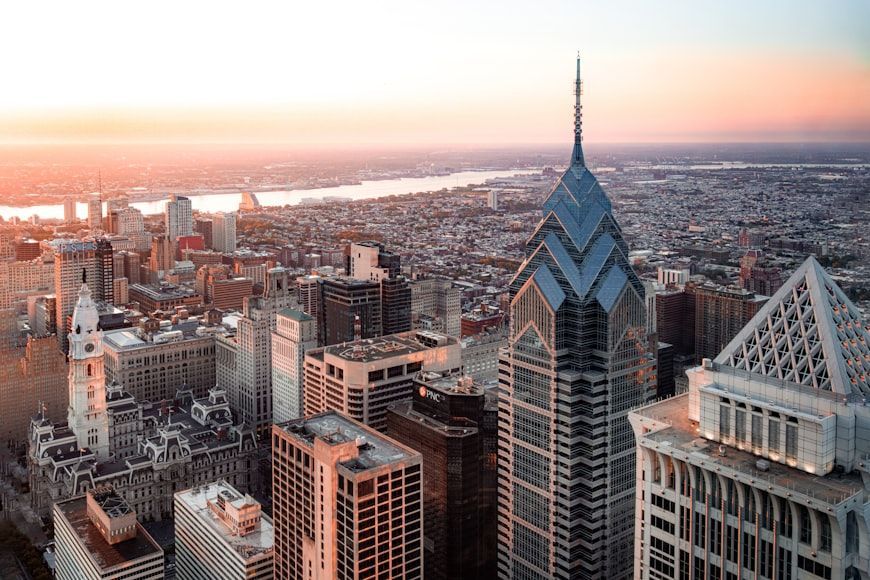
It surprises people how often the biggest city isn’t the state capital . New York City? Not the capital… Albany is. Chicago? Nope, that honor goes to Springfield. Pennsylvania’s capital isn’t Philly or Pittsburgh, it’s Harrisburg. Even California’s capital isn’t L.A. or San Francisco, it’s actually Sacramento. Out of fifty states, only seventeen have their most populous city as the capital.

10
Alaska isn’t divided into counties

Image: Rod Long

Alaska likes to do things its own way. Instead of counties, it’s split into boroughs , and a massive area known as the Unorganized Borough has no local government at all. People out there don’t pay property taxes, but that freedom comes with challenges, limited services, fewer job options, and tough living conditions.

Explore more American facts

Choose your favorite category!

General
General

As American as apple pie—the very best America has to offer!

Culture
Culture

Delve into the astounding richness of American lore.

Geography
Geography

Hop in and explore vast and diverse American landscapes.

History
History

Discover the key moments that shaped the United States.