History History 4 min read

The nation’s best friends

Punxsutawney Phil and other timeless animal celebrities
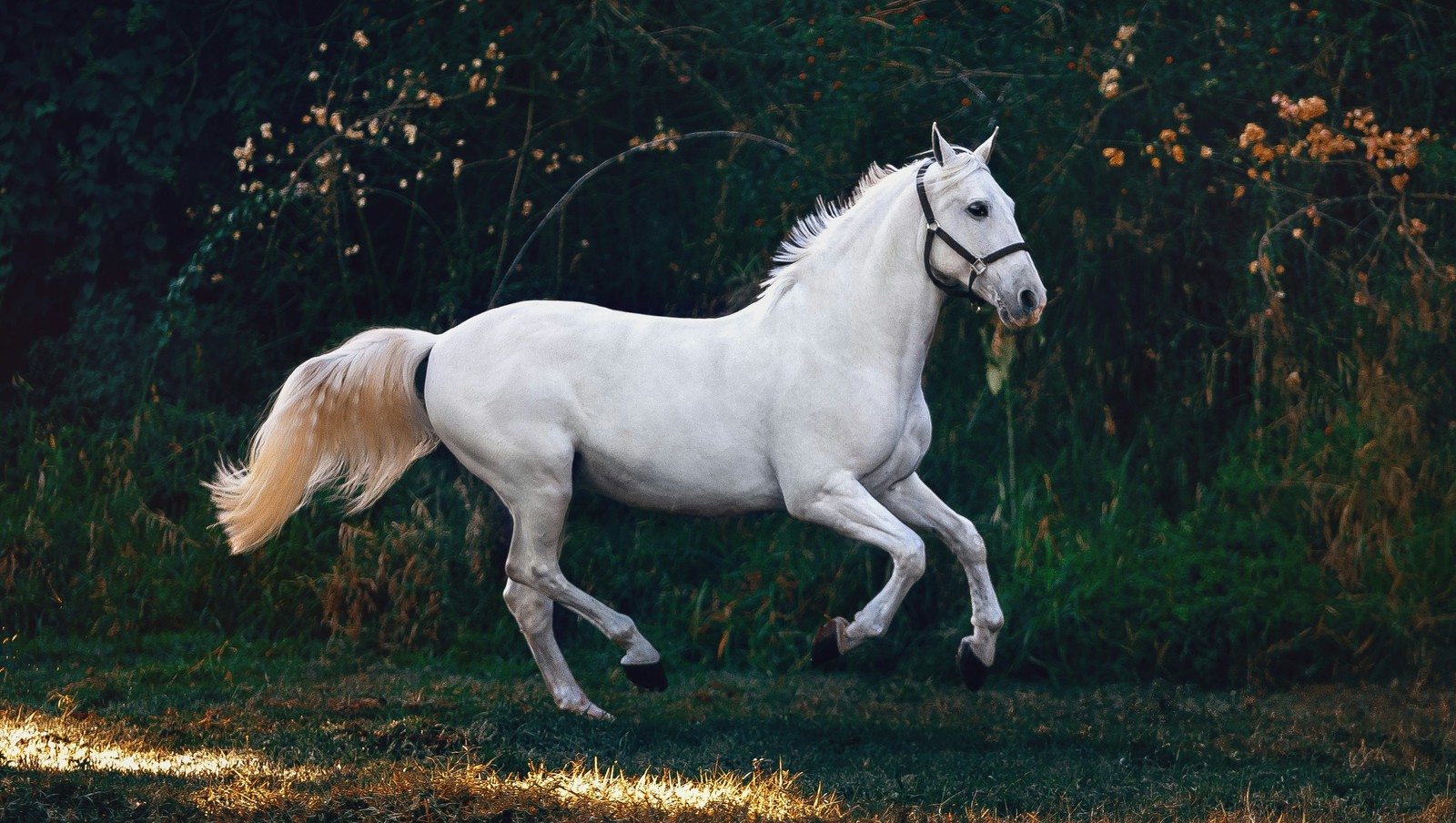
Image: Maja7777 / Olga Nayda

Who hasn’t heard of Balto the dog or the famous groundhog, Punxsutawney Phil? Some animals that lived in the U.S. truly ascended to celebrity status after their remarkable feats. Some were commemorated in monuments, paintings, or movies—but others live on only in our stories. Let’s talk about famous animals in American history !

1
Punxsutawney Phil

Image: Steve Wrzeszczynski

Every February 2nd, the eyes of the nation turn to a small town in western Pennsylvania. That’s where Punxsutawney Phil, a weather-predicting groundhog , is roused from his burrow on Gobbler’s Knob to look for his shadow.

According to tradition, if he sees it, we get six more weeks of winter; if not, spring is just around the corner. The quirky ritual began in 1887 and has since grown into a full-blown celebration.

2
Balto

Image: Meg von Haartman

In the winter of 1925, a deadly diphtheria outbreak threatened the remote town of Nome, Alaska. It was the sturdy Siberian Husky Balto who helped deliver the lifesaving antitoxin across snow and blizzard conditions to Nome.

Although dozens of dogs and mushers contributed to what became known as the Great Race of Mercy , Balto was hailed as a national hero. He even received his own statue in New York’s Central Park just a year later—a monument that still stands today, inscribed with the words: "Endurance, Fidelity, Intelligence."

3
Seaman (a.k.a. "Scannon")

Image: The New York Public Library

In 1803, explorer Meriwether Lewis purchased a Newfoundland dog for $20 and named him Seaman. The dog became a four-legged member of the famed Lewis and Clark Expedition .

He accompanied the Corps of Discovery as they crossed the North American continent, helping with hunting, standing guard, and even surviving a wound from a beaver attack.

The funny bit is that for a long time it was believed that William Clark’s journals referred to the dog as "Scannon," but it might have been a dizzy transcription of his handwriting.

4
Smoky the War Dog

Image: Simona Jašauskytė

Found in a foxhole in New Guinea during World War II, Smoky was a Yorkshire Terrier weighing just four pounds—but her size turned out to be her superpower .

She was trained by her rescuer, Corporal William Wynne, and famously ran communication wires through a narrow pipe beneath an airstrip in Luzon, Philippines.

After the war, Smoky became one of the first recorded therapy dogs, visiting wounded soldiers and performing tricks to lift their spirits. Today, she is honored with memorials in both the U.S. and Australia.

5
Sergeant Reckless

Image: Irina Nakonechnaya

During the Korean War, a small Mongolian mare purchased by U.S. Marines for $250 and nicknamed Reckless made multiple trips through enemy fire to deliver ammunition and evacuate wounded soldiers, sometimes entirely on her own.

For her bravery, she was promoted to Staff Sergeant , awarded two Purple Hearts, and allowed to eat scrambled eggs, Coca-Cola, and beer with the troops. Today, statues in Virginia and California honor her legacy.

6
Cher Ami

Image: William Chen

In the chaos of World War I, a pigeon named Cher Ami saved nearly 200 men from the "Lost Battalion" by flying a crucial message across enemy lines —despite being shot, blinded in one eye, and wounded in her leg during the flight.

Her message arrived, artillery fire was redirected, and the soldiers were rescued. For her bravery, Cher Ami was awarded the French Croix de Guerre and was later taxidermied after her death. You can still visit her at the Smithsonian National Museum of American History.

7
Old Bob

Image: Philippe Oursel

Abraham Lincoln’s beloved driving horse , Old Bob, was a familiar sight in Springfield, Illinois, often seen trotting through town pulling the future president’s buggy.

But his most memorable appearance came in 1865, when he walked riderless and draped in a mourning blanket during Lincoln’s funeral procession. The image of the grieving horse moved the nation and was widely reproduced in illustrations and prints.

8
Pauline Wayne

Image: Susan van Bragt

Pauline Wayne, a Holstein cow, was the last cow to reside at the White House. Gifted to President William Howard Taft by a Wisconsin senator, Pauline grazed on the White House lawn and provided fresh milk for the First Family.

She even survived a brief brush with danger when she was mistakenly sent to a slaughterhouse during a train trip—but was rescued just in time.

9
Macaroni

Image: Sergej Karpow

When Lyndon B. Johnson gifted a pony to young Caroline Kennedy in the early 1960s, he probably didn’t expect Macaroni to become a national sensation—but that’s exactly what happened.

The little white Shetland pony often grazed on the White House lawn, delighting photographers and stealing the spotlight during Camelot-era press coverage. Macaroni received fan mail, appeared in Life magazine, and even inspired a song by folk legend Pete Seeger.

10
Old Abe

Image: Arnaud Padallé

Old Abe was a bald eagle who became the mascot of the 8th Wisconsin Volunteer Infantry Regiment during the Civil War. Perched on a shield-topped staff, he accompanied troops into battle, reportedly screaming whenever gunfire broke out.

He survived multiple campaigns and quickly gained legendary status, later appearing on military insignia and even on U.S. war bond posters in both World Wars.

11
Fala

Image: D_Theodora

Franklin D. Roosevelt’s Scottish Terrier, Fala, traveled with him on countless trips, had a press secretary, and even appeared in cartoons and newsreels.

One of the most famous White House pets in history , Fala was awarded a unique honor: he is the only presidential pet with a statue near his owner’s memorial in Washington, D.C.

12
Checkers

Image: SlimMars 13

In 1952, then–vice presidential candidate Richard Nixon gave a nationally broadcast speech defending himself against accusations of financial impropriety. His emotional turning point was declaring that he would keep one gift no matter what: a black-and-white cocker spaniel named Checkers, beloved by his daughters.

Some believe the heartfelt mention of the pet was inspired by the earlier success of Fala. The speech struck such a chord that it is still known today as "the Checkers speech."


General General 4 min read

Behind the banners

11 U.S. state flags and their hidden meanings

Image: Drei Kubik

Flags are more than mere symbols—they tell stories, capturing the history, pride, and values of each state they represent. Every element, from colors to symbols, was thoughtfully chosen to convey a message tied to the spirit of the state. Join us on a journey across the country as we explore 11 unique state flags and the rich stories behind them.

1
Texas

Image: Joshua J. Cotten

Also known as the Lone Star, Texas’ flag features a single star on a vertical blue stripe, representing the state’s strong independent spirit. The red stripe represents courage, while the white stripe stands for purity.

In fact, the current design was adopted in 1839 during the Republic of Texas, echoing the state's history as an independent republic before joining the Union in 1845.

2
California

Image: Lesli Whitecotton

California's flag features a grizzly bear, a symbol of strength and independence. The star represents California's status as a republic in 1846 during the Bear Flag Revolt, and the red stripe signifies courage.

Interestingly, the bear depicted on the 1911 version of the flag is said to have been inspired by the last California grizzly bear held in captivity.

3
Arizona

Image: Denisse Leon

Arizona’s flag features a golden star surrounded by red and gold rays, symbolizing both the state’s arid landscape and copper mining industry. The blue and red colors are the same shade used on the flag of the United States.

The star commemorates Arizona’s statehood, achieved in 1912, while the thirteen rays symbolize the original Thirteen Colonies.

4
Colorado

Image: Courtney Cook

Colorado’s flag features blue, white, red, and yellow with a bold "C" encircling a golden disk. The blue symbolizes the sky, gold represents the state’s abundant sunshine, white the snowcapped Rockies, and red the "ruddy" earth.

The gold and white elements also honor Colorado’s gold and silver mining industries. Officially adopted in 1911, the flag stands as a tribute to the state’s natural beauty and pioneering heritage.

5
Florida

Image: Karl Callwood

Florida’s flag features a red cross with the state seal at the intersection. The cross represents the state's Spanish heritage, as it was originally founded by Spanish explorers.

The seal depicts a shoreline where a Seminole woman spreads flowers. While some suggest the woman represents the historical heroine Milly Francis, there is no evidence to support this theory. A Sabal palm and a steamboat complete the scene, reflecting Florida's vibrant scenery.

6
Maryland

Image: Gary Cole

Maryland’s flag stands out with its bold black and gold pattern, divided into quarters. The design incorporates elements from the family crest of the Calverts, the state’s founding family.

During the colonial era, Maryland used only the gold and black Calvert arms. The colors fell out of use after American independence but were reintroduced in 1854.

7
South Carolina

Image: Kelly

South Carolina’s flag features a white palmetto tree on a blue field, with a crescent moon beside it. The roots of this design have existed in some form since 1775, being based on one of the first American Revolutionary War flags.

An early version of this flag, known as the Moultrie Flag, was famously flown during the defense of a fortress on Sullivan's Island against the British fleet. The palmetto tree was later added as a symbol of the island’s successful defense.

8
Tennessee

Image: Brandon Hooper

Tennessee’s flag features three stars arranged in a triangular pattern, symbolizing the three regions of the state —East, Middle, and West Tennessee. The red, white, and blue colors align with the state’s commitment to unity and its place in the Union.

The current version, designed by Colonel Le Roy Reeves, was adopted in 1905. However, an earlier version already aimed to represent the state's three distinct regions with three slanted bars of red, white, and blue.

9
Hawaii

Image: little plant

Hawaii’s flag is unique among U.S. state flags. It features a Union Jack in the upper left corner, reflecting the historical ties between Britain and the Hawaiian Kingdom. It was first adopted in the early 19th century by the Kingdom of Hawaii and retained when the state joined the U.S. in 1959.

The eight horizontal stripes represent the eight main islands of Hawaii: Hawaiʻi, Maui, Kahoʻolawe, Lānaʻi, Molokaʻi, Oʻahu, Kauaʻi, and Niʻihau.

10
Indiana

Image: Lucas Beck

Indiana’s flag features a large gold torch, with 19 smaller stars surrounding it, representing Indiana's status as the 19th state to join the Union. The torch symbolizes enlightenment and the path to progress.

Adopted in 1917, the flag’s design was chosen through a contest offering a cash prize. The winning design, created by Paul Hadley of Mooresville, Indiana, was selected as the official flag with only minor modifications.

11
Maine

Image: Aubrey Odom

Maine’s flag features a shield with a pine tree at its center, flanked by a farmer and a sailor, representing the state’s agricultural and maritime heritage. The North Star above the shield symbolizes guidance and Maine’s motto, "Dirigo," meaning "I Lead."

The pine tree is a nod to Maine’s nickname as the Pine Tree State. Adopted in 1909, the flag’s design emphasizes Maine’s strong connection to its natural resources.

General General 4 min read

A map of weirdness

From Bigfoot to the Jersey Devil, discover these American mysteries!

Image: Michael Herren

America is undoubtedly a vast country, and this great land of ours certainly holds its fair share of mysteries. From coast to coast, you’ll encounter fascinating, enchanting, and sometimes chilling secrets hidden across all 50 states. With that in mind, we’ve selected 10 of the most captivating American mysteries, hoping to inspire the adventurer hiding in all of us. Enjoy!

1
Bigfoot

Image: Mandy Bourke

We’ll start with a classic. For many Americans, Bigfoot is the quintessential mystery —a fantastical creature that has fascinated generations. Also known as Sasquatch, Bigfoot is described as a large, hairy, ape-like being that supposedly roams the forests of North America, evading hikers and adventurers. Some believe most sightings result from misidentifying large mammals like black bears, but true believers continue their relentless search for this mythical creature.

2
Area 51

Image: Oliver Pacas

Who would have thought that a number could become synonymous with aliens and mystery? There’s no doubt that Area 51 exists—it is a real and highly classified United States Air Force facility in Nevada. However, most of us know it for the intrigue surrounding it. According to some sources, Area 51 houses crashed spaceships and alien life forms . Of course, the government denies these claims, but to quote the classic TV show The X-Files , some theorists "choose to believe."

3
Amelia Earhart

Image: Tomas Martinez

Amelia Earhart's life was one filled with adventure. She became the first female pilot to fly solo nonstop across the Atlantic Ocean, among many other feats. Beyond her achievements, her magnetic personality and best-selling books made her an international icon, forever cemented as an American cultural icon. Her mysterious disappearance only deepens the intrigue surrounding her: While attempting to become the first female pilot to circumnavigate the globe, Earhart’s plane vanished over the Pacific Ocean —no wreckage or remains were ever found.

4
Mothman

Image: Sonika Agarwal

Moths are sadly often given a bad reputation. Though they are close cousins to the beloved, colorful butterflies, some people find them slightly unnerving. For the people of West Virginia , there’s an even greater reason to find moths scary: The "Mountain State" is home to one of America’s most famous cryptids— the Mothman . According to legend, this eerie creature resembles a man , stands about seven feet tall , and has large white wings and glowing red eyes .

5
Jersey Devil

Image: Tech Nick

If you ever visit South Jersey’s Pine Barrens, be on the lookout for an oddly shaped creature often described as a cross between a kangaroo and a winged beast . If luck (or misfortune) is on your side, you might encounter the fabled Jersey Devil . Many legends surround this creature, but the most popular tells of the cursed thirteenth child of a Pine Barrens resident, forever cursed to haunt this region.

6
UFO Sightings

Image: Michael Herren

UFO sightings are the bread and butter of paranormal enthusiasts. Thousands of Americans have reported seeing flashing lights in the sky , unable to explain their origin. In that regard, we’ll focus on what is perhaps the most famous UFO sighting in this article: In 1947 , residents of the town of Roswell, New Mexico , claimed to have seen a UFO crash into the desert.

7
Haunted houses

Image: Ján Jakub Naništa

As soon as October comes around, hundreds of excited families transform their garages into spooky, fun haunted houses. It’s a thrilling activity that brings neighborhoods together, but let’s face it—these aren’t the haunted houses we’re talking about. From the LaLaurie Mansion in New Orleans to the Winchester Mystery House in San Jose , America is home to some of the world’s most terrifying haunted houses—locations definitely not suitable for the faint of heart.

8
Chupacabra

Image: Nandhu Kumar

For such a terrifying creature, the English translation of " Chupacabra "—literally " goat-sucker "—somewhat diminishes its mystique. However, don’t let the name fool you. According to legend, this cryptid is a foul beast that preys on livestock , draining their blood. Descriptions of its appearance vary: In Puerto Rico , it is depicted as an alien-like creature , while in the Southwestern United States , it is described as more dog- or wolf-like .

9
Marfa lights

Image: Jr Korpa

Many cultures around the world have legends about mysterious lights appearing before wary travelers at night. In our case, the city of Marfa, Texas , is home to a strange phenomenon known as the Marfa Ghost Lights . While scientists suggest a rational explanation—claiming they result from automobile headlights distorted by warm desert air—some still believe the lights have a paranormal origin.

10
Chimayó, New Mexico – Land of Healing

Image: Lina Trochez

We’ve covered some dark and gruesome mysteries in this article, so why not end on a lighter note? In New Mexico’s Rio Arriba and Santa Fe counties, Chimayó is home to a remarkable site . Some believers claim that El Santuario de Chimayó , a Roman Catholic church, possesses mysterious healing powers —particularly the "holy dirt" found in a small well at the back of the church.

Explore more American facts

Choose your favorite category!

General
General

As American as apple pie—the very best America has to offer!

Culture
Culture

Delve into the astounding richness of American lore.

Geography
Geography

Hop in and explore vast and diverse American landscapes.

History
History

Discover the key moments that shaped the United States.