History History 3 min read

Weird science

Prepare to be shocked: 10 bizarre scientific experiments from history
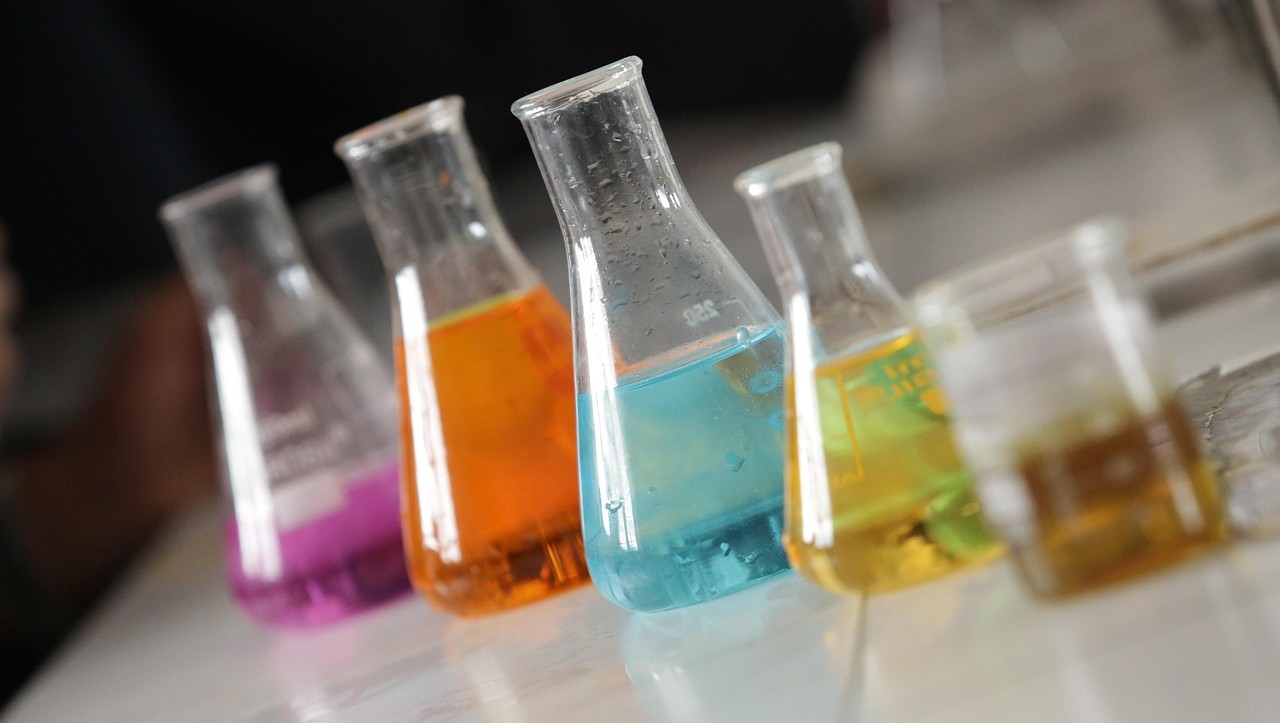
Image: PublicDomainPictures

While the very nature of experimentation involves doing things that have never been done before, some of these investigations are strange even within that context. Take a look at these 10 downright odd studies performed in the name of science, and you may be surprised more than once. Did you know about any of these?

1
The spacesuit satellite

Image: Sieuwert Otterloo

Shoving an astronaut suit out of an airlock and into space might seem like a scene from a movie, but it really happened. In 2003, an empty spacesuit was thrown into space , nicknamed Ivan Ivanovitch (or Mr. Smith), stuffed with old clothes and a radio transmitter .

The idea was that old spacesuits could be used as satellites. SuitSat-1, as it was named, went on to spend several months in silent orbit before entering Earth's atmosphere and burning up on September 7, 2006.

2
The "invisible" gorilla

Image: Mike Arney

In this strange psychological experiment, researchers asked participants to watch a video of people passing a basketball and count how many passes were made. The catch was that, during the video, a person in a gorilla suit walked into the frame, stopped to pound its chest, and then walked out.

The study revealed a curious phenomenon known as "inattentional blindness": people were so focused on counting the passes that they failed to notice the gorilla .

3
Space spiders

Image: Vidar Nordli-Mathisen

In 2011, scientists sent two golden silk orb-weaver spiders on a 45-day trip aboard the ISS. They were kept in an adequate habitat, and both spiders adapted beautifully, continuing to spin their webs and hunt for food.

But not everything was normal. In microgravity, the spiders spun their webs differently —flatter and rounder—compared to the more three-dimensional, asymmetrical structures that orb-weavers spin on Earth.

4
Bitter fingernails
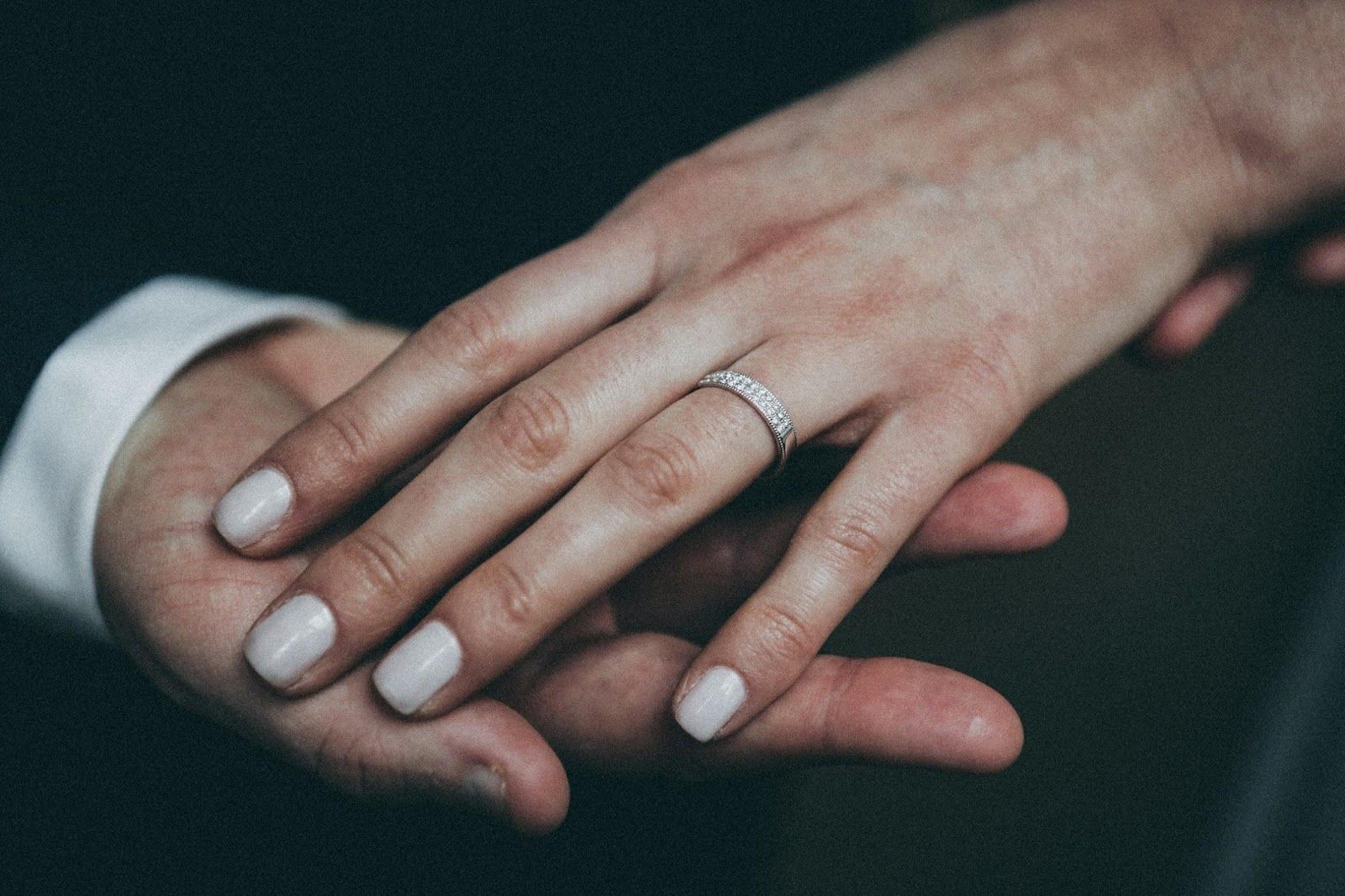
Image: Nick Karvounis

In 1942, a professor conducted an experiment with boys who had been diagnosed as chronic nail-biters. He used a phonograph with the recorded message " My fingernails taste bitter ," playing it over and over at night in the room where the boys slept.

At the end of the summer, the professor examined the boys' nails and concluded that 40% of them had kicked the habit.

5
Syrup swimming

Image: Arwin Neil Baichoo

In 2004, sixteen people with varying swimming skills swam in both a regular pool and a pool of guar syrup , which is twice as thick as water, for an experiment conducted by the University of Minnesota. The differences in their recorded times were negligible.

6
Bearcats and popcorn

Image: Corina Rainer

People encountering bearcats have noted that these animals smell like movie theater popcorn. A non-profit organization tested the bearcat's urine , and the results showed the presence of a chemical compound called 2-acetyl-1-pyrroline.

As it turns out, this is the same compound that gives popcorn its signature smell .

7
The 28-hour day

Image: Ocean Ng

Hoping to find out whether the 24-hour sleep-wake human rhythm was merely a habit, two scientists spent 32 days in a cave to avoid any external reference to day and night.

They tried out a 28-hour day, sleeping for 9 hours, working for 10 hours, and having 9 hours of leisure time . The younger scientist adapted within the first week, while the older one failed to adapt.

8
The fake doctor

Image: Hunters Race

A fake doctor delivered a lecture in 1970 to a crowd of assembled experts titled "Mathematical Game Theory as Applied to Physician Education." His performance impressed the audience so much that nobody noticed he was an actor who didn’t know anything about game theory.

The researchers behind the experiment wanted to find out if a great delivery technique could fool a group of experts—and it did.

9
The electric kite

Image: Brett Wharton

The most famous experiment on our list is also one of the strangest. In 1752, Benjamin Franklin flew a kite in a thunderstorm to demonstrate the electrical nature of lightning .

While many believe otherwise, no lightning hit the kite. Instead, ambient electrical charge moved through the hemp wire, and when Franklin touched the key attached to the wire, he felt a spark, thus proving the existence of such electricity.

10
Moon trees

Image: David Dibert

As we've learned, Americans like taking things to outer space and then bringing them right back. The Apollo 14 mission carried hundreds of tree seeds into space . These "moon trees" were then planted across the country by the US Forest Service.

Unsurprisingly, the trees grew just like any other tree of the same species.

Culture Culture 4 min read

TIMELESS ACHIEVEMENTS

Celebrate These 10 Extraordinary American Nobel Laureates!

Image: Anastacia Dvi

For many disciplines, being awarded a Nobel Prize is akin to reaching the summit of Mount Everest: it is the highest achievement that many scientists, writers, and world leaders can aspire to. In that regard, we Americans can take pride in knowing that our country has been awarded an extraordinary 400 Nobel Prizes, making us the nation with the most laureates in the world. We have selected ten of these extraordinary Americans in history, in an effort to celebrate and remember their remarkable achievements.

1
Barack Obama

Image: History in HD

We’ll begin with our most recent Laureate President. You’ll quickly notice that many U.S. Presidents have made it to this list, which seems only fitting considering their paramount efforts in maintaining world peace.

In this regard, President Obama is no exception, and in 2009 he was awarded the Nobel Peace Prize for his "extraordinary efforts to strengthen international diplomacy and cooperation between peoples."

2
Al Gore

Image: Markus Spiske

The only American Vice President on this list, Al Gore, received the Nobel Peace Prize in 2007 for his "efforts to build up and disseminate greater knowledge about man-made climate change." Gore has been a long-time advocate for fighting climate change, and his endeavors were featured in the Academy Award-winning documentary An Inconvenient Truth .

Nowadays, Al Gore continues to educate the world about environmentalism and the perils of climate change. In 2021, he addressed the United Nations during their Climate Change Conference.

3
Martin Luther King Jr.

Image: Unseen Histories

No other figure represents the fight for Civil Rights in America as Martin Luther King Jr. does. In 1964, Reverend King was awarded the Nobel Peace Prize for "his non-violent struggle for civil rights for the Afro-American population."

King, who was 35 years old at the time, became the youngest Peace Prize recipient in history. This title is now held by Malala Yousafzai, who was awarded the Prize at 17 years of age, in 2014.

4
Richard P. Feynman

Image: Zoltan Tasi

From his bongo playing to his iconic studying technique, American theoretical physicist Richard Feynman has become a pop culture icon. In 1965, Feynman received the Nobel Prize in Physics alongside Julian Schwinger and Shin'ichirō Tomonaga "for their fundamental work in quantum electrodynamics."

While Feynman was by no means the first (nor will be the last) American Nobel-winning physicist, his recognition is still remembered fondly by the scientific community. With the money from the award, Feynman and his wife purchased a beach house in Baja California, Mexico.

5
Bob Dylan

Image: weston m

Bob Dylan is known as "The Voice of a Generation" and with good reason: his songs of protest and insightful lyrics have inspired generations of Americans for almost 70 years. Dylan is truly a renaissance man, being an accomplished musician, painter, and, perhaps more importantly for this list, writer.

In 2016, Bob Dylan was awarded the Nobel Prize in Literature for "for having created new poetic expressions within the great American song tradition." Fellow American musician (and die-hard Bob Dylan fan) Patti Smith performed a heartfelt rendition of his classic song "A Hard Rain’s a-Gonna Fall" during his Nobel ceremony.

6
Jimmy Carter

Image: Library of Congress

At almost 100 years of age, Jimmy Carter’s life has been filled with outstanding achievements and awards. In that sense, it is rather remarkable that our 39th President’s Nobel Peace Prize was awarded almost 20 years after he left the White House.

In 2002, President Carter received the Peace Prize for "his decades of untiring effort to find peaceful solutions to international conflicts." His award mostly acknowledged his work with the Carter Center and their exceptional work in defending and promoting human rights around the world.

7
Ernest Hemingway

Image: Annie Lang

"Beige" prose master and iconic American author Ernest Hemingway was awarded the Nobel Literature Prize in 1954 for his "mastery of the art of narrative". The Nobel Foundation specially cited Hemingway’s then most recent novel, The Old Man and the Sea , as a contributing factor in their decision.

At the time of his award, Hemingway was recuperating from an airplane accident and didn’t travel to Stockholm to receive the award. He did, however, send a speech to be read at the ceremony, in which he stated that "Writing, at its best, is a lonely life."

8
John Forbes Nash

Image: Roman Mager

American mathematician John Forbes Nash was brought into the spotlight thanks to the 2001 film A Beautiful Mind , in which Nash was portrayed by Russell Crowe. Thanks to this movie, the whole world was able to learn about Nash’s troubled but extraordinary life and the amazing theories that earned him a Nobel Prize in Economics in 1994.

Nash is mostly remembered for his groundbreaking contributions to the mathematical field known as "game theory." He was awarded the prize alongside John Harsanyi and Reinhard Selten "for their pioneering analysis of equilibria in the theory of non-cooperative games."

9
Toni Morrison

Image: Isaac N.

American novelist Toni Morrison was awarded the Nobel Prize in Literature in 1993 when she was 62 years of age. A few years earlier, Morrison received the Pulitzer Prize for her groundbreaking 1988 novel Beloved , which was instrumental in her Nobel nomination.

The Nobel Foundation acknowledged Morrison’s extraordinary talent, recognizing her as a writer "who in novels characterized by visionary force and poetic import, gives life to an essential aspect of American reality."

10
Theodore Roosevelt Jr.

Image: Library of Congress

We’ll end this article with the very first American to win a Nobel Prize. Our 26th President received the Nobel Peace Prize in 1906, in recognition of his tremendous and successful efforts in ending the Russo-Japanese War.

Roosevelt was not only the first American but also the very first statesman to receive the Nobel Peace Prize. While at the time this award was deemed controversial, ultimately the Nobel Foundation decided to acknowledge Roosevelt’s "role in bringing to an end the bloody war recently waged between two of the world's great powers, Japan and Russia."

General General 3 min read

Presidential possibilities

Can the US President drive? Play a true or false game with us!

Image: Donghun Shin

The president of the United States might hold the most powerful job in the world, but that doesn’t mean they can do whatever they please . From driving cars to opening windows, some of their daily limits are downright surprising. Let’s play a quick "True or False" game and see which presidential privileges are real and which ones belong in the rumor bin.

1
Fact: Presidents can drive

Image: Jessica Furtney

It sounds fun to imagine the president taking the wheel for a spin around town, right? Maybe a quiet drive to clear their head or grab a meal in secret behind the tinted glass. But can they really do that?

2
Answer: False

Image: Rolando Garrido

Presidents haven’t been allowed to drive on public roads since Lyndon B. Johnson, but they can still enjoy a little time behind the wheel inside fenced areas like Camp David or their own ranch. George W. Bush often drove around his property in Texas, with the Secret Service keeping a close watch, of course!

3
Fact: Presidents can’t attend their kids’ plays or games

Image: Philip White

Yes, we know presidential tasks are of utmost importance, but we can all agree family moments matter just as much, even in the White House. So, do you think the president can really attend a school play or a kid’s soccer game?

4
Answer: True

Image: Ludo Poiré

It’s true, they can’t unless it’s under very controlled conditions . Public outings cause too much security chaos, so these events usually happen privately. Some presidential kids even had classrooms right inside the White House so their parents could drop in for a visit without turning it into a national operation.

5
Fact: Presidents can open the windows whenever they want

Image: Da-shika

Opening a window is one of the most innocent acts one can carry out, and surely, after long meetings and speeches, a little fresh air would be nice. Can the president roll down a window in the White House or a car?

6
Answer: False

Image: Gabriele Proietti Mattia

That simple act is off-limits for security reasons , of course. Michelle Obama once said her security team gave her a five-minute "window treat" on a drive to Camp David, and it felt like freedom. The rest of the time, those windows stay shut tight.

7
Fact: Presidents can’t use commercial airlines

Image: Shutr

You know Air Force One is specifically designed for the President, and you also know that every president travels constantly , but can they ever hop on a regular American Airlines flight like the rest of us?

8
Answer: True

Image: avid Lusvardi

They absolutely can’t fly commercial, but they do take plenty of flights on Air Force One and Marine One. These aircraft are packed with communication systems , security measures, and comfort most travelers can only dream about. It’s safe to say they don’t miss boarding lines.

9
Fact: Presidents can use regular gadgets from the store

Image: Azwedo L.LC

Whoever the president is, when they get to the White House, they already have a phone. So, they must be able to use regular phones . Or, for example, a brand-new iPhone or tablet seems harmless enough. Surely the president can pick one up and start scrolling. Do you think this is true or false?

10
Answer: False

Image: Eirik Solheim

Standard devices aren’t secure enough. Presidents use specially modified versions that can’t be hacked. Barack Obama had a limited-access BlackBerry, and Joe Biden’s smartwatch and the Peloton were both customized for safety. Even the leader of the free world has tech limits.

11
Fact: Presidents can block people on social media

Image: Swello

Alright, so a new president is in office, and they get a brand new secure phone. But with millions of online followers, it must be tempting to block a few loud voices . Surely the president has that right.

12
Answer: False

Image: Daniel Romero

Nope. A federal court decided that official social media accounts are public forums , which means blocking users violates the First Amendment. Presidents have to let everyone speak their mind, even if the comments section gets a little rowdy.

Explore more American facts

Choose your favorite category!

General
General

As American as apple pie—the very best America has to offer!

Culture
Culture

Delve into the astounding richness of American lore.

Geography
Geography

Hop in and explore vast and diverse American landscapes.

History
History

Discover the key moments that shaped the United States.