Geography Geography 5 min read

Are you brave enough?

Only for adventurers: These are 10 of the harshest American landscapes!
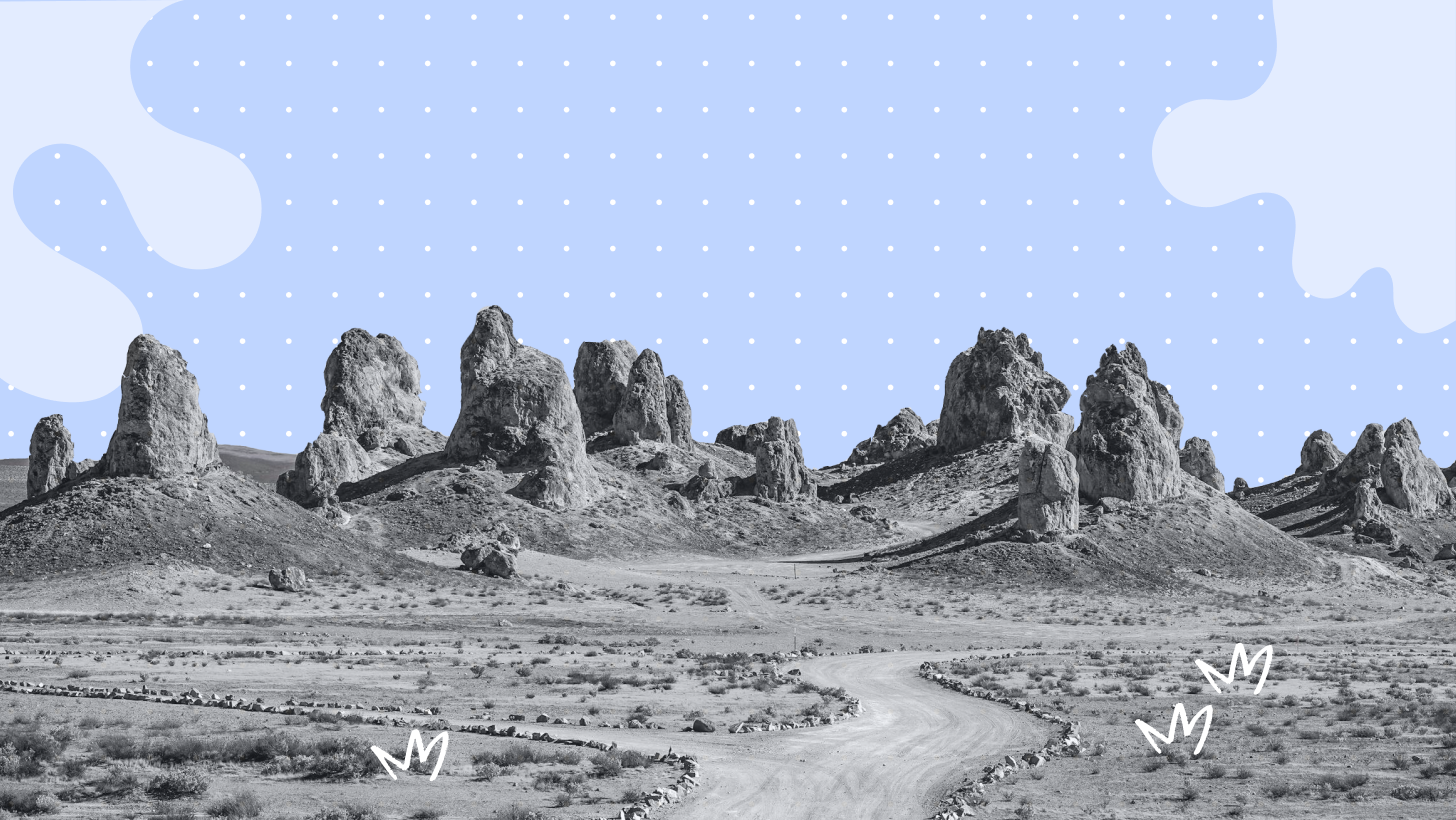
Image: Soly Moses

There’s no denying that American landscapes are beautiful . However, while the stunning wonder of these 10 locations is undeniable, they are definitely not for the faint of heart. These places are perfect for adventurers, for those with the urge to push themselves and explore harsh yet rewarding terrains. With that in mind, here’s our selection of 10 of the most demanding and harsh American National Parks, hoping to awaken your adventurous spirit and offer a glimpse of their beauty so you can enjoy it from the comfort and safety of your home. Enjoy!

1
Mojave Desert

Image: Paulius Dragunas

The possibility of being stranded in the desert has always terrified humankind. Can you imagine being completely alone in the harsh and unforgiving heat? Luckily, nowadays it’s extremely difficult to get lost in the Mojave Desert . However, that doesn’t mean visiting this gorgeous landscape isn’t a demanding endeavor.

The Mojave Desert spans four different western states and is crossed by the Colorado and Mojave rivers. One of its most famous locations is the area known as Death Valley , the point of lowest elevation in North America and the hottest place on Earth during the summer.

2
Mount Rainier

Image: Taylor

Also known as Tahoma, Mount Rainier National Park is located approximately 59 miles from Seattle. As you might guess, the main attraction of this park is the titular Mount Rainier, the highest mountain in the state of Washington and a formidable challenge for daring adventurers.

Mount Rainier’s official summit elevation is 14,410 feet, and it is one of the most popular climbing spots in the world. That doesn’t mean it is an easy climb—quite the contrary, in fact. In order to reach the summit, climbers must traverse glaciers similar to those found in southern Alaska. Of the approximately 11,000 climbers who attempt to summit Mount Rainier each year, only about 50% succeed.

3
Gates of the Arctic National Park

Image: Sauvage

The northernmost park in the United States, Gates of the Arctic National Park, is definitely hard to reach. In fact, it is the least visited park in the country due to its remoteness and lack of infrastructure.

In any case, camping and hiking are allowed in the park, though they are not for the faint of heart. The extreme temperatures, with an annual minimum average of −42.6 °F, make it a challenging yet alluring landscape for those seeking adventure.

4
Glacier National Park

Image: Michael Kirsh

While Montana’s Glacier National Park offers recreational opportunities for people of all ages, including kayaking, fly fishing, and hiking, many tourists visit the park seeking a more thrilling experience. They aren’t disappointed, as the park features numerous climbing challenges, including five peaks over 10,000 feet .

However, we recommend visiting during the tourist season. In winter, temperatures can plummet, with a historical low of -38°F. Additionally, the area is prone to sudden temperature changes, which can pose challenges for adventurers.

5
Lake Clark National Park

Image: Clayton Manche

Much like Glacier National Park, Lake Clark is not necessarily a severe environment during the tourist season. It offers a variety of recreational activities, ranging from bird-watching to more thrilling pursuits like kayaking and rafting. However, the extremely low temperatures and intense snowfall make this park much harsher during the winter months.

With a record-low temperature of -18°F, Lake Clark becomes inhospitable during the colder months. Not only that, but the park is not accessible by roads; only air taxis and boats can reach it.

6
Big Bend National Park

Image: Simon Hurry

As with many other parks on this list, we should start with a small disclaimer: Don’t be discouraged from visiting Big Bend National Park . Not that you need our warning—after all, half a million tourists enjoy the park's magnificence every year. However, a point should be made that the harsh desert conditions of Big Bend do provide a challenge that should not be overlooked.

According to Search & Rescue team reports, 1 in 1,000 visitors requires assistance of some kind. Although most of this assistance is not life-threatening (often involving mild dehydration), it highlights the importance of taking necessary precautions when visiting the park.

7
Rocky Mountain National Park

Image: Michael Kirsh

Located in the heart of Colorado , Rocky Mountain National Park offers unmatched views of the stunning Rocky Mountains, as well as numerous alpine lakes and lush forests that completely surround the park. However, there are many hazards you should be aware of if you plan to visit this beautiful location.

Visitors should be cautious of steep cliffs, falling rocks, cold temperatures, and adverse snow conditions. Additionally, the area is infamous for its recurring wildfires, so campers must be careful not to leave anything that might increase the risk of fire.

8
Great Basin National Park

Image: Shawn Powar

The arid beauty of Great Basin National Park is truly second to none. Although it is located in a desert area , the plants and vegetation have majestically adapted to the dry climate. With that in mind, you can also adapt and thoroughly enjoy this park if you keep these safety suggestions in mind.

We’ll mention just some of the safety tips recommended by the National Park Service for visiting Great Basin: For starters, remember that cell phone service is limited, so don’t rely entirely on your phone. Also, be mindful of sun exposure and take precautions to avoid sunburn and dehydration. One last thing: Like all desserts, heat is not the only concern. The park’s temperature drops significantly at night, so try to not be caught in the open when the sun goes down.

9
Voyageurs National Park

Image: Tim Umphreys

Located in northern Minnesota, right on the border with Canada, Voyageurs National Park was named after the French-Canadian fur traders who frequently traveled the area. It is particularly famous for its many lakes , which offer activities like kayaking, canoeing, and fishing.

However, there are a few dangers that boaters should be aware of, such as the many hazardous rocks hidden in the water. Additionally, during the winter season, many visit the park to engage in snowmobiling, which must be practiced carefully to avoid any soft spots.

10
Kobuk Valley National Park

Image: Adrià Masi

Kobuk Valley National Park is as massive as it is undeveloped. Although the park is larger than the state of Delaware, there are no roads leading to it , nor any internal roads or trails within the park. Visitors must arrive by air taxi, weather permitting, and bring all their gear and supplies if they intend to backpack, camp, or boat.

Not only that, the weather conditions in the park can be extreme, even during the summer, and are completely unpredictable. In any case, as with all the other parks in this article, we don’t want to dissuade you from visiting Kobuk Valley if you choose to. We simply want to emphasize the importance of keeping safety a paramount priority during your trip.

General General 4 min read

Behind the banners

11 U.S. state flags and their hidden meanings

Image: Drei Kubik

Flags are more than mere symbols—they tell stories, capturing the history, pride, and values of each state they represent. Every element, from colors to symbols, was thoughtfully chosen to convey a message tied to the spirit of the state. Join us on a journey across the country as we explore 11 unique state flags and the rich stories behind them.

1
Texas

Image: Joshua J. Cotten

Also known as the Lone Star, Texas’ flag features a single star on a vertical blue stripe, representing the state’s strong independent spirit. The red stripe represents courage, while the white stripe stands for purity.

In fact, the current design was adopted in 1839 during the Republic of Texas, echoing the state's history as an independent republic before joining the Union in 1845.

2
California

Image: Lesli Whitecotton

California's flag features a grizzly bear, a symbol of strength and independence. The star represents California's status as a republic in 1846 during the Bear Flag Revolt, and the red stripe signifies courage.

Interestingly, the bear depicted on the 1911 version of the flag is said to have been inspired by the last California grizzly bear held in captivity.

3
Arizona

Image: Denisse Leon

Arizona’s flag features a golden star surrounded by red and gold rays, symbolizing both the state’s arid landscape and copper mining industry. The blue and red colors are the same shade used on the flag of the United States.

The star commemorates Arizona’s statehood, achieved in 1912, while the thirteen rays symbolize the original Thirteen Colonies.

4
Colorado

Image: Courtney Cook

Colorado’s flag features blue, white, red, and yellow with a bold "C" encircling a golden disk. The blue symbolizes the sky, gold represents the state’s abundant sunshine, white the snowcapped Rockies, and red the "ruddy" earth.

The gold and white elements also honor Colorado’s gold and silver mining industries. Officially adopted in 1911, the flag stands as a tribute to the state’s natural beauty and pioneering heritage.

5
Florida

Image: Karl Callwood

Florida’s flag features a red cross with the state seal at the intersection. The cross represents the state's Spanish heritage, as it was originally founded by Spanish explorers.

The seal depicts a shoreline where a Seminole woman spreads flowers. While some suggest the woman represents the historical heroine Milly Francis, there is no evidence to support this theory. A Sabal palm and a steamboat complete the scene, reflecting Florida's vibrant scenery.

6
Maryland

Image: Gary Cole

Maryland’s flag stands out with its bold black and gold pattern, divided into quarters. The design incorporates elements from the family crest of the Calverts, the state’s founding family.

During the colonial era, Maryland used only the gold and black Calvert arms. The colors fell out of use after American independence but were reintroduced in 1854.

7
South Carolina

Image: Kelly

South Carolina’s flag features a white palmetto tree on a blue field, with a crescent moon beside it. The roots of this design have existed in some form since 1775, being based on one of the first American Revolutionary War flags.

An early version of this flag, known as the Moultrie Flag, was famously flown during the defense of a fortress on Sullivan's Island against the British fleet. The palmetto tree was later added as a symbol of the island’s successful defense.

8
Tennessee

Image: Brandon Hooper

Tennessee’s flag features three stars arranged in a triangular pattern, symbolizing the three regions of the state —East, Middle, and West Tennessee. The red, white, and blue colors align with the state’s commitment to unity and its place in the Union.

The current version, designed by Colonel Le Roy Reeves, was adopted in 1905. However, an earlier version already aimed to represent the state's three distinct regions with three slanted bars of red, white, and blue.

9
Hawaii

Image: little plant

Hawaii’s flag is unique among U.S. state flags. It features a Union Jack in the upper left corner, reflecting the historical ties between Britain and the Hawaiian Kingdom. It was first adopted in the early 19th century by the Kingdom of Hawaii and retained when the state joined the U.S. in 1959.

The eight horizontal stripes represent the eight main islands of Hawaii: Hawaiʻi, Maui, Kahoʻolawe, Lānaʻi, Molokaʻi, Oʻahu, Kauaʻi, and Niʻihau.

10
Indiana

Image: Lucas Beck

Indiana’s flag features a large gold torch, with 19 smaller stars surrounding it, representing Indiana's status as the 19th state to join the Union. The torch symbolizes enlightenment and the path to progress.

Adopted in 1917, the flag’s design was chosen through a contest offering a cash prize. The winning design, created by Paul Hadley of Mooresville, Indiana, was selected as the official flag with only minor modifications.

11
Maine

Image: Aubrey Odom

Maine’s flag features a shield with a pine tree at its center, flanked by a farmer and a sailor, representing the state’s agricultural and maritime heritage. The North Star above the shield symbolizes guidance and Maine’s motto, "Dirigo," meaning "I Lead."

The pine tree is a nod to Maine’s nickname as the Pine Tree State. Adopted in 1909, the flag’s design emphasizes Maine’s strong connection to its natural resources.

Geography Geography 3 min read

When words cross the border

USA vs. Canada: Who wins in the battle of words?

Image: Lara Jameson

When it's time for dinner, do you set out "serviettes" or "napkins"? People in the US and Canada may share a language, but you'd be surprised how many everyday objects have completely different names in each country. If you’re an American planning a trip to Canada—or a Canadian heading south—this article is for you!

1
Table manners

Image: Mika Baumeister

If you're dining out in Canada, don't be surprised if you hear someone ask for a "serviette." It might sound really fancy, but it's just the Canadian way of saying what Americans call a "napkin!"

2
Leftovers confusion

Image: Henry Kobutra

When it's time to clear the table and clean the dishes, things can get confusing between Americans and Canadians. In the US, you'll hear "throw the leftovers in the garbage disposal," but up north in Canada, it's called the "Garburator."

Though it might sound like they’re talking about two different things, it’s the same device—just different names!

3
Let's run

Image: Bruno Nascimento

Both Canadians and Americans use the term "running shoes" to mean athletic shoes designed for jogging or exercise. But there's one word that sets them apart: "runners."

In Canada, "runners" are what you wear on your feet. In the US, they are the people wearing them!

4
A matter of power

Image: Mike Winkler

What do you call that thing you use to plug in several devices at once? Your answer might reveal where you're from. If you say "power strip," chances are you're American. But if you call it a "power bar," you're probably Canadian!

5
Rubber bands

Image: Andres Siimon

They're small but super handy, so it's worth knowing what to call them no matter where you are! In Canada, people ask for "elastics" when they need to bundle papers or bills. But ask for "elastics" in the US, and you might get a confused look. Americans almost always just call them "rubber bands" instead.

6
Colorful vocabulary

Image: Sara Torda

Coloring was undoubtedly one of the most delightful parts of childhood, and some people still enjoy it as adults! If you're one of them, you probably have a good collection of colored pencils. But if you're in Canada and need to buy some, keep in mind they call them "pencil crayons" up there.

7
It's all about gas

Image: Ali Mkumbwa

In both the United States and Canada, a "gas station" is the place where you stop to fill up your car with fuel. But while that term is widely understood and used in both countries, in some regions of Canada, you might also hear it referred to as a "gas bar."

8
Park…

Image: John Matychuk

If you’re Canadian, don’t ask an American where the "parkade" is— they’ll probably look confused . While "parkade" is perfectly normal in Canada, Americans usually say "parking garage," "parking deck," or just "parking lot."

9
Sweet words

Image: NordWood Themes

Those delicious brownies wouldn't be the same without a nice layer of powdered sugar on top, right? And while we can agree on how tasty it is, we don't all agree on what to call it. Here, it is "confectioners' sugar" or simply "powdered sugar," but in Canada, they prefer another name for the same product: "icing sugar."

10
Folder/ Duotang

Image: Savannah Wakefield

Remember that school folder with metal prongs to hold your papers, the ones you could easily add or remove pages from? In the US, we just call it a "pronged folder." But in Canada, they have a totally different name for it: they call it a "duotang!" Have you ever heard of that one?

Explore more American facts

Choose your favorite category!

General
General

As American as apple pie—the very best America has to offer!

Culture
Culture

Delve into the astounding richness of American lore.

Geography
Geography

Hop in and explore vast and diverse American landscapes.

History
History

Discover the key moments that shaped the United States.