General General 5 min read

Second look

Lost in history: 10 forgotten presidents who changed America

Image: Library of Congress

Be honest—how many U.S. Presidents can you name off the top of your head? Great leaders like Washington and Lincoln often steal the spotlight, and with legacies as groundbreaking as theirs, it's totally understandable. However, this also means the work of many lesser-known—but no less important—figures in American history is often overlooked. From controversial characters to underrated statesmen, join us as we unravel the stories of 10 forgotten U.S. presidents.

1
Martin Van Buren (1837-1841)

8th President

Image: Library of Congress

Van Buren, the first president born after the American Revolution, inherited an economic crisis shortly after taking office, known as the Panic of 1837 . The market crash, caused by speculative banking practices, led the country into a severe economic depression.

Van Buren’s quick response was to establish an independent treasury system, which effectively separated federal funds from private banks. This system helped stabilize the currency and laid the foundation for modern federal financial management. Furthermore, Van Buren was also a key figure in the development of the two-party system that continues to shape American politics today. Quite the legacy for an often-overlooked figure!

2
John Tyler (1841-1845)

10th President

Image: Library of Congress

John Tyler became president in 1841 following William Henry Harrison’s death, marking the first time a vice president succeeded a sitting president. Although this might seem unremarkable today, Tyler asserted the constitutional authority of the presidency by doing so, setting an important precedent for the peaceful transfer of power and solidifying the role of the vice presidency in American democracy.

However, Tyler is mostly remembered for championing westward expansion and overseeing the initial negotiations for the annexation of Texas—a move that literally reshaped the nation. Though this ultimately led to tensions with Mexico and the Mexican-American War, his efforts to settle a peaceful border treaty between the United States and Canada helped balance his legacy.

3
James K. Polk (1845-1849)

11th President

Image: Library of Congress

James K. Polk, the 11th president, is often called the "expansionist president" due to his aggressive territorial policies. Under his leadership, the United States expanded significantly, acquiring more than a million square miles of land through various treaties and the victory in the Mexican-American War.

His presidency fulfilled the concept of Manifest Destiny, extending the nation's reach to the Pacific Ocean. However, his legacy remains somewhat controversial, as many of his actions exacerbated the divide between the northern and southern states, setting the stage for the American Civil War.

4
Zachary Taylor (1849-1850)

12th President

Image: Library of Congress

Zachary Taylor, a hero of the Mexican-American War, became president in 1849 with little political experience. Despite being a Southern slave owner, he opposed the expansion of slavery into the newly acquired western territories, a stance that put him at odds with many in the South.

While Taylor's presidency was cut short by his sudden death in 1850, his role in opposing the spread of slavery into new states set the stage for future debates. Though brief, his actions as president are often praised for their conciliatory nature, as he sought compromises in an attempt to prevent the looming conflict.

5
Millard Fillmore (1850-1853)

13th President

Image: Library of Congress

Millard Fillmore took over after Zachary Taylor's untimely death in 1850, inheriting a fractured nation on the brink of civil war. His most controversial act was signing the Compromise of 1850, which included the Fugitive Slave Act, requiring the return of escaped slaves to their owners.

This somewhat ham-fisted attempt to maintain the fragile peace between the North and South only deepened the divisions that eventually led to the Civil War. On a lighter note, Fillmore was the first president to initiate trade relations with Japan, marking the start of Japan’s modernization and its integration into the global economy.

6
Franklin Pierce (1853-1857)

14th President

Image: Library of Congress

Franklin Pierce, elected in 1852, faced an increasingly divided nation over the issue of slavery. His signing of the Kansas-Nebraska Act in 1854 allowed new territories to decide for themselves whether to permit slavery, leading to violent confrontations between pro- and anti-slavery factions in what became known as "Bleeding Kansas."

Despite his troubled domestic policies, Pierce followed his predecessor's path of expanding U.S. influence abroad. He pushed for new trade routes and even attempted to negotiate the acquisition of Cuba from Spain, though his efforts ultimately failed.

7
James Buchanan (1857-1861)

15th President

Image: Library of Congress

James Buchanan’s inability to resolve the tensions between North and South is often criticized, but he faced a nearly impossible task. He sought to avert conflict through diplomacy but was hesitant to overstep states' rights, arguing that the Constitution did not grant him the authority to prevent secession.

Despite his efforts, South Carolina seceded in December 1860, just weeks after Abraham Lincoln’s election, setting the stage for war. In foreign policy, Buchanan strengthened U.S. relations abroad, securing trade agreements with China and managing tense relations with Great Britain.

8
Rutherford B. Hayes (1877-1881)

19th President

Image: Library of Congress

Rutherford B. Hayes is often remembered for his controversial election in 1876, which was decided by a congressional commission after a disputed vote count. His administration is also known for effectively ending the Reconstruction Era by withdrawing federal troops from the South.

While this helped bring stability to the South, it also allowed the rise of segregationist policies. On the other hand, Hayes was one of the first presidents to advocate for civil service reform, arguing that a merit-based government workforce was necessary to reduce corruption and ensure efficiency within the federal system.

9
Chester A. Arthur (1881-1885)

21st President

Image: Library of Congress

Initially seen as a product of the corrupt political machine system, Chester A. Arthur surprised many by becoming a champion of civil service reform. In 1883, he signed the Pendleton Civil Service Reform Act, which mandated that government jobs be awarded based on merit rather than political connections.

This act significantly reduced the influence of patronage in American politics, a practice that had long fueled corruption. Arthur also modernized the U.S. Navy, which had been neglected since the Civil War. His administration helped lay the foundation for the powerful naval force that would emerge in the 20th century.

10
Benjamin Harrison (1889-1893)

23rd President

Image: Library of Congress

Though almost forgotten today, Harrison’s administration was marked by significant legislative accomplishments. In particular, the Sherman Antitrust Act aimed at curbing the power of monopolies and promoting competition, and is considered the first major attempt by the federal government to regulate corporate power.

Harrison pushed to secure federal funding for education and voting rights for African Americans, but many of his efforts were blocked by Congress. Despite these setbacks, he remained a vocal advocate for African American civil rights, consistently addressing the issue in his speeches to Congress.

Geography Geography 4 min read

Local treasures

These 10 American regional industries make our country amazing!

Image: Dziana Hasanbekava / Polina Tankilevitch / David Foodphototasty

One of the many advantages of living in such a vast country is the wide variety of landscapes, cultures, and people that can be found in each of our 50 states. The United States offers a rich tapestry of industries that vary greatly throughout the nation. If you are lucky enough to travel this great country of ours, you’ll encounter many unique and outstanding regional products. In that sense, we’ve selected 10 of the most remarkable regional industries from across America, hoping to pay homage to the hard work and dedication that make this country so wonderful. Enjoy!

1
Wisconsin - Cheese

Image: Lauren Forando

Wisconsin is crazy about cheese , and there’s a reason it’s known as "America’s Dairyland"! The state takes great pride in this regional product, and with good reason. Its cheesemaking tradition is almost as old as the state itself, with European colonists introducing the trade in the 19th century in the fertile lands that would eventually become Wisconsin. Approximately 100 years later, over 1,500 cheesemonger shops and factories had been established in the area.

2
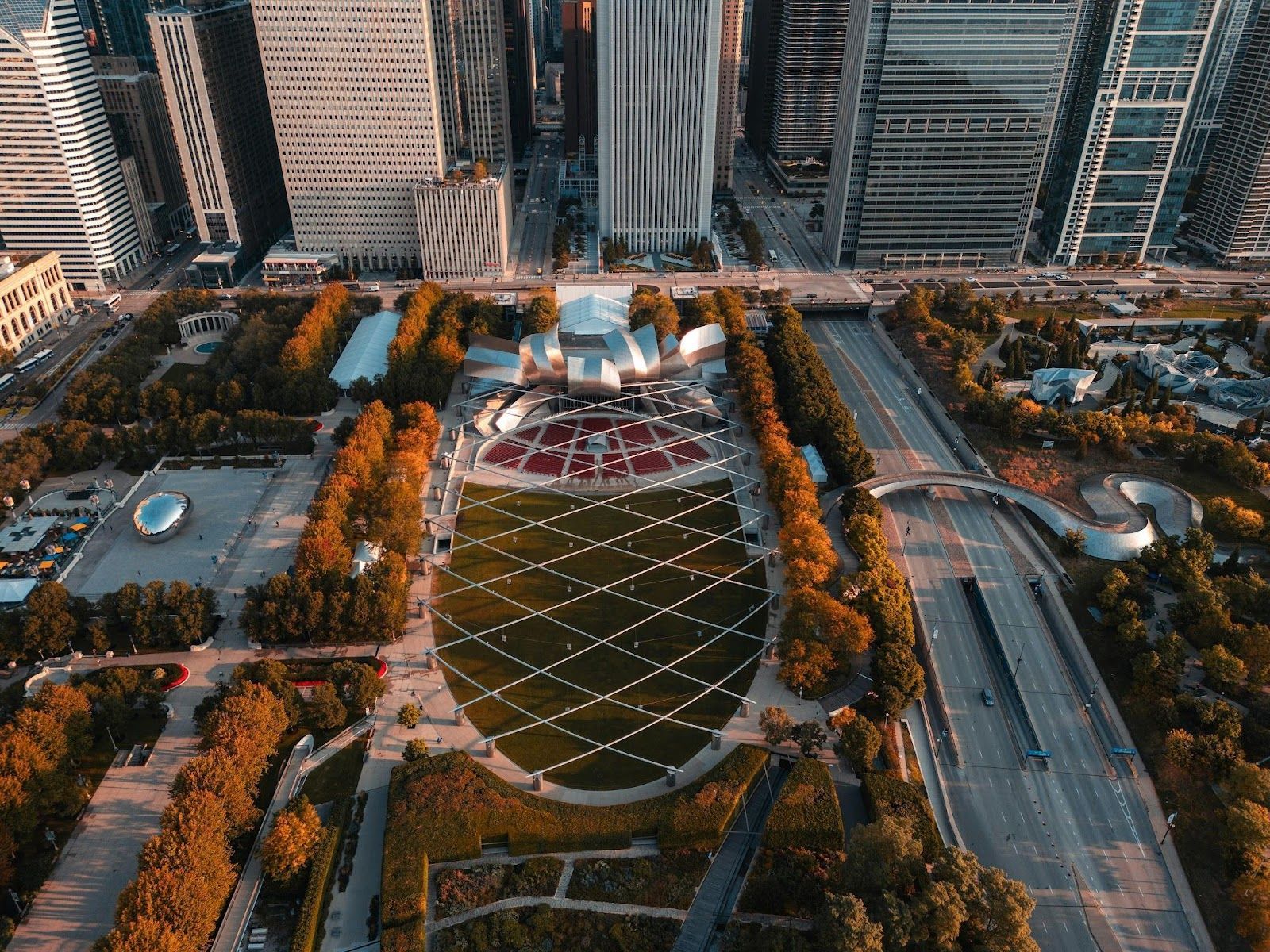
Chicago - Deep-dish pizza

Image: Jon Tyson

Deep-dish pizza has its fair share of detractors, but we honestly can’t think of a single, concrete reason why. In our eyes, Chicago’s most famous regional delicacy is wonderful, with its copious amounts of cheese and chunky tomato sauce. In any case, residents of the "Windy City" take great pride in this pizza style, so be sure to try some whenever you're in town.

3
Detroit - Automotive industry

Image: Egor Vikhrev

Detroit has been synonymous with cars since the 1920s , when the city’s population surged following the expansion of the automotive industry across the country. Nowadays, Detroit is considered the epicenter of this industry in the United States, with the headquarters of the "Big Three" auto manufacturers—Ford, General Motors, and Chrysler—located in "The Motor City."

4
Kentucky - Bourbon

Image: Maxim Hopman

Bourbon is one of the few products that can only be found in America . This type of whiskey, typically made from maize, was created in the United States during the 18th century. While it is undeniably an American treasure, bourbon is most closely associated with the American South and, particularly , with Kentucky . The "Bluegrass State" produces 95% of the world’s supply of bourbon, so it shouldn’t come as a surprise that it is a source of great pride to all Kentuckians.

5
New Mexico - Chiles

Image: Javier Balseiro

The New Mexican chile , a moderately spicy variety , is unsurprisingly a staple of the state’s cuisine and one of its official vegetables. Not only that, New Mexico’s official question is a direct reference to this tasty vegetable. Whenever you hear a New Mexican ask, "Green or Red?", be sure they are asking which type of chile you want with your food.

6
New Orleans - Lucky Dogs

Image: Peter Secan

We could have included any number of delicious New Orleans products in this entry, from its mouth-watering gumbo to its delectable beignets. However, we’ve decided to focus instead on a New Orleans institution—a business that has been standing strong since 1948. Located throughout the streets of "The Big Easy," Lucky Dogs and its iconic hot dog stands bring smiles and tasty treats to both locals and tourists. These stands are featured in one of New Orleans’s most beloved novels, A Confederacy of Dunces , in which its extravagant protagonist briefly works at one of these stands.

7
Texas - Cowboy hats

Image: Donald Giannatti

In 2015, the Texas State Legislature declared the cowboy hat the official "State Hat of Texas." This probably doesn’t come as a surprise. If you’ve ever visited "The Lone Star State," you’ve likely seen cowboy hats everywhere. These accessories have been synonymous with Texas for as long as anyone can remember. In fact, Texas Rangers were the very first law enforcement agency to officially adopt cowboy hats as part of their uniform.

8
New York - I Heart NY T-Shirts

Image: Abhilash G

What might seem like an inexpensive memento to take home after a wonderful trip to New York City is actually one of the most instantly recognizable images in pop culture. "I Heart NY" t-shirts are everywhere in the "Big Apple," and while locals might seem disgruntled at the sight of a happy tourist sporting one of these shirts, rest assured that they feel a small amount of pride in the love and praise their city receives every day.

9
Las Vegas - Casinos

Image: David Lusvardi

Las Vegas calls itself "The Entertainment Capital of the World" for the same reason many refer to it as "Sin City." The largest city in Nevada is known worldwide for its amazing selection of Casino Hotels. Las Vegas’s most famous regional product offers many hours of fun and excitement, though we advise that caution be observed at all times.

10
Sweet Tea - South Carolina

Image: Crystal Tubens

Sweet tea has been a staple of American Southern cuisine for centuries, but many believe the birthplace of this delicious, cold drink is Summerville, a town in South Carolina . According to some historians, during the 19th century, a resident of Summerville named Dr. Charles Shepard started growing tea in the region and innovating with ice-cold drinks that he offered to visitors and neighbors. In due time, sweet tea made Summerville a tourist attraction, eventually cementing the town as the birthplace of this iconic drink.

History History 3 min read

Words that made history

Yes, they really said that: 10 presidential quotes we can't forget

Image: Charly Álvarez

There's no doubt that words are powerful, and some have changed the world. For better or worse, some quotes by US presidents are forever inscribed in history books and the citizens' memory. From George Washington to JFK, join us in exploring 10 unforgettable quotes from our nation's leaders.

1
"The only thing we have to fear is fear itself"

Image: National Archives and Records Administration, Public domain, via Wikimedia Commons

Franklin D. Roosevelt, the 32nd president of the United States, delivered a phrase in his first inaugural address that would be remembered forever. On March 4, 1933, at the height of the Great Depression, he proclaimed, "The only thing we have to fear is fear itself," with the aim of inspiring a nation in crisis to embrace courage and hope.

2
"Ask not what your country can do for you…"

Image: Florida Memory

The Cold War, international tensions, and civil rights struggles were shaking the nation when John F. Kennedy delivered his unforgettable inaugural address on January 20, 1961. Calling on Americans to take personal responsibility and contribute actively to the nation, he gave one of the most famous lines in American history: "Ask not what your country can do for you—ask what you can do for your country."

3
"Speak softly and carry a big stick…"

Image: Pach Brothers, Public domain, via Wikimedia Commons

F.D. wasn't the only Roosevelt with memorable quotes. Before him, Teddy Roosevelt made his mark, but he was a bit blunter. The 26th president first said, "Speak softly and carry a big stick; you will go far" in a public speech in 1901. With that line, he described his approach to foreign policy, which later became known as "Big Stick diplomacy."

4
"A house divided against itself cannot stand"

Image: Alexander Gardner, Public domain, via Wikimedia Commons

Abraham Lincoln gave us iconic words even before becoming president. In 1858, while accepting the Illinois Republican Party's nomination for the US Senate, he declared, "A house divided against itself cannot stand." The Civil War had not yet begun, but the nation was already deeply divided. This powerful line helped elevate Lincoln's reputation, paving the way for his election as president in 1860.

5
"We choose to go to the Moon"

Image: NASA

As expected, John F. Kennedy appears more than once on this list. This time, with a phrase that would kick off one of the greatest achievements in US and human history: the moon landing. During a speech at Rice University on September 12, 1962, in Houston, Texas, he said: "We choose to go to the Moon in this decade and do the other things, not because they are easy, but because they are hard." And history proved him right.

6
"Mr. Gorbachev, tear down this wall!"

Image: Michael Evans, Public domain, via Wikimedia Commons

Ronald Reagan also gave the world memorable quotes, including this famous one addressed to Soviet leader Mikhail Gorbachev during a speech at the Brandenburg Gate in West Berlin on June 12, 1987. Two years later, the Berlin Wall was brought down by the citizens themselves.

7
"The buck stops here"

Image: Greta Kempton, Public domain, via Wikimedia Commons

Displayed in his office, Harry S. Truman had the phrase: "The buck stops here." After assuming the presidency following Franklin D. Roosevelt's death, Truman had to face critical decisions at the end of World War II. The famous line reflected his belief in taking personal responsibility for decisions rather than shifting blame.

8
"Liberty, when it begins to take root…"

Image: Jon Sailer

Washington shared this idea in 1785 in a letter to Alexander Hamilton, shortly after the end of the American Revolutionary War. In it, he clearly expressed his vision for the young nation, whose principles would be rooted in the power of liberty and freedom.

9
"If your actions inspire others to dream more…"

Image: Julielangford, Public domain, via Wikimedia Commons

John Quincy Adams, the 6th President of the United States, gave us one of the most inspiring quotes: "If your actions inspire others to dream more, learn more, do more, and become more, then you are a leader." Thus, he defined leadership as a moral responsibility, one that motivates and uplifts others.

10
"Happiness and moral duty are inseparably connected"

Image: Gilbert Stuart, Public domain, via Wikimedia Commons

In his 1796 Farewell Address, George Washington captured the guiding principles of his presidency with this phrase. For the first US president, fulfilling moral duties and, above all, acting with integrity were inseparable from true happiness.

Explore more American facts

Choose your favorite category!

General
General

As American as apple pie—the very best America has to offer!

Culture
Culture

Delve into the astounding richness of American lore.

Geography
Geography

Hop in and explore vast and diverse American landscapes.

History
History

Discover the key moments that shaped the United States.