Culture Culture 5 min read

Rush fans, anyone?

Living the American Dream: 10 Canadians who made it big in America

Image: Andre Furtado

Our Big Northern Neighbor has contributed greatly to the world in terms of talent, and the United States has benefited immensely from its proximity. Countless individuals have crossed the border to the south to share their genius with us. Most people know that Jim Carrey and Celine Dion are Canadians, but did you know about James Cameron? Or Dan Aykroyd? Take a look at the following ten names. Which of these origins did you already know?

1
Jim Carrey

Image: Avel Chuklanov

Jim Carrey, the man with the "rubber face" himself, is a famously Canadian actor known for his comedic roles in Ace Ventura , The Mask , Dumb and Dumber , and for his more dramatic roles in Eternal Sunshine of the Spotless Mind and The Truman Show , among many other movies.

Jim was born in Newmarket, Ontario , to Kathleen and Percy Carrey. He was raised Catholic and has three older siblings: John, Patricia, and Rita. The family’s original surname was Carré.

2
Avril Lavigne

Image: Priscilla Du Preez 🇨🇦

Early 2000s skate-punk rock teenage star Avril Lavigne recorded Let Go , the best-selling album of the 21st century by a Canadian artist, in 2002 and was named the "Pop-Punk Queen" by the media at the time.

She was born in Belleville, Ontario , and, as the story goes, her parents recognized her vocal abilities when she was two years old and sang "Jesus Loves Me" on the way home from church.

3
Michael J. Fox

Image: Roger Ce

One of the most beloved Canadians of all time is Michael J. Fox, the actor who portrayed Marty McFly in the Back to the Future movies. He began his career as a child actor on the NBC sitcom Family Ties and starred in many movies in the '80s and '90s, beyond his famous role as the time-traveling teenager.

Fox was born in Edmonton, Alberta , and in 1998, he disclosed his diagnosis of Parkinson's disease. Since then, the actor has become an advocate for finding a cure and founded the Michael J. Fox Foundation in 2000 to help fund research. Worsening symptoms have since forced him to reduce his acting work.

4
Celine Dion

Image: Edward Cisneros

The Queen of Power Ballads, noted for her powerful and technically skilled vocals, was born into a large family in Charlemagne, Quebec . Despite starting her career singing in French, Celine Dion became internationally famous thanks to her best-selling albums Falling Into You and Let’s Talk About Love . Her song "My Heart Will Go On," the theme from the 1997 film Titanic , is probably her most famous work.

She was the youngest of 14 children and as a baby, Dion slept in a drawer instead of a crib to save money. With over 200 million records sold worldwide, Dion is the best-selling Canadian recording artist, the best-selling French-language artist, and one of the best-selling musical artists of all time.

5
Dan Aykroyd

Image: Lance Grandahl

Dan Aykroyd, known as one of the Blues Brothers and a member of the original Ghostbusters , is a Canadian actor, comedian, screenwriter, producer, and former SNL cast member. Despite being best known for his comedic roles, he was nominated in 1990 for the Academy Award for Best Supporting Actor for his role as Boolie Werthan in Driving Miss Daisy.

Aykroyd was born in Ottawa, Ontario , to Samuel Cuthbert Peter Hugh Aykroyd, a civil engineer, and Lorraine Hélène Marie, a secretary. His mother was of French-Canadian descent, and his father was of English, Scottish, Irish, French, and Dutch ancestry.

6
Chris Hadfield

Image: Niketh Vellanki

It is always inspiring to see someone who is truly in love with their job and shares that same passion with the rest of us. And, while one could argue that being an astronaut is an easy job to fall in love with, very few astronauts, if any, have been able to convey what Canadian retired astronaut Chris Hadfield does.

Hadfield was born in Sarnia, Ontario . As the first Canadian to perform extravehicular activity in outer space, he has flown on two Space Shuttle missions and also served as commander of the International Space Station (ISS). During this mission, he documented life onboard the space station by posting on various social media platforms. He appeared on television news and talk shows and gained popularity by performing David Bowie’s "Space Oddity" in space.

7
Alanis Morissette

Image: Jason Buscema

A 1990s phenomenon, Alanis Morissette stormed the charts with her 1995 album Jagged Little Pill , which sold more than 33 million copies worldwide and made her a star. She has released several albums since and has sold more than 75 million records.

Morissette was born in Ottawa, Ontario , to Georgia Mary Ann and Alan Richard Morissette. She has a twin brother, Wade (12 minutes older), who is also a musician.

8
Keanu Reeves

Image: Matthew Ball

A genuine on-screen tough guy and off-screen nice guy, Keanu Reeves is best known for his roles as Neo in the Matrix franchise and as John Wick in the films of the same name, among many other roles.

While Keanu was not born in Canada — he was born in Beirut —he is on this list because he was raised in Toronto and made his acting debut in the Canadian television series Hangin' In (1984). An avid motorcyclist, Reeves is the co-founder of the custom motorcycle manufacturer ARCH Motorcycle.

9
Neil Young

Image: Ahmed Rizkhaan

Legendary rocker Neil Young started his career in Winnipeg in the 1960s before joining Buffalo Springfield in Los Angeles. He has released critically acclaimed albums like After the Gold Rush and Harvest , participated in the supergroup Crosby, Stills, Nash & Young, and has been an active promoter of environmental causes in both his native Canada and the U.S.

Born in Toronto, Neil Young is one of the few people to have been inducted into the Rock and Roll Hall of Fame twice: in 1995 as a solo artist and in 1997 as a member of Buffalo Springfield.

10
James Cameron

Image: Michal Mrozek

Most people would think that being a film director known for Terminator 2 , Titanic , and Avatar , among many other blockbusters, would be accomplishment enough. But not for James Cameron, who also decided to become the first person to make a solo descent to the bottom of the Mariana Trench, the deepest part of Earth's ocean.

Cameron was born in Kapuskasing, Ontario , and spent summers on his grandfather's farm. He attended Stamford Collegiate in Niagara Falls. Three of Cameron's films are among the top four highest-grossing films of all time: Avatar , Avatar: The Way of Water , and Titanic hold the positions of highest, third-highest, and fourth-highest-grossing films, respectively. Not bad, right?

Geography Geography 2 min read

Back to the roots

10 great American trees that shaped our history—and you never knew

Image: Art Institute of Chicago

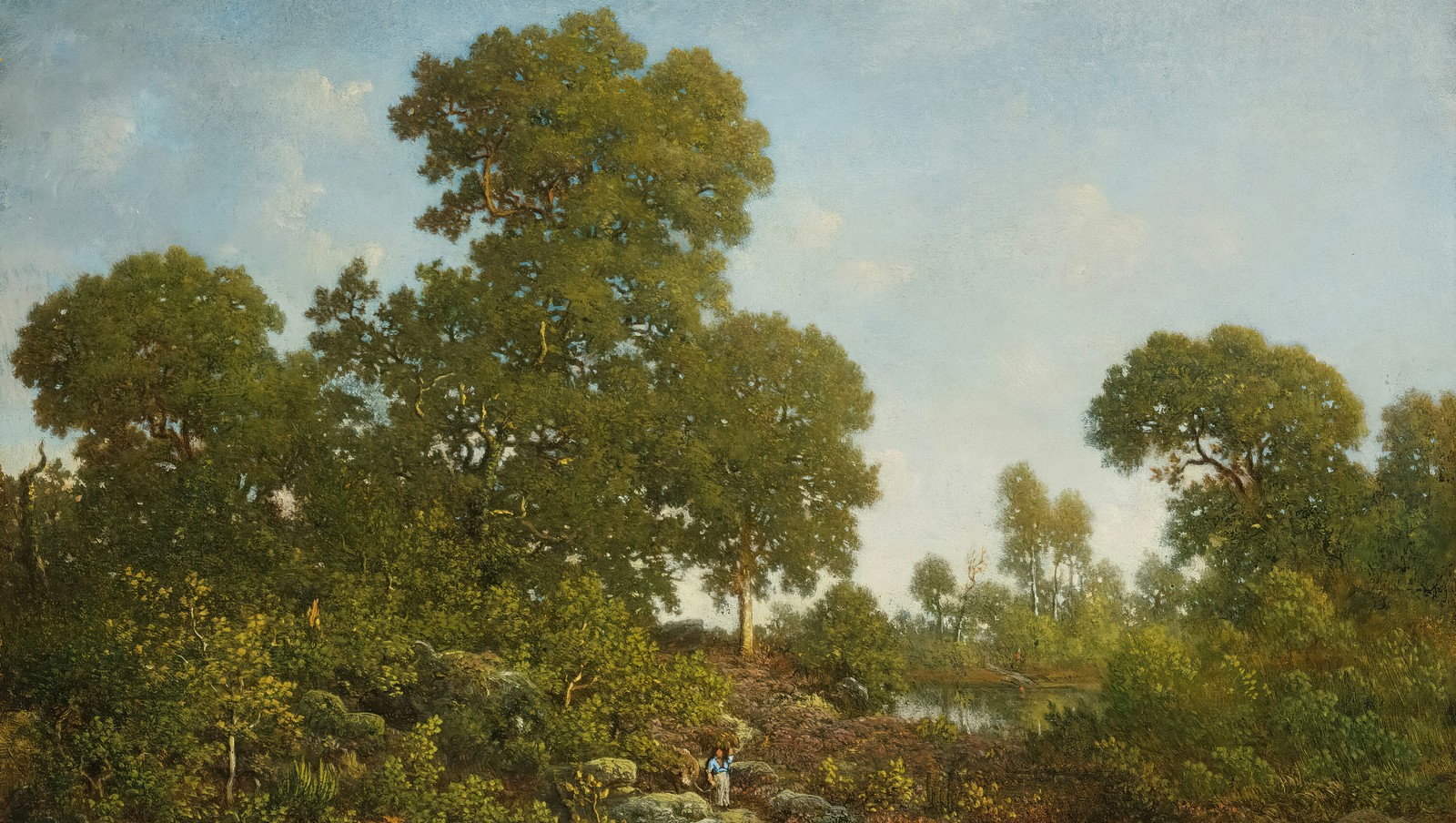
From towering forests to city streets, American trees have shaped culture, commerce, and the environment. Many provided food, medicine, and building materials, while others played a role in history. This list explores 10 iconic American trees and the surprising ways they’ve been used, preserved, and celebrated.

1
Sugar Maple (Acer saccharum)

Image: GraceHues Photography

The sugar maple produces the sap that becomes maple syrup, a North American staple. Its hardwood is also prized for furniture and flooring.

Native to the northeastern U.S. and Canada, sugar maples support both culinary traditions and forestry industries. They can live for over 200 years and are crucial to fall foliage tourism.

2
White Oak (Quercus alba)

Image: Tina Xinia

White oak wood is valued for barrels, furniture, and flooring due to its strength and natural rot resistance.

Historically, it was used in shipbuilding during colonial times. White oak forests also support diverse wildlife, and their acorns feed deer, squirrels, and birds.

3
Eastern Red Cedar (Juniperus virginiana)

Image: Aimee Summers

This tree’s wood is aromatic and naturally repels moths, making it a good choice for closets and storage chests.

Red cedar oil was also used in medicine by Native Americans. Its dense wood has been extensively used for fence posts and small-scale construction.

4
American Chestnut (Castanea dentata)

Image: Marta Reis

Once dominant in eastern forests, the American chestnut was devastated by blight in the early 20th century.

Its wood was lightweight yet strong, ideal for furniture and building. The nuts were a staple food for wildlife and humans alike. Breeding programs now aim to restore it.

5
Ponderosa Pine (Pinus ponderosa)

Image: benjamin lehman

Ponderosa pines dominate the western U.S. and are a major timber source.

Their wood is used for construction, paper, and fuel. Native Americans also used the bark and resin for medicinal purposes and ceremonial practices.

6
Red Maple (Acer rubrum)

Image: Edmond Lau

Red maples are adaptable trees that provide timber and spectacular fall colors.

Like the sugar maple, their sap can also produce syrup, and the wood is used in furniture and flooring. The species thrives in wetlands, supporting a wide range of ecological diversity.

7
Douglas Fir (Pseudotsuga menziesii)

Image: Ulrike R. Donohue

A key timber species, the noble Douglas fir is used for construction, plywood, and paper.

It’s also one of the most popular Christmas trees. Native Americans used the bark and needles for medicinal purposes.

8
Black Walnut (Juglans nigra)

Image: Ross Domke

Black walnut produces edible nuts and dark, durable wood for furniture and gunstocks.

Its wood is highly prized by woodworkers for fine cabinetry. The nuts support wildlife, while the husks can be used for natural dye.

9
American sycamore (Platanus occidentalis)

Image: Heather Wilde

American sycamores are found along rivers and lakes, stabilizing soil and preventing erosion.

Their large, patchy bark makes them visually distinctive. Historically, their wood was used for butcher blocks, furniture, and veneers.

10
White Spruce (Picea glauca)

Image: Joel Cross

White spruce supports timber, paper, and pulp industries in northern forests.

Its wood is lightweight yet strong, ideal for construction and musical instruments. Spruce forests are also critical habitats for migratory birds and wildlife.

History History 7 min read

Full story

Who was Uncle Sam before the famous poster? The mystery revealed

Image: Cory Woodruff

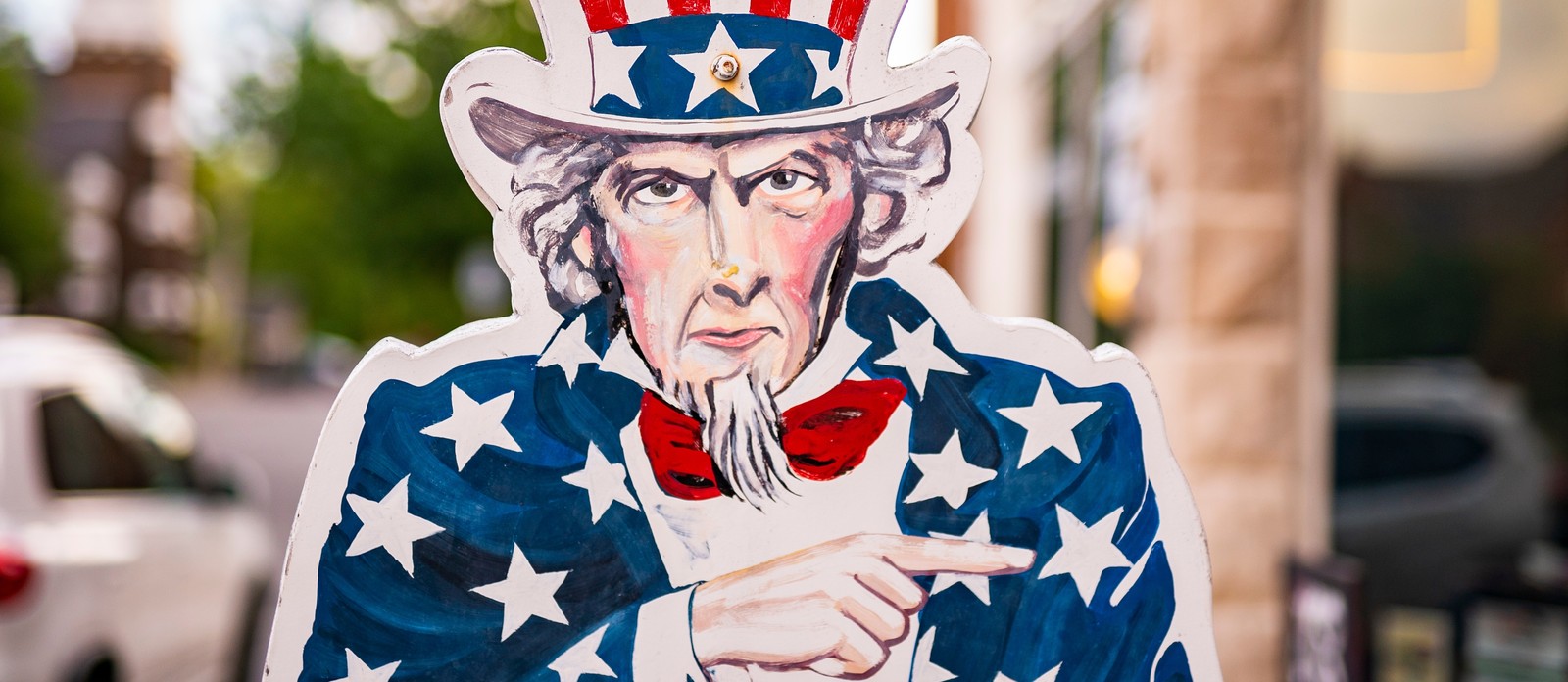
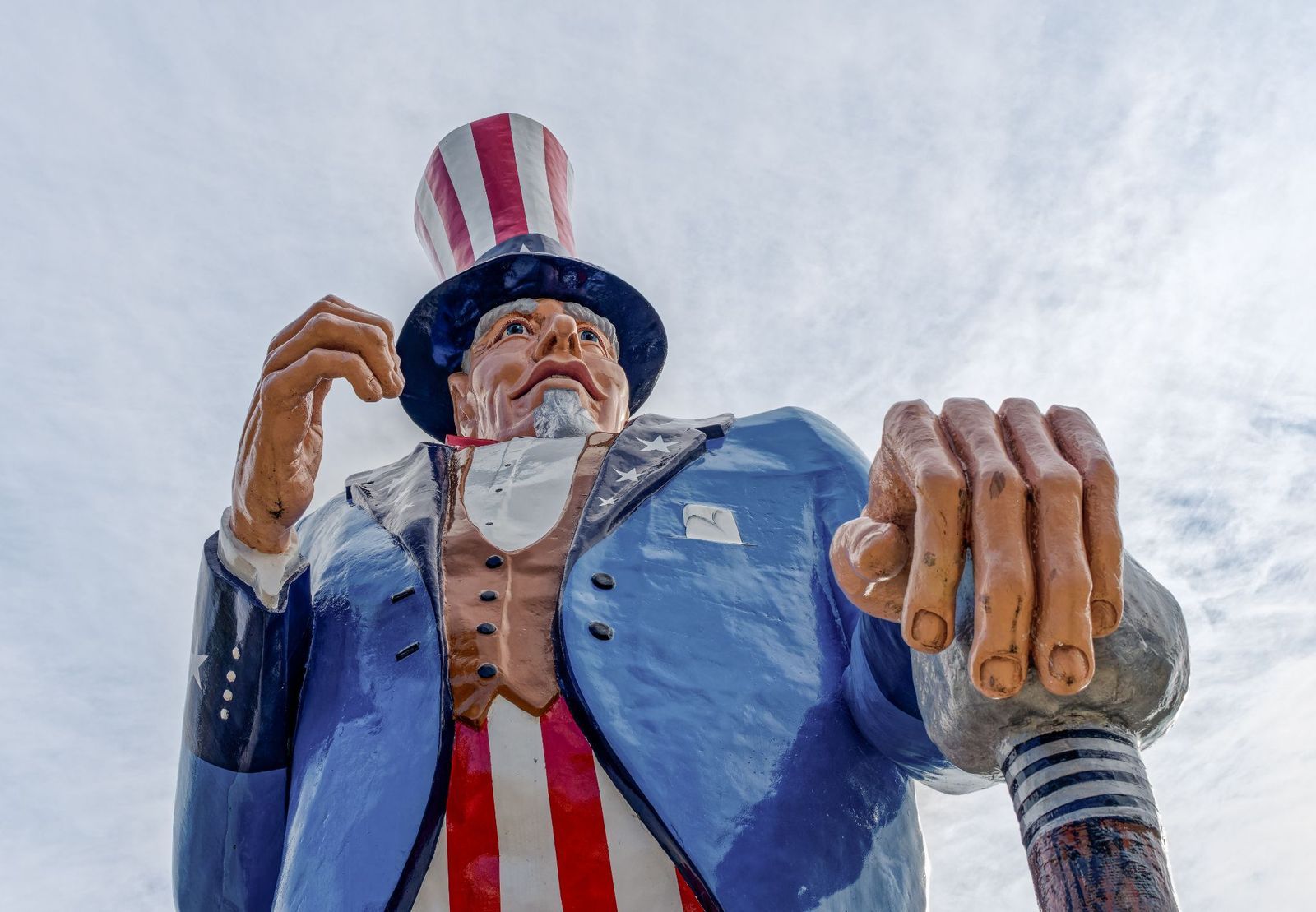
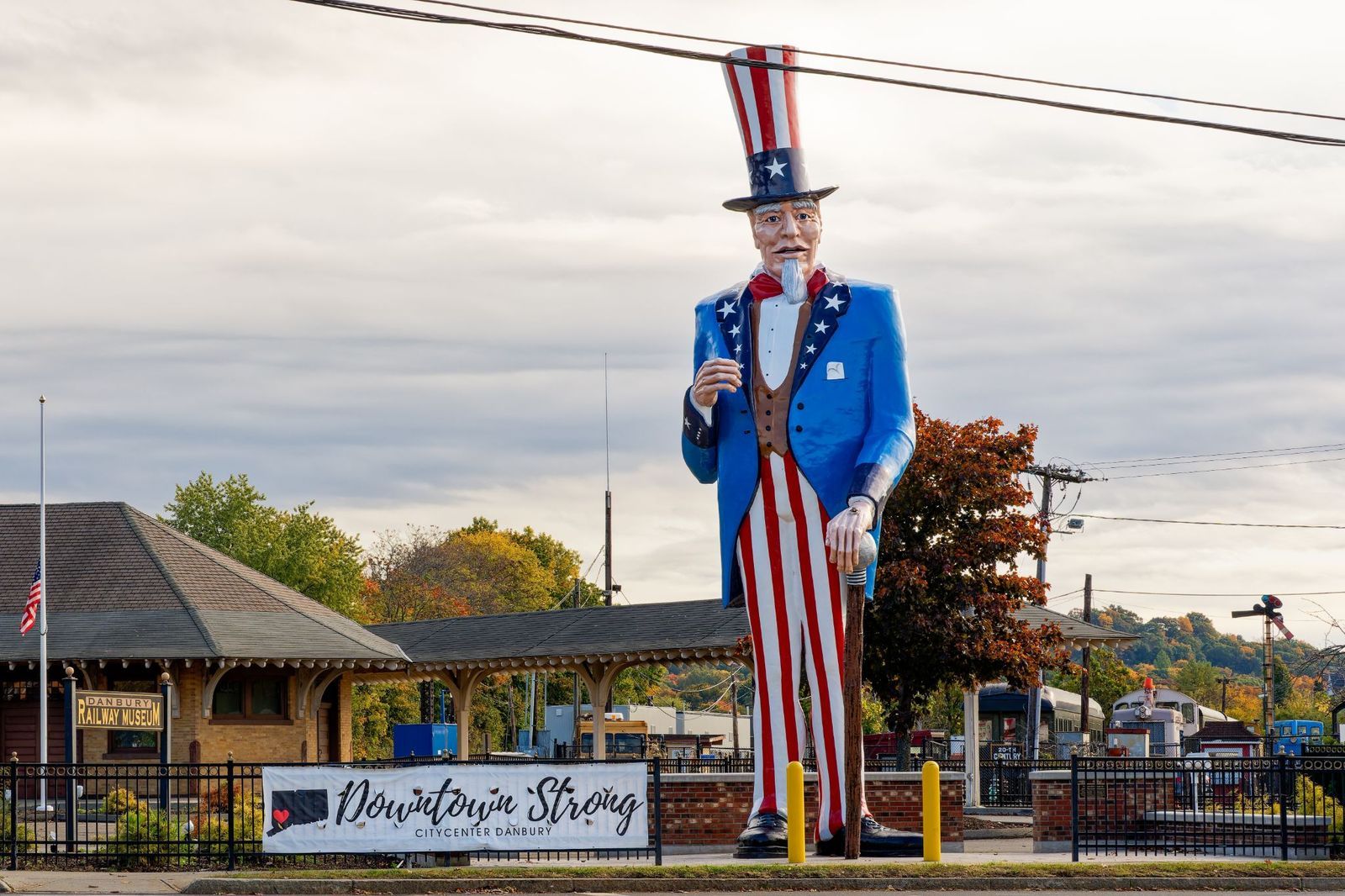
You know Uncle Sam's face from posters, coins, and cartoons, but did you know he started out as a real meatpacker from Troy, New York, stamping beef barrels with two letters that changed everything? Long before the stern man in stars and stripes pointed his finger at you, he wore patchwork clothes, borrowed his pose from a British general, and even helped sell war bonds through baseball. Ten surprising moments shaped the Uncle Sam you know today, and a few of them might genuinely catch you off guard.

1
A meatpacker from Troy sparks a nickname

Image: National Archives at College Park, Public domain, via Wikimedia Commons

In 1812, while the country was at war with Britain again, soldiers stationed near Troy, New York, needed to eat. A local businessman named Samuel Wilson, who ran a meatpacking company with his brother Ebenezer along the Hudson River, won a contract to supply barrels of beef and pork to the army.

Wilson stamped every barrel "U.S." for United States, but around town he was already known by a friendlier name, Uncle Sam, for being an honest and generous employer to the many workers who passed through his docks. Soldiers saw the initials, heard the nickname, and started joking that their rations came courtesy of "Uncle Sam" himself. What started as a joke stuck, and local newspapers quickly picked it up, marking the first step in Uncle Sam’s story.

2
A patchwork figure before the patriotic suit

Image: Rosemarie Mosteller

Before Uncle Sam wore his familiar star-spangled coat, he looked more like any other fisherman.

The earliest known drawing of him appeared in the New York Lantern in 1852 , decades after Samuel Wilson first earned the nickname back in Troy. In that cartoon, he had no top hat, no red and white stripes, nothing close to what you would recognize today. Early illustrators dressed him in rustic, everyday clothes, sometimes patchwork, because he was meant to represent the common American, not a polished symbol of government sitting in an office. It took years of cartoonists experimenting, borrowing bits from other figures and dropping others, before Uncle Sam’s look settled into anything close to consistent.

3
The Civil War gives him his iconic aesthetic

Image: Bibliothèque nationale de France, Public domain, via Wikimedia Commons

During the Civil War, Uncle Sam needed to do more than represent the country. He needed to rally it. Editorial cartoonists of the era, most famously Thomas Nast at Harper’s Weekly , reworked him into someone sharper and more commanding , trading the rustic patchwork look for a tall, lean man with a top hat and striped trousers.

Nast used Uncle Sam to speak for the Union cause and to argue for keeping the country unified, at a time when families followed the war through newspaper cartoons the way we now follow headlines on our phones. This version of Uncle Sam, dignified rather than folksy, laid the groundwork for the figure who would later stare down at millions of Americans from recruitment posters, decades before that poster was ever drawn.

4
Uncle Sam becomes a tool of political satire

Image: Udo Keppler, Public domain, via Wikimedia Commons

By the turn of the 20th century, Uncle Sam had developed a new side: he could make a political argument without saying a word.

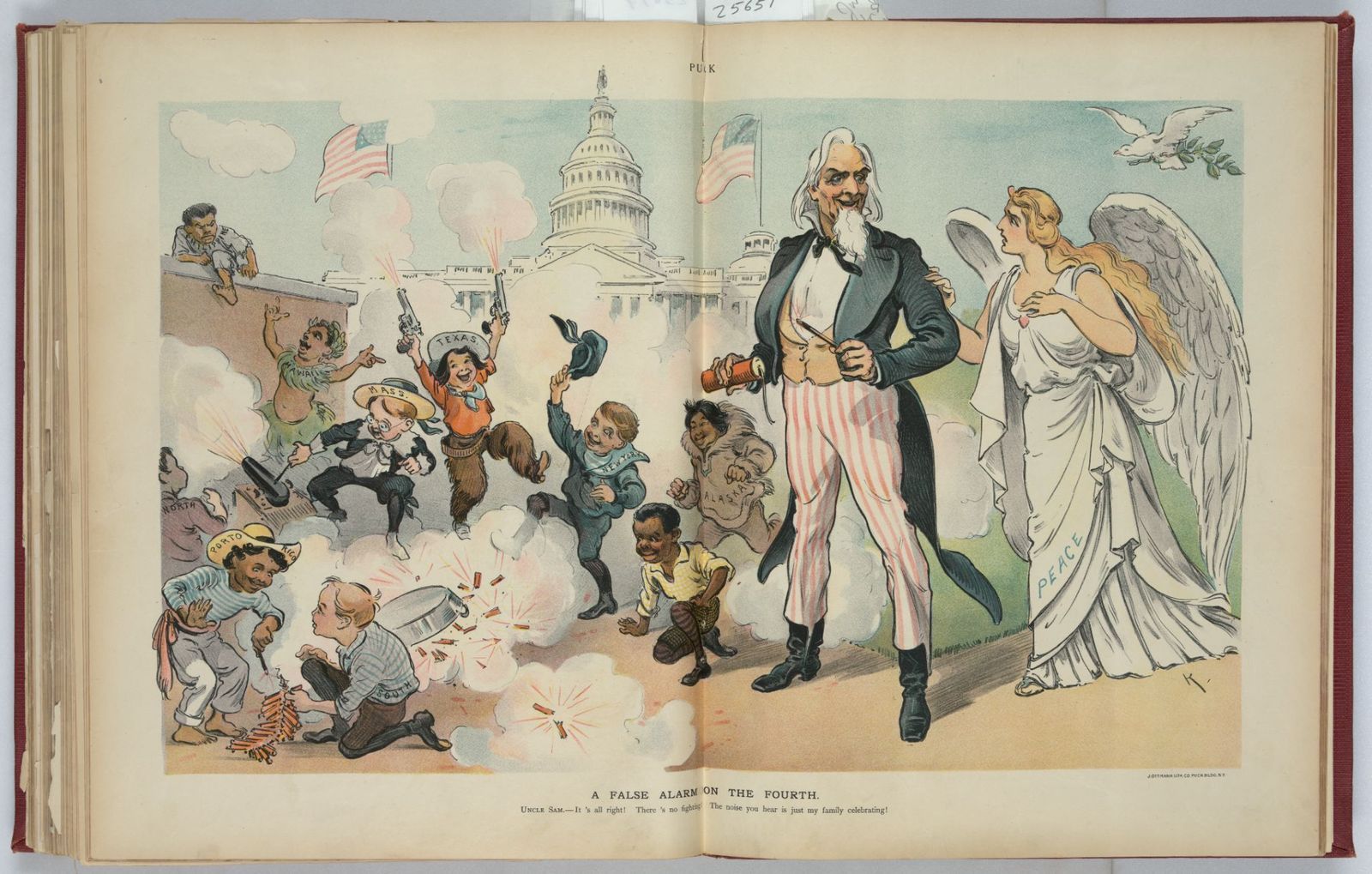
As the United States expanded overseas after the Spanish-American War, cartoonists used his body, clothes, and size to debate what that expansion meant. Around 1900, in J.S. Pughe’s cartoon "Declined with thanks," an oversized Uncle Sam gets measured for an ever bigger suit, a visual joke about the country’s growing territorial expansion. The joke was visual, but the issue was serious. Uncle Sam had become a flexible political weapon, useful both to supporters and critics of American power. The character could literally grow as the nation grew, making him ideal for newspaper satire.

5
A British general points the way first

Image: Alfred Leete, Public domain, via Wikimedia Commons

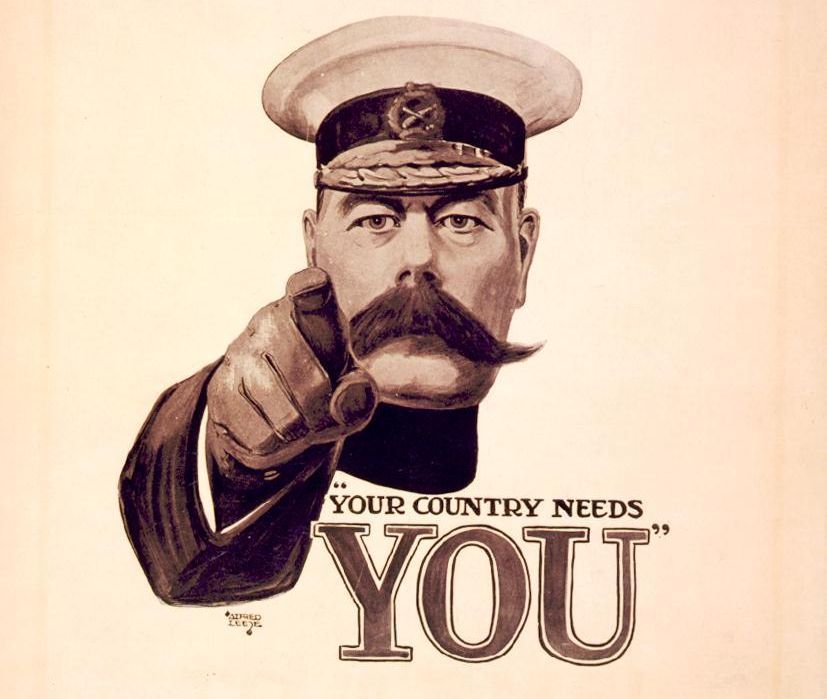
Here’s the twist most people don’t know about: That famous pointing finger, the one every American associated with Uncle Sam, was not originally American at all.

In 1914, as Britain entered World War I, illustrator Alfred Leete created a recruitment poster showing Lord Kitchener, Britain’s Secretary of State for War, pointing directly at the viewer above the words: "Britons: Join Your Country’s Army." The poster ran on magazine covers and street corners across the country and became one of the most talked-about images of the war’s early days. A few years later, on the other side of the Atlantic, an American artist would study that same commanding pose and realize it was exactly what his own country needed to put on paper.

6
An artist paints himself into history

Image: Arnold Genthe, Public domain, via Wikimedia Commons

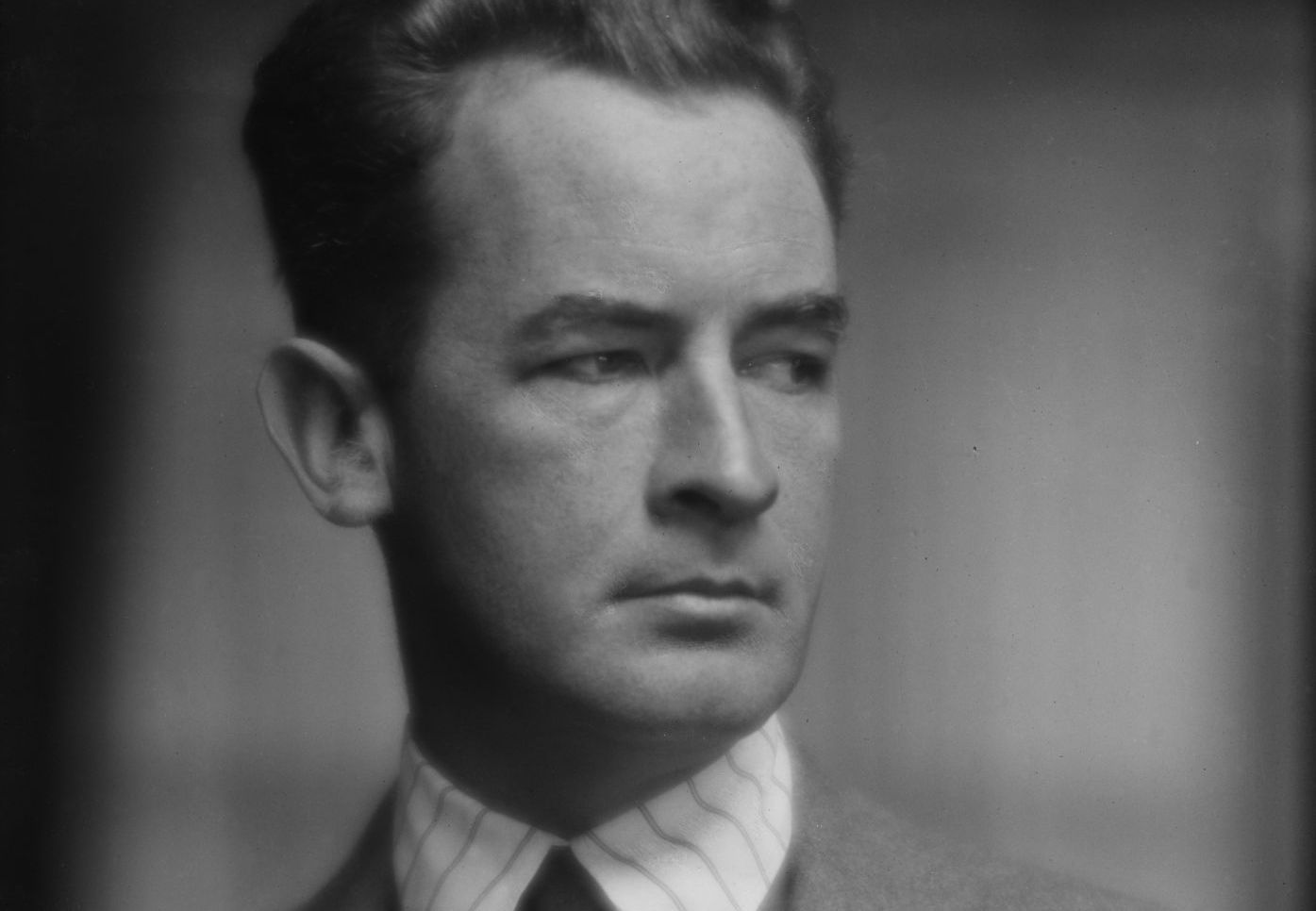
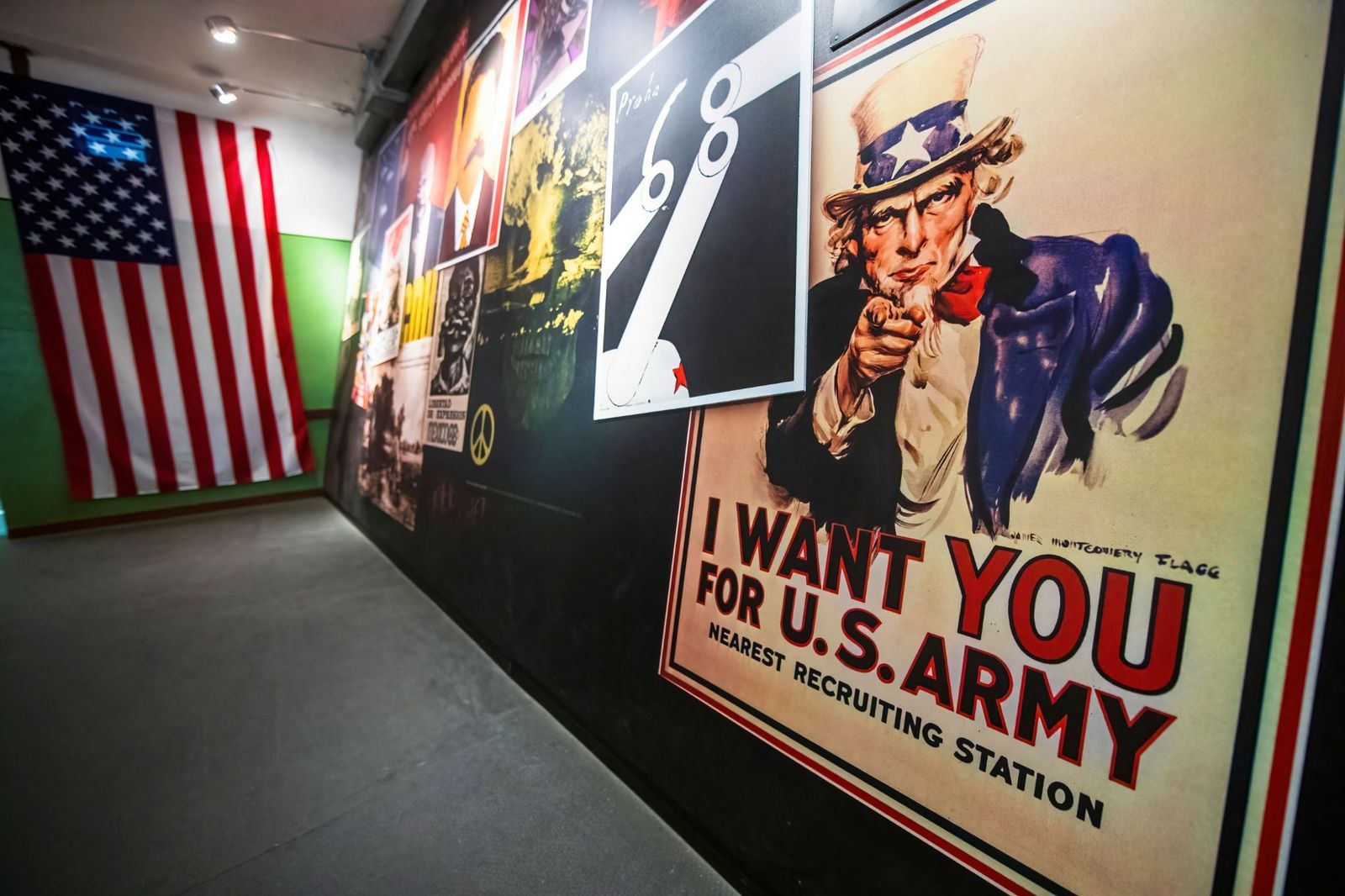
That American artist was James Montgomery Flagg, a well-known illustrator commissioned by the Committee for Public Information to create a recruitment poster for WWI in 1917.

The plan was simple: echo the Kitchener pose with an American face. There was just one problem: the model scheduled to sit for the painting never showed up that day. Rather than waste the afternoon, Flagg propped up a mirror in his studio and used his own reflection, adding a goatee and white hair to age himself into the role of Uncle Sam. The result, "I Want You for U.S. Army," turned out to be the defining image of Uncle Sam for generations, all because one artist got impatient and decided not to wait around for someone else to show up.

7
A single poster printed over four million times

Image: ZikG

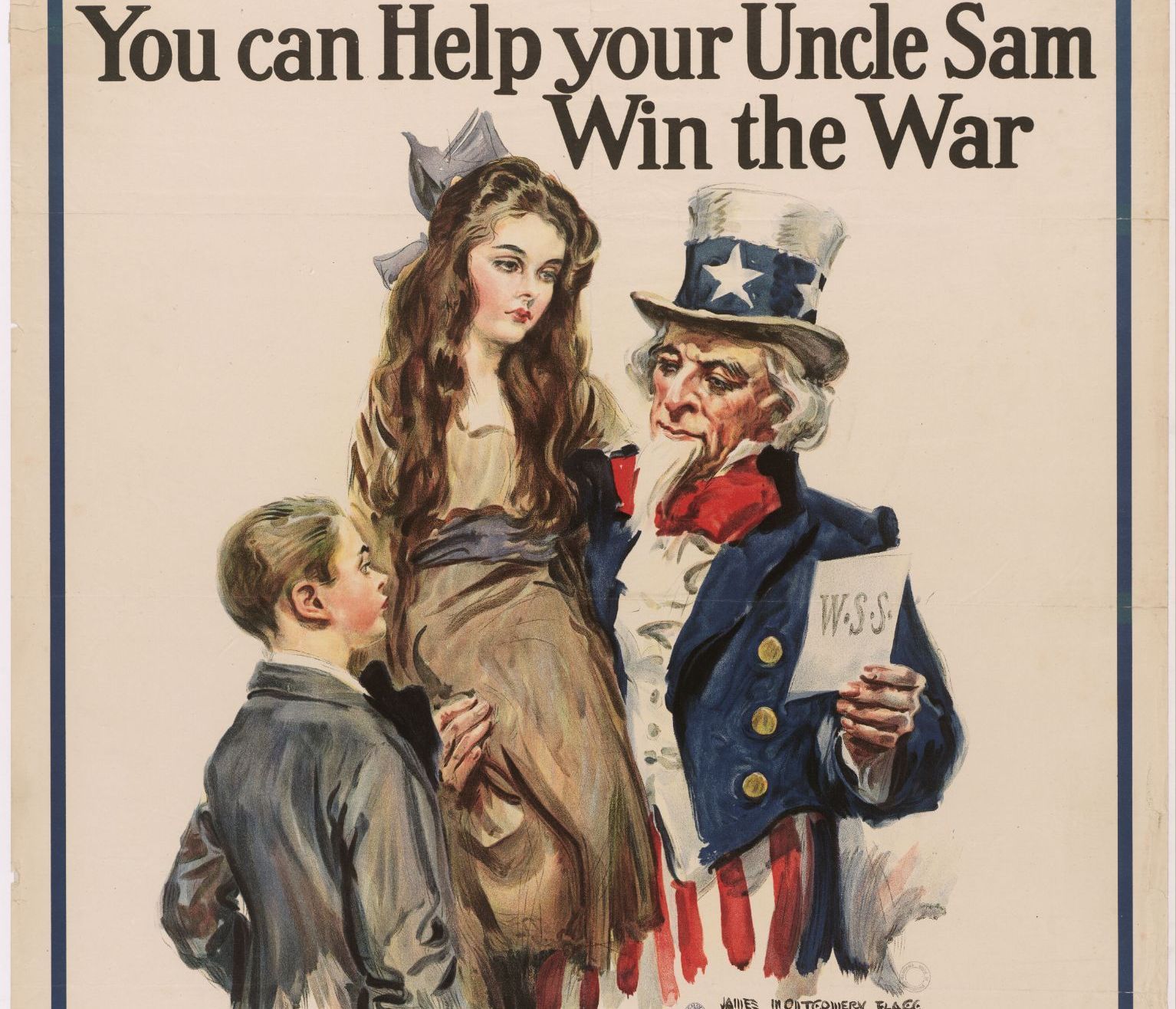
Numbers rarely tell a full story, but this one comes close. Between 1917 and 1918, Flagg’s Uncle Sam poster was printed more than four million times, plastered across train stations, storefronts, and town squares nationwide, often right next to enlistment tables.

It pushed Americans to sign up for service, to buy Liberty Bonds, and to see the war as something that involved them personally, not just the soldiers overseas. Few pieces of American graphic design have ever reached that scale of distribution, and fewer still have stayed recognizable a century later. If you have ever seen a Halloween costume, a magazine cover, or a protest sign featuring that pointing finger, you have already seen Flagg's poster still at work.

8
Uncle Sam trades his rifle for a baseball bat

Image: Rosemarie Mosteller

Not every wartime appearance of Uncle Sam involved a battlefield. Illustrators found plenty of other uses for his familiar face between 1917 and 1918, some of them surprisingly playful.

J.C. Leyendecker drew him swinging a baseball bat under the slogan "Get in the Game," nudging Americans toward the war effort through a sport nearly everyone already loved on weekend afternoons. Flagg himself created a gentler image of Uncle Sam with his arm around a horse, part of a campaign asking Americans to support the care of military animals overseas. These lighter, unexpected adaptations remind us that propaganda during that era was not only about urgency; it also leaned on familiarity and warmth to make its point stick.

9
Pearl Harbor brings the same face back

Image: Karolis Kavolelis

When Japan attacked Pearl Harbor in December 1941, the country needed a rallying image fast, and rather than starting from scratch, officials reached for something already proven.

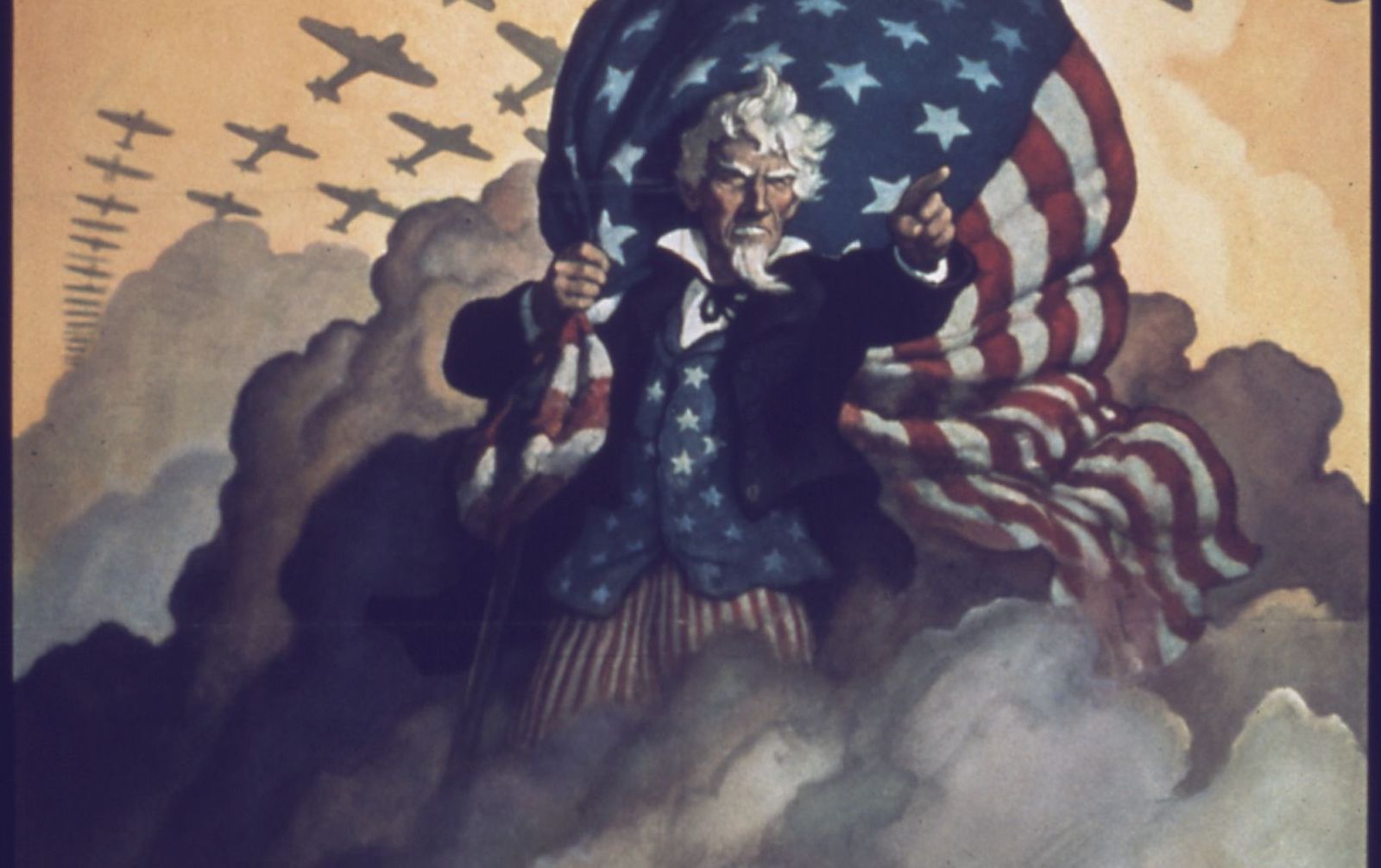
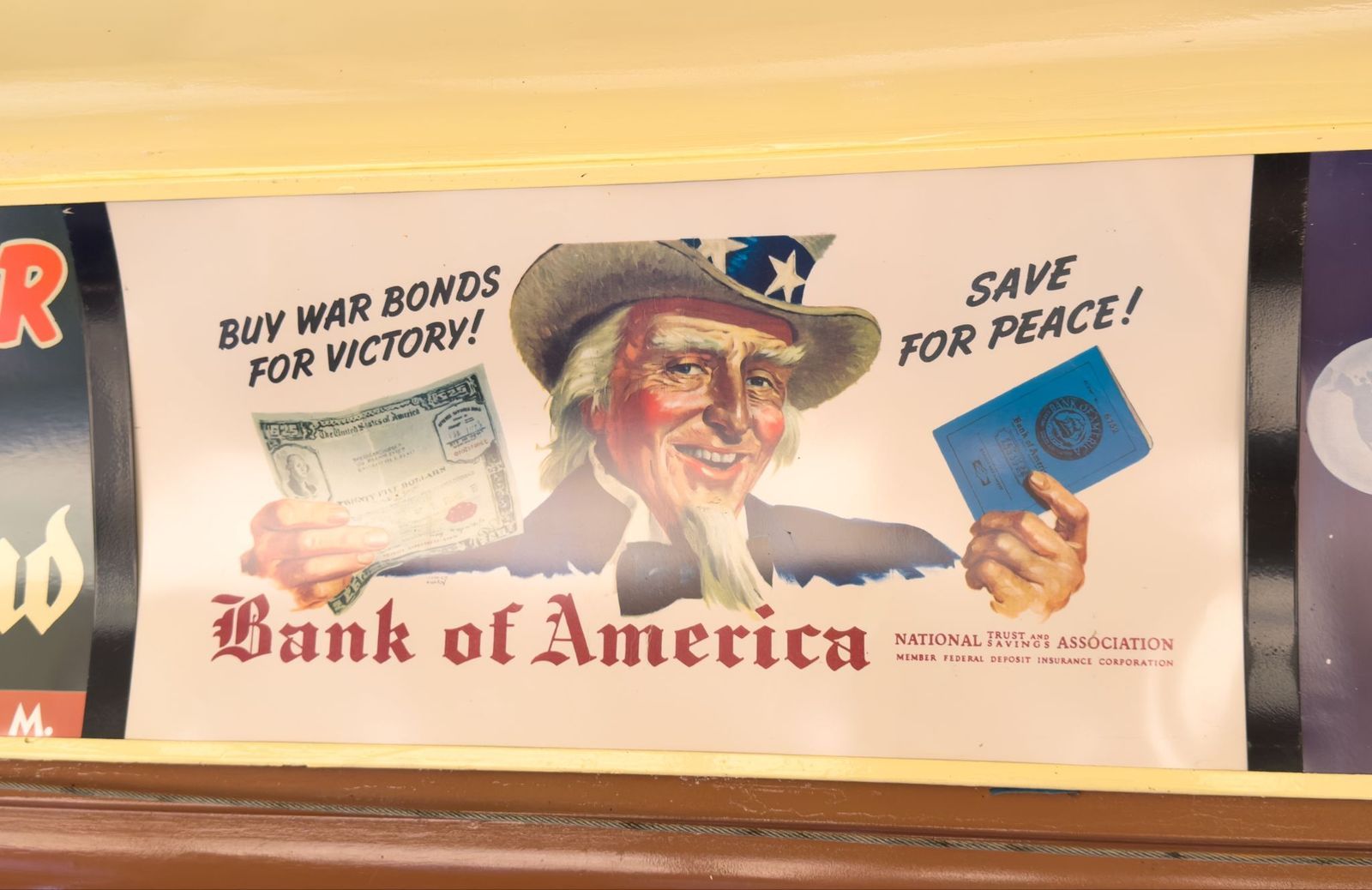
Flagg’s 1917 interpretation was dusted off and reprinted by the millions once again, this time for WWII enlistment drives and home front civil defense campaigns. The same stern face that had once urged an earlier generation to sign up was now doing the job all over again for their sons, appearing on posters in recruiting offices, factories, and post offices nationwide. By the 1940s, he was more than a wartime recruiting figure. He was a shorthand symbol for the federal government and the country itself.

10
From wartime symbol to modern canvas

Image: US Census Bureau, Public domain, via Wikimedia Commons

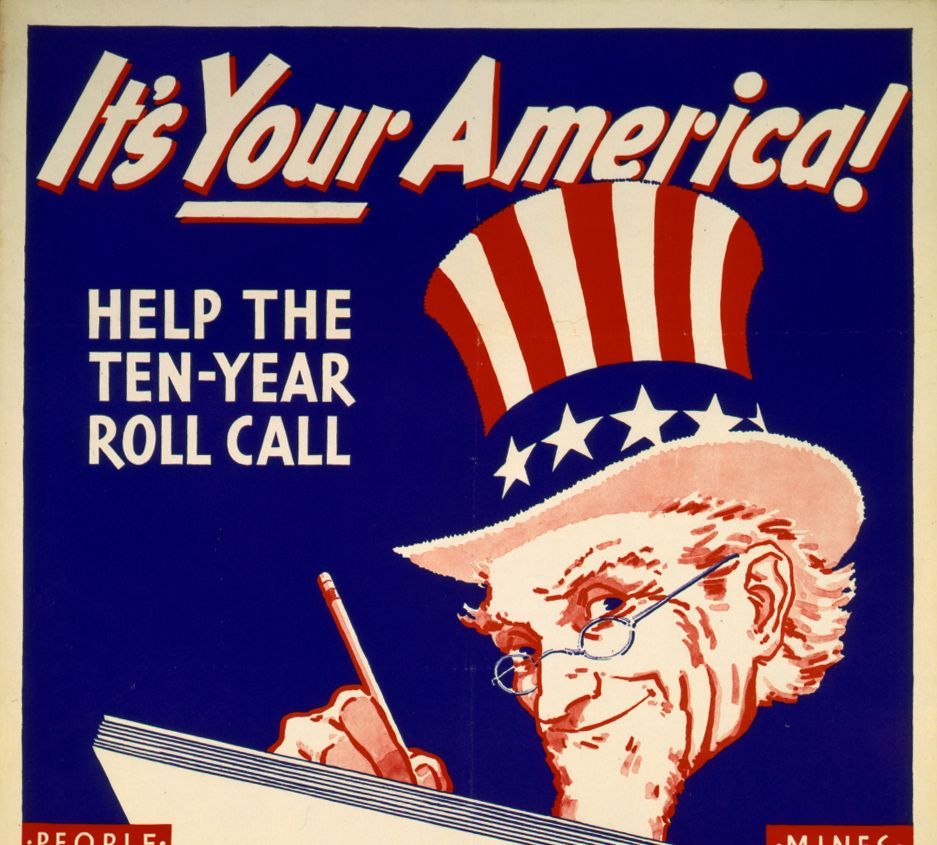
Uncle Sam did not retire once the World Wars ended. In the decades since, he has become something closer to a blank canvas that each generation paints over with its own concerns.

During the Vietnam era, protest artists twisted his familiar pose into pointed criticism of the very government he once represented so simply, using his own famous finger to accuse instead of recruit. Political cartoonists continue to reach for him today, whether the topic is an election, a policy debate, or a national controversy, counting on readers to instantly recognize who he stands for. Few American symbols have proven so adaptable, stretched and reshaped again and again across more than two centuries, yet somehow always recognizable the moment that pointing finger appears.

Explore more American facts

Choose your favorite category!

General
General

As American as apple pie—the very best America has to offer!

Culture
Culture

Delve into the astounding richness of American lore.

Geography
Geography

Hop in and explore vast and diverse American landscapes.

History
History

Discover the key moments that shaped the United States.