Culture Culture 4 min read

Ominous Hollywood

Is your favorite on this list? 10 iconic apocalyptic movies

Image: Max Ovcharenko

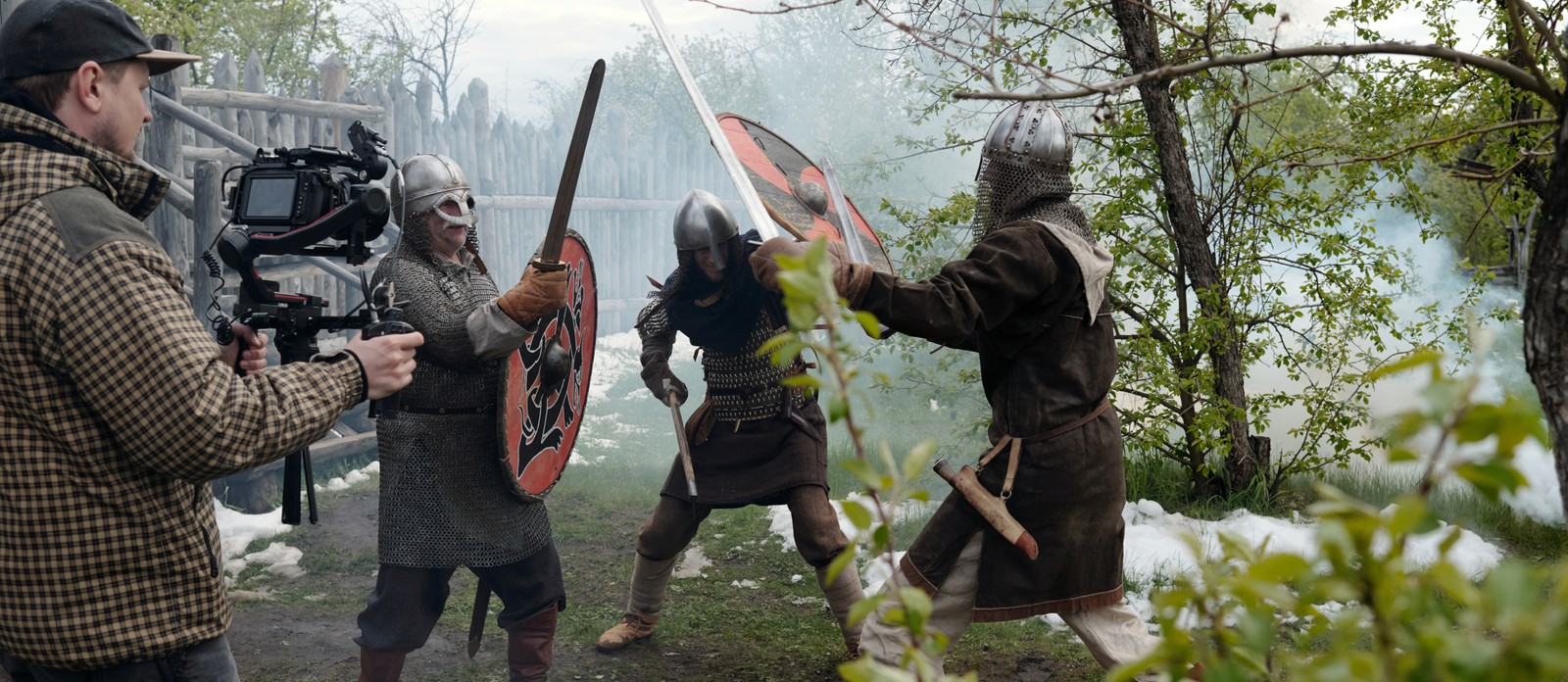
Alien invasions, nuclear accidents, or major natural disasters… The end of the world has been depicted countless times in cinema. Whether for their spectacular visuals or their realistic portrayal of humanity’s demise, some of these films have become icons that most of us have likely seen and remember vividly. Join us as we explore the most popular American apocalyptic films.

1
Independence Day

Image: Jason W

Nothing beats a classic apocalyptic alien invasion, where extraterrestrials arrive to destroy the planet, but encounter a group of humans willing to give everything to save humanity. This is the premise of Independence Day (1996), one of the most famous disaster films. Starring Will Smith, the movie marked a turning point in science fiction, showcasing visual effects that, although they may not be as surprising today, set a new standard at the time.

2
Armageddon

Image: Javier Miranda

It’s hard to keep track of how many explosions light up the screen in Armageddon (1998), but rest assured, there are a lot of them. This film follows the classic natural disaster formula: a massive asteroid threatens Earth, and the only hope for survival is to destroy it. When the planet’s at risk, who better to call than Bruce Willis? Alongside Ben Affleck, he steps up to risk everything in a race against time.

Do you also remember this movie every time you hear Aerosmith's "I Don't Wanna Miss a Thing"? You are one of us!

3
The Day After Tomorrow

Image: Mason Mulcahy

A new Ice Age threatens humanity after a series of devastating storms strike the planet in The Day After Tomorrow (2004), a film that takes climate change and pushes its possible consequences to the extreme. With spectacular disaster sequences and visuals, the movie became a total box office success worldwide.

4
I Am Legend

Image: Natalya Letunova

Imagine waking up one day and realizing that you are, as far as you can tell, the last survivor in the city. This is what happens to scientist Robert Neville, played by Will Smith, in I Am Legend (2007). The now-classic apocalyptic theme is a deadly virus that has devastated humanity, and it is Dr. Robert Neville who appears to be the only one capable of doing something to reverse the effects of this.

5
Interstellar
Image: Guillaume Le Louarn

In 2014, we saw one of the most exciting movies to hit the big screen: Christopher Nolan's Interstellar . Acclaimed by audiences and critics alike for its visual effects and its complex and thrilling plot, this film is one of those you’ll find hard to forget. Set on an Earth that is becoming uninhabitable, Matthew McConaughey plays Cooper, a former NASA pilot who joins a mission to travel through a wormhole near Saturn in search of a new place for humanity.

Fun fact: It’s not surprising that it has been well received even by the scientific community, since a Nobel Prize–winning physicist collaborated on the script.

6
Planet of the Apes
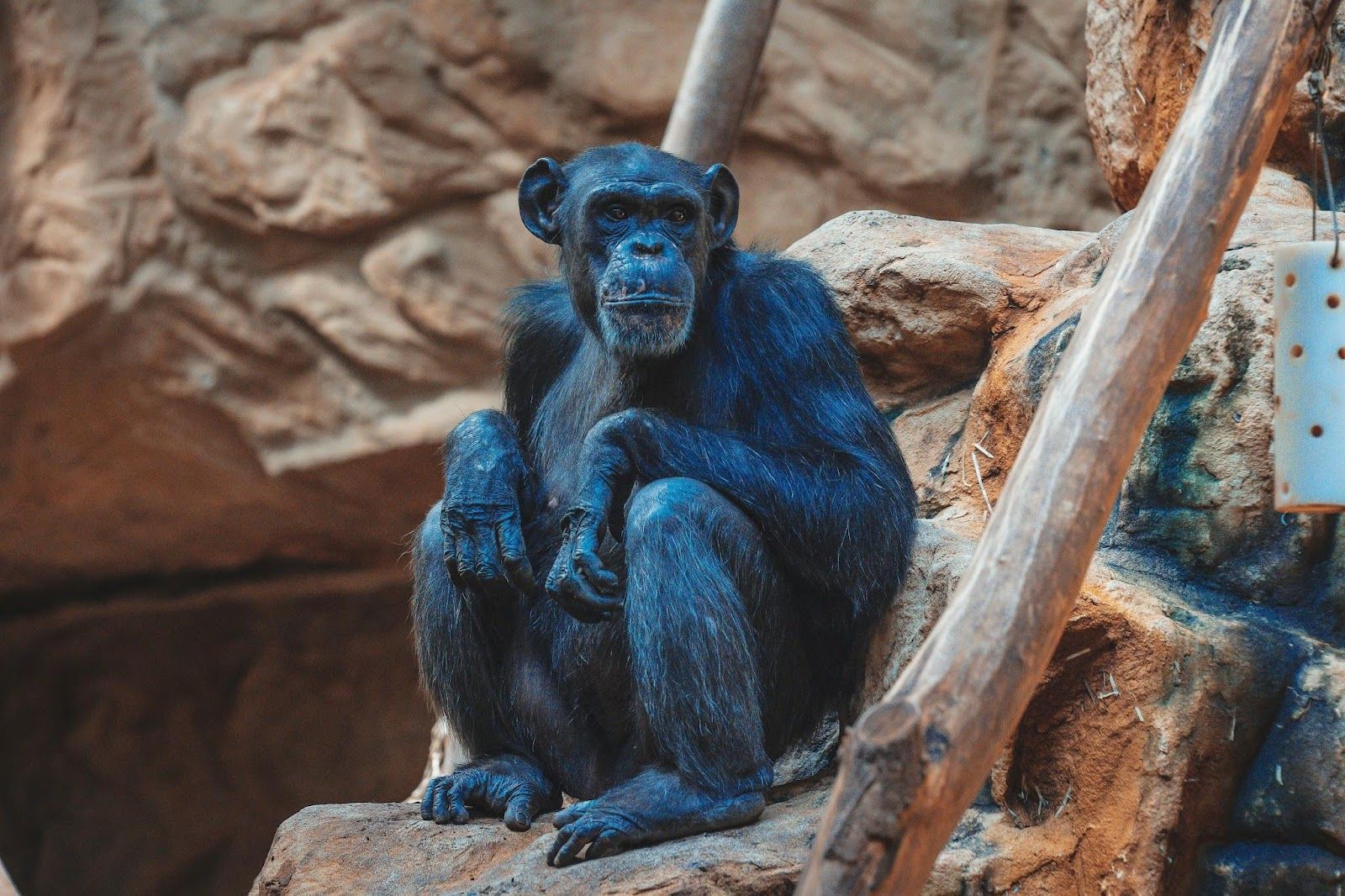
Image: Mateusz Suski

In the original Planet of the Apes (1968), the story takes us to a distant future planet where chimpanzees, gorillas, and orangutans have evolved to possess human-like intelligence and social structures, dominating that world while humans are reduced to an oppressed species. Featuring one of the most shocking and unforgettable plot twists in cinema history, the film stands as an essential classic of dystopian science fiction.

7
Night of the Living Dead

Image: Daniel Jensen

We couldn’t leave Night of the Living Dead off this list, the 1968 film that changed cinema forever. While the concept of "zombies" may feel familiar today, this George A. Romero’s film was the first to present the idea of the dead rising again and becoming a real threat to the living.

8
12 Monkeys

Image: Liam Andrew

Bruce Willis is once again called upon to help humanity (or what remains of it) in the 1995 film 12 Monkeys , this time alongside none other than Brad Pitt, who earned an Oscar nomination for this role. Set in a dark future, most of humanity has been wiped out by a deadly virus, and Willis’s character must travel back in time to gather information about its origins and help find a way to stop it.

9
Dawn of the Dead

Image: airci K

Of course, George A. Romero wasn’t going to appear just once on this list. In 1978, Dawn of the Dead was released, once again portraying the end of the world brought on by the return of the undead. A group of survivors takes refuge in a shopping mall, but human conflicts soon emerge as a threat equal to, or even greater than, that posed by the zombies themselves.

10
The Day the Earth Stood Still
Image: Michael Herren

The Day the Earth Stood Still (1951) is definitely a science fiction classic. Unlike the other films on this list, its catastrophe is not inevitable; disaster can still be avoided. Rather than centering on spectacular destruction, the film delivers a philosophical warning to humanity. An alien visitor arrives on Earth to deliver a stark message: abandon nuclear violence, or face devastating consequences.


Culture Culture 6 min read

American beauties

Who’s the legend in each of these 10 states? A journey through our icons!

Image: Marvin Zettl

Every state in the US has its claim to fame. Some states are known for their landscapes, some for their food. Some are even known for their buildings. But one thing is for sure: All of them produced some of the best people in our country, and in some cases, the best in the world! For example, Mississippi gave us Elvis, and Arkansas, Johnny Cash. But it’s not only about artists, we’ve produced inventors, scientists, politicians, you name it! In this article, we’ll go through 10 states and the most influential figures that were born in them. Can you guess who’s going to make it to the list?

1
Alabama’s Southern charm

Image: Nathan Anderson

You may know Alabama for the peanuts, the cotton, and of course, that typical Southern hospitality. You may also know it for the iconic song "Sweet Home Alabama," but the Southern state has one more thing (or person to be more precise) to make it stand out: Zelda Fitzgerald.

Zelda was a novelist, painter, and socialite, a shining star of the 1920s, known for her creative spirit and marriage to F. Scott Fitzgerald. Zelda embodied the roaring ‘20s and left a lasting artistic legacy.

And as if art was not enough for Alabama, it also produced one of the most important figures in the fight for Civil rights and that’s Rosa Parks whose refusal to give up her bus seat sparked a movement that changed history. Quite a way to kick it off, huh?

2
Arkansas’ man in black

Image: Tommy Bond

The second state is known for its rivers, its lakes, and a bit of extreme weather. Arkansas is famous for its natural beauty, but it’s also the birthplace of one of the most iconic musicians of all time: Johnny Cash.

The "Man in Black" captured the hearts of millions with his deep voice and soulful songs like "I Walk the Line" and "Ring of Fire." Cash’s music transcended genres, blending country, folk, and rock with themes of heartache, redemption, and rebellion.

Few artists have left a mark as deep as Johnny Cash and we’ve got Arkansas to thank!

3
Delaware’s lifesaving innovator

Image: Josefina Lacroze

What’s the first thing you think of when you think of Delaware? Is it that it was the first state to ratify the Consitution? Maybe it’s the fact that it is a tax-free state. But did you know this is also Henry Heimlich’s home state ?

If you find that name familiar, it’s because you probably heard of the maneuver. Born in Wilmington, Delaware, revolutionized the field of emergency medicine with the creation of the Heimlich Maneuver.

This simple but life-saving technique has helped countless people who were choking, cementing Heimlich’s place in medical history. Delaware may be famous for being the "First State," but Heimlich’s contribution proves that it’s also a state of firsts when it comes to saving lives.

4
Georgia on our minds

Image: Joey Kyber

Yes, we all know about the peaches, but Georgia has so much more to offer! This state is also the birthplace of one of America’s greatest civil rights leaders: None other than Martin Luther King Jr!

MLK was born in Atlanta, and he became the face of the 1960s civil rights movement, advocating for non-violent resistance and racial equality. His speech "I Have a Dream" was powerful and it remains today as a call for justice. King’s leadership in desegregating the South and fighting for civil rights earned him the Nobel Peace Prize so this state has more than one reason to feel proud. Way to go, Georgia!

5
Illinois’ creative geniuses

Image: Joel Mott

The land of corn and the first McDonalds in America is also home to great creative minds like that of the great Walt Disney!

Born in Chicago, a city particularly known for its artistic spirit, Disney revolutionized the world of animation. Who doesn’t love that fun and loving Mickey Mouse? Or that magical castle that receives visitors from all over in Disney World. He created a truly magical world!

But that is not all, this state also gave us the literary icon Ernest Hemingway, whose works like The Old Man and the Sea continue to be read and loved all over the globe. Disney’s creativity and Hemingway’s literary genius… How are the rest of the states going to top that? Keep reading and you’ll see!

6
Kansas’ flying heroine

Image: Heyzeus Escribo

Kansas may be known for its wheat fields, but it’s also the home of one of history’s greatest aviators: Amelia Earhart.

Amelia was born in Atchison, Kansas, and she made the headlines as the first woman to fly solo across the Atlantic Ocean. This was a turning point in history, as women in aviation were not a thing at all! One can easily imagine how inspiring it was for the rest of the women to pursue this kind of adventure, even when the tragic finale remains one of history’s unsolved mysteries. Her feat was an achievement for women and for aviation too!

Kansas, raise your glasses in pride, to celebrate this courageous woman!

7
Louisiana’s jazz royalty

Image: Joe Lavigne

How many films are set in this vibrant city? We say Louisiana and you think of music, right? And more than that, you probably think of the one and only Louis Armstrong , don’t you? As you should!

With his majestic voice and his amazing trumpet playing, Armstrong remains today as one of the brightest jazz stars. He was born in the heart of New Orleans and he contributed music with some of the greatest hits like "What a Wonderful World." His music shaped the sound of 20th-century jazz.

But that’s not all, Louisiana also gave us literary genius Truman Capote, who wrote classics like In Cold Blood and Breakfast at Tiffany’s . This is a state that knows how to produce world-class talent, don’t you think?

8
Massachusetts’ master of the macabre

Image: Piermario Eva

Massachusetts didn’t need to prove anything, that is, this was the place where the Pilgrims landed. We could say it’s the birthplace of our nation. But Massachusetts didn’t come here to play, it also gave us one of America’s most famous literary figures, Edgar Allan Poe .

Poe was born in Boston, and he is known for being the master of the macabre: He wrote thrilling stories with a gothic style like The Raven and The Telltale Heart.

More related to the history Massachusetts is known for, this is also the birthplace of one of America’s Founding Fathers, Benjamin Franklin , who helped shape the American Revolution and contributed to innovations in science. Did Massachusetts win the contest or what?

9
Michigan’s motorman

Image: Bruno Guerrero

Sometimes it’s not very clear what came first, it still remains a mystery whether the chicken or the egg came first. Now, in the case of Michigan, there’s no doubt what came first. This is the home state of Henry Ford and that is why this state suddenly came to be known for the automobile industry.

Ford revolutionized manufacturing with the introduction of the assembly line, making cars affordable to the middle class and transforming the way products were made. His Model T became a symbol of the modern world. Michigan’s Motor City, Detroit, owes much of its fame to Ford’s pioneering work. A word and legacy that is still a reality today!

10
Mississippi’s musical legends

Image: Jp Valery

We couldn’t end this article without including one of America’s most beloved characters. And this might cloud your judgment, but it will probably help you choose a winner. Mississippi is the birthplace of none other than the King of Rock ‘n’ Roll, Elvis Presley!

We don’t need to describe how influential Elvis was, or how his music contributions changed the industry forever. If this had been everything Mississippi had to offer, it would have been more than enough!

But the state’s contributions don’t end there, Mississippi saw many more great minds, like

Tennessee Williams , the famous playwright. He was known for works like Cat on a Hot Tin Roof or A Streetcar Named Desire . From rock ‘n’ roll to Broadway, Magnolia State’s influence is undeniable.

General General 6 min read

Timeless inventions

12 amazing American patents that shaped technology and culture

Image: Markus Winkler

The United States Patent and Trademark Office has issued over 12 million patents since its establishment in 1836. Many of the inventors who applied for these patents are well known—such as Elisha Graves Otis or Orville and Wilbur Wright —while others may come as a complete surprise, like President Abraham Lincoln . Some of the patents listed in this article are grandiose; others are smaller and seemingly insignificant. However, they all have something in common: they were invented in our country and changed the course of history. Wondering what they might be? Read on to find out!

1
Locomotive steam-engine for rail (Patent #1)

Image: National Archives at College Park - Textual Reference, Public domain, via Wikimedia Commons

Between 1790 and 1836, the United States granted 9,802 patents that were not awarded on their merits and didn’t have an identification number. The Patent Act of 1836, which established the official Patent Office, aimed to make the system more transparent. Among other reforms, it introduced a numbering system for easier identification.

This system started on July 13, 1836, and remains in effect today. United States Patent No. 1 was issued to John Ruggles —an inventor, attorney, and senator from Maine—for improvements in locomotive traction.

2
Anesthesia (Patent #4,848)

Image: National Library of Medicine

How did patients endure surgery before anesthesia? Before the discovery of an effective anesthetic, surgery was synonymous with excruciating pain. Many large hospitals placed their operating rooms in isolated and remote sections of the hospitals so patients’ screams couldn’t be heard. Alcohol, opium, and even hypnotism were tried as methods of pain relief, but these had little effect.

Fortunately, we no longer have to endure such experiences, thanks to a Boston dentist named William T. G. Morton, who—along with Charles T. Jackson—received the first United States patent for an anesthetic in November 1846.

3
Buoying vessels over shoals (Patent #6,469)

Image: invented by Abraham Lincoln. Issued by United States government Patent Office, Public domain, via Wikimedia Commons

This may be the most unique patent ever issued by the United States Patent Office: it is the first and only U.S. patent granted to an inventor who later became president. Although at least three presidents—George Washington, Thomas Jefferson, and Abraham Lincoln—were inventors, Lincoln is the only one who formally applied for and received a patent .

In 1849, he was awarded Patent No. 6,469 for a flotation device designed to lift boats over shoals and other obstacles in the water. While the invention itself had little bearing on his election, Lincoln’s inventive mindset and mechanical curiosity served him well during his presidency. Although the device was never commercially produced, his appreciation for innovation helped shape the nation's future.

4
Beehive (Patent #9,300)

Image: Bianca Ackermann

Beekeeping arrived in America with the early settlers, and by the end of the 18th century, bee colonies were widespread. However, early efforts met with only partial success.

The first U.S. patent for a practical and effective movable-frame beehive—which revolutionized traditional methods of beekeeping—was granted to American apiarist, clergyman, and teacher Lorenzo Lorraine Langstroth on October 5, 1852. His invention of the "bee space" laid the foundation for all modern beekeeping and hive management.

5
Elevator (Patent #31,128)

Image: Copie de gravure ancienne, Public domain, via Wikimedia Commons

The New York skyline would look very different today had it not been for the invention of the elevator. The man responsible for the forerunner of the modern elevator was American industrialist Elisha Graves Otis , who, on January 15, 1861, received the first U.S. patent for a safety-type passenger elevator.

The concept of vertical travel was not new. However, the first successful passenger safety elevator was installed in 1857 by Otis in the E. V. Haughwout & Company building, a department store in Manhattan. Otis also held patents for other inventions, including railroad trucks and brakes, a steam plow, and a bake oven. But it was the elevator with its safety feature that brought him fame and his sons great fortune.

6
Lock (Patent #31,278)

Image: Parastoo Maleki

The idea of the lock probably stems from the time man first acquired goods he wanted to safeguard from others. However, the first commercially successful modern lock and key system was invented by American mechanical engineer and metalsmith Linus Yale Jr., who received a U.S. patent in 1861.

Yale developed several types of locks, including the Yale Double Treasury Bank Lock, created at the request of the U.S. government. These designs brought him nationwide recognition, but the invention that made him truly famous was the pin-tumbler cylinder lock . Yale died just a few years after receiving his patent. However, every lock and key produced by the Yale & Towne Lock Company since then has proudly carried the Yale name.

7
Barbed wire (Patent #157,124)

Image: Lexis Chadwick

In an age of video surveillance, barbed wire might seem obsolete. Yet it was crucial to the settlement of the American plains in the late 19th century—and it remains widely used around the world today .

On November 24, 1874, Joseph F. Glidden, a farmer from Illinois, received a U.S. patent for the first commercially successful barbed wire . While several earlier patents had been granted for wire fencing, it was Glidden’s design that proved durable, affordable, and easy to mass-produce—making it the dominant form of fencing on the frontier**.**

8
Air conditioner (Patent #808,897)

Image: Prasopchok

On those hot and humid days of summer, we should all be thankful for the work of Willis Haviland Carrier, often called the father of air conditioning. For his efforts, he received the first U.S. patent for a modern air conditioning system on January 2, 1906.

Air conditioning is a complex process that involves refrigeration, dehumidification, air purification, and circulation. Before Carrier’s invention, various individuals had worked on these individual components. But it was Carrier, an American engineer, who successfully integrated them —focusing on the crucial relationship between temperature and humidity.

9
Airplane (Patent #821,393)

Image: John T. Daniels, Public domain, via Wikimedia Commons

Orville and Wilbur Wright are credited with achieving the first controlled, manned flight in history. For their pioneering work, they received the first U.S. patent for an airplane, issued on May 22, 1906.

Many had been intrigued by the idea of human flight before them. However, it was the Wright brothers who succeeded in building, flying, and promoting the world's first successful airplane —an invention that revolutionized transportation.

10
Bakelite (Patent #942,809)

Image: Call Me Fred

The modern plastics industry wouldn’t exist without Belgian-American chemist Leo Hendrik Baekeland , who received the first U.S. patent for a thermosetting plastic in 1909. Before him, others had attempted to produce synthetic resins but were unsuccessful.

Baekeland corrected his predecessors’ mistakes. The result was the first thermosetting resin —one that, once set, would not soften under heat. Bakelite was the first in a long series of resins that shaped the U.S. economy, paving the way for materials such as cellophane, acetate, vinyl, Plexiglas, acrylic, Formica, and polyester.

11
Frozen food (Patent #1,773,080)

Image: United States Patent Office (Clarence Birdseye, inventor)., Public domain, via Wikimedia Commons

Do you know where the name Birds Eye Frozen Food comes from? From its inventor! In 1930, American entrepreneur Clarence Birdseye received the first U.S. patent for this type of product.

Food preservation has been a concern since the beginning of time. Techniques such as salting, pickling, smoking, curing, canning, and later inventions like the icebox and home refrigerator have all contributed to preserving food.

However, one of the most successful methods was developed and commercialized by Birdseye. His process involved quick-freezing meat, seafood, vegetables, and fruit in convenient packages without altering their original taste. Birdseye’s name became a household word, and his innovation created a multibillion-dollar industry.

12
Instant photography (Patent #2,543,181)

Image: Missouri Historical Society, Public domain, via Wikimedia Commons

When we think of instant photography, Polaroid is often the first name that comes to mind. But how much do we know about the man behind the company? American scientist, inventor, and co-founder of the Polaroid Corporation, Edwin Herbert Land , was granted the first U.S. patent for a one-step photographic process in 1951.

While on vacation with his family, Land conceived the idea for a camera and film that could produce an immediate photograph. In 1948, the first Polaroid Land Camera went on sale, though without much public approval. Polaroid continued to improve the Land Camera and, in 1965, introduced the affordable Swinger model , which became an immediate success. Throughout his life, Land was granted more than 533 patents, was inducted into the National Inventors Hall of Fame, and received the Presidential Medal of Freedom.

Explore more American facts

Choose your favorite category!

General
General

As American as apple pie—the very best America has to offer!

Culture
Culture

Delve into the astounding richness of American lore.

Geography
Geography

Hop in and explore vast and diverse American landscapes.

History
History

Discover the key moments that shaped the United States.