General General 5 min read

How well do you really know the Seattle Space Needle?
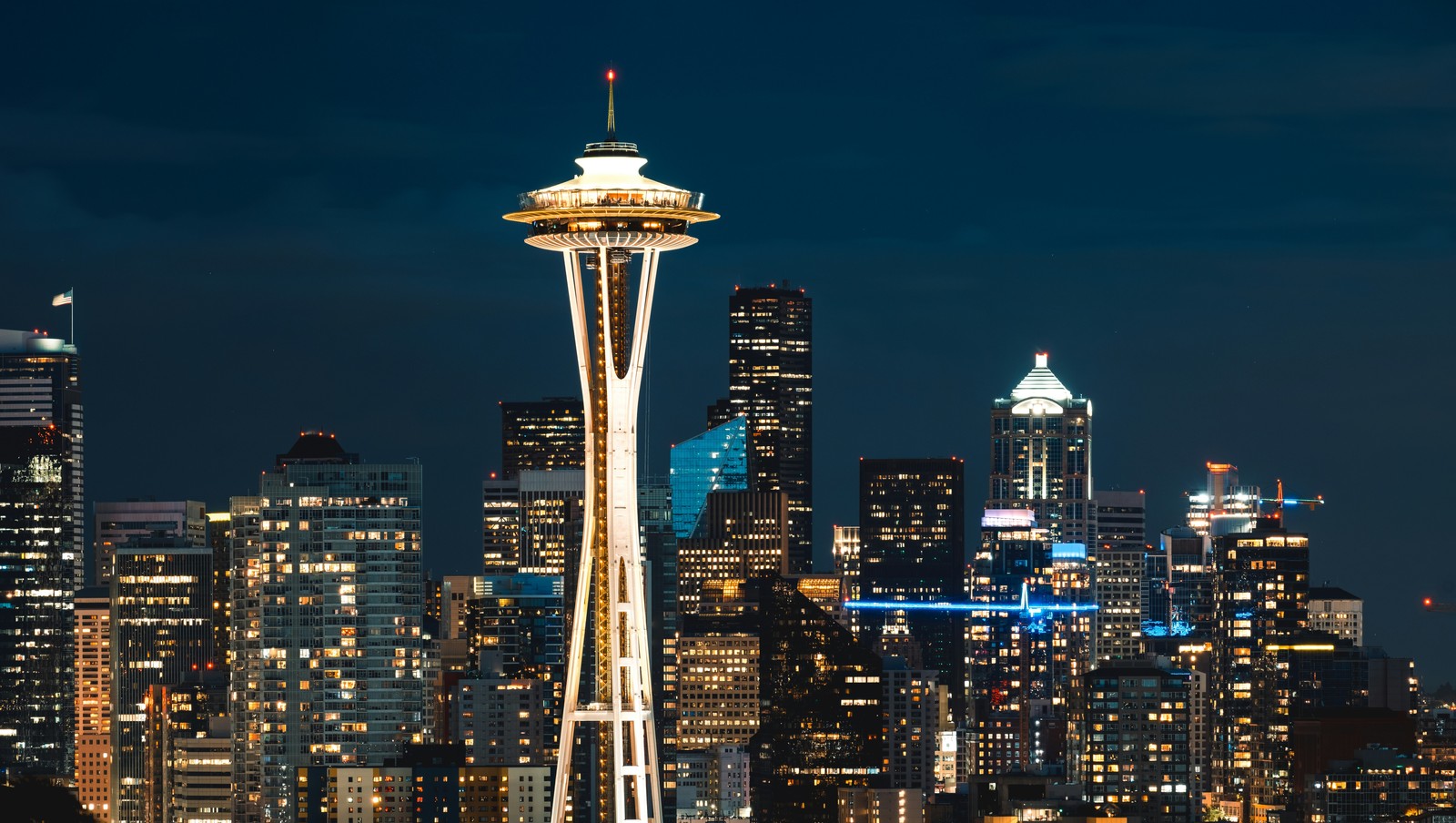
Image: Andrea Leopardi

Rising above Seattle’s skyline since the early 1960s, the Space Needle is easy to recognize but often taken for granted. Built for a single world’s fair, it is a beacon of design and history. From its fast construction to its changing colors and hidden features, this tower has quietly collected dozens of stories. Here are 10 facts that show how much more there is to know about the Seattle Space Needle!

1
It was built for the Seattle World’s Fair
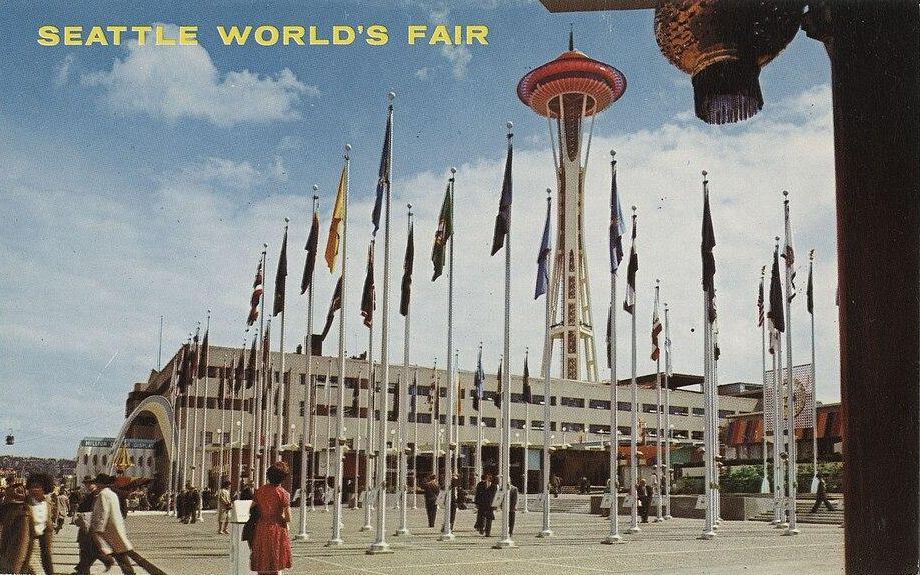
Image: Seattle Public Library, No restrictions, via Wikimedia Commons

The Space Needle wasn’t supposed to be a permanent monument. It was completed in 1962 specifically for the Seattle World’s Fair, an event aimed to highlight science, technology, and forward-looking design. During the fair, the tower helped visitors orient themselves within the Seattle Center grounds and served as a central meeting point. After the fair ended, the building was not dismantled, as many other fair structures were. Instead, it remained open to the public and gradually became a regular part of the city’s skyline.

2
The original colors had distinctive Space Age names
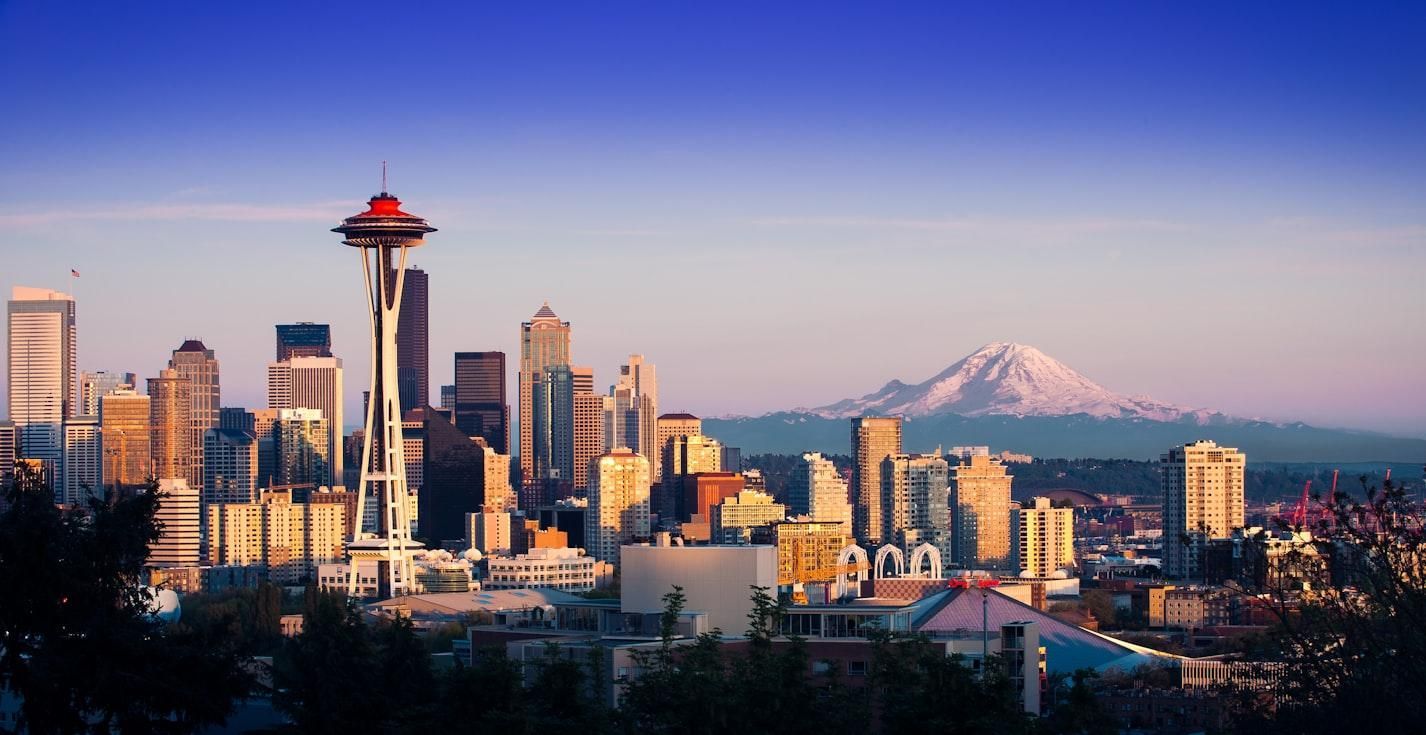
Image: Thom Milkovic

When the Space Needle first opened, its paint scheme reflected the era’s optimism about technology and space exploration. The main tower was painted Astronaut White, while the central core used a darker tone called Orbital Olive. Accent areas were finished in Re-Entry Red, and the top featured a warm, yellow-orange color called Galaxy Gold . These names were officially used at the time and appeared in design documents and promotional materials. Although later renovations replaced this scheme with more neutral colors, the original palette shows how strongly the tower’s design was tied to early 1960s ideas about the future.

3
Elvis was there
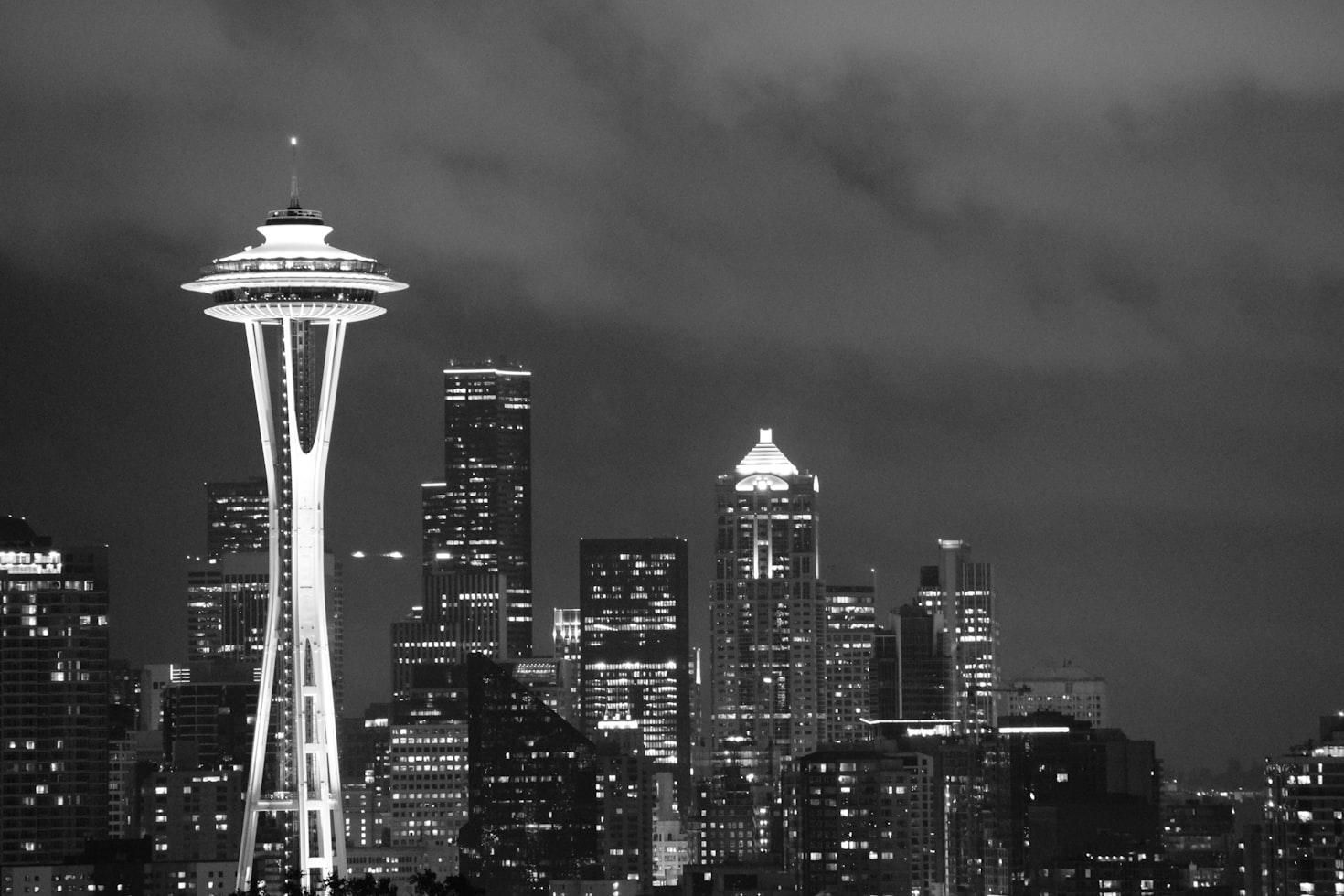
Image: Courtney Hutchin

Not long after it opened, the Space Needle entered American pop culture. Elvis Presley filmed scenes at the tower for the movie It Happened at the World’s Fair , which was released in 1963. The filming took place shortly after the 1962 World’s Fair, when the structure was still new. At that time, many Americans had never traveled to Seattle, and television and movies were major sources of information about distant cities. Hence, the film helped introduce the Space Needle to a nationwide audience.

4
It was inspired by a UFO
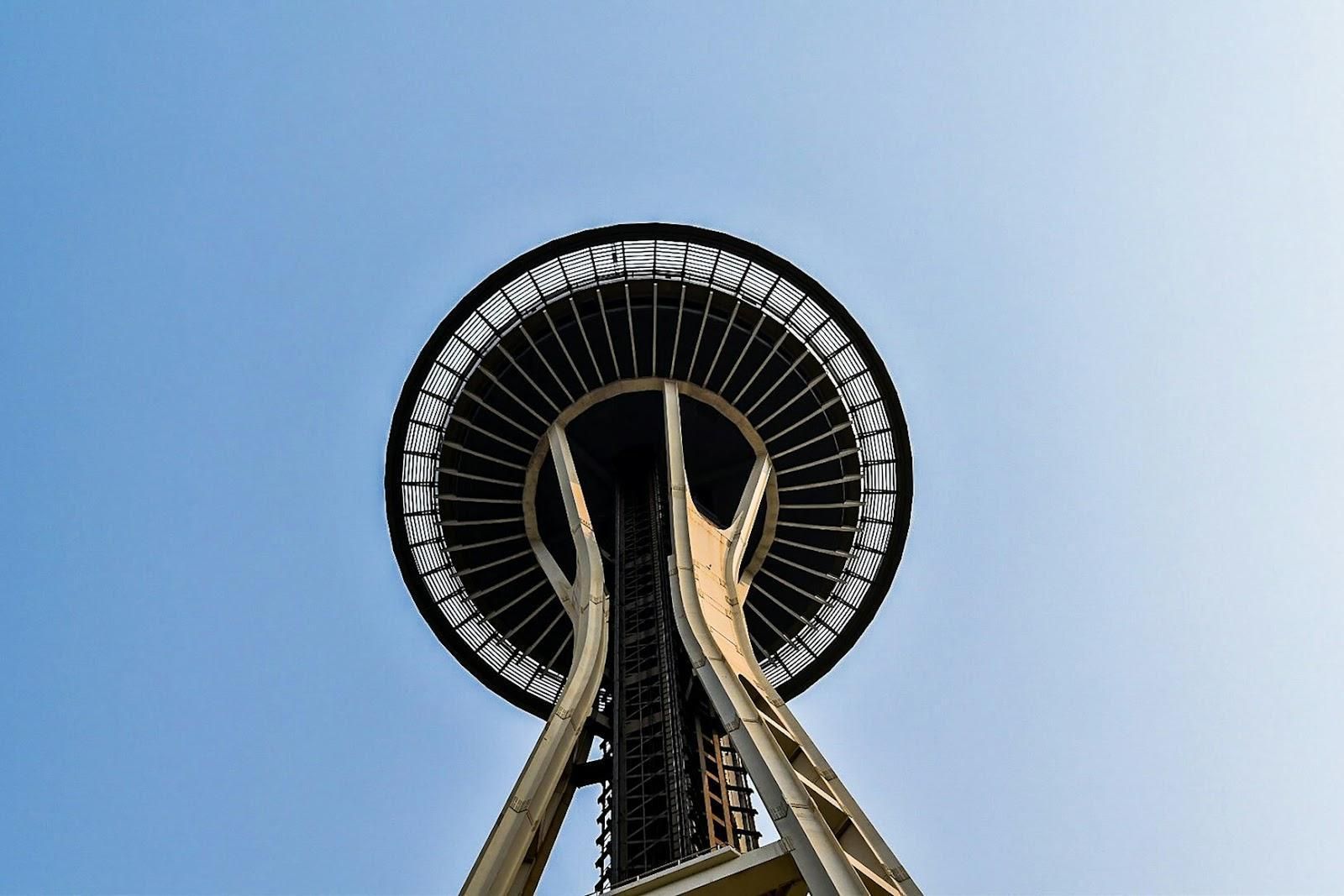
Image: Patrick Hodskins

The building’s most recognizable feature, the round observation deck, was shaped with intention. Designers chose a wide, circular form that reflected the Space Age themes common in the late 1950s and early 1960s. At the time, images of spacecraft and flying saucers appeared often in popular magazines, films, and exhibitions. The Space Needle’s top was meant to echo those ideas in a way that was easy to recognize from a distance. This design helped distinguish the tower from older observation structures and aligned it closely with the forward-looking message of the World’s Fair.

5
It was built in 400 days
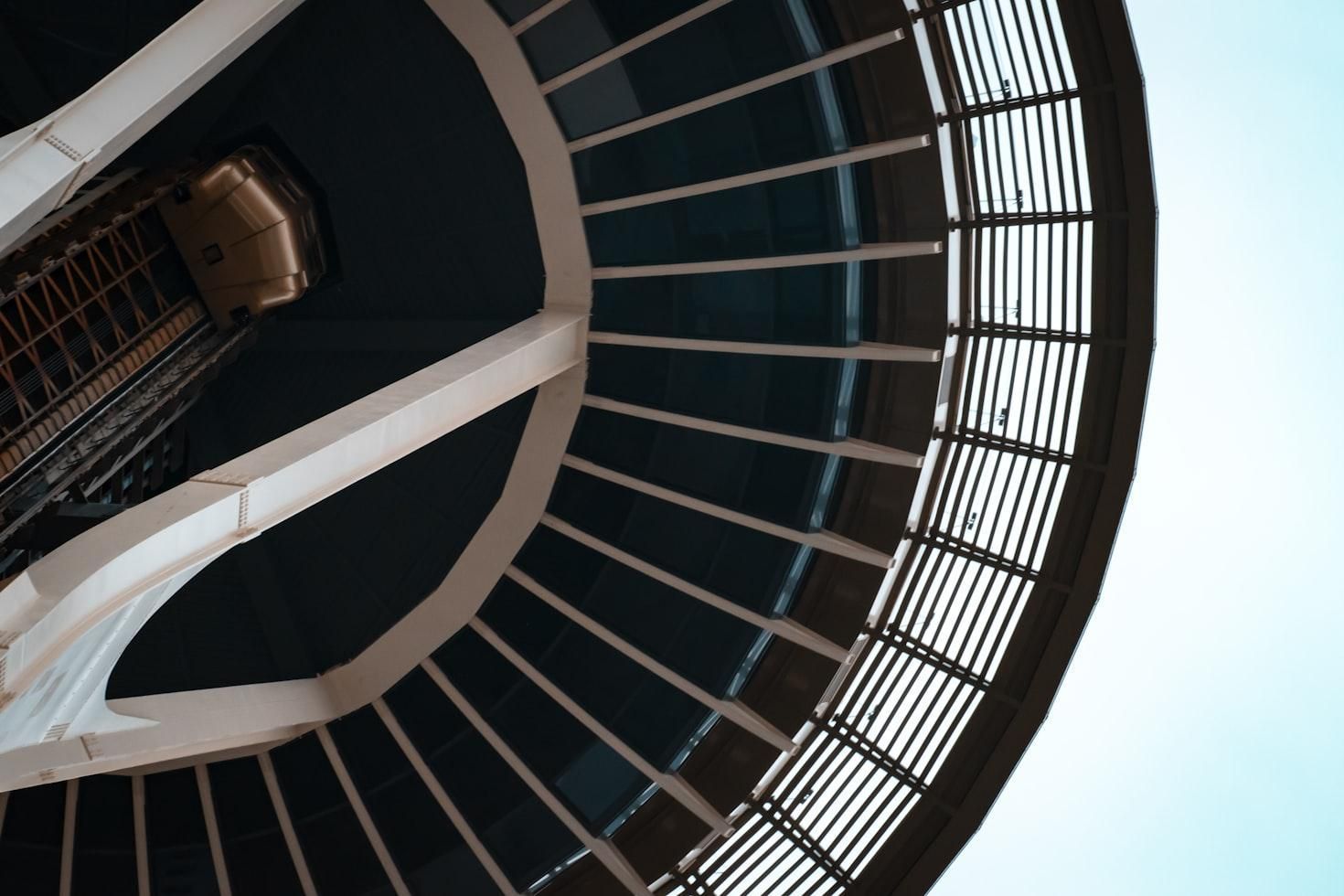
Image: Andy Li

Speed mattered. Construction began in 1961, and the entire tower was completed in roughly 400 days so it could open on time for the World’s Fair in 1962. This schedule required crews to work in carefully planned stages, with steel sections fabricated off-site and assembled quickly once delivered. Concrete for the foundation and core had to be poured and set on a tight timeline. Despite the fast pace, engineers followed existing building standards, and inspections were carried out to ensure the tower could safely handle weight, wind, and daily public use.

6
Forget the elevator, take the stairs
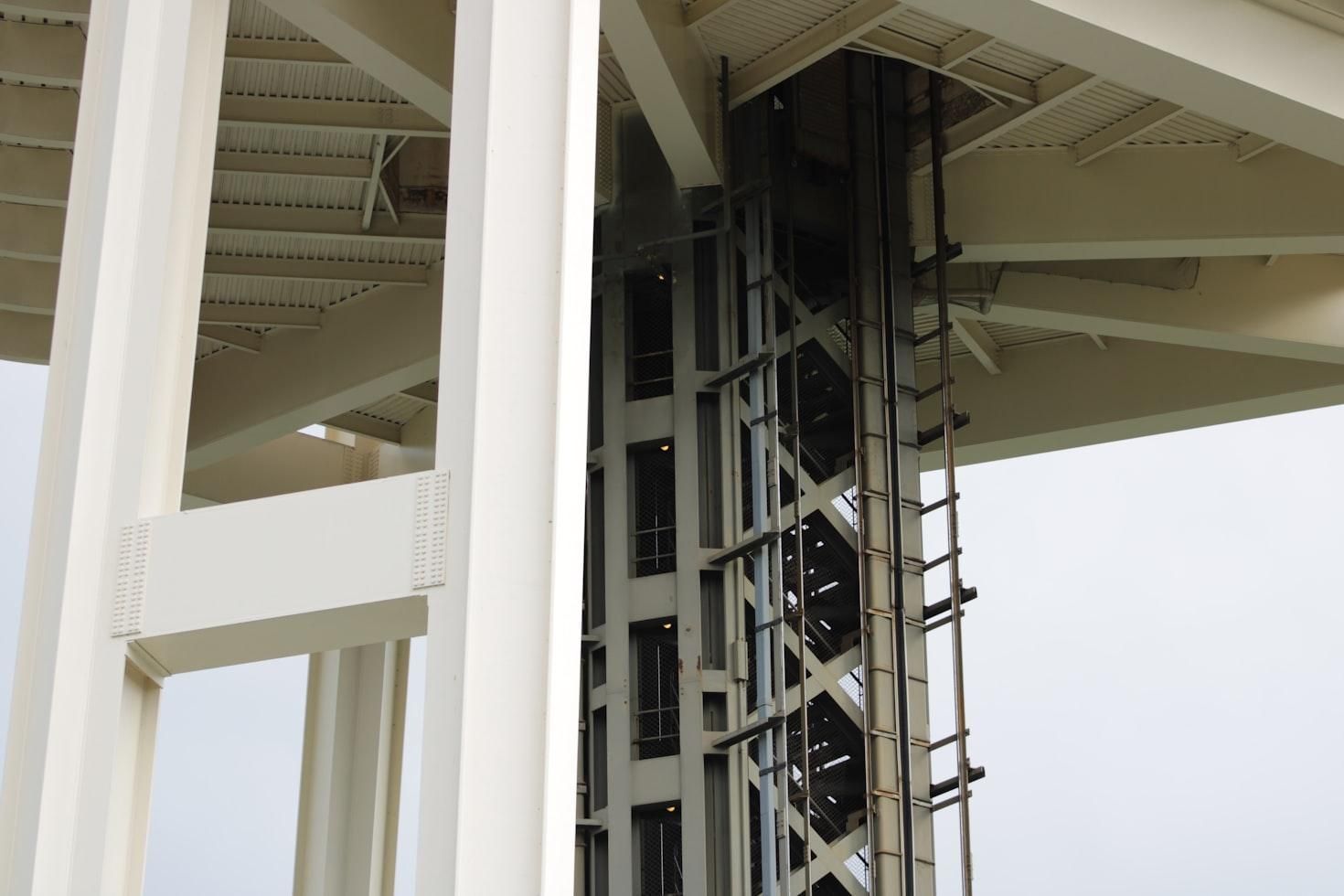
Image: HAYOUNG CHO

Most visitors take the elevator, but the Space Needle also has stairs, 848 of them, from the base to the observation level. The stairs are primarily used for maintenance and special events rather than daily tourist access. Structurally, the tower is held together by tens of thousands of bolts and rests on a deep concrete foundation. Engineers designed the foundation and central core to withstand high winds and seismic activity, which are common in the Pacific Northwest. These construction details are not visible to most visitors, but they play a key role in keeping the tower stable and open to the public year after year.

7
It harbored a secret time capsule from the 1980s
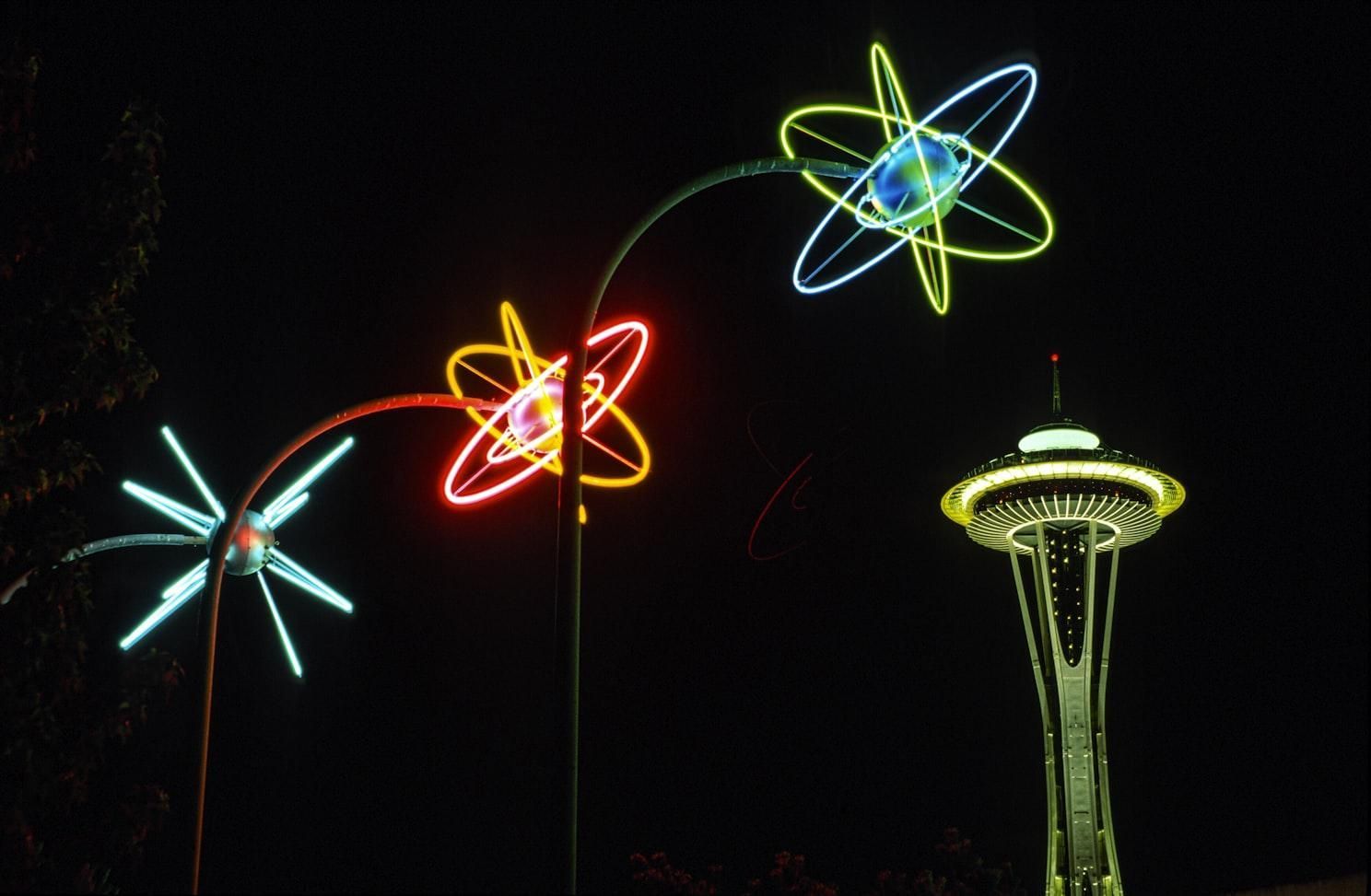
Image: Mick Haupt

In 1982, staff placed a time capsule inside one of the Space Needle’s steel beams without a public announcement. The capsule was sealed and left in place as part of a routine update, rather than a formal ceremony. It remained hidden for more than thirty years until it was rediscovered and opened in 2017. Inside were everyday items from the early 1980s, including handwritten letters, photographs, and postcards. Several of these items were saved and included in a new capsule, which is planned to be opened in 2062 to mark the tower’s 100th anniversary.

8
It was the site of a famous April Fools’ prank
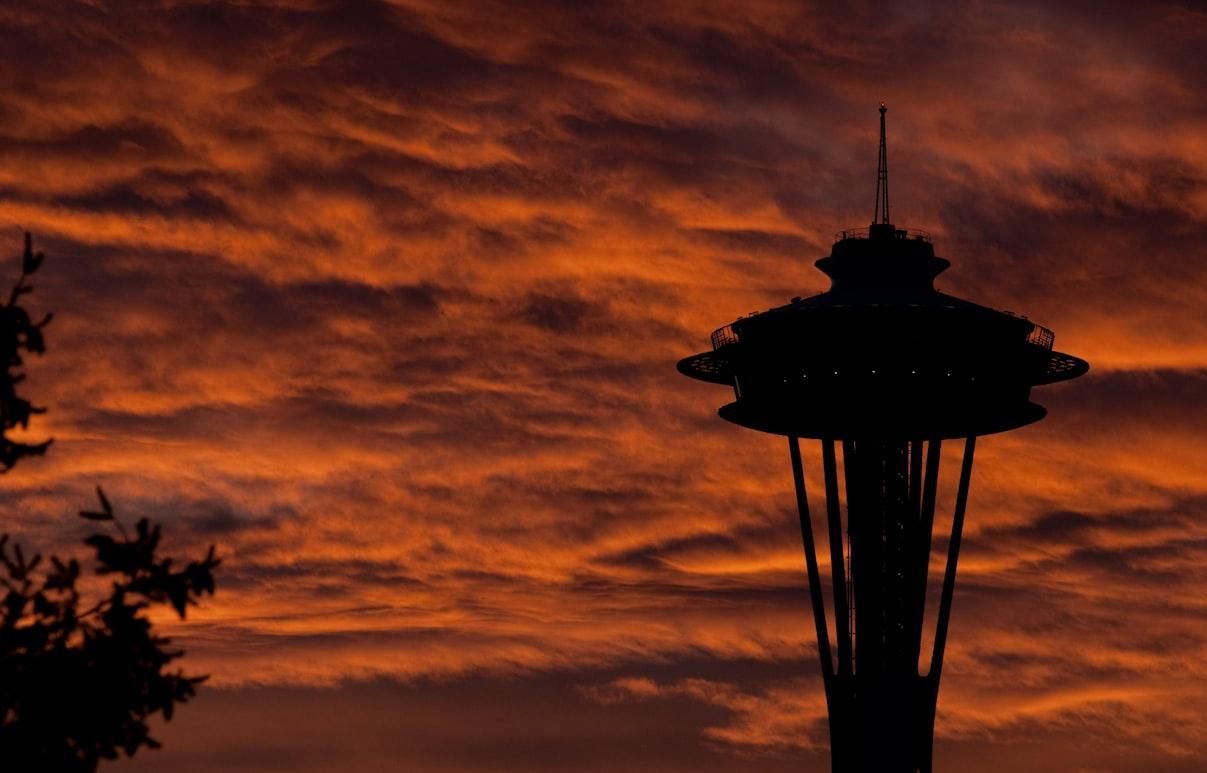
Image: Ben Mater

In 1989, a local television station aired a report claiming the Space Needle had collapsed. The segment was intended as an April Fools’ joke and included on-screen text explaining that it was not real. Even so, many viewers did not notice the disclaimer or tuned in late. Emergency phone lines and the station’s own offices received hundreds of calls from concerned residents and relatives. The reaction showed how familiar and important the Space Needle had become to people in Seattle and beyond.

9
There’s a restaurant at the top
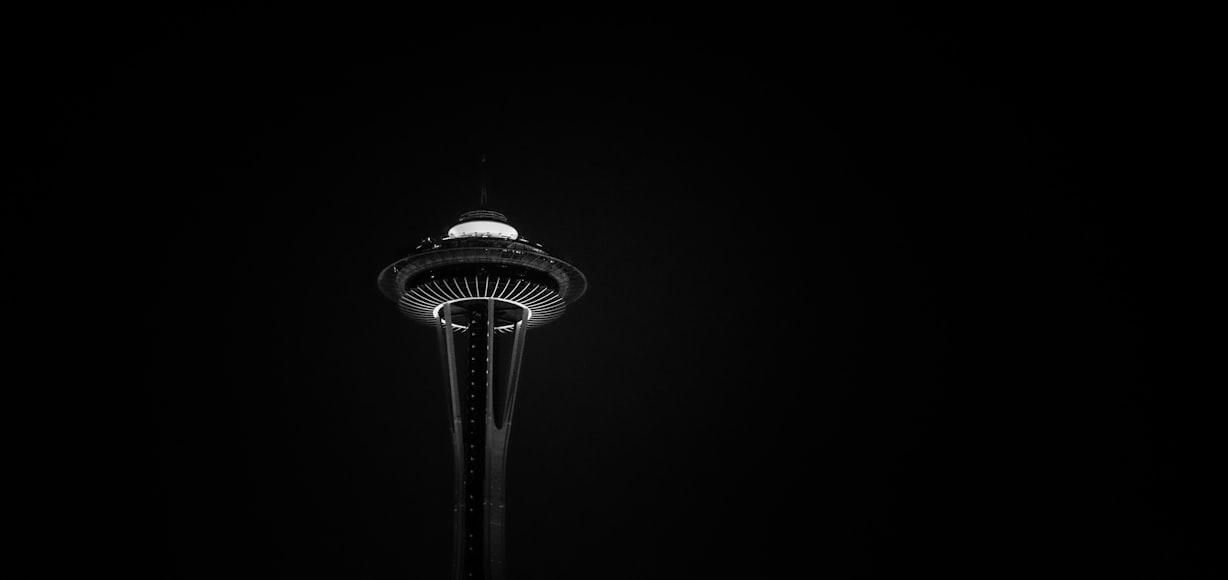
Image: Jason Dent

Dining has always been part of the Space Needle experience. A restaurant opened with the tower in 1962 and was designed to give guests a place to eat while overlooking the city. Over the years, the restaurant has changed names, seating arrangements, and menu styles to match new trends and renovations. Despite these updates, the basic idea has stayed the same. Visitors can order food or drinks and spend extended time at the top, rather than just stopping briefly to look out the windows. For many people, the combination of a meal and a wide city view defines the visit.

10
It has the world’s first and only revolving glass floor
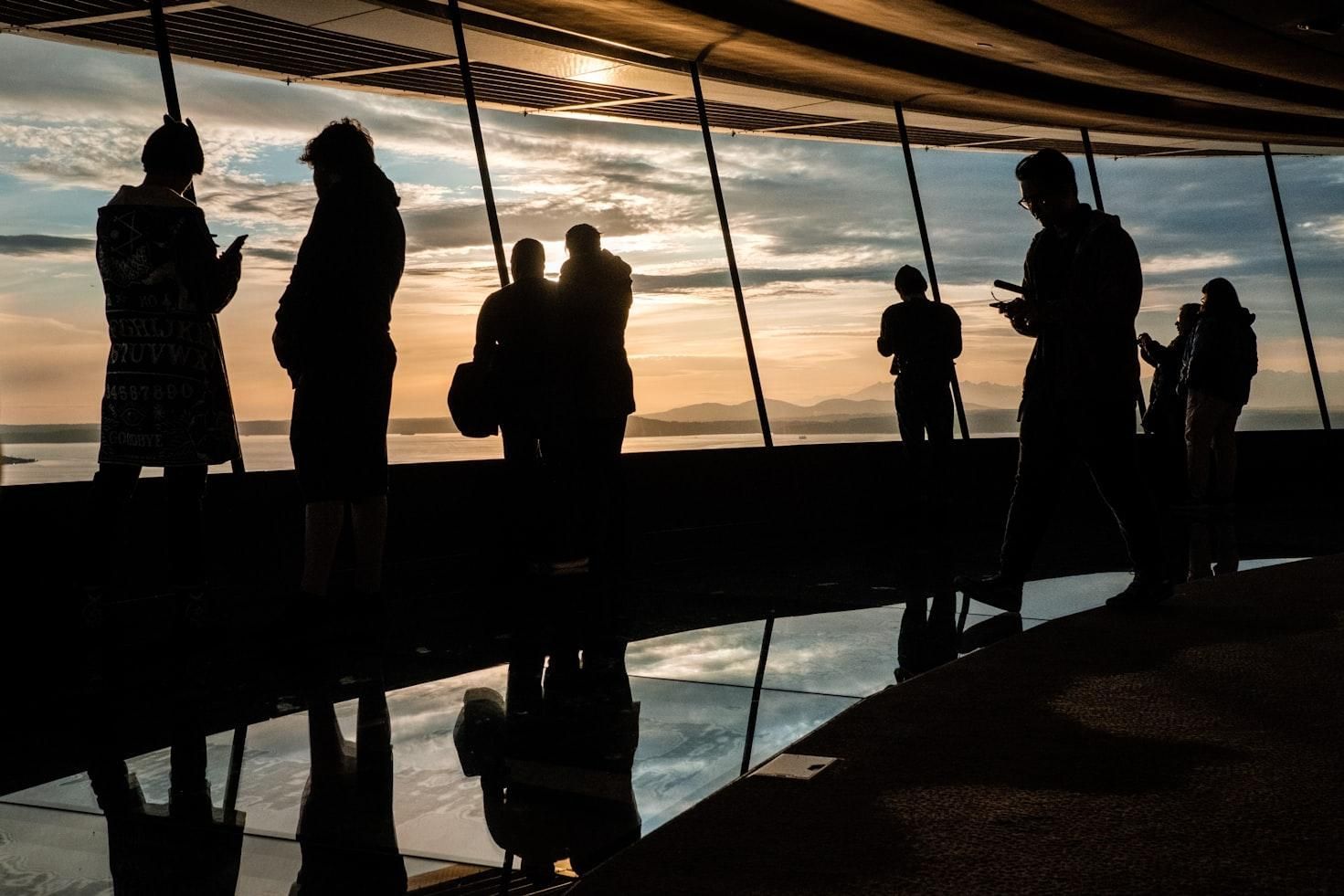
Image: Morgan Petroski

A major renovation in 2018 introduced The Loupe, a rotating glass floor in the observation area. The platform moves slowly, allowing visitors to stand in one place while the view changes. Through the clear panels, people can look straight down at streets, buildings, and open spaces below. This is the only revolving glass floor of its kind in the world. The addition shows how the Space Needle continues to update its visitor experience while keeping its original structure intact.

History History 5 min read

First things first

Pioneering presidents: The 10 firsts that shaped American history

Image: Caleb Perez / Wes Hicks

One fascinating aspect of history is that we can discover who was the first to accomplish certain things. Photography is an everyday activity today, but who was the first president to be photographed? Have you ever wondered who was the first U.S. president to be born in a hospital? The presidency has seen many "firsts" that have left a lasting impact on the nation. Let’s dive into some of the most significant presidential milestones that have shaped the course of American history. From the momentous to the most mundane, here are 10 presidential firsts!

1
Reagan: Breaking the glass ceiling

Image: Library of Congress

Although the numbers are still unequal, women occupy decision-making positions every day. They play an active role in political life, but that wasn’t always the case.

Ronald Reagan made a bold move for gender equality by nominating Sandra Day O'Connor to the Supreme Court in 1981. This historic decision marked the first time a woman would serve on the highest court in the country.

O'Connor’s nomination was a landmark moment for women’s rights, opening doors for future generations. Reagan’s choice was both strategic and symbolic, of course. It was a significant step toward inclusivity in the judiciary. Sandra Day O’Connor went on to serve with distinction, becoming a pivotal figure in many key rulings.

2
Johnson: A historic appointment

Image: Library of Congress

America has already seen a black president, but even that marked a significant turning point in history. However, Black men in such high government positions weren’t a reality until 1967 when Lyndon B. Johnson appointed Thurgood Marshall as the first Black Supreme Court Justice . In the ongoing struggle for civil rights and equality in the U.S., this was a monumental step.

At the time, Marshall was already a legendary figure for his role in Brown v. Board of Education, and his appointment brought a powerful voice to the court. It was a clear signal of the administration’s commitment to racial justice. Marshall served on the court for 24 years! Talk about leaving a mark, huh?

3
Roosevelt: The star of the show

Image: Library of Congress

We can’t get enough of our TVs today, right? But this device was once an innovation, and one can easily imagine how surprising it must have been to see a president on screen for the first time!

In 1939, Franklin D. Roosevelt became the first U.S. president to appear on television during the World’s Fair in New York.

It’s not that he had gone unnoticed, FDR was already a radio sensation with his "fireside chats," but the television debut marked a new era of presidential communication. This historic moment allowed Americans to not only hear but also see their president, making FDR an even more influential figure.

4
Adams: Picture perfect

Image: Library of Congress

People take pictures of everything, everywhere, all the time today. Photos are like our business cards on social media and even in our job profiles, but it wasn’t always like that. And John Quincy Adams was part of a photography milestone.

Adams wasn’t just a former president, he holds the prize for first presidential photography . In 1843, he became the first president to have his photograph taken, although it was after his term had ended. Before Adams, presidents were immortalized through paintings, but his photo brought a new sense of realism to how leaders were remembered. Was he, by any chance, the first influencer?

5
Hayes: A direct line to history

Image: Library of Congress

What would we do without our telephones? It’s like we can’t imagine our lives without them anymore, right? But have you ever wondered who was the first president to have a phone in the White House ?

In 1877, Rutherford B. Hayes ushered the presidential residence into the age of technology by installing the first telephone. Of course, this was far from the smartphones we use today, but it was quite revolutionary at the time.

Fun fact: Hayes’s telephone had the number "1," a fitting symbol for such a groundbreaking moment. Only a few could actually get in direct contact with that line, but the step was taken anyway and history was made.

6
John Adams: Home sweet white house

Image: Library of Congress

While George Washington oversaw the construction of the White House, he never actually lived in it. It was John Adams who had the honor of being its first resident in 1800 .

Adams and his wife Abigail moved into the unfinished mansion, making history as the first Presidential Family to live in the iconic building. Despite the unfinished state of the residence, the Adams family’s presence made it the center of American politics. And of course, he was the first, but he was certainly not the last, as the tradition continues today.

7
Truman: Code name "general"

Image: Library of Congress

If you’re a fan of detective novels, you probably always thought that having a code name is super cool! Well, imagine being the first president with a code name!

Harry Truman made history as the first U.S. president to receive a Secret Service code name . Known as "General," his code name served as a security measure. Although now that you know it, it doesn’t seem so secretive or mysterious, right?

The use of code names has since become standard practice, used to protect presidents and their families. While the tradition of assigning code names has evolved, Truman’s "General" remains a nod to the early days of presidential security. It was just the beginning of a tradition that still exists today.

8
Coolidge: A father’s pride

Image: Library of Congress

Few moments in life are so beautiful as when a father’s eyes are filled with tears of pride for his child, don’t you think? Well, now think about that, between a president and his father!

In a unique and touching moment in U.S. history, Calvin Coolidge was sworn in as president by his own father. After President Harding’s unexpected death in 1923, Coolidge’s father, a notary public, administered the oath of office in their Vermont home.

This made Coolidge the first and only president to be inaugurated by a family member, creating a truly personal and memorable moment. This father-son moment added a deeply personal touch to the transfer of power, making it a memorable event in both their personal lives and American history.

9
Carter: Born in a hospital

Image: Library of Congress

When you think of a birth, you think of a hospital, right? However, that hasn’t always been the case.

Jimmy Carter holds the distinction of being the first U.S. president born in a hospital, on October 1, 1924. Before Carter, presidents were typically born at home, which was the norm for the times.

His birth at the Wise Clinic in Plains, Georgia, marked a shift toward modern medical practices. This milestone highlighted the changing nature of healthcare in America. Carter’s hospital birth was a small, yet significant, indicator of progress in our country.

10
McKinley: Cruising into history

Image: Library of Congress

Our last "first" is a bit crazy and you’ll see why in a minute: William McKinley became the first sitting president to experience the thrill of a car ride .

In 1899, he took a ride in a Locomobile steam carriage, a cutting-edge mode of transportation at the time. The car was driven by the inventor himself!

This ride was quite an oddity, and McKinley’s willingness to try it out showed his interest in new technology. Why is it crazy? Because no president drives their own car today! Regardless of how innovative and technologically advanced it may be!

Culture Culture 7 min read

A bucket list for the creative at heart

Every American should see these 10 American masterpieces at least once

Image: manolofranco

The intense relationship between Americans and their surroundings has been the source of a rich artistic tradition. From Impressionism and Realism to Abstract Expressionism and Pop Art, the United States has given the world a remarkable sample of its artistic potential. Through 10 masterpieces, which span a wide range of movements and artists, this article will explore the enormous legacy that visual art has left on American culture.

1
Snap the Whip - 1872

Image: Winslow Homer, CC0, via Wikimedia Commons

Winslow Homer was a self-taught artist from Boston, best known for his Civil War paintings, which he created at the request of Harper's Weekly magazine. But after the war, Homer moved to a totally different subject matter: childhood. The artist painted the life of American children as a world unto itself, where adults seemed to have no influence.

Homer's children, like the ones depicted in Snap the Whip , can be compared to similar literary characters of the time, like Louisa May Alcott's Little Women and Mark Twain's Tom Sawyer . They are potential America, the stock from which renewal will spring in the aftermath of the Civil War: young, strong, quick-witted, practical, and without pretense. The piece can now be viewed at The Met in New York City.

2
Whistler’s Mother - 1871

Image: James McNeill Whistler, CC0, via Wikimedia Commons

James Abbott McNeill Whistler (1834-1903) was a painter mainly active during the American Gilded Age and a leading proponent of the motto "art for art's sake." Whistler’s best-known piece is a painting entitled Arrangement in Grey and Black No. 1: The Artist’s Mother . While it is a portrait of his mother, the identity of the woman, according to the artist, should be of no interest to the viewer, only the formal layout of grays and blacks.

For Whistler, art was not about moral instruction or storytelling but, instead, about formal perfection. He believed that artists should not simply replicate what they see in nature but express their emotional response to it. Art should be filled with sentiment, not sentimentality. These ideas formed the basis of the Aesthetic Movement of the 1870s and 1880s and influenced several American artists.

3
Madame X - 1884

Image: John Singer Sargent, CC0, via Wikimedia Commons

It may seem totally innocent to us today, but in the late 19th century, this piece was a true scandal. Madame X , by John Singer Sargent (1856-1925), is a portrait of Virginie Gautreau, a young woman born in New Orleans who moved to Paris after her father’s death. There, she married a wealthy man twice her age and became the talk of the town, due to her independent character and her alleged infidelities.

Virginie posed for Sargent, the world's most sought-after portrait painter of his time, and the work turned out to be as rebellious, elegant, and striking as its model. Sargent always thought that this was his masterpiece, but the public hated it. Shortly before his death, he donated the painting to the Metropolitan Museum of Art in New York, saying, "I suppose it is the best thing I have done."

4
The Child’s Bath - 1893

Image: Mary Cassatt, Public domain, via Wikimedia Commons

Mary Cassatt (1845-1926) was not only one of the foremost American Impressionists but also an outstanding woman painter of the 19th century. She was raised and initially trained in Philadelphia before moving to Paris, where she befriended prolific Impressionists like Edgar Degas. However, Cassatt’s subject matter was very different from that of her French counterparts. She depicted a distinct world, drawn from her own strong family interests: sociable encounters over tea, fashionable women in theaters or drawing rooms, and mothers with their babies.

For example, The Child's Bath not only reflects Cassatt’s technical ability but also serves as a testament to her exploration of motherhood and female roles . Her approach succeeds in capturing everyday life, and the painting is remarkable for its composition and use of color. This piece, like many of her works, stands as a reminder of the value of small, deeply meaningful moments that make up culture and life in all its complexity.

5
American Gothic - 1930

Image: Grant Wood, Public domain, via Wikimedia Commons

Perhaps one of the most famous houses in America is located in Eldon, a tiny community in southern Iowa. Contrary to what one might think, no one of distinction, notoriety, or power has ever lived in this house. Its fame is owed entirely to artist Grant Wood (1891-1942), who used it in the background of his painting American Gothic .

Wood enlisted his sister Nan to pose as the woman and recruited a dentist from Cedar Rapids, B. H. McKeeby, as the man. The painting won a prize in Chicago in 1930 and was instantly catapulted to national fame. Since then, it has been reproduced and satirized by popular culture to exhaustion and is now one of the most recognizable American paintings. Wood's American Gothic honors those who settled the land and has become an iconic representation of American identity and resilience.

6
Nighthawks - 1942

Image: Edward Hopper, Public domain, via Wikimedia Commons

Edward Hopper (1882-1967) studied at the New York Institute of Art and Design and worked for many years as a magazine illustrator. Although he didn't particularly enjoy this job, it helped sharpen his compositional skills. Thanks to these influences, Hopper's work has come to typify the American Realism movement. His paintings convey the sense that the events depicted are taking place in front of the viewer in the here and now, as seen in his famous diner scene, Nighthawks .

In this stark, impassive, realist painting, Hopper evokes a powerful sense of urban alienation, highlighting the isolation. The bright fluorescent light in the all-night diner contrasts strongly with the surrounding gloom outside and immediately transports us to a scene from a film noir movie. Exhibited at the Art Institute of Chicago, Nighthawks is considered one of Hopper's masterpieces and is worth visiting at least once in a lifetime.

7
Untitled (Violet, Black, Orange, Yellow on White and Red) - 1949

Image: chummels

Mark Rothko (1903-1970), along with Jackson Pollock, was one of the greatest representatives of American abstraction . He is best known for his color field paintings. Through his work, he sought to achieve an ambitious utopia: to express the most basic universal emotions.

When Rothko painted Untitled (Violet, Black, Orange, Yellow on White, and Red) he was arriving at a point of maturity in what was a highly nuanced and distinct visual style. He had abandoned any remaining references to recognizable imagery, and the result is a painting with a great expressive force. Rothko used to say that he preferred to paint large pictures because he wanted to be very intimate and human. In this work, he achieves this immersion entirely through his sensitive use of color.

8
Autumn Rhythm (Number 30) - 1950

Image: Simi Iluyomade

Jackson Pollock (1912-1956) was a leading figure in Abstract Expressionism and is best known for his "drip technique." Pollock's drip method entailed placing a canvas on the floor and then dripping, pouring, and at times throwing paint over its surface. Although his technique appeared to favor chance, the artist stressed that everything in his paintings was fully intentional.

One of his most emblematic works is Autumn Rhythm (Number 30) , which is currently on display at the Metropolitan Museum of Art in New York. If you ever have the chance to see this piece in person, know that Pollock believed contemplation of his paintings allowed the viewer to access personal and unconscious responses to the modern world. As Pollock advised, the viewer should look passively and "try to receive what the painting has to offer."

9
Twenty Marilyns - 1962

Image: pvdberg

Andy Warhol (1928-1987) started making paintings of Marilyn Monroe shortly after her death. He used a black and white publicity photograph taken by Gene Korman for the 1953 movie Niagara to create a stencil for silk-screen printing, a technique he had adopted for transferring photographic images to canvas. Over the course of four months, Warhol created more than twenty works based on the Korman photograph.

What Warhol called the "assembly line effect" of the repeated image aimed to criticize the supposed uniqueness of the work of art in a world of mass reproduction and mass media. Yet, the repetitive Marilyns are full of small variations, as the paint is applied by hand. Twenty Marilyns is such an iconic work of American art history that, in a 2004 article published in The Guardian , it was named the third most influential piece of modern art in a survey of 500 artists, critics, and other members of the art world.

10
Whaam! - 1963

Image: Eric Koch, CC0, via Wikimedia Commons

Apart from Andy Warhol, perhaps the greatest exponent of American Pop Art is Roy Lichtenstein (1923-1997). Lichtenstein was mainly drawn to action and true romance comic strips. Through his depictions of fighter pilots and tearful drowning damsels, he drew attention to the constructed nature of gender roles. Lichtenstein's exaggeration of these gender stereotypes in comic book characters led some critics to recognize his paintings as true works of art.

Whaam! , based on a comic book panel published by DC Comics in 1962, is Lichtenstein's witty and irreverent reaction to the contemporary popularity of Abstract Expressionism. With this piece, the artist attempted to deflate that movement's pomposity by presenting pictorial subject matter based on what was regarded as crass commercial art. Since Whaam! , Lichtenstein was viewed by the public eye as the ultimate American master of Pop Art.

Explore more American facts

Choose your favorite category!

General
General

As American as apple pie—the very best America has to offer!

Culture
Culture

Delve into the astounding richness of American lore.

Geography
Geography

Hop in and explore vast and diverse American landscapes.

History
History

Discover the key moments that shaped the United States.