General General 5 min read

A taste of home

How a fisherman's breakfast became South Carolina's official dish
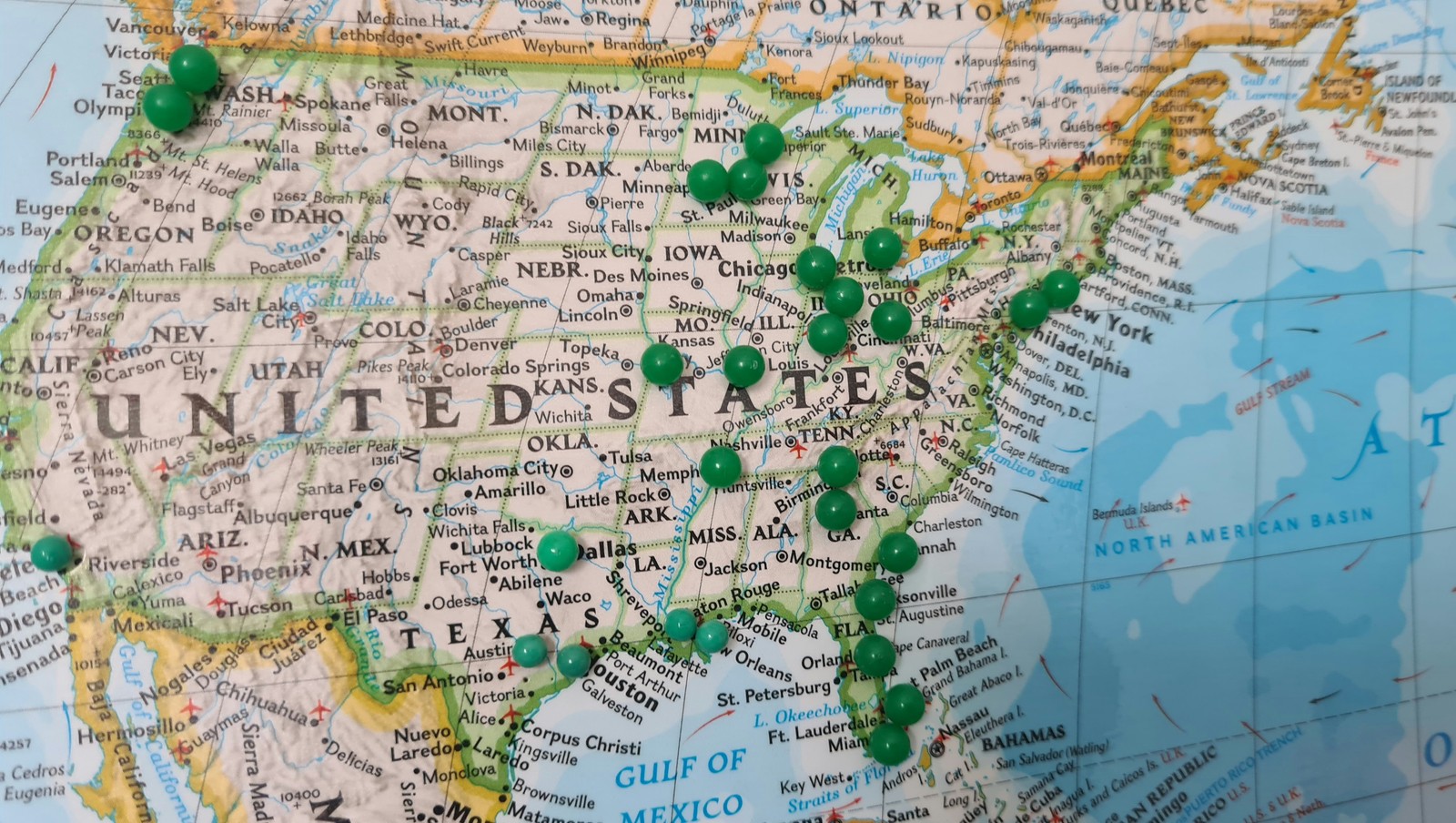
Image: Nico Smit

Every state has its pride, and sometimes that pride comes on a plate. From Baltimore's legendary crab cakes—held together with just enough filler and seasoned with Old Bay—to Boston's creamy clam chowder, unchanged since 1826, America's most iconic state foods tell stories of heritage, geography, and good old-fashioned comfort . Let's take a delicious road trip through 10 states and discover where the locals go to get the real deal!

1
Maryland: Crab Cakes
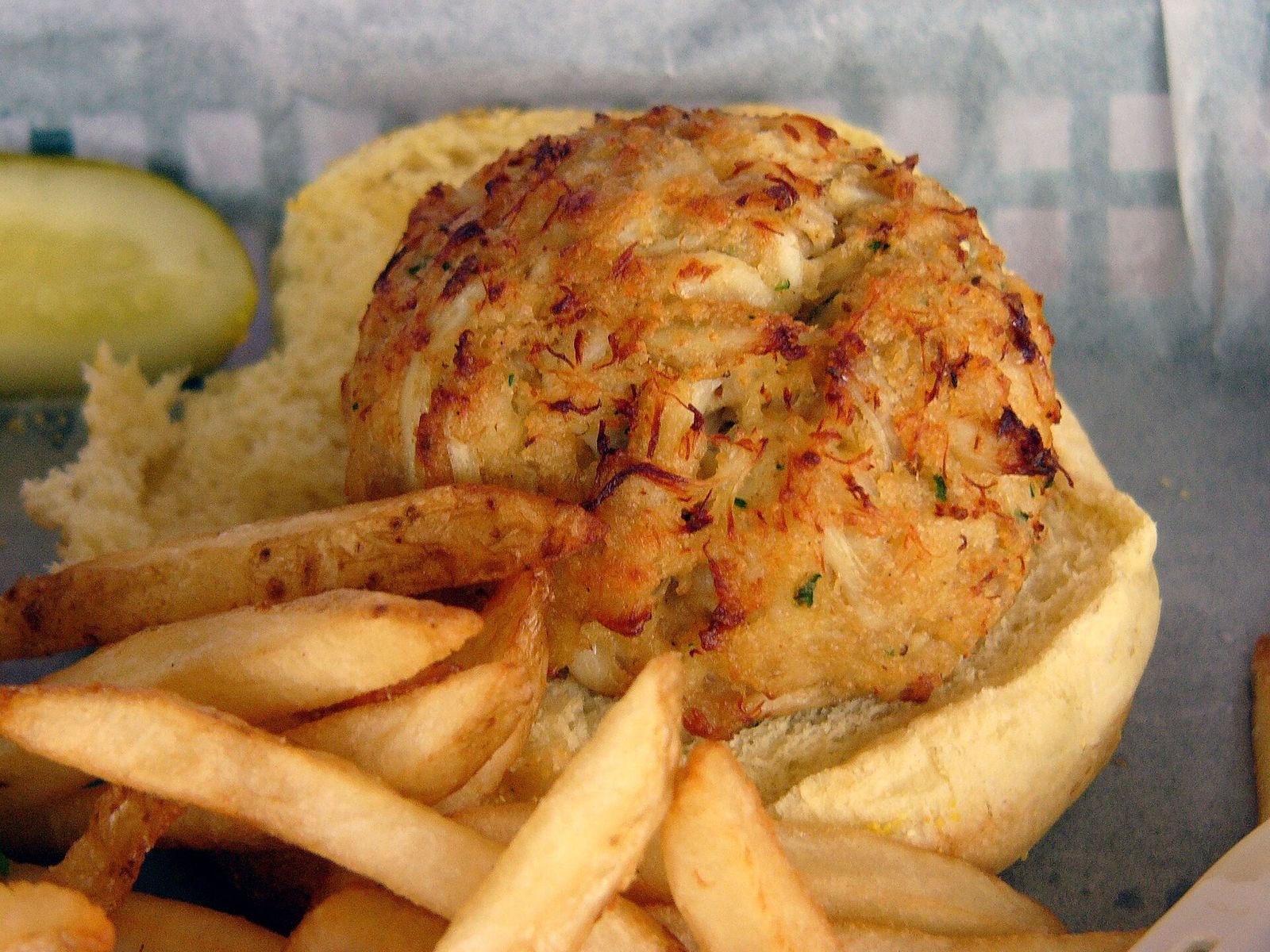
Image: Kathleen Conklin, CC BY 2.0, via Wikimedia Commons

Maryland designated the blue crab as its official state crustacean . The Chesapeake Bay is by now synonymous with blue crabs, and these legendary cakes are a point of pride for the state. A proper Maryland crab cake should contain lump meat held together with just enough filler to keep it from falling apart, seasoned with Old Bay.

Head to Faidley's Seafood in Baltimore's Lexington Market, where they've been serving them since 1886.

2
Louisiana: Gumbo

Image: jons2 at pdphoto.org, Public domain, via Wikimedia Commons

Gumbo is widely recognized as one of Louisiana’s emblematic dishes, and for good reason. This rich, soul-warming stew was born in the melting pot of 18th-century Louisiana, where enslaved Africans, French colonists, and Native American communities lived in close proximity and blended their culinary traditions into one. Whether you prefer it with chicken and sausage or loaded with seafood, the dark roux is non-negotiable.

For the authentic experience, locals head to Dooky Chase's Restaurant in New Orleans, where Leah Chase served her legendary gumbo for decades.

3
South Carolina: Shrimp and Grits

Image: City Foodsters, CC BY 2.0, via Wikimedia Commons

What started as a humble breakfast for Lowcountry fishermen has become South Carolina's staple dish. Creamy stone-ground grits topped with plump shrimp in a savory sauce: it's simple Southern comfort elevated to an art form.

Charleston's Hominy Grill perfected the combination throughout 24 years before closing in 2019, but the torch has been passed to spots like Slightly North of Broad, where locals still gather for their take on this classic.

4
New Mexico: Chile

Image: Nurban, CC BY-SA 4.0, via Wikimedia Commons

New Mexico is so serious about chile that it's both the official state vegetable and the official state question: "Red or green?" refers to which chile sauce you want on everything from enchiladas to burgers.

The Shed in Santa Fe has been serving traditional New Mexican cuisine since 1953, and their red and green chile sauces are legendary.

5
Texas: Chili con carne

Image: cyclonebill from Copenhagen, Denmark, CC BY-SA 2.0, via Wikimedia Commons

Texas doesn't mess around when it comes to chili; there are no beans allowed in the official state dish. Dating back to the 19th century, Texas chili is believed to have originated among cattle drivers and frontier cooks along the famous chili trail , who relied on dried chilies and tough cuts of meat to fuel long drives. Real Texas chili is all about the meat, the chilies, and the spices, slow-cooked until everything melds into something magical.

Austin's Texas Chili Parlor has been dishing it out since 1976, with regulars debating the merits of X-fire versus their milder options. The walls covered in license plates and the no-nonsense attitude make it quintessentially Texan.

6
Massachusetts: Boston Clam Chowder

Image: Jon SullivanThe original uploader was Y6y6y6 at English Wikipedia., Public domain, via Wikimedia Commons

At Boston's Union Oyster House, America's oldest continuously operating restaurant, the clam chowder recipe hasn't changed much since 1826 , and one spoonful tells you why. While every New England state has its own take on this creamy, thick, clam-and-potato stew—Maine keeps it simple, Rhode Island goes clear-broth, and Connecticut prefers a milky base—Boston's version has become the gold standard, beloved for its richness and depth.

The debate over who makes it best has fueled friendly regional rivalries for generations — though Legal Sea Foods makes a strong case, having served its chowder at multiple presidential inaugurations.

7
Illinois: Popcorn

Image: Charles Chen

Illinois is one of the top popcorn producers in the US—and in 2003, it became the official state snack, thanks to an unlikely group of advocates: a class of elementary school students from Joliet, a Chicago suburb, who made it their class project to lobby lawmakers for the designation . Governor Rod Blagojevich signed the bill into law, and popcorn joined the cardinal and the bluegill as official state symbols.

Garrett Popcorn Shops in Chicago have been making people wait in line since 1949. Their "Chicago Mix" combines buttery caramel corn with sharp cheddar cheese popcorn, and locals know to grab a bag whenever they're downtown.

8
Vermont: Apple Pie

Image: Kavya P K

Vermont made apple pie its official state pie in 1999, celebrating the state's apple orchards and New England baking traditions. A proper Vermont apple pie should feature tart local apples, a flaky crust, and maybe a slice of cheddar on the side .

The Blue Benn Diner in Bennington serves classic homemade apple pie that locals have been driving out of their way for since 1948.

9
Oklahoma: Fried Okra

Image: Infrogmation of New Orleans, CC BY-SA 4.0, via Wikimedia Commons

Few vegetables are as deeply tied to Oklahoma's identity as okra. It was brought to the American South by enslaved Africans, who carried the seeds with them and wove the crop into the region's culinary fabric. Over generations, it became a cornerstone of Southern cooking.

Coated in cornmeal and fried to golden, crispy perfection, it's a staple at family gatherings and church potlucks across the state . Eischen's Bar in Okarche, Oklahoma's oldest bar, serves fried okra alongside their famous fried chicken.

10
Rhode Island: Clam Cakes and Chowder

Image: ajay_suresh, CC BY 2.0, via Wikimedia Commons

One of Rhode Island's favorite appetizers is actually a dynamic duo: clam cakes (fried dough balls studded with chopped clams) paired with their distinctive clear clam chowder . Unlike Massachusetts' creamy version, Rhode Island keeps it brothy, more like a seafood soup without dairy (like the Boston-style one) or tomato (like the Manhattan-style one).

Iggy's Doughboys and Chowder House in Narragansett has been a beachside institution since 1924. Order at the window, grab a picnic table, and watch the ocean while you eat.

Geography Geography 6 min read

Natural wonders worth the trip

From Crater Lake to Devils Tower: Top 10 landmarks in U.S. National Parks

Image: Adam Smotkin

America's national parks are among the most diverse and richest in the world. Deserts, forests, geysers, ancient trees, and giant mountains are just some of the most spectacular features our cherished national parks preserve within their boundaries. In this article, we have selected the 10 must-see landmarks you can’t miss when visiting U.S. National Parks.

1
Grand Teton and its central peaks

Image: Toan Chu

No matter how many national parks you visit, Grand Teton will always rank among the most beautiful in the country. As evocative as it is inspiring, this national park in northwestern Wyoming saw the arrival of the first settlers, the brave frontiersmen. It also offers some of the most breathtaking mountain scenery in the world and is a great place for climbing and hiking enthusiasts.

The highest mountain in the park is Grand Teton itself, standing at 13,770 feet, but there are 10 other peaks that reach an impressive height of more than 11,000 feet. The interesting thing is that, to the naked eye, these mountains appear even larger, since they all rise abruptly from the otherwise flat terrain of the Jackson Hole Valley. Six alpine lakes nestled in the foothills of the central peaks, along with a fascinating array of wildlife, complete the scenery of one of the best parks on the West Coast of the US.

2
Crater Lake in Crater Lake National Park

Image: Joris Beugels

The deep blue color of Crater Lake has been the objective of many attempted descriptions, but none comes close to the impact you feel when you see it with your own eyes. In fact, the first name given to it by non-native Americans was simply "Deep Blue Lake." This intense blue color is a result of the lake’s immense depth —reaching 1,932 feet at its deepest point—making it one of the world’s deepest lakes.

Located in south-central Oregon, this volcanic crater lake spans 5 miles in width and 6 miles in length, with a 20-mile shoreline. The dimensions and color are enough to attract visitors, but its setting, surrounded by lava cliffs ranging from 500 to 2,000 feet above the lake's surface, makes it all the more remarkable.

There are many ways to enjoy Crater Lake, which is beautiful all year round. In winter you can rejoice in a true winter wonderland, and in summer, you can hike the trails and go boating or fishing in the bright blue water.

3
Mount Rainier

Image: Peter Robbins

Perhaps the most famous peak in the Pacific Northwest’s Cascade Range is Mount Rainier. This dormant—but not extinct—ice-clad volcanic mountain stands at an impressive 14,410 feet. Though it is not the highest of mountains, Mount Rainier’s sheer bulk and the fact that it is set apart from its neighboring peaks make it the dominant landmark of the region. So much so that it is commonly referred to by locals simply as "The Mountain."

Located in Washington State, just 59 miles south-southeast of Seattle, Mount Rainier is visible from over 100 miles away on clear days. Rainier’s legendary beauty is as great as its overpowering size. Its 27 glaciers cover more than 34 square miles, making it the largest single-peak glacial system in the lower 48 states.

4
Half Dome in Yosemite

Image: Aaron Lee

Yosemite National Park in California is justifiably one of America's most famous and beloved parks. Its spectacular scenery is sure to impress even those who have seen practically every other park in the country. And, in turn, probably the most iconic landmark of Yosemite is Half Dome, a quartz monzonite batholith that rises 8,800 feet above sea level.

Once considered impossible to climb, Half Dome now draws thousands of adventurers to its distinctive, hooked summit each year. The 14- to 16-mile round-trip hike via the Half Dome Cable Route offers outstanding panoramic views of Vernal and Nevada Falls, Liberty Cap, Yosemite Valley, and the High Sierra. This is a journey you definitely can't miss!

5
Hyperion Tree in Redwoods National Park

Image: Josh Carter

Redwood National Park in Northern California protects nearly 140,000 acres of land and almost 40 miles of Pacific coastline. Bathed in a temperate rainforest climate, the park receives up to 140 inches of rainfall annually. This cool moisture, along with rich forest-floor soil and the trees' ability to sprout new buds, allows coast redwoods to reach lofty heights and venerable old age.

These exceptional conditions have made this park home to the world's tallest tree. Standing at an astonishing 380.3 feet, Hyperion, a Sequoia sempervirens , is considered the tallest living thing on record, including the plant and animal kingdoms. Most experts say it’s 600 years old, although some think it may be as old as 900 years. Currently, the exact location of Hyperion is not publicized to protect it from potential damage from mass tourism.

6
Mount Mckinley in Denali

Image: John Feng

Mount McKinley is the highest point in North America , standing at an awe-inspiring 20,320 feet. The almost-four-mile-high giant was known to the Native Americans of Alaska as Denali , "The Great One," a fitting tribute to one of the world’s best-known mountains.

During winter, on clear days, it is possible to see the glacier-capped summit, and the true power of nature manifests itself. In spring, when the snow melts, nature unfolds, wildflowers bloom, grizzly bears emerge from their long hibernation, and you can find mooses, caribous, foxes, and wolves roaming around the park for a memorable encounter with the wilderness.

7
Devils Tower National Monument

Image: Mick Kirchman

Devils Tower is one of the most recognizable landmarks, not only in Wyoming but in the entire United States. Rising 867 feet, this gigantic monolith is visible from up to 100 miles away on clear days! Devils Tower is particularly striking because of its huge, hexagonal rock columns, estimated to be around 50 million years old. The butte is also among the most unusual of the many geologic formations in the country.

Another interesting fact about Devils Tower is that it was designated as the first U.S. national monument in 1906 by Theodore Roosevelt, under the Antiquities Act, due to its scientific and scenic value. Native Americans have long regarded the Tower as a sacred site too. In fact, over 20 Native American tribes have a cultural connection with it, the Lakota people consider it the birthplace of wisdom.

8
Delicate Arch in Arches National Park

Image: Zoshua Colah

Spanning 76,680 acres of desert land, Arches National Park in eastern Utah protects more than 2,000 natural sandstone arches. But perhaps the most iconic one is the 52-foot-tall Delicate Arch. It’s so famous that its image appears on state license plates as well as on a postage stamp issued in 1996 to commemorate the 100th anniversary of Utah's founding. Fun fact: the Olympic torch for the 2002 Salt Lake City Winter Olympics even passed under this arch!

In addition to checking out its most emblematic landmark, this park is a great place to visit any time of the year thanks to its hot, desert climate . There are lots of activities for outdoor enthusiasts, from biking, horseback riding, and hiking to taking a minute to appreciate the colorful wildflowers while enjoying an idyllic sunset.

9
Old Faithful in Yellowstone National Park

Image: Emily Campbell

Yellowstone is probably the name people are most likely to associate with "national park" and is the very symbol of the American West. It was established by President Ulysses S. Grant in 1872 and is the largest megafauna location in the United States. Apart from its scenic mountains, wildflower meadows, and photogenic canyon, perhaps the most emblematic features of Yellowstone National Park are its geysers.

Among these, Old Faithful is certainly the most famous one. Erupting approximately every 90 minutes, it delights visitors with spectacular displays. Shooting up to 8,400 gallons of boiling water nearly 150 feet in the air, it was the first of its kind to be discovered in 1870 by the Washburn-Langford-Doane Expedition when they entered the Upper Geyser Basin. Today, Old Faithful attracts around 500,000 visitors a month.

10
Angels Landing in Zion National Park

Image: Fineas Anton

Zion National Park in southwestern Utah is famous for its brownish-red mountains with fantastic shades of purple and lilac, skinny slot canyons, and vertigo-inducing cliffs. The most paradigmatic of these rock formations is Angels Landing, a towering 1,488-foot monolith, accessible via a challenging 2.5-mile trail.

The best way to experience Zion is by hiking the trail that hugs the cliffside, crossing a narrow ridge flanked by sheer drops. Sounds too dangerous? Believe us, the reward is worthwhile. Atop Angels Landing you will not only have access to an epic view of Zion Canyon but it's also possible to spot California condors soaring gracefully between the sandstone monoliths, alongside 287 other bird species!

History History 5 min read

Do you believe?

Extraterrestrial America: 10 famous unexplained incidents

Image: Albert Antony

Humans have long wondered about the existence of beings from other worlds and civilizations more advanced than ours. While no conclusive evidence has been presented, strange sightings have always sparked our collective curiosity. The U.S. is no stranger to these mysterious incidents, and government interference has done little to theories and conspiracies, fueling the rumors instead. Here are 10 famous sightings.

1
Roswell Incident

Image: Bruce Warrington

In June 1947, a rancher in Roswell, New Mexico, found strange metallic debris in a field. Soon after, military personnel from a neighboring air base gathered all the evidence and announced they had recovered a flying disc . The following day, however, they retracted their statement, claiming instead that the debris was part of a weather balloon — and suspicions of a conspiracy were born

Years later, government officials stated that the balloon story had been a cover, but there are still disputes about what actually happened. Military sources have since said the balloon was part of a program to detect Soviet nuclear weapons , but the contradicting stories have led many to believe that we don’t know the whole truth about the incident.

2
Washington, D.C. UFO Incident

Image: Louis Velazquez

In July 1952, a series of UFO sightings in Washington, D.C., was reported over two consecutive weekends near the White House and the Capitol. These objects were seen visually by pilots and air traffic controllers, and they were also tracked by radar.

Though the air force deployed jets to intercept the UFOs, the pilots reported that these objects had incredible speed and that they were easily outmaneuvered. The incident sparked attention from the media, which led President Truman to create the Robertson Panel, a scientific committee dedicated to investigating UFO sighting reports.

3
Cash–Landrum incident

Image: Noah Silliman

In December 1980, Betty Cash and Vickie Landrum, alongside Landrum’s grandson, spotted what they initially thought was an airplane near Dayton, Texas, but was actually a diamond-shaped object, emitting a bright light and hovering near the ground . After getting out of their vehicle to inspect the object, they returned to the car to find it was extremely hot to the touch.

After the alleged UFO left, Cash and Landrum claimed to have seen a military aircraft following it. The three of them experienced burns, nausea, and other symptoms similar to those of radiation sickness , and Cash spent a month hospitalized. The government denied any involvement in the situation, but many investigators and researchers believe this could have been a secret military experiment.

4
The Westchester Boomerang

Image: USDAgov, Public domain, via Wikimedia Commons

From 1983 to 1984, residents of Hudson Valley in New York and Fairfield County in Connecticut reported the appearance of large objects that emitted bright lights , flying in a circle or V-shaped formation.

The police later claimed that these were actually a group of Cessna 152s from a neighboring town , and the alleged pilots expressed their amusement at the confusion. However, witnesses claimed that the flying objects could not have been small aircraft, as they made no sound and were able to hover in one spot for extended periods of time.

5
Travis Walton incident

Image: Sebastian Unrau

On November 5, 1975, Travis Walton, a logger working in Heber, Arizona, was reported missing by his crew. They claimed that, returning from work, they had stopped because they saw an unusual light. Walton had walked into the forest following it and had been struck by a beam . Afraid that he had died, his companions fled and alerted the police, but Walton was not found despite intense searches.

Five days later, Walton appeared in Heber, confused and disoriented. He claimed to have been abducted by humanoid aliens, who kept them in their aircraft . He and other witnesses passed the lie detector test, but many people believed the incident was an elaborate hoax.

6
Kenneth Arnold UFO sighting

Image: Wei Zeng

In June 1947, Kenneth Arnold, a pilot flying near Mount Rainier in Washington State, reported sighting of several flying objects, which he believed were experimental military aircraft. After an investigation by military officials, they found several witnesses who reported sightings at a similar time and location to Arnold.

Arnold described these aircraft as round objects that moved as a "saucer would if you skipped it across the water". The popularity of the story, the first UFO sighting after World War II, first popularized the term "flying saucer."

7
Stephenville, Texas sighting

Image: Dynamic Wang

Residents of Stephenville, Texas, reported in January 2008 that they had seen a massive flying object, moving at high speed and emitting lights. The witnesses, including a pilot and a police officer, claimed the object was up to a mile long and made no sound.

Though the U.S. Air Force initially denied having planes in the area , they later explained that training maneuvers for 10 F-16 jets had been conducted; this contradiction sparked rumors of a classified military aircraft.

8
Marfa Lights, Texas

Image: Osman Rana

One of the oldest alleged sightings in America, the first record of the Marfa lights dates back to 1883. These light orbs appear sporadically on the horizon, and their color varies between blue, red, and white. Appearing around 30 times a year, the Marfa lights can still be seen to this day.

Scientists have tried to explain these appearances as an atmospheric phenomenon similar to a mirage, or the reflection of car lights from a highway, but they have failed to reach a definite conclusion. Marfa has become a popular destination for UFO aficionados , which has led the Texas Department of Transportation to build a dedicated viewing area.

9
Japan Airlines Cargo Flight 1628

Image: maxime raynal from France, CC BY 2.0, via Wikimedia Commons

On November 17, 1986, the crew of a Japanese cargo plane claimed to have been followed by three flying objects —one massive and two smaller ones— as they flew over Anchorage, Alaska. Media outlets reported that these objects had been captured on a military radar, but government officials later discredited the claims.

After landing in Anchorage, the crew was interviewed by the FBI and the CIA, who allegedly confirmed a radar sighting. However, the agencies have since denied that the meeting ever took place.

10
USS Nimitz "Tic Tac" incident

Image: Tanya Barrow

In November 2004, jet pilots from the USS Nimitz aircraft carrier reported encountering a ‘tic tac-shaped’ object with remarkable flying capabilities. Besides the eyewitnesses, the object was captured by the jets’ cameras and tracked by the radar of another aircraft carrier for two weeks.

The videos were classified until 2020, when they were released by the Pentagon after a series of reports by the New York Times . Though several theories have been postulated, there is no official explanation for this incident.

Explore more American facts

Choose your favorite category!

General
General

As American as apple pie—the very best America has to offer!

Culture
Culture

Delve into the astounding richness of American lore.

Geography
Geography

Hop in and explore vast and diverse American landscapes.

History
History

Discover the key moments that shaped the United States.