General General 5 min read

BEHOLD OLD GLORY

History of the American flag: 10 fascinating facts you never knew

Image: Paul Weaver

A symbol of freedom, courage, and justice, the United States flag is one of the most iconic emblems in the world . No matter where it’s flying, everyone can recognize it from miles away. But it's not just a piece of fabric: its history, what its stripes, stars, and colors represent, is full of fascinating stories you should learn about. Read on to discover 10 fun and interesting facts about the American flag you probably didn’t know.

1
The American Flag has a special day

Image: Pramod Kotipalli

Every June 14 in the United States we celebrate Flag Day by hanging the flag outside our homes and participating in parades and other patriotic events. It was on this same day in 1777 that the Second Continental Congress officially adopted our flag as America's national symbol.

The first Flag Day was celebrated in 1877, 100 years after the Continental Congress. However, it was President Woodrow Wilson who finally issued a presidential proclamation establishing June 14 as Flag Day in 1916. A few years later, in 1949, President Harry Truman officially made it a national observance .

2
Colors have meaning

Image: Joshua Hoehne

Have you ever thought about why our flag is red, blue, and white? Yes, we’ve originally taken the colors from the British flag, and although they didn’t have a special meaning in the beginning, over time they took on new significance .

In 1782, Charles Thomson, Secretary of the Continental Congress, presented a proposed U.S. seal. He suggested that each of the colors of the American flag represented something different : white for purity and innocence, blue for perseverance and justice, and red for bravery and valor.

3
The first flag

Image: Gerard Avril

As the colonies seceded from Great Britain, it became necessary to have a flag to represent the patriotic cause. It is a popular belief that the first American flag was created in 1776 by a seamstress known as Betsy Ross at the request of George Washington, Robert Morris, and George Ross. However, there is no conclusive historical evidence to confirm this theory.

What is certain is that a year later, on June 14, 1777, Congress approved the first official flag composed of 13 red and white stripes representing the American colonies and 13 stars over a blue field symbolizing a constellation.

4
Twenty-seven versions

Image: Dan Parlante

Since that first 1777 version of 13 stripes and 13 stars, the flag of the United States has undergone numerous changes. In fact, over the years, there have been 27 versions of the American flag .

Each time a state was incorporated into the Union, a star was added to the flag. Of the 27 versions, some flew for only a short time, a clear sign of the nation’s rapid expansion. Our current flag has 50 stars representing the 50 states that make up the United States today, but to know the story behind this particular flag you’ll have to keep on reading.

5
Designed by a school student?

Image: Luke Michael

The history of great nations is also based on much-needed myths of origin. For many years it was believed that our current flag, one of the most recognizable symbols in the world, had come out of the creative mind of a teenager . According to this version, 17-year-old Robert G. Heft of Lancaster, Ohio had won a contest in 1958 for creating a new flag that represented the growth of the country.

However, this legend was refuted in 2022 by writer Alec Nevala-Lee. The truth is that the 50-star flag we use today was made official in 1960 with the addition of Alaska and Hawaii. The final design was selected by President Dwight D. Eisenhower from among 1500 contenders. At the time, credit for this design was given by the executive department to the United States Army Institute of Heraldry.

6
Our flag has a nickname

Image: Thomas Ashlock

Well, actually, it has a few. Over the years the American flag has received many monickers , including Stars and Stripes and Star-Spangled Banner . But perhaps the most known nickname for our red, white, and blue flag is Old Glory . This name derives from a flag owned by the 19th-century American sea captain William Driver who proudly flew it on his ship throughout his career.

According to historical reconstructions, this flag was sewn by Driver's mother and other women in 1824 and given to him as a gift when he was granted his own ship. It is believed that the Captain, before sailing to China and other places in Asia and the Pacific, uttered the following words, "Behold Old Glory." This flag was preserved and is now part of the collection of the Smithsonian Institution, and can be visited at the National Museum of American History.

7
Backward flag

Image: Jessica Radanavong

Did you know that the American flag must be displayed backward on military uniforms ? This tradition dates back to the early days of the Army. During the Civil War, both cavalry and infantry units had a bearer who was responsible for carrying the standard in combat. After launching an offensive, the impulse would cause the flag to be raised backward.

Since then, the Stars and Stripes have been placed in such a way that the section with the blue field stands on the right. This location makes it possible to create an effect as if the flag were waving before combat.

8
Say goodbye with dignity

Image: Anthony Garand

Although some may consider it disrespectful, the proper way to dispose of an American flag is to burn it . If the flag can no longer be washed or repaired, ceremonial burning is the correct and respectful way to discard a damaged flag.

It is believed to be illegal to set the flag on fire. As a matter of fact, according to the First Amendment to the United States Constitution, it is unconstitutional for any government to prohibit the cremation of a flag if it was made as a cultural or political statement, due to its status as "symbolic speech."

9
To the Moon and back

Image: NASA

The U.S. flag has flown everywhere the nation has conquered, even the Moon. Probably one of the most iconic images of the 20th century is that of astronaut Buzz Aldrin saluting the American flag during the Apollo 11 mission. It was quite an achievement: in order to get the flag to fly and stay upright in the airless lunar environment, NASA technicians had to design a special mechanism .

In the following three years, 5 other flags were planted on the Moon . But the flag left by Apollo 17 is the most special. It is a piece that had traveled on Apollo 11 and had returned to Earth. It was kept at Mission Control until it was time to return to the place it was destined for: the Moon.

10
Capitol Flag Program

Image: Adam Michael Szuscik

You probably didn't know this: you can own a flag that has flown over the Capitol . Amazing, right? The Capitol Flag Program began in 1937 and allows citizens to have access to an official flag through the offices of the members of the United States Senate and the House of Representatives.

Flags flown every day on Capitol Hill —except Thanksgiving Day, Christmas Day, and New Year's Day— receive a certificate of authenticity before they are delivered. There are currently about 100,000 orders for flags from members of Congress and the number is increasing each year. So now you know, if you want your official capitol flag just contact your local representative or senator!

Geography Geography 5 min read

America’s Mainstreet

Drive across America with these 10 facts about Route 66!

Image: Vicky McLain

Is there a more famous highway than Route 66? Probably not. Show anyone the iconic "Route 66" sign, and they'll instantly think of this American staple. From its rich history to the beautiful landscapes it traverses, Route 66 is undeniably the quintessential American road. With that in mind, we have decided to pay homage to it by highlighting 10 fun and interesting facts about Route 66. Ready to hit the road? Then keep reading and enjoy!

1
History

Image: Christian Linnemann

Let’s start from the very beginning: in 1926, almost 100 years ago, Route 66 was established, covering a total of 2,448 miles. It was one of the original highways built under the then-new Numbered Highway System (also known as the "Federal Highways").

The route famously started in Chicago, Illinois, and stretched all the way to Santa Monica, California, passing through Missouri, Kansas, Oklahoma, Texas, New Mexico, and Arizona. At the time, Route 66 proved to be a quick and easy way to get to the western part of the country, which logically led to an increase in its popularity.

2
Landmarks

Image: Mick Haupt

If you find yourself driving along the 2,448 miles that make up Route 66, you’ll certainly come across a fair share of outstanding landmarks, including American icons like the St. Louis Gateway Arch or the Santa Monica Pier. Not only that, you might want to explore some natural wonders, such as a 50,000-year-old meteor crater located in the heart of Arizona.

However, if you're more interested in landmarks focused on unusual or outlandish topics, there are plenty of roadside attractions worth visiting . For instance, you might want to stop for a few hours in San Bernardino, California, to visit the original McDonald’s location, now turned into a museum.

3
One end of the road…

Image: Arnaud STECKLE

As we mentioned before, Route 66 is too long for us to include every single state it crosses in this article. However, we still felt the need to pay a small tribute to the two ends that "America’s Main Street" was built to connect. With that in mind, let’s start with Chicago, the easternmost point of Route 66.

Originally, Route 66 was commissioned as a quicker way to get from Chicago to Los Angeles in response to the large increase in car ownership that occurred in the 1920s. Route 66 shortened the distance between these two cities by 200 miles, providing an easy-to-follow route for millions of Americans.

4
…followed by the other end.

Image: Rocio Abrego

According to a popular saying, "All good things must come to an end," and the gorgeous west end of Route 66 is a living testament to this phrase. The "City of Angels" truly doesn’t need an introduction. In that sense, can you think of a more welcoming image than the warm California sun greeting drivers at the final stop of Route 66?

Interestingly, nowadays Route 66 ends in the equally gorgeous city of Santa Monica, located in Los Angeles County. In any case, the way the U.S. Route 66 Highway Association described the highway during its construction still holds true, and Route 66 can still be described as the "most scenic route from Chicago through St. Louis to Los Angeles ."

5
The "Father of Route 66"

Image: John Benitez

Nowadays, a route connecting Illinois and California seems almost logical, but at the time, it took the efforts of a visionary group of entrepreneurs to plan the construction of Route 66. Among them, one individual stands out, known to history as " The Father of Route 66 ": an Oklahoma businessman named Cyrus Avery.

A resident of Tulsa, Oklahoma, Avery was truly a jack of all trades. Originally a school teacher, he went on to become a businessman, an insurance agent, and an oilman after founding the Avery Oil & Gas Company in 1904. In the 1920s, Avery was a member of the federal board appointed to create the Federal Highway System, where he rallied for the establishment of what we now know as Route 66.

6
Feel like walking?

Image: Capstone Events

Who said that only cars can enjoy Route 66? Certainly not Charles C. Pyle, a Route 66 Association member who, in 1928, launched an innovative campaign to promote the new highway: a foot race from Los Angeles to New York City.

With a distance of 3,400 miles, this gargantuan race had a suitably large prize: $25,000, which today would be just under $400,000. Nearly 300 racers crossed America, passing through Route 66 and several checkpoints along the highway. Ultimately, the race was won by a Cherokee citizen named Andy Payne, who finished the race in 573 hours.

7
Culture inspired by Route 66

Image: Jonathan Gong

It seems only logical that such an iconic route has inspired a plethora of songs, books, and paintings. Let’s take a moment to pay homage to some masterworks of American culture that celebrate everything Route 66 has to offer. Celebrated authors like John Steinbeck and Jack Kerouac have set their novels on the highway, with Steinbeck nicknaming Route 66 "the Mother Road."

Perhaps most famously, songwriter Bobby Troup wrote the song "(Get Your Kicks on) Route 66" while traveling on the highway on a road trip across America. The song became a smash hit in 1946 after it was recorded by the Nat King Cole Trio, and it was subsequently covered by music legends like The Rolling Stones, Chuck Berry, and Bing Crosby.

8
Decommission

Image: Alejandro Luengo

In the 1950s, President Eisenhower sought to upgrade America’s highway system into a more modern network, comprising several new routes that connected all 50 states. In 1956, Eisenhower signed the Federal Interstate Act, unknowingly initiating a series of steps that would eventually lead to the end of Route 66 .

After several decades, Route 66 was officially decommissioned in 1985. However, that doesn’t mean you can’t travel through most of it. Nearly 85% of the original highway is still drivable, with many signs marking where the original route once stood.

9
Route 66 State Park

Image: Federico Lancellotti

As we mentioned before, there are plenty of spectacular landscapes to explore along Route 66 if you’re a fan of nature. With that in mind, did you know there’s a state park in Missouri named after Route 66?

Route 66 State Park is located at the site of the former town of Times Beach, Missouri, along the Meramec River. In addition to offering beautiful views and hiking trails, visitors might also enjoy seeing the old Route 66 bridge, which is currently undergoing restoration.

10
The music of the road

Image: Miguel Alcântara

We’ll end this article with a Route 66 fact you might not know. Route 66 has inspired many iconic songs, but did you know that a small part of Route 66 actually plays music on its own?

To encourage drivers to stick to the 45-mile-per-hour speed limit, the New Mexico Department of Transportation came up with a rather ingenious idea: by placing rumble strips at strategic points, cars driving under the speed limit will play " America the Beautiful "!

History History 3 min read

Lawn and order

How the American lawn was born: 10 moments that shaped our frontyards

Image: Gunnar Ridderström

The American lawn didn’t sprout overnight. It grew from European ideals, industrial changes, suburban planning, and clever marketing. From elite colonial estates to postwar tract homes, each step shaped how grass became a national obsession. Here are 10 factual milestones that explain how a simple patch of green became a defining feature of U.S. domestic life.

1
European origins

Image: Martin Zenker

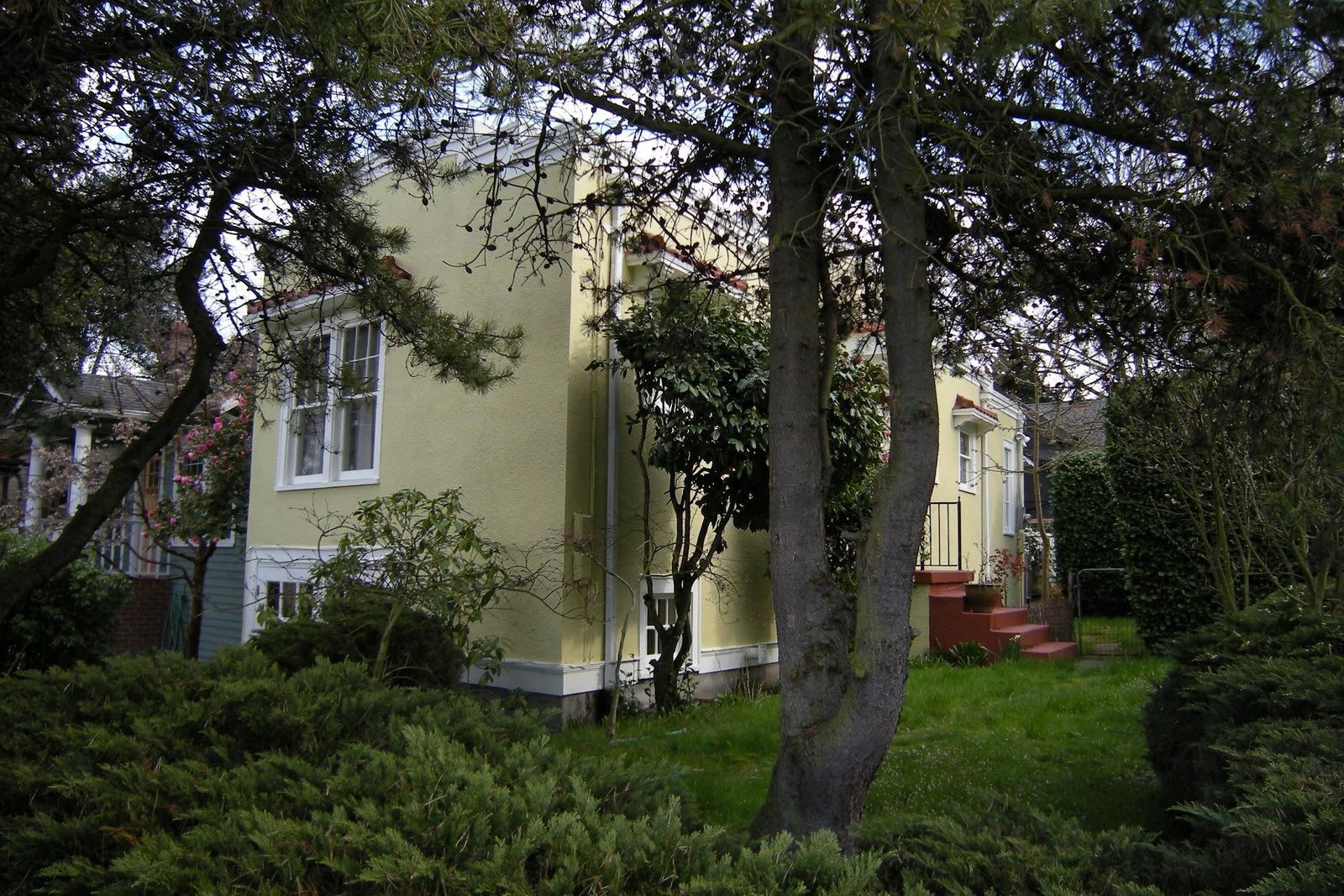
Lawns — and by lawns we mean closely mown grassy spaces — began appearing in 17th- and 18th-century Britain and France as signs of wealth. This was because only aristocrats or large estates could afford to keep grass short and manageable.

Before mechanized tools, scythes, shears, or grazing animals were used to maintain lawns, so turf was largely limited to those who could own the necessary manpower or animals. Early American colonists imported these aesthetics and tried to replicate them in their architecture and homes, albeit less formally.

2
Public parks set the bar

Image: Carl Newton

Early urban park designers, strongly influenced by European landscaping ideas, laid out wide expanses of turf in city parks, showing the public a "civilized" green aesthetic. That made clipped lawns part of the civic-space ideal, and not just a private luxury.

These parks helped cement the association between grass lawns, order, leisure, and modern urban life in American culture.

3
Mechanical breakthroughs

Image: Daniel Watson

In 1830, English engineer Edwin Beard Budding patented the first mechanical lawn mower, inspired by a wool-mill reel used to trim cloth.

Budding’s design used a cylinder of blades powered by a rear roller, making it easier to cut grass evenly, and largely replaced laborious scything or grazing, cutting down the cost of maintaining such status symbols in the process.

4
Et pluribus lawnus

Image: Gang Hao

Once affordable lawn mowers—including lighter push-mower variants in America—became popular, maintaining a lawn became feasible for aspiring middle-class homeowners.

This sparked a major transformation in both private and public architecture, as many well-to-do homes that before could not afford it began attempting to replicate the European lawn style in some fashion or another.

5
Suburban dreams

Image: Venrick Azcueta

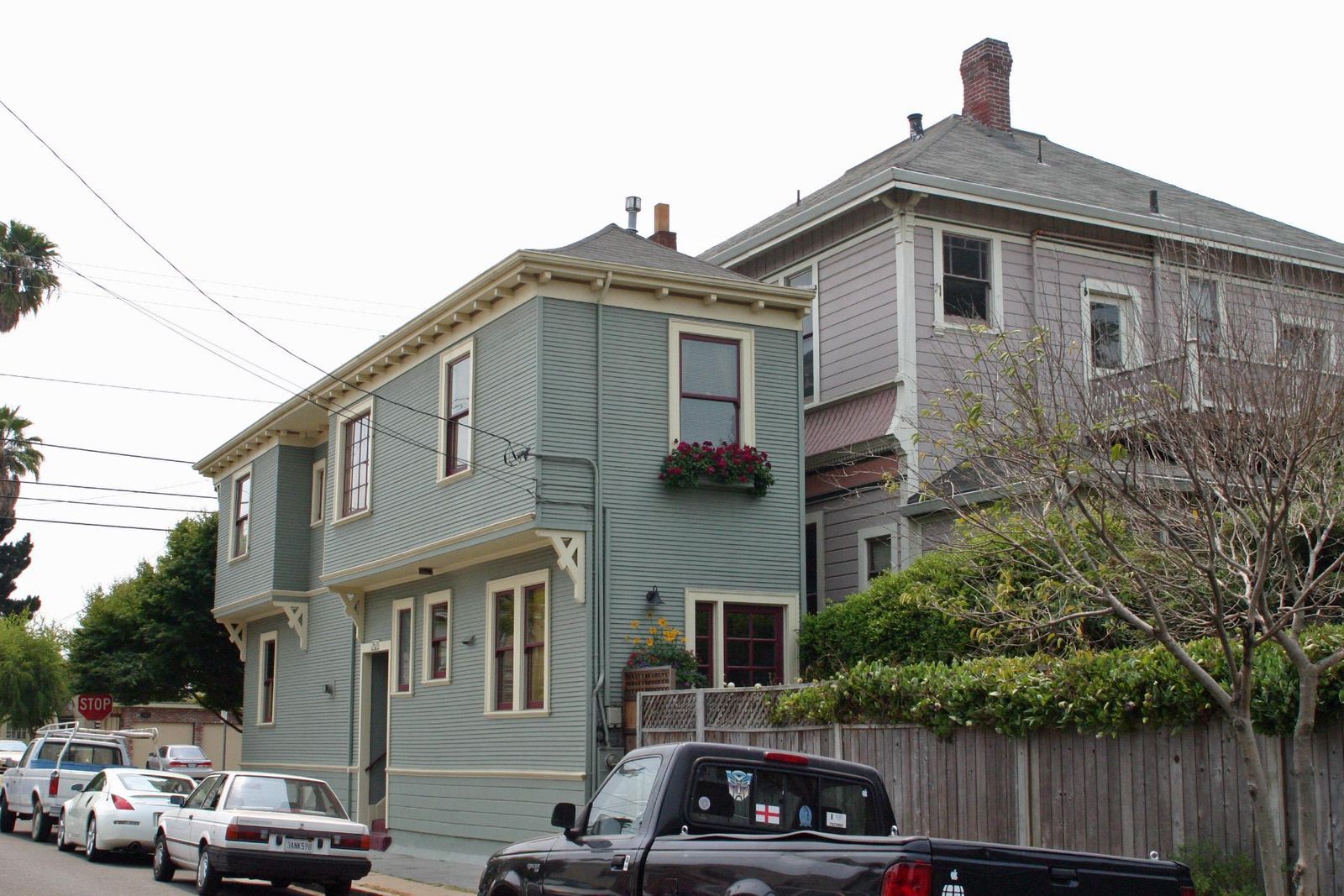
For decades, lawns remained a steady feature of American architecture and green-space design; however, it wasn’t until after WWII that the true lawn boom began. Returning veterans and government-backed mortgages fueled rapidly expanding suburbs.

Developer William Jaird Levitt and his company built thousands of nearly identical homes, each with its own front and back lawn. By the 1950s and ’60s, lawns had become central to the "American Dream," symbolizing stability, middle-class respectability, and neighborhood uniformity.

6
A bit of chemical help

Image: Victor Furtuna

After the war, synthetic fertilizers (derived partly from wartime chemical technologies) became widely available to consumers, enabling lush, uniform lawns even in soil and climate conditions unsuited to grass.

This lowered the barrier to achieving a "perfect" lawn, further popularizing lawns as part of the American identity and raising the expectations of what the perfect lawn should look like.

7
Begone, pesky weeds!

Image: Dmitry Burdakov

In addition to fertilizers, in 1944, researchers discovered 2,4‑Dichlorophenoxyacetic acid (2,4-D), the first widely effective selective herbicide — killing broadleaf weeds while leaving grasses largely unharmed.

Deployed commercially soon after WWII, 2,4-D made maintaining uniform, weed-free lawns much easier and was quickly adopted in home lawn products.

8
Thou shalt keep thy lawn green

Image: Tiago Rodrigues

As suburbs proliferated, lawn maintenance became a shared social norm — homeowners' associations and neighborhood covenants often started to expect regular mowing and upkeep.

Keeping a well-groomed lawn became not just an aesthetic choice but also a mark of civic responsibility and conformity to norms.

9
Environmental worries

Image: Rémi Müller

By the mid- to late 20th century, the ecological cost of the lawn aesthetic became visible: heavy water use for irrigation, chemical runoff from fertilizers and herbicides, and reduced biodiversity as a consequence.

These drawbacks spurred both scientific and public debate about the sustainability of the traditional lawn model — especially in water-scarce regions, where it was both impractical and resource-intensive.

10
The birth of mixed lawns

Image: Ruben Sukatendel

Growing environmental awareness, droughts, and changing tastes have prompted many homeowners and municipalities to adopt drought-tolerant landscaping, native plants, or mixed-species yards instead of the traditional uniform turf.

As a result, today the "ideal lawn" is evolving as we speak: classic turfgrass still remains common, but alternative yard styles now offer more varied ecological, economic, and aesthetic options.

Explore more American facts

Choose your favorite category!

General
General

As American as apple pie—the very best America has to offer!

Culture
Culture

Delve into the astounding richness of American lore.

Geography
Geography

Hop in and explore vast and diverse American landscapes.

History
History

Discover the key moments that shaped the United States.