General General 4 min read

Unplugging in nature

Here's why off-the-grid cabins do better than any other vacation stay
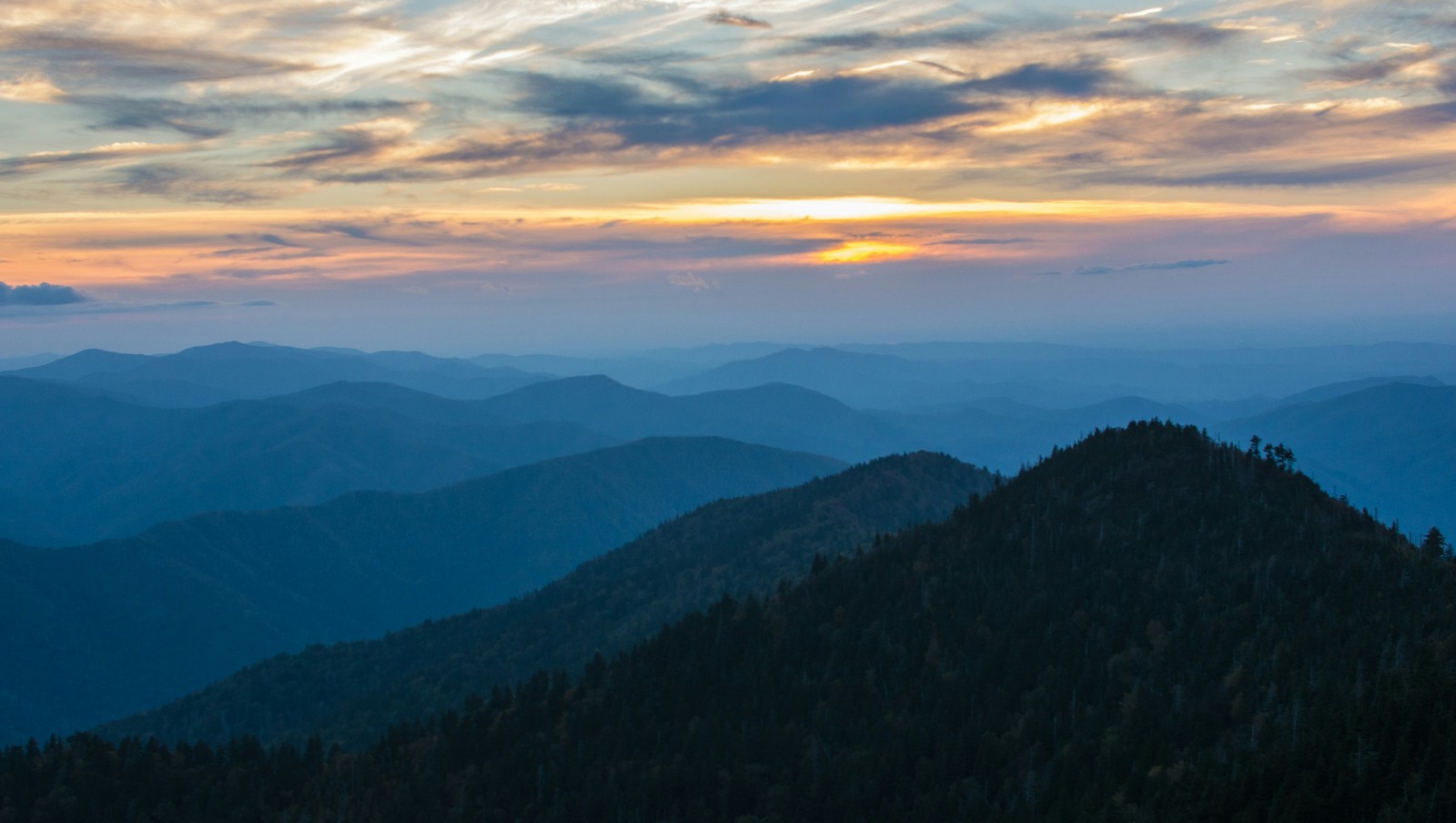
Image: Chris Reid

These days, "getting away" often just means answering emails from a different zip code. If you are craving something new and different, an off-the-grid retreat—whether it’s a remote cabin, a secluded tent site, or a rustic forest yurt—is the ultimate reset button. It’s a chance to start more meaningful conversations with your loved ones, resting your thumb from doomscrolling, or simply to rediscover what it feels like to be truly free and present . Read on to discover the ten life-changing benefits that happen the moment you turn your phone off for good.

1
Your thumb gets a much-needed break
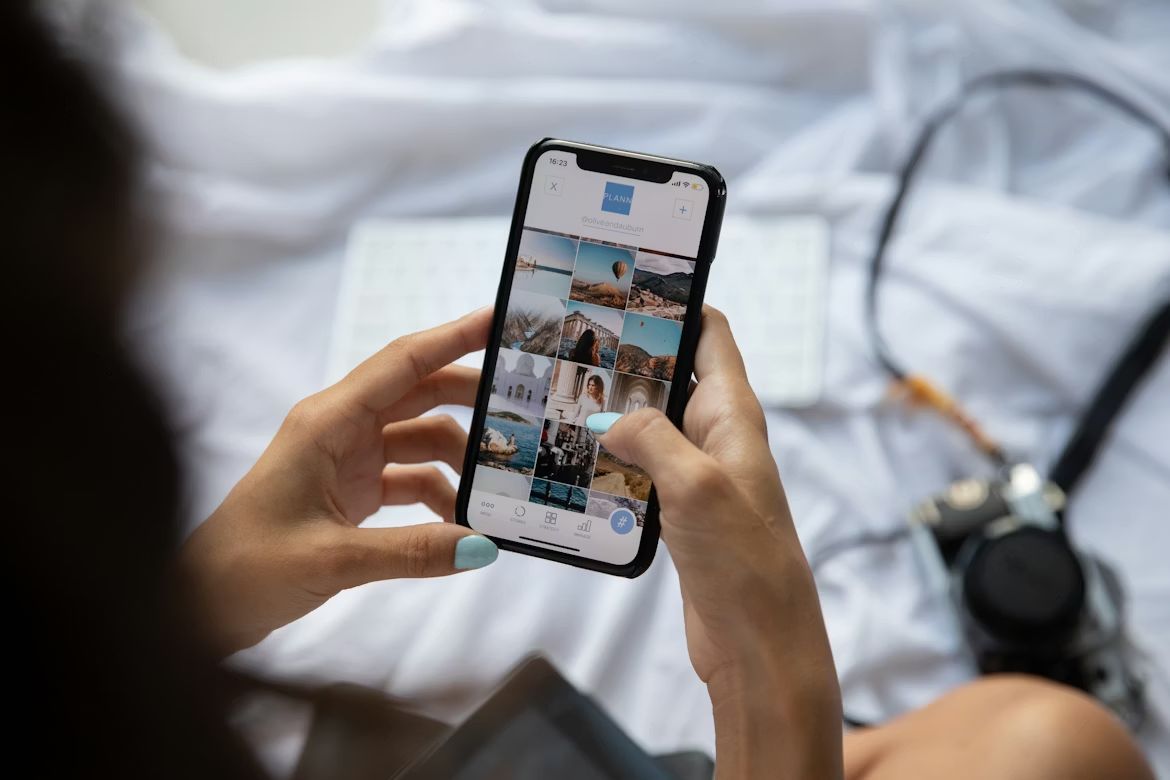
Image: Plann

After years of scrolling through everyone's vacation photos, your thumb has basically been doing cardio. Whether you’re relaxing in a place like the Southern Appalachians or the Pacific Northwest, that overworked digit finally gets to rest . Without service, you'll discover it has other talents, such as turning actual pages in a book or striking a match to start an evening fire.

The first day feels weird, like you've forgotten your wallet. By day two, you'll notice your hand isn't automatically reaching for your pocket every five minutes.

2
Mornings without emails are magical

Image: Brett Jordan

Imagine waking up without that immediate cortisol spike from seeing 47 unread emails. In a no-service cabin, your morning starts with coffee on the porch and actual bird sounds instead of notification pings.

Your boss's "urgent" request about the quarterly report can wait until Monday. Mother Nature doesn't have Wi-Fi, and honestly, she's doing just fine without it.

3
Conversations get interesting again

Image: Priscilla Du Preez

Without phones to fact-check every debate, dinner conversations become adventures . You'll actually have to remember things or admit you don't know something. Someone will insist that a movie came out in 1987, someone else swears it was '89, and you'll never resolve it.

The beauty is, it doesn't matter. You're too busy laughing and telling stories to care who's right.

4
You sleep as you did in your twenties

Image: Slaapwijsheid.nl

Without blue light blasting your eyeballs until midnight, your body remembers how to sleep properly . The mountain air helps too: There's something about that fresh, pine-scented breeze that works better than any sleep app.

You'll wake up actually rested instead of groggy. No 3 a.m. phone checks, no falling down social media rabbit holes when you should be sleeping—just solid, deep, restorative rest.

5
The stars will blow your mind
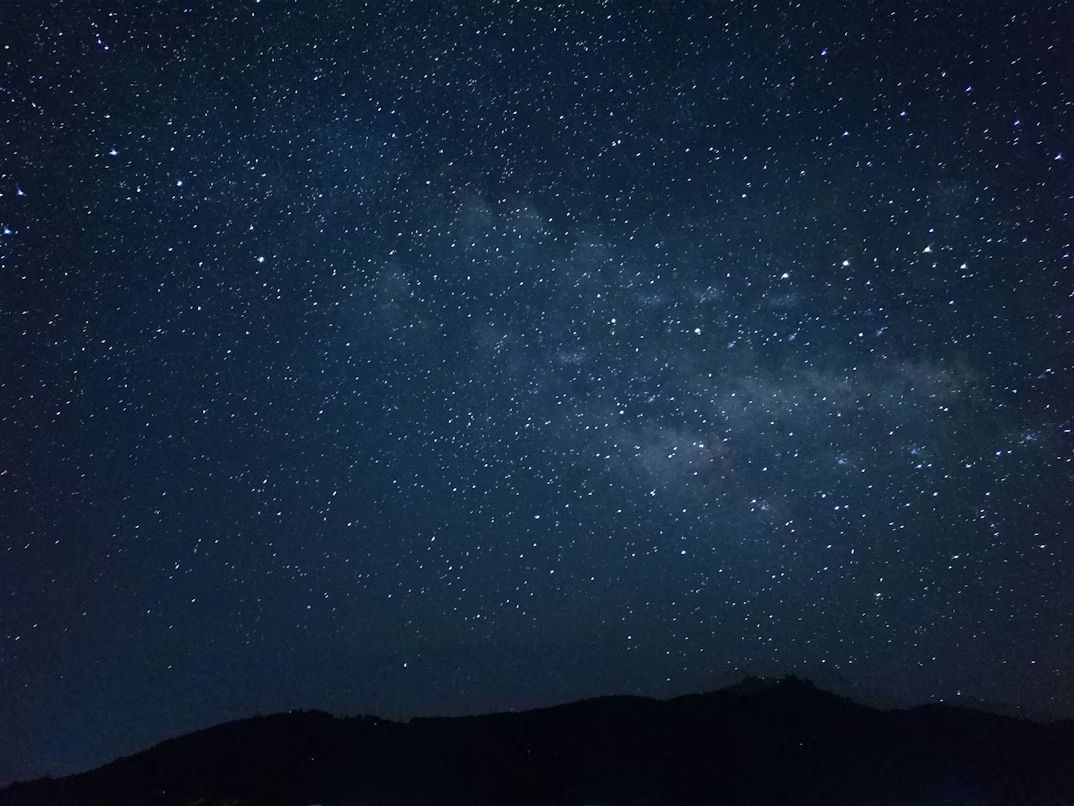
Image: Calwaen Liew

City lights and phone screens have stolen the night sky from us. Out in the deep wilderness, with zero light pollution and nothing to scroll through, you'll actually look up. The Milky Way isn't just a candy bar; it's a river of stars you can see with your naked eye.

Bring a blanket, lie on your back, and prepare to feel wonderfully small. You might even see a shooting star, and without your phone, you'll actually experience the moment instead of trying to photograph it .

6
Reignite your relationship with your partner
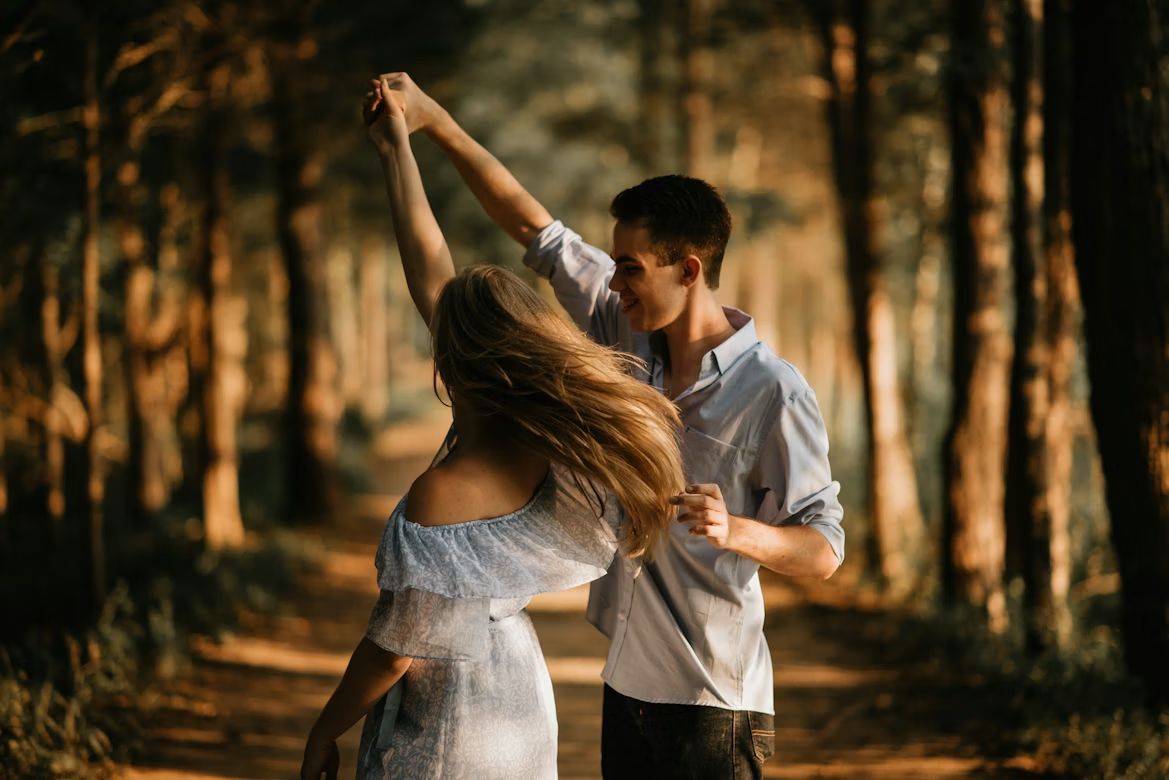
Image: Scott Broome

When you can't zone out on your phone, you have to actually talk to each other . Crazy concept, right? You'll remember why you liked this person in the first place. Without digital distractions, you might have conversations that go deeper than "what do you want for dinner?"

Plus, there's something romantic about being genuinely unreachable together. It's just the two of you against the mountains, like you're the last people on Earth.

7
Boredom becomes interesting

Image: Thomas Park

Here's something nobody tells you: Boredom is actually good for you . When your brain isn't constantly entertained, it starts wandering into interesting territory. You might finally figure out that problem at work, or remember a dream you had, or just notice how pretty the light looks through the trees.

Kids used to complain they were bored, and their parents said, "Go outside and find something to do." Turns out that advice works for adults, too. You'll be amazed at what you notice when you're not staring at a screen.

8
Real books make a comeback

Image: Matias North

Without the internet's constant interruptions, you'll rediscover what it's like to lose yourself in a story for hours . No tabs to check, no notifications to dismiss. Just you and the page.

There's something satisfying about the physical act of turning pages that a Kindle just can't match, especially with a wood fire crackling nearby.

9
Board games don't seem lame anymore
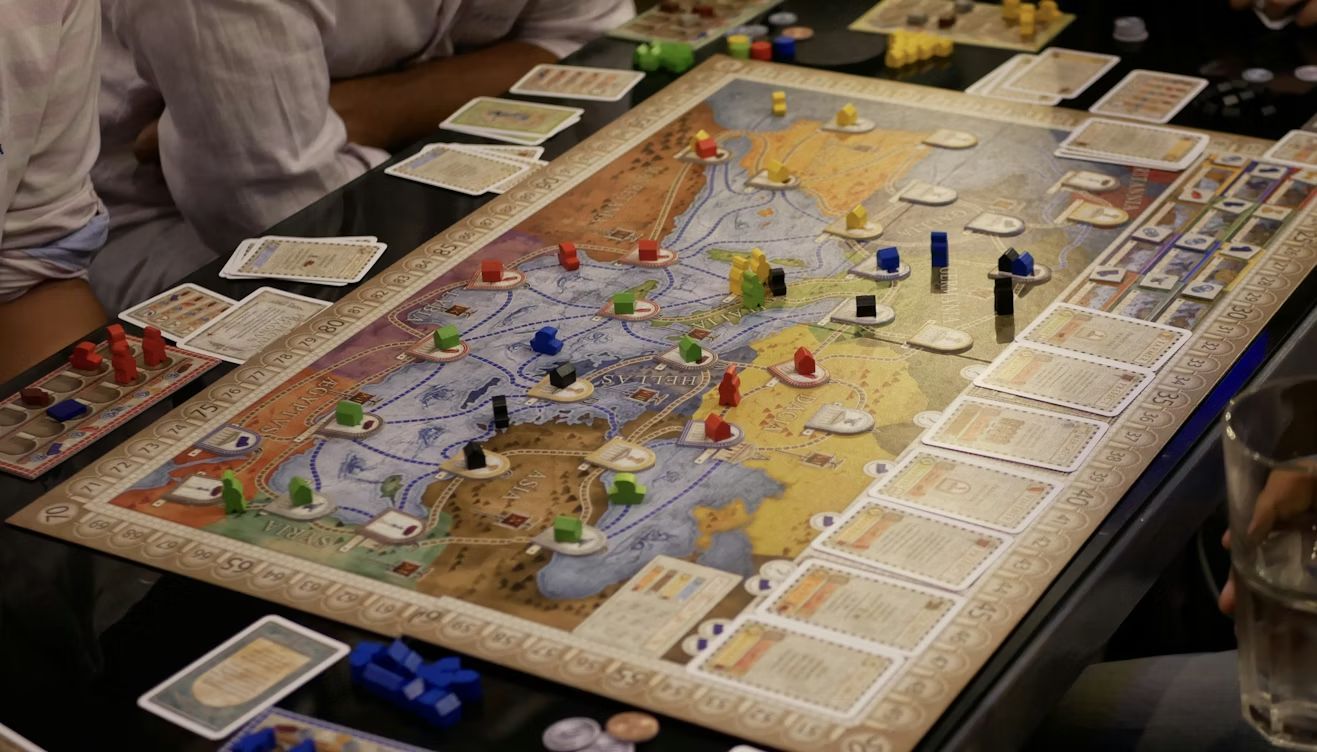
Image: Karthik Balakrishnan

Suddenly, that dusty Scrabble set in the cabin's closet looks pretty appealing. When your entertainment options shrink, simple pleasures expand. You'll find yourself actually enjoying a game of cards or Monopoly.

10
You return home as a better version of yourself

Image: Shane Ryan Herilalaina

After a few days off the grid, you'll notice something strange: you don't immediately need to check everything you missed. The world kept spinning without your constant monitoring, and that's oddly liberating. You might even keep your phone on silent for a while.

That mountain calm sticks with you, at least for a few days. You'll find yourself less anxious, more present , maybe even a little smug about your digital detox.
Culture Culture 7 min read

Foreign gems

These 12 iconic Americans weren't actually born in the U.S.

Image: cytis

Alexander Hamilton wasn’t the only prominent American to be born abroad. Some personalities are so ingrained in American culture that we just assume they were born in the United States. However, many of the major contributors to American science, art, and politics didn’t begin life in our country. Although some iconic figures of American history were immigrants, their stories are absolutely inspirational. Continue reading to learn more about the lives of 12 great Americans you might not have realized were born outside the U.S.

1
Alexander Hamilton

Image: John Trumbull, CC0, via Wikimedia Commons

On January 11, 1757, in the remote Colony of Nevis, British Leeward Islands, a boy was born. He went from having nothing to being a key player in the history of the United States of America. Alexander Hamilton, the illegitimate son of a Scottish trader and a French-English woman, would become George Washington's right hand and one of the nation's Founding Fathers.

At the age of 16, he landed in New York, where he began to study law. But his studies were interrupted when the Revolutionary War broke out. During his lifetime, Hamilton was an influential promoter of the U.S. Constitution, as well as the founder of the nation's financial system, the Federalist Party, the U.S. Coast Guard, and The New York Post .

2
Bob Hope

Image: d

"I left England when I realized I couldn't be king," Bob Hope liked to say. Leslie Townes Hope was so American that his audience was unaware he was actually born in London. When he was five years old, however, his family emigrated to the United States and settled in Cleveland, Ohio.

He began working in show business when he finished high school, appearing in countless Broadway plays, Hollywood films, and television shows. Throughout his more than 60-year career, Hope was not only one of the most influential comedians of his time; he was also one of the most awarded actors in history, the unofficial entertainer of the American troops, and the presenter who hosted the Oscars ceremony the most times.

3
Henry Kissinger

Image: White House Photographic Office, Public domain, via Wikimedia Commons

During the 20th century, this controversial diplomat played a key role in American politics. However, Heinz Alfred Kissinger was born into a Bavarian Jewish family on May 27, 1923. Escaping Nazi Germany, he emigrated to the United States, where his name was changed to Henry.

Henry Kissinger soon obtained citizenship. He served in the Army, studied at Harvard University, and had a long and active life in our country's politics. During the Eisenhower, Kennedy, and Johnson administrations, he worked as a security consultant for various agencies. His reputation led him to be appointed National Security Advisor by President Richard Nixon in 1969, and Secretary of State in 1973, the first person in history to hold both positions simultaneously.

4
Charlie Chaplin

Image: Bain News Service, publisher.Library of Congress, Prints & Photographs Division, Public domain, via Wikimedia Commons

Charles Chaplin, one of the greatest Hollywood legends, was born in London in 1889. At the age of 20, Chaplin crossed the Atlantic to try his fortune in the United States. It was here that he came up with his signature character, Charlot, an endearing tramp who has become a universal icon.

From then on, Charlot appeared in dozens of films that allowed Chaplin to consolidate his reputation as one of the industry's most beloved actors. In 1972, the Academy of Motion Picture Arts and Sciences awarded him an Honorary Oscar for his outstanding career. The audience applauded for twelve uninterrupted minutes.

5
Alexander Graham Bell

Image: Harris & Ewing, photographer, Public domain, via Wikimedia Commons

​​Known for being the inventor of the first patented telephone, Alexander Graham Bell also worked on the development of deaf-friendly systems, was one of the founders of the National Geographic Society, and made great contributions to the U.S. telecommunications industry. Yet, he was born in 1847 in Edinburgh, Scotland.

In 1871, Bell settled in Boston, Massachusetts, where he worked as a teacher and tutor of deaf students. His influence on American science and culture was so important that on the day of his death, all telephone services in the United States stopped for one minute in his honor.

6
Samuel Goldwyn

Image: Metro-Goldwyn-Mayer, Public domain, via Wikimedia Commons

Films, perhaps the most representative industry of American culture, would not be the same without the contribution of numerous foreigners who settled in California since the beginning of the 20th century. This is the case of Samuel Goldwin, one of the most influential magnates in the history of Hollywood, born in Warsaw, Poland, in 1879.

During his more than 50 years of activity, Goldwyn founded several film studios and produced the first feature film entirely made in Hollywood. His reputation in the industry grew steadily, based on his incredible eye for finding great talent. There is a theater named after him in Beverly Hills, and he received a star on the Hollywood Walk of Fame for his invaluable contributions to cinema.

7
Joseph Pulitzer

Image: Allen & Ginter, CC0, via Wikimedia Commons

This self-made, foreign man became an American media mogul and inspired the world's most prestigious journalism award. Born in 1847 in Hungary, young Joseph Pulitzer emigrated to the United States at the age of 17 without knowing a word of English.

After fighting in the Civil War, Pulitzer began to study law. He soon discovered his talent for journalism. Within a few years, he became a leading national figure in the U.S. Democratic Party, began running the New York World newspaper, and became a pioneer of tabloid journalism.

8
Albert Einstein

Image: Archivo General de la Nación, Public domain, via Wikimedia Commons

Despite being born in Germany, the most famous scientist of the 20th century ended his days in the United States, where he was able to continue his research after Nazism took power. In 1933, Albert Einstein was visiting our country, and given the context in Europe, he decided not to return to the old continent and renounced his German citizenship.

Einstein accepted a position at the Institute for Advanced Study in Princeton, where he continued his scientific work until his death. During his stay in America, he remained active in the academic world and received multiple awards. His scientific legacy remains fundamental to modern physics and the understanding of the cosmos.

9
Madeline Albright

Image: U.S. Department of State, Public domain, via Wikimedia Commons

Madeleine Albright was the first woman in the history of the United States to serve as Secretary of State. What you may not know is that the diplomat was born in Prague, Czechoslovakia, as Marie Jana Korbelová. In 1948, Albright immigrated with her family to America and settled in Denver, Colorado.

After graduating from Wellesley College, she worked as a journalist and editor for different newspapers. She later earned her doctorate and began her political career working in the White House. She was a senior advisor to the Democratic Party, and when Bill Clinton became president, she was first appointed Ambassador to the United Nations. A few years later, she became Secretary of State.

10
Alfred Hitchcock

Image: Shamley Productions , Paramount Pictures, Public domain, via Wikimedia Commons

The great Alfred Hitchcock began his film career in England, where he was born, but it was in the United States where he was really able to display all his genius. While in Hollywood, he directed more than 30 films, some of which are considered masterpieces to this day.

Although Hitchcock was relatively successful in his country, in 1939, producer David O. Selznick convinced him to cross the pond and settle in our country. And thank goodness he did! The master of suspense is considered one of the most influential directors of all time and is regarded as one of the most important artists of the seventh art.

11
Meyer Guggenheim

Image: Joe Dudeck

The patriarch of the Guggenheim family, known for playing a decisive role in the transformation of the American mining and smelting industries, was actually born in Lengnau, Canton Aargau, Switzerland. Meyer Guggenheim emigrated to the United States in 1847, where he started working as a salesman.

After earning a considerable sum of money buying and selling stocks, he began investing in silver mines. In a short time, he amassed one of the largest fortunes of the 19th century. Meyer died in 1905 in Palm Beach, but his legacy still influences many sectors today, from industry to philanthropy.

12
Levi Strauss

Image: manusama

Is there anything more American than a pair of blue jeans? What started as a strong and durable pair of pants became the garment that revolutionized the fashion market. Worn by miners, cowboys, rock stars, presidents, and men and women all over the world, blue jeans have been a favorite for generations. However, their creator was not born in the United States.

Levi Strauss, the founder of the first jeans manufacturing company, was born in 1829 in Buttenheim, Germany, as Loeb Strauss. In 1847, he emigrated to New York, but when the California gold rush began, he decided to move to the West Coast and open a branch of the family business in San Francisco. And the rest is history!

Culture Culture 4 min read

Where did RadioShack go?

From Blockbuster to Pan Am: Remember these 10 giants no longer around?

Image: Sean Benesh

It can be hard to imagine a giant falling, but it happens more often than we might think. Huge companies with thousands of employees, stores across the world, and solid reputations file for bankruptcy every year—some with a loud bang, while others fade away quietly after a long decline. You will likely recognize the following ten names. These companies were once everywhere, only to one day vanish into thin air. Some are gone for good, some were absorbed by other corporate giants, and some still exist but only as a tiny fraction of what they used to be. Do you miss any of these brands?

1
Pan Am

Image: Rob Wilson

If a single name were to represent the airline industry in the 20th century, it would most likely be Pan Am. Founded as Pan American Airways in 1927, the company became an American icon , known for its many airline innovations , its distinctive blue logo, and the crisp white uniforms of its staff.

However, when the airline industry was deregulated in 1978, increased competition set the stage for Pan Am’s downfall. The company declined throughout the 1980s and ultimately declared bankruptcy in 1991.

2
Borders

Image: Araix Rand

Its huge stores were havens for book lovers, who could spend hours wandering its aisles, browsing and perusing its vast catalog of books , magazines , CDs , and more. But, alas, none of these stores had been profitable since the mid-2000s.

In 2011, after the company filed for bankruptcy, every single store was closed. Its trademarks were later purchased by its prominent rival, Barnes & Noble.

3
Circuit City

Image: Austin Distel

Starting its life as Wards Company in 1948, Circuit City became one of America’s most recognizable brands in the consumer electronics retail business . However, the turn of the century brought significant changes and financial difficulties, ultimately leading the company to file for bankruptcy in 2008.

4
Tower Records

Image: Lucía Garó

In a similar vein to Borders, Tower Records was a haven for music lovers who enjoyed the vast selection of music available in its stores. And, much like Borders, music stores have largely gone the way of the dodo.

Managerial blunders and the rise of internet piracy contributed to the company filing for bankruptcy twice—first in 2004 and again in 2006. Its assets were sold at auction to Great American Group, and the last store closed in December 2006.

5
Trans World Airlines (TWA)

Image: Ross Parmly

Pan Am was not the only major airline to disappear. The once-powerful TWA met the same fate, operating from 1930 until it was acquired by American Airlines in 2001 . It was once one of the "Big Four" domestic airlines in the United States, alongside United, Eastern, and the aforementioned American.

6
Blockbuster

Image: Bruno Guerrero

Another demise that hit hard for loyal customers was Blockbuster. While the VHS rental behemoth dominated the market throughout the ’90s and early 2000s —with over 9,000 stores and 84,000 employees—the lethal combination of the internet and piracy proved too much to withstand. As a result, the company gradually closed nearly all its stores, leaving only one remaining today in Bend, Oregon.

7
Amoco

Image: Markus Spiske

The first name on this list to disappear not due to financial difficulties but because of a merger, Amoco was a giant in the oil and gas industry. Founded in 1910, it became the largest natural gas producer in North America by the late ’90s .

In 1998, it merged with British Petroleum in a $61 billion deal. Existing service stations were rebranded under the BP name, and the Amoco brand gradually faded from view.

8
Compaq

Image: ThisisEngineering

In the ’90s, Compaq was a major player in the computer industry and, at one point, the largest supplier of PC systems in the US . However, as the century came to an end, lower-cost competitors like Dell began attracting consumers and chipping away at Compaq’s market share. In 2002, the company merged with Hewlett-Packard, and the Compaq name gradually faded away.

9
Woolworths

Image: Kay Enn

The original five-and-dime store, Woolworths, was a pioneer in the retail industry in the late 1800s . It managed to survive—and even thrive—through most of the 20th century, but by 1989, it had entered a steady decline.

Following a 1993 restructuring that led to the closure of half its 800 stores, the rest gradually shut down. While the Woolworths retail brand and name have disappeared, the company rebranded as the Venator Group in 2001 and shifted its focus to its footwear division. Today, you might know it as Foot Locker.

10
Howard Johnson’s

Image: Francesca Saraco

The last name on our list is a familiar one, especially to travelers. The iconic Howard Johnson’s began as a single ice cream stand outside Boston, Mass., before expanding to over 1,000 restaurants. In the 1950s, the chain introduced motor lodges at nearly 300 of its locations.

Howard Johnson’s was sold to Marriott in the 1980s, and most of its restaurants gradually shut down. The last remaining location, in Lake George, N.Y., closed its doors in 2017.

Explore more American facts

Choose your favorite category!

General
General

As American as apple pie—the very best America has to offer!

Culture
Culture

Delve into the astounding richness of American lore.

Geography
Geography

Hop in and explore vast and diverse American landscapes.

History
History

Discover the key moments that shaped the United States.