Geography Geography 3 min read

Rediscovering our land

Ghostly caves, surreal swamps, and other US natural oddities
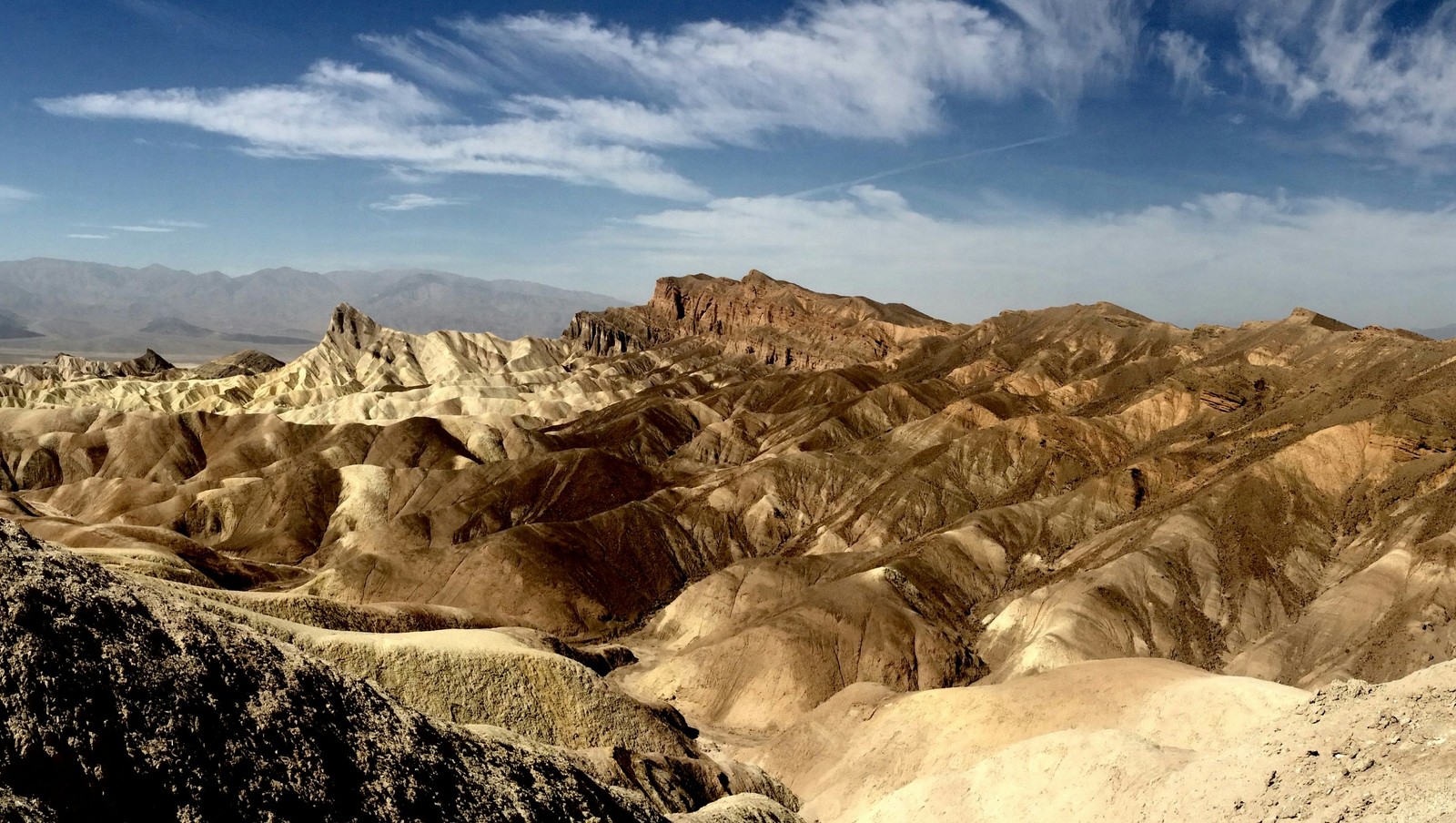
Image: Drahomír Hugo Posteby-Mach

America is as vast as it is diverse, so it's no wonder that you'll find every kind of scenic marvel here, from the ordinary to the truly surreal. Ever heard of a national park filled with volcanoes, where glowing lava flows across the land and pours straight into the ocean? If you’re ready to discover 10 natural wonders in the US that will blow your mind, keep reading!

1
Hawaii Volcanoes National Park, Hawaii
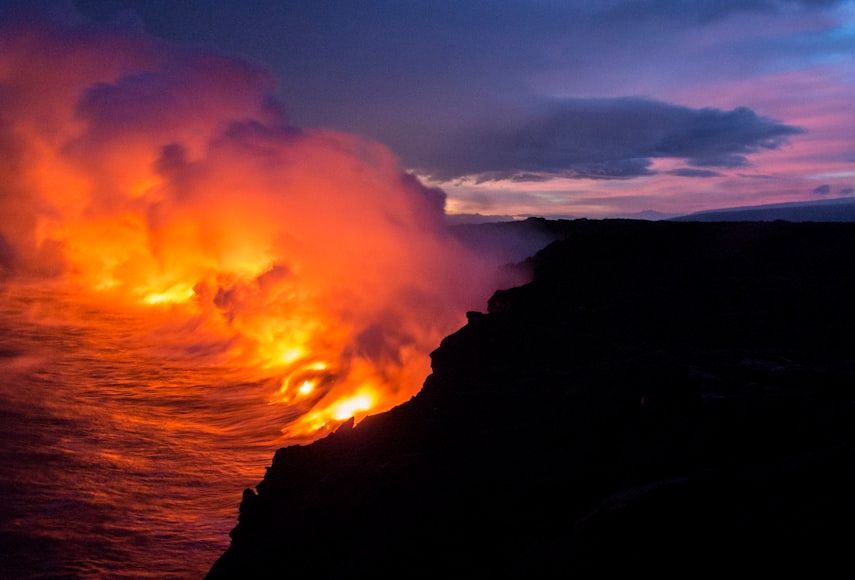
Image: Mandy Beerley

If you've ever imagined what hell might look like, Hawaii Volcanoes National Park could come close—not because it’s a place of suffering (you'll actually witness some of the most incredible views on Earth), but because it's full of glowing, molten, menacing lava. The lava flows from Kīlauea, one of the most active volcanoes in the world. But not everything here burns; this national park is also home to unique flora and fauna.

2
Grand Prismatic Spring, Wyoming
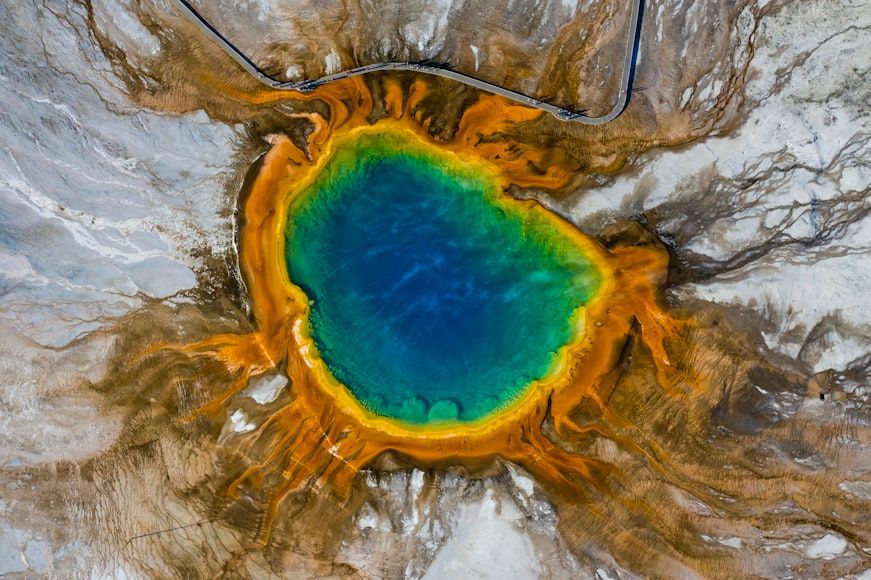
Image: Dan Meyers

What you're looking at might resemble a weather forecast map, but it's not. It's the Grand Prismatic Spring, Yellowstone's most famous hot spring. With its brilliant blue, orange, yellow, and green hues, it looks like a surrealist painting. Although it might look small in pictures, the Grand Prismatic Spring is huge—about 370 feet in diameter and 160 feet deep. That makes it the largest hot spring in the US and the third largest in the world!

3
Antelope Canyon, Arizona
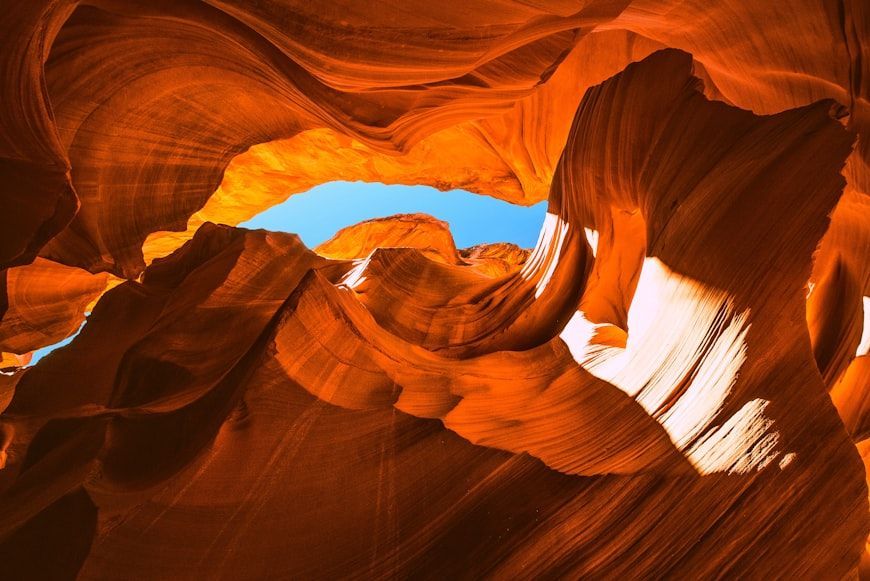
Image: Fudo Jahic

If you want to feel like you're walking through a giant red stone maze, Antelope Canyon near Page, in northern Arizona, is the perfect spot. Carved over thousands of years by flash floods and erosion, its towering walls allow sunlight to stream in from above, creating an unforgettable experience for visitors.

4
Painted Hills, Oregon
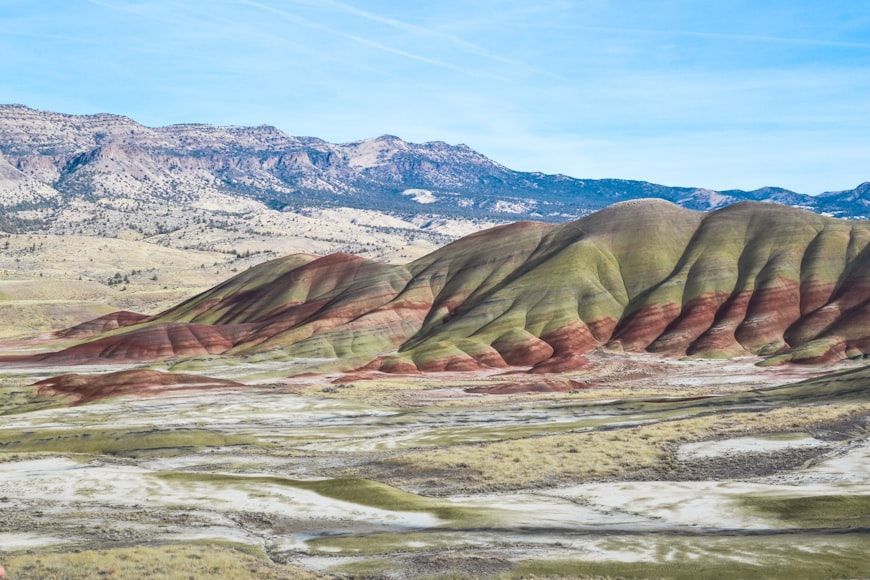
Image: Ashley Bard

If an artist were to paint a series of enormous hills in vibrant colors, it would probably look a lot like Oregon's stunning Painted Hills. Located within the John Day Fossil Beds National Monument, these hills display stripes of red, yellow, gold, and black. But that's not all! The colors shift with the seasons and change throughout the day, creating a breathtaking, ever-changing landscape.

5
Mendenhall Glacier Ice Caves, Alaska
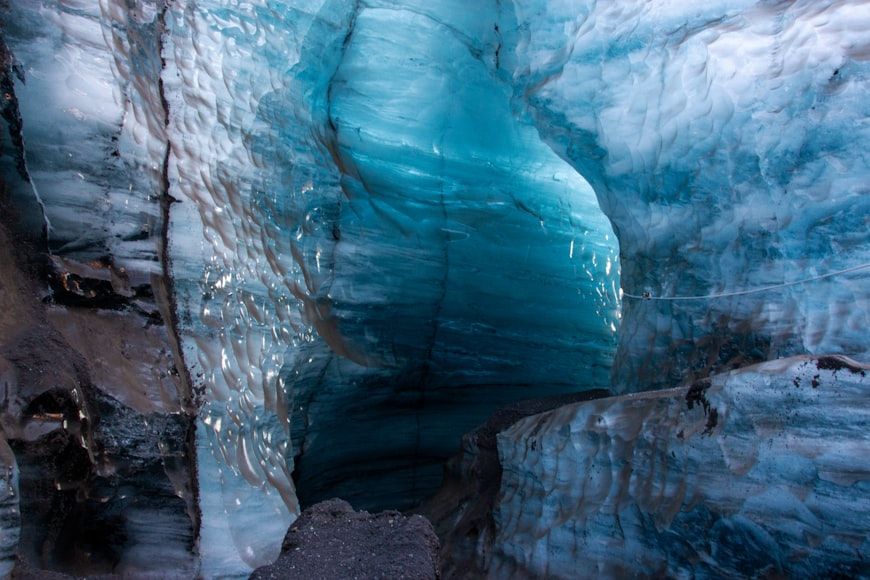
Image: Salomé Guruli

Exploring caves can be risky and terrifying for many, but imagine a cave system made entirely of ice! It sounds like something from a fantasy movie, but it really exists—and it's in Alaska. The stunning Mendenhall Glacier Ice Caves lie beneath the glacier of the same name, formed by meltwater carving tunnels and chambers deep within the ice.

6
Turnip Rock, Michigan
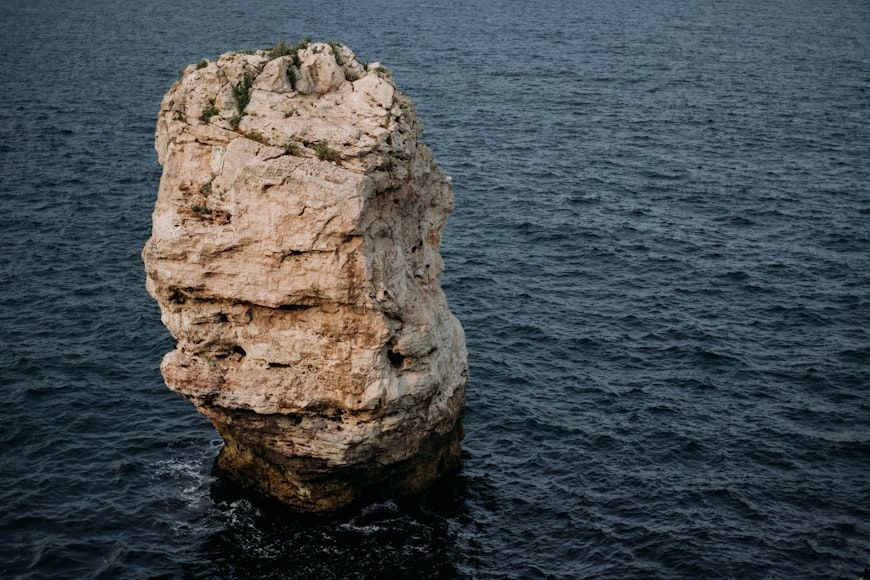
Image: Maria Teneva

Turnip Rock, located in the famous Lake Huron in Michigan, is as fascinating as it is mysterious. What makes this rock so special? Standing about 20 feet tall, it has a turnip-like shape—its narrow base supports a much wider top—giving it a perfectly balanced appearance that amazes all who see it.

7
Hubbard Glacier, Alaska
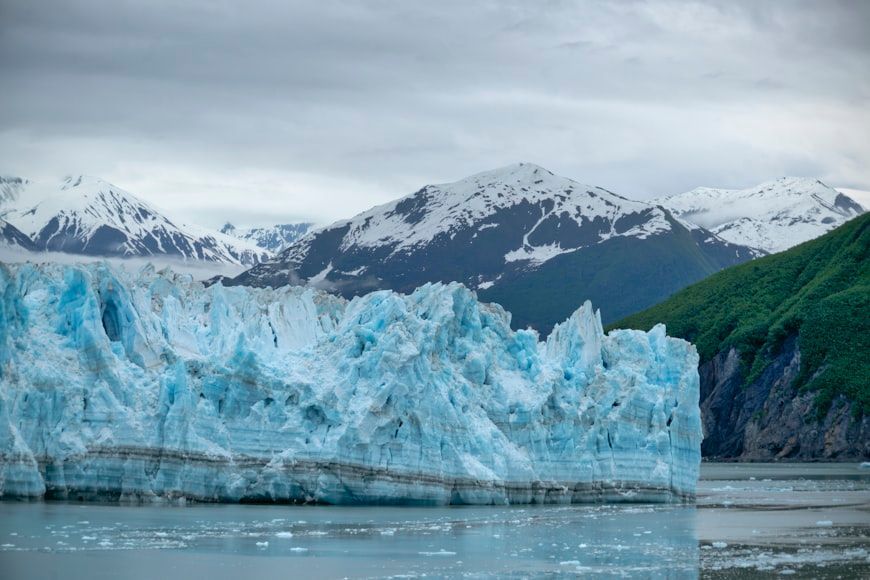
Image: Peter Hansen

The Mendenhall Glacier Ice Caves are just one of Alaska's many spectacular sights. Another must-see is the incredible Hubbard Glacier in southeastern Alaska, one of the largest and most active tidewater glaciers in North America. Trust us— its sheer size and dramatic ice cliffs will absolutely blow your mind!

8
Bisti/De-Na-Zin Wilderness, New Mexico
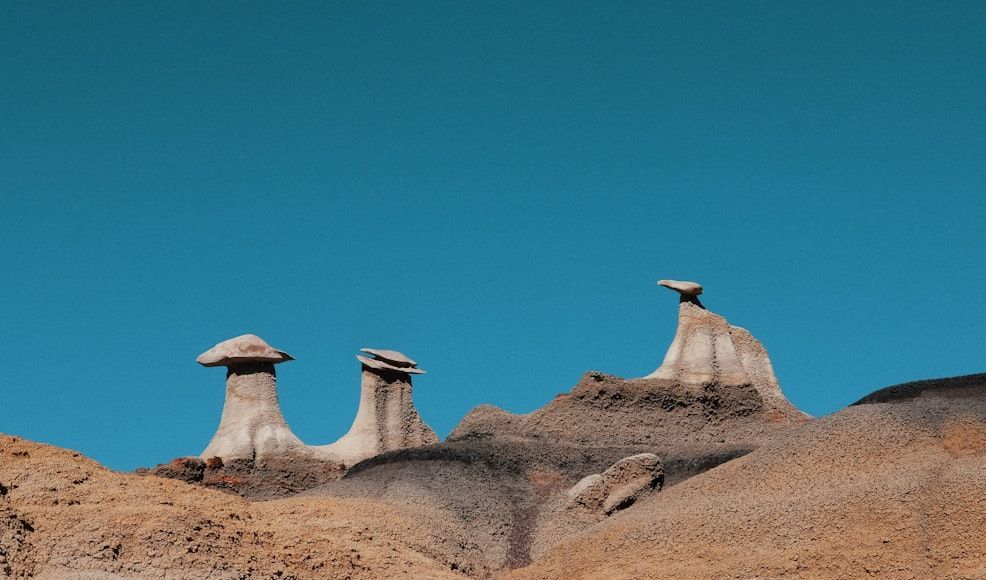
Image: Robert Harkness

When it comes to surreal landscapes, New Mexico's Bisti/De-Na-Zin Wilderness can't be left out. Its towering rock formations, blending shades of white, gray, red, and orange, were shaped by erosion and look like something straight out of another planet!

9
Mammoth Cave, Kentucky
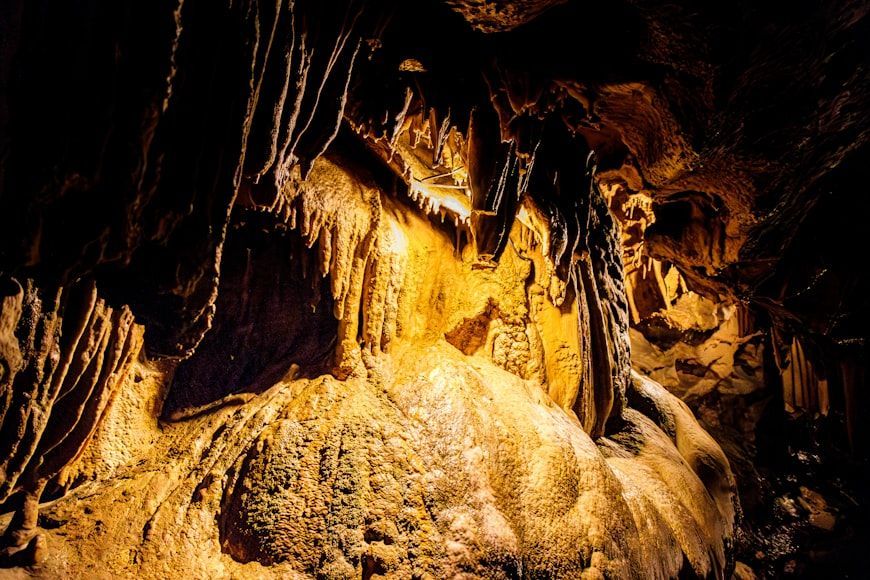
Image: Adrien Tanic

A cave doesn't always have to be a small, cramped space. Mammoth Cave stands out with its enormous underground chambers, filled with impressive rock formations in both shape and size. In fact, it's the world's longest-known cave system—and it's right here in the state of Kentucky!

10
Atchafalaya Basin, Louisiana
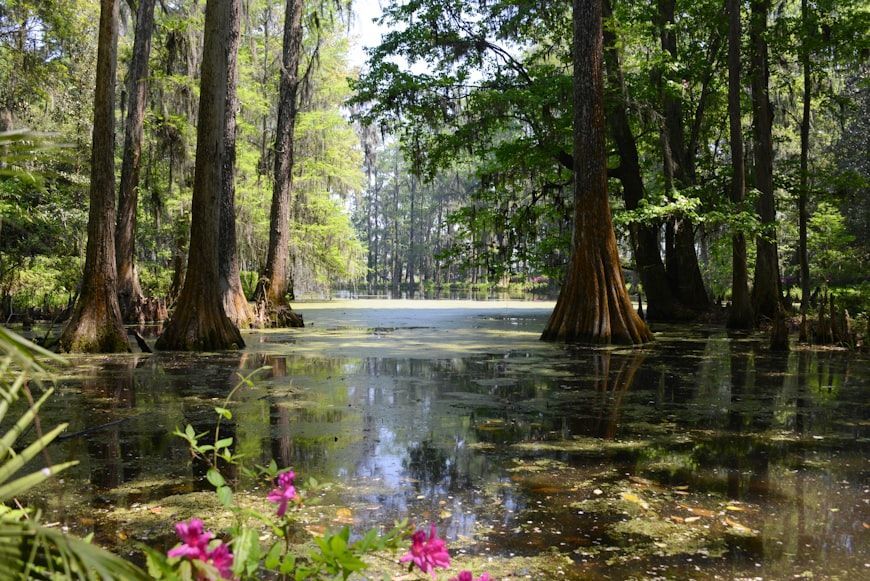
Image: Carlo Lisa

If you're easily spooked, Louisiana's Atchafalaya Basin might not be your idea of a fun trip, especially at night! It's the largest swamp and wetland area in the US, packed with twisting bayous, spooky cypress trees, and massive alligators lurking around.

General General 4 min read

WHAT GOES INTO A NAME?

10 States with unusual names explained

Image: Nico Smit

A lot of consideration goes into naming a state. Or, at least, it should. After all, that enormous piece of public land will be an important part of the country, and its citizens will be defined by its name as well. Some states’ names are obvious: New York was named after the English town of York, New Mexico was named after Mexico, and so on. But many other states have strange-sounding names, like Wyoming or Connecticut. Stick around until the end of this list and learn why ten of these states are named that way!

1
Massachusetts

Image: Kaya Arro

A curious word in itself, Massachusetts originated from an Algonquian word meaning "large hill place." The term "Massachusett" was first recorded in 1616 as the name of a village near present-day Boston, and the English added an -s to signify the plural.

The name was applied to the bay, from which the Massachusetts Bay Company, founded in 1629, took its name. With the Massachusetts Constitution of 1780, legislators officially adopted the name Commonwealth of Massachusetts.

2
Michigan

Image: Aaron Burden

Another name with an Algonquian origin, like Massachusetts, Michigan comes from the word mishigama which means "big lake." The state was named after its chief geological feature: that large body of water to its west. After all, Michigan is in direct contact with four of the five Great Lakes.

When the area became a U.S. territory, the name Michigan was adopted as the name of the state. Michigan achieved statehood in 1837.

3
Montana

Image: Tim Stief

A name most likely derived from the either Spanish ( Montaña ) or Latin ( Montanus ) word for mountain, Montana was suggested by Rep. James M. Ashley of Ohio, who was a member of the House Committee on Territories. He recommended it in 1863 for the territory that would become Idaho. He liked the name so much that he recommended it again for a territory being organized in 1864.

The name Montana itself was first given in 1858 to a town in the Pike’s Peak gold region, which was at the time part of Kansas and is today part of Colorado. The town eventually died, though, when the gold ran out, but the name lived on.

4
Oklahoma

Image: Skyler Smith

The name Oklahoma was coined in 1866 by Allen Wright, a Choctaw chief and Presbyterian minister who served in the Confederate Army during the Civil War. He combined two Choctaw words that, together, mean "Land of the Red People." Eventually, the name was adopted into the Choctaw-Chickasaw Treaty.

5
Pennsylvania

Image: Lera Kogan

In 1681, the English king Charles II gave a land grant to William Penn. The charter designated that the colony was to be called Pennsylvania, which was a combination of Penn’s name and the Latin " silva " (spelled " sylva " in the 17th century), meaning "forest." Therefore, Pennsylvania means " Penn’s forest ."

William Penn had originally suggested that the land be called New Wales, but since the charter was signed with Pennsylvania permanently inscribed, he declared that the name was in honor of his father.

6
Tennessee

Image: Brice Cooper

While the names of many states originate from descriptions, the name of Tennessee didn’t have any particular meaning when it was bestowed upon the Volunteer State. This name originally came from a Cherokee town called Tanasqui by the Spanish, and Tinnase by the English. But the Cherokees themselves didn’t associate any literal meaning with the word.

The name was also given to a stream near the town, and as English settlers moved downstream, they carried the name with them. Tennessee first appeared in that spelling as the name of a newly organized county in North Carolina in 1788, and it was eventually proposed and accepted by Congress as a state name in 1796.

7
Wyoming

Image: Kellie Klumb

The name of Wyoming originated from the Algonquian word meche-weami-ing , which meant " at the big flats. " It was originally applied to a valley in Pennsylvania and became well-known through Thomas Campbell’s epic 1809 poem "Gertrude of Wyoming," which was about a girl from Pennsylvania.

James Ashley, a member of the House Committee on Territories representing Ohio, suggested the name for a new territory in 1868.

8
Alaska

Image: Rod Long

The name Alaska is thought to come from the Aleut word aláxsxaq or aleyska , which translates to " an object to which the sea is directed ."

When Alaska was purchased from Russia in 1867, the name Alaska was suggested by Senator Charles Sumner under the belief that it meant "great land," when in fact the word was simply what Aleuts used to refer to the mainland.

9
Connecticut

Image: Christopher Luther

Whoever thinks Connecticut sounds like a complicated word, should take a look at the Algonquian word from which it originated: Quinnehtukqut , which means " place beside the long tidal river. "

An English scribe probably inserted the second, silent "c" in the name into the word to form the more common "connect" section, as we know it today.

10
Idaho

Image: Clay Elliot

The name of the state of Idaho has at least two probable origins. On the one hand, it may be derived from the word Idahi , the Kiowa-Apache name for the Comanche, both of whom were known to have been in that area. On the other hand, it might have been fabricated by a mining lobbyist at a time when native-sounding names were popular.

When Colorado was being organized as a territory in 1860, the name Idaho was considered, but Congress chose Colorado instead. The name came up again in 1863 when territories farther north were being organized. Montana was first proposed for the new area, but the U.S. Senate decided to call it Idaho.

Geography Geography 6 min read

AMERICA’S BEST MANSIONS AND ESTATES

Luxury living: 10 impressive historic homes worth visiting

Image: Ramith Bhasuka

You don't have to travel all the way up to Europe to enjoy grand estates and castles. The United States is full of historic mansions that tell stories of times past, from the Gilded Age to the Roaring 20s. Today, many of these architectural marvels have been carefully restored and are available for public tours. Read on to discover 10 breathtaking mansions where the country's wealthiest and most distinguished American families used to live.

1
Vanderbilt Mansion

Image: Michael Denning

The Vanderbilt Mansion was one of several homes owned by Frederick William Vanderbilt and his wife Louise Holmes Anthony. Built between 1896 and 1899, this 54-room marvel is an excellent example of the Beaux-Arts architectural style , characterized by its grandeur and ornate detailing. In addition, the mansion's interiors are representative of the American Renaissance.

Historically known as Hyde Park, the estate includes 211 acres and is built on a hilltop overlooking the Hudson River. It includes well-groomed flowerbeds, formal gardens, woodlands, and ancillary buildings. In 1940 the Vanderbilt Mansion was designated a National Historic Landmark. Today it’s a historic house museum operated by the National Park Service.

2
Hildene Mansion

Image: sarahlawrence603

Hildene Mansion was built in 1905 by Robert Todd Lincoln, eldest son of President Abraham Lincoln. This Georgian Revival-style mansion is set on a 200-foot promontory, which offers a panoramic view of the Battenkill Valley. The name "Hildene" comes from Old English words meaning "hill" and "valley with stream".

Hildene Mansion remained in the possession of the Lincoln family until 1975. Then, in 1978, the property was acquired by a non-profit organization that restored it, preserving its historic integrity. Today this former summer home is one of Vermont's most popular tourist attractions. Visitors can wander around the large estate and contemplate its opulence: from the grand entry staircase to the original furnishings.

3
Swan House

Image: Michael Starkie

Swan House, located in Atlanta, Georgia, is a historic mansion built in 1928 by Edward and Emily Inman, heirs to a cotton fortune. The mansion's eclectic design combines neo-Renaissance styles with a classical approach. The 28-acre estate features terraced gardens and a cascading fountain on the hillside. Carved or painted swans are a recurring motif throughout the house and gardens.

In 1966, the Atlanta Historical Society acquired the house and grounds. Today, Swan House is part of the Atlanta History Center and operates as a museum documenting 1920s American history. Many of the Inmans' original furniture pieces are still on display, offering visitors a glimpse into the past.

4
Hearst Castle

Image: Mike Hsieh

On the west coast, halfway between San Francisco and Los Angeles, there’s a magnificent mansion, a combination of a medieval castle , a Spanish cathedral , and a Roman temple. Hearst Castle is the result of the feverish dreams of one of the greatest tycoons of the 20th century: William Randolph Hearst.

Facing the Pacific Ocean, this four-building palace has 175 rooms, 40 bathrooms, and gigantic extensions of gardens. An immense semicircular outdoor swimming pool, a private zoo, tennis courts, a huge Gothic-style library, a movie theater, and an airfield are also part of this estate that took almost thirty years to build. Once visited by the most prominent Hollywood stars and politicians of the time, today Hearst Castle is registered as a National Historic Landmark and functions as a museum.

5
Ca d’Zan

Image: Tessa Edmiston

This estate located on the shores of Sarasota Bay was once the exquisite winter residence of American circus magnate John Ringling and his wife Mable. The majestic Ca' d'Zan —Venetian for "John's House"— is an incredible Mediterranean-style architectural beauty built in 1926 to resemble a palace on the Grand Canal in Venice.

The extravagant 5-story building is adorned with stained glass, stucco, and terra cotta details. It features 56 rooms, an 82-foot observation tower, and an impressive marble terrace overlooking the ocean. This residence, an icon of the Florida Boom Years of the 1920s, was restored by the state and opened to the public in 2002.

6
Old Westbury Gardens

Image: Jialin Hu

Old Westbury Gardens, listed on the National Register of Historic Places, is located in Nassau County on New York's Long Island peninsula. The 23-room estate was once the home of businessman John S. Phipps, his wife Margarita Grace, and their four children.

Completed in 1906 by English designer George A. Crawley, the magnificent Charles II-style mansion is set amid 160 acres of formal gardens, woodlands, ponds, and lakes. This former private estate is now a museum that can be visited from April through October. It is also regularly used for cultural events, private parties, and as a film set for Hollywood productions.

7
Oheka Castle

Image: Peter Oswald

Believed to have inspired "The Great Gatsby," Oheka Castle is the largest private home in New York and the third largest in the United States. Although now it’s a hotel, this estate was once the country home of financier and philanthropist Otto Hermann Kahn and his family. In fact, the name "Oheka" is an abbreviation derived from the first letters of his name.

The mansion, located on the North Shore of Long Island in West Hills, New York, was built between 1914 and 1919. In recent years Oheka Castle has gained popularity as a wedding venue for socialites and celebrities and was used for photo shoots , films , and television series. The castle also houses a bar and a restaurant and offers guided tours for regular visitors.

8
Lyndhurst Mansion

Image: Pixabay

Designed in 1838 by the famous American architect Alexander Jackson Davis, Lyndhurst Mansion is a remarkable example of Gothic Revival architecture. This country house is located in Tarrytown, New York, along the Hudson River, and was owned by New York Mayor William Paulding Jr, merchant George Merritt, and railroad magnate Jay Gould.

In 1961, Gould's daughter, Anna Gould, donated it to the National Trust for Historic Preservation. In 1966, Lyndhurst was recognized as a National Historic Landmark, a testament to its historical and architectural significance. Today, the house is open to the public, allowing visitors to explore its unique features and learn about its rich history.

9
Villa Vizcaya

Image: Zoshua Colah

Between 1914 and 1923 philanthropist and conservationist James Deering built this sumptuous mansion as his winter home. Born in South Paris, Maine, Deering suffered from anemia, so his doctors recommended that he seek refuge in a sunny, warm climate. South Florida was the perfect place to recuperate. He lived in Miami until his death in 1925.

In the mid-20th century, the county took possession of the complex and its extensive Italian Renaissance gardens and began operating as a museum. Over the years Villa Vizcaya has hosted countless historic events, such as the meeting between Ronald Reagan and Pope John Paul II, and the first Summit of the Americas. In 1994 it was designated a National Historic Landmark and today is open to the public for tours.

10
The Biltmore Estate

Image: Stephanie Klepacki

In the Blue Ridge Mountains of Asheville, North Carolina stands a true architectural marvel: the Biltmore Estate. At more than 178,926 square feet, this legendary residence with 250 rooms, 35 bedrooms, 43 bathrooms, and 65 fireplaces is the largest privately owned house in the country . Biltmore Estate is also a monument that reflects the grandeur and luxury of the American Gilded Age.

Inspired by the landscape, George Washington Vanderbilt, grandson of industrial titan Cornelius Vanderbilt, set out to build an estate that would combine European elegance with American nature. Designed in the Châteauesque style, the mansion —which reportedly cost $5 million (equivalent to about $183 million today)— was finally inaugurated on Christmas Eve of 1895. Today, the Biltmore Estate attracts millions of visitors every year who are amazed by its architectural splendor and history.

Explore more American facts

Choose your favorite category!

General
General

As American as apple pie—the very best America has to offer!

Culture
Culture

Delve into the astounding richness of American lore.

Geography
Geography

Hop in and explore vast and diverse American landscapes.

History
History

Discover the key moments that shaped the United States.



