Geography Geography 3 min read

Want to go for a ride?

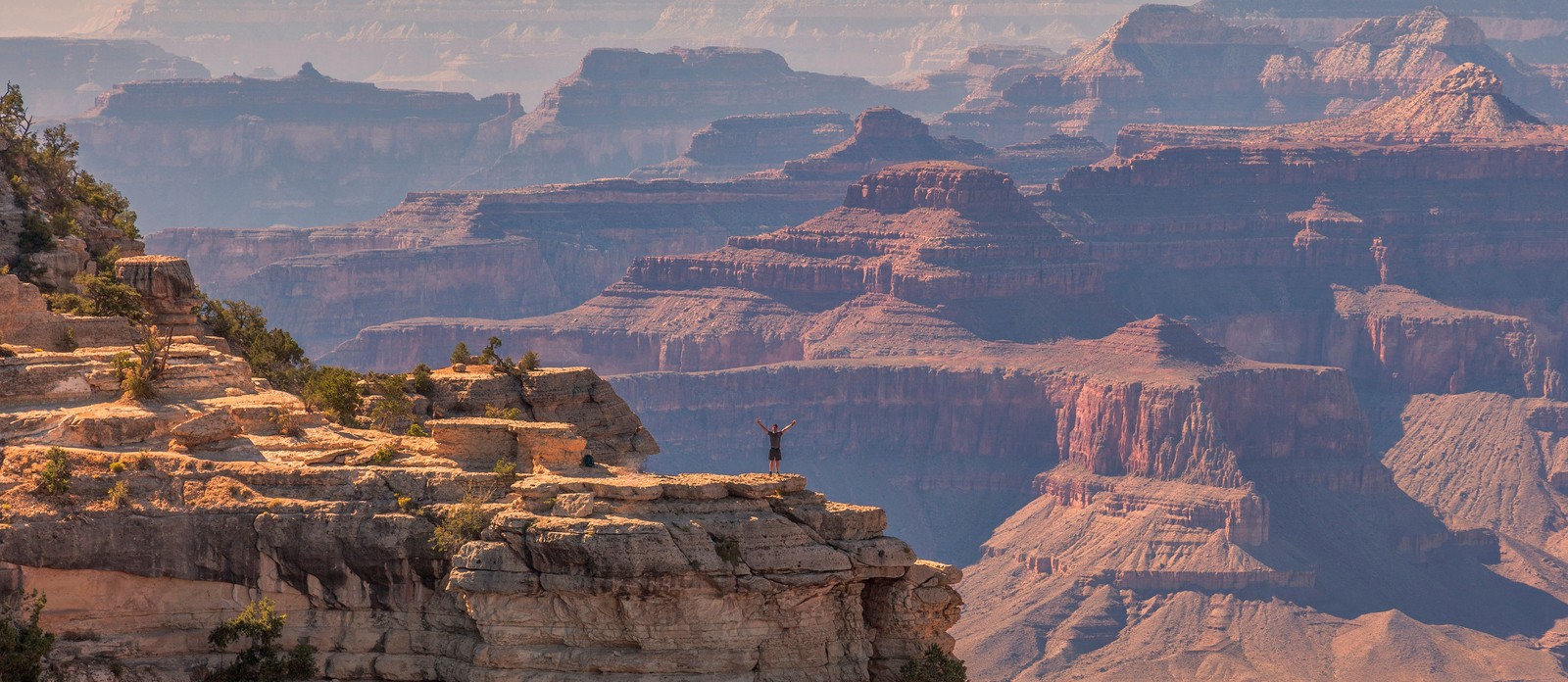
From epic exploration to lonely road trips: the Great American Road

Image: Enric Cruz López

America has provided its majestic landscape for many different types of journeys, from the heroic to the touristic. Its infinite roads offer all kinds of experiences, and different personalities will find different adventures. The following ten journeys showcase these extremes and then some more. Which of these travelers do you identify yourself with the most?

1
Lewis & Clark

Image: James Lee

Also known as the Corps of Discovery Expedition, the Lewis and Clark Expedition crossed the newly acquired western portion of the country after the Louisiana Purchase . This group of U.S. Army and civilian volunteers under the command of Captain Meriwether Lewis and his close friend Second Lieutenant William Clark set out from Illinois, on May 14, 1804.

They crossed the Continental Divide of the Americas near the Lemhi Pass, eventually coming to the Columbia River, and the Pacific Ocean in 1805. The return voyage ended on September 23, 1806.

2
George Wheeler

Image: Alex Moliski

The leader of the Wheeler Survey, George Montague Wheeler, was an American pioneering explorer and cartographer who led one of the major geographical surveys of the western United States in the late 19th century.

In 1872, the US Congress planned to map the portion of the country west of the 100th meridian . This plan became known as the Wheeler Survey, which lasted until 1879 when the Wheeler, King, and Powell Surveys’ combined work was reorganized as the United States Geological Survey.

3
The Donner Party

Image: Naithen

The Donner Party was a group of pioneers who migrated to California in a wagon train from the Midwest. Delayed by a multitude of mishaps, they spent the winter of 1846-1847 snowbound in the Sierra Nevada .

While the journey west usually took between four and six months, the Donner Party chose to follow a new route called the Hastings Cutoff, which delayed them greatly.

4
Mark Twain

Image: Jim Strasma

Mark Twain was never one to shy away from adventure. Roughing It was published in 1872. It follows his travels through the American West from 1861 to 1867, when he joined his brother Orion Clemens, appointed Secretary of the Nevada Territory, on a stagecoach journey west.

5
John Muir

Image: Mathilda Khoo

The "Father of the National Parks" was a Scottish-born American explorer, naturalist, author, botanist, and early advocate for the conservation of the nation’s wilderness.

After spending much of his youth traveling across the country, Muir visited Yosemite and was enthralled by its natural beauty . Later on, he worked as a shepherd for a season in the valley, built a cabin, and began advocating for the creation of a national park to protect the area.

6
Jack Kerouac

Image: Ana Viegas

Probably one of the most famous entries on this list, Jack Kerouac’s 1947 cross-country hitchhiking round-trip became the basis for On the Road , a freeform travelogue that became the bible of the Beat Generation.

His roundtrip started and ended in New York, passing through Chicago on the way out to California, following the West Coast south before returning east.

7
John Steinbeck

Image: Jack Anstey

In 1960, John Steinbeck decided to travel across America setting out from his Long Island home aboard his camper van, dubbed Rocinante, and accompanied by his French poodle, Charley . In 1962, he published Travels with Charley: In Search of America .

Their 10,000-mile-long trip passed through New England, then via Niagara Falls along the Canadian border, hitting Chicago and continuing to Seattle before turning south towards the Salinas Valley, then to Texas, New Orleans, and a huge chunk of the Deep South.

8
Tom Wolfe

Image: Geio Tischler

Long before writing The Bonfire of Vanities , Tom Wolfe embarked on a trip across the country with a group of psychedelic enthusiasts known as the Merry Pranksters. The trip produced his 1968 nonfiction book, The Electric Kool-Aid Acid Test .

9
William Least Heat-Moon

Image: Aaron Huber

William Least Heat-Moon lost his wife and his job as a professor in a short period of time, which prompted him to embark on a soul-searching journey across the country . The result was 1982’s Blue Highways , a novel that describes the experiences he had during his travels, including conversations with colorful characters, the towns he visited, and his adventures on the road.

10
Michael Paterniti

Image: Tim Trad

Imagine driving across the country with the brain of one of the world’s most celebrated geniuses in the backseat . That is exactly what Michael Paterniti experienced and shared in his 2000’s Driving Mr. Albert: A Trip Across America with Einstein’s Brain .

The author started his quest in New Jersey, driving the doctor who performed Einstein’s autopsy and afterward refused to give up the brain which, eventually, was delivered to an Einstein heir in Berkeley.

Culture Culture 5 min read

ICONS FROM THE SMALL SCREEN

Do You Remember These 10 American Television Legends?

Image: Dave Weatherall

Television has been a faithful companion of the American public since the very first station started broadcasting in the 1920s. Generations of American families have gathered around their TV sets in order to enjoy a couple of hours of priceless bonding and entertainment.

Over the years, television has produced its fair share of beloved hosts who have filled our downtime with laughter, information, and all-around enjoyment. We have selected ten of the most iconic personalities that have shaped American culture throughout the history of television. Enjoy!

1
Carl Sagan

Image: Greg Rakozy

Astronomer Carl Sagan showed the wonders of outer space to an entire generation of Americans. Besides his groundbreaking innovations in his field of study, Sagan co-wrote and presented the TV series "Cosmos: A Personal Voyage", on which he tackled heavy questions like the origin of life and humankind’s place in the universe.

What’s most interesting about "Cosmos" is how this short series left such an unforgettable impact , considering the show lasted 13 episodes between 1980 and 1981. A big part of this show’s legacy is thanks to Sagan’s passion: His dedication to outer space made us truly believe we were made of "star stuff".

2
Julia Child

Image: Светлана Хуснутдинова

Even if we didn’t focus on her extraordinary cooking skills , the life of Julia Child would still be a fascinating subject: She served her country during WW2 as a spy and a researcher and helped develop an extremely effective shark-repellant that would have made 60’s Batman proud. Regardless, arguably her most iconic contribution to the world was the many hours of entertainment she recorded, in her effort to teach America the joys of cooking.

Julia Child’s iconic cooking show "The French Chef" debuted in 1962, and ran for ten years throughout the entire nation. Not only that, this show was the very first to win an Emmy award for an educational program.

3
Bill Nye

Image: Hal Gatewood

The title of "Science Guy" might not seem the most glamorous but trust us: Bill Nye is directly responsible for thousands of scientists. You won’t have to look hard to find a scientist who was inspired to pursue a career in science after countless hours watching Bill Nye’s show on PBS as a kid.

Bill Nye's work history isn’t exactly orthodox: After a successful career as a mechanical engineer for Boeing, Nye left this path to pursue comedy. However odd this combination might seem, it made Nye the perfect host for this science show for kids. His on-screen character was a wacky and hyper-kinetic scientist who managed to both entertain and educate an entire generation of American children.

4
Mr. Rogers

Image: Darren Bockman

Franklin D. Roosevelt once said "The whole world is one neighborhood", and we believe that many Americans who grew up watching Fred Rogers will agree: After all, his warm voice and kind demeanor welcomed us to "Mr. Rogers’ Neighborhood" every single day.

This show was groundbreaking in so many ways: Through each thirty-minute episode, Mr. Rogers could educate his audience on various subjects, or spark their imagination over regular trips to the "Neighborhood of Make Believe" . "Mr Rogers’ Neighborhood" held the title of longest-running children's show for almost 40 years, and helped start the careers of such iconic actors as Keith David and Michael Keaton.

5
Walter Cronkite

Image: ThisisEngineering

Any journalist would be proud to be known as "the most trusted man in America" . However, it is a title befitting to only a select few, determined by their integrity, work ethic, and professionalism. Walter Cronkite is no exception to this rule: His 20-year tenure as anchorman for the CBS Evening News earned him a place in journalism history.

Known for his iconic signing-off catchphrase "and that’s the way it is", Cronkite's career earned him a myriad of accolades and recognitions , including the Presidential Medal of Freedom in 1981.

6
Alfred Hitchcock

Image: James Lee

Alfred Hitchcock might be most remembered for his groundbreaking contributions to the world of cinema. To this day he is considered one of the most influential directors in the history of this medium. However, there’s a reason he made it to this list: For almost ten years, Hitchcock hosted his iconic anthology series "Alfred Hitchcock Presents".

The series consisted of single episodes that featured guest actors and directors, including legends like Clint Eastwood, Vincent Price, and Robert Redford. Time magazine included this show in their "100 Best TV Shows of All Time" list.

7
Johnny Carson

Image: Tiziano Brignoli

You know the drill: We say "Johnny Carson was so incredibly funny" and you reply "How funny was he?" To be honest, we didn’t really think about a punchline here, other than the fact that Carson was so funny he remained as the undisputed host of "The Tonight Show" for thirty years.

Filmed in the iconic 30 Rockefeller Plaza building, Carson and his sidekick and announcer Ed McMahon brought uncontrollable laughter to the millions of Americans tuning on to his show on NBC. He is considered by many to be the father of the late-night talk show and inspired many late-night entertainers like Conan O'Brien or Stephen Colbert.

8
Bob Ross

Image: Yannis Papanastasopoulos

Bob Ross taught millions of Americans how to find happiness in a new and extremely demanding hobby. You probably remember his soothing voice and calm manners while hosting his iconic TV show "The Joy of Painting" : He would usually encourage viewers to embrace mistakes while painting, calling them "happy little accidents".

What you might not know is that Bob Ross’ previous job didn’t involve this gentle motivation. Quite the contrary, actually: Ross served for approximately 20 years in the United States Air Force, on which he rose up to the rank of first sergeant . However, once he retired, Ross sought a professional career that didn’t involve yelling orders around terrified trainees.

9
Roy Rogers

Image: JosephHershMedia

Roy Rogers wasn’t known as "The King of Cowboys" for nothing: He was an amazing rodeo performer and one of the most popular Western actors of all time. He is still fondly remembered for his iconic appearances on "The Roy Rogers Show", a Western television series that cemented Rogers as one of the most recognizable actors of the 50s.

Accompanied by his trusted animal sidekicks, Trigger the Horse and Bullet the Dog, Rogers delighted American children with his Western exploits. His character would often face con-men and bank robbers, before departing with his iconic ending theme song, "Happy Trails".

10
Oprah Winfrey

Image: Ioann-Mark Kuznietsov

We’ll end this article with a television giant. There’s a reason why Oprah Winfrey is known as "The Queen of All Media" : She’s an Academy Award-nominated actress, best-selling author, and CEO of a multimedia production company. However, she’s best recognized as the undisputed queen of daytime talk shows, having hosted the iconic Oprah Winfrey Show for 25 years.

Since the end of her series in 2011, Oprah’s mark in American television and pop culture has proved to be completely indelible. Among her many accolades, she was awarded the Presidential Medal of Freedom in 2013.

General General 5 min read

Are you home shopping?

Watch out! Here are 12 things to pay attention to when buying a home

Image: Dillon Kydd / Thirdman

Buying a house can be a nerve-wracking experience, especially for first-time buyers who might lack the necessary experience to do so with ease and confidence. Is the electrical system okay? What about the plumbing? Is there mold in the house? Is it too noisy? Is the neighborhood safe? These are all important questions homebuyers need to ask themselves when visiting a property. The following 12 are just a few of those questions, but they are definitely important ones. Can you think of anything else?

1
House Size

Image: Esther Zheng

One of the very first things any prospective homeowner should ask themselves is what kind of house they want . Having a general idea of the size, as well as the amount and type of spaces needed, is considered basic information before starting to look for a property.

2
Roof Condition

Image: Andreas Weiland

For practical reasons, most people looking to buy a house don’t inspect the roof of a prospective home. However, that section of the house can present serious and costly problems if it has any kind of damage.

Asking about the condition of the roof is paramount. How old is it? What is it made of? Buyers can find this information on the seller’s disclosure or ask the real estate agent to find out. Asphalt shingle roofs last around 20 years, but other materials, like clay or metal, can last much longer.

3
Neighborhood Safety

Image: Alev Takil

It goes without saying: safety is a big thing. When searching for a home, make sure the neighborhood where a potential house is located is safe. It’s also highly advisable to check out the neighborhood from an insider’s perspective via social media, such as Facebook groups, where you can learn more about the area and ask locals questions.

If you’re truly interested in a particular home, spend some time in the neighborhood. Go for a walk and check out local businesses to get a feel for what it’s like to live in the area.

4
HVAC system

Image: Taylor Vick

The HVAC system heats and cools a house year-round. Anyone looking at houses should ask about the type of heating and cooling system each one has and, most importantly, how old it is. Asking for maintenance records is also a good idea.

Furnaces and AC units typically last anywhere from 10 to 25 years. If a unit is broken, repair costs vary based on the type of system and how big it is. Homeowners can spend an average of $7,000 to replace an existing HVAC unit—but don’t count on a home warranty to automatically cover that.

5
Property Taxes

Image: Recha Oktaviani

A commonly overlooked item for first-time homeowners when searching for a house is property taxes. When considering a potential home, always compare property tax amounts over several years to help you calculate the overall affordability of the property .

To find out a home's estimated property taxes, check with the county's appraisal board. Homeowners Association dues should be listed in the home's listing, or you can request them from the listing agent.

6
Plumbing

Image: PAN XIAOZHEN

The plumbing system in a house can be a mystery for a prospective buyer if they don't know how to inspect it properly. Pipe disintegration, obstructive tree root growth, and complicated clogs can all cause havoc on the system. Keep in mind that sewer line replacement can cost anywhere from $1,300 to $4,900.

Always check toilets for leaks, unstable bases, and discoloration . Look under the bathroom and kitchen sinks for signs of leaks. Turn on the hot water in the sink or tub to see if it gets hot. If it doesn’t, that could indicate a problem with the water heater.

7
Water damage and mold

Image: Hydra 4x

Water damage can cause numerous problems in a house, including structural issues, mold, and rot, especially in basements. Anyone inspecting a house should pay close attention to musty smells as well as water stains on floors, walls, or ceilings .

The cost of mold removal can be anywhere from a few hundred to a few thousand dollars, depending on the size of the affected area. And, because mold is a health hazard, it should be treated before moving in.

8
Proper ventilation

Image: Jelleke Vanooteghem

This one might be subtle, but it’s very important, especially when considering the mold issues mentioned earlier. Without adequate interior ventilation, moisture can't evaporate , which can turn a room into a breeding ground for mold.

Look for condensation on windows or slightly bubbled or peeling paint around windows, doors, or vents. These signs may indicate moisture within the walls or ceiling drywall.

9
Noise Level

Image: Rei Kim

Nobody wants to live in a noisy home. But, at the same time, this issue is often overlooked when searching for houses. Many showings are cunningly scheduled during quiet hours to disguise the noise issues.

If you are truly interested in a property, visit during high-traffic hours to assess this concern . Even if the house is perfect in every other way, the constant hum of passing cars, public transport, or other sources of noise can become a serious problem.

10
Foundation and home exteriors

Image: Aiden Craver

Foundations matter. Bulging or bowing foundation walls are signs of structural weakness that can be expensive to repair. Always check for cracks in the foundation, drywall, or ceiling ; gaps above doors and windows ; sunken stairs or porches; and sloping or uneven floors or tiling.

Of course, not every crack means the home is about to collapse. Every home experiences some degree of settling, so some cracks are to be expected.

11
Electricity issues

Image: Mila Albrecht

The electrical system in a house can be compared to the nervous system of a human being: every part must work properly, and issues can sometimes be difficult to spot. From the power outlet next to the bed to other electrical systems in the house, like the garage door opener, everything is important and contributes to your safety and comfort. Bring a phone charger and plug it into random sockets to check if they work properly .

12
Room for improvement

Image: Daniel McCullough

Buying a house is a big investment and you can be living in it for a very long time. Therefore, it is always important to take into consideration any future plans and whether these plans make sense in that particular house.

Is there a wall you could knock out to create more space if needed? A garage or attic you could potentially finish if you need an extra room? Having an easy-to-modify layout can provide more possibilities for the future.

Explore more American facts

Choose your favorite category!

General
General

As American as apple pie—the very best America has to offer!

Culture
Culture

Delve into the astounding richness of American lore.

Geography
Geography

Hop in and explore vast and diverse American landscapes.

History
History

Discover the key moments that shaped the United States.