Culture Culture 4 min read

Which one’s your favorite?

From Gilligan to Alf: 10 great TV series from back in the day

Image: DS Stories

For decades now, television series have been a part of our culture. And while many have faded into oblivion, quite a few are fondly remembered by fans all over the world, even years after their endings. Maybe it has to do with nostalgia, or perhaps it is something else, but no one can deny that characters like MacGyver or Alf are very much alive in pop culture. The following 10 are just a handful of the ones deserving a spot on this list, but still, these are the ones we remembered the most. Which ones do you recall?

1
The Twilight Zone

Image: Artie_Navarre

The first show on our list was a fantasy science-fiction series created and presented by Rod Serling, which ran for five seasons from 1959 to 1964. Each episode presented a standalone story in which characters dealt with often disturbing or unusual events , an experience described as entering "the Twilight Zone", often with a surprise ending.

Since the show appeared, the phrase "Twilight Zone" has become a household term used to describe surreal experiences. The series featured both established stars and younger actors who would become much better known later.

2
Bewitched

Image: RDNE Stock project

America’s favorite witch, Samantha Stephens was the star of Bewitched , a sitcom series that aired from 1964 to 1972. The plot of the show revolves around a witch who marries an ordinary mortal man and leads the life of a typical suburban housewife.

The show was popular and starred Elizabeth Montgomery as Samantha Stephens, Dick York as Darrin Stephens, and Agnes Moorehead as Endora, Samantha’s mother.

3
Gilligan’s Island

Image: Michael

Its iconic soundtrack and Gilligan’s bucket hat remain a part of today’s pop culture. This sitcom aired from 1964 to 1967, and it followed the misadventures of seven castaways trying to survive on an island where they shipwrecked.

Most episodes revolve around the different castaways’ conflicts and their unsuccessful attempts to escape the island, with the ship’s first mate, Gilligan, usually being responsible for the failures.

4
M A S H

Image: The Australian War Memorial

This comedy-drama aired from 1972 to 1983 and was a spinoff of the 1970 film M A S H. The series follows a team of doctors and support staff stationed at the "4077th Mobile Army Surgical Hospital" (hence the name, M A S H) in South Korea during the Korean War.

The series included broad comedy and tragic drama and was one of the highest-rated shows in U.S. television history, regarded by many as one of the greatest television shows of all time. Its final episode remains both the most-watched finale of any television series and the most-watched episode of a scripted series.

5
Mister Rogers' Neighborhood

Image: Yannis H

Very few people in showbusiness, if any, are as widely appreciated as Fred Rogers, the host of Mister Rogers’ Neighborhood . Both his onstage and offstage persona were filled with a wholesome warmth that became an oasis in an increasingly loud and superficial medium as national television.

His half-hour educational children’s television show ran from 1968 to 2001. The series was aimed primarily at preschool children ages 2 to 5, but it was labeled by PBS as "appropriate for all ages".

6
Knight Rider

Image: Arthur Besnard

The television series that showcased a young David Hasselhoff helping people in distress with his talking car aired from 1982 to 1986. Michael Knight (Hasselhoff’s character) was a modern-day crime-fighter who used a technologically advanced, artificially intelligent automobile.

The car, named KITT, was virtually indestructible due to a high-tech coating applied to it. Knight Rider stories usually depicted either average citizens or ethical heads of corporations being bullied into subservience to an overbearing or ruthless criminal organization.

7
Cheers

Image: Alex Knight

A feelgood series, Cheers aired from 1982 to 1993. It was set in a bar of the same name in Boston, owned by former Red Sox pitcher Sam Malone, where a group of locals met to drink, relax, socialize, and escape from their daily routine.

During its run, Cheers became one of the most popular series in history, received critical acclaim from its start to its end, and is frequently cited as one of the greatest television shows of all time.

8
Sledge Hammer!

Image: kampfmonchichi

Its short lifespan (two seasons) didn’t prevent Sledge Hammer! from leaving a mark in pop culture. This satirical police sitcom aired from 1986 to 1988 and featured Inspector Sledge Hammer, a volatile agent of the law who solved crimes with outlandish methods. Hammer was accompanied by his partner, Dori Doreau, and the irascible police captain, Trunk.

9
MacGyver

Image: Nipun Haldar

MacGyver was the name of the show and the character who sold a million Swiss Army knives. It was an action-adventure television series starring Richard Dean Anderson as Angus MacGyver, a secret agent armed with remarkable scientific resourcefulness to solve any problem out in the field using any materials at hand.

The show aired from 1985 to 1992 and was a ratings success. While some reboots for the series appeared in the years after its ending, none of those managed to achieve its predecessor’s success.

10
Alf

Image: Erik Mclean

The extra-terrestrial being that crash-landed in the Tanner family garage, Alf, had a hit sitcom that aired from 1986 to 1990. The series starred Max Wright as the ather, Willie Tanner, Anne Schedeen as the mother, Kate Tanner, and Andrea Elson and Benji Gregory as their children, Lynn and Brian Tanner.

As in the case of MacGyver , a few years after the original series ended, some reboots were announced.
Culture Culture 6 min read

We the people of the United States

America has two famous mottos, but did you know only one is official?

Image: Marek Studzinski

We see them everywhere: the flag waving on front porches, the bald eagle on government seals, and school children reciting the Pledge of Allegiance. But how did these symbols, songs and rituals become part of American life in the first place? Is it true that a teenager designed our flag? Behind each symbol lies a story of war, pride, debate, and tradition. Some were chosen centuries ago, while others are surprisingly recent. Here’s the story of ten American symbols.

1
United States flag

Image: Jacob Morrison

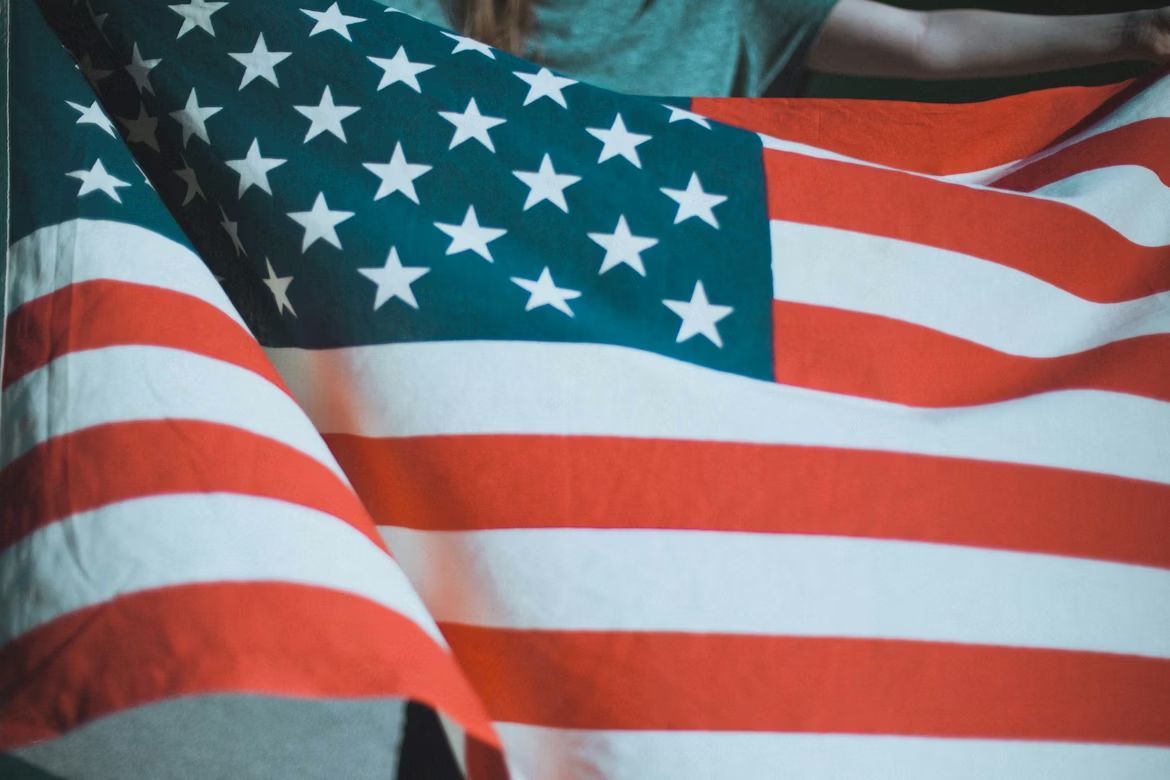
For years, Americans loved telling the story of Robert G. Heft , the Ohio high school student who supposedly designed the modern 50-star flag as part of a class project in 1958. According to the tale, his teacher gave him a B minus, only to change it after President Dwight Eisenhower selected his design for the nation.

But real history turned out to be more complex. When Alaska and Hawaii officially joined the U.S. in 1959, the government received roughly 1,500 proposals for a new flag. In 2022, writer Alec Nevala-Lee dug deeper into the records and found that the final version was actually credited to the U.S. Army Institute of Heraldry, not a teenager from Ohio. The current version first flew in 1960 and has now lasted longer than any other American flag design. Those 13 stripes still honor the original colonies, while the 50 stars honor the states.

2
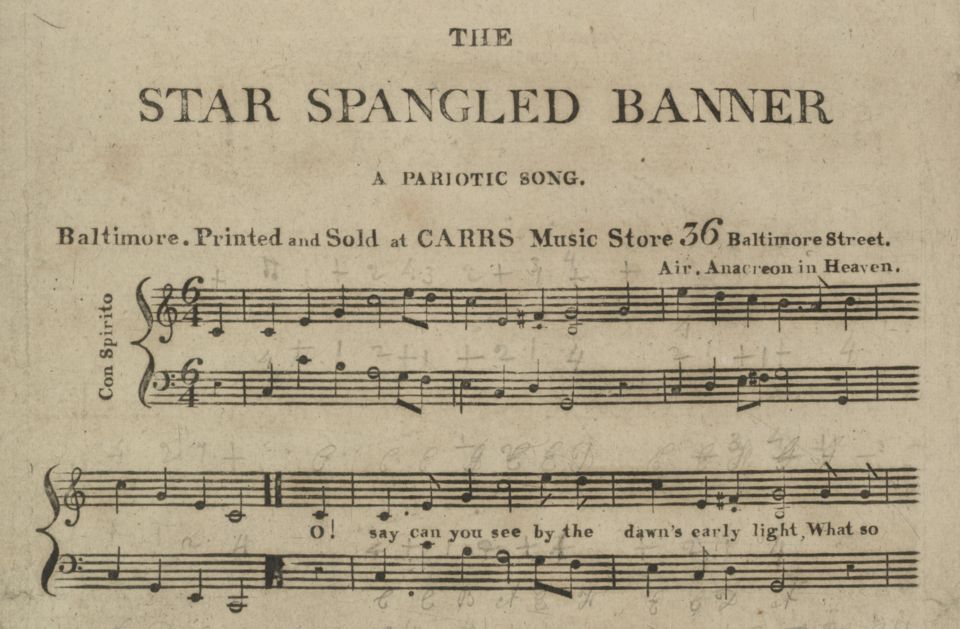
National anthem: "The Star-Spangled Banner"

Image: Thomas Carr (arranged), Public domain, via Wikimedia Commons

You’ve probably sung it hundreds of times, but did you know that "The Star-Spangled Banner" didn’t begin as a song? Our national anthem started as a poem written during one of the most dramatic moments in early American history.

In September 1814, lawyer Francis Scott Key watched from a ship as British forces bombarded Fort McHenry near Baltimore, Maryland. The darkness was heavy, but at dawn, Key spotted the American flag still waving over the fort. That moment inspired him to write a poem called "Defence of Fort M’Henry," and the melody that kept matching in his head for the poem was borrowed from an old British drinking song called "To Anacreon in Heaven," from 1775. Ironic, considering the circumstances. The song became widely popular across the country, but it became the official national anthem in 1931, under Hoover’s presidency.

3
Pledge of Allegiance

For generations of Americans, the school day began the same: standing by a desk, hand over heart, facing the flag. But the Pledge of Allegiance has changed since it was first written in 1892 by Francis Bellamy for a nationwide Columbus Day Celebration.

The original version didn’t even mention the U.S. by name. Children simply said, "I pledge allegiance to my flag." Years later, in 1923, the words were changed so that every school kid, native or immigrant, would think of "the flag of the United States of America" when reciting it.

4
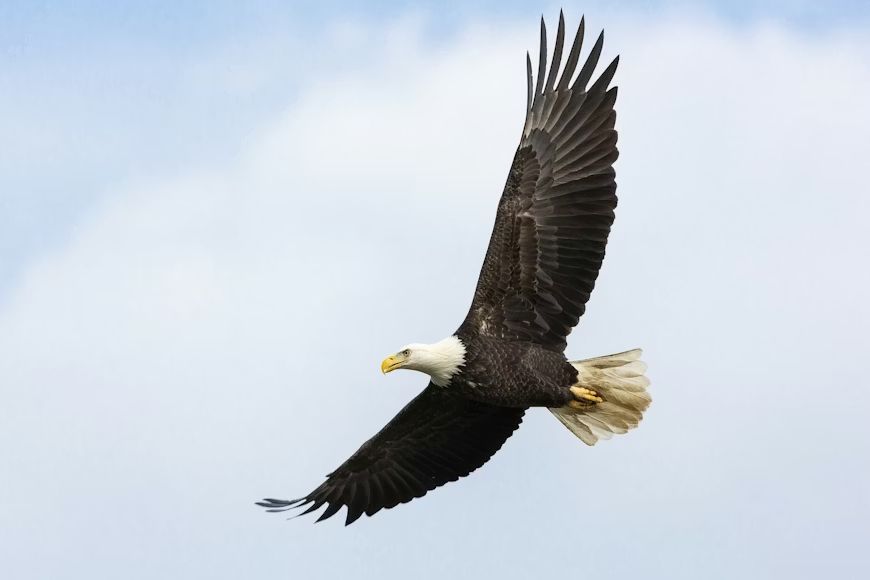
National bird: bald eagle

Image: Mathew Schwartz

The first relevant appearance of the bald eagle wasn’t as the national bird; it was in the design of the Great Seal. This was in 1782, when the first committee appointed to design the task suggested this bird. The committee was formed by John Adams, Thomas Jefferson, and Benjamin Franklin, who was the only one who thought of the bald eagle as a bird of "bad moral character." Jefferson and Adams, instead, thought the bald eagle represented strength and independence, which seemed perfect for a young country trying to stand on their own. Moreover, the bird was unique to North America at the time, which made it feel distinctly American.

While it has appeared on the Great Seal, currency, and documents since that year, it was only in 2024 when it was designated as the national bird by an Act of Congress under Biden’s administration.

5
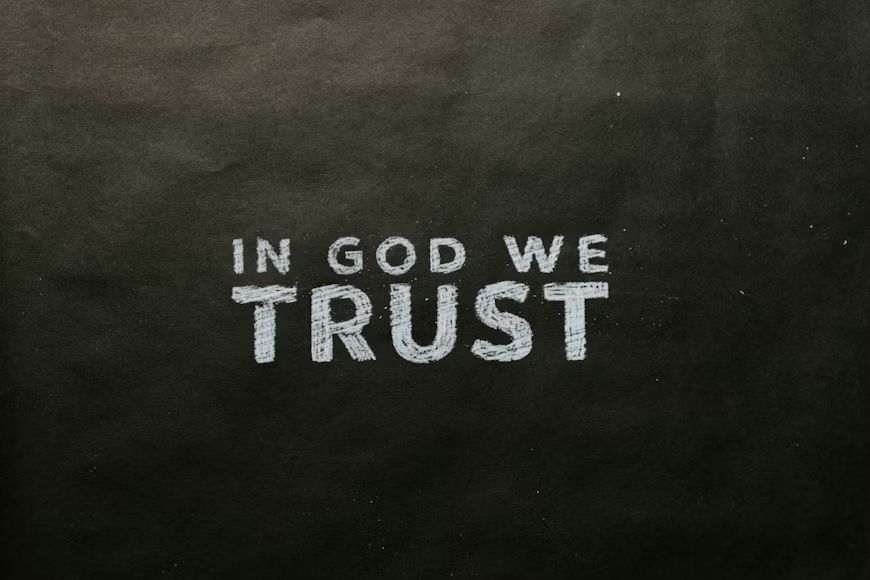
National motto: "In God We Trust"

Image: Kelly Sikkema

Many Americans assume that E pluribus unum is still our national motto, but in 1956, that changed. The modern motto "In God We Trust" first appeared during one of the country’s darkest moments.

In 1864, as the Civil War tore the nation apart, several religious leaders urged President Lincoln to recognize God on American currency. Many believe the nation needed a symbol of faith and stability during such uncertain times. That same year, the motto appeared for the first time on a two-cent coin. But it was during the Cold War in the 1950s that the words took on new importance and officially became the national motto in 1956 when President Dwight D. Eisenhower signed the law.

6
Great Seal of the United States

Image: C Bischoff

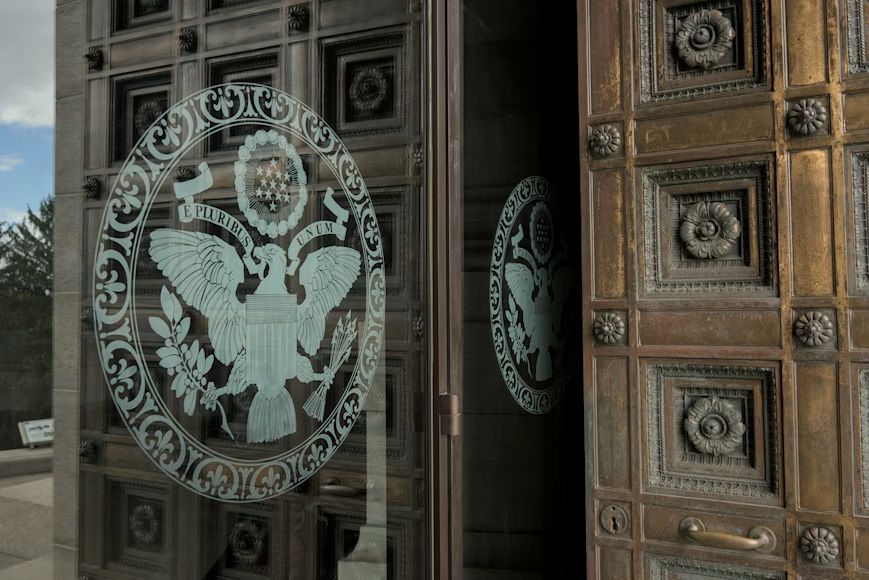
The seal is printed on passports, official government documents, and even the back of the one-dollar bill. It features a complex design, and every detail on it means something.

The story of the Great Seal begins on the 4th of July, 1776, when the Continental Congress recognized that the new nation needed a seal to sign official documents. But that was just the beginning. Six years and three committees later, in 1782, Charles Thomson, Secretary of the Continental Congress, designed the seal we know today. The olive branch and the arrows held in the eagle’s talons denote the power of peace and war. The eagle faces the olive branch, but gazes toward the arrows, meaning it’s ready to defend. The 13 stars honor the colonies, and the escutcheon represents the eagle’s courage, along with the motto E pluribus unum, which was the official motto at the time.

7
National march: "The Stars and Stripes Forever"

Image: John Philip Sousa, Public domain, via Wikimedia Commons

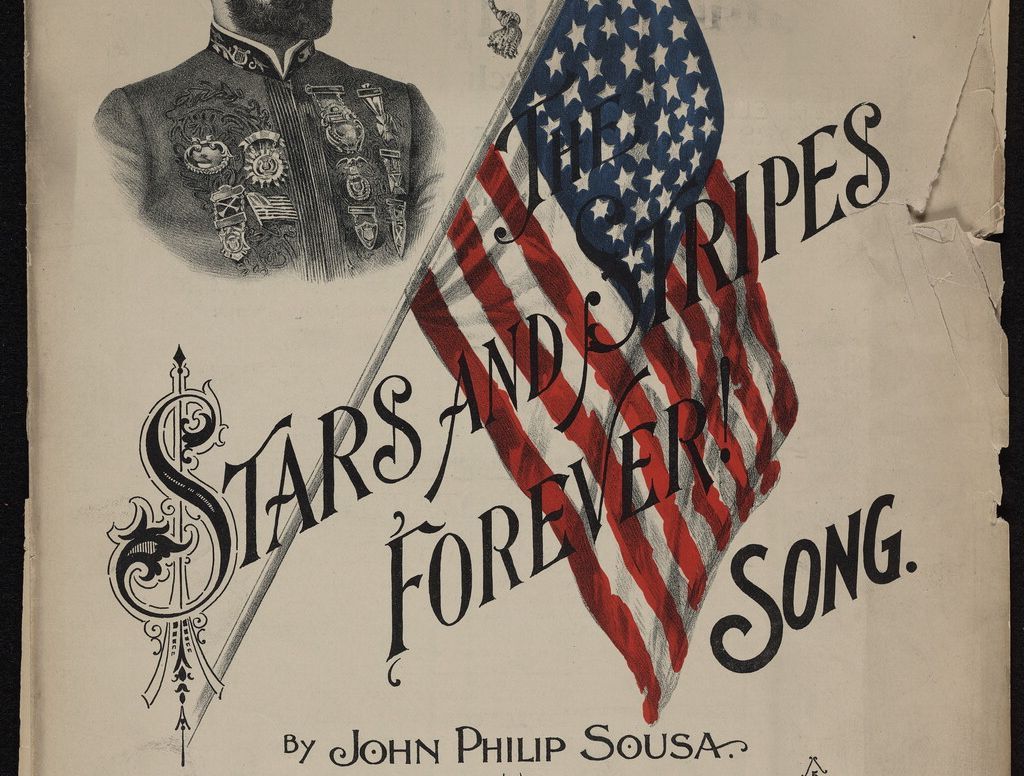
Today, no Independence Day is complete without the bass of "The Stars and Stripes Forever," but its origin goes back to 1896. The national march began during a difficult trip across the Atlantic.

In 1896, composer John Philip Sousa was traveling home from Europe after learning that his close friend and business partner, David Blakely, had suddenly died. As Sousa paced the deck of a ship, a melody kept playing in his mind. By the time the ship reached New York, the entire march had taken shape. Inspired by the American flag waving as he returned home, Sousa later added the title we know today. But it was on December 10, 1987, that the march was named the "Official March of the United States of America" under Reagan’s administration.

8
National mammal: American bison

Image: Bryce olsen bolsen10

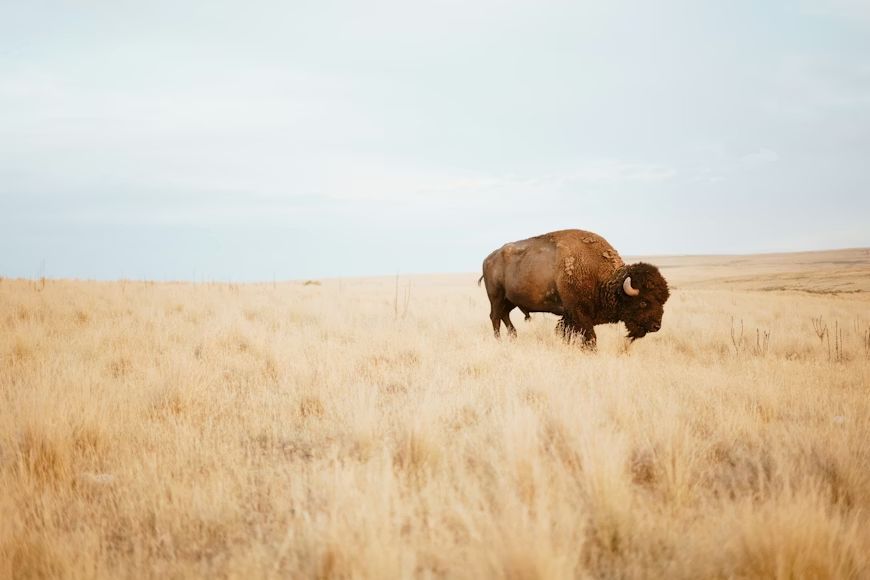
Long before highways crossed the country, bison herds thundered across the American grasslands from Texas all the way to Canada. But in the late 1800s, hunters began massively exterminating them to the point of extinction. Oddly enough, that’s when Americans began paying attention to them. Bison started appearing everywhere: on state flags like Wyoming’s, official seals, coins, and giant statues in cities across the country.

President Roosevelt became a big defender and helped create the American Bison Society in 1905 to protect the remaining herds. More than a century later, in 2016, Congress officially named the bison the national mammal of the U.S. and, today, more than 400.000 bison once again roam American grasslands.

9
National floral emblem: rose

Image: Mariana B.

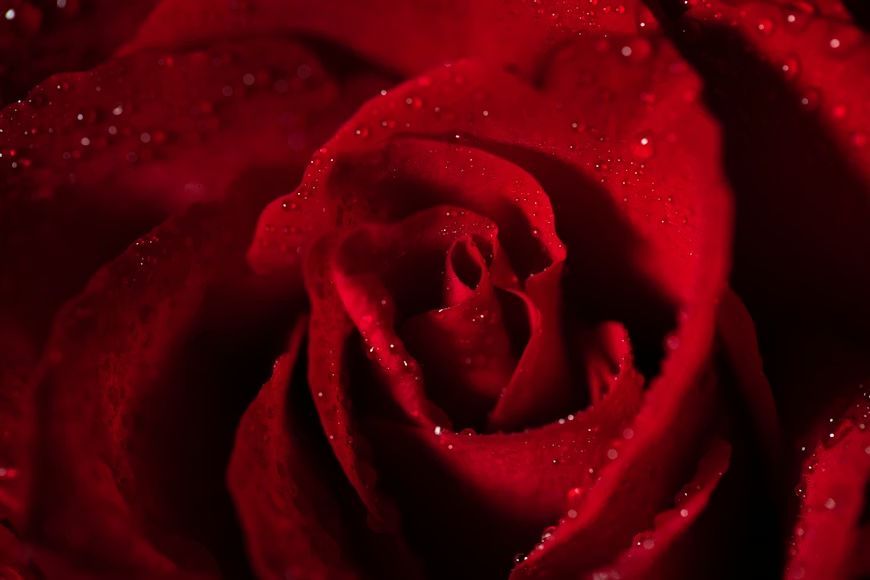
Roses have been part of American life for generations. In 1986, President Ronald Reagan signed Proclamation 5574, declaring the rose the national floral emblem of the United States. This choice was highly practical since roses are grown in all fifty states and have been cultivated in American gardens since the nation’s inception. Reagan noted that Americans have long used the rose to "speak the language of the heart," making it a fitting symbol for the country.

10
National tree: The Mighty Oak Tree

Image: niko photos

The oak tree didn’t become America’s national tree through congressional debate alone. In 2004, the National Arbor Day Foundation opened the decision to the public, and Americans of all ages cast votes for their favorite tree over four months. From the start, t he mighty oak was the frontrunner, earning more than 101,000 votes and beating out redwoods, maples, and pines.

The choice came from the symbolism behind it. Oaks are some of the most widespread trees in the country, with more than 60 species stretching across the states. Besides, it carries roots in American history: The USS Constitution earned the nickname "Old Ironsides" because its oak hull was strong enough to repel British cannonballs during battle. Strong, enduring, the oak was a perfect match.

Culture Culture 4 min read

Funny papers

Do you remember these timeless American comic strips?

Image: somecomputer

Comic strips might seem like a colorful little detail on the last page of a stuffy, boring newspaper, but they are so much more. They not only add humor and levity to our day, but many people can attest that they learned to read as children through their favorite comic strips. In that sense, America has produced its fair share of amazing comic strips over the years, so we thought it appropriate to honor 10 of the most iconic "funny papers" with this article. Enjoy!

1
Peanuts

Image: ZENG YILI

We’ll start with what some describe as "arguably the longest story ever told by one human being." When Charles Schulz started Peanuts in 1950, he wasn’t aware that he would single-handedly produce a plethora of amazing stories until his death in 2000. The original Peanuts run, which introduced iconic characters like Charlie Brown, Snoopy, and Linus, appeared in over 2,600 newspapers and has been translated into 21 languages.

2
Marmaduke

Image: Oliver Bichard

As any Great Dane owner can tell you, these massive dogs can sometimes be a handful. However, if the comic strip Marmaduke has taught us anything, it’s that no matter how messy their lovable dog is, the Winslow family will always care for their Great Dane, the titular Marmaduke. This comic strip was created in 1954 by cartoonist Brad Anderson, who continued to make Marmaduke comics for 61 years until his death in 2015.

3
Krazy Kat

Image: Shelby Murphy Figueroa

While perhaps not as well-known as other comic strips in this article, George Herriman’s Krazy Kat (also known as Krazy and Ignatz ) is considered by many critics to be one of the most influential comic strips in history. At first glance, Krazy Kat , which ran from 1913 to 1944, appears to be a simple gag-a-day comic depicting an anthropomorphic cat and his mouse rival. However, Herriman’s impressive artwork and groundbreaking creativity have led critics to regard Krazy Kat as one of the most significant pieces of American art .

4
Garfield

Image: Jason Yuen

Garfield is a strong contender for the title of "world’s most famous cartoon cat." True, he is competing with heavy hitters like Tom from Tom and Jerry or Felix the Cat, but this Monday-hating, lasagna-loving orange cat is truly a force to be reckoned with. Created by Jim Davis in 1976, Garfield was first introduced in a comic strip named Jon after the cat’s owner. However, Garfield quickly took the spotlight, and the comic strip was renamed Garfield in 1977. From that point onward, Garfield became an international icon, earning the Guinness World Record for being the world's most widely syndicated comic strip.

5
Calvin and Hobbes

Image: cogdogblog, CC BY 2.0

Can you remember the stuffed animal you would carry everywhere as a child, going on imaginary adventures all across your backyard? Well, for many of us, Calvin and Hobbes perfectly encapsulates those beloved memories. Created by Bill Watterson in 1985, this comic strip depicts the adventures of a young boy named Calvin and his best friend Hobbes, a whimsical and friendly tiger. What’s most moving about this comic strip is that both Calvin and the readers see Hobbes not as a stuffed animal, but as the best friend a young boy could have.

6
The Far Side

Image: Luis Cortés

Up until this point, we’ve been focusing on multi-paneled comic strips, which have several panels at their disposal to tell a compelling story. However, The Far Side has the remarkable distinction of making us laugh heartily with just a single panel. Written and drawn by Gary Larson, this comic strip combines surreal humor with unexpected punchlines , often depicting social situations or the author’s unique view of the world.

7
Dilbert

Image: The Conmunity - Pop Culture Geek from Los Angeles, CA, USA, CC BY 2.0

The break rooms of offices across America are filled with newspapers, which tired employees read during their breaks before returning to work. In that sense, artist Scott Adams perfectly chose office humor as the ideal backdrop for his comic strip, Dilbert . First published in 1989, the strip tells the story of the titular Dilbert, a white-collar engineer trying to navigate the hilarious madness of working in an office.

8
The Family Circus

Image: William Fitzgibbon

At times, the chaos of living with a big family might seem not too dissimilar to the frenzy and excitement of a circus. This seems to be the premise behind the beloved comic strip The Family Circus , created by cartoonist Bil Keane and continued by his son Jeff after Bil’s death. This comic strip revolves around an unnamed family and the many adventures that their three small children and modern life bring to them.

9
Popeye

Image: Jonathan MONCK-MASON

Years before becoming the world’s most famous sailor, Popeye debuted in 1929 as a character in a comic strip called Thimble Theatre . Interestingly, he first appeared when the series was already in its tenth year, but he quickly became its most famous character, eventually overshadowing the original cast and becoming the protagonist. In due time, the strip was renamed Thimble Theatre Starring Popeye before being simply shortened to Popeye in the 1930s.

10
Little Nemo in Slumberland

Image: Hayffield L

We’ll end with the oldest comic strip in this article, which many believe to be the father of all American comic strips. In 1905, American cartoonist Winsor McCay first published Little Nemo in Slumberland . The comic revolved around the titular Nemo, a young boy who often found himself embarking on wonderful adventures in the dream world. McCay’s remarkable artistry and surreal imagery influenced generations of cartoonists and visual artists throughout history.

Explore more American facts

Choose your favorite category!

General
General

As American as apple pie—the very best America has to offer!

Culture
Culture

Delve into the astounding richness of American lore.

Geography
Geography

Hop in and explore vast and diverse American landscapes.

History
History

Discover the key moments that shaped the United States.