Culture Culture 3 min read

From fame to oblivion

Forgotten, not gone: 10 American heroes who changed history
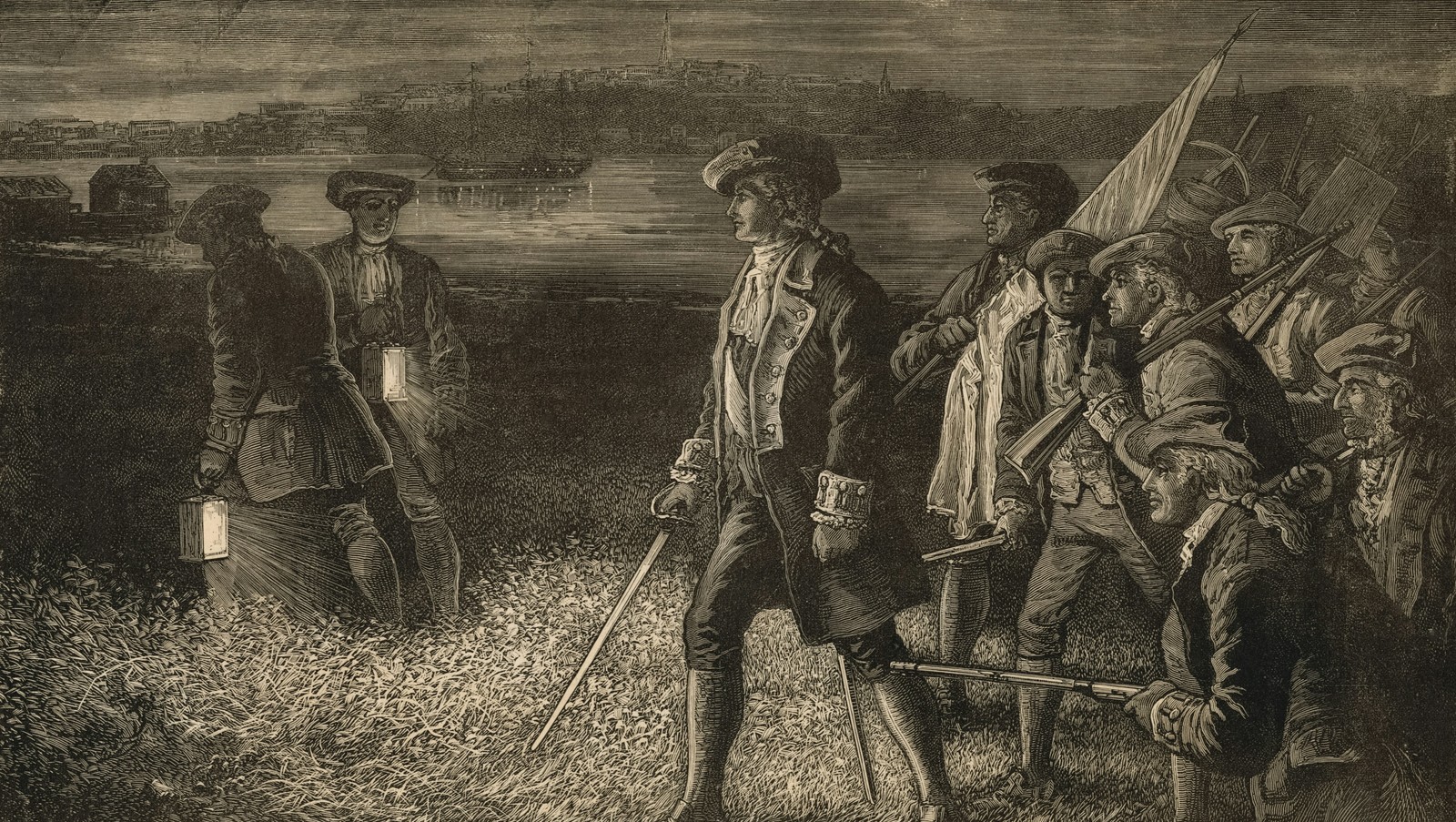
Image: The New York Public Library

America has produced more than its fair share of legends, but not all are remembered equally. From pioneers of technology to forgotten war heroes, each of these names once meant something big in the U.S. Here's a look at 10 American icons whose legacies deserve a second glance.

1
Hedy Lamarr

Image: Geoffroy Berlioz

Best known for her 1930s–40s film career, Hollywood icon Hedy Lamarr also co-invented frequency-hopping spread spectrum technology to prevent enemy jamming in WWII. And if you think it’s no big deal, know it’s the basis for modern Bluetooth and Wi-Fi!

While largely overlooked as an inventor at her time, she was posthumously inducted into the National Inventors Hall of Fame in 2014.

2
Sybil Ludington

Image: Taylor Brandon

According to many historians, at just 16 years old, Sybil Ludington rode about 40 miles through the night in 1777 to alert American militia of a British attack on Danbury, Connecticut.

This would make her ride roughly twice as long as Paul Revere’s . While some scholars question the veracity of her story, a statue stands in her honor in Putnam County, New York.

3
Bass Reeves

Image: Pramod Tiwari

Born into slavery in 1838, Reeves became one of the first Black U.S. Deputy Marshals west of the Mississippi. He made over 3,000 arrests during his law enforcement career.

Many historians believe his exploits may have inspired the Lone Ranger character, although his name rarely appears in history textbooks.

4
Mary Edwards Walker

Image: David Trinks

A Civil War surgeon and suffragist, Walker treated soldiers on the front lines and was even captured as a prisoner of war.

In 1865, she became the first woman to ever receive the Medal of Honor. Her unorthodox dress style and fearless activism made her a striking figure in 19th-century America.

5
Clara Barton

Image: Kevin Paes

Known as the "Angel of the Battlefield," Barton provided medical care during the Civil War and later founded the American Red Cross in 1881.

Though once a household name, her legacy has faded compared to other, more widely remembered wartime figures.

6
Joshua Lawrence Chamberlain

Image: Chris Chow

A college professor turned Union colonel, Chamberlain famously held Little Round Top during the Battle of Gettysburg, a pivotal moment in the Civil War.

He was awarded the Medal of Honor and later became governor of Maine, but his unexpected battlefield brilliance is often overlooked in Civil War discussions.

7
Robert Smalls

Image: Ian Hutchinson

In 1862, Smalls, a formerly enslaved sailor, seized a Confederate ship and delivered it to Union forces, securing freedom for himself and his crew.

He later served five terms in Congress, advocating for Black education and civil rights.

8
Harvey Wiley

Image: Diana Polekhina

Known as the "Father of the FDA," Harvey Wiley was a chief chemist in the late 1800s whose "Poison Squad" tested various food additives, leading to the 1906 Pure Food and Drug Act.

This law laid the foundation for the FDA and led to the removal of many dangerous substances from consumer products. Notably, it prompted Coca-Cola to eliminate cocaine from its formula in the early 20th century.

9
George Washington Carver

Image: Dan Meyers

More than just being associated with peanuts, George Washington Carver developed numerous innovative crop rotation methods and created over 300 uses for peanuts, sweet potatoes, and other plants to help Southern agriculture recover after the Civil War.

10
Joe Medicine Crow

Image: Boston Public Library

The last war chief of the Crow Nation, Joe Medicine Crow, completed several traditional war deeds during WWII—including counting coup and stealing enemy horses —and earned both the Bronze Star and the French Légion d’honneur.

Part of his legacy was bridging Native American warrior traditions with modern military service, honoring both cultural heritage and patriotic duty.

General General 2 min read

Eating out today?

12 establishments other than a restaurant where you can get a decent meal

Image: Melissa Walker Horn

If you are interested in going out for a bite but don’t feel like sitting in a restaurant, plenty of other options are available to get a very decent meal. Turn your dining out experience into an adventure by exchanging, for once, your usual eaterie for a casino, a train station, or even a hardware store.

1
Casinos

Image: Kvnga

A casino might not be the first place one has in mind when thinking about going out to eat, but these establishments usually have a variety of dining options, from buffet-style areas to casual eateries and upscale, more traditional restaurants, with good prices and good food, to attract gamblers .

2
Hotels

Image: Francesca Saraco

Unlike a regular restaurant, where clients come and go, hotel kitchen staff is used to serving the same guests more than once in short periods of time . This motivates them to enforce a higher standard of service since their clients will return soon and are more likely to hold them accountable for any previous issues.

3
Delicatessens

Image: Simona Sergi

Other than being a place where you buy ingredients, a delicatessen store, known as a deli, is also known for its sandwiches and often offers other meal options like soups and salads .

4
Sporting venues

Image: Mick Haupt

Eating a hot dog or a hamburger with a beer on a sunny day, while sitting on the benches during a baseball game, is an experience that everyone should attempt at least once in their lives.

5
Department stores

Image: mostafa meraji

Department stores are convenient. These places offer many different services, grouped together, in a controlled environment, including meals. In their food courts, you can choose your menu from a variety of stands, take your tray to your selected table, and eat undisturbed .

6
Colleges and universities

Image: Michael Marsh

College and university campuses usually have dining halls or food courts that are open to students, faculty, and staff. But some are also open to the general public. Their meals tend to be healthy and balanced , prepared by catering companies that work with nutritionists.

7
Bowling alleys

Image: Persnickety Prints

Many bowling alleys have snack bars or restaurants where you can get food and drinks to enjoy while you bowl . Or you can enjoy it without bowling, as well.

8
Train stations

Image: Michał Parzuchowski

Train stations often have a selection of restaurants and cafes for travelers where you can watch the passengers and dream of going places while you enjoy a snack .

9
Bookstores

Image: Pauline Loroy

Many bookstores, especially larger chains or independent ones, now include cafes. These offer a relaxing and quiet environment to enjoy a coffee and a light meal or snack while browsing a book.

10
Hospitals

Image: National Cancer Institute

Hospitals are places where people spend long periods, maybe waiting for somebody else, and have areas where they can grab a bite in a usually quiet place. And, since the food is usually prepared in the hospital kitchens, hygiene and health tend to be especially respected .

11
Hardware stores

Image: Oxana Melis

Believe it or not, some larger hardware stores, particularly those in rural areas, have a small cafe or deli counter serving basic meals . It's often a local gathering spot for the community.

12
Cooking schools

Image: Odiseo Castrejon

Some cooking schools offer demonstration classes that include a meal, or they might have a small cafe open to the public, where students offer their creations .

Geography Geography 6 min read

Gotham secrets revealed

Start spreadin' the news: 10 fun facts about New York City

Image: Roberto Vivancos

Welcome to New York, a city as bustling as it is fascinating. From towering skyscrapers and breathtaking parks to delicious food and riveting culture, New York City boasts such a rich history that it would be impossible to capture its essence in just one article. Therefore, this time around, we have selected 10 curious facts about the Big Apple that you may not know about. Join us!

1
New York’s many names…

Image: ian dooley

Did you know that New York has had several names throughout its history? The first documented European visit to New York Harbor was in 1524 by Giovanni da Verrazzano, an Italian explorer who claimed the area for France and named it Nouvelle Angoulême (New Angoulême), after the French city located on the banks of the Charente River.

Almost a century later, English explorer Henry Hudson rediscovered New York and claimed it for the Dutch East India Company, who christened Manhattan Island as Nieuw Amsterdam (New Amsterdam). In 1664, due to the war between The Netherlands and the United Kingdom, the British took over the area and renamed it New York , as a tribute to King Charles II's brother, James, Duke of York.

2
…and nicknames

Image: Artem Zhukov

In addition to its various official names, New York City has earned a good number of nicknames over the years. For example, Canvas Town, The Empire City, The City of Churches, Second City of the World, The Melting Pot, The City that Never Sleeps, The Center of the Universe, The City So Nice They Named It Twice, The Five Boroughs, and Metropolis, among many others.

But perhaps the most iconic New York City monikers are Gotham —coined by writer Washington Irving in 1807— and, of course, The Big Apple . In May 1921, sportswriter John Joseph Fitz Gerald of the New York Morning Telegraph first used The Big Apple in a feature on horse racing. As he later explained, that was the way New Orleans grooms' referred to New York City. Later, in the 1970s, an advertising campaign revived the nickname, and the rest is history.

3
National capital

Image: Cornelius Tiebout, artist and engraver of the original; this copy engraved by Hatch & Smillie and printed by J. &. G. Neale., Public domain, via Wikimedia Commons

Given its cultural, political, and financial richness, it's curious that New York is not the capital of the United States. However, although it was only for five years, at one point in history it became a reality. Between January 11, 1785, and August 12, 1790, The Empire City served as the last capital under the Articles of Confederation and the first capital under the U.S. Constitution .

While the capital resided in New York, the representatives of Congress met in Federal Hall, a building located close to the current site of the Wall Street Stock Exchange. In fact, this is where George Washington was sworn in as president in 1789. However, a year later the Residence Act established the temporary seat of government in Philadelphia until the construction of the new capital, Washington, DC, was completed. Congress met for the first time in its new and current location on November 17, 1800.

4
Linguistically diverse

Image: Dan Gold

Did you know that New York is one of the most linguistically diverse places in the world? It’s like a modern-day Tower of Babel, which is no surprise given its nickname, The Melting Pot . It is estimated that up to 700 different languages are currently spoken in New York, many of them endangered. For example, in Queens, there is a small community that speaks Tagalog, the language on which Filipino is based. In the Bronx, on the other hand, several families still speak Laotian at home.

Alongside these lesser-known dialects, other more widespread languages such as Spanish, Chinese, Arabic, Hebrew, Russian, and Italian, are spoken daily by communities that migrated to New York from their native countries. And that today, after several generations, still have a relevant representation in the most cosmopolitan city on the planet.

5
First pizza

Image: Jon Tyson

Not surprisingly, the first pizzeria in the United States is located in New York. The Italian immigrants who arrived in the city at the end of the 19th century brought with them their language, customs, and of course, their delicious food. One of these immigrants, Gennaro Lombardi, used leftover dough from the bread he sold in his Little Italy grocery store to make "tomato pies," following his Neapolitan family's recipe.

This pizza was so successful that in 1905, Lombardi converted his store into a pizza place. Little by little, he adapted his pizza to American ingredients and tastes, and lo and behold in a short time he had created what we now know as New York-style pizza. Lombardi's Pizza, today one of the most legendary pizzerias in New York, is the oldest in the United States. Be sure to grab a slice next time you visit The Big Apple — you won’t regret it!

6
Golden city

Image: Zlaťáky.cz

A city of firsts and mosts, New York is also home to the world's largest known depository of monetary gold. Buried 80 feet below street level, on the bedrock of Manhattan Island, hides an incredible treasure. Established in 1924, the vault of the main building of the Federal Reserve Bank of New York, located in the Financial District, stores more gold than The United States Bullion Depository, better known as Fort Knox.

As of 2024, it houses approximately 507,000 gold bars. This reserve is enclosed in a 140-ton steel-and-concrete frame protected by a state-of-the-art security system. About 98% of the gold belongs to foreign governments, while the rest is owned by the U.S. government and other financial institutions, such as the International Monetary Fund.

7
Unique ZIP codes

Image: William Wachter

Apart from being home to major companies, the most photographed building in the world, and getting struck by lightning about 25 times a year, the Empire State Building is also notable for having its own ZIP code: 10118.

Although located in South Midtown, the building is so large that the U.S. Postal Service needed to assign it a unique zone improvement plan—ZIP for short—to handle its high volume of mail more accurately and efficiently. To be fair, other buildings in New York also have their own ZIP codes , including 30 Rockefeller Plaza, the Chrysler Building, The Pavilion, Park Avenue Plaza, and the Pennsylvania Building, among others.

8
Birding paradise

Image: Laila Zouaki

New York has something for everyone, but wildlife? Who would have thought! When it comes to fauna, New York is much more than just rats, squirrels, and cockroaches. In fact, this concrete jungle has had animals at its heart since the beginning: two beavers adorn the official city seal. But not many New Yorkers know that Central Park is one of the nation's top spots for bird-watching.

The city is located at a concentration point on the Atlantic Flyway bird migration route, making it possible to observe birds year-round. In 1886, the park's first official bird census counted 121 species. Since then, 282 have been observed, including cuckoos, warblers, sparrows, owls, gulls, and Peregrine Falcons, among many others. Some of the best places in Central Park for birding are North Woods, The Ramble, Hallett Nature Sanctuary, and The Pond.

9
Times Square

Image: graphicsdays1989

The busiest street in the Big Apple owes its current name to a newspaper . Formed by the junction of Broadway, Seventh Avenue, and 42nd Street, this area is now a spectacle of lights, screens, neon signs, theaters, and hordes of people. However, it was once the center of New York's horse carriage industry. For this reason, in the late 19th century it was known as Longacre Square.

In the early 20th century, The New York Times moved its offices to a skyscraper on 42nd Street. A new subway station soon followed and the area was given the name we know it by today, Times Square. Although the newspaper moved out a few years later, that building is still famous for the Times Square Ball drop on its roof every New Year's Eve.

10
Film mecca

Image: Marta Wave

Declared a National Historic Landmark, Central Park is a staple of New York City. It’s no wonder that this area, in addition to its natural beauty, is a world cultural icon. Central Park is, in fact, the most-filmed location in the world , having been featured in movies as far back as 1908.

With silver screen classics like An Affair to Remember or Breakfast at Tiffany's and modern films including Home Alone and The Avengers , more than 300 productions have chosen this 843-acre park in the heart of the bustling city to film some of the most iconic scenes in movie history. Have you ever spotted Central Park in a film or TV show? Now you won't stop seeing it everywhere!

Explore more American facts

Choose your favorite category!

General
General

As American as apple pie—the very best America has to offer!

Culture
Culture

Delve into the astounding richness of American lore.

Geography
Geography

Hop in and explore vast and diverse American landscapes.

History
History

Discover the key moments that shaped the United States.