History History 5 min read

Believe it or not!

Falling babies, twins separated at birth, & more: 10 amazing coincidences

Image: Jan Canty

Some of us believe in coincidences, some don’t. But either way, incredible things do happen from time to time, and America has no shortage of them. Some involve famous presidents, others, ordinary people caught in extraordinary situations, but all of them show us that strange coincidences can sometimes shape real life.

1
The Civil War began and ended on Wilmer McLean’s property
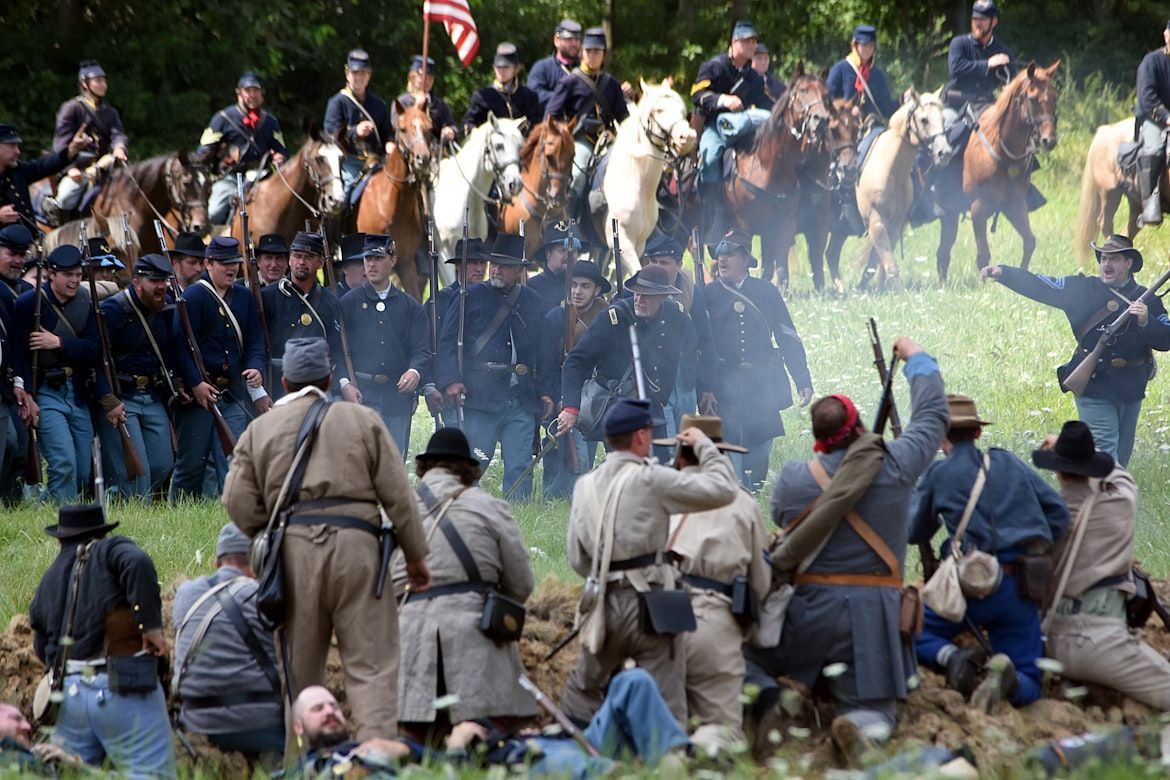
Image: Chris Chow

Virginia businessman Wilmer McLean tried to escape the Civil War by moving away from Manassas after the First Battle of Bull Run erupted near his home in 1861. Confederate General P.G.T. Beaugard even used McLean’s house as headquarters, and a Union cannonball crashed through his kitchen.

McLean relocated about 120 miles south to Appomattox Court House, hoping for peace. Instead, on April 9, 1865, Robert E. Lee surrendered to Ulysses S. Grant in McLean’s parlor, effectively ending the war. McLean later joked that the war "began in my front yard and ended in my front parlor."

2
A bullet links the first and last soldiers who lost their lives in the Civil War
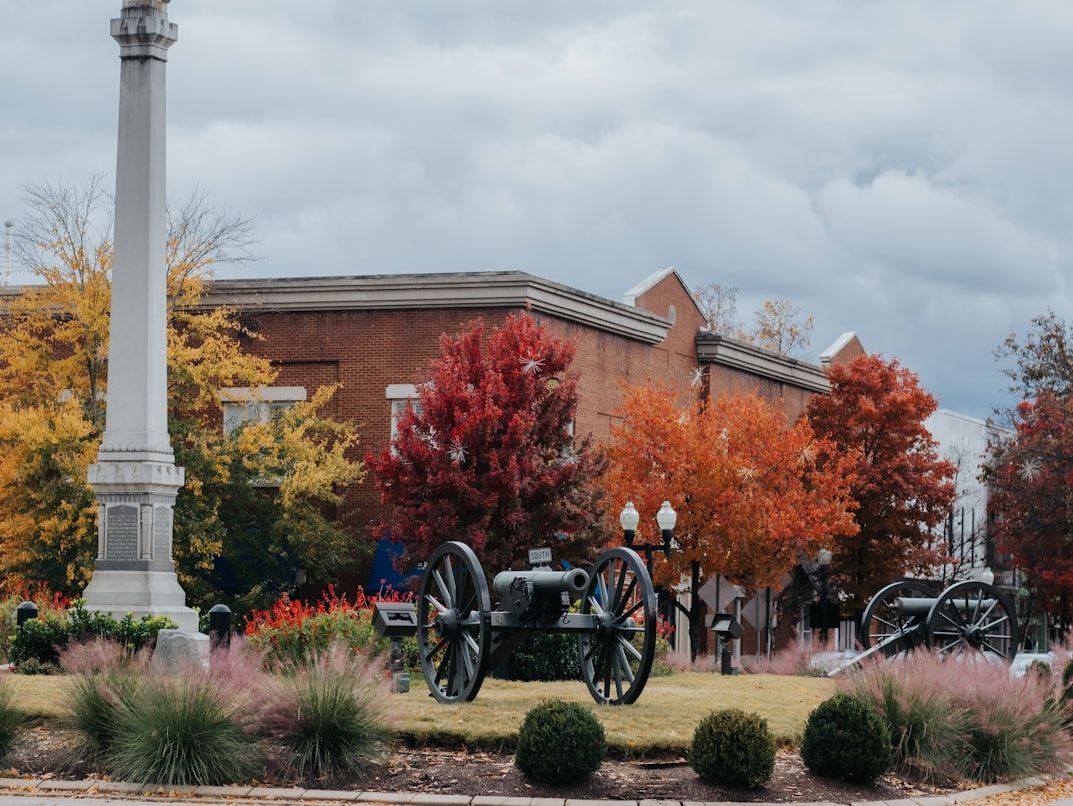
Image: Elijah Crouch

One long-circulated Civil War story claims that the bullet removed from the first Union casualty was later melted and reused years afterward, eventually ending with the life of one of the final soldiers of the conflict . Historians debate parts of the tale, but it became one of the war’s more enduring legends.

The coincidence works as a reflection on how Americans tried to make sense of the terrible human cost of the war. More than 600,000 people lost their lives in the conflict, making it the deadliest war in U.S. history.

3
A baby fell from a building twice, on the same man

Image: Jamie Coupaud

In Detroit, during the 1930s, street sweeper Joseph Figlock reportedly became part of a bizarre accident when a baby fell from an apartment window and landed on him . The child survived, and so did Figlock.

About a year later, the same child allegedly fell from the same building again and once again landed on Figlock . Newspapers at the time treated the story as one of the strangest coincidences ever recorded in America. One might argue that street sweepers spend a disproportionate amount of time on the same streets, but the situation is still quite incredible.

4
Anthony Hopkins accidentally found the exact book he needed

Image: Omar David Sandoval Sida, CC BY-SA 4.0, via Wikimedia Commons

While preparing for the 1972 film The Girl from Petrovka , actor Anthony Hopkins searched London bookstores for a rare copy of George Feifer’s novel. After failing to locate one anywhere, he sat down on the subway and noticed a forgotten copy of the tome in question lying on a bench .

Months later, Hopkins met Feifer himself and learned that the author had lent his annotated personal copy to a friend, who had lost it on the London Underground. The abandoned copy Hopkins found turned out to be that exact copy.

5
John Wilkes Booth is in one of Abraham Lincoln’s last photographs
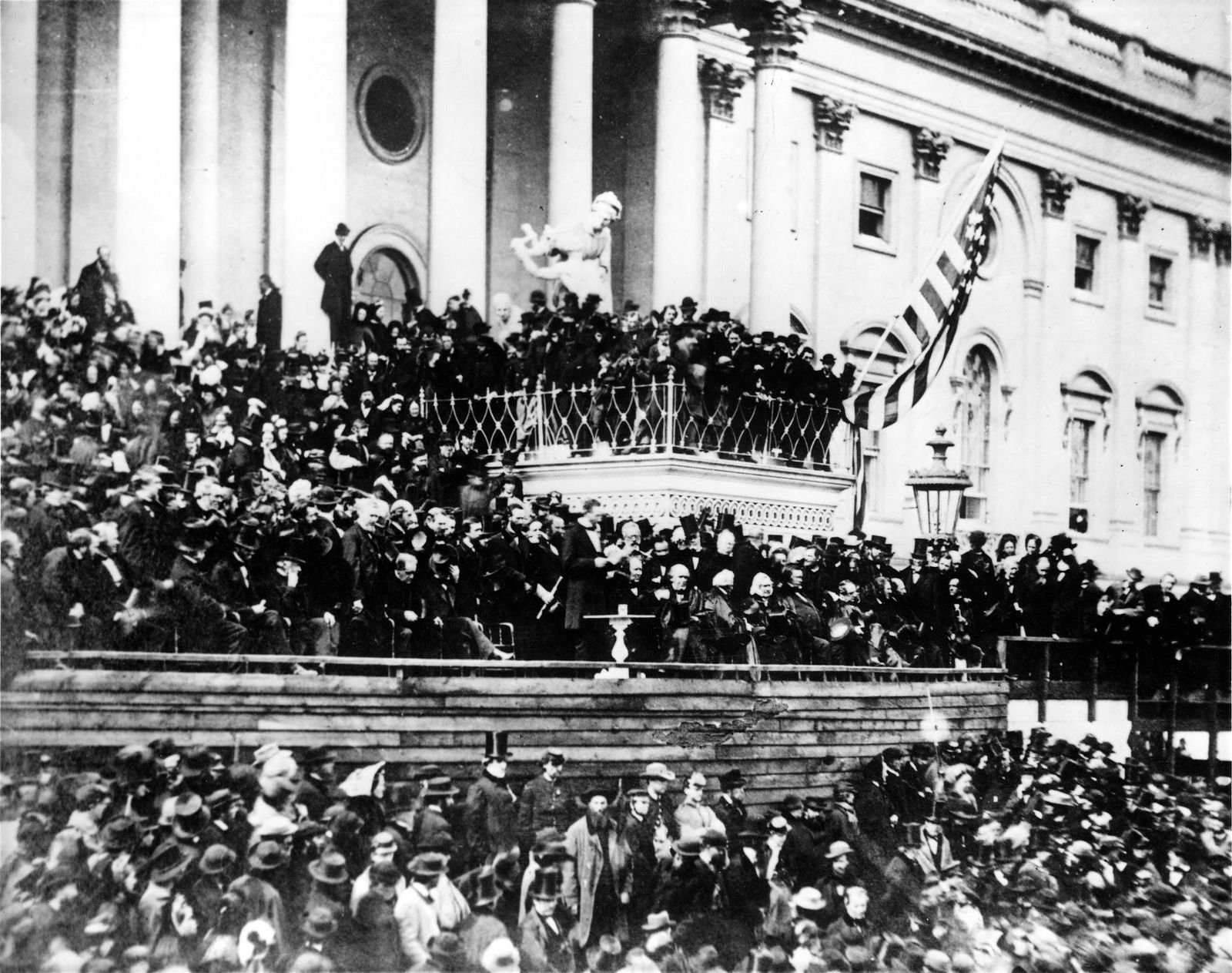
Image: Alexander Gardner, Public domain, via Wikimedia Commons

John Wilkes Booth was already a nationally famous actor before assassinating President Abraham Lincoln in April 1865. Because of that fame, photographers had captured detailed images of Booth years before the crime that made him infamous.

One especially eerie coincidence is that Booth appears in photographs connected to Lincoln’s second inauguration festivities shortly before the crime took place . Historians later realized that the future assassin had unknowingly been documented near the President before he changed history forever.

6
A woman survived all three major White Star ship disasters
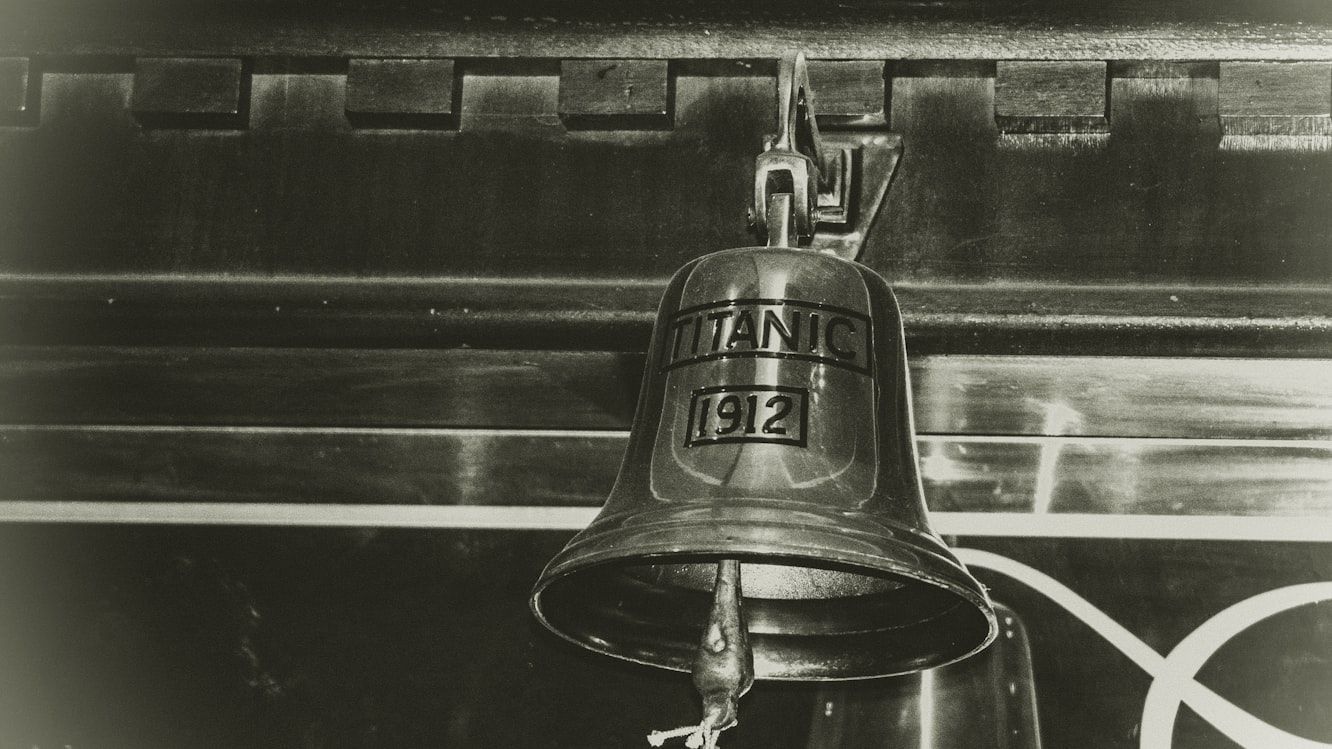
Image: K. Mitch Hodge

Violet Jessop worked as a stewardess for the White Star Line, the company behind the Olympic-class ocean liners. In 1911, she was on board the RMS Olympic when it collided with another ship.

In 1912, she survived the sinking of the Titanic . Four years later, in 1916, during World War I, she was aboard the HMS Britannic when it struck a mine and sank in the Aegean Sea. Jessop survived all three disasters and later became known as "Miss Unsinkable."

7
Theodore Roosevelt’s speech manuscript helped stop a bullet
Image: Ryan Stone

During the 1912 presidential campaign, former President Theodore Roosevelt was shot in Milwaukee before giving a speech. The bullet first passed through a folded 50-page speech manuscript and Roosevelt’s metal eyeglass case in his breast pocket.

The thick stack of papers slowed the bullet enough that Roosevelt survived . Remarkably, he still delivered the speech, speaking for about 90 minutes (those 50 pages were no joke) before seeking medical treatment. Doctors later decided that the bullet was safer left inside his chest permanently.

8
A man unknowingly photographed his own future car accident

Image: Volodymyr Kozhevnikov

In the 1970s, amateur photographer Robert Landsburg reportedly took pictures of everyday traffic while experimenting with a new camera. After developing the film later, he realized one image showed the exact intersection where he would soon be involved in a collision .

The eerie coincidence became famous because the photograph captured the other vehicle that would later crash into his own car.

9
The "Jim Twins" lived nearly identical lives without knowing each other

Image: Eduardo Barrios

Identical twins Jim Lewis and Jim Springer were separated at birth in Ohio in 1940 and adopted by different families. Amazingly, both adoptive families independently named the boys James. The twins did not meet again until they were 39 years old.

When reunited in 1979, they discovered a shocking number of similarities. Both had married women named Linda, later remarried women named Betty, owned dogs named Tony, drove similar cars, and even suffered from the same headaches .

10
The Wizard of Oz costume accidentally belonged to the book’s author

Image: Chuang XY

While filming The Wizard of Oz in 1938, costumers searched for an old-looking coat for actor Frank Morgan, who played both Professor Marvel and the title character. Costume staff reportedly bought several secondhand jackets from a thrift store in Los Angeles and picked one that looked perfect for the Marvel role.

Later, while examining the coat, the team discovered a label sewn inside with the name "L. Frank Baum", author of The Wonderful Wizard of Oz . Baum’s widow later confirmed that the jacket had indeed belonged to her late husband.
General General 4 min read

From coast to coast

Did you get these 10 US geography facts wrong too?

Image: Nick Seagrave

The United States is an extensive and diverse country, full of surprising geographic facts, some of which even break records! Perhaps that's why many people, even Americans, sometimes confuse certain details about our territory. For example, did you know that Maine is the only state among the 50 that shares its border with just one other state? Get ready to be shocked by some common misconceptions! Today, we're diving into 10 geographic facts about America that people often get wrong.

1
There's only one

Image: Keith Luke

How many states share a border with just one other state? Only one! Do you know which one it is?

Correct! It's Maine. The Pine Tree State, located in the northeastern United States, shares its only state border with New Hampshire to the west. But wait! It also borders Canada (the provinces of New Brunswick and Quebec) to the north and northeast, and the Atlantic Ocean to the east.

2
Alaska's distance

Image: Hari Nandakumar

If someone asked you what the shortest distance is between Alaska and the Lower 48 states, would you know the answer? Most people wouldn't! Well, the average distance between Alaska and the contiguous US is about 500 miles. But that's not the most interesting part. Believe it or not, Alaska is actually closer to Russia than to the mainland United States! At their closest point, Alaska and Russia are separated by just 2.4 miles across the Bering Strait.

3
The US-Canada border

Image: Sergey Pesterev

You probably already know that, at 5,525 miles, the US-Canada border is the longest land border in the world. But there are still some fascinating details about it that many people haven't heard before.

The Haskell Free Library and Opera House (Derby Line, Vermont & Stanstead, Quebec) has an international border inside the building! You read that right: Americans enter through one door, Canadians through another. But be careful! International law requires that you exit through the same door you entered.

4
The largest freshwater lake

Image: Andrew Ling

The Great Lakes —Lake Superior, Lake Michigan, Lake Huron, Lake Erie, and Lake Ontario— are one of the natural wonders of North America, and they also hold a world record!

That's right! The largest freshwater lake in the world by surface area is right here in North America. We're talking about Lake Superior, which is shared by both the United States and Canada.

5
The most densely populated state

Image: Rob Curran

Since New York City is the most densely populated city in the country, many tend to believe that, as a result, New York State is the most densely populated. However, that's not the case.

The most densely populated US state is actually New Jersey! Its small size, combined with the large population in its urban areas and its proximity to New York City, has earned The Garden State this title.

6
The largest US state

Image: Jacob Vizek

Most Americans know which state is the largest by area. But outside the US, some get this fact wrong!

Many people answer "Texas" when asked which is the largest of the 50 states. But in reality, Alaska is far bigger, covering about 665,300 square miles compared to Texas's 268,600. This misconception may stem from Texas's reputation as a "large state" or from the way many maps distort Alaska's true size, making it appear much smaller than it actually is.

7
Florida's capital

Image: Meadow Marie

Miami is not only the most densely populated city in Florida but also one of its most famous, right up there with Orlando! Perhaps that's why many people mistakenly believe Miami is the capital city of the Sunshine State. However, the capital city of Florida is actually Tallahassee, which is smaller and doesn't quite receive as much attention.

8
The longest river

Image: Samantha Sheppard

Measuring the actual length of a river can be tough due to the serpentine shape that these bodies of water often take. This may be why many people are unsure about which river holds the title of the longest in the US.

Well, here's the truth: At 2,341 miles, the Missouri River is the longest river in the US, though just by a small margin. In second place is the Mississippi River, which stretches for some 2,320 miles and is often mistakenly thought to be the longest due to that small difference.

9
New York's capital

Image: Charlize Kruger

Similar to Florida, New York State's capital city is not its largest or most famous.

Contrary to what many people think, the capital of New York is not NYC, but Albany. Although Albany is smaller than NYC, it's an important economic and political hub, and it was chosen as the state capital because of its central location along the Hudson River.

10
Large population

Image: Satyan Chawla

The United States is known for having a large population, partly due to the large size of its territory. But did you know it's also one of the most populated countries in the world? In fact, it's the 3rd most populated, coming right after India and China! There sure are a lot of us, aren't there?

11

Culture Culture 4 min read

Was the 1950s truly the best decade to live the American Dream?

Image: Master1305

Emerging from the shadows of the Great Depression and World War II, 1950s America entered an era of optimism. It was a decade where the "American Dream" shifted from a concept to a tangible reality for millions of citizens. From the music playing on portable radios to the sudden affordability of a home with a yard, the fifties reshaped the cultural, technological, and economic landscape of the country. In this article, we explore 10 core reasons why the 1950s are remembered as an exceptionally great time to be an American.

1
Economic prosperity

Image: LightField Studios

The foundation of everything that made the fifties fabulous was a booming economy. Following the end of World War II, the United States found itself as the world’s undisputed industrial leader, while much of Europe was still rebuilding.

Unemployment rates consistently dropped below 3%. Jobs were secure and offered strong wages that regularly surpassed inflation. Also, purchasing power exploded to the point where a single working-class income could comfortably cover a mortgage, buy a vehicle, and keep a pantry fully stocked, allowing financial stability for the average family.

2
The rise of suburbia

Image: Tupungato

With wallets full and families growing, millions of Americans left the crowded urban centers and headed for the periphery. The 1950s birthed the modern American suburb.

Developers revolutionized the housing industry by applying assembly line tactics to real estate, producing affordable homes. With low-cost mortgages, buying a suburban home suddenly became cheaper than renting a cramped city apartment. Suburbia became synonymous with safe, community-driven neighborhood living.

3
Baby Boom era

Image: fotoak

When the soldiers returned home from the war, they built families at a record pace. The "Baby Boom" era saw an astonishing 4 million babies born every single year in the U.S. throughout the decade.

By the time the boom dwindled, nearly 77 million new Americans had entered the world, shifting the nation’s commercial, architectural, and social priorities toward youth and family life. It was an era focused on domestic stability and a collective desire to protect and celebrate childhood.

4
Advances in medicine

Image: The New York Public Library

Living in the 1950s meant witnessing some of the most profound medical miracles in human history. With the introduction of widespread inoculations, better anesthesia, and advanced pharmaceuticals, life expectancy surged.

In 1955, Dr. Jonas Salk’s polio vaccine was declared safe and effective. Within a few short years, a terrifying disease that had paralyzed thousands of children annually was near eradication. The fifties also welcomed the first successful human kidney transplant and massive structural breakthroughs in open-heart surgery.

5
The golden age of television

Image: Library of Congress

Before the 1950s, the radio was the centerpiece of the American living room. By the end of the decade, a glowing box took its place, permanently altering entertainment, news, and daily habits.

Electronic companies began mass-producing television sets that quickly became affordable for the average middle-class family. Americans gathered every night to share laughs over I Love Lucy , watch historic variety hours like The Ed Sullivan Show , or catch Westerns and championship wrestling. Millions of people across different states were suddenly watching the same stories, creating a unified national culture.

6
Iconic cars and drive-in culture

Image: Gestalt Imagery

Besides being a mode of transportation, the automobile in the 1950s was a declaration of personal freedom. Coupled with the expansion of the Interstate Highway System, car culture gave birth to a new social ecosystem.

Detroit created iconic machines like the Chevrolet Bel Air, with its tail fins that mirrored the era’s obsession with aviation and rocket design. Drive-in movie theaters and diners with roller-skating carhops became the epicenter of teenage social life, offering a sense of autonomy and mobility.

7
Rock ‘n’ Roll revolution

Image: Uncredited, Public domain, via Wikimedia Commons

The fifties gave birth to the teenager as a distinct cultural demographic, and that demographic needed its own unique soundtrack.

Pioneering artists like Elvis Presley, Chuck Berry, Bill Haley, and Little Richard fused rhythm and blues with country music to create a loud, energetic, and infectious sound. Enabled by the invention of the portable transistor radio and cheap vinyl records, teenagers could listen to their own music away from their parents. This sparked a youth counterculture that laid the groundwork for decades of musical and social evolution.

8
Space Race beginnings

Image: NASA/U.S. Army, Public domain, via Wikimedia Commons

The late 1950s forced Americans to look up to the stars. When the Soviet Union successfully launched Sputnik in 1957, it ignited a fierce competitive drive known as the Space Race.

This cosmic rivalry meant that the government focused on funding science, mathematics, engineering, and technological research. The founding of NASA in 1958 captured the public’s imagination more than anything before. To be an American in the late fifties was to live on the precipice of the future.

9
Innovations in Technology & Home Life

Image: Everett Collection

Daily domestic life underwent a radical upgrade in the 1950s, driven by an explosion of household appliances designed to maximize comfort and convenience. These innovations dramatically decreased the physical labor and hours required for chores, meaning extra leisure time for homemakers.

Refrigerators evolved with groundbreaking features like automatic defrosting and adjustable shelving. Meanwhile, early residential microwaves, automated dishwashers, and washing machines became standard fixtures. Also, the introduction of the frozen "TV Dinner" and the rise of fast-food restaurants like McDonald’s translated into less cooking.

10
Fashion & Glamour

Image: Ironika

1950s American style was all about elegance and sophistication, moving away from the utilitarian garments of the wartime 1940s. Driven by Christian Dior’s "New Look," women’s fashion celebrated the classic hourglass silhouette with cinched waists, sharp tailoring, and voluminous skirts.

Poodle skirts and black-and-white saddle shoes dominated high school hallways, while Hollywood icons like Marilyn Monroe, Audrey Hepburn, and Grace Kelly set the glamour standard. For men, sharp suits, narrow ties, and slicked back hair defined a timeless aesthetic.

Explore more American facts

Choose your favorite category!

General
General

As American as apple pie—the very best America has to offer!

Culture
Culture

Delve into the astounding richness of American lore.

Geography
Geography

Hop in and explore vast and diverse American landscapes.

History
History

Discover the key moments that shaped the United States.