General General 3 min read

Which is your favorite food?

Did you know these 12 very American foods are not really American?

Image: Fernando Andrade

When your country is a melting pot of nationalities and cultural backgrounds, as America is, many things you might consider local are actually not, including food. You might be surprised to learn about the true origins of some of these American culinary icons, from the hamburger to apple pie and beyond. Which one do you like the best?

1
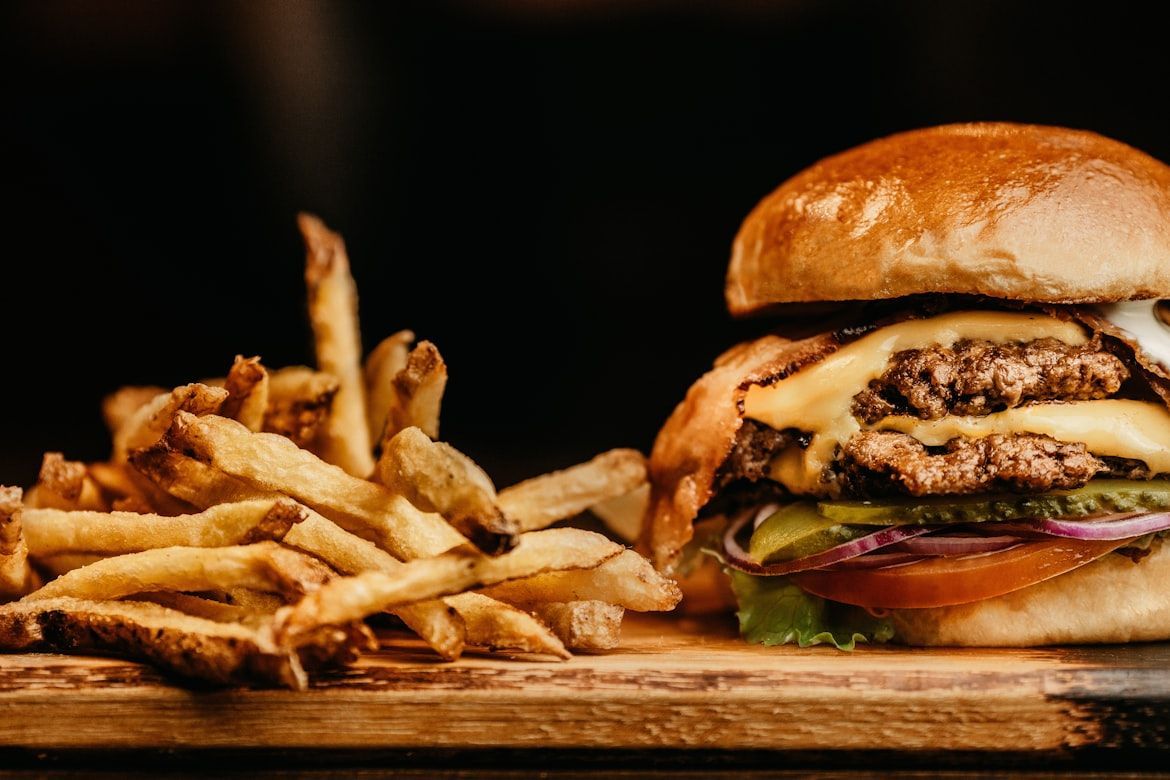
Hamburger

Image: Carles Rabada

Due to their popularity and widespread appeal, hamburgers are considered an unofficial national dish of the United States, and there’s good reason for this. It's hard to think of a more American dish than a hamburger, right?

Well, hamburgers may be a national treasure today, but their very name gives us a clue about their true origin: Germany’s Hamburg .

2
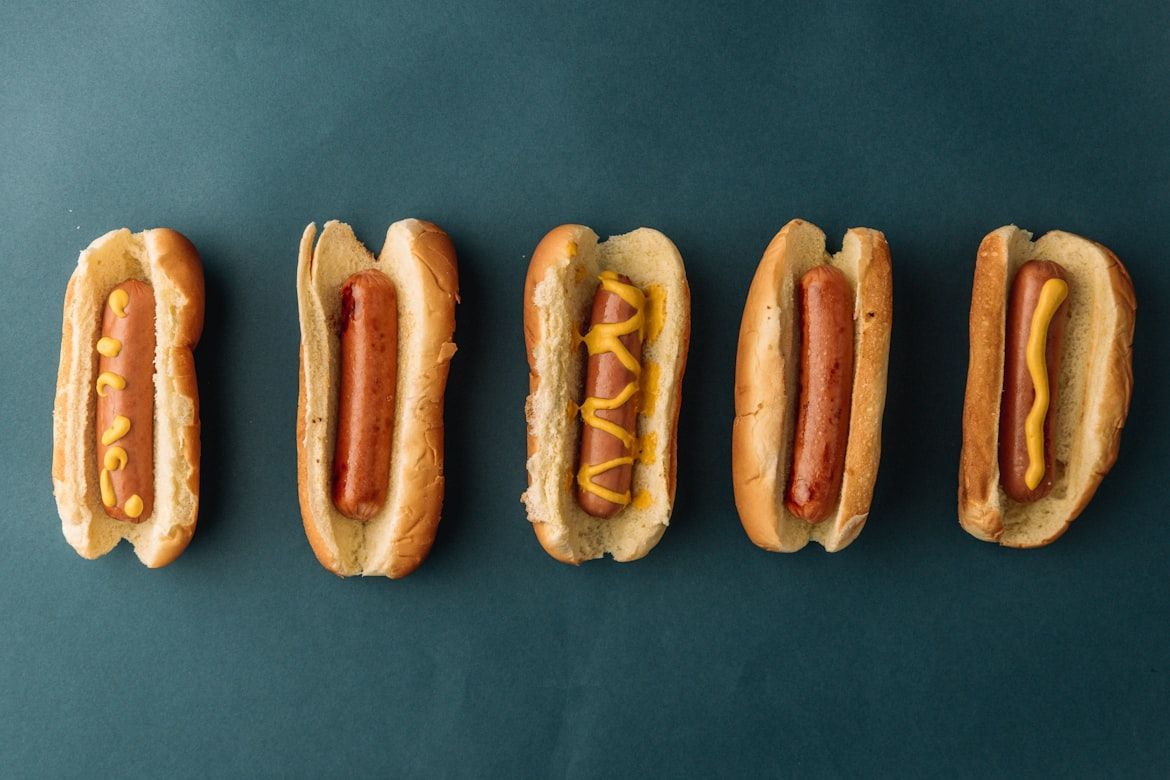
Hot dogs

Image: Peter Secan

Few things are as American as buying a hot dog from a street vendor and enjoying it in the sun, right? Well, not exactly. The more formal names of the humble hot dog—frankfurters and Vienna sausages—give us, once again, a hint about their German and Austrian true origin.

3
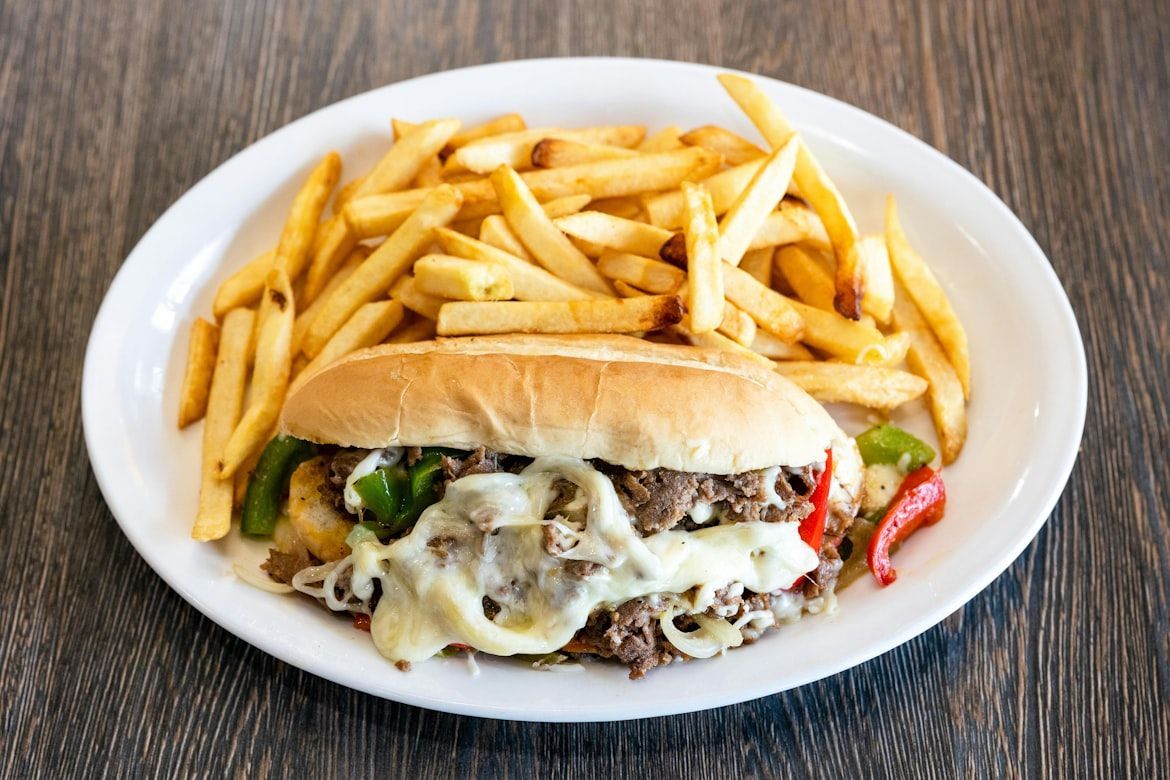
French fries

Image: Elizabeth Jamieson

While French fries have been a national staple for quite some time, their very name also gives away their foreign origin. There is an ongoing debate about whether these fries are actually French or Belgian , but in any case, these delicious bits of joy are not American.

4
Mustard

Image: Peter Werkman

Mustard, the first of many popular condiments cherished by Americans, was first consumed by the Egyptians in its original seed form and later by the Romans as the paste we most commonly use today.

5
Ketchup

Image: Dennis Klein

Another condiment that is at least as popular as mustard in America, if not more, ketchup originated as a Chinese fermented fish sauce called "kê-tsiap." Over time, the sauce evolved, leaving the fish behind and replacing it with tomatoes to become the ketchup we know today.

6
Pickles

Image: Mehmet Uzut

Another food highly appreciated on American soil is pickles. Whether on burgers, served as a side with sandwiches, chopped into relish for hot dogs, or enjoyed in many other ways, these vinegar-soaked cucumbers are a staple of our cuisine. But multiple records trace the origin of these treats as far as ancient Egypt , where even Cleopatra was rumored to love them.

7
Apple pie

Image: Priscilla Du Preez 🇨🇦

This may be shocking to some, but alas, it is true: the quintessentially American apple pie is not really American. The earliest known recipes for apple pie belong to the ancient Greeks . And Dutch bakers created the modern version of the pie in the 15th century.

8
Mac and cheese

Image: Hermes Rivera

Thomas Jefferson is often credited with inventing macaroni and cheese after bringing back a macaroni machine from a trip to Europe, but he was not the first to come up with the idea.

The original recipe for macaroni baked with cheese sauce first appeared in the 14th-century cookbook Liber de Coquina, which is believed to have been written by an Italian author.

9
Bacon

Image: Casey DeViese

Nobody "invented" bacon, right? It’s just a piece of meat. The origins can be traced back to the ancient world, where curing and preserving pork became a common practice. But, as it happens, most sources agree that the Celts were the first to prepare and cook it in the way we do today.

10
Meatloaf

Image: RitaE

A humble recipe, for sure, meatloaf was made in Medieval Europe from scraps of meat held together by fruits, nuts, and seasonings. It was created to stretch leftover beef or create a more substantial meal from less expensive cuts of meat.

11
Mayonnaise

Image: May_hokkaido

The third and final condiment on our list is another American staple, even though its French name might give us a pretty straightforward idea of its origin. But it's not that simple.

The French mayonnaise is likely derived from Spanish versions of aioli, which is a garlic mayonnaise.

12
Barbecue

Image: Andrik Langfield

Surely, something as American as a barbecue must be a local invention, right? Wrong, again. Known as "barbacoa" in the West Indies long before it became popular in America, barbecues have been around for a long time. Even the modern barbecue, with spice-rubbed meat slowly cooked over a fire and topped with sauce, originated in the Caribbean .

General General 4 min read

Made in the U.S.A.

Are you familiar with these 10 iconic American car brands?

Image: Brett Sayles

America lovers cars. And cars love America. Its infinite roads and vast landscapes are the perfect environment for a four-wheeled vehicle to thrive in. From historic brands still alive and kickin’, like Ford, to new and disrupting players like Tesla, or the gone but not forgotten, like Oldsmobile, this list showcases ten examples of what America’s car industry can produce. Have you ever driven any of these brands?

1
Ford

Image: Ross Sokolovski

What is to say about Ford that hasn’t been said already? This omnipresent American car brand, founded by Henry Ford in 1903, is popularly known as the auto manufacturer responsible for putting America on wheels. Ford’s first car, the Model A , was assembled at a plant in Detroit.

The Model T was an affordable, reliable, and efficient vehicle . Within 10 years, half the cars in America were Model T’s. Ford created the world’s first moving assembly line for cars, which would change the industry forever. This invention allowed the company to produce one Model T in under thirty seconds.

2
Chevrolet

Image: Gary Sandoz

Another legendary brand, Chevrolet was founded in 1911, in Detroit, Michigan, by Louis Chevrolet and William C. Durant. Chevrolet introduced its first model, which was the Series C Classic Six and almost three thousand cars were sold the first year.

Chevrolet produced its one-millionth vehicle in the 1920s. In the late 1920s, Chevrolet surpassed Ford in sales, becoming the top seller of both cars and trucks. This position for first place went back and forth between the two brands over the years.

3
Jeep

Image: Kenny Eliason

A brand that was born strong, Jeep vehicles were first used in World War II as a reliable ride and then slowly made their way into the American non-military market. This brand is dubbed as a "Go anywhere, Do anything" kind of vehicle, owing to its sturdy frame and powerful engine.

Nowadays Jeep is popular among off-roaders and has several classic models in its roster, including the Wrangler, Cherokee, and Grand Cherokee, among others.

4
Dodge

Image: Dan Gold

Believe it or not, Dodge was a bicycle maker before being a car maker . The brand, established in 1900 dealt with bicycles in the first place and then started supplying car parts before deciding to get into the production of vehicles in 1914.

In the early 1920s, after the original founders passed away Chrysler bought the brand and continued producing successful cars, among them, the Ram, the Charger, the Caravan, and many others.

5
GMC

Image: todd kent

Another hugely successful American brand is GMC. The General Motor Truck Company came into existence in 1911. Over the years, the company started manufacturing large powerful vehicles including SUVs, vans, and a massive range of trucks. Popular GMC models include Acadia, Canyon, Sierra, Sienna, and Yukon among others.

6
Cadillac

Image: Sidney Pearce

The most famous luxury car in America, Cadillac owes its name to Antoine Laumet de La Mothe Cadillac, a French adventurer who discovered the city of Detroit. Believe it or not, passenger seats and an enclosed cabin were introduced for the very first time by Cadillac because, well, that was considered a luxury back then.

Some famous Cadillac car brands include the Camaro, Silverado, Tahoe, and Impala, among others.

7
Lincoln

Image: Arvin Dale

Other than Cadillac, most people would say Lincoln if asked for a luxury car brand, since this company is also a pioneer in this segment. This popular American car manufacturer started making luxury vehicles in 1917, at a time when the concept was not affordable for many.

Some classic Lincoln cars that are timeless to date include the Zephyr, the Town Car, the Mark LT, and the Navigator SUV. The latest SUVs popular among car enthusiasts include the Nautilus, MKC, Aviator, and Lincoln Corsair.

8
Tesla

Image: Tesla Fans Schweiz

Not many car brands have become so iconic in as few years as Tesla has and there is a simple reason for this: this American car brand revolutionized regular automobiles and made them electric . It had been done before, yes. But not with this level of success.

Tesla is a pioneer in reducing the carbon footprint of the environment with its electric vehicles. Many auto manufacturers are now following in Tesla’s footsteps. The revolutionary company unveiled its first creation called the Tesla Roadster in 2008.

9
Buick

Image: Mohammad Hoseini Rad

Buick is one of the oldest automobile brands in the world, having been founded in 1899. The company has a long history of producing high-quality, luxury, and performance-oriented vehicles and has been a part of General Motors since 1908.

In recent years, Buick has seen a decline in sales in the United States and has focused on the Chinese market where the brand has experienced success. Buick has shifted its focus towards producing more crossover and SUV models to meet the demand for larger vehicles in the current market.

10
Oldsmobile

Image: Hombre

Honoring its name, Oldsmobile, like the aforementioned Buick, was one of the oldest automobile brands in the United States, being founded in 1897. It initially gained popularity through innovations such as the first mass-produced car and the first automatic transmission.

In the mid-20th century, it was known for its performance and style, being a public favorite. However, by the late 1990s, Oldsmobile’s sales began to decline, leading to its discontinuation in 2004 as part of General Motors’ restructuring.

History History 3 min read

Lawn and order

How the American lawn was born: 10 moments that shaped our frontyards

Image: Gunnar Ridderström

The American lawn didn’t sprout overnight. It grew from European ideals, industrial changes, suburban planning, and clever marketing. From elite colonial estates to postwar tract homes, each step shaped how grass became a national obsession. Here are 10 factual milestones that explain how a simple patch of green became a defining feature of U.S. domestic life.

1
European origins

Image: Martin Zenker

Lawns — and by lawns we mean closely mown grassy spaces — began appearing in 17th- and 18th-century Britain and France as signs of wealth. This was because only aristocrats or large estates could afford to keep grass short and manageable.

Before mechanized tools, scythes, shears, or grazing animals were used to maintain lawns, so turf was largely limited to those who could own the necessary manpower or animals. Early American colonists imported these aesthetics and tried to replicate them in their architecture and homes, albeit less formally.

2
Public parks set the bar

Image: Carl Newton

Early urban park designers, strongly influenced by European landscaping ideas, laid out wide expanses of turf in city parks, showing the public a "civilized" green aesthetic. That made clipped lawns part of the civic-space ideal, and not just a private luxury.

These parks helped cement the association between grass lawns, order, leisure, and modern urban life in American culture.

3
Mechanical breakthroughs

Image: Daniel Watson

In 1830, English engineer Edwin Beard Budding patented the first mechanical lawn mower, inspired by a wool-mill reel used to trim cloth.

Budding’s design used a cylinder of blades powered by a rear roller, making it easier to cut grass evenly, and largely replaced laborious scything or grazing, cutting down the cost of maintaining such status symbols in the process.

4
Et pluribus lawnus

Image: Gang Hao

Once affordable lawn mowers—including lighter push-mower variants in America—became popular, maintaining a lawn became feasible for aspiring middle-class homeowners.

This sparked a major transformation in both private and public architecture, as many well-to-do homes that before could not afford it began attempting to replicate the European lawn style in some fashion or another.

5
Suburban dreams

Image: Venrick Azcueta

For decades, lawns remained a steady feature of American architecture and green-space design; however, it wasn’t until after WWII that the true lawn boom began. Returning veterans and government-backed mortgages fueled rapidly expanding suburbs.

Developer William Jaird Levitt and his company built thousands of nearly identical homes, each with its own front and back lawn. By the 1950s and ’60s, lawns had become central to the "American Dream," symbolizing stability, middle-class respectability, and neighborhood uniformity.

6
A bit of chemical help

Image: Victor Furtuna

After the war, synthetic fertilizers (derived partly from wartime chemical technologies) became widely available to consumers, enabling lush, uniform lawns even in soil and climate conditions unsuited to grass.

This lowered the barrier to achieving a "perfect" lawn, further popularizing lawns as part of the American identity and raising the expectations of what the perfect lawn should look like.

7
Begone, pesky weeds!

Image: Dmitry Burdakov

In addition to fertilizers, in 1944, researchers discovered 2,4‑Dichlorophenoxyacetic acid (2,4-D), the first widely effective selective herbicide — killing broadleaf weeds while leaving grasses largely unharmed.

Deployed commercially soon after WWII, 2,4-D made maintaining uniform, weed-free lawns much easier and was quickly adopted in home lawn products.

8
Thou shalt keep thy lawn green

Image: Tiago Rodrigues

As suburbs proliferated, lawn maintenance became a shared social norm — homeowners' associations and neighborhood covenants often started to expect regular mowing and upkeep.

Keeping a well-groomed lawn became not just an aesthetic choice but also a mark of civic responsibility and conformity to norms.

9
Environmental worries

Image: Rémi Müller

By the mid- to late 20th century, the ecological cost of the lawn aesthetic became visible: heavy water use for irrigation, chemical runoff from fertilizers and herbicides, and reduced biodiversity as a consequence.

These drawbacks spurred both scientific and public debate about the sustainability of the traditional lawn model — especially in water-scarce regions, where it was both impractical and resource-intensive.

10
The birth of mixed lawns

Image: Ruben Sukatendel

Growing environmental awareness, droughts, and changing tastes have prompted many homeowners and municipalities to adopt drought-tolerant landscaping, native plants, or mixed-species yards instead of the traditional uniform turf.

As a result, today the "ideal lawn" is evolving as we speak: classic turfgrass still remains common, but alternative yard styles now offer more varied ecological, economic, and aesthetic options.

Explore more American facts

Choose your favorite category!

General
General

As American as apple pie—the very best America has to offer!

Culture
Culture

Delve into the astounding richness of American lore.

Geography
Geography

Hop in and explore vast and diverse American landscapes.

History
History

Discover the key moments that shaped the United States.