General General 5 min read

Say cheese!

Did you know American cheese is not actually cheese?

Image: Jonathan Borba

Few foods trigger as much heated debate as the neon-orange, perfectly square slice of American cheese. To culinary purists, it’s an industrial piece of rubber. But to the backyard grill master and the late-night grilled cheese enthusiast, it is a scientific masterpiece of consistency and meltability. The truth is, American cheese has been both witness and party to U.S. history, from World War I to Apollo missions. Before you peel back the wrapper on your next slice, let’s dive into 10 mind-melting facts that prove American cheese is one of the most fascinating—and misunderstood—innovations in food history.

1
It was invented in Switzerland

Image: NastyaSensei

While the name suggests a US origin, the technology that created American cheese actually began in the heart of the Alps. It was developed in 1911 by Swiss researchers Walter Gerber and Fritz Stettler, who were looking for a way to extend the shelf life of their country’s famous Emmental cheese.

The problem with traditional cheese is that it eventually dries out, molds, or separates into a greasy mess when heated. By shredding the cheese, adding sodium citrate, and heating it, the Swiss duo discovered they could create a stable, smooth product that didn't separate. While they weren't trying to create "American" cheese as we know it today, their emulsification process laid the foundational science for every single-wrapped slice produced today.

2
It was popularized by a Canadian
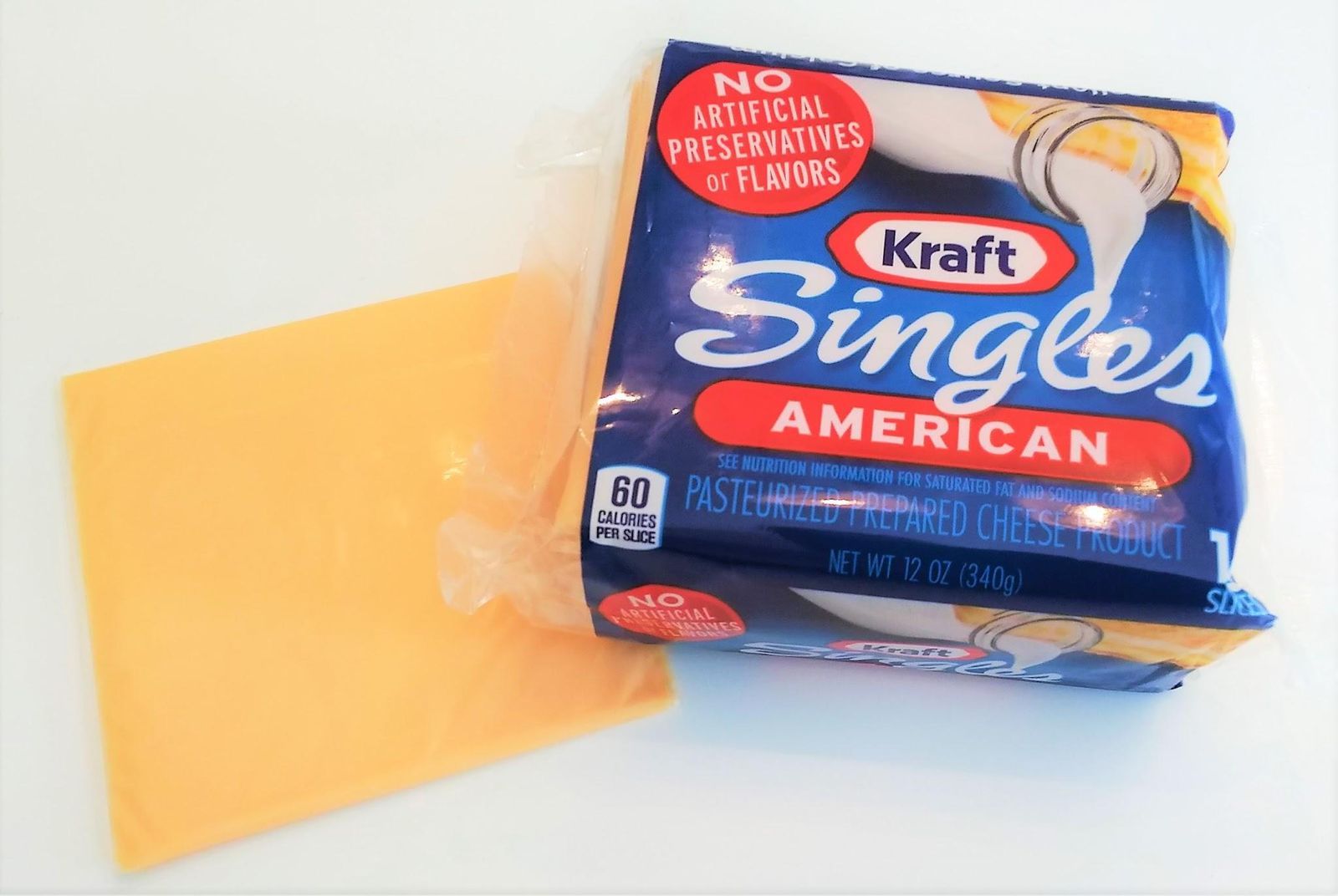
Image: Martylunsford, CC BY-SA 4.0, via Wikimedia Commons

The man responsible for the global dominance of American cheese was James L. Kraft. Ring any bells? Kraft was a Canadian immigrant who moved to Chicago in 1903. While he didn't invent the concept of processed cheese, he perfected the industrial scale of its production and marketing.

Kraft noticed that retailers struggled with cheese spoilage; if a wheel of cheddar didn't sell quickly, it was a total loss. He experimented with various methods of heating and blending cheese until he found a formula that could be canned and shipped long distances without spoiling. In 1916, he received a patent for his "processed cheese," and during World War I, the U.S. government purchased millions of pounds of it for soldiers, cementing its privileged place in the American diet.

3
It was almost called "Embalmed Cheese"
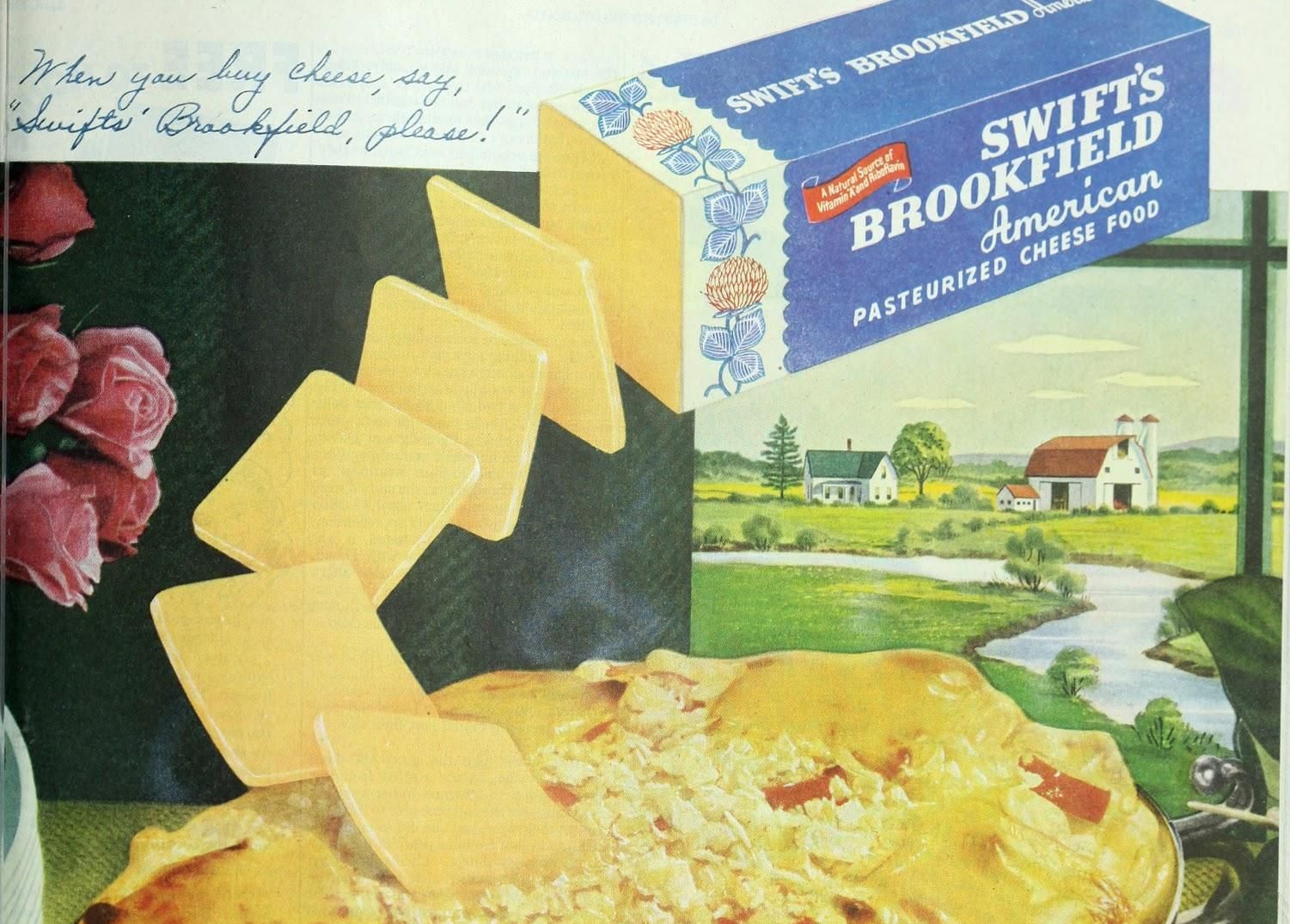
Image: Internet Archive Book Images, No restrictions, via Wikimedia Commons

When processed cheese first hit the market, it had its detractors. Traditional cheesemakers were horrified, and so were pure food advocates. These critics argued that the product shouldn't even be called cheese. They’ve even gone so far as to call it "embalmed cheese" because of its unnaturally long shelf life and the chemical emulsifiers used to keep it stable. Yet, Kraft’s marketing prowess and the sheer convenience of the product ultimately won the naming battle. At least in the court of public opinion.

4
Technically, it isn’t cheese

Image: RDNE Stock project

Kraft may have won the battle among the people, but legally, American cheese is not considered cheese. If you look closely at the packaging, you will rarely see the word "cheese" on its own. Because of strict FDA regulations, most varieties are legally classified as "Pasteurized Process Cheese Product" or "Pasteurized Process American Cheese Food."

To be labeled "cheese," a product must be made primarily of milk, salt, and enzymes. Processed American cheese, however, is made by blending real cheese—usually cheddar or Colby—with emulsifying salts, whey, and sometimes extra milk or fats.

5
Any cheese can be made into American cheese

Image: Edita Brus

The term "American cheese" refers more to a process than a specific flavor. In theory, you could make "American-style" brie, blue cheese, or parmesan. The defining characteristic is the addition of an emulsifier, which breaks down the proteins and allows the fats and water to stay together.

In fact, some high-end chefs now make their own artisanal American cheese with aged cheddars processed with sodium citrate to create a slice that has the complex flavor of an expensive block but the melting point of a Kraft Single.

6
It isn’t naturally yellow

Image: jianwei zhu

The vibrant orange-yellow hue of American cheese is entirely a cosmetic choice. Traditionally, cheese color varied by the season; when cows ate fresh grass in the summer, their milk contained more beta-carotene, leading to a naturally yellowish cheese. To make their cheese look high-quality all year round, cheesemakers began adding dyes.

American cheese takes this tradition to the extreme. It is typically colored with annatto, a seed from the achiote tree. Without this dye, American cheese would be a pale, creamy white, which is how it is sold in many delis as "White American". Yes, that’s right, there is no flavor difference between the white and yellow versions.

7
It has an extremely low melting point

Image: Vinícius Caricatte

The scientific superpower of American cheese is its meltability. Traditional cheeses have a protein structure that tightens when heated, which is why a slice of aged cheddar on a burger often results in an oily puddle and a rubbery clump.

Because of the emulsifying salts, the proteins in American cheese can withstand heat without clumping together. This gives it an incredibly low and stable melting point, transforming the slice into a silky sauce. This is why it remains the undisputed king of grilled cheese sandwiches.

8
It’s been in space

Image: NASA, Public domain, via Wikimedia Commons

When you're hurtling through orbit in a cramped capsule, you need food that is stable, easy to eat, and won't crumble into thousands of tiny, electronics-clogging pieces. American cheese fit the bill perfectly for early NASA missions.

Processed cheese in tubes or cubes was a staple of the Apollo missions. Because it doesn't separate or sweat oil in varying temperatures and pressures, it was one of the few dairy products that could reliably provide flavor and calcium to astronauts.

9
It helped bring cheese to the masses
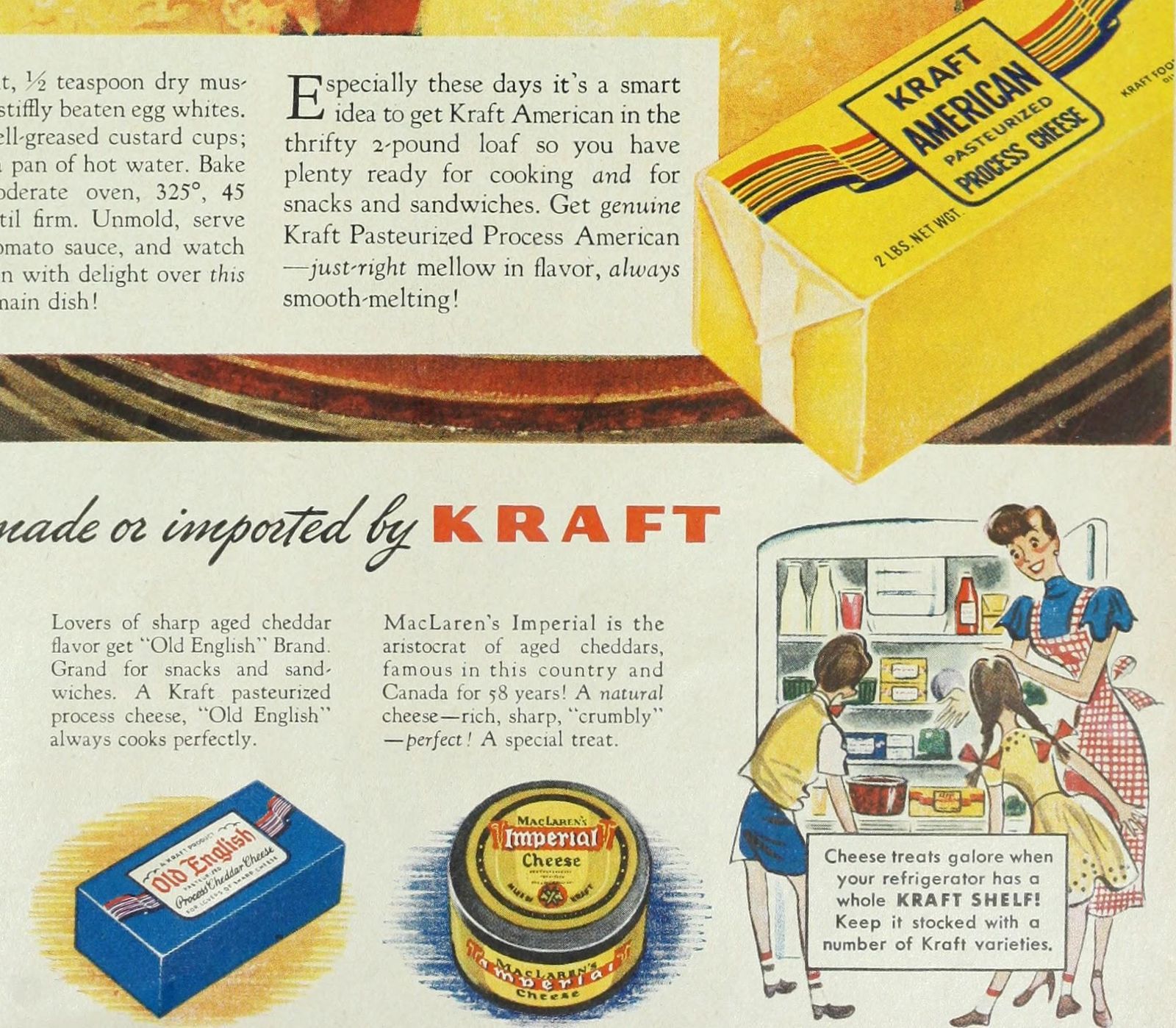
Image: Internet Archive Book Images, No restrictions, via Wikimedia Commons

Before the advent of processed cheese, cheese was often a seasonal luxury. It was difficult to transport, expensive to store, and highly variable in quality. James L. Kraft’s invention changed that. By creating a product that was uniform in flavor and shelf-stable, he made cheese affordable and accessible to every corner of the United States.

10
The U.S. Government once gave it out

The U.S. government not only bought tons of American cheese during World War I. In the 1980s, the term "government cheese" became a thing. During a period of dairy surpluses, the government bought millions of pounds of cheese to prop up prices for struggling farmers.

To avoid letting it rot, the Reagan administration began distributing five-pound blocks of cheese to low-income families, seniors, and schools. For many who grew up in that era, that pale orange processed cheese was a lifesaver.


General General 5 min read

Native marvels

What 600-pound animal climbs trees? 10 amazing American animals

Image: Bryan Hanson

America is home to a rich tapestry of unique wildlife found nowhere else on Earth. These species thrive in diverse ecosystems, from mountains to oceans, and form an integral part of our natural heritage. Some have even become national icons, symbolizing the spirit of our country. From the majestic bald eagle to the resilient black bear, discover 10 animals that embody the wild essence of our nation.

1
American Bison

Image: Chloe Leis

The American bison once roamed the Great Plains in vast herds, a true icon of the American West. These massive mammals can weigh up to 2,000 pounds and stand 6 feet tall at the shoulder. Due to overhunting and habitat loss in the 1800s, their numbers dwindled dangerously low, with the species being driven to the brink of extinction.

Fortunately, thanks to dedicated conservation efforts, bison populations have rebounded miraculously and now roam freely through many of the United States' national parks, particularly in Yellowstone, where they have lived continuously since prehistoric times.

2
California Condor

Image: Kacie Long

The California condor is North America's largest flying land bird, boasting an impressive wingspan of nearly 10 feet. In the 20th century, populations dramatically declined due to various threats, including DDT and lead poisoning, poaching, and habitat loss. By 1987, only 27 individuals remained, with the species facing near-extinction.

Rigorous conservation efforts, including captive breeding programs, have increased the condor's numbers, and many individuals have been reintroduced to their natural habitats near the Grand Canyon area, Zion National Park, and the coastal mountains of California.

3
American Alligator

Image: David Clode

The American alligator, a formidable reptile, is native to the southeastern United States. As apex predators, they consume a wide range of prey, including fish, amphibians, reptiles, birds, and mammals. These powerful creatures can grow up to 15 feet long and weigh over 1,000 pounds.

Once hunted nearly to extinction for their hides, American alligators have made a remarkable comeback thanks to strict protection laws. Today, they thrive in swamps, marshes, and rivers, where they play a crucial role as ecosystem engineers. By constructing small ponds known as alligator holes, they create both wet and dry habitats that support a variety of other organisms.

4
Bald Eagle

Image: Ingo Doerrie

The bald eagle is not only America's national bird but also a powerful symbol of freedom all over the world. An opportunistic feeder that primarily subsists on fish, it is classified as a type of sea eagle, closely related to the European white-tailed eagle. Found throughout North America, this majestic bird has a wingspan of up to 7.5 feet and uses its sharp talons to snatch prey from the water.

Despite its name, the bald eagle is not actually bald. The name comes from an older use of the word "bald," which used to mean "white-headed." This bird of prey is also known for building the largest nest of any North American bird—a structure that can be up to 13 feet deep, 8 feet wide, and weigh almost 1 metric ton on average.

5
Gila Monster

Image: David Clode

The Gila monster, native to the southwestern United States, is one of the few venomous lizards in the world. These brightly colored reptiles are slow-moving and rarely attack humans, but they can deliver a powerful bite if threatened or mishandled. Gila monsters are a unique part of America's desert fauna, often inhabiting burrows or sheltering under rocks where conditions are favorable.

The name "Gila monster" refers to the Gila River Basin in Arizona and New Mexico, where these lizards were once abundant. Because the species has remained relatively unchanged morphologically since at least the Miocene, they are occasionally regarded as living fossils.

6
Red Wolf

Image: Patrick Fobian

A canid native to the southeastern United States with a size that falls between a gray wolf and a coyote, the red wolf is often classified either as a subspecies of the gray wolf or as a type of coywolf (a genetic hybrid of wolf and coyote). Despite their size, red wolves play a crucial role in their ecosystem as apex predators.

While their original range covered the southeastern United States to as far north as the state of New York, the species is currently critically endangered, with fewer than 20 individuals remaining in the wild. Efforts to save the species include captive breeding and reintroduction programs aimed at restoring their presence in the wild.

7
Florida Panther

Image: Maheera Kulsoom

The Florida panther, a subspecies of the cougar, roams the forests and swamps of southern Florida. Its modern range includes national parks and natural reserves such as the Big Cypress National Preserve and Everglades National Park. With only around 200 individuals left in the wild, these solitary and elusive cats are considered endangered and currently occupy only 5% of their historic range.

Conservation efforts focus on habitat preservation and reducing vehicle collisions, the leading cause of death for these big cats. Since 1982, this majestic feline has been officially recognized as Florida’s state animal.

8
Hawaiian Monk Seal

Image: Sebastian Coman Travel

Found only in the Hawaiian Islands, the Hawaiian monk seal is one of the only two mammals endemic to the islands, alongside the Hawaiian hoary bat. Its common name comes from the short hairs on its head, resembling a monk's tonsure, but native Hawaiians know it as ʻIlio-holo-i-ka-uaua, which translates to "dog that runs in rough water."

Considered one of the most endangered marine mammals in the world, with a population of about 1,400 individuals, these seals are protected by the Marine Mammal Protection Act and the Endangered Species Act.

9
Pronghorn

Image: Patrick Hendry

The pronghorn, native to North America's grasslands, is the second fastest land animal in the world, capable of reaching speeds up to 55 mph. Often mistaken for antelopes, pronghorns are actually unique to the American continent and are not related to Old World antelope species.

In fact, the pronghorn's closest living relatives are the giraffe and okapi. Remarkably, their incredible speed evolved as a defense mechanism against now-extinct predators, such as Miracinonyx , commonly known as the American cheetah.

10
Black Bear

Image: Robert Thiemann

The black bear, the most widely distributed bear species in North America, is found in forested areas from Canada to Mexico. These adaptable omnivores can weigh up to 600 pounds and are skilled climbers and swimmers.

Not related to grizzly or polar bears, black bears share more genetic similarities with the Asian black bear than with any other species. And before the migration of brown bears to the continent, American black bears were likely the only bear species present in much of North America. Despite their size and strength, black bears are generally shy and tend to avoid human contact whenever possible.

General General 4 min read

WHICH ONE WOULD YOU LIVE IN?

Which Are The 10 Most Popular Architectural Styles In America?

Image: Todd Kent

Land of the free, home of the brave, right? As far as architecture is concerned, that is very much true. As long as you can imagine it (and afford it, and get your blueprints approved), you can make it. America has many different styles of architecture , some more eccentric, some more unassuming. In this list, we have favored the latter and compiled ten of the most popular ones in the country because, as Tom Waits says, "What makes a house grand, ain't the roof or the doors. If there's love in a house, it's a palace for sure".

1
Townhouse

Image: Aman Kumar

Most commonly found in cities, townhouses have spacious layouts, more amenities than the condo styles, and lower maintenance than most residential homes. They’re typically two or three-story homes, usually sharing one or two walls with adjacent properties, and a rooftop deck to enjoy sprawling views.

While the most famous examples are the ones from New York or San Francisco, thanks to TV series and movies, these types of homes can be found all over the country.

2
Cape Cod

Image: Phil Hearing

Cape Cod houses bring to mind the classic American cottage style but with a weekend feel to them. This type of home design migrated from the UK to the United States, maintaining its symmetrical design and central chimney.

These houses feature a steep roof to keep snow from accumulating, dormer windows for added light, wood siding and shutters to keep the heat in, and hardwood floors for comfort and practicality.

3
Modern

Image: Avi Werde

Funny how the word "modern" is used to define things that happened 100 years ago, right? Emerging in the 1920s to embrace minimalism and reject the more ornate house styles, modern house styles include progressive elements such as asymmetrical exteriors, flat roofs, and integrated outdoor spaces.

Many modern interiors also feature minimal to zero molding and trim, neutral color palettes, and metal accents to accentuate the simplicity of its design.

4
Farmhouse

Image: Raychel Sanner

A house design that has been around for a long time, the farmhouse style was created back in the early 1700s, as housing for farmers and is all about practicality.

Modern farmhouses still showcase many of the same features from the original design such as large, wraparound front porches, clapboard siding, large fireplaces, wood floors, eat-in kitchens, and oversized kitchen sinks.

5
Craftsman

Image: Lernestorod

This style became increasingly popular in the 1900s and has remained a staple throughout the 21st century. Craftsman style adds charm to any neighborhood with its exterior features, including shingles, low-pitched roofs, and covered front porches.

These types of houses feature interior details such as thick trim, prominent ceiling beams, and built-in shelving and seating.

6
Contemporary

Image: James Kovin

A style often compared to modern style architecture, contemporary is very much a trend these days among house builders. These homes have simple forms without elaborate ornamentation or detail.

Showcasing geometric lines, large windows and doors to bring in light, and open floor plans, contemporary homes often incorporate sustainable and eco-friendly building materials, textures, and components, exposed roof beams, and flat or low-pitched roofs.

7
Cottage

Image: Czapp Botond

As the name implies, cottage houses of the 1920s and 30s were inspired by the cozy cottage-style houses of the English countryside, but with a more modern twist.

This style of house typically has a steep, thatched roof, arched doorways, and shuttered windows. They can be found in semi-rural areas, closed communities, and holiday spots, among other places.

8
Mid-Century Modern

Image: Lenalensen

A style that has been well represented in modern media, the mid-century modern style is part of the modernism movement and dates back to post-World War II, and remained popular throughout the 1970s.

This design is characterized by minimalism. Think of clean lines and floor-to-ceiling windows, open layouts, and a mix of natural and manufactured materials for the interior elements like wood, stone, steel, and plastic.

9
Colonial

Image: Mateus Campos Felipe

Another early style, colonial architecture has maintained its allure in many parts of the United States. These classic homes are known for their vintage charm, decorative doorways, and symmetrical window placement.

Many of these houses will be similar to the Cape Cod-style home because of their symmetry and side-gabled roofs but with two or three stories, fireplaces, and brick or wood exteriors.

10
Ranch

Image: Michal Průcha

A style that dates back to the 1930s, ranch homes grew in popularity during the 1950s and 1960s, and are still popular today. This architecture is known for its simple, single-story floor plan, low-to-the-ground look, often with an open layout and occasional basement.

With a smaller yard, attached garage, and a low-pitched roof, the ranch-style home often features large windows and sliding glass doors, encouraging an indoor-outdoor living style. A ranch can also be called a ‘rambler,’ depending on which region in the country it is located.

Explore more American facts

Choose your favorite category!

General
General

As American as apple pie—the very best America has to offer!

Culture
Culture

Delve into the astounding richness of American lore.

Geography
Geography

Hop in and explore vast and diverse American landscapes.

History
History

Discover the key moments that shaped the United States.