General General 4 min read

From coast to coast

Did you get these 10 US geography facts wrong too?

Image: Nick Seagrave

The United States is an extensive and diverse country, full of surprising geographic facts, some of which even break records! Perhaps that's why many people, even Americans, sometimes confuse certain details about our territory. For example, did you know that Maine is the only state among the 50 that shares its border with just one other state? Get ready to be shocked by some common misconceptions! Today, we're diving into 10 geographic facts about America that people often get wrong.

1
There's only one

Image: Keith Luke

How many states share a border with just one other state? Only one! Do you know which one it is?

Correct! It's Maine. The Pine Tree State, located in the northeastern United States, shares its only state border with New Hampshire to the west. But wait! It also borders Canada (the provinces of New Brunswick and Quebec) to the north and northeast, and the Atlantic Ocean to the east.

2
Alaska's distance

Image: Hari Nandakumar

If someone asked you what the shortest distance is between Alaska and the Lower 48 states, would you know the answer? Most people wouldn't! Well, the average distance between Alaska and the contiguous US is about 500 miles. But that's not the most interesting part. Believe it or not, Alaska is actually closer to Russia than to the mainland United States! At their closest point, Alaska and Russia are separated by just 2.4 miles across the Bering Strait.

3
The US-Canada border
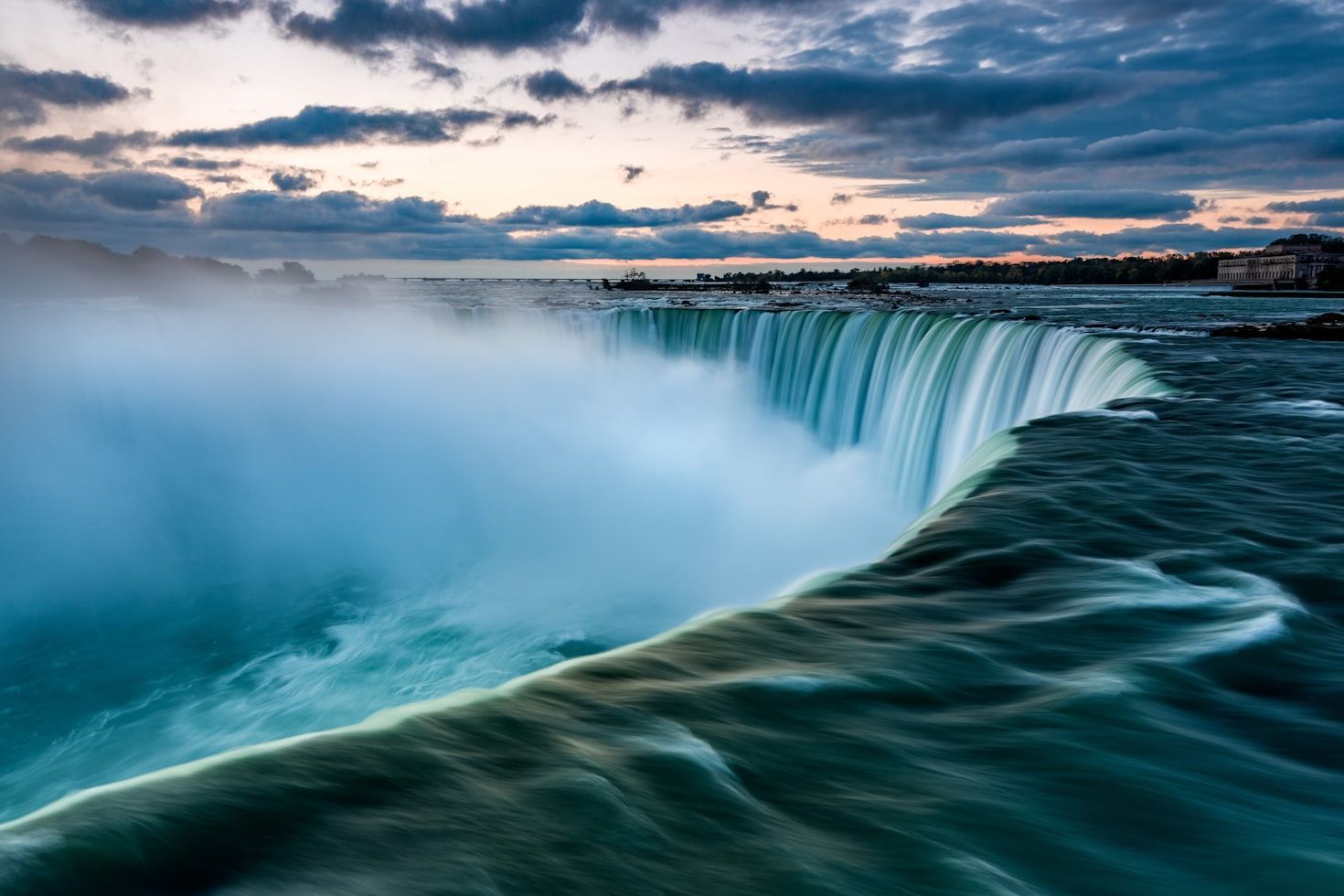
Image: Sergey Pesterev

You probably already know that, at 5,525 miles, the US-Canada border is the longest land border in the world. But there are still some fascinating details about it that many people haven't heard before.

The Haskell Free Library and Opera House (Derby Line, Vermont & Stanstead, Quebec) has an international border inside the building! You read that right: Americans enter through one door, Canadians through another. But be careful! International law requires that you exit through the same door you entered.

4
The largest freshwater lake

Image: Andrew Ling

The Great Lakes —Lake Superior, Lake Michigan, Lake Huron, Lake Erie, and Lake Ontario— are one of the natural wonders of North America, and they also hold a world record!

That's right! The largest freshwater lake in the world by surface area is right here in North America. We're talking about Lake Superior, which is shared by both the United States and Canada.

5
The most densely populated state

Image: Rob Curran

Since New York City is the most densely populated city in the country, many tend to believe that, as a result, New York State is the most densely populated. However, that's not the case.

The most densely populated US state is actually New Jersey! Its small size, combined with the large population in its urban areas and its proximity to New York City, has earned The Garden State this title.

6
The largest US state

Image: Jacob Vizek

Most Americans know which state is the largest by area. But outside the US, some get this fact wrong!

Many people answer "Texas" when asked which is the largest of the 50 states. But in reality, Alaska is far bigger, covering about 665,300 square miles compared to Texas's 268,600. This misconception may stem from Texas's reputation as a "large state" or from the way many maps distort Alaska's true size, making it appear much smaller than it actually is.

7
Florida's capital

Image: Meadow Marie

Miami is not only the most densely populated city in Florida but also one of its most famous, right up there with Orlando! Perhaps that's why many people mistakenly believe Miami is the capital city of the Sunshine State. However, the capital city of Florida is actually Tallahassee, which is smaller and doesn't quite receive as much attention.

8
The longest river

Image: Samantha Sheppard

Measuring the actual length of a river can be tough due to the serpentine shape that these bodies of water often take. This may be why many people are unsure about which river holds the title of the longest in the US.

Well, here's the truth: At 2,341 miles, the Missouri River is the longest river in the US, though just by a small margin. In second place is the Mississippi River, which stretches for some 2,320 miles and is often mistakenly thought to be the longest due to that small difference.

9
New York's capital

Image: Charlize Kruger

Similar to Florida, New York State's capital city is not its largest or most famous.

Contrary to what many people think, the capital of New York is not NYC, but Albany. Although Albany is smaller than NYC, it's an important economic and political hub, and it was chosen as the state capital because of its central location along the Hudson River.

10
Large population

Image: Satyan Chawla

The United States is known for having a large population, partly due to the large size of its territory. But did you know it's also one of the most populated countries in the world? In fact, it's the 3rd most populated, coming right after India and China! There sure are a lot of us, aren't there?
11

History History 3 min read

Nature finds its way

When nature takes over! 12 abandoned places in America you have to see

Image: Dan Meyers

Many places across America once buzzed with life but have since been left behind: ghost towns, forgotten amusement parks, crumbling factories, you name it. Over time, nature has crept back in, covering concrete with moss, letting trees grow through old buildings, and allowing animals to reclaim quiet spaces. Take a look at 12 of these haunting landscapes. Maybe one is near you!

1
Igloo City, Alaska

Image: Tim Oun

Igloo City in Cantwell, Alaska, is a massive, unfinished hotel built in the 1970s that never opened due to building code issues . Despite multiple owners and redevelopment plans, it remained abandoned and eventually deteriorated too much to renovate.

Now a roadside oddity between Fairbanks and Anchorage, its giant igloo shape continues to draw curious visitors.

2
Spectre Set, Alabama

Image: Dan Meyers

The abandoned film set of Spectre from Big Fish still stands on a private island along the Alabama River. Originally built for the 2003 movie, the town was left behind after filming and has slowly decayed.

Fires and flooding destroyed much of it, but a few buildings, spooky trees, and crumbling columns remain, giving the site a haunting atmosphere.

3
Dogpatch USA, Arkansas

Image: Matt Gross

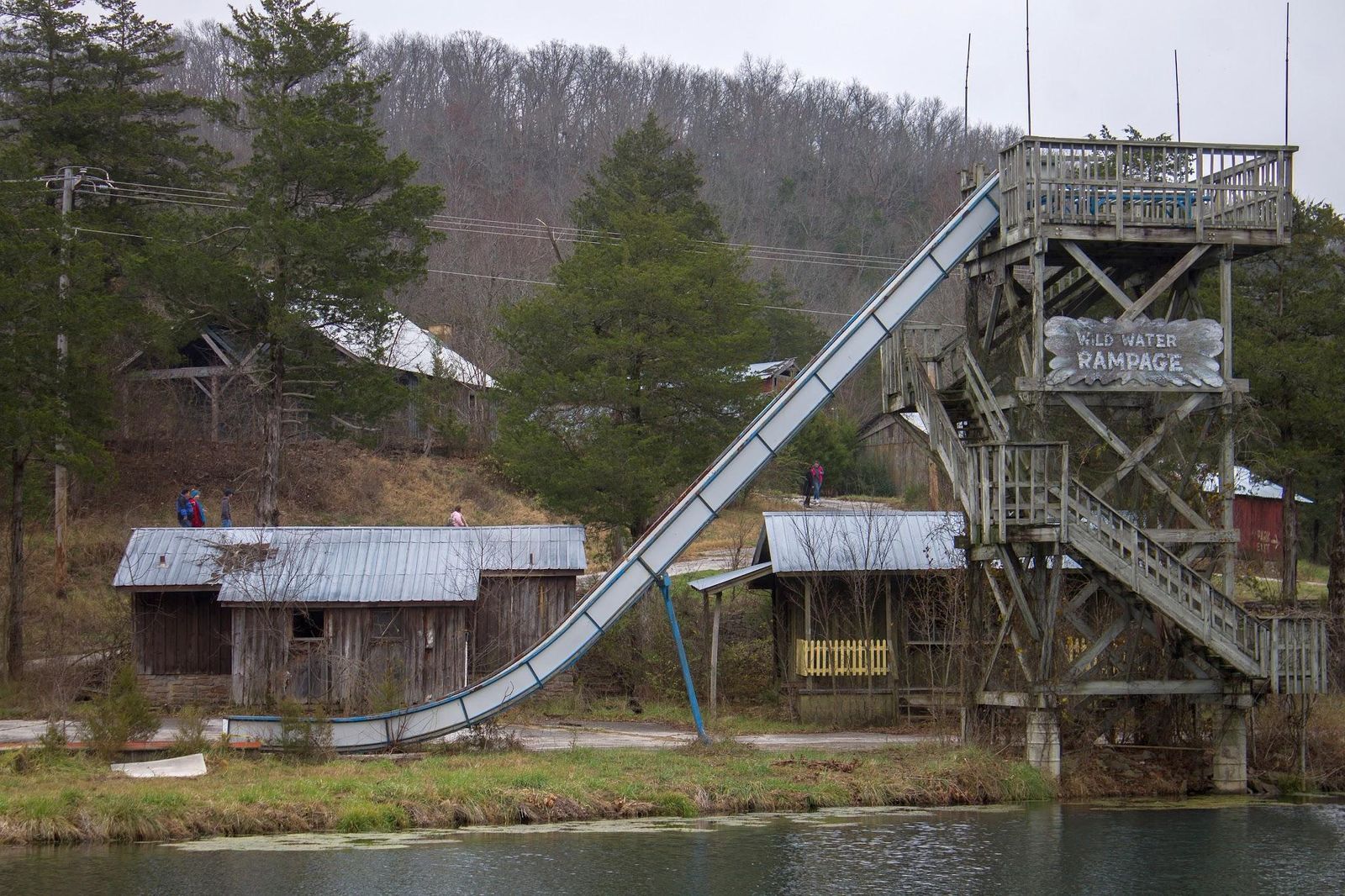
Dogpatch USA, a hillbilly-themed park in Arkansas based on the Li’l Abner comic strip , opened in 1968 but never met visitor expectations. With low-key attractions and rustic charm, it struggled to draw crowds and ultimately closed in 1993.

Attempts to sell the land largely failed, and parts of the park still stand abandoned. While some parcels have been sold over the years, most of the site remains a curiosity for urban explorers.

4
Gibraltar, Delaware

Image: Johannes Beilharz

Hidden behind a stone wall in Wilmington, Delaware, Gibraltar is a crumbling 1840s mansion surrounded by beautifully restored gardens . While the house itself is abandoned, ivy-covered, and slowly decaying, the gardens remain vibrant and full of life.

5
Atlanta Prison Farm, Georgia

Image: Dan Meyers

The Atlanta Prison Farm has sat abandoned for over 25 years , now covered in graffiti and fast-growing kudzu. Though there's talk of turning it into a regional park, disagreements between counties have stalled any concrete progress.

6
Custer Ghost Town, Idaho

Image: Ruth Durbin

Custer, Idaho, was born from the 1870s gold rush, and later grew after a fire destroyed the nearby town of Bonanza. As mining dried up, the once-busy one-street town was abandoned, leaving behind rusted equipment and relics like a bullet-riddled poker table.

Thanks to its designation as a historic site in 1981, parts of Custer have been restored. Summer visitors can tour cabins, a schoolhouse, and the old saloon.

7
Cairo, Illinois

Image: Steffen Lemmerzahl

At the southern tip of Illinois, Cairo once thrived as a key port town during the steamboat era and later as a railroad hub. But as industry shifted and economic opportunities dwindled, the city entered a long period of decline.

Today, Cairo is eerily quiet. Its historic downtown is filled with crumbling buildings and boarded-up windows , and decay is spreading into nearby neighborhoods.

8
Knightridge Space Observatory, Indiana

Image: Daniel Gregoire

Hidden in the woods near Bloomington, Indiana, the Knightridge Space Observatory was built in the 1930s for early astronomers . Its wooden dome once held a four-ton telescope, but city growth and light pollution made it obsolete.

Abandoned since the 1960s, the building was left to decay, with its dome rusted shut, the floors unstable, and the telescope relocated. It has since been demolished due to safety concerns.

9
Waverly Hills Sanatorium, Kentucky

Image: Dan Meyers

Waverly Hills Sanatorium opened in the early 1900s to treat tuberculosis patients with rest, fresh air, and isolation . As the epidemic grew, the facility expanded to hold hundreds of patients, including children.

After closing in 1961, it became a nursing home but was shut down in 1982. Today, Waverly Hills is famous as a haunted attraction, drawing ghost hunters and tourists from around the world.

10
Jazzland, Louisiana

Image: Dmitry Lakhno

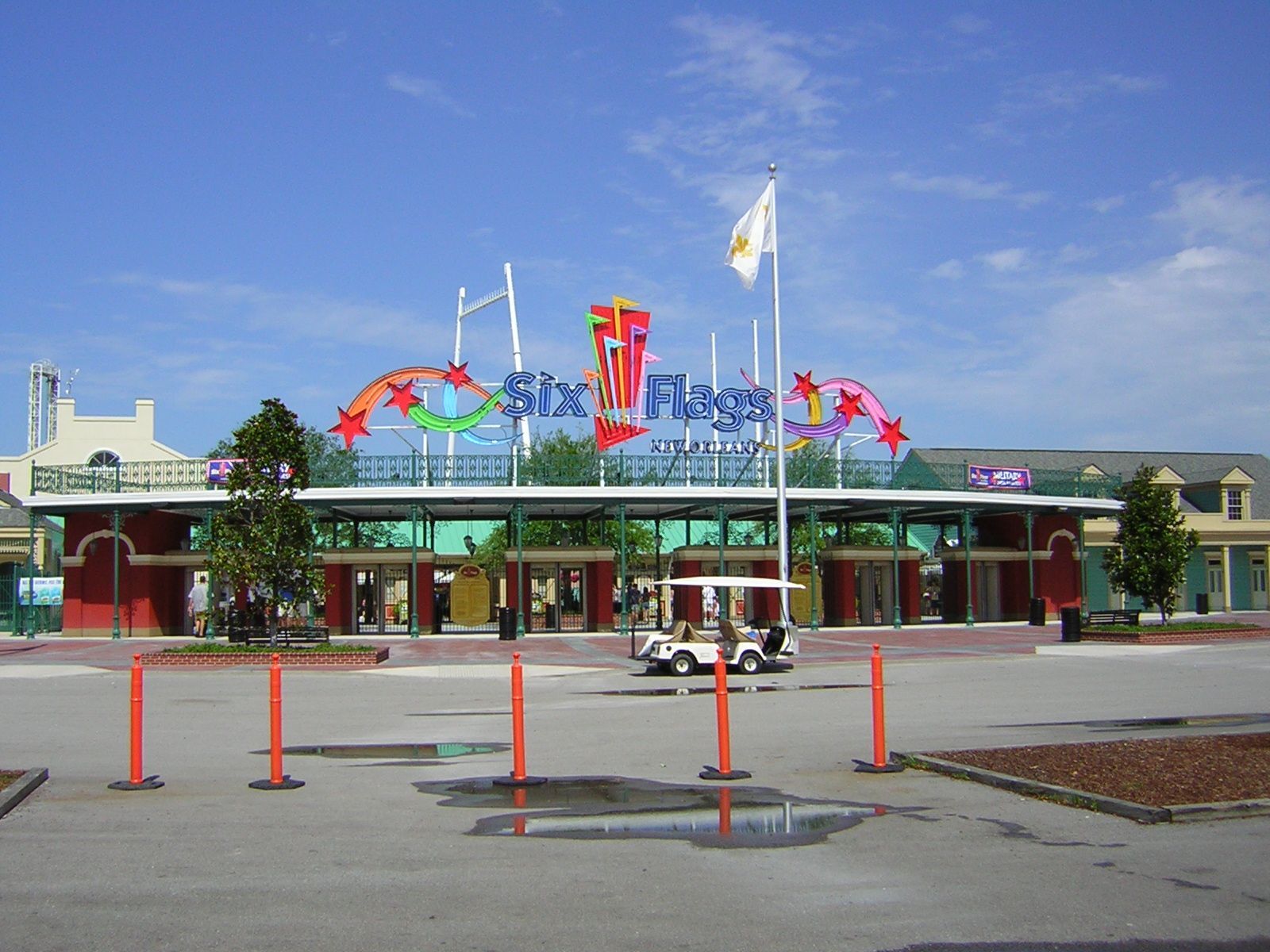
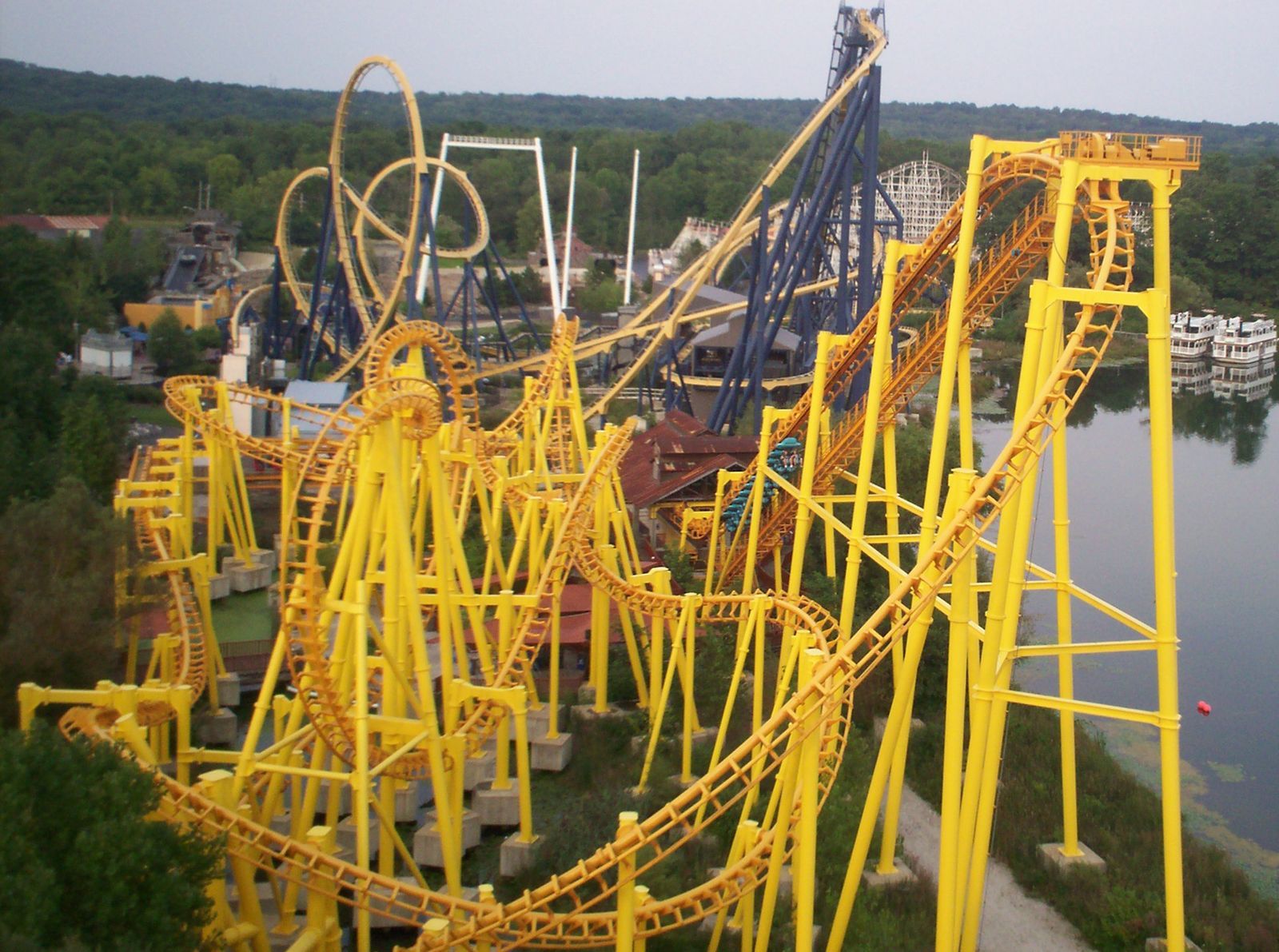
Jazzland was a theme park in New Orleans that opened in 2000. After major investments, it reopened in 2003 as Six Flags New Orleans. Following Hurricane Katrina in 2005, the park was submerged, with murky floodwaters destroying roughly 80% of the property. Rides were wrecked, stands overturned, and only the Batman coaster survived on higher ground .

Deemed too costly to repair, the park was abandoned and now draws curious urban explorers.

11
St. Mary's College, Maryland

Image: Pavel Neznanov

Built in 1868, St. Mary’s College trained young men for the priesthood until declining enrollment forced its closure in 1972. The abandoned campus, soon nicknamed "Hell House," became a hotspot for ghost stories, local legends, and thrill-seekers.

12
Yellow Creek Nuclear Power Plant, Mississippi

Image: Lukáš Lehotský

Yellow Creek was one of 17 nuclear plants planned by the Tennessee Valley Authority (TVA) in the late 1970s, but construction was halted before completion. The cooling tower base and nearby processing building were left abandoned .

Originally intended to process nuclear fuel components, the site now stands as a vast, unfinished shell.

Culture Culture 3 min read

Halloween secrets

Why is Halloween orange and black? The surprising meaning behind it

Image: David Menidrey

It’s hard not to love Halloween. It’s a time for celebration, jack-o’-lanterns, and of course, candy. But behind today’s traditions lie plenty of spooky secrets about the holiday and where it came from. From the meaning behind costumes to the origins of trick-or-treating, we’re exploring 10 facts you probably didn’t know about Halloween. Let’s get started!

1
Ancient roots

Image: Miguel Teirlinck

Believe it or not, what we call Halloween began more than 2,000 years ago. The ancient Celtic festival of Samhain, held from October 31 to November 1 in what is now Ireland, Scotland, and parts of Britain, marked the shift from the harvest season to the dark days of winter. The Celts believed that, on that night, the boundary between the living and the dead grew dangerously thin. Spirits could slip through that barrier... both benevolent and darker ones.

2
Why scary costumes?

Image: JOHN BEARBY IMAGES

If the spirits of the dead were roaming the earth, what would you do? The Celts had a clever solution: they disguised themselves with animal skins and masks to look frightening and protect themselves from any spirits that might not have the best intentions. The hope was that ghosts would either mistake them for one of their own or be scared off entirely. Over time, the tradition evolved, but its roots remained; just look at all the little witches, skeletons, and other spooky costumes we see on Halloween today.

3
There's a reason for black and orange

Image: Gary Fultz

Orange and black take over homes and streets every Halloween, but why? The answer goes back to the Celtic festival of Samhain as well. Orange symbolized the end of autumn and fallen leaves, while black represented the darkness of the long winter nights ahead.

4
Witches weren’t always seen as scary

Image: Halanna Halila

Witches have been part of Halloween lore for ages. Countless stories cast them as spooky figures with flying broomsticks, pointed hats, and bubbling potions. But it wasn’t always this way. Among the Celts, many practices now labeled as "witchcraft" were connected to healing, spirituality, and nature, and weren’t seen as evil at all; that association came much later with the spread of Christianity. In fact, the English word "witch" is often linked to the Old English wicca (masculine) and wicce (feminine), meaning "wise one."

5
Trick-or-treating origins

Image: Robin Jonathan Deutsch

In addition to dressing up to protect themselves, the Celts also left treats on their doorsteps to appease wandering spirits. Over the centuries, that custom changed and spread. By medieval times in Europe, people—especially children—would go door to door during this season, offering prayers for departed souls or performing small songs and jokes in exchange for food or treats. This tradition, known as "souling" or "guising," eventually inspired the trick-or-treating we know today.

6
Scary tricks

Image: Nick Fewings

In the recent past, the "tricks" in trick-or-treating were no joke—they could be genuinely frightening. In the late 19th and early 20th centuries, Halloween was known far more for mischief than for candy. Kids pulled off pranks like tying doors shut or slamming windows to make homeowners think their houses were haunted. Scary? Yes. Fun? Definitely.

7
In the past, they weren't pumpkins

Image: Igor Omilaev

Pumpkins may be the stars of Halloween décor today, but they weren’t always the first pick. The tradition of carving Halloween lanterns also began in Ireland and Scotland, but not with pumpkins. In the old days, people carved turnips, beets, and other root vegetables. When Irish immigrants arrived in the United States in the 19th century, they found that pumpkins were bigger, softer, and far easier to carve, so pumpkins quickly replaced the turnips.

8
Halloween, SC

Image: Joseph Corl

Today, Americans put a lot of effort into Halloween celebrations. But perhaps no one embraces it more than the residents of Conway, SC, who made headlines for a bold decision. In 2022, the city officially adopted the monikers "City of Halloween" and "Halloween, SC" for the month of October. Although "Conway" remains its legal name year-round, the town uses the spooky nickname during the holiday season to attract visitors eager to experience its larger-than-life celebrations and decorations.

9
Parents also have their "tricks"

Image: Tolgahan Akbulut

Although trick-or-treating is mostly for kids, parents definitely get in on the fun. According to a 2019 survey, 74% of parents admitted to stealing a few pieces of their children’s candy. And honestly, who can blame them? A pumpkin bucket overflowing with sweets is hard to resist.

10
Paranormal full moon

Image: Ganapathy Kumar

Celebrating Halloween under a full moon has a special charm, as that lunar phase has long been linked to heightened paranormal activity. But this coincidence is rare: a full moon on Halloween only happens about every 18–19 years. The last full moon during Halloween was in 2020, and according to forecasts, we won’t see another until 2039.

Explore more American facts

Choose your favorite category!

General
General

As American as apple pie—the very best America has to offer!

Culture
Culture

Delve into the astounding richness of American lore.

Geography
Geography

Hop in and explore vast and diverse American landscapes.

History
History

Discover the key moments that shaped the United States.