History History 5 min read

Did Frank Sinatra really act as a secret liaison between JFK and the mob?
Image: Fresnel

From cinematic prison escapes to strange personal habits, the real history of 20th-century organized crime is stranger than fiction. Figures like Al Capone, John Dillinger, and Bugsy Siegel built reputations on ruthlessness; yet, their private lives were filled with bizarre quirks, peculiar superstitions, and unbelievable historical twists. Discover 10 real gangster tales you won’t believe are true.

1
Frank Sinatra was punished by the mob over JFK
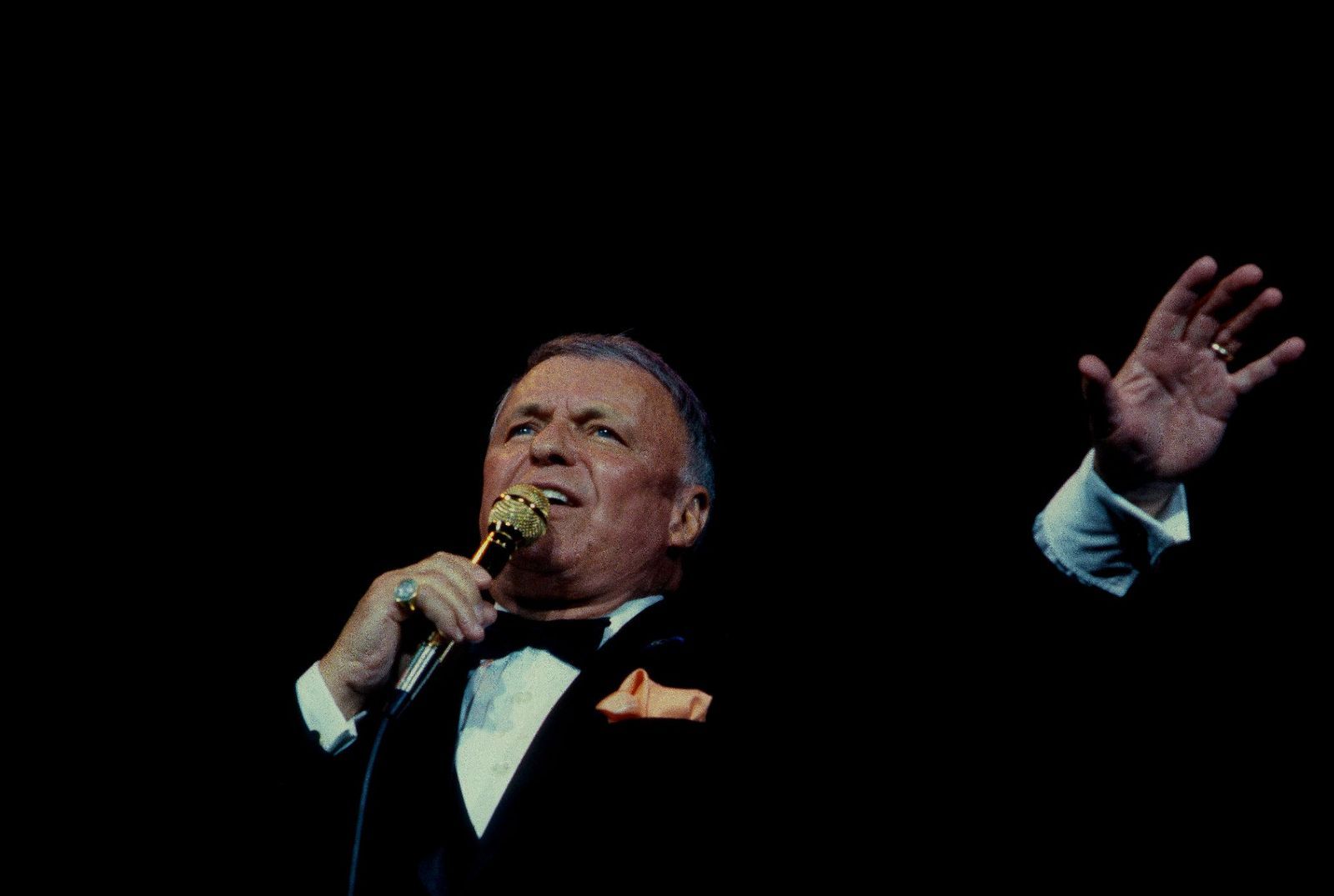
Image: mark reinstein

According to reports, during the 1960 presidential election, Frank Sinatra allegedly acted as an intermediary connecting Chicago Outfit boss Sam Giancana with John F. Kennedy’s campaign. The mob believed securing votes for JFK would lead to lighter law enforcement pressure on organized crime.

When President Kennedy and Attorney General Robert Kennedy instead launched an aggressive crackdown on the Mafia, Giancana blamed Sinatra for failing to deliver on implied promises. As punishment, Giancana is said to have forced Sinatra to perform eight consecutive nights of unpaid shows at his Villa Venice nightclub in suburban Chicago to make up for the betrayal.

2
Al Capone opened one of America’s first Great Depression soup kitchens
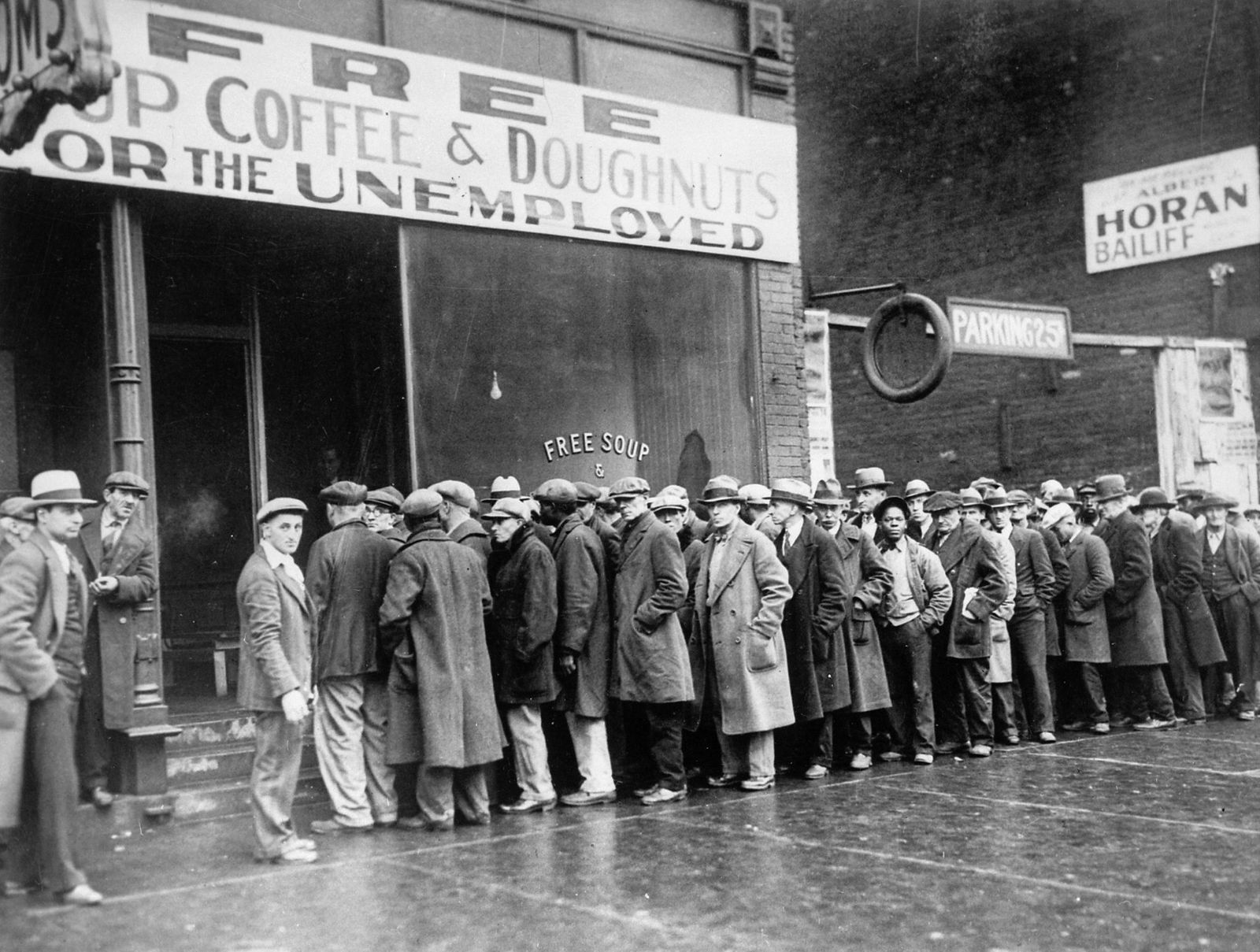
Image: National Archives at College Park, Public domain, via Wikimedia Commons

In November 1930, as the Great Depression devastated the American economy, Chicago mob boss Al Capone saw an opportunity to improve his public image by opening a soup kitchen. Operating out of a storefront at 935 South State Street, Capone’s establishment served three hot meals a day (including coffee, soup, and donuts) to over 2,200 unemployed people daily.

Capone funded the operation entirely out of pocket with no government assistance, earning him a reputation among many locals as a modern Robin Hood before his tax evasion conviction.

3
Prohibition moonshiners wore "Cow Shoes" to fool the law
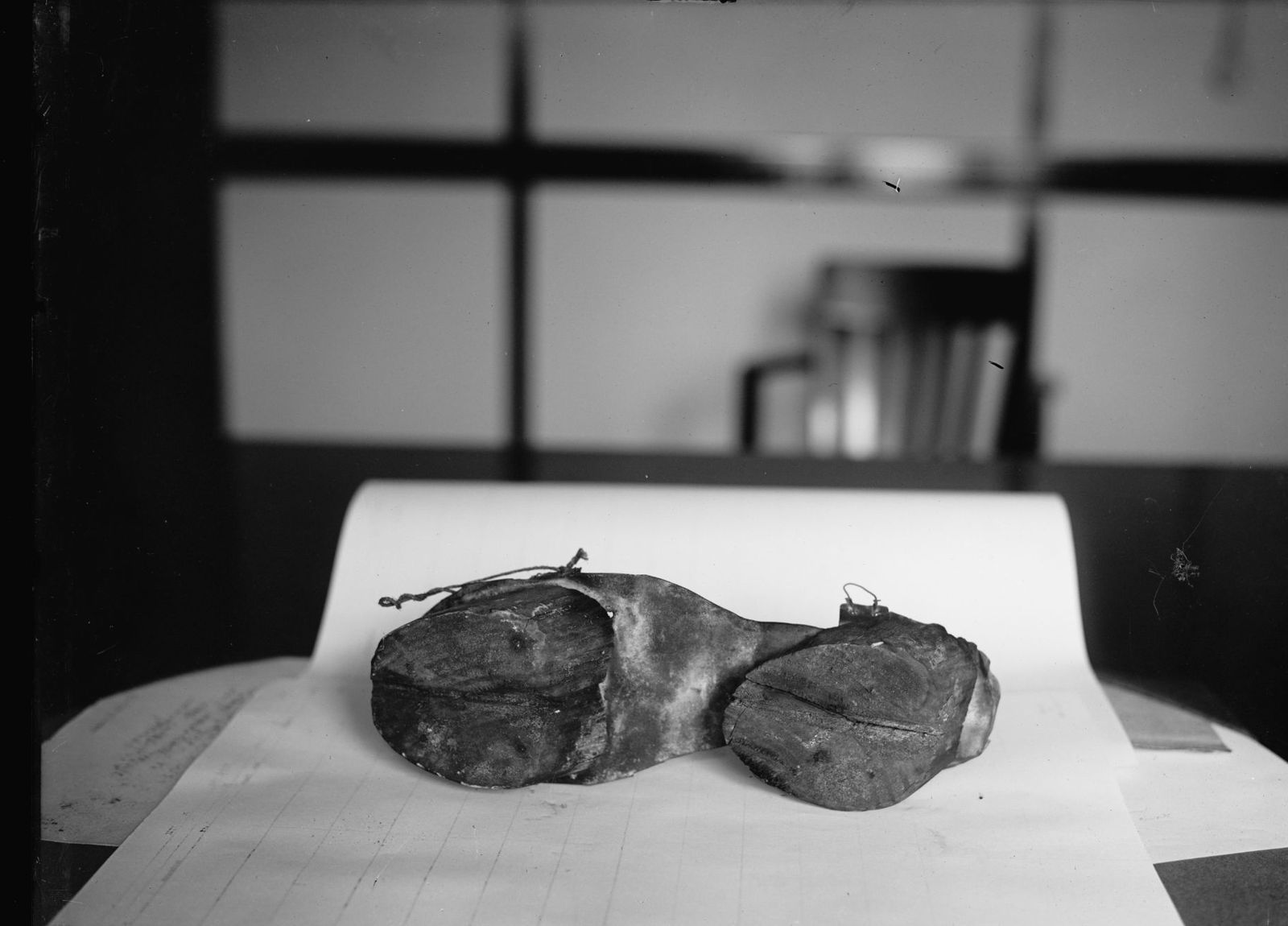
Image: National Photo Company Collection, Public domain, via Wikimedia Commons

During Prohibition, federal agents and state police tracked illegal distilleries by following human footprints through soft mud and dirt. To counter this, rural bootleggers invented "cow shoes".

These specialized footwear attachments consisted of a carved wooden block shaped like a cow’s hoof at the bottom. When moonshiners walked through the woods carrying heavy jugs of illegal liquor, they left behind tracks that looked like cattle rather than criminals.

4
John Dillinger escaped jail with a block of wood
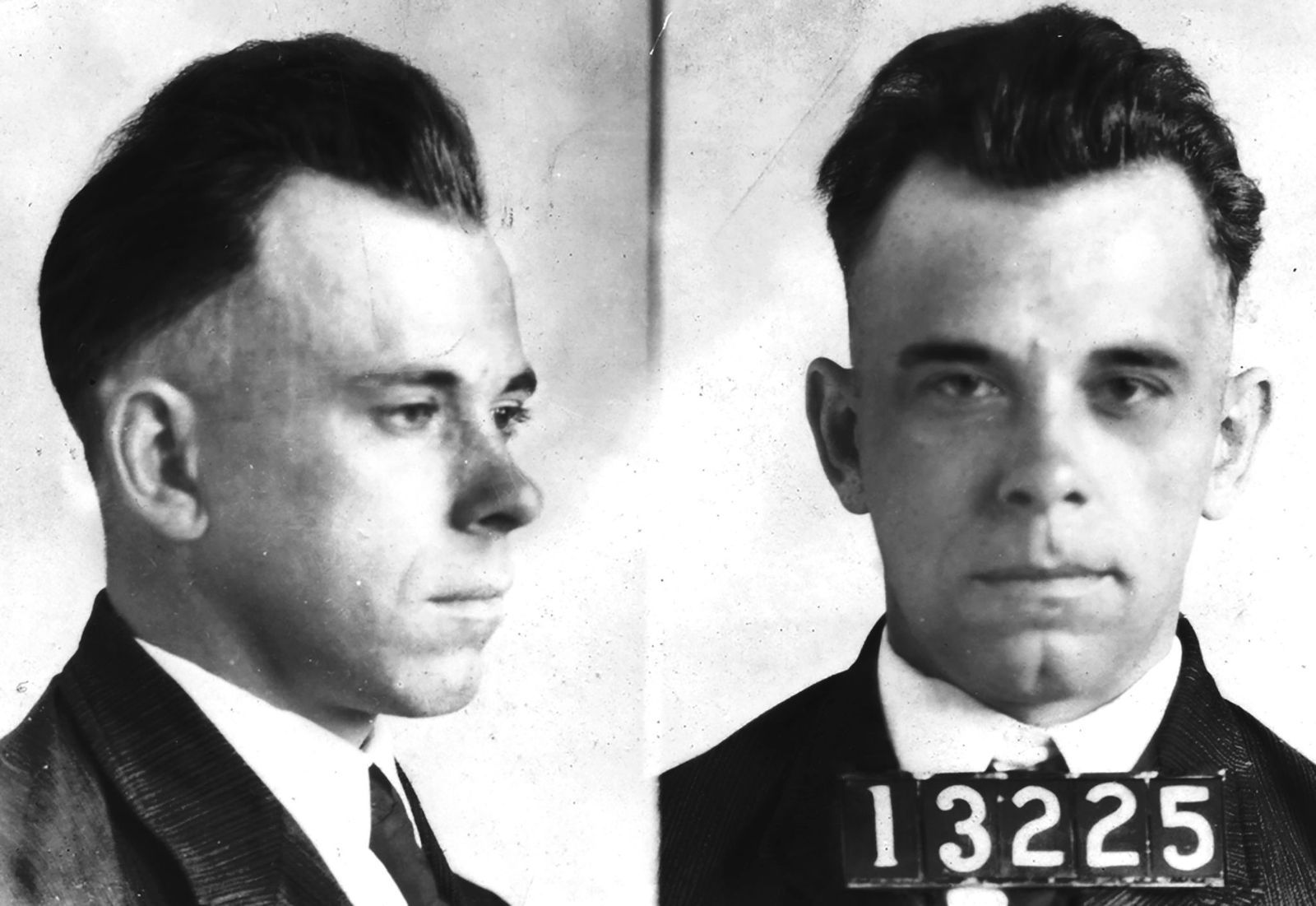
Image: Indiana State Penitentiary, Public domain, via Wikimedia Commons

In March 1934, infamous bank robber John Dillinger was locked inside the Lake County Jail in Crown Point, Indiana, a facility local officials bragged was completely impossible to escape from.

Using a pocketknife, Dillinger carved a piece of wood into the shape of an automatic pistol and stained it black using razor polish. He used the wooden prop to trick a guard into opening his cell door. After taking real weapons from the jail armory, Dillinger took hostages and stole the sheriff’s personal V8 Ford to make his getaway.

5
The "Oddfather" wandered New York in pajamas for 30 years
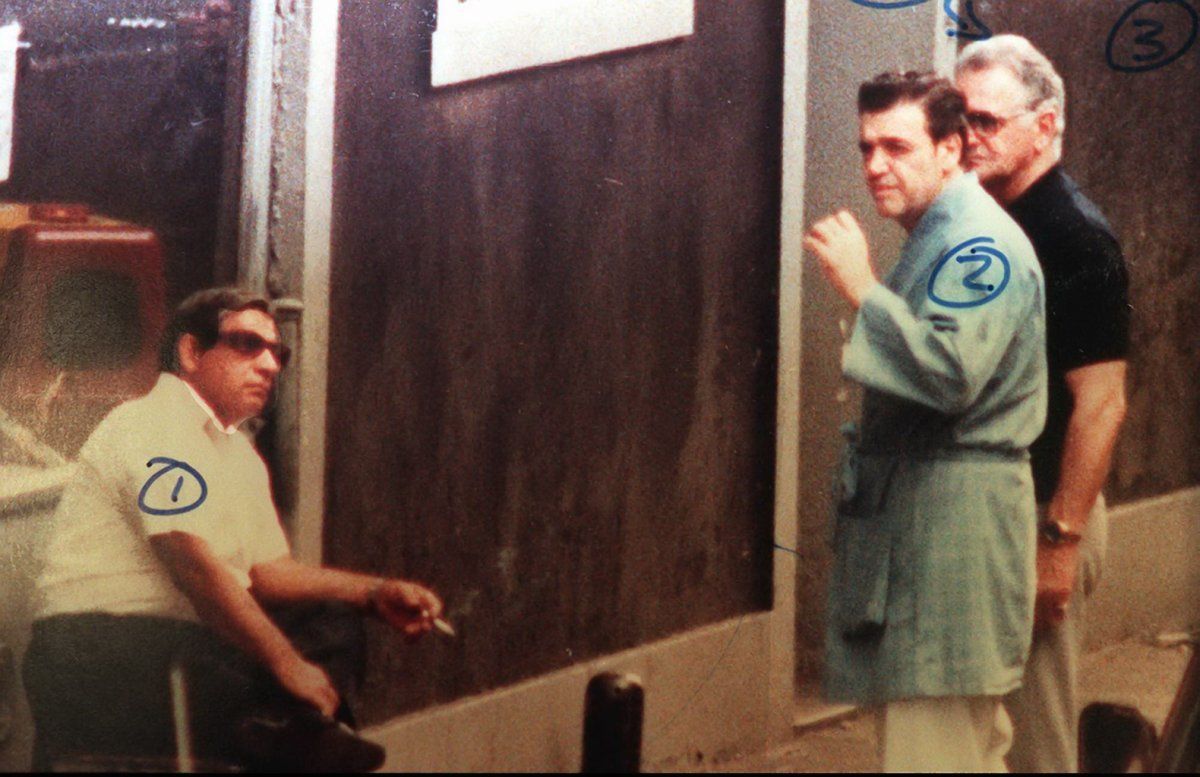
Image: National Archives at College Park, Public domain, via Wikimedia Commons

Vincent "Chin" Gigante, boss of New York’s powerful Genovese crime family, earned the nickname "The Oddfather" for his elaborate scheme to evade federal prosecution. Starting in the late 1960s, Gigante began wandering the streets of Greenwich Village wearing a ragged bathrobe, pajamas, and slippers while muttering incoherently to himself.

His lawyers presented him as suffering from severe dementia and schizophrenia. For nearly three decades, the performance protected him from trial. However, in 1997, federal prosecutors finally proved in court that the routine was an act, and Gigante admitted in 2003, at age 75, that his madness was fake.

6
Al Capone accidentally shot himself in the groin
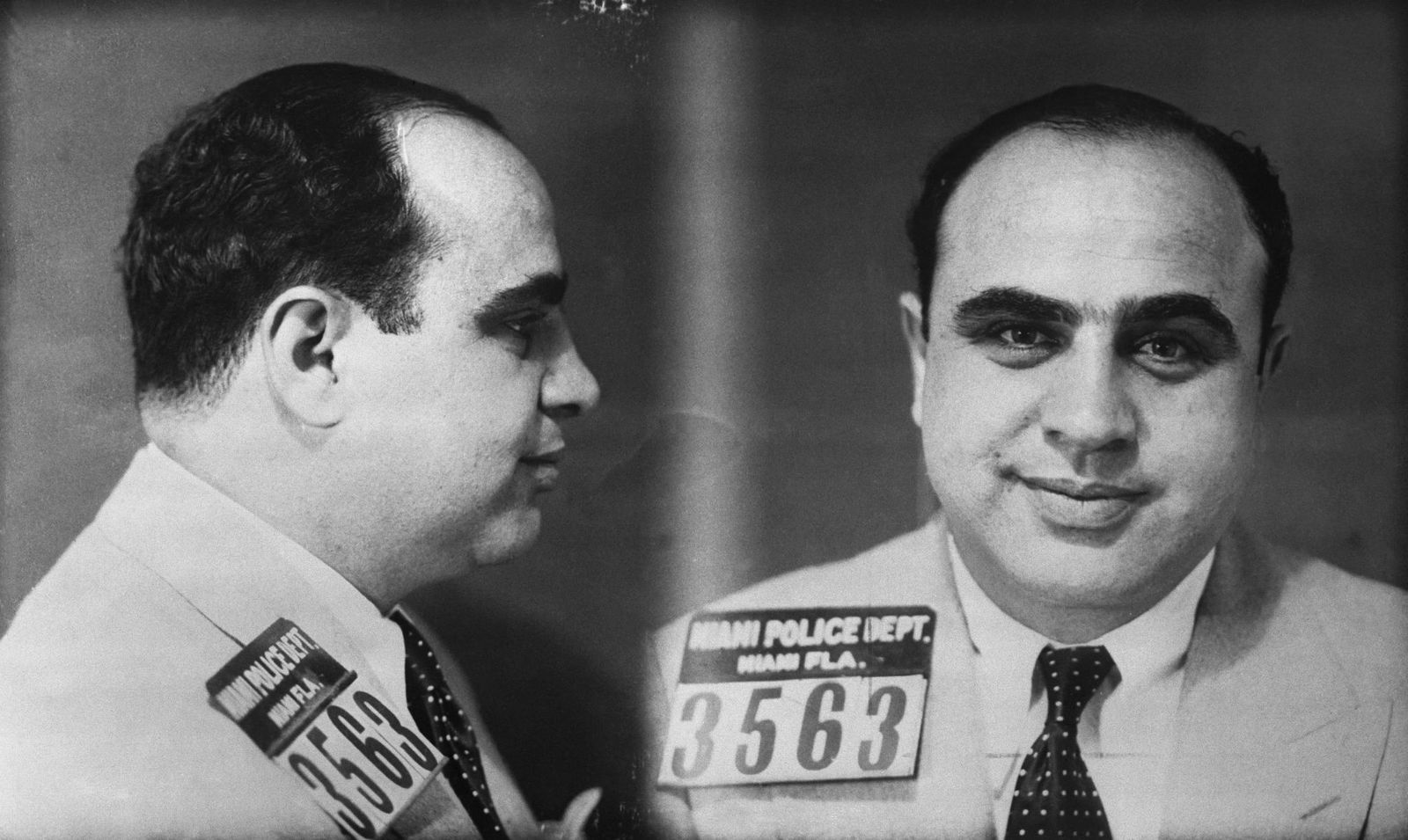
Image: Miami Police Department, Public domain, via Wikimedia Commons

Despite his reputation as a ruthless gang boss, Al Capone was surprisingly clumsy with his own weapons. In September 1928, while playing a round of golf at the Burnham Woods course near Chicago, Capone reached into his pocket to retrieve a golf ball.

His hand caught the trigger of his hidden, loaded revolver. The gun discharged, shooting Capone through the right thigh and groin. He was rushed to Saint Mary’s Hospital under the alias "Bob Hart" and spent weeks recovering from the self-inflicted wound.

7
FDR rode in Al Capone’s armored limousine?
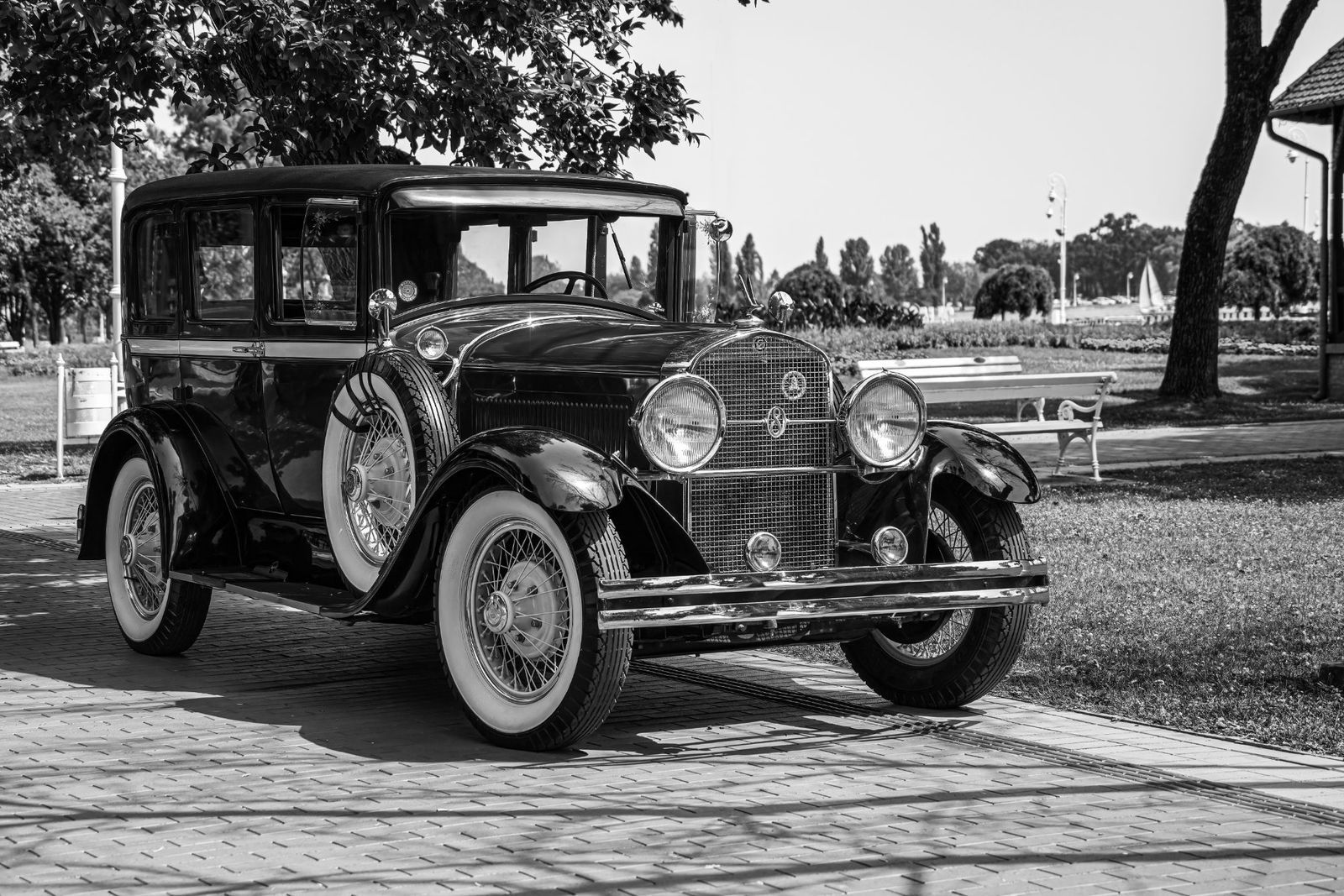
Image: kukurund

Following the Japanese attack on Pearl Harbor on December 7, 1941, the Secret Service faced an immediate security dilemma: President Franklin D. Roosevelt needed a bulletproof vehicle for his public appearances, but federal rules prohibited spending more than $750 (or about $17,000 today) on executive automobiles.

According to legend, Treasury agents solved the problem by pulling Al Capone’s custom 1928 Cadillac Town Sedan out of impound. The car had been seized by the government following Capone’s tax evasion trial in 1931. Equipped with heavy armor plating and bulletproof glass, Capone’s former car might have safely transported President Roosevelt to Capitol Hill to deliver his famous "Day of Infamy" speech.

8
Kingpin Arnold Rothstein never drank alcohol
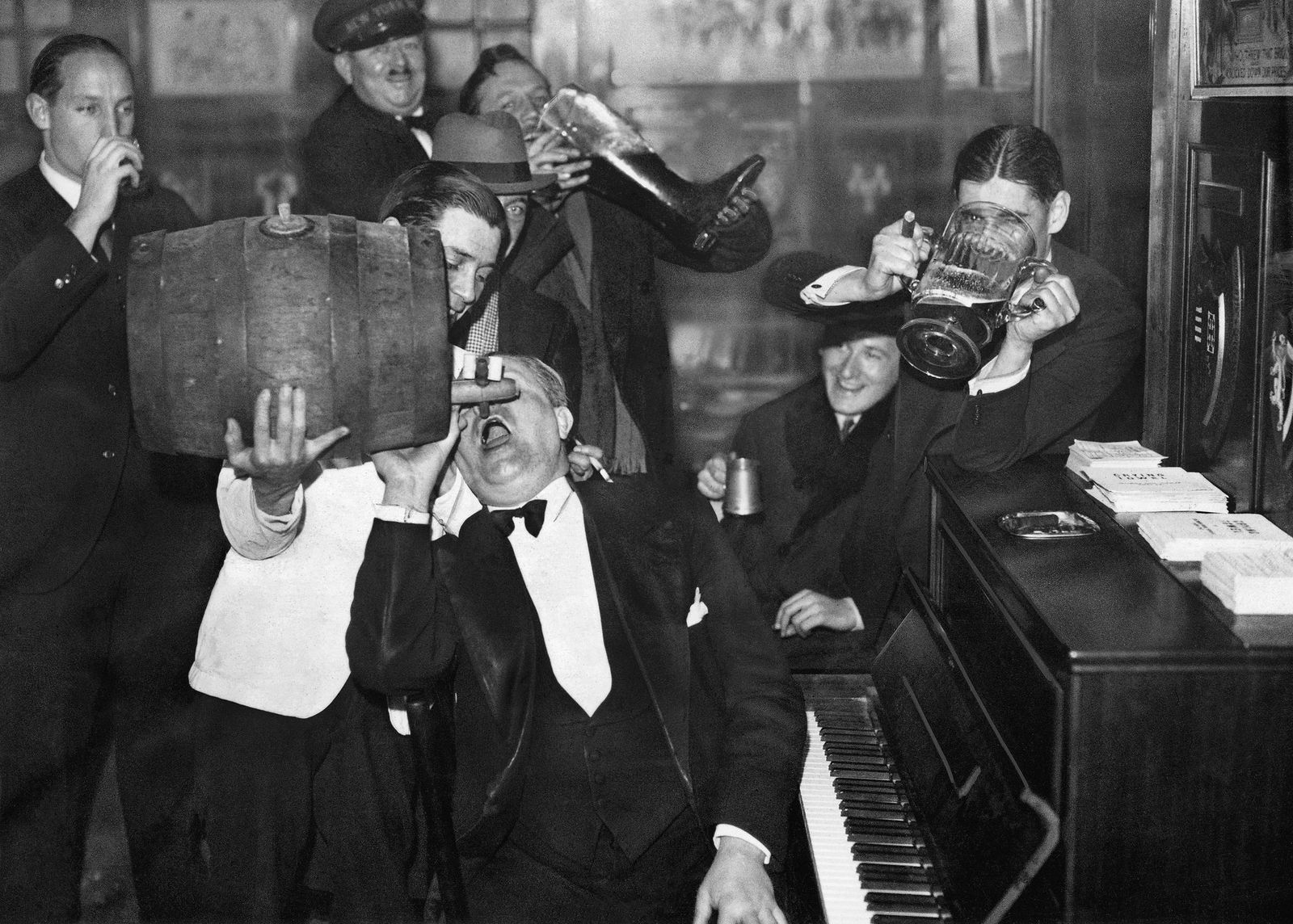
Image: Unknown /w New York Times, Public domain, via Wikimedia Commons

Arnold "The Brain" Rothstein was the financial mastermind of 1920s American organized crime, famously transforming street gangs into corporate syndicates and allegedly fixing the 1919 World Series.

Despite making tens of millions of dollars importing illegal liquor during Prohibition, Rothstein was a strict teetotaler. He never drank alcohol, smoked cigarettes, or used drugs. Instead, he preferred milk, ginger ale, and club soda, maintaining that staying sober gave him a clear advantage over business rivals and gamblers.

9
Bugsy Siegel tried to fix his hairline with magic
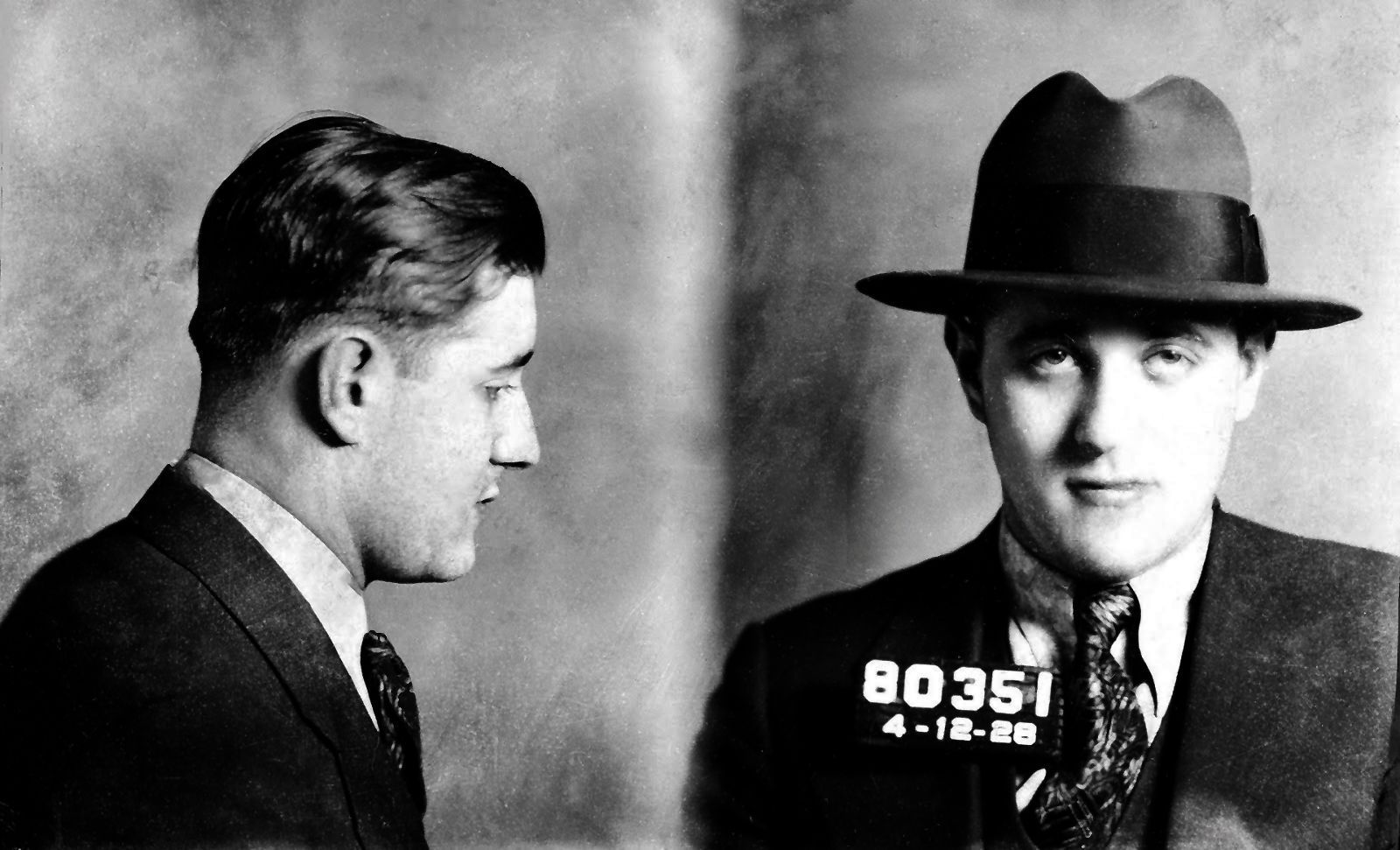
Image: New York Police Department, Public domain, via Wikimedia Commons

Benjamin "Bugsy" Siegel, the mobster credited with developing the Flamingo Hotel and building modern Las Vegas, was notoriously vain. Obsessed with his good looks, Siegel loathed his nickname "Bugsy" (slang for crazy) and lived in terror of going bald.

As his hairline began to recede, Siegel turned to extreme measures. He bought expensive unproven tonics, tried home remedies involving raw eggs and olive oil, and consulted spiritualists who offered magical chants and scalp massages to restore his hair growth.

10
Mickey Cohen was a devoted dog dad and germaphobe
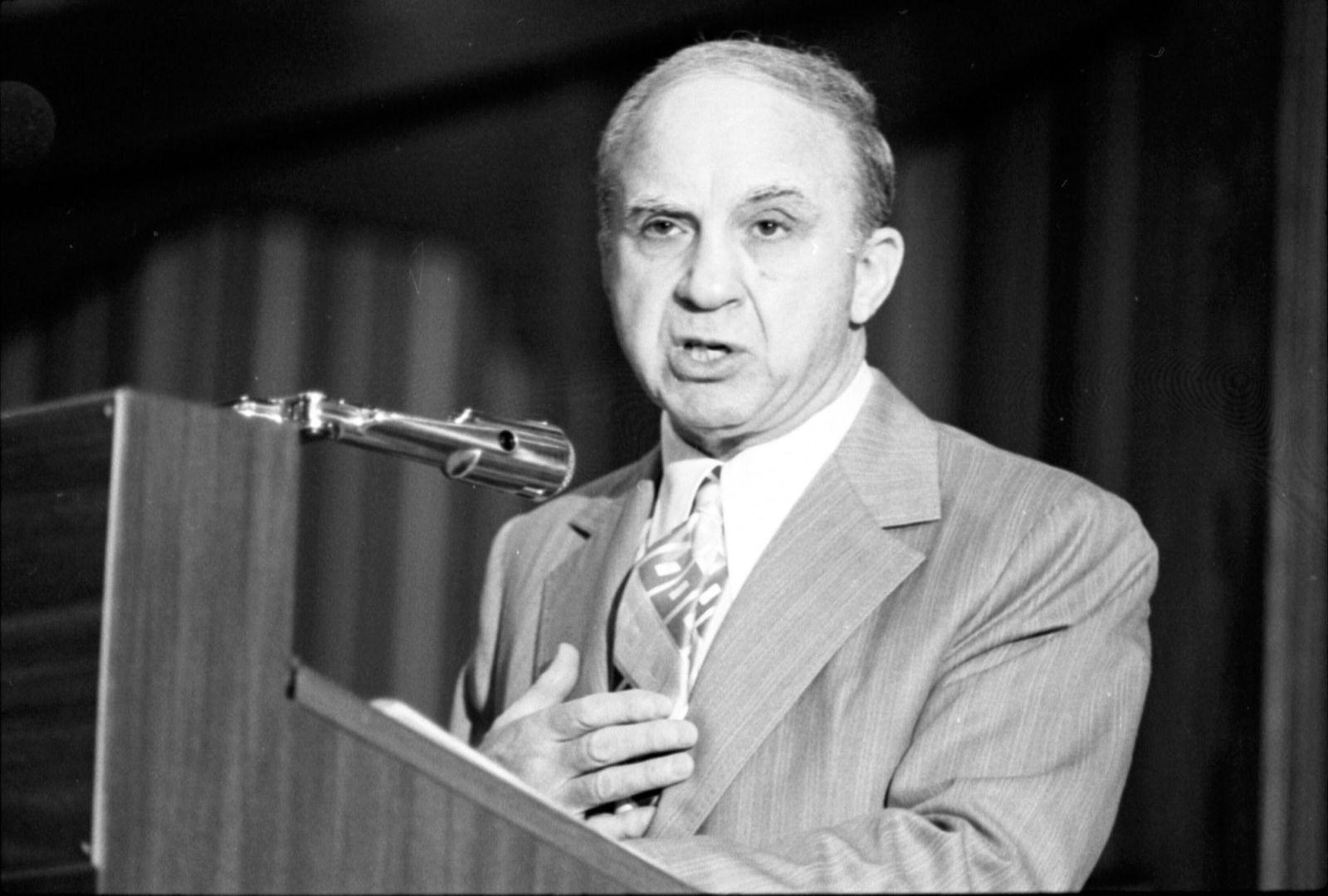
Image: Larry Downing, Los Angeles Times, CC BY 4.0, via Wikimedia Commons

West Coast mob boss Mickey Cohen ruled Los Angeles crime with an iron fist, but his personal life was defined by extreme eccentricities. Cohen was a germaphobe who washed his hands dozens of times a day and refused to touch doorknobs without a towel.

At the same time, Cohen was a passionate dog lover. He showered his pet dogs with affection, buying them silk bedding, feeding them prime cuts of meat, and hiring full-time staff to groom and walk them. When his favorite dogs fell ill, Cohen hired top veterinary specialists to tend them at his Hollywood home.

General General 4 min read

Which one are you?

Beatniks, hippies, yuppies, and beyond: 10 subcultures decoded

Image: Cottonbro Studio

Unlike generations, which can be easily grouped by years, social labels attached to groups of people with similar interests are not as rigid. Their boundaries blur into each other, and intersections appear. Aesthetic reasons, like music and clothing, bind some of these groups, philosophical reasons bring together others, and some, like hipsters, don’t even recognize themselves as such. Do you recognize yourself as a member of one of the following subcultures?

1
Bohemians

Image: Kinga Howard

Bohemianism, an original subculture that ended up lending its name as an adjective often used to describe other subcultures, is a social and cultural movement that embraces a way of life away from society's conventional norms and expectations . The term comes from the French bohème , and it was used to describe mid-19th-century non-traditional lifestyles, especially those of artists, writers, journalists, musicians, and actors.

Today, the term is used to describe anyone who shows disdain for money, dresses in hippie fashion (more on this later), and appreciates everything art-related.

2
Greasers

Image: Alberto Bigoni

Think John Travolta in _Grease_—yes, Grease . Think Biff Tannen in the 1950s segment of Back to the Future . Greasers emerged in the 1950s and early 1960s from predominantly working-class and lower-class teenagers and young adults in the United States and Canada.

An interest in cars, motorcycles, leather jackets, jeans, and rock music was the common theme among greasers. According to some sources, the subculture’s name was applied to its members partly because of their characteristic greased-back hair.

3
Beatniks

Image: Clem Onojeghuo

The first subculture on this list to adopt the adjective "bohemian," beatniks were a mid-20th-century social movement that embraced an anti-materialistic lifestyle, rejecting consumerism and expressing themselves through art, spirituality, drugs, and sexuality.

The term "beat" was first used by Jack Kerouac in 1948 to describe his group of friends and fellow writers, including Allen Ginsberg, William S. Burroughs, and Neal Cassady. Kerouac said that "beat" had multiple meanings, such as "beaten down," "beatific," "beat up," and "beat out." Beatniks are often stereotyped as wearing black clothing, and speaking in hip slang that incorporates words like "cool," "dig," "groovy," and "square."

4
Hippies

Image: Trevar Skillicorn-Chilver

One of the most famous countercultures of all time, hippies are deeply associated with the 1960s. The term "hippie" originally came from "hipster" (more on this later) and was used to describe the aforementioned Beatniks, who were "hip" to all things sophisticated and fashionable. In fact, early hippies adopted much of the language and values of the Beat Generation.

The festivals of Human Be-In (1967), Monterey (1967), and Woodstock (1969) popularized hippie culture, with its fashion and values influencing culture, popular music, television, film, literature, and the arts. Since the 1960s, mainstream society has assimilated many aspects of Hippie culture.

5
Mods

Image: Michael Schofield

The Mods were a group of stylish, London-based young men and women in the late 1950s, named for their preference for modern jazz. This subculture was known for its distinctive fashion, including tailor-made suits, as well as its love for music and scooters.

By the mid-1960s, their musical tastes had shifted toward rock and blues, with bands like The Who and Small Faces gaining popularity among Mods. Mod fashion was a defining element of the "Swinging London" era, and during this time, the subculture spread to other countries, becoming emblematic of the larger youth culture of the period.

6
Punks

Image: Viktor Forgacs

Another popular subculture, thanks in no small part to its striking visual component, is the punk movement, which encompasses music, fashion, ideologies, dance, film, and visual arts, among other forms of expression. Its strong anti-establishment views, stances on individual freedom, and DIY ethic make punks easy to identify.

Punk fashion includes T-shirts, leather jackets, boots, distinctive hairstyles such as brightly colored hair and spiked mohawks, as well as cosmetics, tattoos, jewelry, and even body modification.

7
Yuppies

Image: Nick Fewings

Anyone who has seen the movies Wall Street (the one with Charlie Sheen and Michael Douglas) or American Psycho knows what a yuppie is. The term stands for "young urban professional" and was coined in the early 1980s as a way to describe young professionals living in a city.

Those labeled as yuppies generally dislike the association, because this characterization often suggests a very materialistic approach to life in general and a cutthroat attitude towards the workplace environment.

8
Skaters

Image: Parker Gibbons

An offshoot of the punk subculture, skater culture rose to prominence in the 1980s when a massive drought in California left numerous empty pools, which skaters used to practice their sport. The rise of magazines like Thrasher and stars like Tony Hawk helped the movement transition from an underground scene to a mainstream sport.

Its aesthetics centered around the preferred type of clothes for skateboarding: baggy and sturdy pants, sneakers, and oversized shirts. Its music was shared by the punk and hardcore movements.

9
Straight Edge

Image: Evgeniy Smersh

Going deeper down the rabbit hole, we encounter the Straight Edge subculture, an offshoot of both skater and hardcore punk cultures. Its followers reject the excesses of the punk scene by abstaining from alcohol, tobacco, and recreational drugs . Many also refrain from casual sex, follow a vegetarian or vegan diet, and avoid caffeine or prescription drugs. The name "Straight Edge" was inspired by the 1981 song "Straight Edge" by the hardcore punk band Minor Threat.

Overall, Straight Edge culture promotes a lifestyle of self-discipline, health, and community, and it continues to evolve while maintaining its roots in the hardcore punk scene.

10
Hipsters

Image: John Fornander

The final entry on the list is dedicated to the most modern subculture in it: the hipsters. Mostly associated with perceived upper-middle-class white young adults who gentrify urban areas , hipster culture has been critiqued for lacking authenticity and focusing on consumption.

As mentioned earlier, members of this subculture typically do not self-identify as hipsters, as the term’s connotations are often unflattering. It is no coincidence that the term evokes the previously mentioned Beatniks, as that subculture can be seen as an early precursor to hipster culture.

General General 5 min read

Historic castles across America worth visiting

Ten forgotten American castles you can explore

Image: Pascal Bernardon

America might not have medieval knights or dragon legends, but we've got castles—lots of them, actually . Built by eccentric millionaires, romantic dreamers, and people who apparently had too much money and not enough hobbies, these stone fortresses dot the landscape from coast to coast.

1
Bannerman Castle, New York

Image: Erim Berk Benli

This crumbling fortress sits on a tiny island in the Hudson River, looking like something straight out of a Gothic novel . Francis Bannerman VI built it in 1901 to store his surplus military weapons because, apparently, his wife refused to keep thousands of munitions in the basement anymore.

The castle partially exploded in 1920 when some gunpowder got a little too excited, and it's been slowly deteriorating ever since. You can kayak out to the island or take a boat tour to see the ruins up close, where nature is slowly reclaiming the stone walls in a beautiful, apocalyptic sort of way.

2
Fonthill Castle, Pennsylvania

Image: Leyla M

Henry Mercer built this concrete monstrosity between 1908 and 1912. The guy was obsessed with tiles and built his castle as a showcase for his handmade ceramic collection , resulting in 44 rooms, 32 stairwells, and 18 fireplaces.

The castle has no blueprints because Mercer apparently just made it up as he went along, adding rooms and towers whenever the mood struck.

3
Gillette Castle, Connecticut

Image: Darya Tryfanava

William Gillette, famous for playing Sherlock Holmes on stage, built this eccentric castle in the 1910s and filled it with spy mirrors, secret doors, and wooden locks he carved himself . The place looks like someone dropped a medieval fortress into a blender with a detective novel.

The castle has 47 doors, none of which work like normal doors should, because Gillette apparently thought regular doorknobs were for boring people. Now it's a state park where you can wander through rooms designed by someone who clearly never met a quirk he didn't like.

4
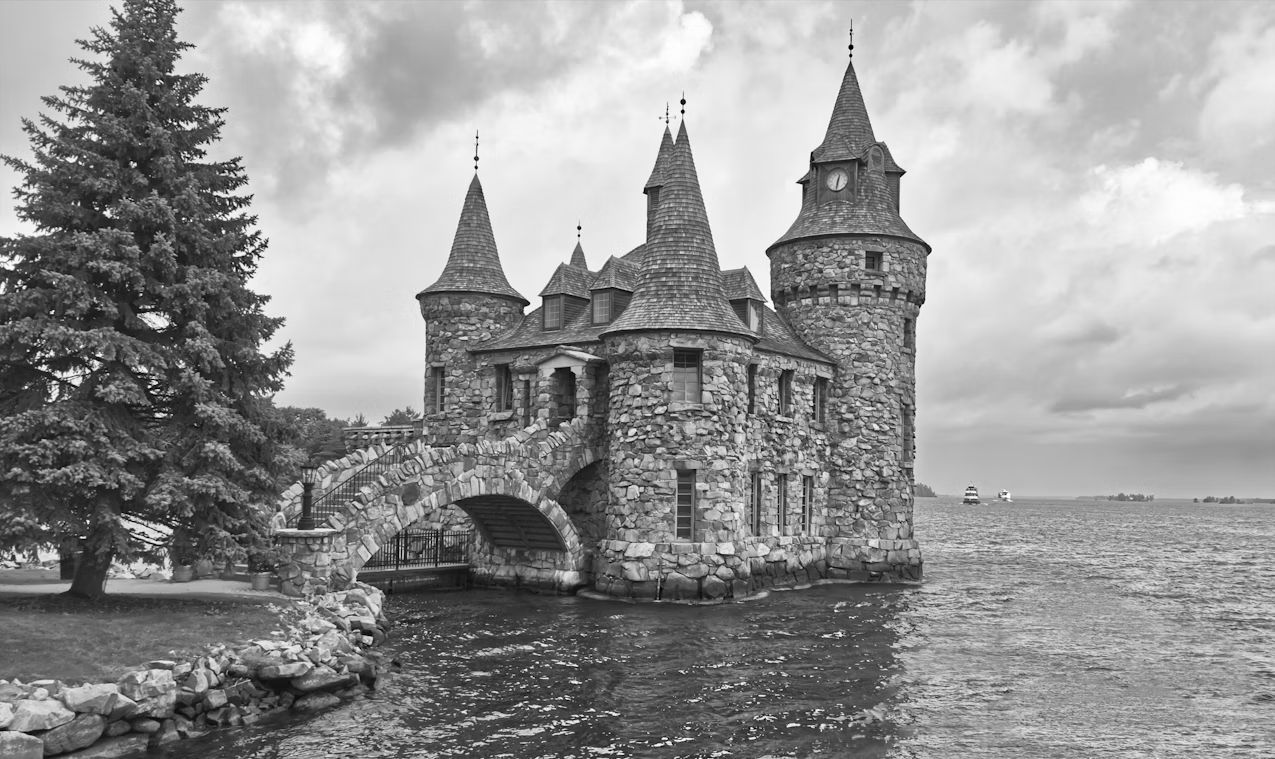
Boldt Castle, New York

Image: Pascal Bernardon

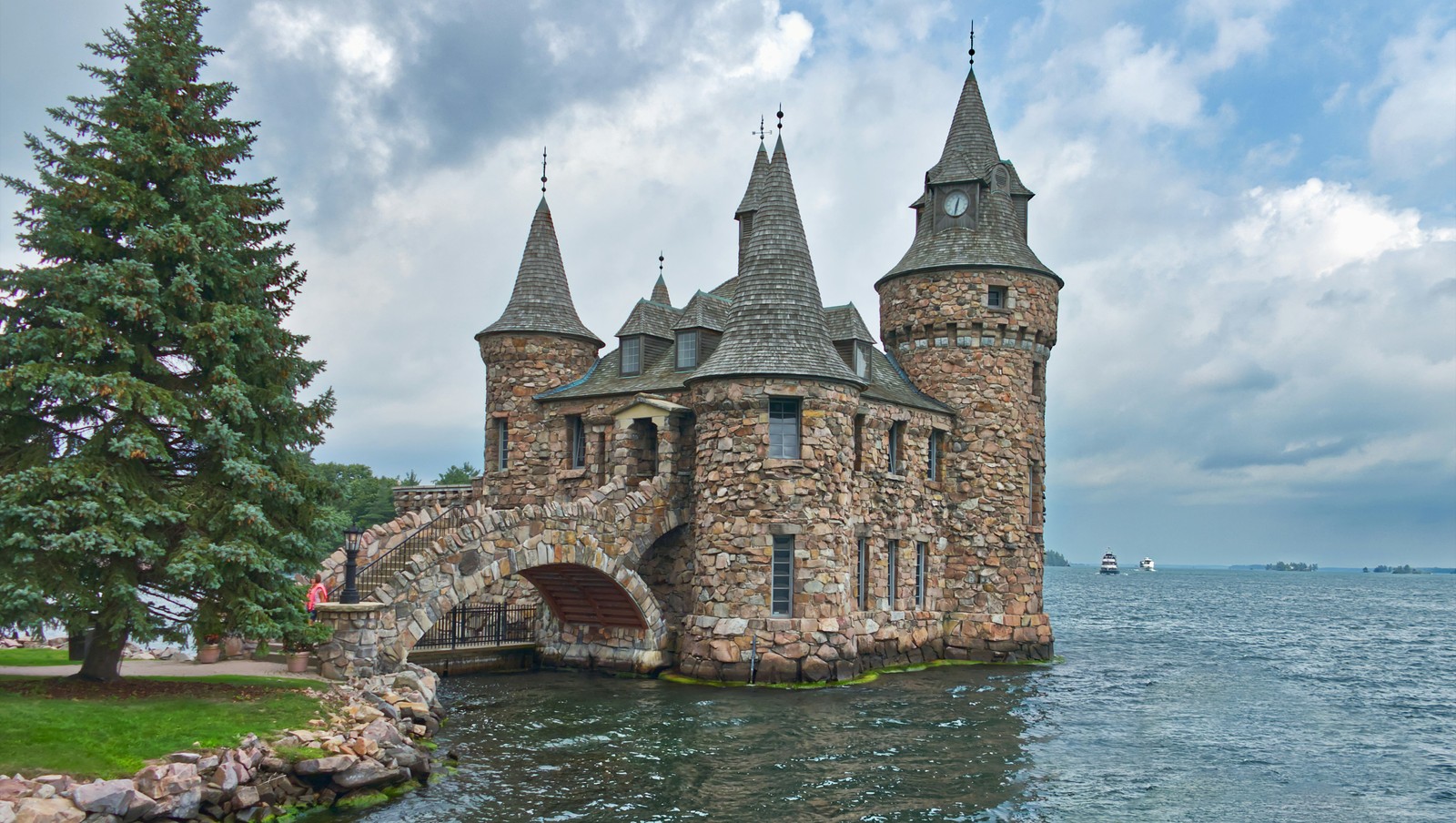
George Boldt started building this Rhineland-style castle in 1900 as a Valentine's Day gift for his wife Louise . Then she died suddenly in 1904, and he immediately halted construction and never returned, leaving behind a monument to heartbreak on Heart Island in the Thousand Islands.

The castle sat abandoned for 73 years until the Thousand Islands Bridge Authority took it over and began restoration. Today you can visit via ferry and explore the grand halls, the powerhouse, and the perfectly intact bowling alley.

5
Castello di Amorosa, California

Image: Museum of New Zealand Te Papa Tongarewa

This one's a bit of a cheat since it was built in 2007, but it's so ridiculously authentic that it deserves a spot . Winemaker Dario Sattui spent 14 years and $40 million building a 13th-century Tuscan castle in Napa Valley, complete with a moat, drawbridge, and torture chamber, because apparently wine tastings needed more medieval flair.

The castle used 8,000 tons of hand-chiseled stone and over a million antique bricks imported from Europe. You can tour the dungeons, great hall, and of course, taste wine in a setting that makes you feel like you should be wearing chainmail instead of your Costco polo shirt.

6
Belvedere Castle, New York

Image: Birmingham Museum Trust

Perched on Vista Rock in Central Park, this miniature castle was built in 1869 as a Victorian folly —basically an expensive decoration that serves no practical purpose. It's now home to the Henry Luce Nature Observatory and offers panoramic views of the park, which is considerably more useful than its original job of just looking pretty.

The castle got a major renovation in the 1980s after decades of neglect left it looking more "haunted" than "enchanting." Today it's one of Central Park's most popular spots.

7
Bishop Castle, Colorado

Image: Art Institute of Chicago

Jim Bishop started building this castle by himself in 1969 and worked on it for over 55 years until his death in 2024 . The hand-built stone structure rises 160 feet into the Colorado sky and includes towers, walkways, and a dragon that breathes actual fire—all constructed by one incredibly dedicated (and possibly slightly unhinged) man.

There are no railings on many of the precarious walkways because Bishop didn't believe in them. Admission is still free, though you might want to update your will before climbing to the top of the tallest tower, where the views are spectacular, and the safety regulations remain charmingly absent.

8
Searles Castle, Massachusetts

Image: John Phelan

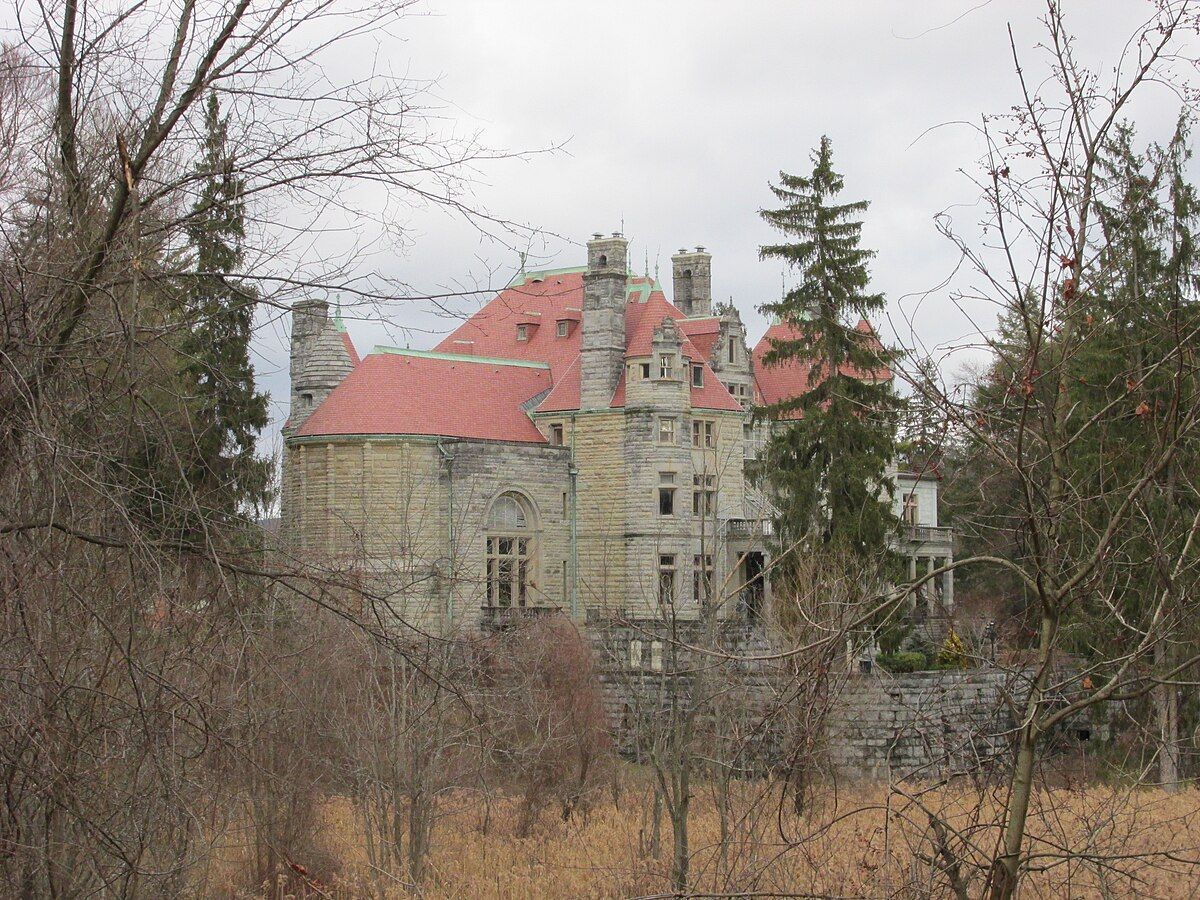
Edward Searles built this castle in 1888 in Great Barrington, Massachusetts, creating a 40-room mansion that combined Romanesque and Gothic styles into something that can only be described as "aggressively architectural." The castle features stained glass windows, carved woodwork, and enough turrets to repel a small army.

After changing hands several times, the castle is now home to the John Dewey Academy. You can't tour the interior since it's a school, but you can admire the exterior and imagine what it's like to do algebra homework in a building that looks like it should contain dragons.

9
Kip's Castle, New Jersey

Image: Birmingham Museum Trust

This English Tudor-style castle was built in 1902 by textile businessman Frederic Kip on a mountain in Montclair . The castle features towers, battlements, and spectacular views of Manhattan, proving that even early 1900s commuters wanted homes with dramatic flair and manageable drive times.

The castle has been through various owners and purposes, including a brief stint as a Prohibition-era speakeasy, because apparently nothing says "secret illegal bar" like a castle. Today it's used for private events, but the grounds are part of a county park where you can hike around and pretend you're visiting distant relatives who happen to be slightly eccentric nobility.

10
Chateau Laroche (Loveland Castle), Ohio

Image: ConlonTT

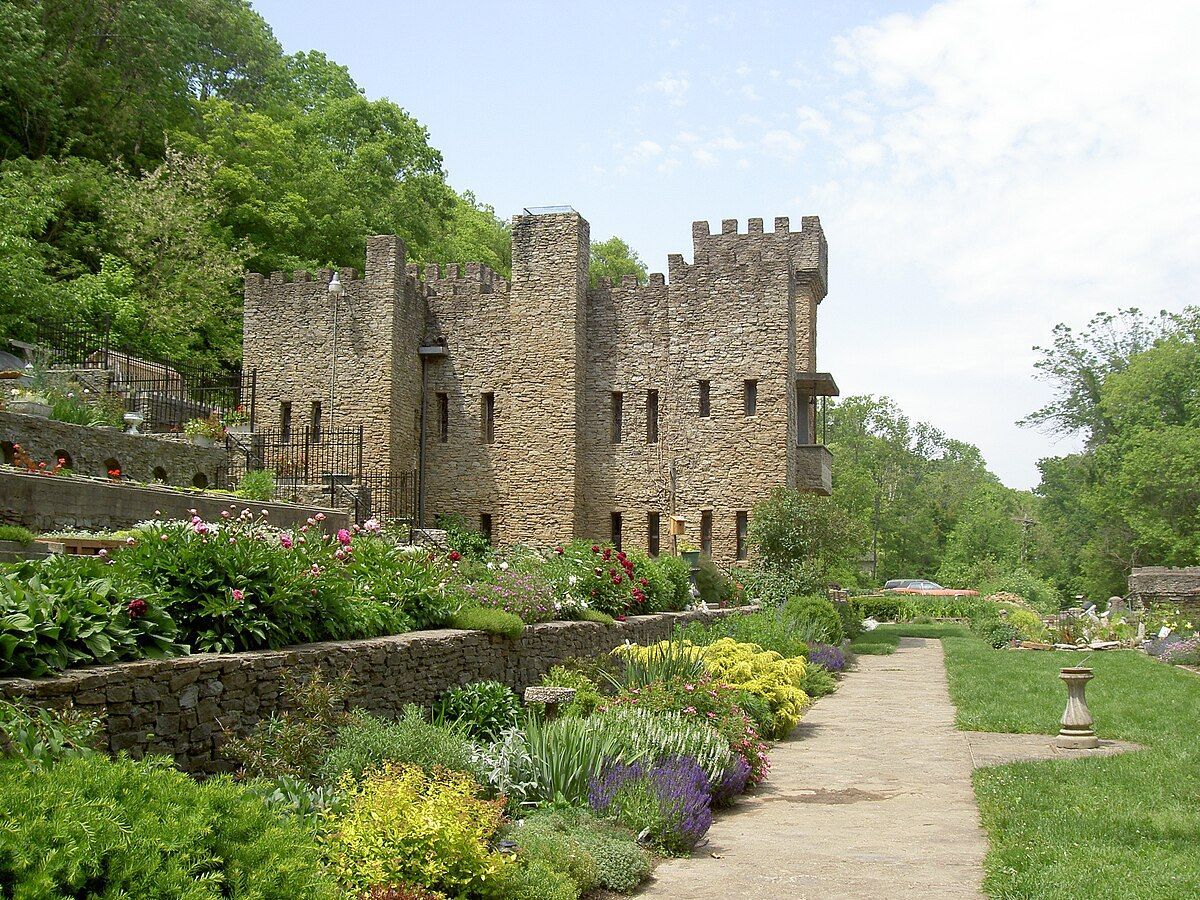
Harry Andrews started building this medieval castle in 1929 using stones from the Little Miami River , spending over 50 years creating his dream fortress. Andrews was inspired by his time in Europe during World War I and decided Ohio needed more castles, which is hard to argue with.

He built most of it himself using ancient techniques, including a primitive pulley system and sheer determination. Today, the castle is maintained by the Knights of the Golden Trail, a Boy Scout-like organization Andrews founded. You can tour the castle for a few bucks and marvel at what one man with too much time and enough river rocks can accomplish.

Explore more American facts

Choose your favorite category!

General
General

As American as apple pie—the very best America has to offer!

Culture
Culture

Delve into the astounding richness of American lore.

Geography
Geography

Hop in and explore vast and diverse American landscapes.

History
History

Discover the key moments that shaped the United States.