Geography Geography 4 min read

Around the world

A Statue of Liberty in Paris? 10 Landmarks with clones around the world!

Image: Darryl Brooks

The world is full of iconic landmarks: Mount Rushmore, the Colosseum, and the Eiffel Tower, just to name a few. These majestic monuments are rich in history and reflect the societies that built them. But what if we told you there's a Leaning Tower of Pisa in Tennessee or a Statue of Liberty in France? It may seem like the world is upside down, but they do exist! Join us as we explore 10 fascinating replicas of the world's most famous landmarks.

1
The Statue of Liberty in France

Image: Tom Corbett

Europe may seem like a different world from the United States, but surprisingly, some things bring us closer. Did you know there's a replica of the Statue of Liberty in Paris? Unveiled in 1889 —just three years after the original in New York—it was created to honor the strong ties between the US and France. It stands along the banks of the iconic Seine River . At about 37 feet tall , it’s quite a bit smaller than the original, which stands at 151 feet.

2
The Leaning Tower of Pisa in Illinois

Image: davide ragusa

Ahhh... the Leaning Tower of Pisa, one of the most famous and instantly recognizable landmarks in the world. Have you seen that classic picture of tourists "holding up" the tower? Well, you don't need to travel all the way to Italy to take one, because Illinois has its very own replica!

The Leaning Tower of Niles, Illinois, is about half the size of the original (94 feet vs. 183 feet), but it's just as fascinating. Next time you're in the Prairie State, you’ll know where to stop!

3
The White House in China

Image: Raymond M.E. Aguirre

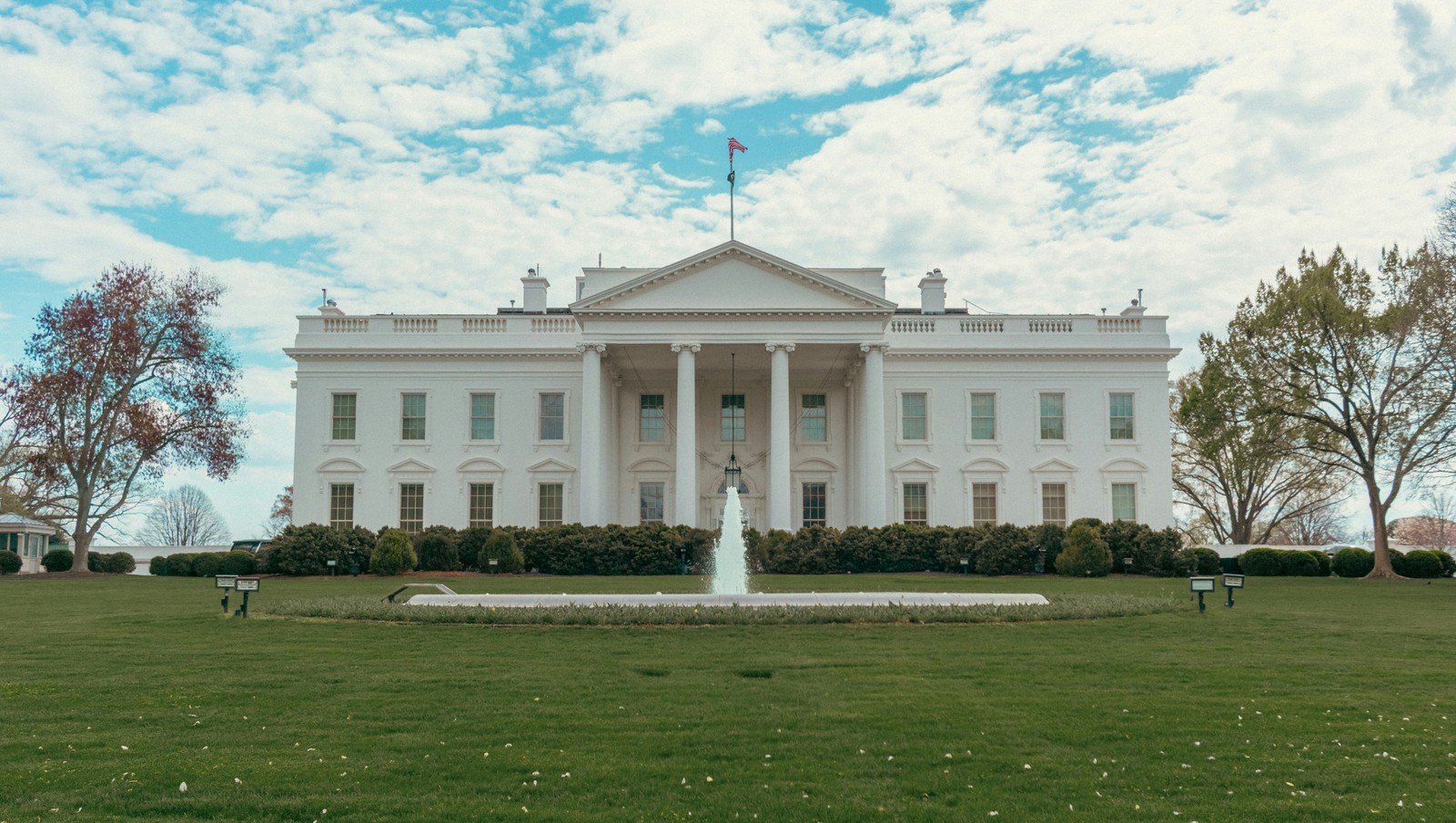
The White House in Washington, DC, is a powerful symbol of America—but it's not the only one of its kind! Believe it or not, replicas of this iconic mansion can be found in various parts of the world, including China. In fact, China has not just one, but several replicas of the historic American building. And that’s not all—there’s also a life-size replica of the US Capitol Building in Beijing. Pretty wild, right? We'd love to visit these replicas!

4
Trevi Fountain in Nevada

Image: Michele Bitetto

Las Vegas, Nevada, is definitely one of the places in the US with the most replicas of international landmarks. One of the most celebrated is the Trevi Fountain at Caesars Palace, with its amazing resemblance to the original.

If you've been to the Trevi Fountain in Rome—or even if you've just seen pictures of it—you know that the details of its sculptures are incredibly intricate, so creating a replica is no small feat. Fortunately, Las Vegas pulled it off quite well. Although their fountain is much smaller than the original, it’s no slouch when it comes to beauty!

5
The Hollywood Sign in Ireland

Image: De'Andre Bush

The huge and famous Hollywood sign attracts millions of visitors each year. Fortunately, people living in Europe don’t need to travel all the way to California to get their own " Hollywood " photo —there’s a replica of the legendary sign in Ireland !

But here's the crazy fact: there's a city called Hollywood in Ireland, which is believed to have inspired the name of the Los Angeles film district.

6
The Eiffel Tower in Texas

Image: Malgorzata Frej

Paris isn’t just the famous city of love in France. There's another charming Paris, and it's located here in the US, more specifically, in Texas!

As a way to celebrate its name, the city of Paris, Texas, built a replica of the splendid Eiffel Tower in 1993. The Texan version stands at about 65 feet tall , compared to the original’s 1,083 feet. While it may not reach the same height, it has a unique twist that makes it special: the tower is topped with a big red cowboy hat !

7
The Mount Rushmore in China

Image: Brandon Mowinkel

Mount Rushmore is definitely one of America’s most iconic landmarks, with the faces of Lincoln, Washington, Roosevelt, and Jefferson carved into a massive granite mountainside.

Incredibly, there's a replica of this monument in China ! The Chinese version closely resembles the original, although it was created using much more modern techniques—and, of course, it’s considerably smaller in scale than the original.

8
The Parthenon in Tennessee

Image: Joshua Woods

A former temple in Greece dedicated to the goddess Athena, the Parthenon is one of the most famous monuments in the world. Although much of the original has fallen into ruins, you can still see what it looked like when it was complete right here in Tennessee!

That’s right! The city of Nashville has a full-scale replica of the incredible temple. Built in 1897, it still stands today as a stunning tribute to classical architecture.

9
The Stonehenge in Washington

Image: K. Mitch Hodge

Stonehenge is that famous prehistoric monument in England, made up of massive 25-ton stones —each standing about 13 feet tall and 7 feet wide—arranged in a mysterious circle. But here's the great news: You don't have to travel to Europe to experience it up close because we have our very own replica right here in Washington State!

Known as the Maryhill Stonehenge , this version was created as a memorial to those who died in World War I. It took 11 years to complete, from 1918 to 1929, and instead of ancient stone, it’s made entirely of concrete .

10
The Pyramid in Nevada

Image: Simon Berger

In the incredible city of Las Vegas, you also have the chance to see a replica of one of the Seven Wonders of the Ancient World ! We’re talking, of course, about the Great Pyramid of Giza—recreated at the Luxor Hotel and Casino . Built in 1993, the Las Vegas pyramid rises an impressive 30 stories high!

Culture Culture 7 min read

A bucket list for the creative at heart

Every American should see these 10 American masterpieces at least once

Image: manolofranco

The intense relationship between Americans and their surroundings has been the source of a rich artistic tradition. From Impressionism and Realism to Abstract Expressionism and Pop Art, the United States has given the world a remarkable sample of its artistic potential. Through 10 masterpieces, which span a wide range of movements and artists, this article will explore the enormous legacy that visual art has left on American culture.

1
Snap the Whip - 1872

Image: Winslow Homer, CC0, via Wikimedia Commons

Winslow Homer was a self-taught artist from Boston, best known for his Civil War paintings, which he created at the request of Harper's Weekly magazine. But after the war, Homer moved to a totally different subject matter: childhood. The artist painted the life of American children as a world unto itself, where adults seemed to have no influence.

Homer's children, like the ones depicted in Snap the Whip , can be compared to similar literary characters of the time, like Louisa May Alcott's Little Women and Mark Twain's Tom Sawyer . They are potential America, the stock from which renewal will spring in the aftermath of the Civil War: young, strong, quick-witted, practical, and without pretense. The piece can now be viewed at The Met in New York City.

2
Whistler’s Mother - 1871

Image: James McNeill Whistler, CC0, via Wikimedia Commons

James Abbott McNeill Whistler (1834-1903) was a painter mainly active during the American Gilded Age and a leading proponent of the motto "art for art's sake." Whistler’s best-known piece is a painting entitled Arrangement in Grey and Black No. 1: The Artist’s Mother . While it is a portrait of his mother, the identity of the woman, according to the artist, should be of no interest to the viewer, only the formal layout of grays and blacks.

For Whistler, art was not about moral instruction or storytelling but, instead, about formal perfection. He believed that artists should not simply replicate what they see in nature but express their emotional response to it. Art should be filled with sentiment, not sentimentality. These ideas formed the basis of the Aesthetic Movement of the 1870s and 1880s and influenced several American artists.

3
Madame X - 1884

Image: John Singer Sargent, CC0, via Wikimedia Commons

It may seem totally innocent to us today, but in the late 19th century, this piece was a true scandal. Madame X , by John Singer Sargent (1856-1925), is a portrait of Virginie Gautreau, a young woman born in New Orleans who moved to Paris after her father’s death. There, she married a wealthy man twice her age and became the talk of the town, due to her independent character and her alleged infidelities.

Virginie posed for Sargent, the world's most sought-after portrait painter of his time, and the work turned out to be as rebellious, elegant, and striking as its model. Sargent always thought that this was his masterpiece, but the public hated it. Shortly before his death, he donated the painting to the Metropolitan Museum of Art in New York, saying, "I suppose it is the best thing I have done."

4
The Child’s Bath - 1893

Image: Mary Cassatt, Public domain, via Wikimedia Commons

Mary Cassatt (1845-1926) was not only one of the foremost American Impressionists but also an outstanding woman painter of the 19th century. She was raised and initially trained in Philadelphia before moving to Paris, where she befriended prolific Impressionists like Edgar Degas. However, Cassatt’s subject matter was very different from that of her French counterparts. She depicted a distinct world, drawn from her own strong family interests: sociable encounters over tea, fashionable women in theaters or drawing rooms, and mothers with their babies.

For example, The Child's Bath not only reflects Cassatt’s technical ability but also serves as a testament to her exploration of motherhood and female roles . Her approach succeeds in capturing everyday life, and the painting is remarkable for its composition and use of color. This piece, like many of her works, stands as a reminder of the value of small, deeply meaningful moments that make up culture and life in all its complexity.

5
American Gothic - 1930

Image: Grant Wood, Public domain, via Wikimedia Commons

Perhaps one of the most famous houses in America is located in Eldon, a tiny community in southern Iowa. Contrary to what one might think, no one of distinction, notoriety, or power has ever lived in this house. Its fame is owed entirely to artist Grant Wood (1891-1942), who used it in the background of his painting American Gothic .

Wood enlisted his sister Nan to pose as the woman and recruited a dentist from Cedar Rapids, B. H. McKeeby, as the man. The painting won a prize in Chicago in 1930 and was instantly catapulted to national fame. Since then, it has been reproduced and satirized by popular culture to exhaustion and is now one of the most recognizable American paintings. Wood's American Gothic honors those who settled the land and has become an iconic representation of American identity and resilience.

6
Nighthawks - 1942

Image: Edward Hopper, Public domain, via Wikimedia Commons

Edward Hopper (1882-1967) studied at the New York Institute of Art and Design and worked for many years as a magazine illustrator. Although he didn't particularly enjoy this job, it helped sharpen his compositional skills. Thanks to these influences, Hopper's work has come to typify the American Realism movement. His paintings convey the sense that the events depicted are taking place in front of the viewer in the here and now, as seen in his famous diner scene, Nighthawks .

In this stark, impassive, realist painting, Hopper evokes a powerful sense of urban alienation, highlighting the isolation. The bright fluorescent light in the all-night diner contrasts strongly with the surrounding gloom outside and immediately transports us to a scene from a film noir movie. Exhibited at the Art Institute of Chicago, Nighthawks is considered one of Hopper's masterpieces and is worth visiting at least once in a lifetime.

7
Untitled (Violet, Black, Orange, Yellow on White and Red) - 1949

Image: chummels

Mark Rothko (1903-1970), along with Jackson Pollock, was one of the greatest representatives of American abstraction . He is best known for his color field paintings. Through his work, he sought to achieve an ambitious utopia: to express the most basic universal emotions.

When Rothko painted Untitled (Violet, Black, Orange, Yellow on White, and Red) he was arriving at a point of maturity in what was a highly nuanced and distinct visual style. He had abandoned any remaining references to recognizable imagery, and the result is a painting with a great expressive force. Rothko used to say that he preferred to paint large pictures because he wanted to be very intimate and human. In this work, he achieves this immersion entirely through his sensitive use of color.

8
Autumn Rhythm (Number 30) - 1950

Image: Simi Iluyomade

Jackson Pollock (1912-1956) was a leading figure in Abstract Expressionism and is best known for his "drip technique." Pollock's drip method entailed placing a canvas on the floor and then dripping, pouring, and at times throwing paint over its surface. Although his technique appeared to favor chance, the artist stressed that everything in his paintings was fully intentional.

One of his most emblematic works is Autumn Rhythm (Number 30) , which is currently on display at the Metropolitan Museum of Art in New York. If you ever have the chance to see this piece in person, know that Pollock believed contemplation of his paintings allowed the viewer to access personal and unconscious responses to the modern world. As Pollock advised, the viewer should look passively and "try to receive what the painting has to offer."

9
Twenty Marilyns - 1962

Image: pvdberg

Andy Warhol (1928-1987) started making paintings of Marilyn Monroe shortly after her death. He used a black and white publicity photograph taken by Gene Korman for the 1953 movie Niagara to create a stencil for silk-screen printing, a technique he had adopted for transferring photographic images to canvas. Over the course of four months, Warhol created more than twenty works based on the Korman photograph.

What Warhol called the "assembly line effect" of the repeated image aimed to criticize the supposed uniqueness of the work of art in a world of mass reproduction and mass media. Yet, the repetitive Marilyns are full of small variations, as the paint is applied by hand. Twenty Marilyns is such an iconic work of American art history that, in a 2004 article published in The Guardian , it was named the third most influential piece of modern art in a survey of 500 artists, critics, and other members of the art world.

10
Whaam! - 1963

Image: Eric Koch, CC0, via Wikimedia Commons

Apart from Andy Warhol, perhaps the greatest exponent of American Pop Art is Roy Lichtenstein (1923-1997). Lichtenstein was mainly drawn to action and true romance comic strips. Through his depictions of fighter pilots and tearful drowning damsels, he drew attention to the constructed nature of gender roles. Lichtenstein's exaggeration of these gender stereotypes in comic book characters led some critics to recognize his paintings as true works of art.

Whaam! , based on a comic book panel published by DC Comics in 1962, is Lichtenstein's witty and irreverent reaction to the contemporary popularity of Abstract Expressionism. With this piece, the artist attempted to deflate that movement's pomposity by presenting pictorial subject matter based on what was regarded as crass commercial art. Since Whaam! , Lichtenstein was viewed by the public eye as the ultimate American master of Pop Art.

General General 2 min read

Shocking the neighbors

These things are not as common outside the US

Image: Jennifer Kalenberg

America is a land of unique customs and rituals, many of which leave outsiders scratching their heads. From super-sized food to partying habits, these traditions reflect the country’s history, creativity, and widespread patriotism. Here are 10 American practices that are often admired, misunderstood, or simply confusing to people abroad.

1
Tipping everywhere

Image: Sam Dan Truong

Americans tip for almost every service, from coffee to taxis. The standard is 15–20% of the bill. Unlike most countries where service charges are included, tipping is often expected and essential for workers’ income.

Restaurants, bars, and even hair salons rely on it. Since this is not as common elsewhere, tourists often miscalculate or under-tip, causing awkward interactions.

2
Super-sized portions

Image: Nima Naseri

Restaurant portions in the U.S. are notoriously large, often doubling or tripling international standards.

This stems from both historical abundance and marketing strategies that equate quantity with value. All-you-can-eat and combo meals reinforce the "more is better" mentality.

3
College tailgating

Image: Josh Applegate

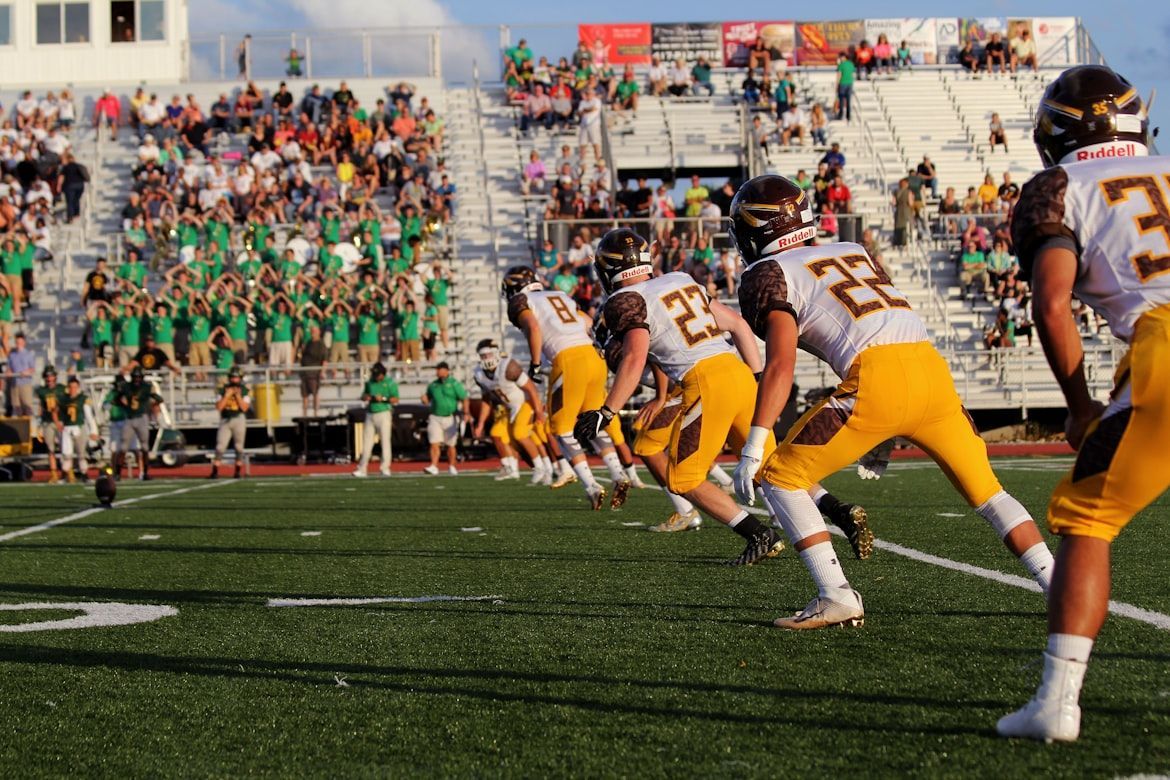
Fans arrive hours before football games, grilling and partying in parking lots. Tailgating mixes sports passion with social gatherings, showing regional pride and university loyalty.

This uniquely American tradition often shocks outsiders with the devotion shown to local sports.

4
Black Friday mania

Image: Artem Beliaikin

Originating in Philadelphia in the 1960s, Black Friday marks the start of the holiday shopping season. It’s a consumer spectacle tied as much to capitalism as to tradition.

Retailers use extreme discounts to generate sales; the frenzy often leaves international observers bewildered by the ensuing chaos.

5
Wearing patriotic clothes year-round

Image: Shari Sirotnak

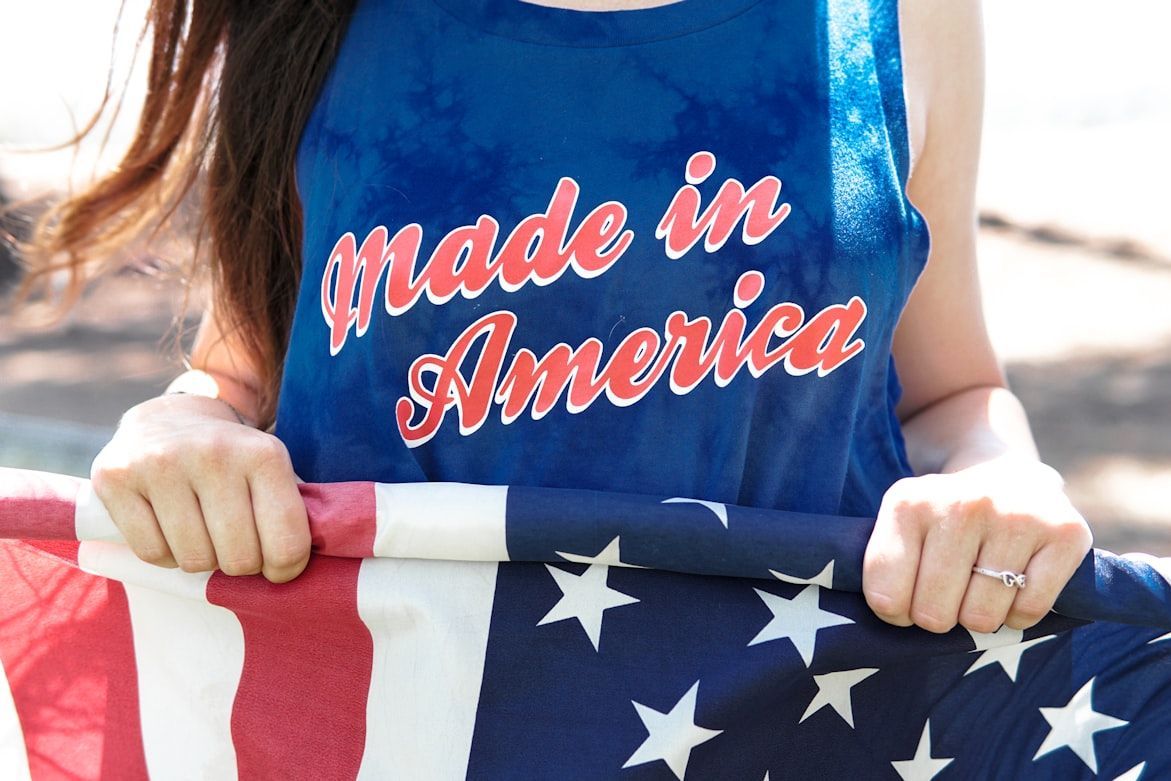
Americans often wear flag-themed clothing even outside national holidays. The practice intensifies during major sporting events, but displaying the flag as apparel reflects civic pride in everyday life.

For many outsiders, wearing a flag as clothing seems unusual, yet this custom embodies American individualism and patriotism.

6
Driving everywhere

Image: why kei

Unlike many countries with extensive public transit, Americans rely heavily on cars. Suburban expansion and urban planning favor personal vehicles.

Gas prices, infrastructure, and cultural identity reinforce driving as normal. Tourists accustomed to walking or trains find long drives mandatory, and as a result, the layout of U.S. cities is unusually spread out.

7
High school proms

Image: Long Truong

Proms evolved in the 20th century as a rite of passage. Teenagers dress formally for dances with elaborate rituals, including crowning kings and queens.

While other countries almost always have some form of graduation celebrations, the formality, expense, and emphasis on dating customs in American proms often confuse foreigners.

8
Obsession with college sports

Image: Riley McCullough

Universities dominate cities with massive stadiums and fanfare. College football and basketball inspire loyalty rivaling professional leagues.

The intensity is unusual internationally, where professional sports typically overshadow collegiate athletics.

9
Yard sales

Image: Clem Onojeghuo

Communities host sidewalk sales for secondhand goods. This tradition emphasizes recycling, community interaction, and bargain hunting.

This casual sale of used goods in public spaces is uncommon in many countries, making it a uniquely American practice.

10
Spelling bees

Image: Brett Jordan

Americans hold intense competitions where kids spell increasingly difficult words aloud. Spelling bees originated in the 19th century as educational contests, promoting literacy and vocabulary skills.

The National Spelling Bee, held annually since 1925, draws contestants nationwide and often surprises outsiders due to English’s tricky spelling rules.

Explore more American facts

Choose your favorite category!

General
General

As American as apple pie—the very best America has to offer!

Culture
Culture

Delve into the astounding richness of American lore.

Geography
Geography

Hop in and explore vast and diverse American landscapes.

History
History

Discover the key moments that shaped the United States.