History History 9 min read

From crisis to action

11 crises that changed American history
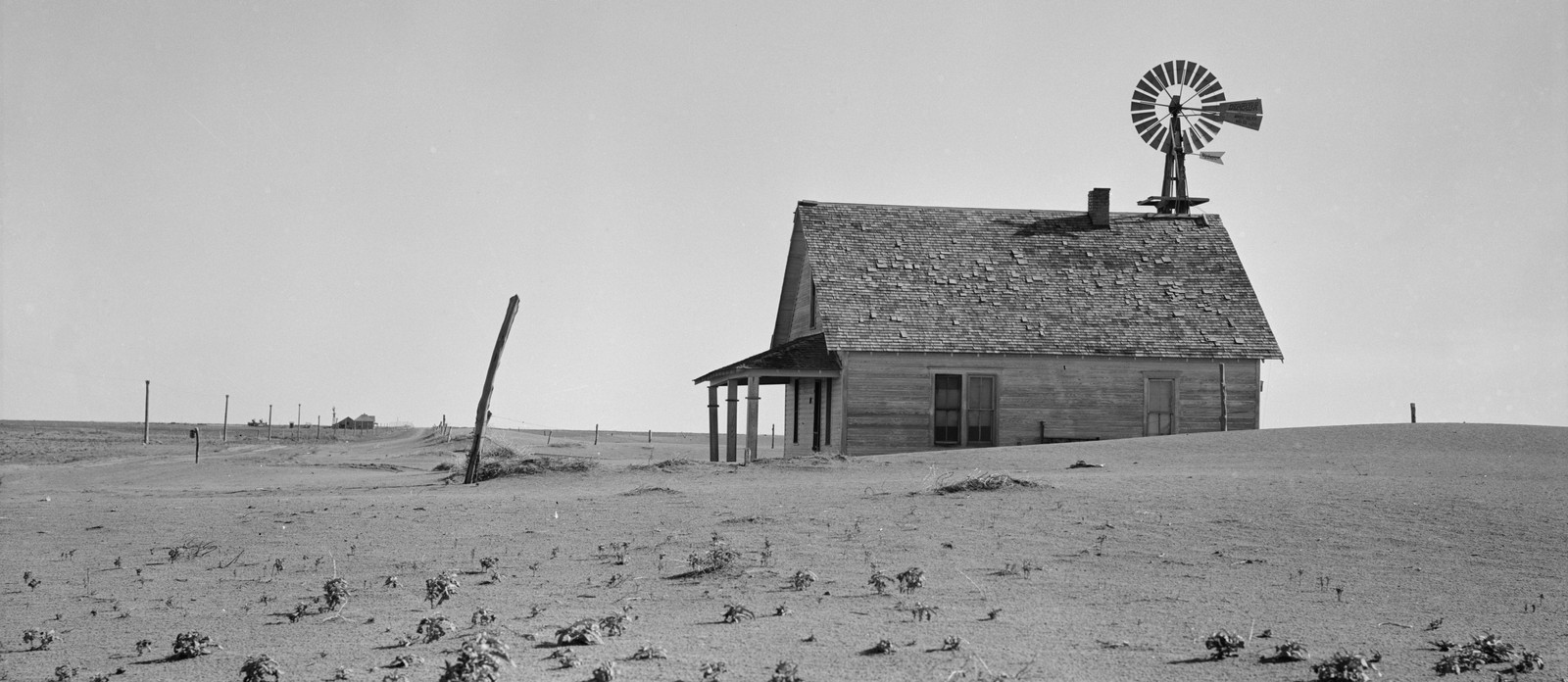
Image: Dorothea Lange, Public domain, via Wikimedia Commons

Nowadays, we take many sanitary, economic and safety standards for granted. Food should be unadulterated, drinking water should be fit for consumption, and the government should have a series of preventions in place. But this was not always the case. Many of these systems and laws are relatively new, and some of our worst crises have led the U.S. government to devise systems to ensure these events would not happen again. Here are 11 crises in American history that led to change.

1
World War II (1939–1945)
Image: Aaron Burden

American veteran soldiers are entitled to several benefits as recognition for their service on behalf of the country, but this was not always the case. Before 1944, war veterans received pensions and disability-related medical care, but that was it. WWI veterans had received bonuses for their service, but these were not redeemable until 1945, which led to protests and turmoil during the Great Depression.

To avoid a similar situation with soldiers serving in WWII, a set of laws, popularly known as the "G.I. Bill", was passed in 1944. These laws guaranteed that, in addition to pensions and medical assistance, veterans were entitled to financial help towards education or training, low-cost loans, unemployment benefits, and job-search assistance . Since then, additional "G.I. Bills" have been passed, ensuring that veterans are looked after once their service is complete.

2
The Great Depression (1929–1939)
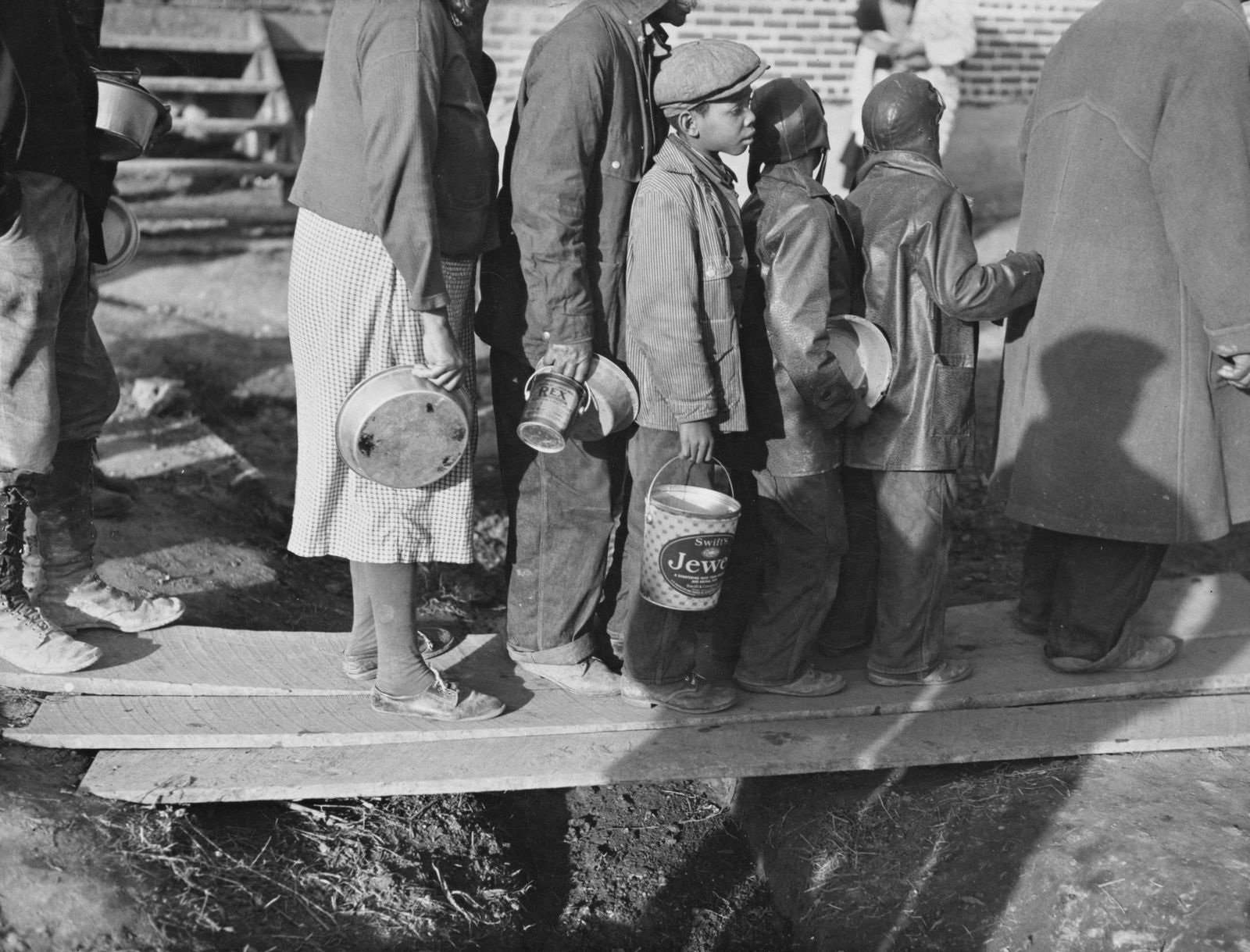
Image: The New York Public Library

Historians agree that, despite President Roosevelt’s best efforts, the Great Depression was effectively ended by the industrial mobilization caused by WWII. America’s biggest economic crisis to date had been brought on by several factors , many of them related to reckless market speculation, inefficient monetary policies, lack of social security, and massive bank withdrawals made by panicked citizens.

While F.D.R.’s "New Deal" policies were insufficient to overcome the crisis, they successfully set up a system to prevent a similar economic collapse in the future . As a result of financial and banking reform, personal accounts were federally insured —which prevented future massive withdrawals that would deplete savings, commercial and investment banking were separated, and commissions were set up to regulate trading and prevent fraud. Additionally, social and welfare laws established pensions, work insurance, and unemployment compensation, and protected unions that allowed workers to collectively bargain with their employers.

3
The Great Chicago Fire (1871)
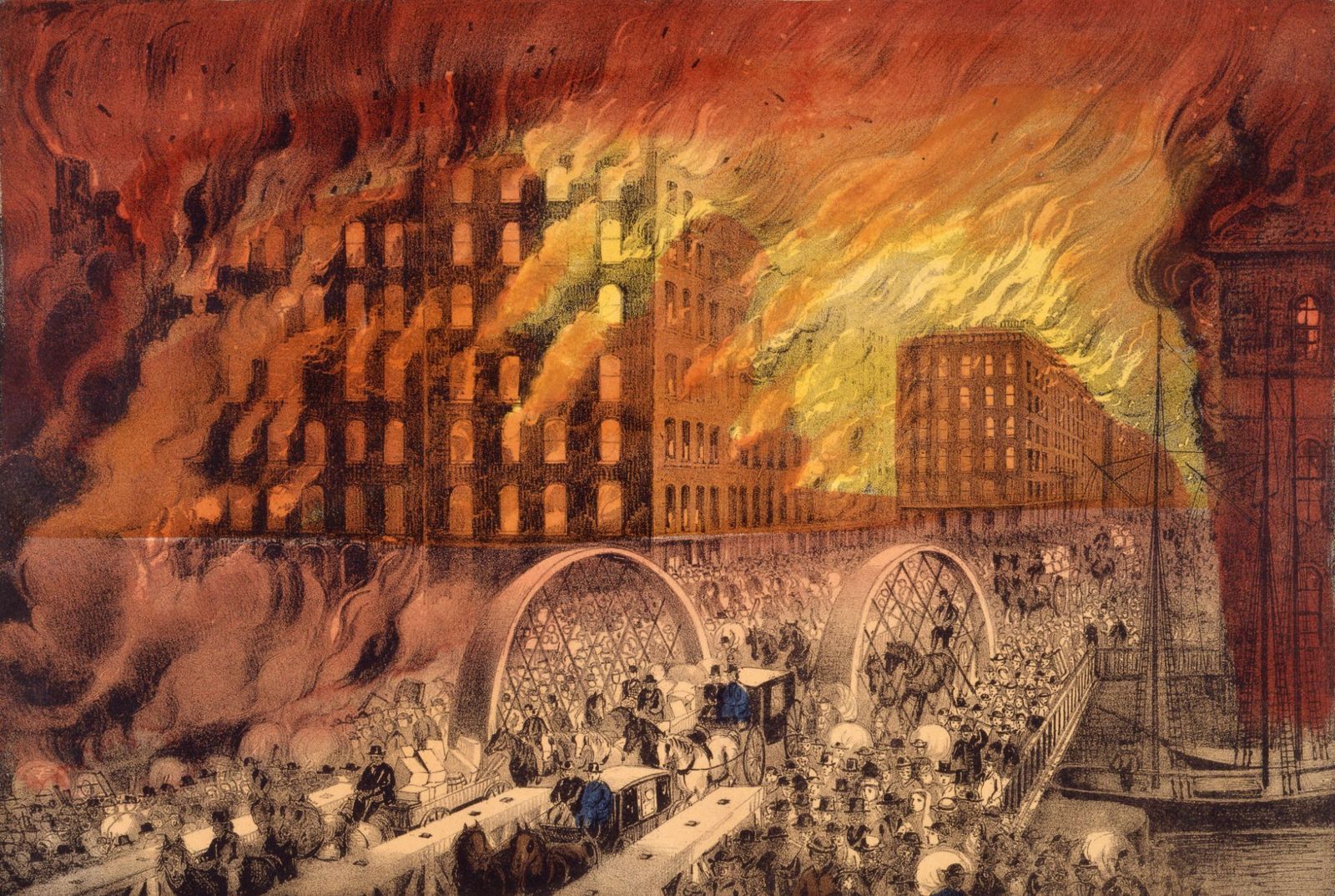
Image: Currier and Ives, Public domain, via Wikimedia Commons

On October 8, 1871, a fire started on DeKoven Street, Chicago, and it burned for three days, destroying 17,450 buildings and leaving 300 casualties and thousands of people homeless. According to legend, the fire was started by a cow (owned by a woman named Mrs. O’Leary), although this was never confirmed; it was the wooden buildings, the strong wind, and the dry weather that turned an accident into a catastrophe.

Americans from all over the country rallied behind the relief effort, donating money, food, clothing, and more, but the tragedy also forced authorities to review their own municipal safety codes. New fire and building safety codes were implemented, banning wood buildings and requiring fire-safe materials such as brick, stone, or marble, as well as fireproof staircases, exit signs, and outward-opening doors. A new fire academy was founded to properly train firefighters, which put Chicago at the lead of America’s firefighting force.

4
Yellow Fever (1793)
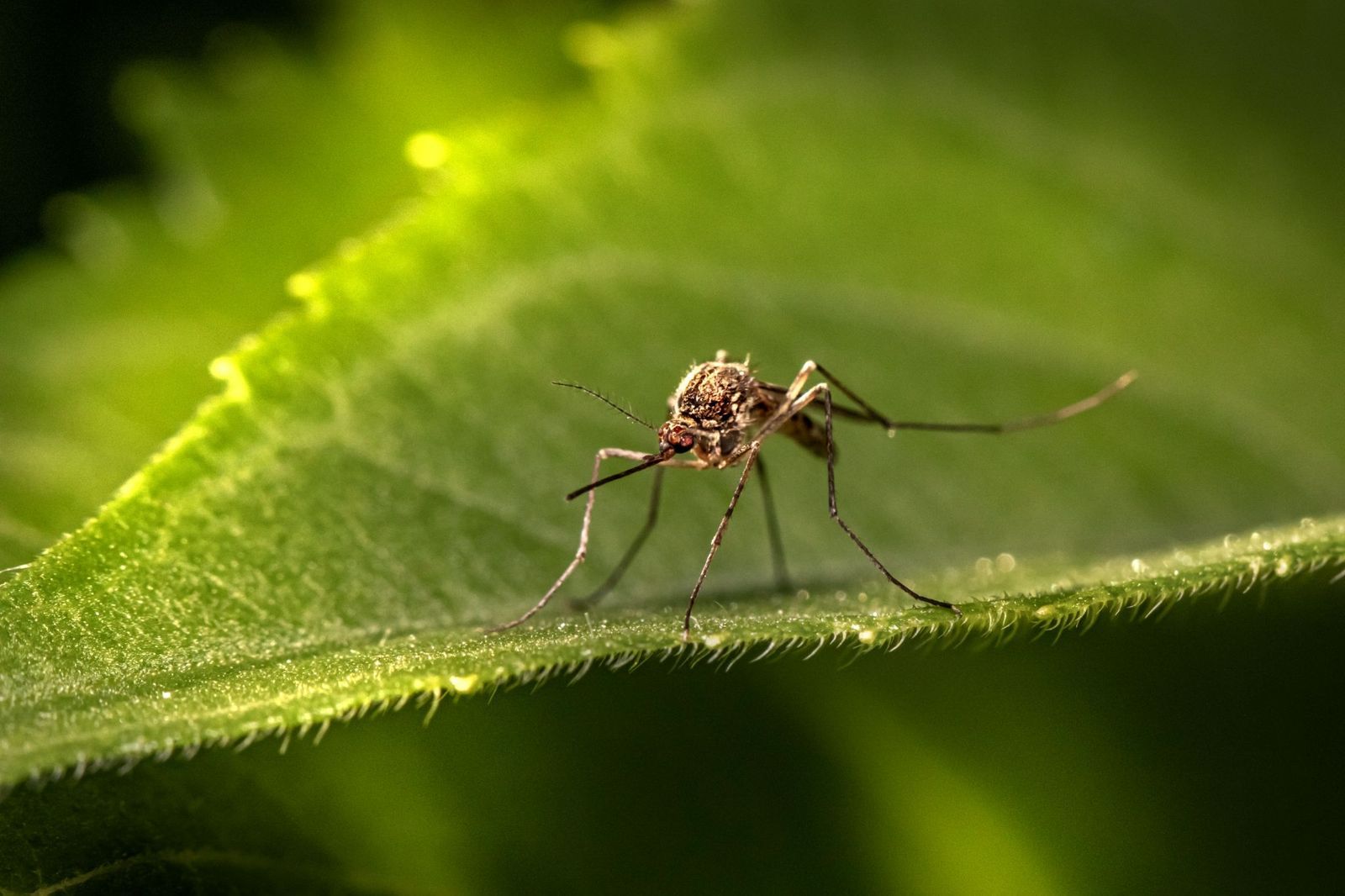
Image: Erik Karits

In 1793, the city of Philadelphia received cargo ships from Saint-Domingue (modern-day Haiti), and with them, an epidemic that lasted for half a year. Among the cargo from the Caribbean, there were yellow fever-carrying mosquitoes, which thrived in the crowded docks and in the humid spring and summer weather. The open sewers, poor waste management, and general ignorance about the disease worsened the situation, which only let up with the cold fall weather, with 5,000 people, about 10% of the population, as casualties.

Although the widely believed cause of the spread of the epidemic —foul "miasma" or bad air— was incorrect, it did lead to proper infrastructure changes to prevent a similar situation. The city targeted polluted waterways and rotten waste, exposing severely contaminated wells. Municipal water systems to provide clean drinking water were created, and paved streets with proper gutters and sewers reduced the amount of stagnant water . Additionally, the crisis led to the establishment of municipal health boards, proper quarantine facilities for incoming ships, and municipal hospitals all across the country.

5
The Triangle Shirtwaist Factory Fire (1911)
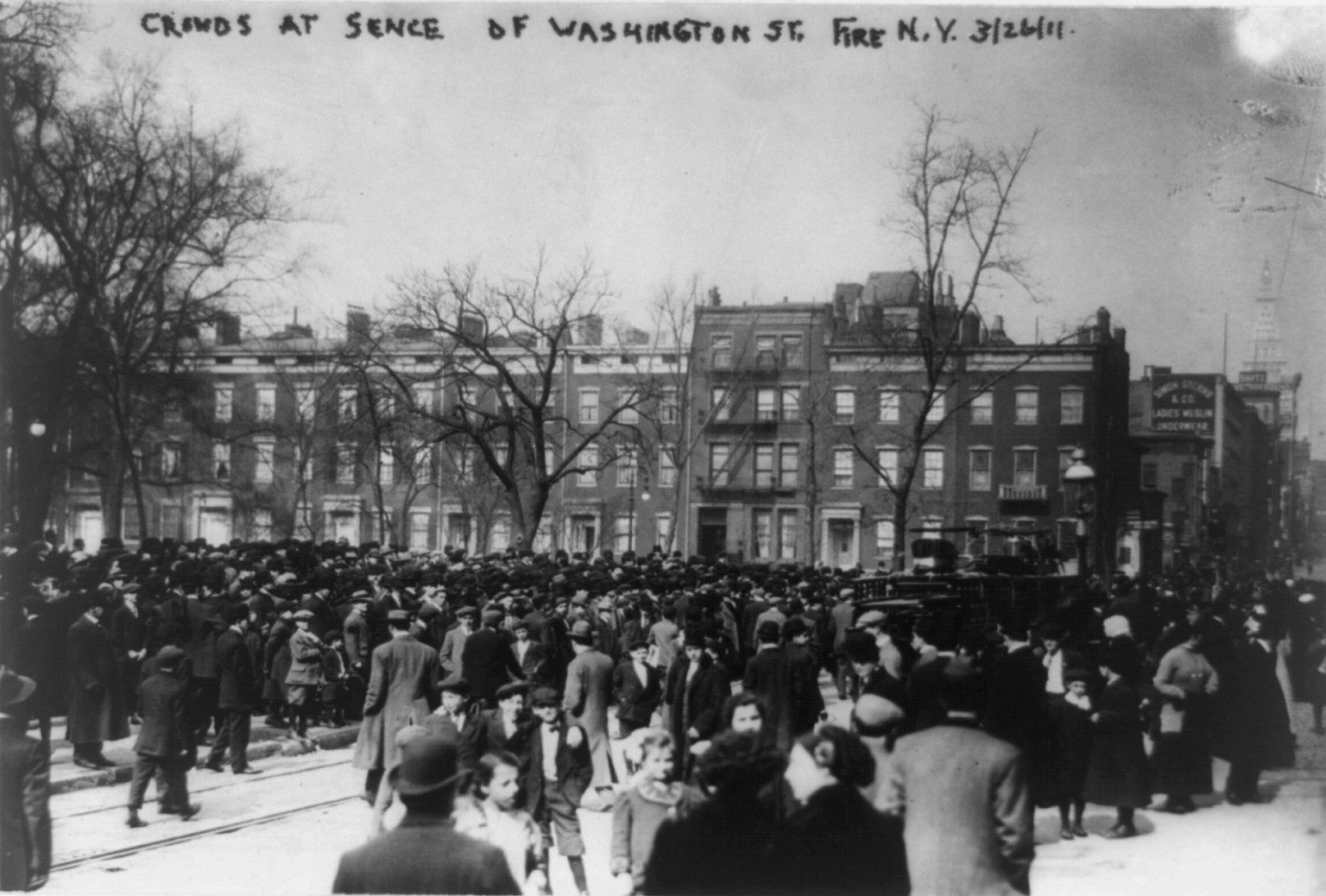
Image: George Grantham Bain Collection, Public domain, via Wikimedia Commons

Nowadays we expect any factory or building to have proper fire and safety systems in place, but not so long ago safe working conditions were not a given. Places like the Triangle Shirtwaist Factory in New York not only lacked fire alarms, sprinklers, and fire escapes, but also locked their doors during work hours to prevent unauthorized breaks and workers' union gatherings . On March 25, 1911, when a pile of rags caught fire, the single fire escape collapsed and, with firefighters' ladders only able to reach six of the ten floors, the factory became a deadly trap that took the lives of 146 workers.

New Yorkers were outraged by the conditions that led to the tragedy, and public pressure led to the establishment of an investigating commission. As a result, more than 30 safety laws were passed , making fire drills, sprinklers, fire escapes, and emergency exits mandatory, among other measures, all of which set a precedent for federal safety codes and protections. The event also strengthened labor unions all across the country, who pushed for better working conditions.

6
The Dust Bowl (1930s)
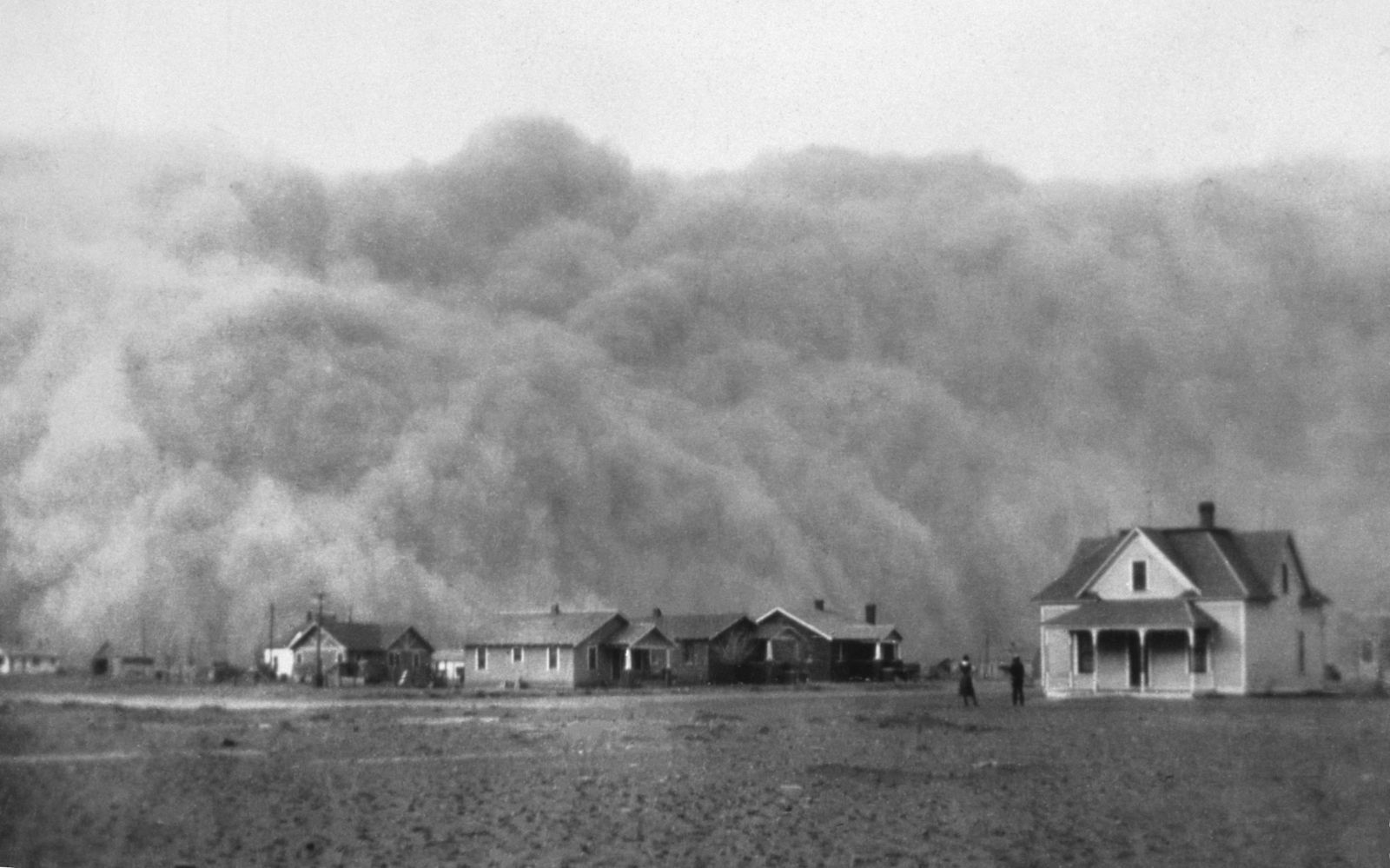
Image: George Everett Marsh Jr., Public domain, via Wikimedia Commons

The 1929 Wall Street Crash had already kickstarted the Great Depression, but the American crisis was still deepening. By the start of the 1930s, years of severe drought had hit the Great Plains (comprising ten states in the Midwest and Rocky Mountain regions) and had worsened an environment already depleted by human intervention. Native grasses that protected the topsoil had been eradicated through plowing, leaving the land vulnerable to wind erosion, while intensive cultivation of single crops had depleted the land. All this caused severe dust storms that hit the plains, further eroding the fields and suffocating the crops. In an agricultural recession, thousands of families migrated West looking for work.

The government’s response had diverse approaches. The Soil Conservation Service focused on changing detrimental agricultural practices through educating farmers on contour plowing, crop rotation, and shelterbelt tree planting. FDR’s "New Deal" plan established subsidies for farmers, requiring landowners to distribute a percentage of the subsidy to their laborers, and thousands of cattle were acquired, butchered, and distributed by the government to the affected population. Ultimately, the return of rain in the 1940s ended the drought and helped restore the soil, but the education, conservation, and relief mechanisms implemented by the government ensured that the Great Plains would not be as severely affected by drought in the future.

7
The Cold War (1945-1991)

Image: Markus Winkler

The euphoria of the WWII victory in American politics was short-lived, as the climate quickly shifted to a new threat: communism. The Cold War deeply affected domestic American life, and the paranoia of the Red Scare prompted the government to invest thousands of dollars in defense , infrastructure, political propaganda, and counter-espionage. Sadly, this paranoia also allowed government officials and politicians, like Senator Joseph McCarthy, to persecute and blacklist thousands of suspected communist sympathizers without solid evidence.

While the desire to beat the USSR in public achievements resulted in the government funding the military industry, science education and research, and sports programs, espionage and propaganda were targeted through the creation of federal agencies —among them the CIA, the NSC, and the NSA— that managed domestic security, international intelligence, information, and propaganda.

8
The Revolutionary War Smallpox Epidemic (1775–1782)
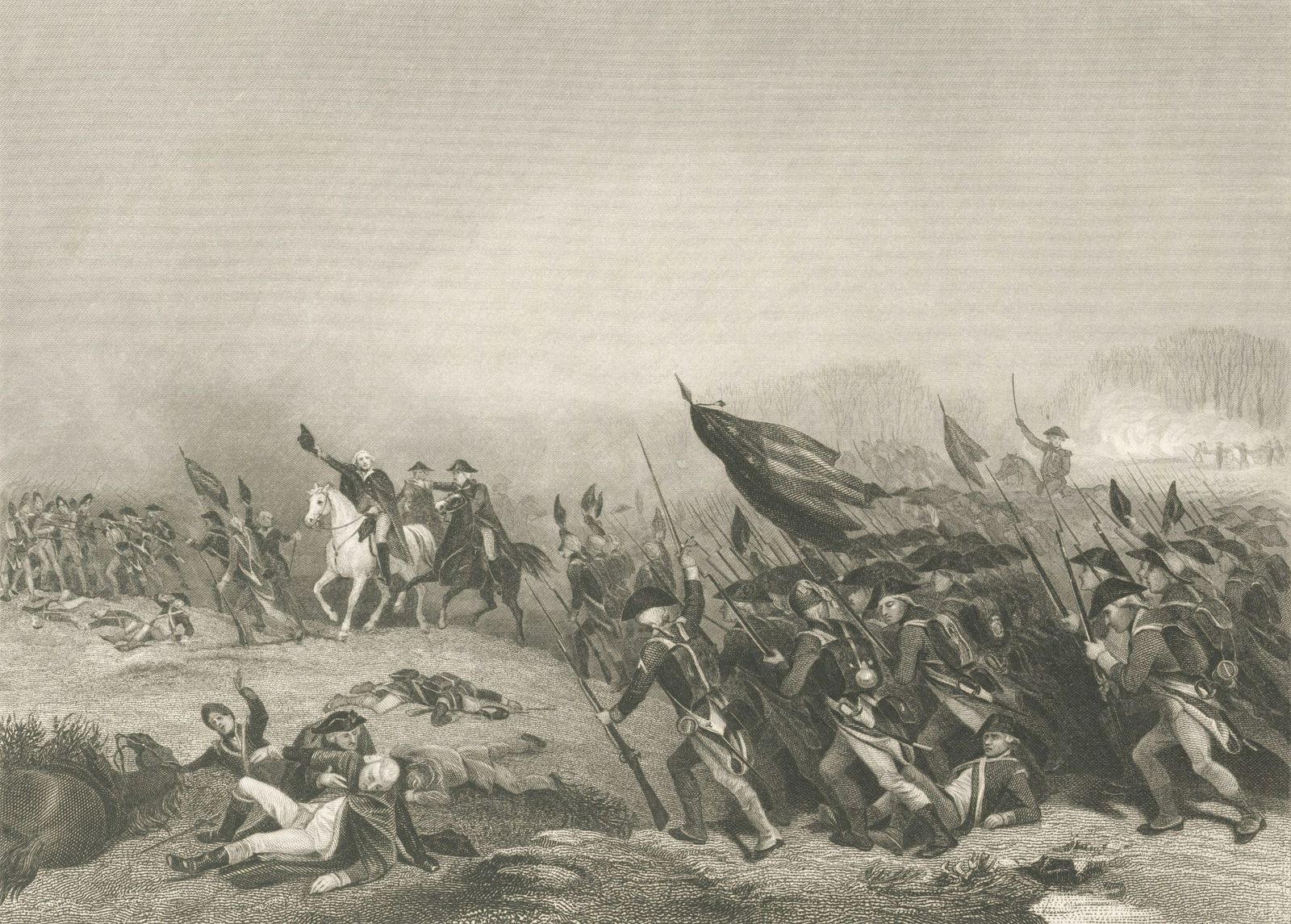
Image: The New York Public Library

The 1775 North American Smallpox epidemic lasted for nearly a decade, well beyond the Revolutionary War, but the military leaders of the Revolution were the ones to put in the efforts to contain it and prevent further spreading of the disease. In 1775, smallpox was a rampant disease in the American colonies, and a big part of the population had not been exposed to it due to isolation. This meant that, when colonists from rural areas joined the Continental Army, overcrowded military camps became a hotspot of contagion. It is estimated that smallpox caused more casualties than the fighting itself.

While smallpox decimated the Revolutionary Army, the British, who had been traditionally exposed to the disease, were immune to it. Recognizing the need to stop the spread of the disease, George Washington ordered a secret mass immunization of the troops in 1777 , a measure that drastically lowered the mortality rates among the army. While several founding fathers were in favor of mass inoculations and better public health policies, most of the colonists were distrustful of vaccinations and of government-mandated health policies. The success of Washington’s mass inoculation showed that public health policies could make the difference, and paved the way for later policies and health systems.

9
The Cholera Waves (1832–1866)
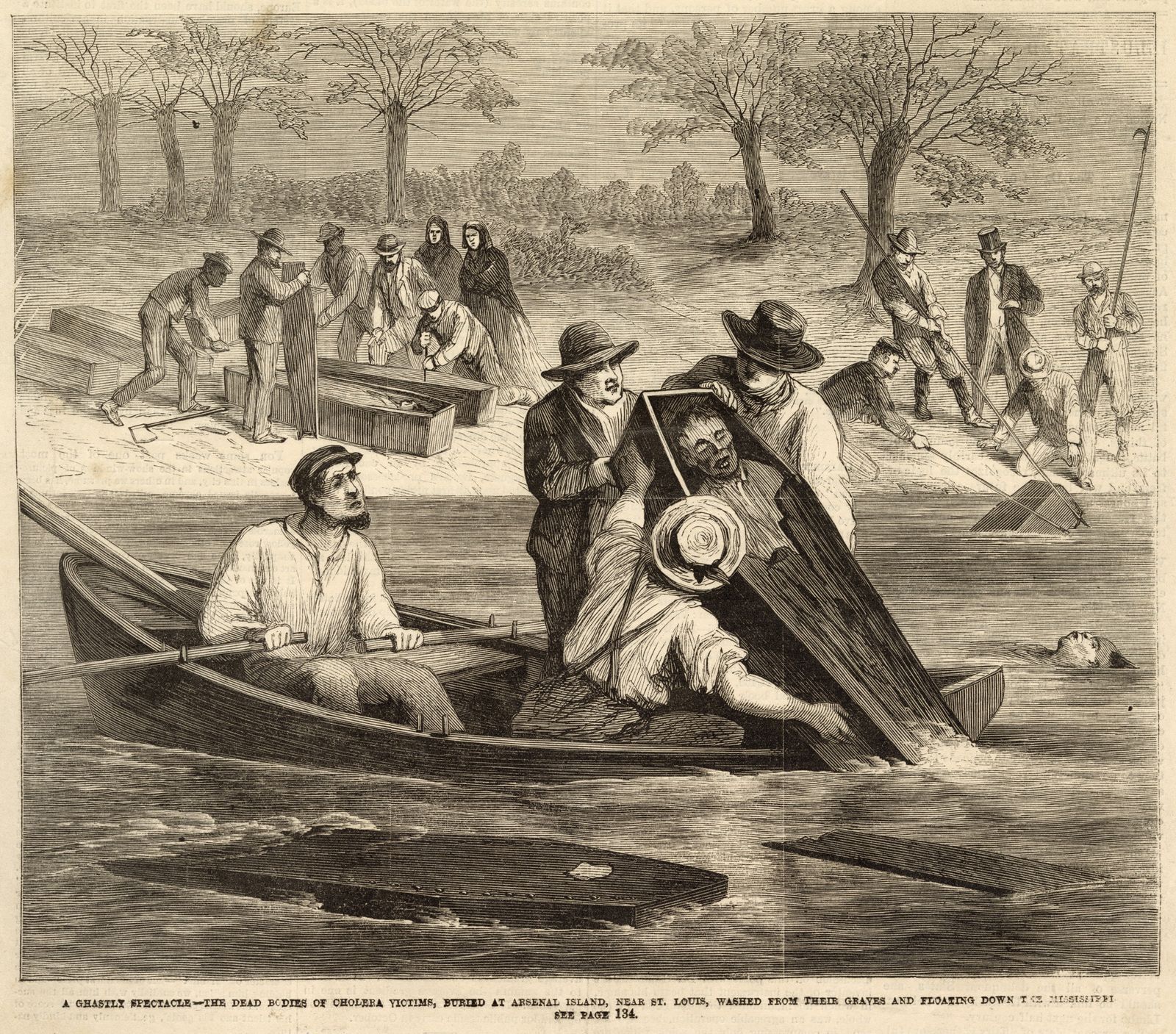
Image: Missouri Historical Society, No restrictions, via Wikimedia Commons

The U.S. went through three major cholera waves in 1832, 1849, and 1866, with tens of thousands of casualties, economic crises, and mass panic. Rapidly growing cities lacked proper sewage, and rancid water accumulated in the unpaved streets, while overcrowding and poor living conditions furthered the contagion. New travel methods such as the railroad helped introduce the disease to different regions, while doctors blamed the epidemic on "bad air" or a divine punishment.

It was not until the 1866 wave that city governments decided to change their approach to the health crisis. New York was the first city to establish a Metropolitan Board of Health, which focused on improving sanitary conditions and reforming the hospital system. Police forces encouraged (or forced) residents to clean their yards and remove manure and rotten waste, while the city strived to maintain clean streets and build sewage systems. By the time the third cholera wave hit New York, the city was prepared, and the number of casualties was much lower. Following its example, other major cities established their own permanent boards of health, implemented municipal health codes, improved their hospitals, and constructed underground sewers.

10
The Smoking and Lung Cancer Crisis (1960s)
Image: Pascal Meier

Although tobacco had been popular for decades, the 20th century saw a rise in consumption thanks to aggressive cigarette marketing campaigns in print, radio and television. Smoking was allowed everywhere, and it was portrayed as stylish and smart in movies and magazines. There was a lack of education about the addictive properties of nicotine and the chemicals present in commercial cigarettes , a fact that the tobacco industry was eager to keep concealed. By the 1960s, lung cancer and heart disease numbers had risen dramatically, forcing the government to address the situation.

The 1964 Surgeon General’s report was the first to publicly link lung cancer and heart disease with tobacco consumption. Following several reports by other specialists , public opinion about cigarettes drastically shifted, despite the efforts of the tobacco industry . In 1965, Congress passed a law requiring mandatory health warning labels on cigarette packaging, and in 1971, cigarette radio and TV ads were outlawed. As a result, from the 1960s to the 2010s, cigarette consumption decreased by nearly 50%.

11
The Pure Food and Drugs Act (1906)

Image: Arno Senoner

If you are the kind of person who religiously scans the ingredient list on food and medicine labels, you might not know that these labels exist thanks to a novel (and several journalists' investigations). In the late 19th century, increased food and medicine demands led manufacturers to sell tainted or unsafe products with false labels and filled with unsafe preservatives. Factory sanitary conditions were also subpar, which led many journalists to write about the issue. In 1906, Upton Sinclair’s novel The Jungle described the meat-packing industry practices in a graphic and revolting way, which caused mass outrage.

The Pure Food and Drugs Act of 1906 was the first of a series of laws passed by Congress to address the issue. It created a federal agency (now called the FDA) responsible for overseeing food and drug manufacturing , banned a series of commonly used substances and active ingredients, outlawed the sale of spoiled or contaminated food, set an inspection system for factories, and acted as a baseline for future consumer protection laws.
History History 4 min read

The nation’s best friends

Punxsutawney Phil and other timeless animal celebrities

Image: Maja7777 / Olga Nayda

Who hasn’t heard of Balto the dog or the famous groundhog, Punxsutawney Phil? Some animals that lived in the U.S. truly ascended to celebrity status after their remarkable feats. Some were commemorated in monuments, paintings, or movies—but others live on only in our stories. Let’s talk about famous animals in American history !

1
Punxsutawney Phil

Image: Steve Wrzeszczynski

Every February 2nd, the eyes of the nation turn to a small town in western Pennsylvania. That’s where Punxsutawney Phil, a weather-predicting groundhog , is roused from his burrow on Gobbler’s Knob to look for his shadow.

According to tradition, if he sees it, we get six more weeks of winter; if not, spring is just around the corner. The quirky ritual began in 1887 and has since grown into a full-blown celebration.

2
Balto

Image: Meg von Haartman

In the winter of 1925, a deadly diphtheria outbreak threatened the remote town of Nome, Alaska. It was the sturdy Siberian Husky Balto who helped deliver the lifesaving antitoxin across snow and blizzard conditions to Nome.

Although dozens of dogs and mushers contributed to what became known as the Great Race of Mercy , Balto was hailed as a national hero. He even received his own statue in New York’s Central Park just a year later—a monument that still stands today, inscribed with the words: "Endurance, Fidelity, Intelligence."

3
Seaman (a.k.a. "Scannon")

Image: The New York Public Library

In 1803, explorer Meriwether Lewis purchased a Newfoundland dog for $20 and named him Seaman. The dog became a four-legged member of the famed Lewis and Clark Expedition .

He accompanied the Corps of Discovery as they crossed the North American continent, helping with hunting, standing guard, and even surviving a wound from a beaver attack.

The funny bit is that for a long time it was believed that William Clark’s journals referred to the dog as "Scannon," but it might have been a dizzy transcription of his handwriting.

4
Smoky the War Dog

Image: Simona Jašauskytė

Found in a foxhole in New Guinea during World War II, Smoky was a Yorkshire Terrier weighing just four pounds—but her size turned out to be her superpower .

She was trained by her rescuer, Corporal William Wynne, and famously ran communication wires through a narrow pipe beneath an airstrip in Luzon, Philippines.

After the war, Smoky became one of the first recorded therapy dogs, visiting wounded soldiers and performing tricks to lift their spirits. Today, she is honored with memorials in both the U.S. and Australia.

5
Sergeant Reckless

Image: Irina Nakonechnaya

During the Korean War, a small Mongolian mare purchased by U.S. Marines for $250 and nicknamed Reckless made multiple trips through enemy fire to deliver ammunition and evacuate wounded soldiers, sometimes entirely on her own.

For her bravery, she was promoted to Staff Sergeant , awarded two Purple Hearts, and allowed to eat scrambled eggs, Coca-Cola, and beer with the troops. Today, statues in Virginia and California honor her legacy.

6
Cher Ami

Image: William Chen

In the chaos of World War I, a pigeon named Cher Ami saved nearly 200 men from the "Lost Battalion" by flying a crucial message across enemy lines —despite being shot, blinded in one eye, and wounded in her leg during the flight.

Her message arrived, artillery fire was redirected, and the soldiers were rescued. For her bravery, Cher Ami was awarded the French Croix de Guerre and was later taxidermied after her death. You can still visit her at the Smithsonian National Museum of American History.

7
Old Bob

Image: Philippe Oursel

Abraham Lincoln’s beloved driving horse , Old Bob, was a familiar sight in Springfield, Illinois, often seen trotting through town pulling the future president’s buggy.

But his most memorable appearance came in 1865, when he walked riderless and draped in a mourning blanket during Lincoln’s funeral procession. The image of the grieving horse moved the nation and was widely reproduced in illustrations and prints.

8
Pauline Wayne

Image: Susan van Bragt

Pauline Wayne, a Holstein cow, was the last cow to reside at the White House. Gifted to President William Howard Taft by a Wisconsin senator, Pauline grazed on the White House lawn and provided fresh milk for the First Family.

She even survived a brief brush with danger when she was mistakenly sent to a slaughterhouse during a train trip—but was rescued just in time.

9
Macaroni

Image: Sergej Karpow

When Lyndon B. Johnson gifted a pony to young Caroline Kennedy in the early 1960s, he probably didn’t expect Macaroni to become a national sensation—but that’s exactly what happened.

The little white Shetland pony often grazed on the White House lawn, delighting photographers and stealing the spotlight during Camelot-era press coverage. Macaroni received fan mail, appeared in Life magazine, and even inspired a song by folk legend Pete Seeger.

10
Old Abe

Image: Arnaud Padallé

Old Abe was a bald eagle who became the mascot of the 8th Wisconsin Volunteer Infantry Regiment during the Civil War. Perched on a shield-topped staff, he accompanied troops into battle, reportedly screaming whenever gunfire broke out.

He survived multiple campaigns and quickly gained legendary status, later appearing on military insignia and even on U.S. war bond posters in both World Wars.

11
Fala

Image: D_Theodora

Franklin D. Roosevelt’s Scottish Terrier, Fala, traveled with him on countless trips, had a press secretary, and even appeared in cartoons and newsreels.

One of the most famous White House pets in history , Fala was awarded a unique honor: he is the only presidential pet with a statue near his owner’s memorial in Washington, D.C.

12
Checkers

Image: SlimMars 13

In 1952, then–vice presidential candidate Richard Nixon gave a nationally broadcast speech defending himself against accusations of financial impropriety. His emotional turning point was declaring that he would keep one gift no matter what: a black-and-white cocker spaniel named Checkers, beloved by his daughters.

Some believe the heartfelt mention of the pet was inspired by the earlier success of Fala. The speech struck such a chord that it is still known today as "the Checkers speech."

Culture Culture 5 min read

Uncovering the genius

What was Einstein's first job? Discover 10 fun facts about the scientist!

Image: Raghav Modi

On March 14, 1879, the famous Albert Einstein was born in Ulm, Germany. While we all recognize him as a major figure in the history of science and appreciate his many contributions to the fields of physics and quantum mechanics, there are many colorful facts about Einstein's life that you probably haven't heard before. From his first job and hobbies to his love affairs and preferred clothing, we'll uncover 10 surprising facts about the author of the Theory of Relativity!

1
Smart boy

Image: Benjamin Smith

It's definitely not a secret that Albert Einstein was an exceptionally intelligent child. However, his achievements were extraordinary, and we're not just talking about him getting A's in school; he was teaching himself complex subjects as a preteen just for fun!

At just 12 years of age, his curious and powerful mind led him to become an autodidact. While other children were naturally playing on the playground, Einstein taught himself algebra and geometry in a single summer!

2
Scientific teen

Image: Camille Orgel

That genius child became a teenage scientist. At 16 years old, most of us were dealing with high school, but Einstein was doing something a bit different: he was writing his first scientific paper, titled "On the Investigation of the State of the Ether in a Magnetic Field."

The paper was inspired by his compass and examined the force of magnetism. Although it wasn't published, this research reveals the passion, dedication, and great intellect that Einstein displayed from a very young age.

3
A hobby

Image: Providence Doucet

But calculus and science weren't the only interests of the young Einstein. One of his other great passions was music. And, of course, he stood out in that field too.

It turns out that his mother, Pauline, was a talented pianist, and she encouraged Albert to play music from an early age. At 5 years old, Albert received a violin as a gift and began his lessons immediately.

It's said that, at first, he struggled a bit due to the instrument's complexity—yes, probably because he was only 5—but by the age of 13, he had become a skilled violinist, playing compositions by classical composers such as Bach and Mozart.

4
First job

Image: Andrew George

Einstein graduated from the Polytechnic Institute in Zurich in 1902 at the age of 23. Surprisingly, despite his impressive intellectual ability and broad knowledge, he was rejected for many of the academic positions he applied for after graduation. Faced with this situation, the scientist accepted a job at the Swiss Patent Office in Bern.

Later, Einstein stated that taking that job was "a salvation," as it provided a stable income and, at the same time, gave him free time to commit to his ongoing scientific research fully. Thanks to this key decision, by 1909, Einstein had already become a renowned scientist, celebrated for his contributions to physics.

5
Another passion

Image: Ian Keefe

With such a wonderful mind, it's no surprise that Einstein would have multiple and varied passions and hobbies.

One of those was sailing. Although he developed this interest as an adult, he was still very young when he discovered that sailing had a calming effect on him.

Sailing became one of his favorite activities, allowing him to escape the intensity of his work and appreciate nature—and his relationship with it—from a different perspective. He would often spend entire days on lakes and rivers, both during his time in Europe and later in the United States.

6
Almost a president

Image: Kate Macate

Among Einstein's varied accomplishments, there is one that many people don't know about: he almost became a president!

In 1952, the genius received a formal invitation from Israel to become the country's president. By that time, Albert was already a recognized and respected physicist, making him an ideal figure for that leadership role. However, Einstein politely declined the offer, claiming that he didn't have the political experience needed for the position and that his desire was to continue working in the scientific field. Once again, his wisdom stood out.

7
100 against him

Image: Igor Omilaev

Standing out in a field and introducing new ideas can often turn many against you. That "hate" we see today on social media isn't something entirely new. Some public figures had to deal with hate long before the internet became part of our daily lives.

Something like that happened to Einstein. As is well known, the publication of his Theory of Relativity brought a lot of uproar, both positive and negative. In 1931, a group of scientists published a collection of essays called One Hundred Authors Against Einstein (a bit aggressive, right?), in which they opposed the new ideas and discoveries of the German scientist.

8
Gossip

Image: Jarvik Joshi

The 20th century had something for everyone. In the 1950s , while Einstein was immersed in his theoretical physics work, Hollywood was at one of its peaks, with stars like Audrey Hepburn, Elizabeth Taylor, Grace Kelly, and Marilyn Monroe gracing the screen. While it may seem that science and entertainment are separate realms, rumors and gossip brought these two worlds together.

Legend has it that our well-remembered scientist had a brief romantic affair with none other than Marilyn Monroe, one of the most talented and beautiful women the world has ever seen. Although it's true that both figures met at several public events in the United States, there's not enough evidence to support this rumor.

9
The marriage

Image: Marc A. Sporys

There is a romance involving Einstein that was somewhat controversial but definitely confirmed. We're talking about his second marriage.

Einstein was married twice in his life. In 1903, he tied the knot with Mileva Marić, his colleague at the Polytechnic Institute in Zurich, Switzerland. Just like him, she was also noted for her brilliance. After 16 years, the marriage began to weaken, and the couple divorced in 1919.

That same year, Einstein married for the second time, this time to his first cousin , Elsa Löwenthal. The marriage was controversial due to their familial connection, but the union lasted for 17 years, until Elsa's death in 1936.

10
Free ankles

Image: Mockup Graphics

We all have our fashion quirks, right? Some hate turtlenecks, others choose the quality of their shirts carefully, and others may pay attention to details like accessories.

It turns out that Albert Einstein also had a little quirk when it came to clothing, but it's probably not what you're expecting. In fact, Einstein didn’t pay much attention to clothes or fashion. However, there was one particular item he found totally annoying and useless: socks . It’s said that he often wore mismatched socks for several days in a row, and at one point, he simply stopped wearing socks altogether.

Explore more American facts

Choose your favorite category!

General
General

As American as apple pie—the very best America has to offer!

Culture
Culture

Delve into the astounding richness of American lore.

Geography
Geography

Hop in and explore vast and diverse American landscapes.

History
History

Discover the key moments that shaped the United States.