General General 3 min read

Not everything has instructions

You were doing it wrong: Discover 12 things with unexpected uses

Image: Polina Zimmerman

Most of the things we use daily don’t require instructions to be operated successfully. Many others, we learn to use by watching other people. But in this instruction-less environment, some not-so-obvious possibilities are often overlooked. Do you know what the bumps on the F and J keys are for? Or what that extra piece of fabric that comes with some clothes is meant for? Read on to find out!

1
Tin can tab holes

Image: frame harirak

The tab on a tin can, which we use to open it, has two holes—one smaller than the other. If you turn the tab around and place the smaller hole over the can’s opening, you can slide a straw through it , keeping it in place.

2
F and J bumps on keyboards

Image: Jan Loyde Cabrera

Have you ever noticed the small bumps on the F and J keys of every computer keyboard? These bumps are tactile information that lets you know where your fingers are placed on the keyboard without having to look at them.

3
Pasta scoop holes

Image: María Sainz Cabezalí

Most people think the hole in the middle of a pasta scoop is just a strainer for draining excess water. While it does serve that purpose, it is actually designed to measure a single serving of spaghetti .

4
Oven under drawer
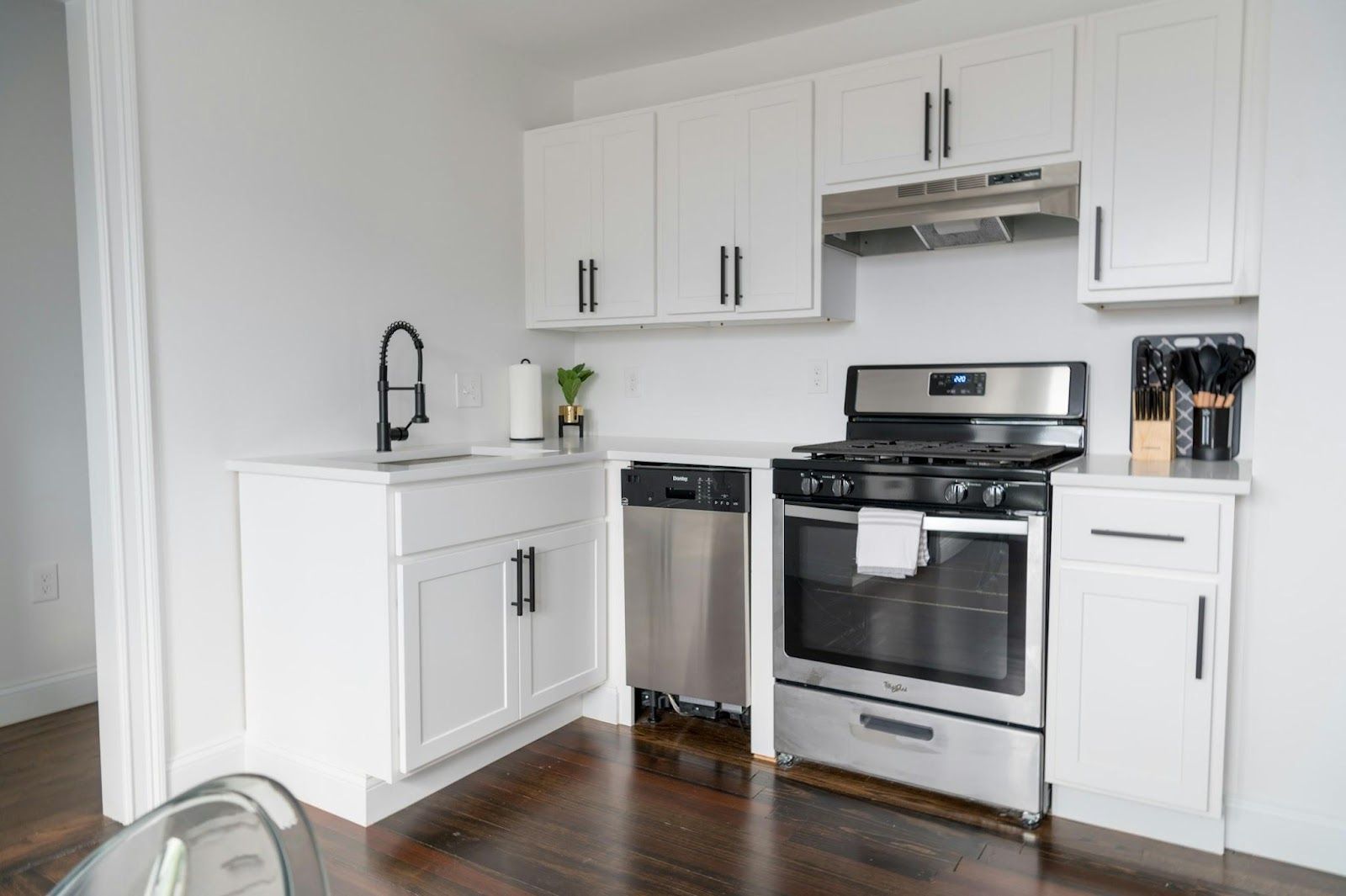
Image: Andrea Davis

The drawer beneath an oven is designed to keep food warm without cooking it further. In some models, it functions as a broiler drawer , it can be used for grating cheese. A heating element above the drawer allows for high-heat cooking.

5
Extra fabric

Image: PlanetCare

Some clothing items come with a small piece of extra fabric, matching the garment's material. This fabric isn’t meant as a patch for repairs but rather for testing in the washing machine , allowing you to check how it reacts to different wash cycles before laundering the entire garment.

6
Pan handle hole

Image: Mara Conan Design

The hole at the end of most pan handles is designed to hold a wooden spoon , preventing messes on the kitchen counter. Simply slide the handle of the wooden spoon into the hole, letting the spoon rest over the pan when not in use.

7
Toaster crumb tray

Image: Daniel Salgado

Hidden away at the bottom of your toaster’s side is a small removable tray designed to catch and collect crumbs . You can slide it out to dispose of the crumbs and slide it back in for easy cleanup.

8
Marker on laundry detergent’s bottle cap

Image: Julianna Arjes

Most people who do laundry know that the bottle cap on laundry detergent is used to pour the liquid into the washing machine. However, not everyone notices that these caps have markings inside to measure the correct amount of detergent for a single wash cycle.

9
Utility knife blade replacement

Image: ds_30

When your utility knife blade starts to show signs of wear, you can break off the end segment to reveal a fresh, sharp edge . To do this, remove the detachable plastic piece from the back of the knife. This piece has a small slot where you can insert the blade’s end segment and snap it off safely. Once done, simply reattach the plastic piece, and your knife is ready to use again.

10
Color thread on wheel tire

Image: Jaye Haych

Many tire manufacturers embed colored threads near the outer edge of tires to indicate when they need to be replaced. These thread lines help measure tread depth . When the tread wears down to the level of these colored lines, it signals that the tire is approaching the end of its usable life and may need to be replaced.

11
Pint glass bulge

Image: tito pixel

If you've ever wondered what the bulging part on the sides of a pint glass is for—besides aesthetics—the answer can be found in bars and pubs everywhere. When glasses are stacked, they can sometimes get stuck together . However, pint glasses with a bulging design prevent this from happening .

12
Tic Tac dispenser

Image: jarmoluk

Tic Tac containers have an oval-shaped indentation in the lid, where a single Tic Tac can fit snuggly . This design functions as a dispenser for individual servings. Instead of shaking the container like a salt shaker, simply tilt it on its side, open the lid slowly, and a single candy will appear on it.

History History 3 min read

Everything has a secret to tell

Take a deep breath before reading these iconic landmarks’ untold stories

Image: Venti Views

America is filled with famous landmarks that everyone recognizes. But some of these places hold secrets known to only a few. For example, did you know that Niagara Falls can be turned off and on like a faucet? Or that a hidden social club exists inside New York’s Grand Central Station? Discover 12 of these incredible facts and impress your friends with your knowledge!

1
The Statue of Liberty’s color

Image: Pierre Blaché

We start our list with a moderately well-known fact: the Statue of Liberty’s beautiful emerald color is not original. Technically, it’s a sign of damage. While the statue's infrastructure is made of iron, its exterior is copper, which has turned green over time due to oxidation .

Fortunately, that same green coating now protects the statue from further damage and deterioration.

2
Grand Central Terminal’s hidden club

Image: David Vives

A busy train station may not seem like the ideal place for a social club, but that’s exactly the case with the Explorers Club. Operating for decades, this exclusive venue primarily serves locals, featuring a full gym, an indoor hard court, and even a smaller secondary court .

3
Gateway Arch’s time capsule

Image: Chris Hardy

This beloved St. Louis landmark holds a secret at its peak: a time capsule was placed inside the arch in 1965 , containing 762,000 signatures—many from students who attended St. Louis schools at the time.

The capsule is permanently welded inside the arch and will remain sealed for as long as the structure stands.

4
New York's High Court Building’s ball court

Image: Markus Spiske

New Yorkers seem to have a penchant for sports courts hidden on the top floors of iconic buildings—this one being the second on our list. The New York High Court Building is primarily a place for legal proceedings and bureaucratic work, but on its fifth floor, visitors will find a basketball court known as the "Highest Court in the Land."

5
The White House’s dentist

Image: Benyamin Bohlouli

It’s easy to imagine hallways and rooms filled with endless state secrets in the White House basement. But what most people won’t guess is that you can also find a dentist’s office, a carpenter’s shop, and even a bowling alley down there.

6
Niagara Falls is a huge faucet

Image: Tosab Photography

As strange as it sounds, this statement is true in a sense. The complex system of pumps and gates that administer the water of the Falls can be controlled by a central command.

In fact, part of Niagara Falls is even scheduled to be "turned off" in the coming years to replace some obsolete structures—just like a faucet.

7
Washington Monument’s Civil War graffiti

Image: Sonder Quest

Graffiti has been around all over the world, for a couple of centuries now. The Washington Monument was still under construction when the Civil War broke out, and Union soldiers stationed there carved their names and drew pictures onto the monument . These markings can still be seen today at its base.

8
Mount Rushmore’s hidden room

Image: Jéan Béller

One of America’s most famous landmarks hides a secret room known as the Hall of Records , which is filled with documents intended to preserve the nation’s history for future generations. This hidden chamber is accessed through a concealed door behind Abraham Lincoln’s ear.

9
Lincoln Memorial’s secret carvings

Image: Andy Feliciotti

Speaking of Lincoln, you’ll need a flashlight to spot this one—but it’s there. On the north wall stone of the Lincoln Memorial, the letters "EBL" can be seen carved . These initials stand for Evelyn Beatrice Longman, the artist who sculpted the memorial’s ornamental border.

10
Empire State Building’s secret floor

Image: Kit Suman

As it turns out, the Empire State Building has one more floor than the famous 102. This extra floor was originally constructed for building maintenance but now serves as an exclusive hotspot for celebrities, complete with an ultra-thin, knee-high railing separating observers from the sky surrounding them.

11
Brooklyn Bridge’s wine cellars

Image: Partha Narasimhan

Wine cellars are cold and dark places—just like the basements at the Brooklyn Bridge’s bases. This connection, now quite obvious, was made by the bridge’s engineer, Washington Roebling, who incorporated two full wine cellars into the bridge’s bases on each side and then rented the space to local businesses who needed the extra storage.

12
Disneyland’s secret members-only club

Image: Travis Gergen

If a trip to Disneyland isn’t enough of a Disney experience for you, there’s an exclusive club on the premises called Club 33 . This exclusive joint boasts an invite-only guest list, where members must pay anywhere from $25,000 to $100,000 to join, with annual membership dues ranging from $12,500 to $30,000. Do you think it’s worth it?

General General 4 min read

Beyond the Preamble

The amendment that took 200 years and other intriguing Constitution facts

Image: Anthony Garand

The Constitution is undoubtedly one of the most important documents in our history —and in our present! But even if we think we know everything about it, there are still some surprising details that might shock even the most knowledgeable history fans. Did you know that the 27th Amendment, which is also the last one, took more than 200 years to be ratified? Join us to uncover 10 fascinating facts about the Constitution that many people don't know about!

1
10/12

Image: Sue Winston

We know that the Bill of Rights consists of the first 10 amendments to the Constitution, but did you know that Congress originally proposed 12 amendments? That's right! Yet, the states ratified only 10, leaving two out.

But here's the interesting part: One of these unratified amendments —the one concerning congressional compensation— was ratified more than 200 years later! In 1992, it became the 27th Amendment, which is also the last one.

2
World record

Image: Pierre Bamin

Our Constitution was signed in the 18th century, and while we know it's been a long time, what you might not know is that it is considered the world's oldest written national constitution still in effect today.

With various changes and amendments added over the years, this document not only defined the ideals of our nation but also earned us a world record!

3
The youngest

Image: MJ S

The men who signed this historic document were of varying ages. In fact, the age difference between the youngest and oldest signer was a remarkable 55 years!

The youngest to sign was attorney Jonathan Dayton of New Jersey, who was 26 years old at the time. Do you want to know who was the oldest? Keep reading!

4
The oldest

Image: Adam Nir

Well, as we mentioned, there was a 55-year age gap between the youngest and oldest signers of the US Constitution.

Do you know who the oldest was? That's right, Benjamin Franklin! He was a distinguished 81 years old when he signed this historic document.

5
500 copies

Image: Christa Dodoo

The original Constitution had 500 copies printed for distribution, made by the Founding Fathers themselves. They distributed those copies to members of Congress and state legislatures. Of those 500 original copies, however, only 13 are known to exist today. We have to say that, given that more than 230 years have passed, it's impressive that so many have survived!

6
How much?

Image: Jp Valery

Logically, since so few original copies remain, they ' re incredibly rare and valuable. In fact, one of these original documents was sold in 2021, and you won't believe its price!

You might have imagined it was sold for $5 million, maybe $10 million. But no, this invaluable copy went for $43.2 million. With that sale, it also became the most expensive historical document ever sold at an auction.

7
30 bucks

Image: Barry A

The person who transcribed the original US Constitution signed in 1787 had an important job, didn't he? The man who accomplished this major deed was Jacob Shallus, a clerk of the Pennsylvania General Assembly at the time. He was responsible for taking the text drafted by the Founding Fathers and transcribing it onto parchment: over 4,000 words scribbled down entirely by hand! Surprisingly, he was paid just $30 for this task.

8
Let's celebrate

Image: Kelly Sikkema

In 1789, long before Thanksgiving became an official national holiday, President George Washington issued a proclamation declaring November 26 as a day to give thanks. As it was an occasion for national gratitude, he also encouraged citizens to celebrate the birth of the new nation and the recently established Constitution.

9
A spelling issue

Image: Katherine McAdoo

Being a text from so long ago, some words —particularly proper nouns— may have changed slightly since the Constitution was first drafted. This was the case for the state of Pennsylvania, which is spelled as "Pensylvania" in the original document. However, while some may consider it a misspelling today, it was actually an accepted spelling for the state's name in the 18th century.

Fun fact: You can also find "Pensylvania" engraved on the Liberty Bell!

10
The Father of the Constitution

Image: Richard Hedrick

"The Father of the Constitution" is one of the nicknames given to James Madison, one of our Founding Fathers. And it's these very words that appear on the rare $5,000 bill.

Although this bill is no longer in circulation, if you are lucky enough to get your hands on one, you'll read "James Madison, The Father of the Constitution" next to the portrait of the 4th U.S. President.

Explore more American facts

Choose your favorite category!

General
General

As American as apple pie—the very best America has to offer!

Culture
Culture

Delve into the astounding richness of American lore.

Geography
Geography

Hop in and explore vast and diverse American landscapes.

History
History

Discover the key moments that shaped the United States.