History History 4 min read

Nature’s wrath unleashed

Wild, wild weather: 10 natural disasters that changed U.S. history

Image: Greg Johnson

America’s vast territories and diverse landscapes make it a hotspot for some of the world’s most remarkable weather and natural phenomena . From raging tornadoes to volcanic eruptions, the U.S. is no stranger to extreme natural events. While some of these events have left deep scars on the nation’s collective memory, many have also driven significant advancements in prevention and disaster response protocols, helping to mitigate the impact of future occurrences. Here’s a look at 10 of the most powerful natural events in American history.

1
Tri-State tornado

Image: Greg Johnson

In 1925, the Tri-State Tornado carved a path of destruction across Missouri, Illinois, and Indiana. With winds exceeding 300 mph, it remains the deadliest tornado in U.S. history, claiming more than 700 lives and leaving thousands homeless.

This record-breaking F5 tornado—classified as such by modern standards—traveled over 200 miles in just three and a half hours, leveling entire towns. Its unprecedented speed and longevity exposed the limitations of early warning systems, prompting significant advancements in tornado research and forecasting.

2
The Dust Bowl

Image: Sophia Simoes

The 1930s Dust Bowl was a man-made disaster exacerbated by a severe drought across the Great Plains. Decades of over-plowing and unsustainable farming practices had left the farmland highly vulnerable to erosion.

When the drought struck, winds swept loose soil into colossal clouds that darkened cities and devastated remaining crops. These massive dust storms, known as "Black Blizzards," choked the skies and forced thousands of families to abandon their homes . Eventually, the disaster led to significant agricultural reforms under the New Deal.

3
Lake Michigan's seiche wave

Image: Silas Baisch

On the morning of June 26, 1954, a 10-foot-high seiche wave crashed onto the Chicago shoreline , sweeping away eight people and injuring many others. But what exactly is a "seiche wave"?

According to researchers, seiche waves are large, sudden standing waves that form in enclosed bodies of water due to extreme atmospheric changes, such as abrupt shifts in air pressure or strong winds. This rare event shocked the Midwest and prompted scientists to study lake oscillations and their connection to storm systems.

4
Great Alaska earthquake

Image: Joris Beugels

In 1964, Alaska was struck by a devastating earthquake with a magnitude of 9.2, making it the most powerful ever recorded in North America and the second most powerful worldwide. Lasting four minutes and thirty-eight seconds, the earthquake triggered massive tsunamis and landslides across the state, along with significant geographic changes —some coastlines sank while others rose dramatically.

The destruction it caused led to major updates in seismic safety protocols and infrastructure standards throughout the U.S. This event emphasized the need for better preparedness and stricter building codes , to handle similar future events, especially in earthquake-prone areas.

5
Hurricane Katrina
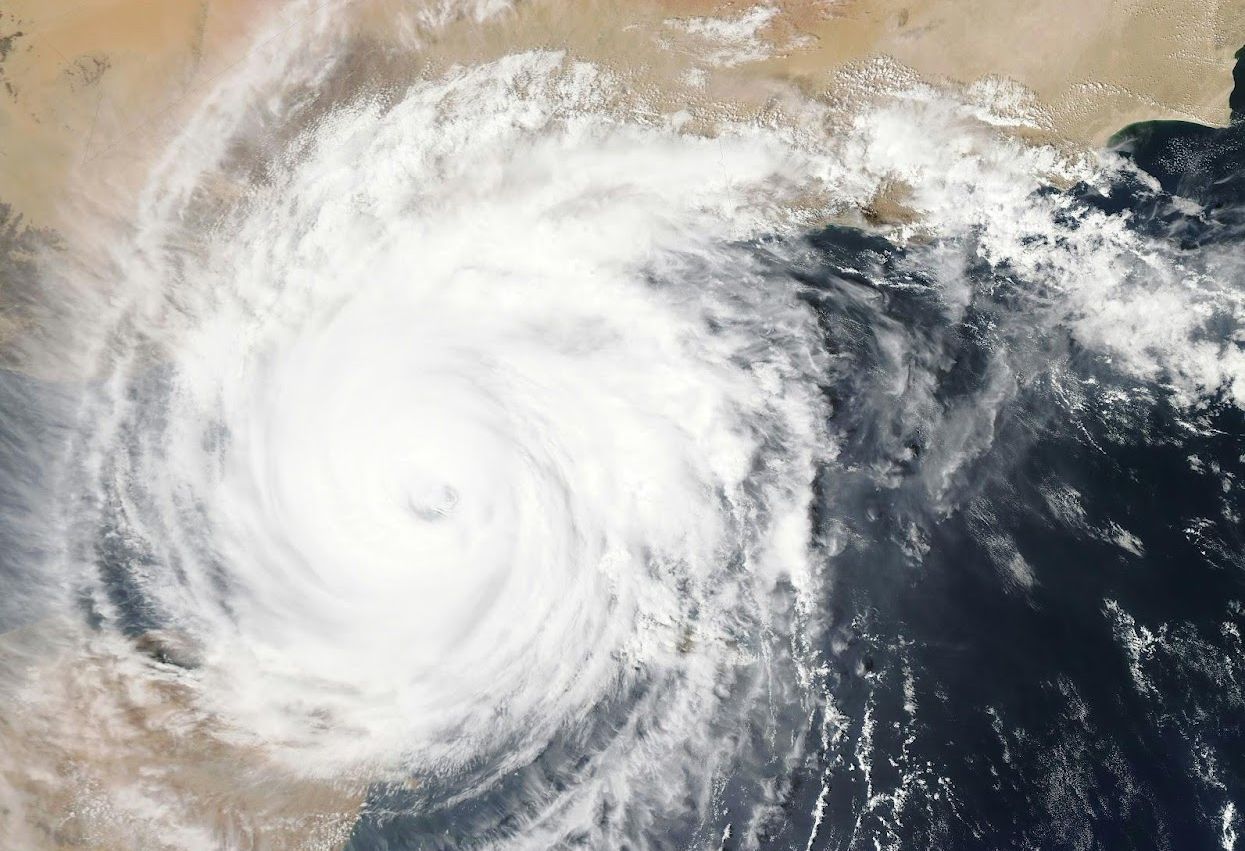
Image: NASA

In 2005, Hurricane Katrina ravaged New Orleans and the Gulf Coast, claiming more than 1,300 lives and leaving millions homeless, sparking an urgent humanitarian crisis. The storm caused an estimated $125 billion in damages, making it one of the costliest hurricanes in history , tied with Hurricane Harvey in the Atlantic basin.

Katrina exposed critical flaws in the region's levee systems and emergency response efforts, prompting widespread criticism and driving essential reforms in disaster preparedness and infrastructure.

6
The Peshtigo firestorm

Image: Tim Mossholder

On the same day as the Great Chicago Fire of 1871, a catastrophic firestorm near the small town of Peshtigo, Wisconsin, scorched approximately 1.2 million acres, making it the deadliest wildfire in recorded history . The uncontrolled blaze claimed over 1,500 lives, though the exact number of fatalities remains uncertain.

Since 1883, there has been speculation that the simultaneous outbreaks of major fires across Illinois, Michigan, and Wisconsin, including the Peshtigo and Chicago fires, were not coincidental but caused by burning fragments from Biela's Comet . However, this theory remains unproven.

7
Superstorm Sandy

Image: Matt Hardy

Nicknamed "Superstorm" by the media, Hurricane Sandy wreaked havoc on the Caribbean and the coastal Mid-Atlantic region of the United States in late October 2012. While it affected 24 states, the most severe damage was concentrated in New Jersey and New York .

The storm caused an estimated $70 billion in damages, flooding New York City's subway system and displacing thousands of residents. It also ignited a nationwide debate about the role of man-made climate change in amplifying the intensity of seasonal storms.

8
Death Valley heatwave

Image: Johannes Plenio

Death Valley recorded the world’s hottest temperature —134°F—in 1913. A testament to America’s climatic extremes, the region’s unique topography traps heat, effectively turning it into a natural furnace.

While the record remains a point of fascination for meteorologists and tourists alike, some recent researchers have challenged the accuracy of the 1913 measurement. Regardless, the region has come close to this temperature in recent years, indicating that a new record-breaking summer may be in the cards.

9
The Great Blizzard of 1888

Image: Jan Canty

The "White Hurricane" of 1888 buried the Northeast under as much as 55 inches of snow, crippling major cities and resulting in over 400 fatalities. Railroads were shut down, and many residents were confined to their homes for up to a week.

As one of the most severe blizzards in American history , the storm compelled New York City to bury power lines and redesign its transportation systems to better withstand future extreme weather events.

10
Mount St. Helens eruption

Image: Tetiana Grypachevska

On May 18, 1980, Mount St. Helens erupted in Washington, triggering massive landslides and pyroclastic flows, killing 57 people and causing over $1.1 billion in damages. The violent blast also reduced the mountain’s height by more than 1,300 feet and sent a plume of ash 80,000 feet into the atmosphere, disrupting air travel for weeks.

This volcanic event, the first in the contiguous United States since the much smaller 1915 eruption of Lassen Peak in California, is considered one of the most disastrous volcanic eruptions in U.S. history. Its aftermath raised awareness of volcanic hazards and underscored the importance of geological research in the country.

Geography Geography 6 min read

WORDS OF WISDOM

Celebrate all that makes us great with these 10 American state mottos!

Image: Maik Poblocki

Mottos truly have a tough job, don’t they? These phrases usually have the gargantuan task of having to summarize everything they represent in just a few words. However, it’s in that simplicity and brevity that their beauty truly shines, and perhaps this concept is most clearly seen in our nation’s inspiring state mottos. These brief yet powerful words are astonishingly able to convey the beauty, history, and character of each of our 50 states, so we have decided to pay homage to 10 of the most remarkable American state mottos. Enjoy!

1
California - "Eureka"

Image: Chor Tsang

According to legend, after the Ancient Greek mathematician Archimedes discovered his groundbreaking principle, he happily proclaimed, " Eureka! " This expression, which means "I have found it," is almost as famous as Archimedes’ work, so it stands to reason that the State of California chose Eureka as its state motto.

The Golden State’s slogan references the California Gold Rush. It is believed that a miner who finally struck gold was as excited about his discovery as Good Old Archimedes was. While the California State Seal has included the word Eureka since its design in 1850, it was only adopted as the state’s official motto over a hundred years later, in 1963.

2
Kansas - "To the stars through difficulties"

Image: Taylor Hunt

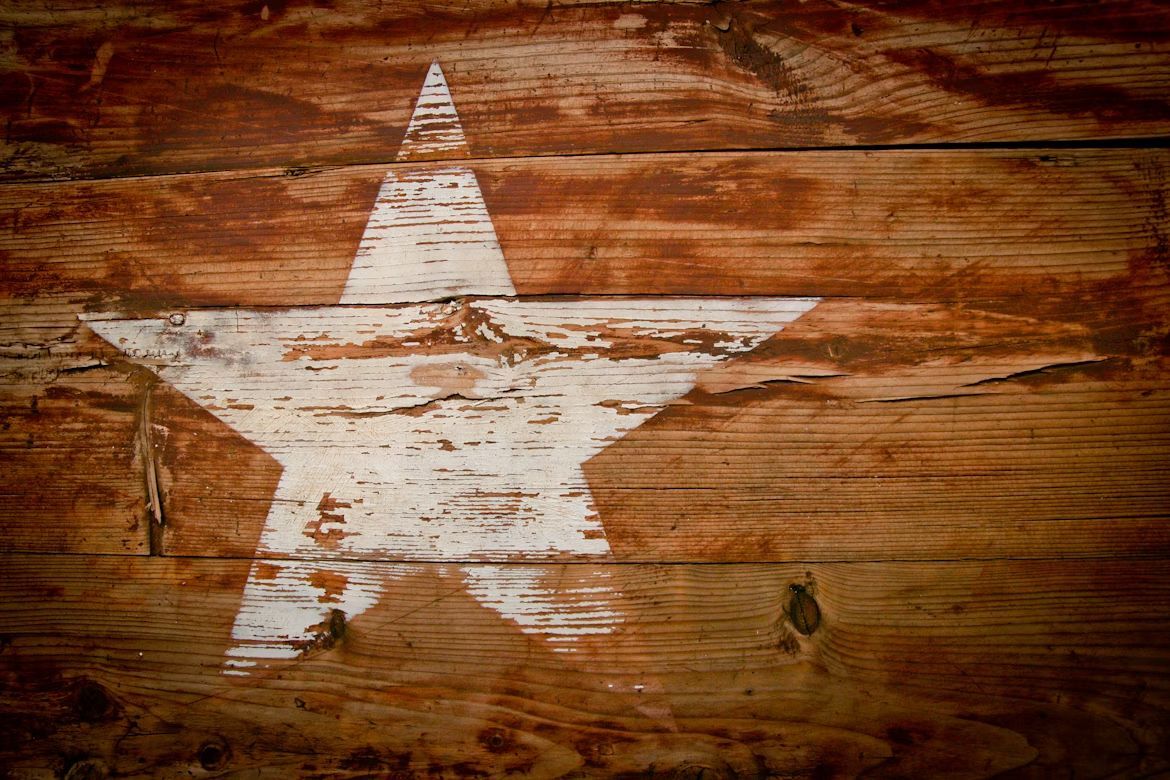
In 1861, the State of Kansas adopted its official state seal which depicted a beautiful prairie at dawn, filled with hardworking Kansans under 34 stars and the Latin motto Ad Astra Per Aspera. Anyone who reads the English translation of this motto will immediately realize how perfectly it describes the industrious and resilient people of Kansas: Ad Astra Per Aspera means "To the stars through difficulties."

Our 34th state chose this phrase alongside its state seal in 1861, only a few months after the first Governor of Kansas delivered the inaugural "State of the State" address. Nowadays, this motto stands as a reminder of both the bravery and diligence of the state’s first settlers, as well as the hardships that Kansas had to go through in order to gain statehood.

3
Indiana - "Crossroads of America"

Image: Steven Van Elk

The phrase "Crossroads of America" has long been associated with the state of Indiana , particularly after a specific intersection in Terre Haute, where U.S. Highways 40 and 41 met. Over time, Indiana itself proudly embraced the title of "the Crossroads of America," eventually adopting it as the state motto in 1937.

Interestingly, while "Crossroads of America" is the state’s official motto, some Hoosier cities have adopted this phrase —or variants of it— as their respective city slogans. For instance, Indianapolis adopted the motto in 1988, to reference how the city serves as a junction of 4 different Interstate Highways.

4
West Virginia - "Mountaineers are always free"

Image: Sara Cottle

Have you ever reached the summit of a particularly steep mountain after hours of arduous trekking? If you had to describe that amazing feeling in one word, what would it be? We’ll leave you to ponder that while we tell you the first word that came into our minds: freedom.

Apparently, we share this feeling with the good people of West Virginia , since its motto reflects the freedom that its magnificent mountains and hills inspire. West Virginia’s motto is the Latin phrase Montani Semper Liberi, which means "mountaineers are always free." Furthermore, since one of West Virginia’s demonyms is "mountaineers," this phrase also speaks to the core of West Virginians’ identity.

5
New York - "Excelsior"

Image: ben o'bro

Any Marvel fan will associate this phrase with comic-book legend Stan Lee, after all, he made this word his catchphrase throughout his many media appearances. However, you might be surprised to learn that "Excelsior" is also New York’s official state motto, and it perfectly describes New Yorkers’ industrious and resilient nature.

"Excelsior" is a Latin word that’s commonly translated as "Ever Upward," but it can also mean "higher" or "superior." It is featured in New York’s coat of arms, which features the representations of Liberty and Justice standing above the state’s motto.

6
Montana - "Gold and Silver"

Image: Trevor Vannoy

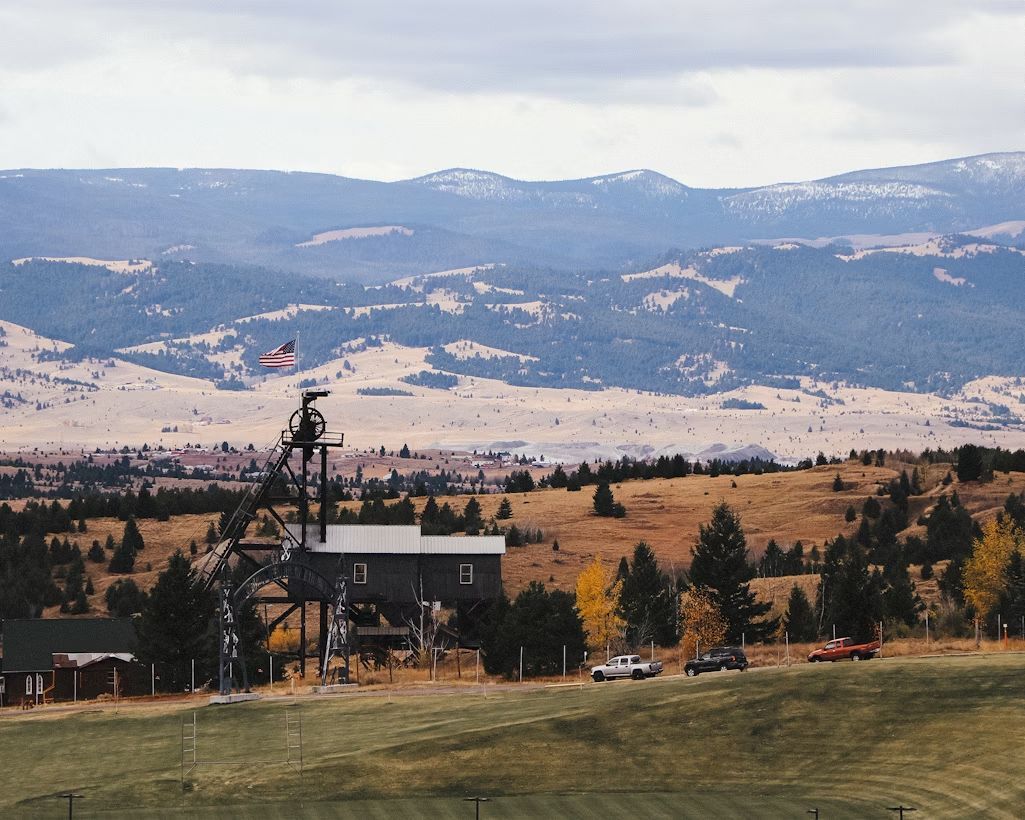
Just like West Virginia, Montana pays tribute to its breathtaking mountains and landscapes with its motto. However, it focuses on another key aspect of its geography, more akin to its nickname: Montana’s motto Oro y Plata literally translates to "Gold and Silver," which is a direct reference to The Treasure State’s proud mining history.

Montana first included the phrase Oro y Plata on its State Seal many years before it was adopted as the state’s official motto. Shortly after Montana was declared an official U.S. territory in 1864, the newly formed state honored the gold rush that had led to its territorial status by including its two most precious metals into its State Seal. Finally, the state motto was officialized in 1865.

7
Tennessee - "Agriculture and Commerce"

Image: Nathan Anderson

It’s no secret that state mottos sometimes reference their state’s most prominent industry: As we mentioned before, Montana and California pay tribute to the mining that helped build their economies. In that regard, Tennessee is no exception; its state motto is incredibly straightforward, directly praising the industries that helped the Big Bend State grow.

Tennessee chose "Agriculture and Commerce" in 1987. In turn, this motto was directly taken from the State Seal, which was adopted in 1801. The seal shows both sides of this state’s industry, with "Agriculture" referenced by a bundle of wheat and a cotton plant, while "Commerce" is depicted by a riverboat, presumably trading goods.

8
Texas - "Friendship"

Image: Brandon Zanders

Texas’s state motto may only feature one word, but it singlehandedly describes an essential part of Texan history. Before we can delve into that, though, we have to take a quick look into the etymology of the name of this great state. The word Texas is believed to come from the Caddo word táy:shaʼ , which means "friend." Spanish settlers adopted this word for the area, spelling it as Texas or Tejas.

In that sense, Texas pays homage to its history with the single-word motto "Friendship." Not only that, while Texas is mostly known by the nickname "The Lone Star State," its official slogan is "The Friendly State."

9
Vermont - "May the fourteenth star shine bright" & "Freedom and Unity"

Image: Eric Chen

Vermont is the only state on this list to feature two official mottos: "Freedom and Unity" and the Latin phrase " Stella quarta decima fulgeat, " which translates to "May the 14th Star Shine Bright." Interestingly, this last phrase is also the newest slogan to be made official, since it was elected as Vermont’s state motto in 2015.

In any case, both mottos represent Vermont’s individuality, strength, and, perhaps more importantly, its solidarity: "Freedom and Unity" describes Vermont’s mission to create a free and neighborly community, while "May the 14th Star Shine Bright" depicts the search of the common good throughout the entire state.

10
Rhode Island - "Hope"

Image: Praswin Prakashan

We’ll end this article with probably the most beautifully simple American state motto. The State of Rhode Island has the single-word motto "Hope," which is also featured in its State seal. In tune with their long maritime history, the seal depicts a golden anchor emblazoned in a dark blue field.

The inspiration behind both Rhode Island’s state motto and seal is probably a biblical quote found in the New Testament, which reads "Hope we have as an anchor of the soul." Considering that this state was founded by a Christian minister seeking to escape religious persecution, this single word expresses a very powerful sentiment: the hope that people could find in this new land a place of refuge and freedom.

General General 4 min read

Not everything is digital

Do you remember these 12 gifts people used to give but don’t anymore?

Image: Joshua Lam

No one can deny that the modern age has brought an almost infinite number of advantages. But, be it for nostalgic reasons or otherwise, everybody misses something from the past that was rendered obsolete by technology, social convention, or simply fell out of fashion at some point in time. Among those are many things that we used to gift to each other and we don’t anymore, from music to DVDs, to preserves. Which one do you miss the most?

1
Music

Image: Jamakassi

Back in the day, the gift of music used to mean something. It was a connection between the person who made the gift and the one who received it . It was a beautiful object, to be played on a music player and stored at home. Nowadays, music is something much more abstract that is streamed from online services and is not given as a gift of discovery anymore.

2
Movies

Image: Delaney Van

Movies have experienced a fate similar to the one suffered by music. Thanks to streaming services like Netflix, Amazon Prime, and the rest, movies are available to watch online, and no one owns a VHS, DVD, or Blu-Ray player anymore . It used to be a fun thing to give as a gift. "You are going to love this movie". Not anymore. Nowadays, we just recommend things from HBO or Disney to each other.

3
Preserves

Image: Rob Wicks

Since the dawn of time, preparing a meal with care and dedication for somebody else has always been a way to show affection. Until not so long ago, gifting preserves used to be a common practice and a way to express love from a distance . Nowadays, if you want strawberry jam, you can just go to the store.

4
Knitted clothes

Image: Liana S

The many hours invested in knitting a clothing item are an integral part of the gift that the person who created it is giving . The warm embrace of a knitted sweater, scarf, socks, or any other item created similarly cannot be replaced by store-bought clothes.

5
Fresh flowers

Image: Annie Spratt

Giving someone a fresh bouquet, especially harvested from one’s own garden, used to be a thing in the past, at least for people who had gardens. It was meant as a kind gesture that said "I thought about you when I picked these flowers" and embellished the home of the one who received it.

6
Homemade cooking

Image: Priscilla Du Preez 🇨🇦

A delicious homemade pie or a nice dessert used to be a common thing for house guests to bring to their hosts. While it still happens from time to time, it used to be much more common. These days, the usual drill involves stopping by the deli to get a packaged item, at best.

7
House plants

Image: Lasma Balode

Plants can really upgrade a room, and people used to know this, at least to a larger extent than today. Bringing a small house plant to a new home is a great gift , and it used to be a much more common practice than it is these days.

8
Framed artwork

Image: Jonny Caspari

Paintings have the reputation of being expensive things. And in some cases, they are. But beautiful artwork by unknown artists can be found for low and reasonable prices everywhere . People used to know this and bought paintings to decorate their walls and, taking into consideration the personal taste of the receiver, to give as gifts.

9
Maps

Image: Hutomo Abrianto

In the age of smartphones, paper maps have become somewhat irrelevant and cumbersome. But they make for beautiful objects and can be framed into beautiful works of art . Gifting maps depicting places that are relevant to the gift receiver is a habit that should come back.

10
Greeting cards

Image: Annie Spratt

Be it of the Hallmark kind or any other, greeting cards used to be given for many different occasions throughout the year. Since the Internet came around with emails, social media, and WhatsApp messages, these cards have all but faded into oblivion.

Even if you only kept them for a couple of months before throwing them away, it was fun to receive those cards as a reminder of the fact that someone cared about you enough to buy, write, and mail the card.

11
Handwritten postcards

Image: Ireland Rogers

Somewhat similar to greeting cards but not quite the same are postcards. These lovely reminders of a friend or a relative’s trip brought the comfort of knowing that whoever wrote the postcard was thinking about you .

Again, the internet has rendered postcards obsolete, but that does not mean that, even to this day, receiving one would be a very nice gesture.

12
Framed pictures

Image: Natalia Rüdisüli

Giving someone a framed picture of a significant moment can be a great gift, and it used to be much more common. Just like in the case of the framed artwork, it is important to understand the personal taste of the person who is receiving this gift . But if this is understood and taken into account, there is no reason why this shouldn’t come back as a great gift idea.

Explore more American facts

Choose your favorite category!

General
General

As American as apple pie—the very best America has to offer!

Culture
Culture

Delve into the astounding richness of American lore.

Geography
Geography

Hop in and explore vast and diverse American landscapes.

History
History

Discover the key moments that shaped the United States.