Culture Culture 3 min read

Memorial facts

Why does the Lincoln Memorial have 87 steps? The real reason
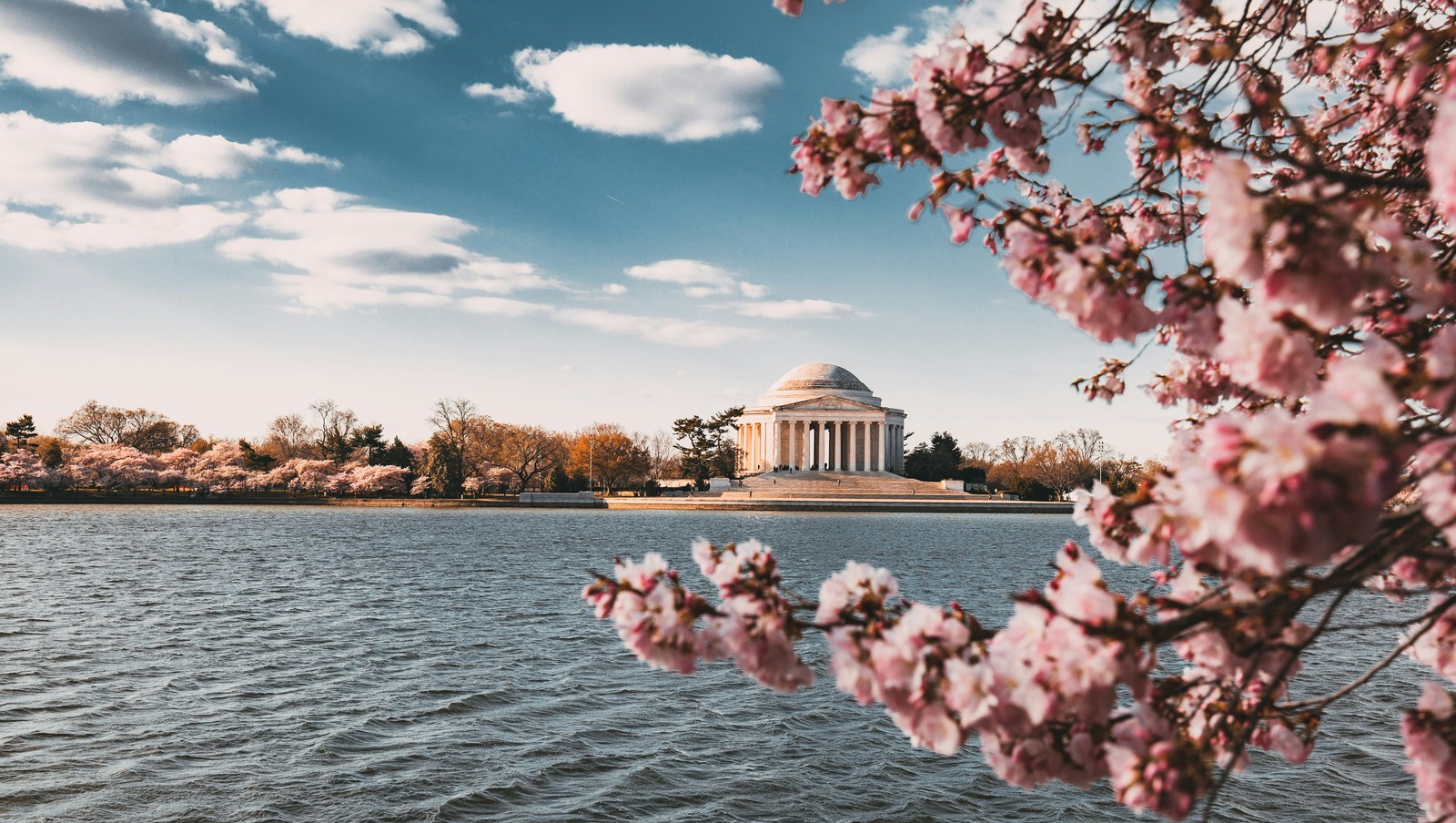
Image: Kyaw Tun

Washington, DC, is known for its many landmarks, but the Jefferson and Lincoln memorials stand out, drawing millions of visitors every year. And even though they’ve been part of the city for decades, there’s still a lot that most people don’t know about them. If you want to discover 10 facts you probably never learned in school, this article is for you!

1
87 steps
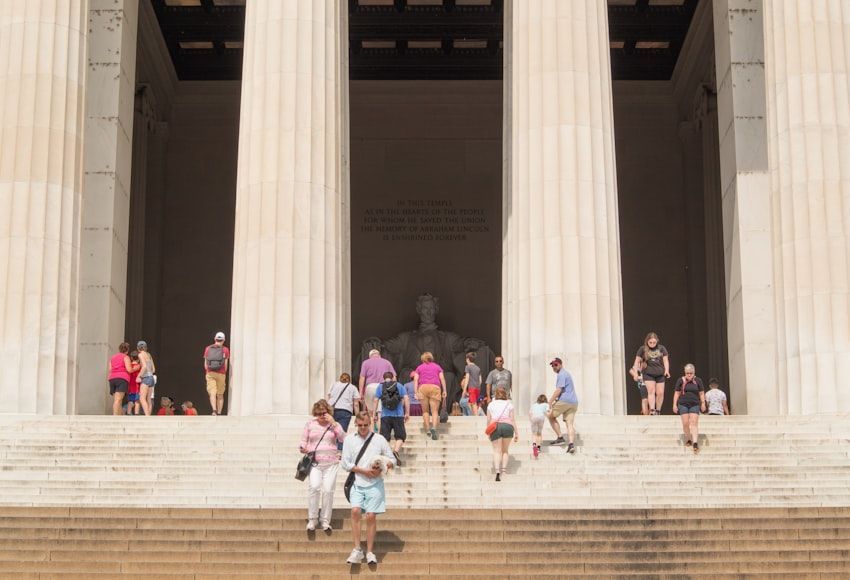
Image: Ryan Stone

In case you haven't counted them, there are exactly 87 steps leading up to the Lincoln Memorial. But why does that number matter? Although the National Park Service says it wasn’t intentional, many people connect it to the opening line of Lincoln’s Gettysburg Address: "Four score and seven years ago..." Coincidentally, 87 is also the number of years between the moment he delivered the speech and the monument’s dedication. Pretty incredible, right?

2
Hidden underground chamber

Image: Kdwk Leung

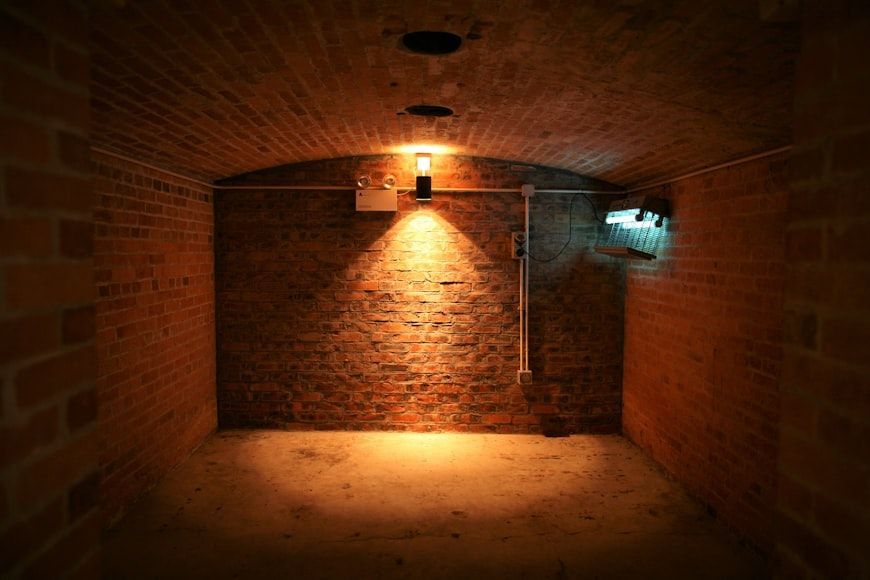
The Lincoln Memorial is more than what you see at first glance; there’s an entire hidden world beneath it. That’s right! Underground lies a large chamber built as part of the monument’s foundation. Giant concrete columns support the structure above, and there are also narrow corridors where workers once walked. You can even find graffiti and markings left by those builders in the early 1900s. Although the public can’t visit this space yet, the National Park Service has said it hopes to open it in the future.

3
A pyramid?
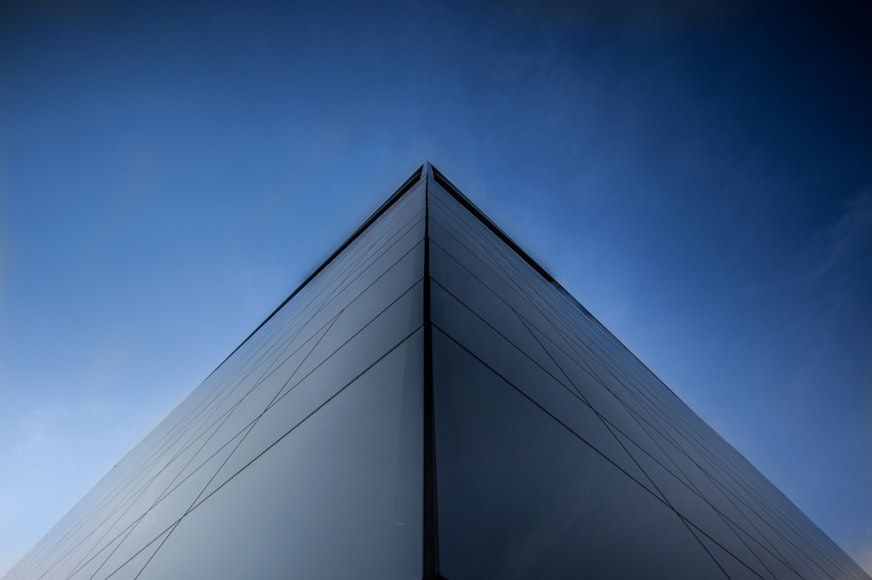
Image: Andrew Backhouse

Can you imagine a giant pyramid rising over the landscape of Washington, DC? It’s hard to picture, but it could have happened. Among the many design proposals for the Lincoln Memorial were some extravagant ideas, including a huge pyramid. In the end, the Greek temple design we know today won out.

4
The typo
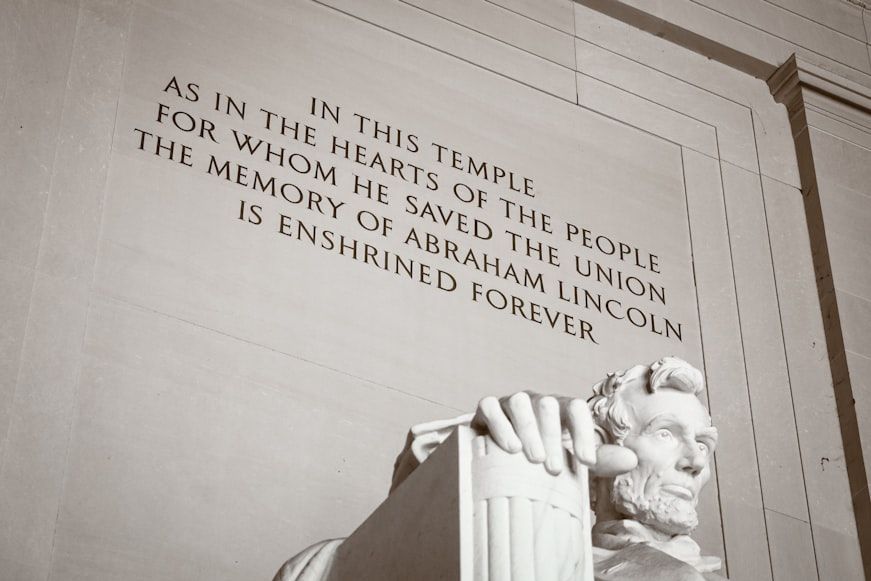
Image: Andre Schofield

To err is human, and the Lincoln Memorial is no exception. As you may know, Lincoln’s Gettysburg Address and his Second Inaugural Address are engraved on the interior walls. But the carver made a small mistake when transcribing the Second Inaugural Address, writing "euture" instead of "future" in the line "high hopes for the future." Although the error was corrected, people say that if you look closely enough, you can still see it.

5
Lincoln's friends made it happen
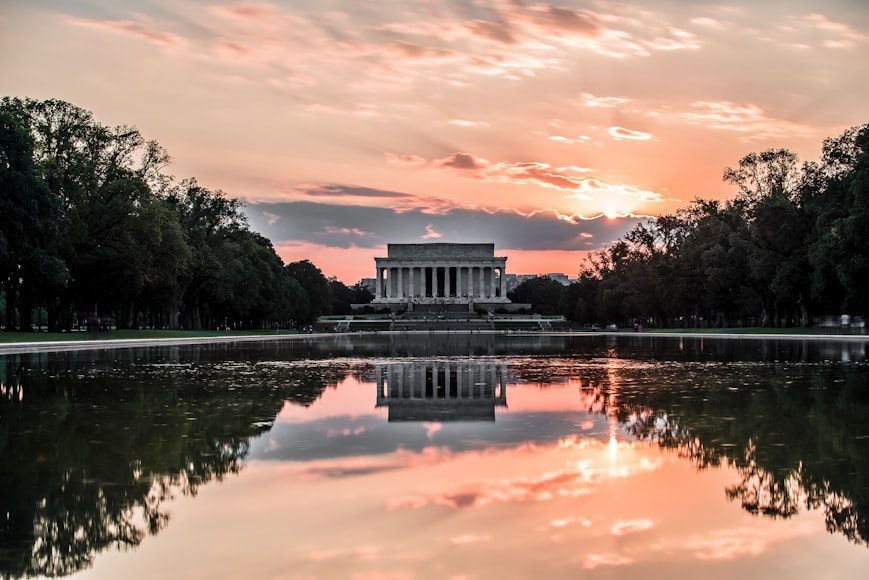
Image: Casey Horner

For years, several proposals to build a memorial to Abraham Lincoln failed in Congress. Fortunately, Senator Shelby Collum and Speaker of the House Joseph Cannon joined forces to get the final bill approved. These men had known Lincoln and felt that a memorial to Honest Abe was both fitting and necessary.

6
Who is Thomas Jefferson looking at?
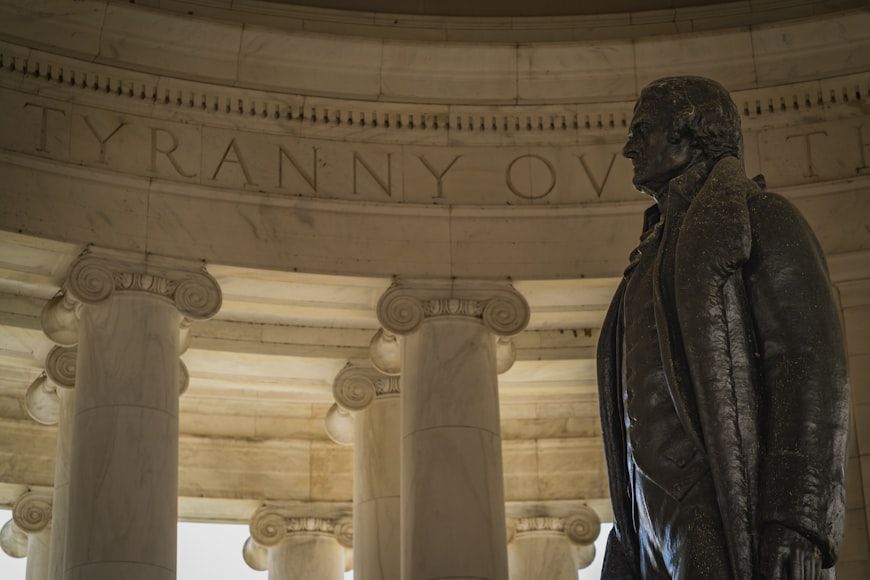
Image: J. Amill Santiago

It’s well known that the statue of Thomas Jefferson inside his memorial faces north toward the White House and the Washington Monument. But there’s another interesting interpretation. Also to the north is the statue of Alexander Hamilton on the south side of the US Treasury Building. Since Jefferson and Hamilton were once colleagues who later became political rivals, some like to imagine that Jefferson’s bronze likeness is keeping a cautious, almost "watchful eye" on Hamilton.

7
FDR specifically requested the Jefferson Memorial
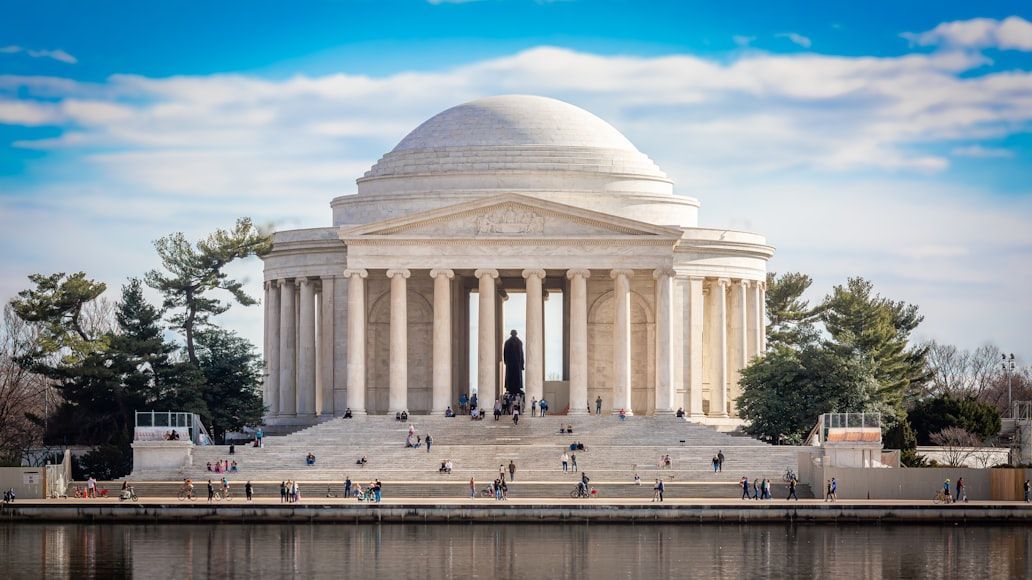
Image: Rafik

Since the early 20th century, there had been talk of building a memorial to honor Thomas Jefferson. But nothing moved forward until Franklin D. Roosevelt took office in 1933. An admirer of Jefferson, FDR pushed tirelessly for the project until Congress approved it. But he was not only the one who requested it; he even delivered the dedication speech when the memorial was completed in 1943.

8
10,000 pounds
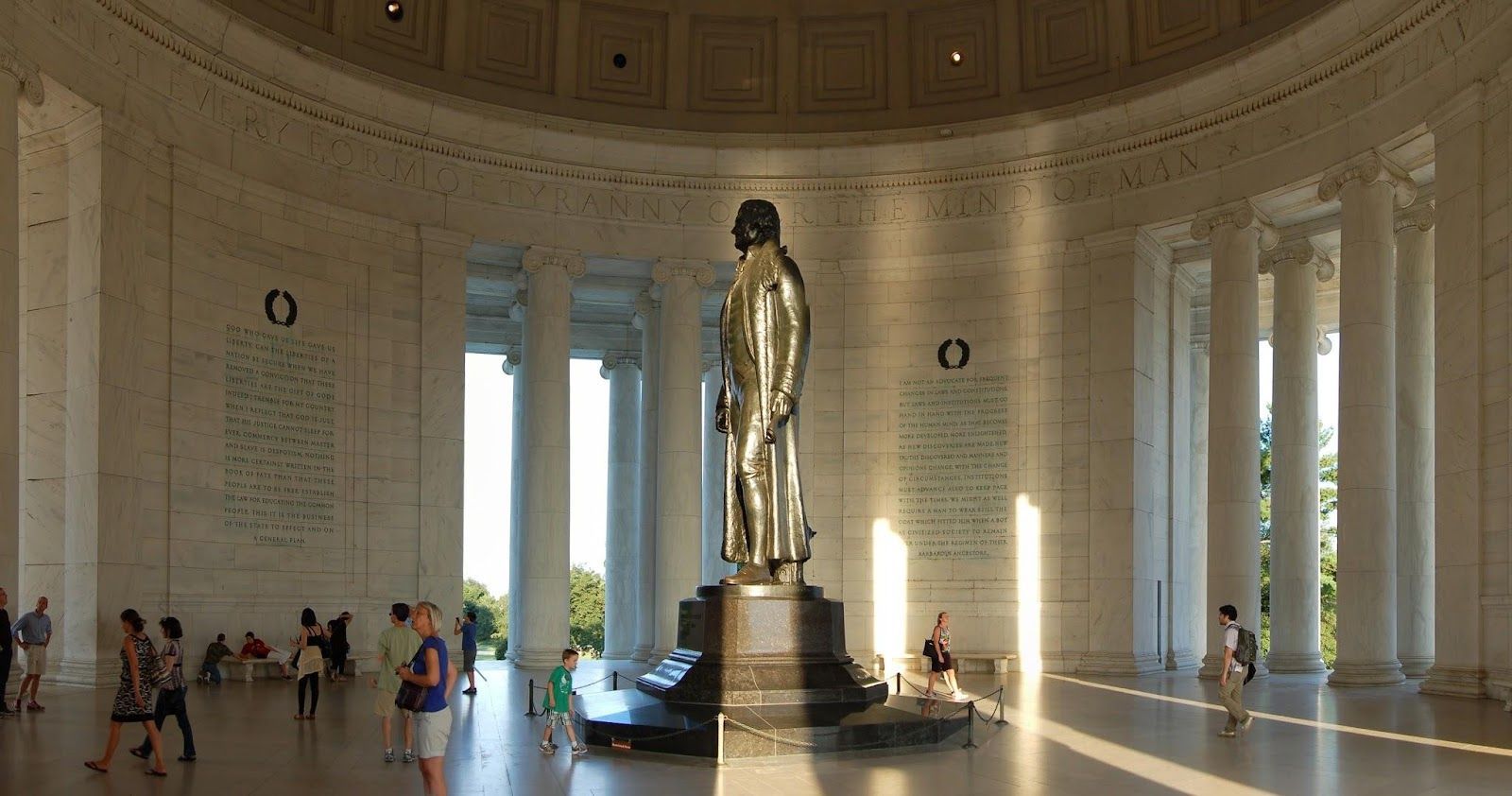
Image: Michael Kranewitter, Public domain, via Wikimedia Commons

We all know Jefferson was a great man, but do you know how big his statue is? It stands around 19 feet tall and weighs an astonishing 10,000 pounds; that’s a lot of bronze! Originally, the statue was a painted plaster model because, when it was dedicated in 1943, metal shortages from World War II made bronze unavailable. Four years later, in 1947, the bronze statue we see today was installed.

9
Once a popular beach
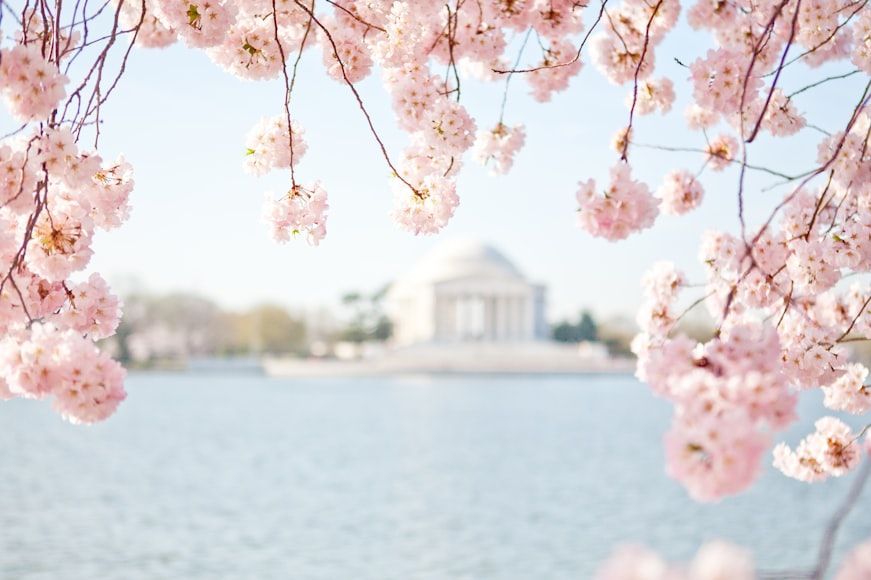
Image: Amelia Cui

Before becoming the site of the Jefferson Memorial, the Tidal Basin Beach was a popular beach in Washington. That's right; at the beginning of the 20th century, the area was used for swimming, boating, and picnics. This, coupled with the need to cut down some cherry blossom trees for construction, sparked controversy and turned some people against the project.

10
Created by a landfill
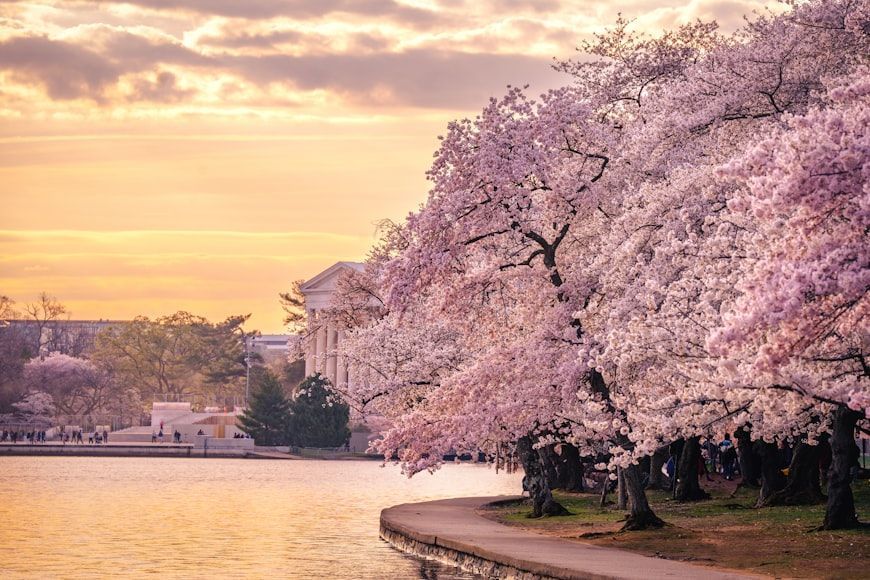
Image: Sharosh Rajasekher

Before the Jefferson Memorial could be built, the area had to be transformed. The Tidal Basin was originally shallow and surrounded by marshland, so workers filled it with material dredged from the Potomac River to create a stable foundation. Definitely a big effort.
Geography Geography 6 min read

NATURAL WONDERS

10 Breathtaking Waterfalls In The U.S. You Should Visit

Image: Jared Erondu

Waterfalls never disappoint. And the United States, with its vast and rich biodiversity, is home to some of the most impressive examples in the world: Niagara Falls, McWay Falls, and Tahquamenon Falls, just to name a few.

From stunning water slides overhanging white sandy beaches to gentle falls on the side of a glacier, here’s a list of 10 of the most dazzling American waterfalls that should be on your travel bucket list. Dive in!

1
Multnomah Falls (Bridal Veil, Oregon)

Image: Karsten Winegeart

Multnomah Falls is, without a doubt, the mother of all the 77 waterfalls that can be found in the gorge of the Columbia River in the state of Oregon. Located 30 miles east of Portland, it is one of the three largest waterfalls in the United States . Multnomah Falls has a staggering drop of 620 feet divided into two sections and is a natural wonderland of breathtaking beauty.

A stone bridge suspended between two cliffs offers the best views. The Benson Bridge, built in 1914, allows you to cross the lower falls and continue along a paved trail to the viewing platform at the top. From this privileged observation point, you’ll be able to appreciate the geology exposed by centuries of flooding. Multnomah Falls is the perfect place for hikers , especially during the autumn months. Its rich natural, cultural, and geological history is worth visiting at least once in a lifetime.

2
Bridalveil Fall (Yosemite, California)

Image: PeterBowers

Bridalveil Falls is a 617-foot cascade and is one of the most iconic sights in the Yosemite National Park . This famous waterfall drops to the base in spring and early summer with enough water to spray its visitors with a gentle mist. In winter, Bridalveil Falls offers a soft yellow glow.

The Ahwahneechee tribe believed that Bridalveil Falls was home to a vengeful spirit named Pohono who protected the entrance to the valley and that those leaving should not look directly at the waterfall lest they suffer the curse. They also thought inhaling the mist from the waterfall would help them find someone to marry , hence the name it is known today.

3
Nugget Falls (Juneau, Alaska)

Image: Timon Cornelissen

Surrounded by snow-capped mountains, lush forests, and crystal-clear lakes, Nugget Falls is one of the most beautiful waterfalls in the United States. Although it’s a popular spot for outdoor enthusiasts , the scenery alone provides ample reasons for anyone to visit and explore.

Located at the tail end of Alaska's Mendenhall Glacier, these 377-foot falls are formed from a glacial stream making their way to Mendenhall Lake in the course of a two-tiered plunge. They can be accessed by a gravel road, but they are often visited as part of an excursion to Juneau Shore or Mendenhall Lake. Whether you’re an avid hiker or just looking for some tranquil moment in nature, Nugget Falls is sure to provide a memorable experience .

4
Wailua Falls (Līhuʻe, Hawái)

Image: Zane Persaud

You may recognize these waterfalls from their appearance in the opening credits of the hit TV show "Fantasy Island". Or you may have seen them in promotional materials for Kauai, as Wailua Falls are considered the most amazing waterfalls on this scenic Hawaiian island . It is located 5 miles north of downtown Līhuʻe and although there is no walking trail, it can be easily seen from the road.

The double-flow cascade spans an 80-foot drop, thundering and crashing into a small plunge pool below. A lush jungle wall surrounds Wailua Falls, a magnificent site, especially after heavy rains. If you visit in the morning, you may be greeted by a rainbow as the sunlight hits the mist rising from the waterfall . It's an excellent photo opportunity you don’t want to miss!

5
Tahquamenon Falls (Paradise, Michigan)

Image: Dillon Austin

The astonishing Tahquamenon Falls are divided into two equally impressive sections. You can visit the Upper Falls to witness the 200-foot-wide and 48-foot-high cascades before heading to the Lower Falls, a group of five waterfalls that drop around a freshwater island. This area was first popularized by Henry Wadsworth Longfellow’s "The Song of Hiawatha", but long before that, it was used as a hunting and fishing site by the Ojibwa natives .

Nowadays, these rust-colored cascades —the result of tannins released from cedar trees upstream— are known to some as "Root Beer Falls." They are located in Tahquamenon Fall State Park, an ideal location for fishing and swimming during the summer. In winter, it becomes a snow-covered paradise for snowmobiling and cross-country skiing . No matter the time of the year, the natural scenery of Tahquamenon is truly a sight to behold!

6
McWay Falls (Big Sur, California)

Image: Jairo Gonzalez

Located on the stunning California coast, McWay Falls is a true hidden gem. With its crystal clear waters cascading directly onto the white sandy beach, this 80-foot waterfall delights all visitors with its unique beauty . If you are planning to visit Big Sur and you're looking for spectacular views, McWay Falls is a must-see!

The history of McWay Falls dates back to the beginning of the 20th century when the area was acquired by the McWay family. Julia Pfeiffer McWay, a woman with an adventurous spirit and a passion for nature, fought all her life to preserve its native ecosystem. In 1983, the site was donated to the State of California and incorporated into Julia Pfeiffer Burns State Park, named in honor of Julia's generosity.

7
Crabtree Falls (Blue Ridge Parkway, North Carolina)

Image: Leslie Cross

North Carolina has many natural wonders that can be enjoyed all year round, and Crabtree Falls is no exception. Although it’s not as popular as other waterfalls in the state, it's a site worth visiting, especially during the warmer months . Located just 45 miles north of Asheville, this 70-foot-high cascade is surrounded by an oak and hickory tree forest.

Originally known as Murphy’s Falls, this area was renamed Crabtree Falls by the National Park Service when the Blue Ridge Parkway was constructed in the 1930s. If you are a flower and plant lover, Crabtree Falls is the place to be . In the spring, visitors can find a magnificent array of wildflowers along the trail, and during the summer, ferns fill the forest with rosebay rhododendrons in bloom.

8
Havasu Falls (Supai, Arizona)

Image: Daniel Hernandez

The Grand Canyon attracts more than 5 million tourists every year and is considered one of the Seven Natural Wonders of the World. But hidden deep in the canyon, on the Havasupai reservation, there is a breathtaking site little known to most tourists: the Havasu Falls . Being in a protected reserve, a special permit is required to visit. If you're lucky enough to get one, the falls can be accessed by helicopter, horse, or mule. Another option is to hike 10 miles there and back, along a beautiful path of red rocks and ancient pictographs.

Havasu Falls is known for having a fantastic turquoise color due to the high levels of calcium carbonate present in the spring-fed waters of Havasu Creek, the main source of the waterfalls. These high levels also create the 70-degree travertine pools at the top, making them the perfect swimming spot!

9
Palouse Falls (LaCrosse, Washington)

Image: Dave Hoefler

The unexpected beauty of Palouse Falls dominates eastern Washington, attracting thousands of visitors each year to experience the 200-foot drop from a stunning rocky outcrop into a swirling blue pool. The falls are surrounded by striking cliffs and can be seen from several vantage points throughout the State Park, including the trail that hugs the canyon's rim.

Palouse Falls is the result of the last Ice Age , the product of several glacial floods known as the Missoula Floods that swept across the region, creating the unique landscape that amazes us today. If you are feeling adventurous, just pack a tent and prepare to catch one of the best sunset views the country has to offer!

10
Niagara Falls (New York)

Image: Ivan Torres

Last, but certainly not least, Niagara Falls is one of the most beautiful sights in the United States and a unique destination that attracts millions of tourists from all over the world. With a width of more than 3,000 feet and a drop of 160 ft, these three magnificent falls —two American and one Canadian— are located 400 miles from New York City. Approximately 600,000 gallons of water flow over the falls every second and the average depth underneath is 170 ft.

Named by the Iroquois tribe, the word Niagara means "thunder of water" . Since its discovery by European settlers in the 17th century, Niagara Falls has become very popular, not only for their beauty but also as a source of energy. Niagara Falls is a marvelous spectacle that will remain in the memory of all those who have the chance to explore it . There’s no doubt about it, everyone should visit Niagara Falls at least once in their lifetime!

General General 4 min read

WHAT GOES INTO A NAME?

10 States with unusual names explained

Image: Nico Smit

A lot of consideration goes into naming a state. Or, at least, it should. After all, that enormous piece of public land will be an important part of the country, and its citizens will be defined by its name as well. Some states’ names are obvious: New York was named after the English town of York, New Mexico was named after Mexico, and so on. But many other states have strange-sounding names, like Wyoming or Connecticut. Stick around until the end of this list and learn why ten of these states are named that way!

1
Massachusetts

Image: Kaya Arro

A curious word in itself, Massachusetts originated from an Algonquian word meaning "large hill place." The term "Massachusett" was first recorded in 1616 as the name of a village near present-day Boston, and the English added an -s to signify the plural.

The name was applied to the bay, from which the Massachusetts Bay Company, founded in 1629, took its name. With the Massachusetts Constitution of 1780, legislators officially adopted the name Commonwealth of Massachusetts.

2
Michigan

Image: Aaron Burden

Another name with an Algonquian origin, like Massachusetts, Michigan comes from the word mishigama which means "big lake." The state was named after its chief geological feature: that large body of water to its west. After all, Michigan is in direct contact with four of the five Great Lakes.

When the area became a U.S. territory, the name Michigan was adopted as the name of the state. Michigan achieved statehood in 1837.

3
Montana

Image: Tim Stief

A name most likely derived from the either Spanish ( Montaña ) or Latin ( Montanus ) word for mountain, Montana was suggested by Rep. James M. Ashley of Ohio, who was a member of the House Committee on Territories. He recommended it in 1863 for the territory that would become Idaho. He liked the name so much that he recommended it again for a territory being organized in 1864.

The name Montana itself was first given in 1858 to a town in the Pike’s Peak gold region, which was at the time part of Kansas and is today part of Colorado. The town eventually died, though, when the gold ran out, but the name lived on.

4
Oklahoma

Image: Skyler Smith

The name Oklahoma was coined in 1866 by Allen Wright, a Choctaw chief and Presbyterian minister who served in the Confederate Army during the Civil War. He combined two Choctaw words that, together, mean "Land of the Red People." Eventually, the name was adopted into the Choctaw-Chickasaw Treaty.

5
Pennsylvania

Image: Lera Kogan

In 1681, the English king Charles II gave a land grant to William Penn. The charter designated that the colony was to be called Pennsylvania, which was a combination of Penn’s name and the Latin " silva " (spelled " sylva " in the 17th century), meaning "forest." Therefore, Pennsylvania means " Penn’s forest ."

William Penn had originally suggested that the land be called New Wales, but since the charter was signed with Pennsylvania permanently inscribed, he declared that the name was in honor of his father.

6
Tennessee

Image: Brice Cooper

While the names of many states originate from descriptions, the name of Tennessee didn’t have any particular meaning when it was bestowed upon the Volunteer State. This name originally came from a Cherokee town called Tanasqui by the Spanish, and Tinnase by the English. But the Cherokees themselves didn’t associate any literal meaning with the word.

The name was also given to a stream near the town, and as English settlers moved downstream, they carried the name with them. Tennessee first appeared in that spelling as the name of a newly organized county in North Carolina in 1788, and it was eventually proposed and accepted by Congress as a state name in 1796.

7
Wyoming

Image: Kellie Klumb

The name of Wyoming originated from the Algonquian word meche-weami-ing , which meant " at the big flats. " It was originally applied to a valley in Pennsylvania and became well-known through Thomas Campbell’s epic 1809 poem "Gertrude of Wyoming," which was about a girl from Pennsylvania.

James Ashley, a member of the House Committee on Territories representing Ohio, suggested the name for a new territory in 1868.

8
Alaska

Image: Rod Long

The name Alaska is thought to come from the Aleut word aláxsxaq or aleyska , which translates to " an object to which the sea is directed ."

When Alaska was purchased from Russia in 1867, the name Alaska was suggested by Senator Charles Sumner under the belief that it meant "great land," when in fact the word was simply what Aleuts used to refer to the mainland.

9
Connecticut

Image: Christopher Luther

Whoever thinks Connecticut sounds like a complicated word, should take a look at the Algonquian word from which it originated: Quinnehtukqut , which means " place beside the long tidal river. "

An English scribe probably inserted the second, silent "c" in the name into the word to form the more common "connect" section, as we know it today.

10
Idaho

Image: Clay Elliot

The name of the state of Idaho has at least two probable origins. On the one hand, it may be derived from the word Idahi , the Kiowa-Apache name for the Comanche, both of whom were known to have been in that area. On the other hand, it might have been fabricated by a mining lobbyist at a time when native-sounding names were popular.

When Colorado was being organized as a territory in 1860, the name Idaho was considered, but Congress chose Colorado instead. The name came up again in 1863 when territories farther north were being organized. Montana was first proposed for the new area, but the U.S. Senate decided to call it Idaho.

Explore more American facts

Choose your favorite category!

General
General

As American as apple pie—the very best America has to offer!

Culture
Culture

Delve into the astounding richness of American lore.

Geography
Geography

Hop in and explore vast and diverse American landscapes.

History
History

Discover the key moments that shaped the United States.