Culture Culture 5 min read

Why does Japan eat KFC for Christmas? The answer will shock you!
Image: Nixx Photography

When you think of fast-food royalty, few figures are as universally recognizable as Colonel Harland Sanders. With his iconic white suit, black string tie, and goatee, his image is plastered across tens of thousands of Kentucky Fried Chicken (KFC) locations around the globe. Yet, behind that grandfatherly smile lies a corporate history filled with drama, secret recipes, and unusual marketing decisions. Here are 10 mindblowing facts about KFC and its legendary founder.

1
A rivalry becomes a business success
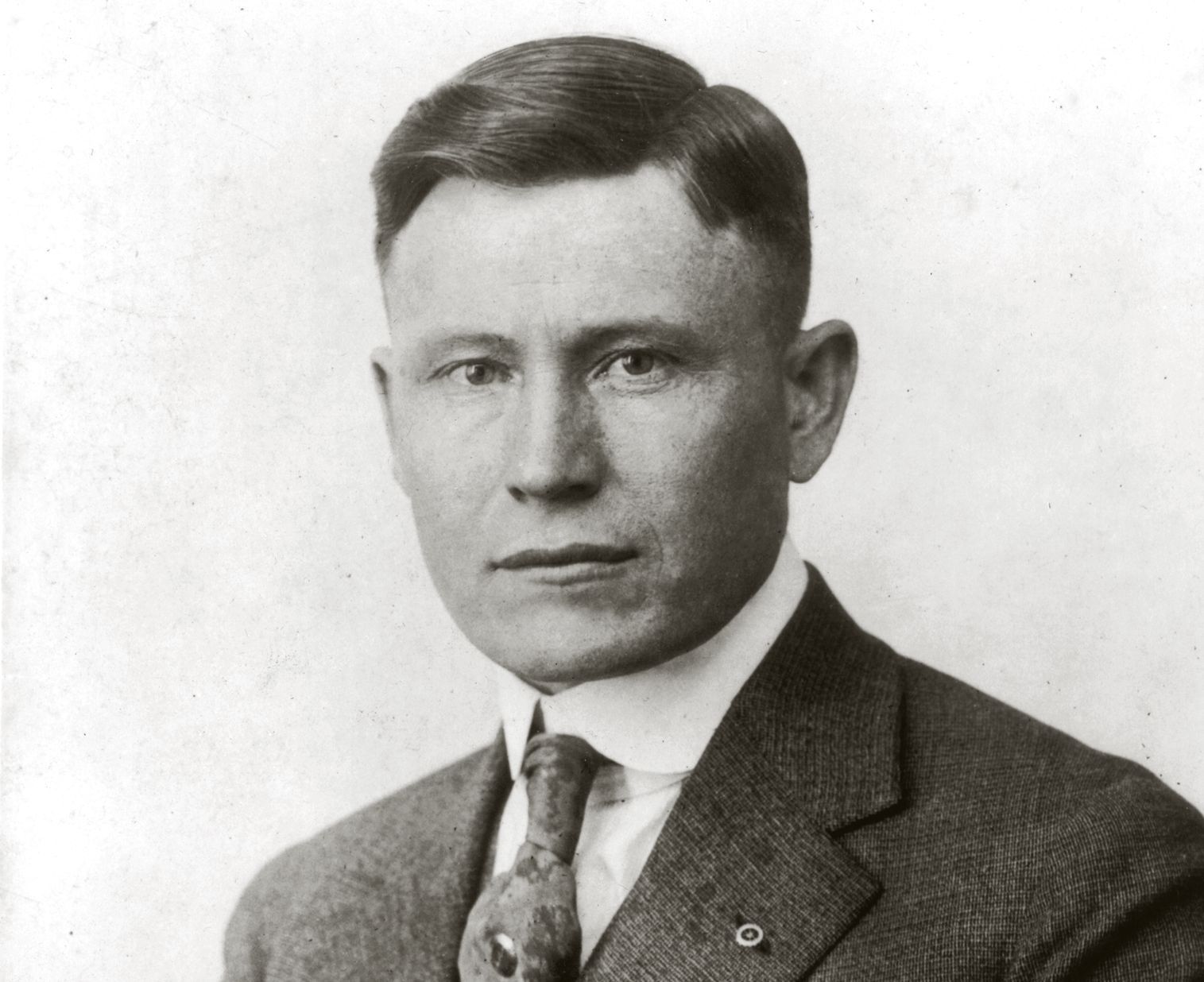
Image: Unclear, likely someone from the family of Colonel Sanders, Public domain, via Wikimedia Commons

During the Great Depression, Harland Sanders ran a humble Shell station in Corbin, Kentucky. Back then, business was cutthroat, and Sanders found himself in a bitter feud with Matt Stewart, a rival gas station owner who kept painting over Sanders’ highway signs to redirect traffic. After several warnings went unheard, Sanders marched over to confront Stewart.

When Stewart was caught in the act, a physical confrontation quickly escalated. Stewart drew a pistol and shot a Shell manager who was accompanying Sanders, killing him on the spot. Sanders retaliated by firing back and wounding Stewart, who was later arrested and sentenced to prison for murder. With his main competitor safely behind bars, Sanders was able to expand his service station, perfect his pressure-frying method, and ultimately transform his business into a massive commercial success.

2
The KFC you know today exists thanks to Wendy’s
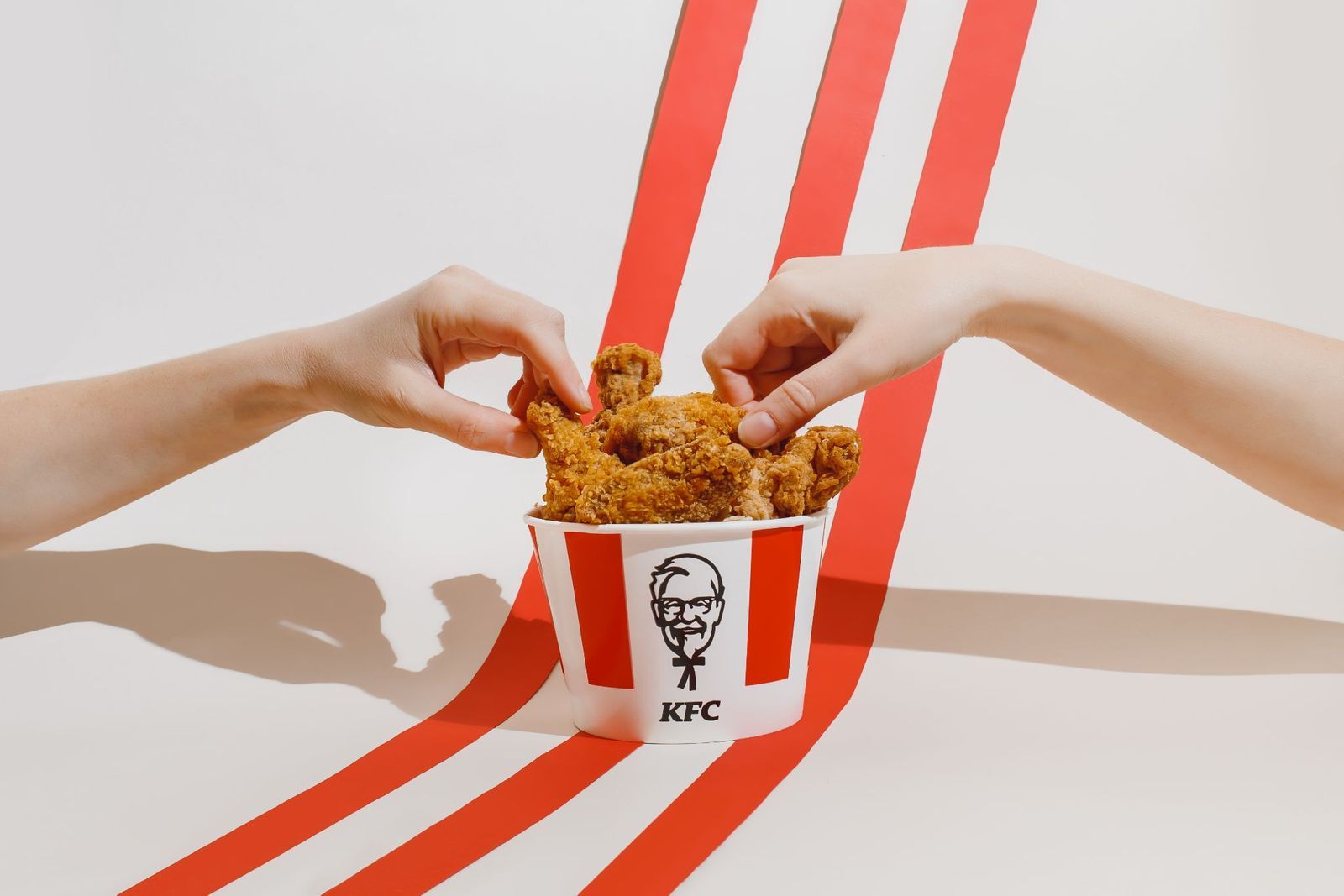
Image: Pavlovska Yevheniia

Although you may view KFC and Wendy’s as distinct competitors, the reality is that the chicken giant owes its structural identity to Dave Thomas, the founder of Wendy’s. In the 1960s, Thomas worked as a head chef and regional manager for the Colonel’s franchises.

He was a marketing whiz who personally convinced Colonel Sanders to star in his own television commercials, cementing his status as a living mascot. Furthermore, Thomas created the iconic red and white striped bucket design. He became so wealthy from his shares and success at KFC that he used his payout to establish his own burger empire, Wendy’s, in 1969.

3
The secret recipe's security
Image: Patcharaporn Puttipon4289

The legendary blend of "11 herbs and spices" is one of the most famously guarded secrets. Did you know KFC keeps the recipe locked inside a top-secret vault at the corporate headquarters in Louisville, Kentucky?

The vault, encased in thick layers of concrete, is protected by motion sensors, security cameras, and 24/7 guards. To ensure the formula is never leaked, KFC splits the production pipeline: two different companies are hired to mix separate halves of the spice blend. Neither company knows the other's ingredients, and a computer system automatically combines the two halves before the seasoning is shipped out to individual franchises.

4
KFC for Christmas in Japan
Image: Tricky_Shark

In the United States, a Christmas dinner consists of roasted turkey or ham. In Japan, however, Nativity food comes in a cardboard bucket. This wild tradition dates back to 1974, sparked by Takeshi Okawara, the manager of the country's first KFC branch.

After overhearing homesick Western expats lamenting how difficult it was to source a holiday turkey in Japan, Okawara launched the national "Kentucky for Christmas" campaign, which exploded into a cultural phenomenon. Today, an estimated 3.6 million Japanese families celebrate Christmas Eve with KFC, with patrons placing their orders months in advance to avoid long lines.

5
Colonel Sanders hated KFC

Image: WayneRay, CC BY-SA 4.0, via Wikimedia Commons

By 1964, 73-year-old Colonel Snaders felt he was no longer cut out for the pace of corporate life. He sold the Kentucky Fried Chicken company to a group of investors for $2 million, under a contract that allowed the brand to continue using his likeness.

As executives changed the original recipes to cut costs, Sanders grew to hate the food KFC was serving. He began travelling the country, showing up unannounced at franchises to taste the food, throw public tantrums, and openly tell the media that the new gravy tasted like "wallpaper paste" or "sludge". He even attempted to open a rival restaurant and sued KFC for using his image, leading the company to counter-sue him. Eventually, KFC paid him an additional million dollars just to stop making public scenes.

6
KFC Double Down

Image: Boyloso

KFC has never been afraid of pushing nutritional boundaries, but in 2010 they certainly hit another level. The Double Down features bacon, Monterey Jack cheese, and a Colonel's special sauce encased between two seasoned, crispy slabs of fried chicken breast instead of bread buns.

The item sparked a media frenzy, with health advocates calling it a dietary disaster and foodies treating it as a dare. Ultimately, it proved to be a commercial hit. As it turns out, when it comes to extreme fast food, consumers are more than willing to ignore the carbs in favor of deliciousness.

7
That time KFC ran out of chicken
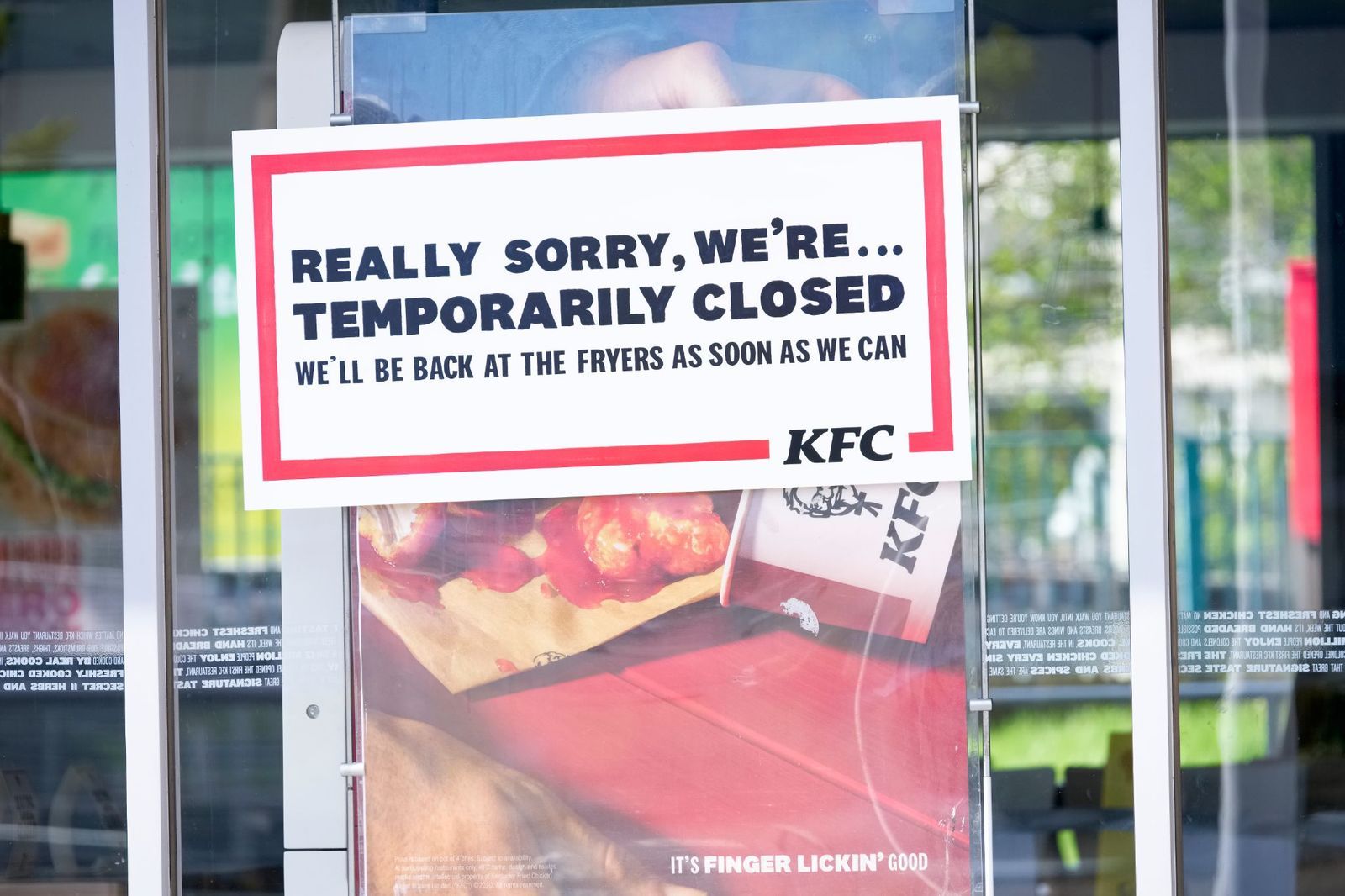
Image: richardjohnson

A fried chicken restaurant running out of its main ingredient sounds like a nightmare, but in 2018, it became real for KFC in the United Kingdom. In an effort to optimize logistics and save money, management switched its delivery contract to DHL. The transition went completely wrong, resulting in a supply chain jam that left over 900 UK locations with no chicken to fry.

Hundreds of stores were forced to shut down temporarily, sparking nationwide outrage, with desperate citizens even calling the police to complain. KFC managed to restore its reputation by leaning into self-deprecating humor, purchasing newspaper advertisements that featured an empty bucket rearranged to read "FCK".

8
The problem with the slogan in Chinese
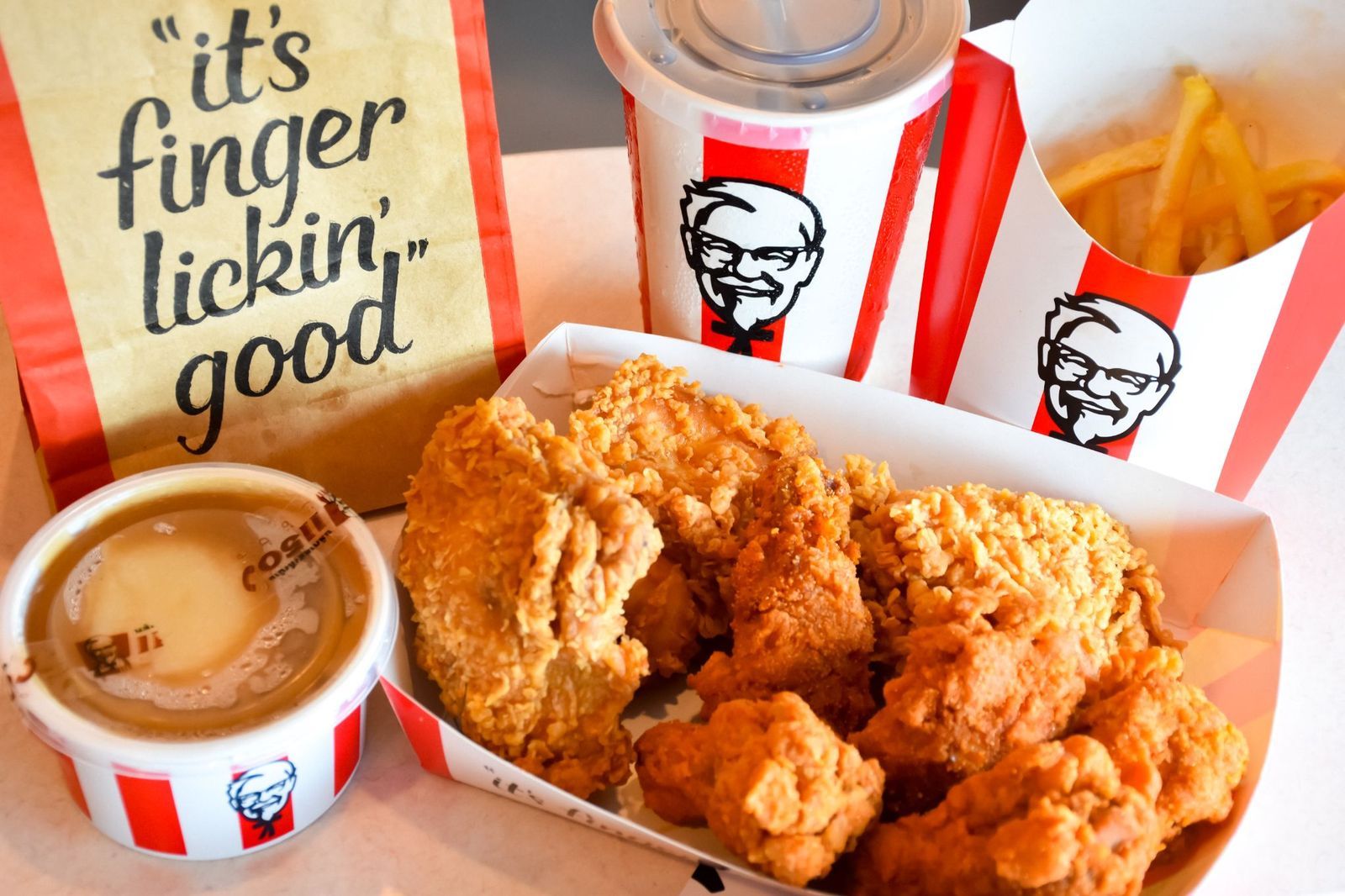
Image: Patcharaporn Puttipon4289

When international fast food brands began expanding into foreign territories in the late 1980s, errors were very common. KFC experienced this firsthand when it opened its first store in Beijing, China, in 1987. The company wanted to proudly display its world-famous catchphrase, "Finger-Lickin' Good", to tempt local diners.

Unfortunately, due to an oversight in Mandarin translation, the slogan was literally translated to "Eat Your Fingers Off". While the phrase initially startled and amused local consumers, the brand quickly corrected the translation mishap to something more culturally appropriate and appetizing.

9
KFC's video game
Image: Ratana21

Decades after the Colonel’s passing, KFC’s marketing division decided to lean into modern internet subcultures. In 2019, the brand shocked the gaming community by releasing an official, anime-style video game titled I Love You, Colonel Sanders! A Finger Lickin’ Good Dating Simulator.

Developed as a visual novel, the free game places the player in a culinary school alongside a young and handsome romanticized version of Colonel Sanders. The goal of the game is to successfully navigate cooking school battles while attempting to woo the chicken chef. Against all odds, the game became a viral sensation.

10
KFC releases its own console

Image: Pixel-Shot

Following the unexpected success of their video game, KFC’s marketing team announced the KFConsole in 2020. Many assumed it was an April Fool’s joke, but it turned out to be a genuine gaming PC.

The most bizarre feature of the console is its custom "Chicken Chamber". This specialized compartment uses the heat generated by the computer’s internal components to keep pieces of fried chicken warm and crispy while you play video games.

Culture Culture 6 min read

ALL-TIME CLASSICS

Are you looking for the Great American Novel? Explore 10 contenders

Image: Laura Chouette

American literature is rich in stories and authors. Its best examples capture life in the big cities, luxury, and glamour, but also the small rural American towns, diving into their roots and history. Books like Francis Scott Fitzgerald's The Great Gatsby or John Steinbeck's The Grapes of Wrath are classics that have left a lasting mark on generations of readers . Today we have put together a bookshelf with 10 of the best American novels of the 20th century. This list will surely fall short, but we hope you enjoy our selection!

1
The Great Gatsby , F. Scott Fitzgerald (1925)

Image: Girl with red hat

Written by F. Scott Fitzgerald, one of the most iconic authors of the so-called "Lost Generation", The Great Gatsby portrays the dark side of the American dream . The protagonist, the mysterious and apparently frivolous millionaire Jay Gatsby, is obsessed with winning back a woman he loved in his youth. Set in the Jazz Age, Fitzgerald’s book raises the contradictions between the power of money and the most intimate individual aspirations.

Published in 1925, The Great Gatsby is one of the greatest masterpieces of American fiction . Since then, it has sold millions of copies all over the world, has had numerous theatrical and film adaptations, and was chosen as the best American novel of the 20th century on several occasions.

2
The Sound and the Fury , William Faulkner (1929)

Image: Brandi Redd

Published in 1929, The Sound and the Fury is William Faulkner's fourth novel and is considered the greatest opus of this Nobel Laureate . It chronicles the decadence of the Compsons, an aristocratic family in the American South, their secrets, and the relationships of love and hate that sustain and destroy them.

The Sound and the Fury is a profound and heartbreaking exploration of decay, despair, and loss . Faulkner's innovative narrative technique, while challenging, allows for an intimate and visceral portrayal of the characters. The novel also addresses issues of race, gender, and class with admirable narrative prowess.

3
The Old Man and the Sea , Ernest Hemingway (1952)

Image: MonicaVolpin

The Old Man and the Sea was the last novel published by Ernest Hemingway during his lifetime. For it, he won the Pulitzer Prize for Fiction in 1953 and it undoubtedly contributed to the Nobel Prize for Literature he was awarded in 1954.

The novel tells the story of Santiago, an old and experienced fisherman who embarks on a grueling three-day battle when he finally manages to catch a huge marlin. The Old Man and the Sea is considered one of the masterpieces of universal literature that has captivated readers around the world for decades . Its message about perseverance, dignity, and the search for life’s meaning is still relevant today. The novel is a must-read for anyone interested in literature and human nature.

4
In Cold Blood , Truman Capote (1965)

Image: Brandi Redd

On November 15, 1959, in a small Kansas town called Holcomb, the four members of the Clutter family, a married couple and their two teenage children, were savagely murdered by Dick Hickcock and Perry Smith.

Based on these gruesome events, the American novelist Truman Capote managed to turn around his career as a storyteller by writing In Cold Blood , the novel that definitively established him as one of the great authors of twentieth-century American literature. This book catapulted him as the pioneer of the New Journalism literary movement , a non-fiction genre that became popular in the 1960s for narrating stories based on real events.

5
The Catcher in the Rye , J. D. Salinger (1951)

Image: Gratisography

The Catcher in the Rye , written by the great J. D. Salinger, is a contemporary novel that has become a classic of modern literature. At the time of its publication in 1951, it provoked numerous controversies for its provocative language and its unabashed portrayal of teenage struggles, such as sexuality, the loss of innocence, and the transition to adulthood.

The Catcher in the Rye could be framed within the Bildungsroman —a literary genre that focuses on the psychological and moral growth of the protagonist. It follows Holden Caulfield, a teenager who, after being expelled from school, gets lost in New York trying to find his way in the world. The novel is rich in symbolism and themes , and the literary style and narrative technique are unique and exceptional.

6
American Pastoral , Philip Roth (1997)

Image: Arno Senoner

Published in 1997, American Pastoral is the novel that earned Philip Roth the Pulitzer Prize and is the first in the well-known "American Trilogy", a series of novels narrated by Nathan Zuckerman, the author's alter ego. With the Vietnam War as a backdrop, this book is a lucid tale that questions American values during the end of the happy sixties.

In American Pastoral we find Roth at his best: deep, intense, incisive, magnificent . His ability to build a universe of complex characters and dig into their psychologies is astounding and overwhelming. Few writers have managed to capture the contradictions of American society as he has done.

7
Beloved , Toni Morrison (1987)

Image: Artis Kančs

Beloved , published in 1987 by Nobel Prize winner Toni Morrison, takes place in the aftermath of the American Civil War . The novel tells the story of an African-American slave, Margaret Garner, who escapes from Kentucky to Ohio, a free state.

Magic realism runs throughout the entire book and manifests through the ghostly presence of Beloved's character. Morrison uses this technique to explore collective memory and the persistence of the past . The novel is considered a masterpiece of contemporary literature and has been acclaimed for its innovative writing style and its exploration of sensitive subjects such as slavery, freedom, identity, and memory.

8
On the Road , Jack Kerouac (1957)

Image: Daria Kraplak

On the Road is a semi-autobiographical novel in which Jack Kerouac recounts a series of trips he made across the United States and Mexico with his friend Neal Cassady. Inspired by his passion for jazz, Kerouac developed the idea of a book that would be a great improvised prose solo . He wrote it on his typewriter on a long, single roll of paper in just three weeks.

A cornerstone of the so-called "Beat Generation," On the Road was published in September 1957, after 6 years of delay due to the publisher's reservations about the explicit contents. At the time, this emblematic book had a major impact, especially on the younger readers of the 60s. Today, On the Road is still considered one of the great American novels of the 20th century for capturing the rebellious spirit of an entire generation.

9
The Heart is a Lonely Hunter , Carson McCullers (1940)

Image: Faith Enck

The Heart is a Lonely Hunter is a literary masterpiece that continues to resonate in the hearts of readers, even though it was published more than 60 years ago. Set in a small southern town, it tells the story of a group of people who have in common the rejection of a society that ignores them.

This is Carson McCullers' first novel, written when she was only twenty-three years old. She masterfully captures the essence of loneliness and the search for human connection in a way that transcends time. With a moving narrative and unforgettable characters, the novel has received critical acclaim and has earned a prominent place in literary history.

10
The Grapes of Wrath , John Steinbeck (1939)

Image: Sonder Quest

We couldn't leave The Grapes of Wrath, 1940 Pulitzer Prize winner , out of this list. In this harrowing book, Nobel laureate John Steinbeck narrates the difficult journey of a family of farmers who, beset by hunger and misery, leave the fields of Oklahoma to reach the golden shores of California, the promised land.

First published in 1939, The Grapes of Wrath is a seminal work in American literature that explores the conflict between the rich and the poor and reflects the horrors of the Great Depression with sensitivity and sharp insight. Steinbeck's chronicle of the shameful mistreatment of 1930s families is perhaps the most "American" of all American classics.

Culture Culture 5 min read

LIVES ON FILM

Celebrate The Ten American Lives Portrayed In These Iconic Biopics!

Image: Jon Tyson

An actor's biggest weapon is their ability to get into the skin of an entirely new person. In that regard, the ten actors and actresses on this list had the daunting task of portraying the lives of some of the most remarkable Americans in our country’s history. We decided to celebrate the extraordinary talent of these thespians and the way they brought the stories of these exceptional Americans to the big screen. Enjoy!

1
Lincoln (Daniel Day-Lewis)

Image: Maarten Brakkee

Legendary method actor Daniel Day-Lewis definitively had big shoes to fill when he portrayed our 16th President. And we mean that quite literally: Historians believe that Lincoln had the largest feet of any U.S. President in history. In any case, Day-Lewis stood up to the task and his acting prowess earned him both an Academy Award and a Golden Globe for Best Actor.

Directed by Steven Spielberg, Lincoln focuses on the year 1885 and President Lincoln’s struggles to abolish slavery. Famously, Day-Lewis requested everyone on the filming set to only refer to him as "Mr. President" or "Mr. Lincoln", in order to immerse himself in the role.

2
Jackie Kennedy (Natalie Portman)

Image: Cornelia Ng

Pablo Larrain’s 2016 film Jackie depicts the life of former First Lady Jaqueline Kennedy, both during her time at the White House and after the assassination of President Kennedy. Natalie Portman does an outstanding job in her role as Jackie, portraying her characteristic charm and quiet strength.

The film was nominated for three Academy Awards, including Best Actress for Portman. Although she ultimately lost the Oscar to Emma Stone’s character in La La Land , movie critics acclaimed Natalie’s performance.

3
Johnny Cash (Joaquin Phoenix)

Image: Dominik Scythe

Few musicians have the mysterious and fabled aura as " The Man in Black ", but American actor Joaquin Phoenix was able to faithfully portray Johnny Cash’s gritty character in the 2005 biopic Walk the Line . Directed by James Mangold, this film focuses on Cash’s rise to fame and turbulent career, as well as his relationship with singer June Carter, wonderfully played by Reese Witherspoon.

Phoenix and Witherspoon’s acting was universally praised by film critics, and they both received Best Actor and Actress nominations at the Oscars. While only Witherspoon won the Academy Award, this film remains an impressive highlight in Joaquin Phoenix’s career.

4
John Nash (Russell Crowe)

Image: Roman Mager

Ron Howard’s 2001 film A Beautiful Mind depicts the life of American mathematician and Nobel Laureate John Nash. Russell Crowe does a wonderful job portraying this brilliant American’s life, representing both his brilliance as well as his struggles with mental health.

While the film was based on a 1998 biography by Sylvia Nasar, Howard’s spin on Nash’s life results in a daunting yet inspiring movie. A Beautiful Mind received several nominations at the Academy Awards, winning four Oscars that included "Best Picture" and "Best Director".

5
Mark Zuckerberg (Jessee Eisenberg)

Image: Deeksha Pahariya

David Fincher’s 2010 movie The Social Network took on the formidable task of depicting the rise of the world’s largest social media company as well as the legal battles between two former best friends. Actor Jesse Eisenberg amazingly plays two sides of Facebook founder Mark Zuckerberg, both as a 19-year-old college student and as the CEO of one of the biggest companies in the world.

While many critiqued the movie’s lack of historical accuracy, Eisenberg’s portrayal was almost universally praised, earning the then-young actor his first nomination for an Academy Award.

6
Truman Capote (Phillip Seymour Hoffman)

Image: CHUTTERSNAP

Truman Capote is revered as one of the greatest authors in American history: His groundbreaking book In Cold Blood is credited as starting the genre of non-fiction literature. The 2005 film Capote is a deep-dive into this author’s investigation into the murders that inspired this iconic book, as well as his interviews with Perry Smith, one of the criminals.

Phillip Seymour Hoffman’s inspiring portrayal of Capote is considered one of the peak performances of this amazing actor’s outstanding career. Hoffman earned a well-deserved Oscar for Best Actor, while the film was nominated in four other categories.

7
Howard Hughes (Leonardo Di Caprio)

Image: Rafael Garcin

Martin Scorsese is certainly a Hollywood legend: Few movie directors have such an incredible filmmaking record as he does. We could have chosen from many iconic Scorsese biopics (including Robert De Niro’s astounding performance in Raging Bull ), but we ultimately chose his depiction of American business magnate and pilot, Howard Hughes .

In that regard, Leonardo Di Caprio’s impressive range allowed him to portray the life of this American legend, faithfully representing both his business acumen as well as his fight against obsessive-compulsive disorder.

8
Muhammad Ali (Will Smith)

Image: Johann Walter Bantz

You might be surprised to learn that the 2001 film Ali , which depicts the life of the most famous American boxer in history, was a huge box office failure. However, this film was beloved by movie critics, particularly due to Will Smith’s outstanding performance as Muhammad Ali.

The film focuses on most turning points in Ali’s remarkable career, from his first heavyweight title win to his iconic "Rumble in the Jungle" fight against George Foreman. Will Smith was nominated for Best Actor at the 2001 Academy Awards, while Jon Voight’s portrayal of a journalist received a Best Supporting Actor nomination.

9
Charlie Chaplin (Robert Downey Jr.)

Image: Olesia Libra

Now, we know what you are thinking: Why is British legendary actor Charlie Chaplin in this list of American biopics? While it is true that Chaplin was not born in the United States, he was instrumental in building the American film industry, and his films are still revered as icons of our country’s culture. In that regard, Robert Downey Jr’s performance in the 1992 film Chaplin serves as a magnificent tribute to this Hollywood legend.

Directed by Richard Attenborough, this film also stars Chaplin’s daughter , Geraldine Chaplin, who portrays the actor’s mother. While Chaplin wasn’t a huge blockbuster, Downey Jr’s portrayal of the silent actor was particularly well-received.

10
Ray Charles (Jamie Fox)

Image: Andrik Langfield

We’ll end this article with one of America’s most iconic voices. American actor Jamie Foxx got in the skin of iconic musician Ray Charles in the 2004 film Ray . Directed by Taylor Hackford, this film focuses on Charles’ troubled youth and rise to fame, as well as his tragic sight loss.

Foxx’s amazing portrayal of the insanely talented Ray fooled audiences everywhere: Many to this day believe that the actor was actually singing in the film. Foxx was able to convincingly adopt Charles’ mannerisms and habits, which earned him his first Academy Award for Best Actor.

Explore more American facts

Choose your favorite category!

General
General

As American as apple pie—the very best America has to offer!

Culture
Culture

Delve into the astounding richness of American lore.

Geography
Geography

Hop in and explore vast and diverse American landscapes.

History
History

Discover the key moments that shaped the United States.



