History History 3 min read

Stars, stripes, and surprises

The truth about the 4th of July: A secret on the back of the Declaration?
Image: Paul Weaver

The 4th of July is all about fireworks, parades, and patriotic pride, and for good reason! It marks the birth of our nation's independence. But the way to that historic day wasn't easy. It was full of challenges, quirks, and a few surprising twists. Did you know some Founding Fathers wanted to celebrate Independence on July 2nd? Or that there's actually something written on the back of the Declaration? Get ready to discover 10 fun and little-known facts about the 4th of July that might surprise you!

1
July 2nd
Image: Joe deSousa

In a letter to his wife Abigail, John Adams predicted that July 2nd would go down in history. Why? Well, because that's the day in 1776 when the Continental Congress voted in favor of independence from Great Britain. But while the vote happened on the 2nd, the Declaration of Independence wasn't officially signed until the 4th, so that's the date we celebrate!

2
Secret signers

Image: Pierre Bamin

The signing of the Declaration of Independence wasn't as simple as it might seem. In fact, signatures were added over time, from July to August. In addition, the names of the signers were kept secret from the public for six months! Why? Because if the fight for independence had failed, those who signed the document would have been labeled traitors, and under British law, that meant a punishment of death.

3
Washington invites
Image: phil cruz

In the middle of the Revolutionary War, 1778 marked the second anniversary of the Declaration of Independence. As Commander-in-Chief of the Continental Army, George Washington wasn't about to let the anniversary go unnoticed, so he ordered a double ration of rum for his soldiers to celebrate the holiday. Cheers!

4
Something written on the back

Image: Anne Nygård

There's actually something written on the back of the Declaration of Independence. This handwritten note appears upside down at the bottom of the back of the parchment, and it reads: "Original Declaration of Independence dated 4th July 1776." Just like we label the files we save on our computers today, it's believed they added the note to help identify the original document from other copies.

5
We are many more now

Image: Rob Curran

Many courageous people did everything they could to make the Independence dream a reality and help the nation grow. And it did grow! While there's no exact official data from that time, the US Census Bureau estimates that about 2.5 million people lived in America in 1776. By the most recent census in 2020, that number had grown to about 332 million!

6
John Adams' idea
Image: Jingda Chen

It's hard to imagine the 4th of July without the classic barbecues, parades, and -of course- fireworks lighting up the sky. But even though these traditions are now a staple, there was a first time for all of them. It's said that John Adams himself, in that letter to his wife Abigail, suggested using fireworks and illuminations to celebrate this important day.

7
Busy hospitals

Image: camilo jimenez

While fireworks are beautiful and help raise patriotic spirit during Independence Day celebrations, it's also true that they can sometimes be dangerous. In fact, it's been reported that hospitals see more patients than usual on July 4th due to fireworks-related injuries.

8
Thomas Jefferson's laptop

Image: Alicia Razuri

Of course, laptops didn't exist at the time of the drafting and signing of the Declaration of Independence, but that's a fun way to describe the lap desk Thomas Jefferson used to write it. That's right: The father of the Declaration of Independence didn't need a grand marble desk or anything fancy to put his ideas into words.

9
Surprising coincidences
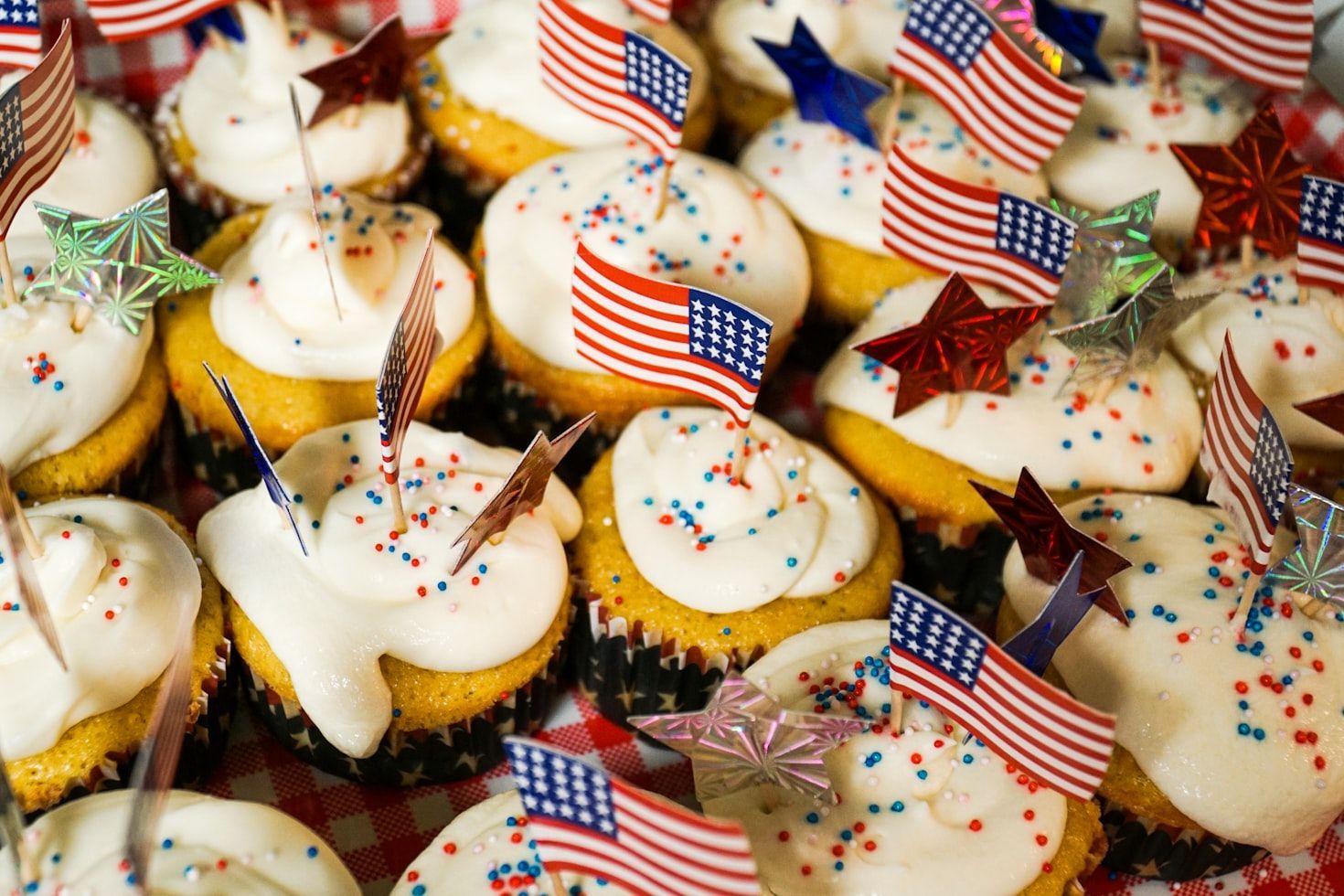
Image: Thomas Park

The 4th of July isn't just the day America officially declared its independence; it also holds some incredible historical coincidences. On Independence Day in 1826, both Thomas Jefferson and John Adams died, exactly 50 years after the birth of the nation they helped create. Five years later, in 1831, James Monroe became the third president to die on the 4th of July.

But it's not all about endings: President Calvin Coolidge was born on the 4th of July, 1872, making him the only US president born on Independence Day.

10
Millions of hot dogs
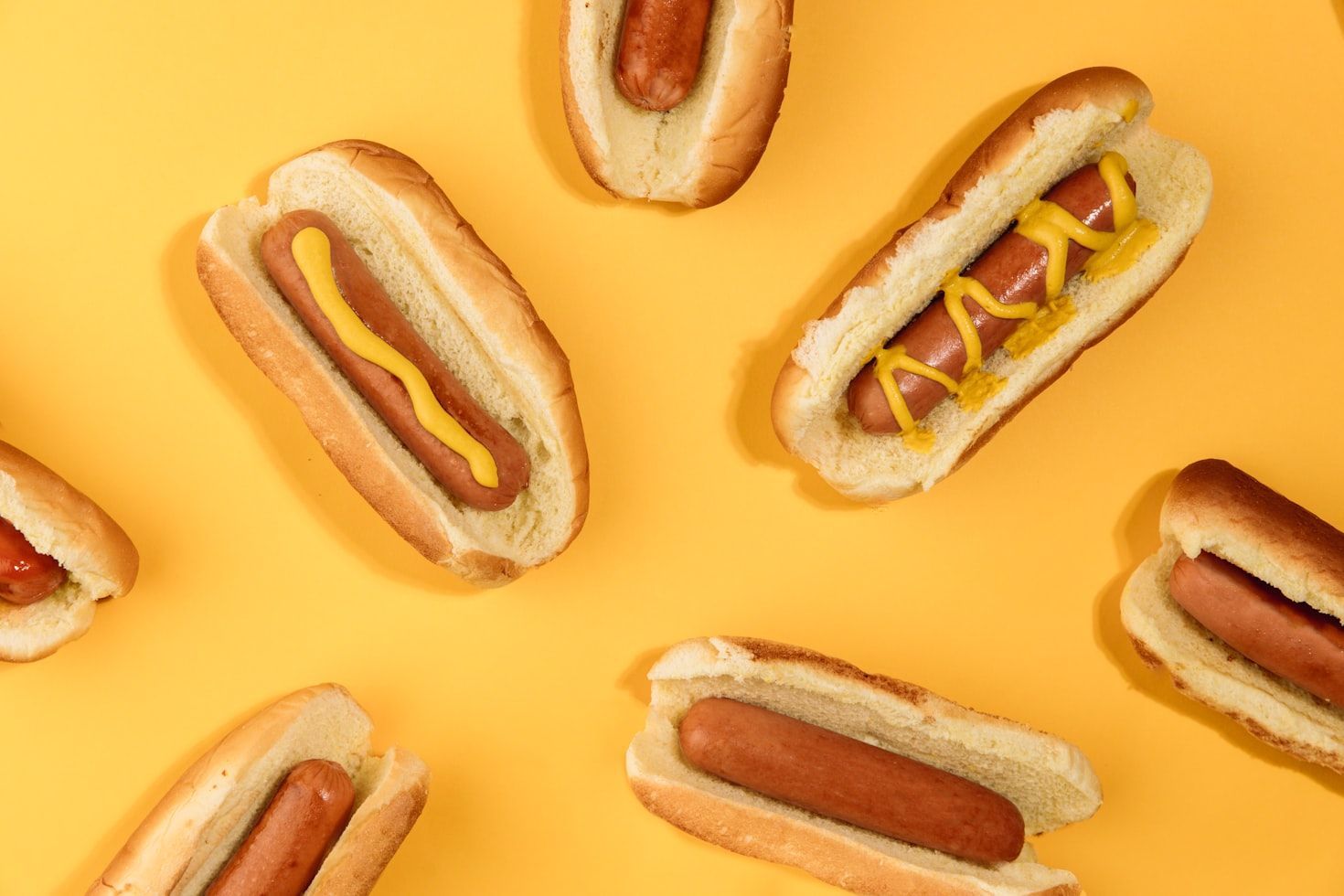
Image: Ball Park Brand

It's clear we Americans love hot dogs, and for good reason! This iconic food is closely tied to one of the most important days in our nation's history. According to the National Hot Dog and Sausage Council (yes, that's a real thing), Americans typically eat around 150 million hot dogs on Independence Day alone. 150 million!

Geography Geography 5 min read

American landmarks

The sky is the limit: Do you know these 10 breathtaking skyscrapers?

Image: Frederik Sørensen

The noun "skyscraper" has a fantastical side to it, doesn’t it? It directly speaks to mankind’s eternal dream to touch the sky, to be able to reach previously insurmountable heights. Ever since the first skyscraper was built in Chicago, America has been synonymous with these breathtaking and humongous buildings. With that in mind, we have selected 10 of the most iconic buildings in American history. Celebrate these architectural wonders and how they represent everything that makes us so proud to be American. Enjoy!

1
Empire State Building

Image: Afif Ramdhasuma

We’ll begin with what’s perhaps the most famous skyscraper in "The City That Never Sleeps". The Empire State Building speaks to the magnificence and grandeur of New York City: After all, it is named after the State of New York’s official nickname, "The Empire State".

At the time of its construction, the Empire State Building was the tallest building in the world, a title held for almost 40 years. Its exquisite Art Deco design and innovative architecture have turned it into an instantly recognizable icon. Perhaps more famously, it has been featured in unforgettable pictures like "Sleepless in Seattle" and "King Kong". Be honest: Whenever you see a picture of this building, can’t you almost see a humongous ape perched atop its antenna?

2
Flatiron Building

Image: Vidar Nordli-Mathisen

For many, the most remarkable feature of this iconic building is its unusual name, which comes from its also rather unusual shape. The Flatiron is considered a New York City institution, and its history is almost as inspiring as its groundbreaking design.

In its early years, the Flatiron was known by the derisive nickname "Burnham's Folly", since detractors believed that architect Daniel Burnham’s design was a laughable idea. History would prove Burnham right though, since the Flatiron is still one of the most instantly recognizable skyscrapers in the world.

3
Willis Tower

Image: Gardhy Granados

For any Chicagoan who might be reading this, we know that you probably still call this building the "Sears Tower", but we thought it would be appropriate to include the official new name of this iconic skyscraper. Located in the heart of the "Loop", the Willis Tower is a 110-story, 1,451-foot building that has truly earned its place in Chicago’s skyline.

Since its opening in 1973, Willis Tower has proudly held the title of the world’s tallest building for close to 25 years. Regardless, this juggernaut is still an American landmark and one of Chicago’s most visited tourist attractions.

4
Transamerica Pyramid

Image: Chris Leipelt

While most pictures of San Francisco’s skyline are usually dominated by the Golden Gate Bridge, visitors of "The City by the Bay" are frequently dazzled by this unusual yet breathtaking building. Completed in 1972, the Transamerica Pyramid was San Francisco’s tallest building until 2018, when it was surpassed by the Salesforce Tower.

Without a doubt, the most striking aspect of this building is its groundbreaking design: Just like San Francisco’s carefree spirit of independence, this building seems effortlessly innovative. It has been compared to other revolutionary designs, most notably to "the Shard" building in London.

5
Columbia Center

Image: Anthony Alexander

Formerly known as "the Bank of America Tower" (or BOAT for short), the Columbia Center was constructed in downtown Seattle in the early ‘80s: At the time, this imposing black skyscraper was the highest building on the West Coast. While most of this skyscraper is leased for private usage, it does house the highest public viewing area west of the Mississippi River.

The Columbia Center’s design produces a rather interesting effect: Since the building is composed of 3 separate segments joined by 2 setbacks, viewers from the street might believe the Columbia Center is made from 3 different towers set side to side.

6
The Chrysler Building

Image: Anthony Fomin

As you probably expected, many iconic skyscrapers from "The City That Never Sleeps" will be featured in this article. The Chrysler Building is an art-deco masterpiece located at the intersection of 42nd Street and Lexington Avenue, which holds the distinction of being the world’s very first supertall skyscraper.

This building was commissioned by (and named after) Walter Chrysler, head of the Chrysler Corporation, and its construction was marked by a friendly competition with the Empire State Building for the title of the world’s tallest building. In that sense, the Chrysler Building’s remarkable 1,046 feet height gave it this impressive title, albeit only for 11 months.

7
Wells Fargo Plaza

Image: Franky Magana

If you ever find yourself taking a stroll through Downtown Houston, you’ll definitely come across a gorgeous all-glass skyscraper. You can’t miss it: After all, the Wells Fargo Plaza is the tallest all-glass building in the entire Western Hemisphere, standing at an impressive 992 feet.

This skyscraper was formerly known as the Allied Bank Plaza and in, 1988, it was renamed to the First Interstate Bank Plaza. However, when in 1996 First Interstate Bancorp was bought by Wells Fargo, this skyscraper changed its name once again to the Wells Fargo Plaza we all know.

8
John Hancock Center

Image: Jonathan J. Castellon

Founding Father John Hancock truly deserves all the praise it can receive from the American people, so it stands to reason that he should have his name honored by a 1,128-foot supertall skyscraper. Located in the iconic "Magnificent Mile", the John Hancock Center was for a while the tallest building in Chicago, surpassed by the previously mentioned Willis Tower.

This skyscraper was completed in 1969 and it has remained a Chicago staple ever since. It houses several restaurants and offices, as well as approximately 700 condominiums. Interestingly, the John Hancock Center is the background on which the 1988 horror film "Poltergeist III" takes place: Posters for this film featured this skyscraper, with a menacing lighting bolt crossing the night sky behind it.

9
Bank of America Plaza

Image: Luis Negron

Just like the Empire State and the Chrysler buildings, the Bank of America Plaza is another wonderful example of Art Deco architecture located between Midtown and Downtown Atlanta. This gorgeous skyscraper is instantly recognizable thanks to its unusual color palette, and it holds the distinction of being the tallest building of any U.S. state capital.

If you are lucky enough to visit "the City in a Forest", try to visit the Bank of America Plaza at night. You’ll quickly notice that the stunning golden spire at the top of the building (which is actually shaped like the Plaza itself) glows alongside a gorgeous pyramid of girders, in a lovely orange hue that tries to resemble old street lights.

10
Home Insurance Building

Image: Александр Македонский

We’ll end this article by honoring an iconic skyscraper that, while it is not still standing, lives on in the proud history of our country. Standing at 138 feet, the Home Insurance Building might not seem remarkably tall by today's standards but, at the time of its construction in 1885, this Chicago historical landmark became the world’s very first skyscraper.

Due to a decrease in its occupancy, the Home Insurance Building was demolished in 1931, alongside 5 other buildings, to make way for the site on which the Field Building now stands. However, this landmark’s legacy still stands, earning its well-deserved place in history as the father of the skyscraper.

General General 6 min read

RAISE YOUR GLASS TO AMERICA

Have You Tried These 10 Classic American Cocktails?

America is celebrated as the home of many wonders . Among its most delightful creations are a variety of delicious drinks and cocktails that have not only gained international fame but have also been critically acclaimed across the country and around the globe for their quality and flavor . There's always something to celebrate, right? Whether you are the life of the party or you just enjoy relaxing in the backyard with a cool drink in hand, this article is for you.

Let's take a look at the recipes and places of origin behind these 10 tasty American cocktails . Cheers!

1
Long Island iced tea

Image: yeoul Shin

There are two theories about the origin of this cocktail, both rooted in Long Island , though not the sameLong Island!

One story claims it was born during the Prohibition era in a community named Long Island in Kingsport, Tennessee . Another, more recent, credits Robert "Rosebud" Butt with inventing the recipe in a 1972 contest held on Long Island, New York .

A daring choice for some, the iconic Long Island Iced Tea has a recipe with a long list of ingredients . To prepare it, you'll need tequila, light rum, vodka, triple sec, gin, and a splash of cola. Only the bravest dare to try it!

2
Martini

Image: Daniel Lloyd Blunk-Fernández

If you are one of those who loves a drink that's both strong and stylish , then the classic Martini is probably among your favorites. It is the choice of the sophisticated James Bond, who famously prefers his Martini "shaken, not stirred."

Traditionally made with gin and vermouth , and garnished with an olive or a lemon twist, the Martini has several variants, including the vodka Martini, which -as its name suggests- swaps gin for vodka.

While the origin of this classic is not entirely clear, most sources argue it comes from a drink called the Martinez , which had the same basic ingredients and was already being served in the mid-19th century at the Occidental Hotel in San Francisco, California.

3
Old Fashioned

Image: Nuff

Let's step back in time with the classic Old Fashioned ! This drink traces its roots back to the early 19th century right here in the United States.

Initially called "the whiskey cocktail," it was prepared much like it is today: mixing sugar with bitters and water, then adding whiskey or brandy. However, as the 19th century progressed, new ingredients like fruit juices, soda, or other liquors became part of many drinks. To stick to the original recipe and avoid these modern twists, people began ordering it as an "Old Fashioned."

The invention of this liquid delicacy is sometimes linked to The Pendennis, a gentlemen's club that opened in 1881 in Louisville, Kentucky . However, mentions of this delicious drink across the country long predate the club.

4
Mint julep

Image: Abby Boggier

Originally from the south of the United States and very popular, especially in Kentucky , there are mentions of this fresh cocktail as early as the 1770s!

It truly stood the test of time, and we understand why. With a base of bourbon , a hint of sugar, water, the classic crushed ice, and the essential fresh mint , it is a mix that's hard to resist.

Served traditionally in silver or pewter cups , this classic American drink is perfect for summer. However, the touch of bourbon can also be good for a cool winter day.

5
Manhattan

Image: OurWhisky Foundation

Remember the original Old Fashioned recipe? Well, let's spice it up. Take the whiskey cocktail and add a splash of sweet vermouth . That's it! Now you have a chic drink: the popular Manhattan .

The Manhattan cocktail has a fascinating origin myth , situated -of course- in NYC . Legend has it that this recipe was created in the 1870s , at the Manhattan Club for a banquet hosted by Winston Churchill's mother! However, historical records show that Lady Randolph Churchill was actually in Paris and pregnant with Winston at the time.

According to more reliable sources, the Manhattan cocktail was actually invented in the 1860s by a bartender named Black , who ran a bar near Houston Street in Manhattan.

6
Sazerac

Image: Bon Vivant

The classic Sazerac cocktail embodies the spirit of The Big Easy , where it was born in the mid-19th century.

The Sazerac we savor today is named after the Sazerac de Forge et Fils brand of Cognac brandy, from which this cocktail was first created. To make a Sazerac, absinthe, bitters, and sugar were combined with the brandy. Over time, rye whiskey replaced brandy in the modern recipe.

What sets the Sazerac apart, besides its Frenchy name, is its distinctive serving style . The ritual begins by rimming an old-fashioned glass with absinthe. Next, the drink is mixed with ice and strained into the prepared glass. Finally, a classic touch: a twist of lemon.

7
Mai Tai

Image: wu yi

While it might sound like the name of an ancient martial art, the Mai Tai is actually a delightful cocktail born in the United States of America.

More modern and with a tropical touch, the Mai Tai is a vibrant blend of rum , Curaçao liqueur, orgeat syrup, and lime juice. The year was 1944 when this balanced recipe was created by Victor J. Bergeron at his Trader Vic's restaurant in Oakland, California .

Apparently, the Mai Tai's name comes from the Thai expression "maitaʻi," which translates as "good," "excellent," or even "the best." So, if you haven't tried it yet, consider this your signal!

8
Tequila Sunrise

Image: Jamin Eyes

Named for its unmixed colors that mirror the beautiful moment when the sun rises, the Tequila Sunrise carries an intense blend: tequila, orange juice, and grenadine syrup .

The original recipe was a bit different. Between the 1930s and '40s , bartender Gene Sulit stirred up tequila with crème de cassis, lime juice, and soda water at the Arizona Biltmore Hotel in Phoenix. Some three decades later in Sausalito, California , Bobby Lozoff and Billy Rice made a change to the original recipe. They traded out the original last three ingredients for orange juice and grenadine, creating the present version.

In case you're wondering, yes, The Eagles' song was inspired by this drink!

9
The Ramos Gin Fizz

Image: The Humble Co.

And New Orleans is here again! With its festive spirit, this city also gave birth to another American cocktail: The Ramos Gin Fizz . This delightful recipe was born in 1888 , courtesy of Henry Charles "Carl" Ramos, owner of the Imperial Cabinet Saloon .

Originally called the " New Orleans Fizz ," it was an instant hit. But if you want to try making it at home, be prepared for a trip to the grocery store, as the recipe is a bit long . The mix for a perfect Ramos Gin Fizz includes gin, lemon juice, lime juice, egg whites, sugar, heavy cream, orange flower water, and soda water.

10
Cosmopolitan

Image: Laure Noverraz

Who hasn't heard of the iconic " Cosmo "? This delightful, sweet drink is a blend of vodka , Cointreau (a type of triple sec), cranberry juice, and a splash of sweetened lime juice. It is served in a chic martini glass and often garnished with a lemon twist.

The origin of this drink is a subject of debate, with various reports suggesting its creation in different places across the country . Some stories trace it back to the 1970s in Provincetown, Massachusetts ; San Francisco, California ; or Minneapolis, Minnesota . Others claim it was born a bit later, in the mid-1980s , in the sunny state of Florida . The current recipe, however, has traces in the bustling city of New York.

Regardless of its birth city, this drink originated in our country and is part of American culture. Let's enjoy it!

Explore more American facts

Choose your favorite category!

General
General

As American as apple pie—the very best America has to offer!

Culture
Culture

Delve into the astounding richness of American lore.

Geography
Geography

Hop in and explore vast and diverse American landscapes.

History
History

Discover the key moments that shaped the United States.



