History History 5 min read

Teddy Roosevelt’s shocking election rally feat: 10 bizarre history facts

Image: Kelly Sikkema

The history of U.S. elections is filled with fascinating stories, from "Founding Feuds" and duels to ad campaigns produced by Disney. Exploring these oddities and quirks reveals that, in some ways, not much has changed since the early days of voting, and can even shed new light on today's politics. Explore ten bizarre and surprising facts from the history of U.S. presidential elections, including some incredible, last-minute feats.

1
1789 and 1792: George Washington
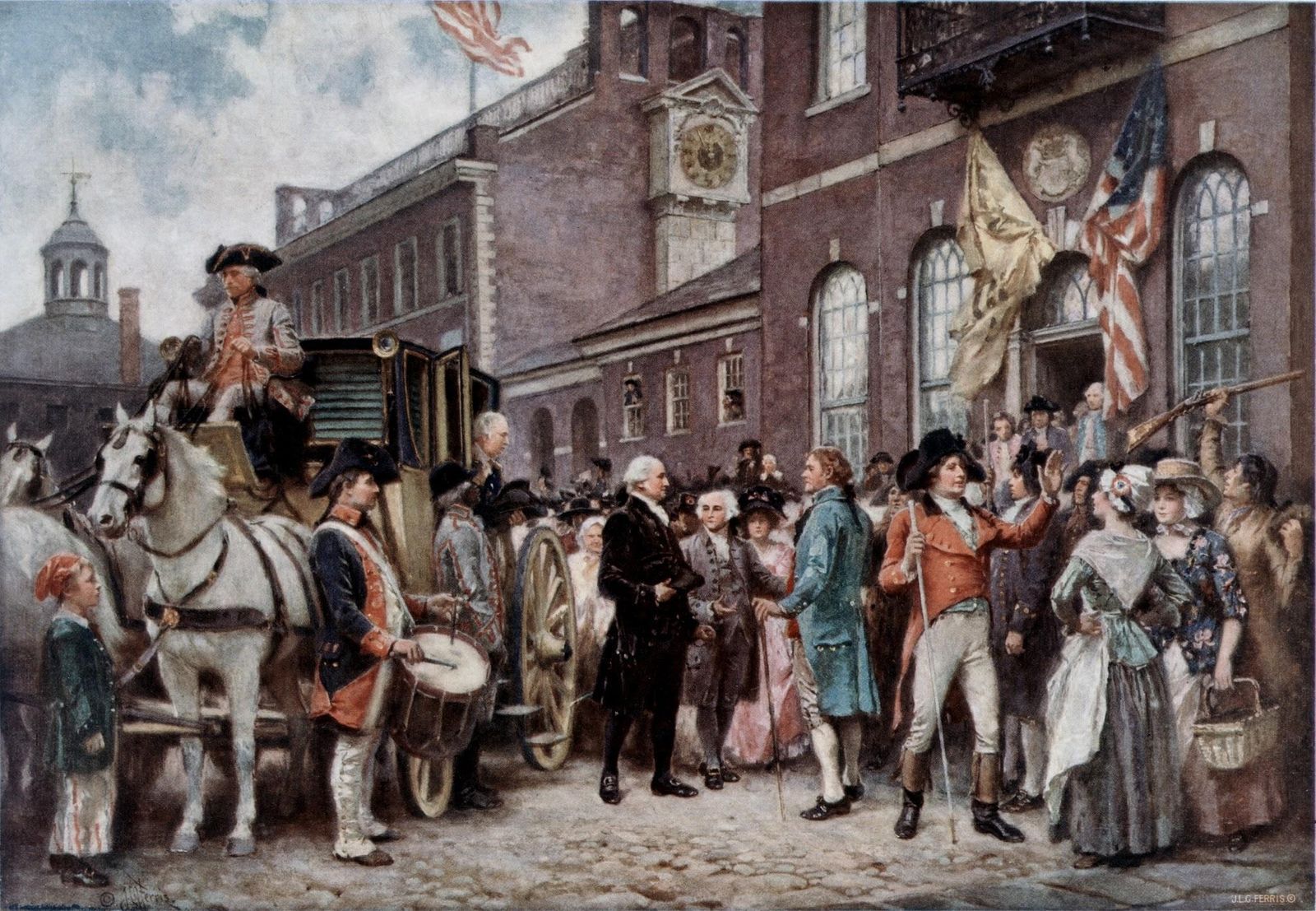
Image: Jean Leon Gerome Ferris, Public domain, via Wikimedia Commons

According to lore, Founding Father John Adams jealously complained that the only reason George Washington was "chosen for everything" was because "he was taller than anyone else in the room." Whatever the reasons, Washington was the only president to be unanimously elected by the Electoral College in both 1789 and 1792. In the 1792 election, the so-called "Father of His Country", though reluctant to serve a second term, was re-elected when no one dared run against him.

2
1804: Thomas Jefferson

Image: David Trinks

When Alexander Hamilton, former Secretary of the Treasury, and sitting Vice President Aaron Burr challenged each other to a duel, it set off a series of events that dramatically influenced the 1804 presidential election. Hamilton, Thomas Jefferson's main political rival, was killed by Burr, who consequently destroyed his own political career. A few months later, Burr wasn’t even on the ticket, and Jefferson was overwhelmingly re-elected .

3
1824: John Quincy Adams
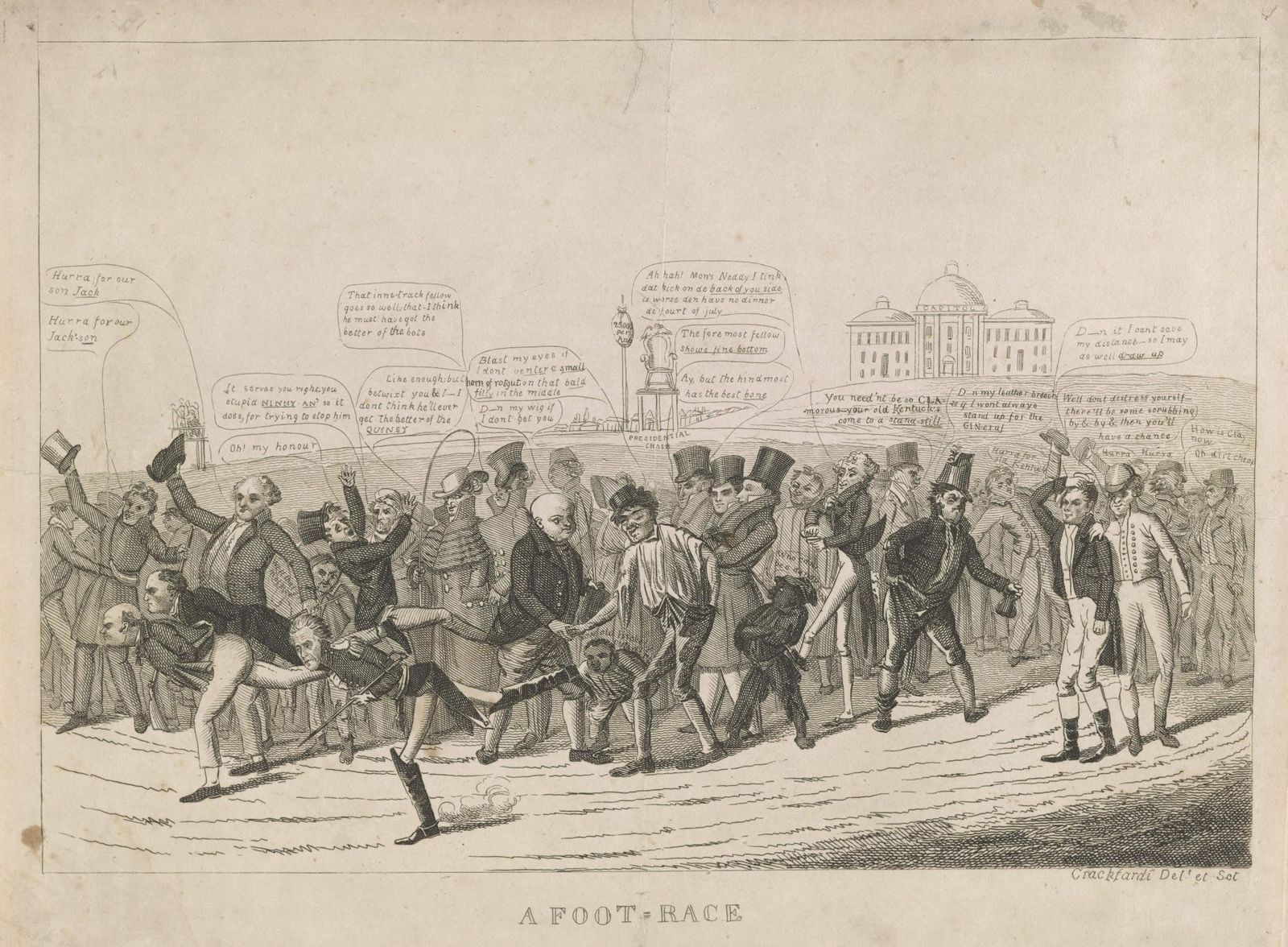
Image: Johnston, David Claypoole, 1799-1865., Public domain, via Wikimedia Commons

The election of 1824 was the first decided by the House of Representatives, as no candidate secured a clear majority in the Electoral College. The 12th Amendment to the Constitution provides that if no candidate receives a clear majority of electoral votes, it is up to the House to choose the president, and each state receives one vote. Andrew Jackson had won the popular vote and the most electoral votes, but John Quincy Adams was ultimately elected president.

4
1829: Andrew Jackson
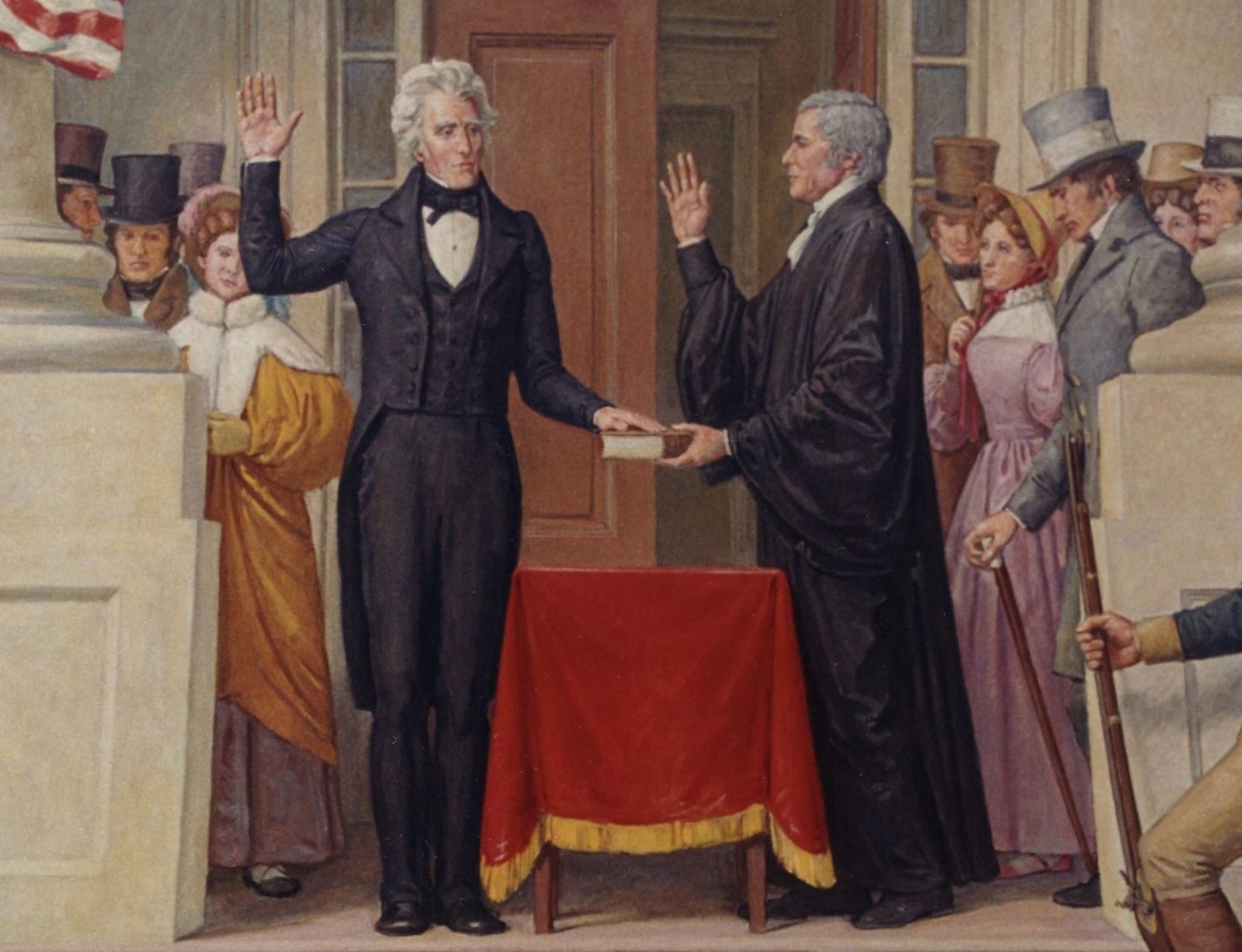
Image: Allyn Cox, Public domain, via Wikimedia Commons

According to the chronicles of the time, Andrew Jackson’s inauguration party in March 1829 was so wild that he had to sneak out of the White House and spend the night at a hotel. In fact, it took a whole week to scrub and clean the Executive Mansion after the party.

But perhaps there was another reason for Jackson to leave. Rachel Donelson Robards Jackson, his wife, died just a few months before she would have become first lady. A vicious campaign had smeared her as a bigamist, and her heart is said to have given out from the stress. Throughout his presidency, Jackson claimed he felt very lonely. Perhaps that is why he often opened up the White House to the public.

5
1872: Ulysses S. Grant
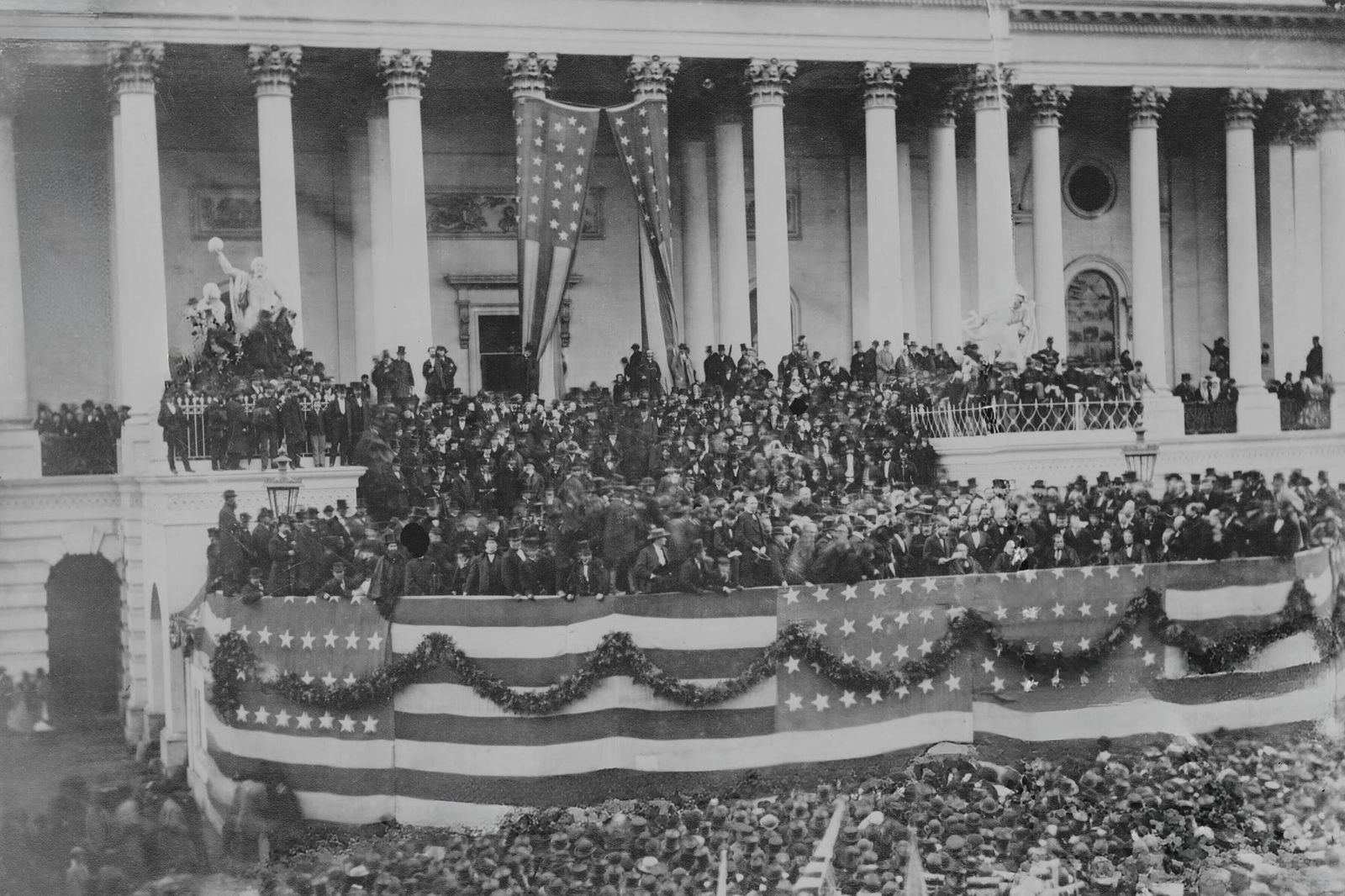
Image: Mathew Benjamin Brady, Public domain, via Wikimedia Commons

In the final phase of the 1872 election, presidential incumbent Ulysses S. Grant technically ran against a corpse. His opponent, Horace Greeley, candidate for both the Democrats and the Liberal Republicans, died on November 29, 1872, after the general election but before the Electoral College officially cast its votes. After Greeley's death, the electoral votes he had received—a rather significant number—were distributed among other candidates. Ultimately, the election resulted in Grant winning.

6
1876 and 1880: Rutherford B. Hayes & James A. Garfield
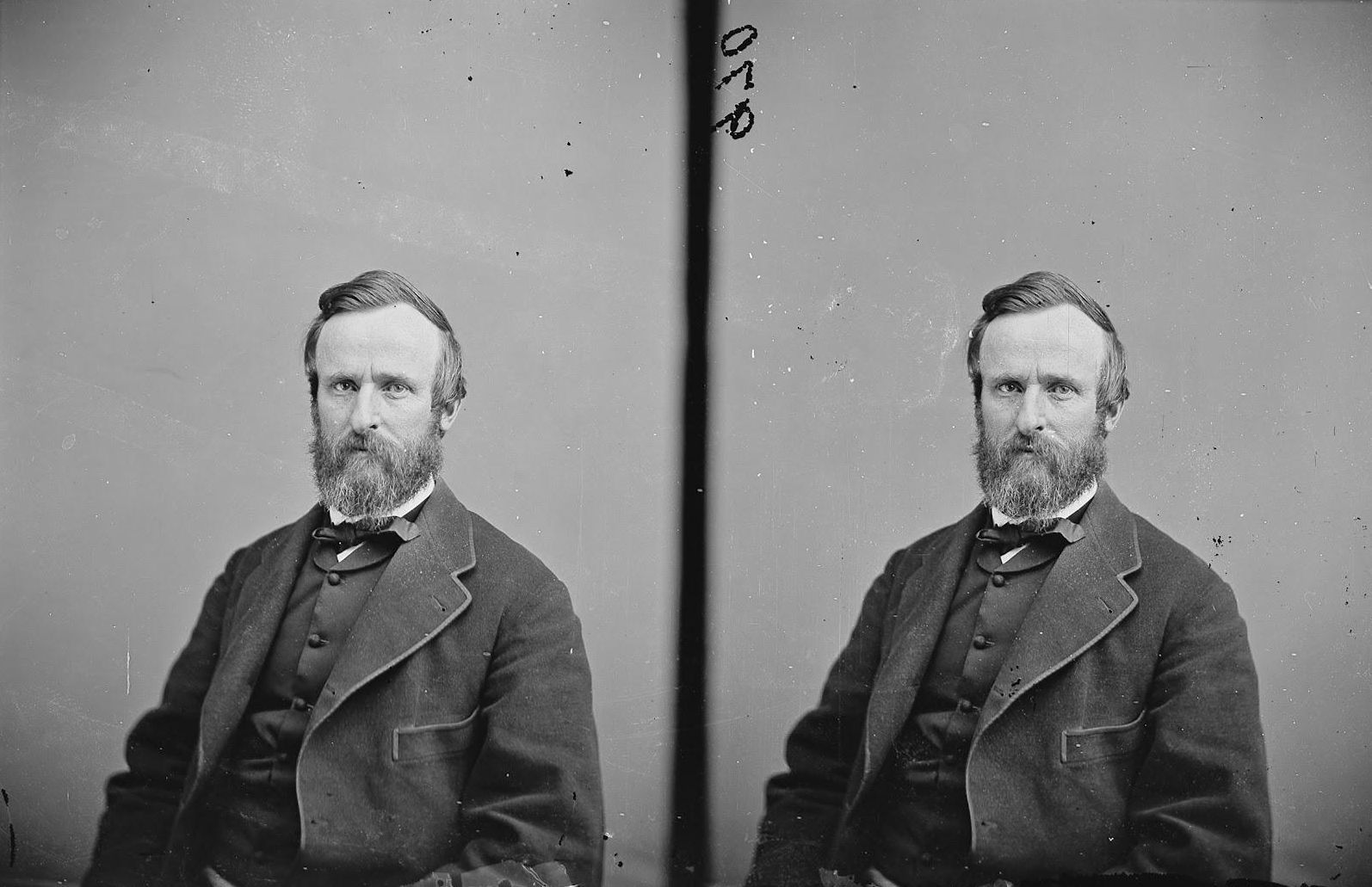
Image: Mathew Benjamin Brady, Public domain, via Wikimedia Commons

In the 1876 elections, no candidate won a majority of the votes, so Rutherford B. Hayes made a deal to become president. In exchange for the Democratic Party not disputing his election victory, Hayes agreed to withdraw the remaining federal troops from the South, which effectively ended the Reconstruction era after the Civil War.

In 1880, when Hayes chose not to run for reelection, the Republicans had the longest convention in party history—6 days—which resulted in the nomination surprisingly going to James A. Garfield, a "dark horse" who later won in the general election. Unfortunately, Garfield was assassinated a year into his term at age 49.

7
1884 and 1892: Grover Cleveland
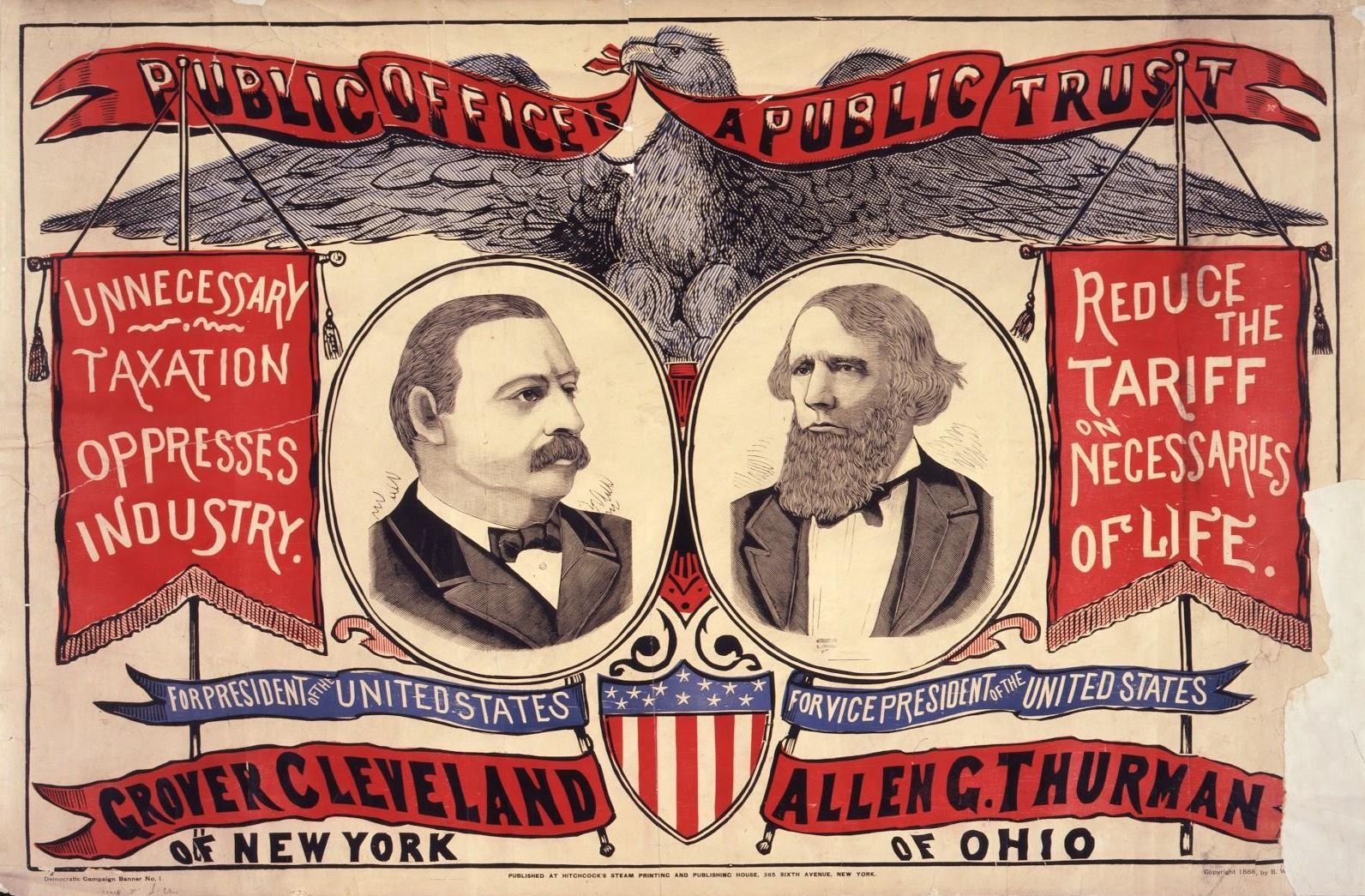
Image: bb

In 1884, when Grover Cleveland was elected president, phrenology , a pseudoscience that claimed a person's character and abilities could be determined by the size of their skull, was gaining cultural traction. Leaflets were distributed in New York as "scientific proof" that Cleveland was smarter than his opponent.

Four years later, he lost re-election despite winning the popular vote. But in 1892, Cleveland became the first president to win a second non-consecutive term, ushering in the first Democratic Trifecta since the Civil War.

8
1912: Teddy Roosevelt
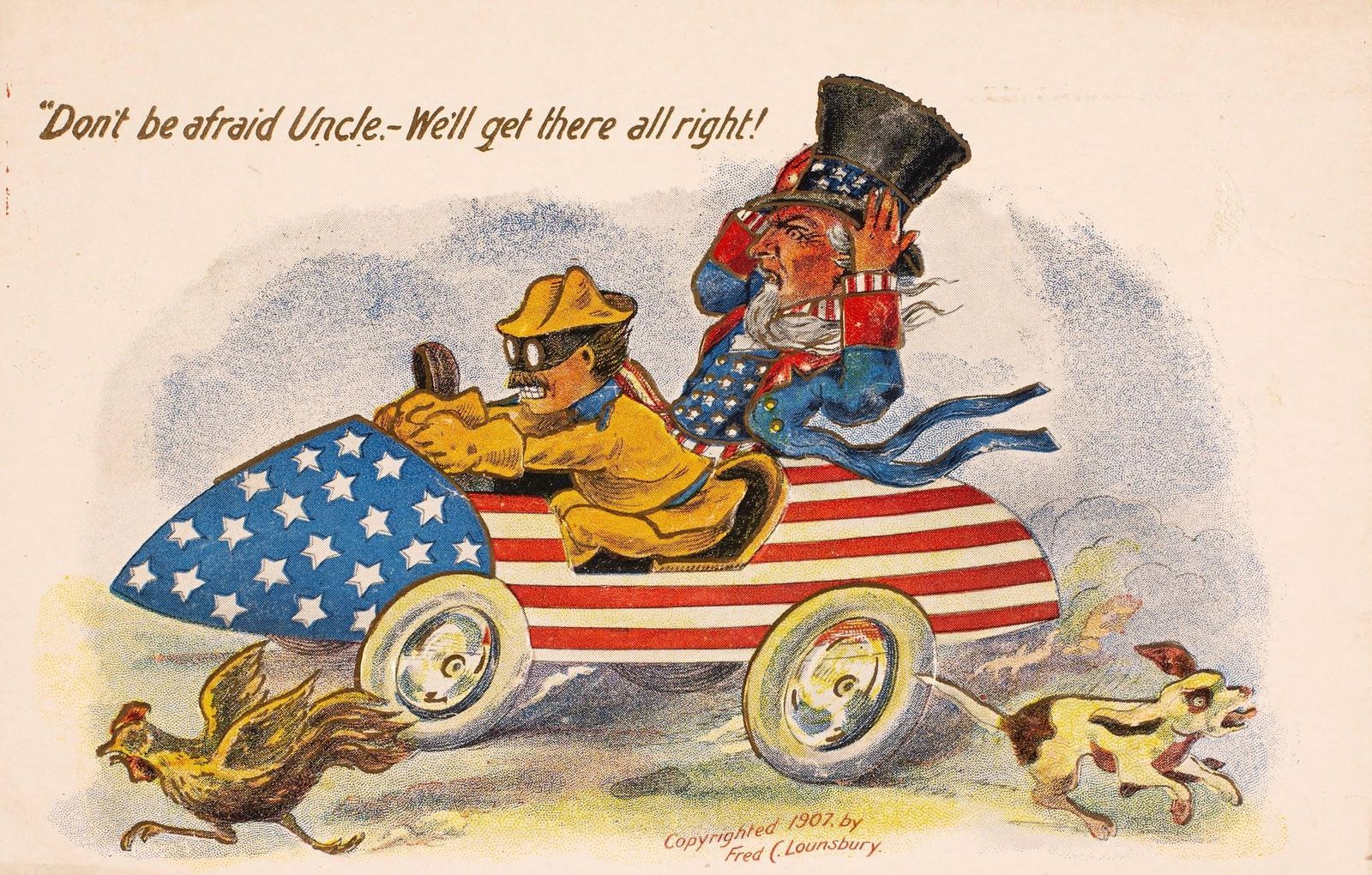
Image: Fred C. Lounsbury, Public domain, via Wikimedia Commons

In the 1908 election, after pledging not to seek a third term, Theodore Roosevelt supported his then good friend William Howard Taft, the only person to be both President and Chief Justice of the Supreme Court. But in 1912, he decided to run for a third time as a third-party candidate.

On October 14, Teddy Roosevelt gave a 50-page speech in Milwaukee, where he was the victim of an assassination attempt. According to various accounts, he went on to speak for almost an hour and a half with a bullet lodged into his chest before he was rushed to the hospital. "It takes more than a bullet to kill a Bull Moose," Teddy said to the crowd. He eventually lost the race to Democrat Woodrow Wilson.

9
1932, 1936, 1940, and 1944: Franklin D. Roosevelt
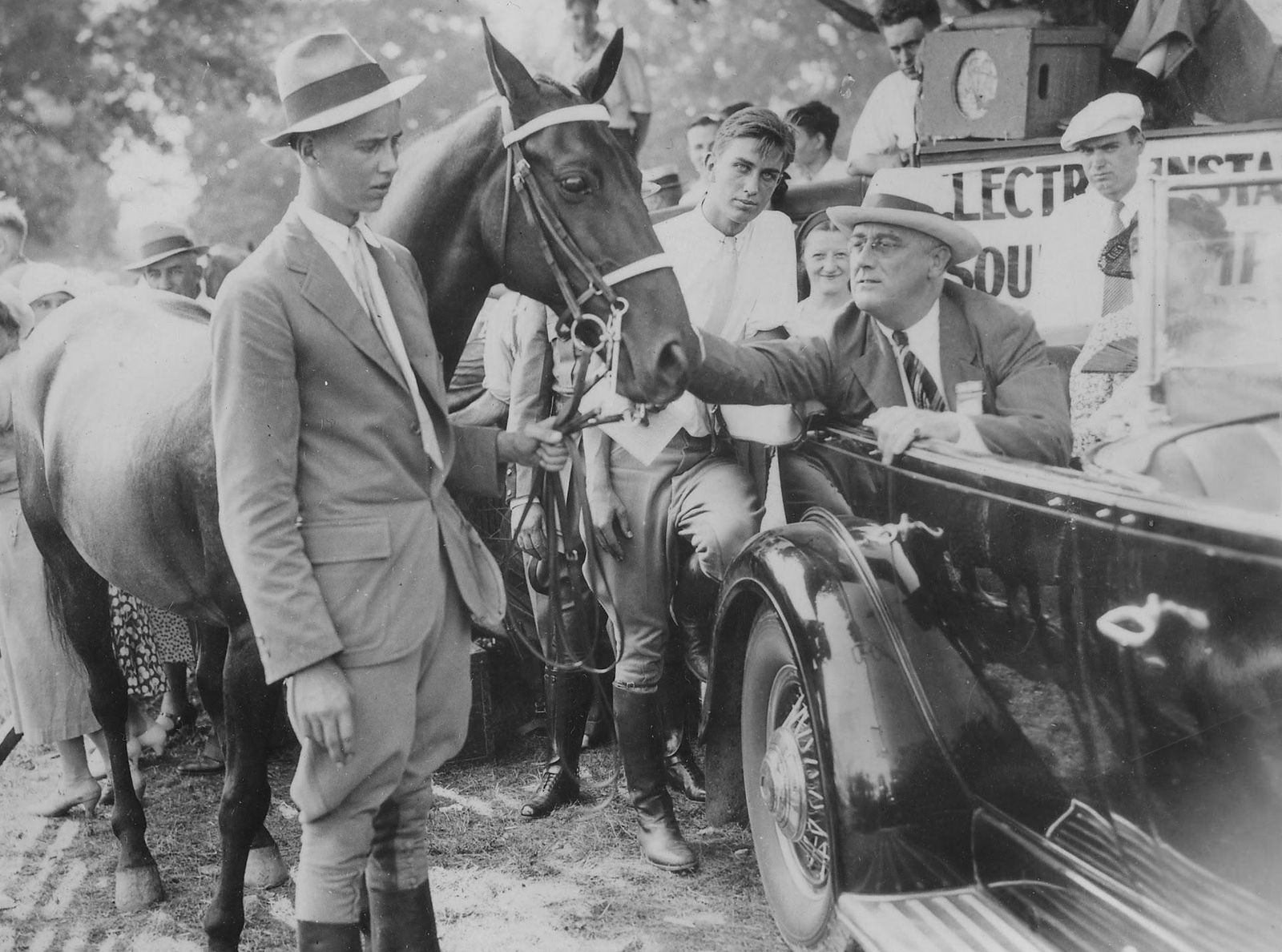
Image: National Archives and Records Administration, Public domain, via Wikimedia Commons

FDR was the first Democrat since Franklin Pierce in 1852 to win a majority in both the popular vote and the Electoral College. Four years later, in 1936, in part due to the support of the New Deal, African Americans shifted their majority for the first time ever, from the party of Lincoln to the party of FDR, giving him the win.

In 1940, the Republican Party chose Wendell Willkie, a New York businessman and former FDR delegate, to oppose Roosevelt, who was running for the third time. Yet, he was walloped. In 1944, pitching steady leadership in the face of World War II, Roosevelt won an unprecedented fourth term. Unfortunately, he died just 3 months into it at age 63 from a stroke.

10
1952: Dwight Eisenhower

Image: Library of Congress

Did you know one of Dwight Eisenhower's 1952 ads was produced by the Walt Disney Company? Roy Disney—Walt's brother—created a highly effective, minute-long, animated political commercial known as "Ike for President" or "We'll Take Ike." In fact, it was the first animated presidential campaign ad in U.S. history.

​​The ad featured an upbeat jingle, an animated Uncle Sam, and a Republican elephant leading a parade of citizens. The commercial was widely considered a success and was credited with softening Eisenhower's image, who ended up winning that year’s bid against Democratic opponent Adlai Stevenson.

Geography Geography 6 min read

Natural wonders worth the trip

From Crater Lake to Devils Tower: Top 10 landmarks in U.S. National Parks

Image: Adam Smotkin

America's national parks are among the most diverse and richest in the world. Deserts, forests, geysers, ancient trees, and giant mountains are just some of the most spectacular features our cherished national parks preserve within their boundaries. In this article, we have selected the 10 must-see landmarks you can’t miss when visiting U.S. National Parks.

1
Grand Teton and its central peaks

Image: Toan Chu

No matter how many national parks you visit, Grand Teton will always rank among the most beautiful in the country. As evocative as it is inspiring, this national park in northwestern Wyoming saw the arrival of the first settlers, the brave frontiersmen. It also offers some of the most breathtaking mountain scenery in the world and is a great place for climbing and hiking enthusiasts.

The highest mountain in the park is Grand Teton itself, standing at 13,770 feet, but there are 10 other peaks that reach an impressive height of more than 11,000 feet. The interesting thing is that, to the naked eye, these mountains appear even larger, since they all rise abruptly from the otherwise flat terrain of the Jackson Hole Valley. Six alpine lakes nestled in the foothills of the central peaks, along with a fascinating array of wildlife, complete the scenery of one of the best parks on the West Coast of the US.

2
Crater Lake in Crater Lake National Park

Image: Joris Beugels

The deep blue color of Crater Lake has been the objective of many attempted descriptions, but none comes close to the impact you feel when you see it with your own eyes. In fact, the first name given to it by non-native Americans was simply "Deep Blue Lake." This intense blue color is a result of the lake’s immense depth —reaching 1,932 feet at its deepest point—making it one of the world’s deepest lakes.

Located in south-central Oregon, this volcanic crater lake spans 5 miles in width and 6 miles in length, with a 20-mile shoreline. The dimensions and color are enough to attract visitors, but its setting, surrounded by lava cliffs ranging from 500 to 2,000 feet above the lake's surface, makes it all the more remarkable.

There are many ways to enjoy Crater Lake, which is beautiful all year round. In winter you can rejoice in a true winter wonderland, and in summer, you can hike the trails and go boating or fishing in the bright blue water.

3
Mount Rainier

Image: Peter Robbins

Perhaps the most famous peak in the Pacific Northwest’s Cascade Range is Mount Rainier. This dormant—but not extinct—ice-clad volcanic mountain stands at an impressive 14,410 feet. Though it is not the highest of mountains, Mount Rainier’s sheer bulk and the fact that it is set apart from its neighboring peaks make it the dominant landmark of the region. So much so that it is commonly referred to by locals simply as "The Mountain."

Located in Washington State, just 59 miles south-southeast of Seattle, Mount Rainier is visible from over 100 miles away on clear days. Rainier’s legendary beauty is as great as its overpowering size. Its 27 glaciers cover more than 34 square miles, making it the largest single-peak glacial system in the lower 48 states.

4
Half Dome in Yosemite

Image: Aaron Lee

Yosemite National Park in California is justifiably one of America's most famous and beloved parks. Its spectacular scenery is sure to impress even those who have seen practically every other park in the country. And, in turn, probably the most iconic landmark of Yosemite is Half Dome, a quartz monzonite batholith that rises 8,800 feet above sea level.

Once considered impossible to climb, Half Dome now draws thousands of adventurers to its distinctive, hooked summit each year. The 14- to 16-mile round-trip hike via the Half Dome Cable Route offers outstanding panoramic views of Vernal and Nevada Falls, Liberty Cap, Yosemite Valley, and the High Sierra. This is a journey you definitely can't miss!

5
Hyperion Tree in Redwoods National Park

Image: Josh Carter

Redwood National Park in Northern California protects nearly 140,000 acres of land and almost 40 miles of Pacific coastline. Bathed in a temperate rainforest climate, the park receives up to 140 inches of rainfall annually. This cool moisture, along with rich forest-floor soil and the trees' ability to sprout new buds, allows coast redwoods to reach lofty heights and venerable old age.

These exceptional conditions have made this park home to the world's tallest tree. Standing at an astonishing 380.3 feet, Hyperion, a Sequoia sempervirens , is considered the tallest living thing on record, including the plant and animal kingdoms. Most experts say it’s 600 years old, although some think it may be as old as 900 years. Currently, the exact location of Hyperion is not publicized to protect it from potential damage from mass tourism.

6
Mount Mckinley in Denali

Image: John Feng

Mount McKinley is the highest point in North America , standing at an awe-inspiring 20,320 feet. The almost-four-mile-high giant was known to the Native Americans of Alaska as Denali , "The Great One," a fitting tribute to one of the world’s best-known mountains.

During winter, on clear days, it is possible to see the glacier-capped summit, and the true power of nature manifests itself. In spring, when the snow melts, nature unfolds, wildflowers bloom, grizzly bears emerge from their long hibernation, and you can find mooses, caribous, foxes, and wolves roaming around the park for a memorable encounter with the wilderness.

7
Devils Tower National Monument

Image: Mick Kirchman

Devils Tower is one of the most recognizable landmarks, not only in Wyoming but in the entire United States. Rising 867 feet, this gigantic monolith is visible from up to 100 miles away on clear days! Devils Tower is particularly striking because of its huge, hexagonal rock columns, estimated to be around 50 million years old. The butte is also among the most unusual of the many geologic formations in the country.

Another interesting fact about Devils Tower is that it was designated as the first U.S. national monument in 1906 by Theodore Roosevelt, under the Antiquities Act, due to its scientific and scenic value. Native Americans have long regarded the Tower as a sacred site too. In fact, over 20 Native American tribes have a cultural connection with it, the Lakota people consider it the birthplace of wisdom.

8
Delicate Arch in Arches National Park

Image: Zoshua Colah

Spanning 76,680 acres of desert land, Arches National Park in eastern Utah protects more than 2,000 natural sandstone arches. But perhaps the most iconic one is the 52-foot-tall Delicate Arch. It’s so famous that its image appears on state license plates as well as on a postage stamp issued in 1996 to commemorate the 100th anniversary of Utah's founding. Fun fact: the Olympic torch for the 2002 Salt Lake City Winter Olympics even passed under this arch!

In addition to checking out its most emblematic landmark, this park is a great place to visit any time of the year thanks to its hot, desert climate . There are lots of activities for outdoor enthusiasts, from biking, horseback riding, and hiking to taking a minute to appreciate the colorful wildflowers while enjoying an idyllic sunset.

9
Old Faithful in Yellowstone National Park

Image: Emily Campbell

Yellowstone is probably the name people are most likely to associate with "national park" and is the very symbol of the American West. It was established by President Ulysses S. Grant in 1872 and is the largest megafauna location in the United States. Apart from its scenic mountains, wildflower meadows, and photogenic canyon, perhaps the most emblematic features of Yellowstone National Park are its geysers.

Among these, Old Faithful is certainly the most famous one. Erupting approximately every 90 minutes, it delights visitors with spectacular displays. Shooting up to 8,400 gallons of boiling water nearly 150 feet in the air, it was the first of its kind to be discovered in 1870 by the Washburn-Langford-Doane Expedition when they entered the Upper Geyser Basin. Today, Old Faithful attracts around 500,000 visitors a month.

10
Angels Landing in Zion National Park

Image: Fineas Anton

Zion National Park in southwestern Utah is famous for its brownish-red mountains with fantastic shades of purple and lilac, skinny slot canyons, and vertigo-inducing cliffs. The most paradigmatic of these rock formations is Angels Landing, a towering 1,488-foot monolith, accessible via a challenging 2.5-mile trail.

The best way to experience Zion is by hiking the trail that hugs the cliffside, crossing a narrow ridge flanked by sheer drops. Sounds too dangerous? Believe us, the reward is worthwhile. Atop Angels Landing you will not only have access to an epic view of Zion Canyon but it's also possible to spot California condors soaring gracefully between the sandstone monoliths, alongside 287 other bird species!

General General 6 min read

Don’t break the law

Home haircuts are technically a felony, and so are all these small things

Image: Michał Jakubowski

Maybe you think of yourself as a law-abiding citizen who stays on the straight and narrow, but the truth is that the American legal system is full of weird rules that might catch you off guard. From honking without a real reason to cutting your partner’s hair, there are dozens of little things we do every day that could be considered a felony . Most of these laws were written a long time ago with good intentions, but they seem somewhat outdated today. Join us as we learn these offenses that could make an "outlaw" out of any common citizen.

1
Being annoying

Image: Andre Hunter

We all have bad days where our mood goes south, but in Florida, you’d better keep those frustrations to yourself . Ever since 1832, the Sunshine State has had a broad nuisance statute that classifies anything that "annoys the community, injures public health, or corrupts public morals" as a second-degree misdemeanor. Of course, the law was intended to address community hazards like toxic waste disposal or unsafe buildings. Modern enforcement targets environmental hazards and serious health violations. Personal annoyances are off-limits, since what qualifies as "annoying" is completely subjective.

2
Honking with no purpose

Image: Hitanshu Patel

We’ve all used our car horn to wave at a neighbor or used it to vent a little frustration in traffic. However, in New Jersey, according to their traffic code, your horn is legally reserved for safety warnings only . In this state, using it for any non-emergency reason is technically a traffic violation since 1968. Unless you are trying to prevent a fender-bender or warn a distracted driver, it is best to keep your hands off the steering wheel's center and just give a friendly wave instead.

3
Dangling car decorations

Image: Daniel Hobiera

If you have a pine-scented air freshener or a set of graduation tassels swinging from your rearview mirror, you might be looking at a ticket in some states. Laws vary across the country, but for example, in California, the law states that there cannot be anything obstructing the view through the windshield or side window . This rule is part of the California Vehicle Code, enforced in 1959. In Texas, the regulation is similar according to the state Transportation Code, and Minnesota, in turn, has had a law since 1957 making it strictly illegal to hang anything from the mirror. Nobody has anything against a nice-smelling car or a beautiful lucky charm, but when they obstruct your view , that’s a problem for everyone on the road.

4
Handling a stranger’s mail

Image: sue hughes

It’s not unusual to find a stack of letters addressed to the person who lived in your house three years ago, right? Now, your first instinct might be to toss it in the bin . Believe it or not, that’s a big no-no since 1948, clearly stated in the U.S. Code. Tossing out mail intended for someone else into the garbage is considered a federal felony, and penalties can be severe, including up to five years in federal prison and fines up to $250,000. The proper way to proceed is to write "refused" or "return to sender" on the envelope and let the post office take it from there.

5
Forgetting to tell the DMV you moved

Image: Erik Mclean

Life gets busy and messy when you move to a new house, so it’s easy for updating your driver's license to fall to the bottom of the to-do list. However, in most states, you are legally required to notify the DMV of your change of address within a very short window, usually ten to thirty days . In California, for example, you must do this within ten days. If you get pulled over and your license doesn't match your current address, you could get a fine. Time really flies when moving, but make sure to write this on the very top of your to-do list, and you’ll be fine!

6
Letting the engine on

Image: Carbyn Wu

Isn’t it common to start the car on a frosty morning to let it warm up while you finish getting ready? Well, if you do this, you’re technically breaking the law in some states: since 2004, in Ohio and Colorado, this is actually a citable offense known as "puffing." Leaving an unattended vehicle idling in your driveway is illegal because it invites car theft and contributes to unnecessary exhaust emissions. If you want to get the heater going, the law expects you to stay right there in the driver's seat until you’re ready to pull away.

7
Prank pizzas

Image: Mariya

In Louisiana, ordering a stack of pizzas to be delivered to an unsuspecting friend as a prank is more than just a lousy joke; it’s a crime. Believe it or not, there’s a reason behind this law. Passed in 2018, the Louisiana Revised Statute was specifically written to protect small businesses from losing time and money on fake orders. Can you imagine how annoying it must be to deal with a pranked customer who doesn’t want the five pizzas they got out of the blue? Even if it started as a joke, the authorities now view it as a form of theft that can result in a fine of up to $500, imprisonment for up to six months, or both.

8
Playing hairdresser

Image: Gabriela

If you’ve ever offered to give a friend a quick perm or some highlights in your kitchen, you might be an accidental criminal. In the US, performing any kind of cosmetology service on another person without a professional license is illegal. Forms of enforcement and penalties depend on each state, but most follow the rules established by the National-Interstate Council of State Boards of Cosmetology, which grants licenses following pertinent examinations. Of course, a bangs cut is not always a problem, but these kinds of regulations were created to ensure that chemicals and sharp tools are handled safely by trained experts.

9
No-hands bike riding

Image: Florian Kurrasch Disponible para contratación

Riding a bike is fun, especially for kids who like to do tricks and take both hands off the handlebars. But in North Carolina, that’s a traffic violation, according to the city code. The statute requires cyclists to keep at least one hand on the grip at all times to maintain control of the bike. Fines for this behavior can go up to $50 and even imprisonment for up to 30 days. Riding a bike without using your hands might feel like a fun way to show off skills, but the consequences can be serious.

10
Tossing out old batteries

Image: Syed Ahmad

When the remote dies, most people are tempted to just drop the old batteries into the kitchen trash can, but you might want to think that over, especially if you live in California. As of 2005, in this state, household batteries are classified as hazardous waste because they contain chemicals that leak into the soil. The California Rechargeable Battery Recycling Act requires you to take them to a proper recycling center instead of the regular landfill. It takes a little more effort to do the right thing, but it keeps the local environment a lot cleaner for everyone.

11
Lending your Wi-Fi password

Image: Dreamlike Street

You’ve just moved, and you ask your friendly neighbor to share their Wi-Fi password until your internet is set up. That’s pretty common, but that’s also been a felony since 1986. The feds view this as unauthorized access to a computer network . Under the Computer Fraud and Abuse Act, jumping on a signal you don't have explicit and formal permission to use is technically a crime. It’s better to stick to the local coffee shop than risk a run-in over a bit of borrowed bandwidth.

Explore more American facts

Choose your favorite category!

General
General

As American as apple pie—the very best America has to offer!

Culture
Culture

Delve into the astounding richness of American lore.

Geography
Geography

Hop in and explore vast and diverse American landscapes.

History
History

Discover the key moments that shaped the United States.