General General 3 min read

Which one is your favorite?

How word of mouth has changed over the years

Image: Cottonbro Studio

Over the years, how we’ve tuned into news, music, and entertainment in America has undergone serious changes. From the days of gathering around to hear stories passed down through oral traditions, to listening to the radio for the evening broadcast, to the modern age of podcasts, each era has its flavor. Take a look at these 12 media formats that we have used and use today.

1
The human voice

Image: Priscilla Du Preez 🇨🇦

Before modern technology, oral communication and word of mouth were the primary ways people shared news, stories, and music everywhere.

From Native American storytelling traditions to community gatherings, spoken word connected people, passed down history, and spread important information long before any other medium ever existed.

2
Public proclamations

Image: Andrew Ebrahim

Public proclamations were an early form of mass communication in America, used to spread news and official announcements.

Town criers or officials would read proclamations aloud in public squares , ensuring that important information reached everyone, even those who couldn't read, who were more than a handful at the time.

3
Live music

Image: Francesco Giacomini

Before recorded music, people would gather at local events, fairs, or churches to hear musicians perform songs that reflected current events, social issues, or, often, served as entertainment.

In the same way as today, live performances were a major form of entertainment and communication.

4
Gramophones

Image: Tasha

Gramophones and Edison’s musical cylinders revolutionized how Americans consumed music and news in the late 19th and early 20th centuries.

These devices allowed people to listen to recorded sound at home for the first time , offering a new way to enjoy music, speeches, and even news broadcasts.

5
Radio broadcasts

Image: Maximilian Hofer

It is hard to overstate the importance of radio. It was a game-changer in the early 20th century, bringing news, music, and entertainment directly into homes across America.

For the first time, families could listen to live broadcasts of events, catch the latest hits, or hear radio dramas .

6
Television

Image: PJ Gal-Szabo

Television caused a huge impact in the 1950s, blending news, music, and entertainment into one screen . As with radio, families gathered around the TV for nightly broadcasts, from the evening news to variety shows and music performances.

This new visual element added a deeper level of engagement, shaping how Americans consumed information and entertainment, making TV a major force in media for decades.

7
Vinyl record players

Image: Eran Menashri

Vinyl record players became a major music format in the mid-20th century, offering high-quality sound. People could listen to entire albums, making music a personal, immersive activity .

Vinyl records also became a cultural icon, with album artwork and collector’s editions turning listening into a ritual.

8
Magazine players

Image: Ciocan Ciprian

Somewhat of a half-step format between the vinyl records and compact cassettes , magazine players offered a portable way to listen to music and news in the 1960s through the 1980s.

These devices used cartridges or tapes that could hold multiple songs or recordings, making it easy for people to enjoy their favorite tunes on the go.

9
Cassette players

Image: Dave Weatherall

If magazine players made music a portable activity, cassette players and, especially, Walkmans, took it even further.

With the ability to play mixtapes or purchased albums anywhere, these devices gave people personal control over their music while on the go . Walkmans, in particular, became iconic for offering a private, on-demand listening experience.

10
CD players

Image: Lucky Alamanda

CD players became the go-to music format in the 1990s, offering a digital upgrade to cassettes with better sound quality and durability .

Compact discs could store albums without the wear-and-tear issues of tapes, and CD players were easy to use, making them popular in cars, homes, and portable devices.

11
MP3 players

Image: Ben Szymanski

The possibility of holding entire album catalogs and more in a single portable device became real in the early 2000s when MP3 players made their appearance.

Devices like the iPod became cultural icons, shaping how people accessed and enjoyed music, paving the way for the next and last item on our list.

12
Streaming services

Image: Heidi Fin

In the last decade, streaming services and podcasts have transformed the media landscape, allowing everybody to instantly access music, news, and entertainment on demand.

Platforms like Spotify and Apple Music put millions of songs at users' fingertips, while podcasts offer a vast range of topics for all interests .
Culture Culture 3 min read

Fashion statements

The king of pop, and the queen of the blowout: 10 celebrated styles!

Image: Abbie Rowe, National Park Service, Public domain, via Wikimedia Commons

For some, style is something superficial. But history shows us otherwise: Elvis’s legendary pompadour, Jackie’s chic pillbox hat, and Marilyn’s unforgettable white dress are just a few examples of how some Americans have shaped the way the world sees fashion. Before them, very few people used clothing as self-expression. But they came to change the idea of personal style forever.

1
Marilyn Monroe

Image: Sam Shaw, Public domain, via Wikimedia Commons

When we think of her, one iconic garment immediately comes to mind: her white halter dress . This image, now a key part of American pop-culture history, comes from the 1955 film The Seven Year Itch, in which she stands over a New York City subway grate as a gust of wind blows her dress upward.

2
Elvis Presley

Image: MGM, Public domain, via Wikimedia Commons

His style made such an impact that it became a symbol in its own right. Just a high pompadour and a flashy jumpsuit with flared pants are enough for anyone to recognize a reference to Elvis, the King of Rock and Roll. But here’s something you might not know: when he was young, Elvis’ natural hair color was blonde!

3
Jackie Kennedy

Image: U.S. Navy, Public domain, via Wikimedia Commons

When talking about fashion icons, Jackie Kennedy has to be on the list. Her classic pillbox hat became famous worldwide in 1961, when she wore it to her husband’s inauguration. Beyond the hat, her elegance shone through her tailored suits, pearl necklaces, and cat-eye sunglasses.

4
Frank Sinatra

Image: William P. Gottlieb, Public domain, via Wikimedia Commons

If someone says "fedora," we think of Sinatra. His suits were sharp and extremely elegant, sure, but it was that slightly tilted hat that stole the show. We have to say that no one ever wore a fedora quite like he did!

5
Steve Jobs

Image: AB

Turtlenecks aren’t for everyone, we know. But there was a man who knew how to wear them with unmistakable style. Steve Jobs made the black turtleneck his signature look; he wore it so consistently that it became his personal "uniform." In addition, each one was custom-made by Japanese designer Issey Miyake.

6
Johnny Cash

Image: Heinrich Klaffs, CC BY-SA 2.0 <https://creativecommons.org/licenses/by-sa/2.0>, via Wikimedia Commons

It’s no wonder Johnny Cash earned the nickname "The Man in Black." His style was not only elegant, but it was also extremely cool, thanks to his signature all-black wardrobe. Every item, from head to toe, was that color. Many tried to imitate him, but none could match him.

7
Farrah Fawcett

Image: ABC Television, Public domain, via Wikimedia Commons

Her smile was lovely, but her hair is what everyone remembers most. Farrah Fawcett set the standard for ’70s and early ’80s hairstyles with her famous feathered, voluminous blowout that turned heads everywhere she went.

8
Bob Dylan

Image: Rowland Scherman, Public domain, via Wikimedia Commons

Bob Dylan doesn’t need flashy clothes to make a style statement. What really defines his look is that carefree, rebellious vibe, especially his voluminous hair, as seen in photos from his youth and even today. Of course, his guitar and harmonica were constants throughout his career, helping to shape his unmistakable image.

9
Michael Jackson

Image: White House Photo Office, Public domain, via Wikimedia Commons

Michael Jackson was the definition of style. We could fill an entire article talking about his clothing and accessories, but one item set him apart: his single white glove. Covered in numerous sparkling Swarovski crystals, he first wore it in the early ’80s, perfectly complementing his legendary dance moves.

10
Buddy Holly

Image: Buddy_Holly_Brunswick_Records.jpg: Brunswick Recordsderivative work: GDuwenTell me!, Public domain, via Wikimedia Commons

Who knew a pair of thick black-rimmed glasses could make someone an icon? That’s exactly what happened with Buddy Holly. He didn’t just keep wearing them after reaching fame; he turned them into the key item that defined his image. We can’t imagine his face without them!

Geography Geography 4 min read

National gems of the US

Some of the US's most breathtaking national parks are the ones few visit

Image: Christopher Osten

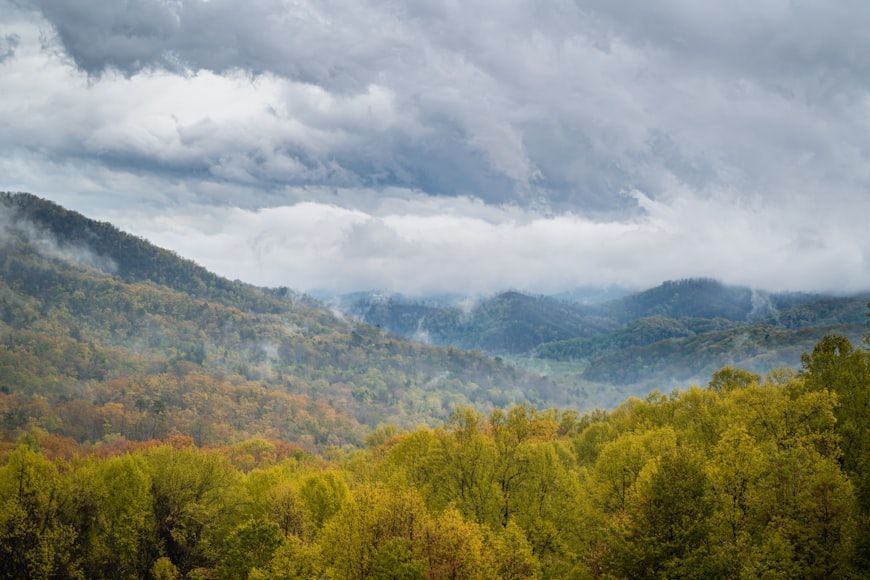
The National Park Service reports that over 12 million people visit the Great Smoky Mountains Park every year. Be warned: it may not be the isolated haven you were looking for. If you want to visit less crowded national parks that are just as interesting and scenic, here is a list of suggestions .

1
Dry Tortugas National Park, Florida

Image: U.S. National Park Service, Public domain, via Wikimedia Commons

Located about 70 miles west of Key West, Dry Tortugas National Park is one of the most isolated national parks in the country , accessible only by ferry or seaplane. About 99% of the park is water. Its main landmark is Fort Jefferson, a massive unfinished 19th-century coastal fort built with more than 16 million bricks.

Visitors often go for a day trip, but camping is available for those looking for an overnight experience. The park also offers snorkeling, swimming, and birdwatching.

2
White Sands National Park, New Mexico

Image: Joonyeop Baek

White Sands National Park protects the world’s largest gypsum dune field, covering about 275 square miles in southern New Mexico. Here is the difference between gypsum and typical sand: the former does not absorb heat the same way, so the dunes remain relatively cool underfoot, even in hot weather.

The park is known for activities like dune sledding, hiking marked trails , and scenic drives through the shifting landscape. While its distance from major cities means it stays less crowded than others, the park is still easily accessible by car.

3
Big Bend National Park, Texas

Image: Mick Haupt

Big Bend National Park covers more than 800,000 acres along the Rio Grande, which forms the natural border between the United States and Mexico. It’s one of the least visited national parks of its size, largely because of its remote location in southwest Texas.

Those who visit come for the Ross Maxwell Scenic Drive, hikes into Santa Elena Canyon, and some of the best stargazing in the country. The Greater Big Bend International Dark Sky Reserve, spanning over 15,000 square miles, is the world’s largest certified "Dark Sky," an area where light pollution is regulated to preserve wildlife, aid astronomical research, and allow visitors to enjoy a stunning night sky.

4
Pinnacles National Park, California

Image: Mo

This national park might be one of the newest —it was designated in 2013—, but that doesn’t mean that its unique rock formations are recent. They were created by an ancient volcanic field that has shifted over millions of years.

The park is best known for its talus caves, one of the few places where you might spot the endangered California condor in the wild. Located about 80 miles southeast of San Jose, it’s relatively accessible but still far less crowded than parks like Yosemite .

5
Isle Royale National Park, Michigan

Image: English: NPS staff, Public domain, via Wikimedia Commons

This island sits on Lake Superior and is one of the least visited national parks in the United States, receiving only a small fraction of the visitors seen at major parks. It’s only accessible by ferry or seaplane, and has no roads or cars.

This makes it an ideal destination for hikers, backpackers, and kayakers. Keep in mind, though, that the park is only open from mid-April through October due to harsh winter conditions.

6
Mammoth Cave National Park, Kentucky

Image: Niagara66, CC BY-SA 4.0, via Wikimedia Commons

Mammoth Cave National Park protects more than 400 miles of mapped underground passages . That makes it the longest cave system in the world —and scientists believe there are hundreds of miles left to be discovered.

Guided tours are available, ranging from easy walking routes to more physically demanding crawls. Even above ground, the park offers hiking, biking, and canoeing along the Green River.

7
Voyageurs National Park, Minnesota

Image: English: NPS, Public domain, via Wikimedia Commons

Voyageurs National Park is named after French-Canadian fur traders who once traveled these waterways. It is made up of nearly 40% water, with a network of interconnected lakes along the Canadian border. That means you can explore it by boat, kayak, or canoe.

Its isolation and lack of light pollution also make it ideal to enjoy gorgeous night skies —to gaze at the stars, the Milky Way, or even the Northern Lights.

8
North Cascades National Park, Washington

Image: Trevor Vannoy

North Cascades National Park is one of the most glaciated areas in the contiguous US, with around 300 glaciers. Located about a three-hour drive from Seattle, it remains one of the least visited national parks, largely because it lacks the easy roadside viewpoints found in places like Yellowstone.

Its highlights include Diablo Lake and the Cascade Pass trail. Summer and early fall offer the best access, as many roads and trails are closed by snow in winter.

9
Wrangell-St. Elias National Park and Reserve, Alaska

Image: Mick Kirchman

Wrangell–St. Elias National Park and Preserve spans about 13.2 million acres. That means it’s larger than Yellowstone, Yosemite, and Switzerland combined . The park includes some of North America’s tallest peaks, massive glaciers, and historic mining sites like the Kennecott Copper Mine. Most travelers can explore it via small aircraft, guided tours, or long-distance hiking trips.

10
Petrified Forest National Park, Arizona

Image: dconvertini, CC BY-SA 2.0, via Wikimedia Commons

Petrified Forest National Park is known for its large deposits of petrified wood, trees that lived over 200 million years ago and have since turned to stone. The park also includes sections of the Painted Desert, with layered rock formations in shades of red, purple, and orange . It can be easily explored by car, with a scenic drive connecting major viewpoints and short trails.

Explore more American facts

Choose your favorite category!

General
General

As American as apple pie—the very best America has to offer!

Culture
Culture

Delve into the astounding richness of American lore.

Geography
Geography

Hop in and explore vast and diverse American landscapes.

History
History

Discover the key moments that shaped the United States.