Geography Geography 5 min read

Special details

Have you heard these fun facts about 10 famous American landmarks?

Image: Joe Richmond

Yes, we all know which cities are home to America's most iconic monuments and attractions, such as the Statue of Liberty, the impressive Gateway Arch, or the unique Hollywood Sign. However, as famous as these landmarks are, there are some hidden details and stories about them that you might have never heard before! If you'd like to surprise your friends in your next conversation, keep reading to discover 10 incredible facts about America's most famous landmarks!

1
A change in plans

Image: Alexey Komissarov

Can a color be a worldwide celebrity? It seems so! This is the case of the famous "international orange" of the Golden Gate Bridge in San Francisco, California.

It's hard to imagine this iconic bridge in any other color. But believe it or not, it was once about to be painted in another hue.

The original idea was to paint the Golden Gate Bridge black with yellow stripes to make it visible to ships and planes. However, the sharp vision of consulting architect Irving Morrow changed the plans. When he saw the reddish color of the primer used on the iron, he realized that this color would work much better and would also give the imposing structure an original touch.

2
Too good to be true?

Image: Hana Oliver

We all know that incredible creatures and breathtaking landscapes await us in Yellowstone. You probably also know that this amazing area that covers more than 3,400 square miles in parts of Wyoming, Montana, and Idaho was the first national park in the United States. Not only that, it was actually the first national park in the entire world!

But, while it's totally famous and celebrated today, there was a time when only a few knew about this place. Early explorers who walked Yellowstone in the 19th century wrote detailed journals about what they saw and experienced there, but when they returned, they found that people didn't believe their stories. We have to admit that those skeptics had a point; such a beautiful place seems out of this world!

3
Capitol's subway

Image: Louis Velazquez

Nobody can deny the metro system is great. Its speed and efficiency allow thousands of people around the world to get to their homes and jobs every day. Did you know that the members of the U.S. Congress have their own subway system right underneath the Capitol building?

That's right! Under the impressive structure that houses U.S. Representatives and Senators lies an entire subway system. This allows workers there to access different parts of the complex in a matter of seconds. It must make things easier on busy days, don't you think?

4
The final detail

Image: MIKE STOLL

But not all of the Capitol's surprises are underground; some are in plain sight. We're talking about the spectacular dome that crowns the famous neoclassical building in Washington, D.C. While the dome is a symbol of our country today, there was a time when the Capitol Building didn't have this gracious final detail.

The construction was considered completed in 1800. However, one last touch was still needed. In 1824, the first and smaller dome arrived, made of wood. Finally, it was replaced in 1866 by the impressive dome we see today, which stands an incredible 288 feet high and is made of cast iron, brick, stone, and copper.

5
A misspelling?

Image: Dan Mall

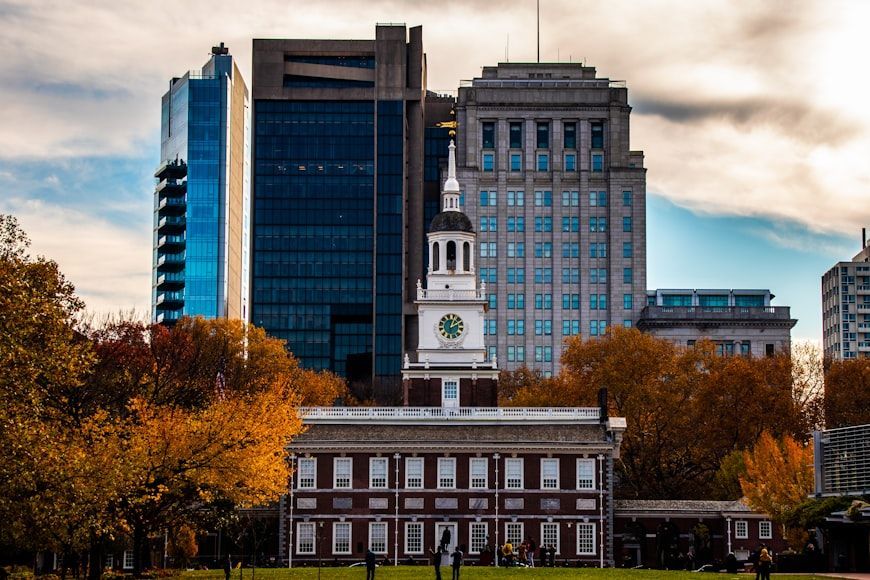
The Liberty Bell must be one of the most recognized icons of the United States. Preserved as a symbol of our Independence, everyone can visit the famous bell at the Independence Hall in Philadelphia, Pennsylvania.

In addition to its well-known history and its famous "crack," this bell has even more hidden details to discover. When you read the inscription on the Liberty Bell, you'll be able to read "Pensylvania" instead of "Pennsylvania." While you could think that those in charge of inscribing the bell weren't paying attention, it wasn't actually a misspelling; it was one of the accepted spellings for Pennsylvania in those days.

6
Hollywood(land)

Image: Justin Aikin

Whether in person or through the screen, we all had the chance to see the legendary Hollywood sign over Mount Lee in Los Angeles, California.

But, while this landmark is recognized around the world today, it didn't always look as we see it now. The Hollywood sign had several changes throughout its history. It was first erected in 1923 as an advertisement for a real estate development. At the time, it read "Hollywoodland" and even had lights, illuminating the entire area at night.

Many things happened in our country before 1949, when the last four letters were removed, leaving just the current "Hollywood."

7
Good things take time

Image: Jeromey Balderrama

As we grow older, we understand one truth: good things often take time. While patience seems to be in short supply these days, it was certainly in abundance for those who built the impressive Mount Rushmore National Memorial, one of our most famous attractions.

The construction of this imposing monument that features the faces of George Washington, Thomas Jefferson, Theodore Roosevelt, and Abraham Lincoln began in 1927 and took 14 years to complete. Carving four 60-foot-tall heads on a granite hill is no easy task. But, on top of that, some budget difficulties slowed down the process even more.

8
Mount Rushmore's secret door

Image: John Bakator

Mount Rushmore National Memorial has more secrets to disclose! Although not visible to the naked eye, there is a particular detail among the heads of Washington, Jefferson, Roosevelt, and Lincoln. Want to know what it is?

If you haven't heard about it, this might surprise you: there is a small door right there on Mount Rushmore. Mysteries everywhere! The door leads to a chamber known as the "Hall of Records." According to the plans of sculptor Gutzon Borglum, this spot would hold important documents and objects of our history.

9
Time capsule

Image: Mark Serafino

Besides being the tallest human-made monument in the United States and also the tallest arch in the world, the famous Gateway Arch in St Louis has much more to offer.

During its construction in the 1960s, a curious detail was placed inside its iconic metal structure. At the base of the monument, you can find nothing less than a time capsule!

The capsule, which contains various artifacts and relics from our country's history and culture, was thought to give future generations an idea of what the world and the United States were like in those days.

10
19th-century graffiti

Image: Dineda Nyepan

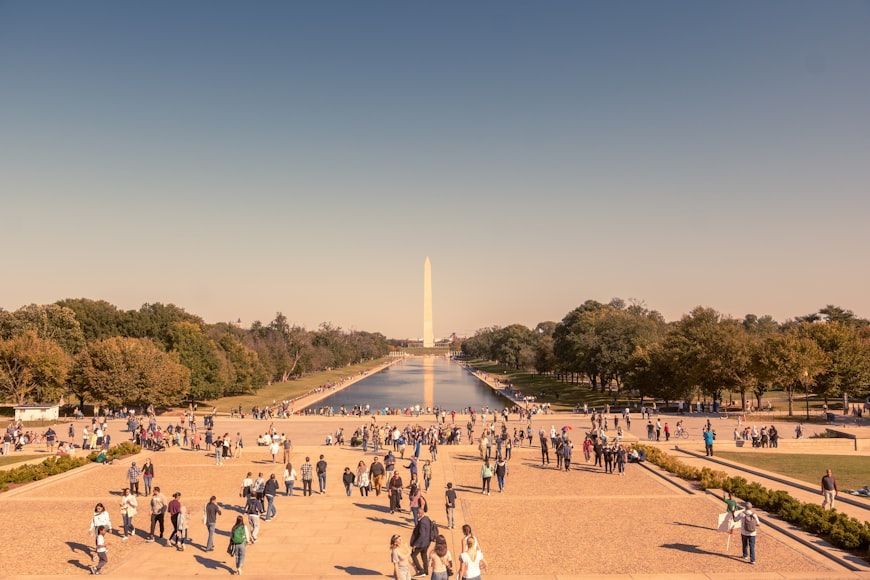
At 555 feet tall, the Washington Monument is one of the most imposing in our country. But besides its height, this landmark also possesses a couple of surprising facts.

It might seem that graffiti is a modern artistic expression that has only been around recently, but this isn't the case, and the Washington Monument is proof of that. At the structure's base, there is a series of graffiti made in the 19th century, during the Civil War.

That's right! Many people and soldiers passing by at the time left signatures, dates, and patriotic messages inscribed on the famous obelisk, and some of them are still visible!
History History 3 min read

Lawn and order

How the American lawn was born: 10 moments that shaped our frontyards

Image: Gunnar Ridderström

The American lawn didn’t sprout overnight. It grew from European ideals, industrial changes, suburban planning, and clever marketing. From elite colonial estates to postwar tract homes, each step shaped how grass became a national obsession. Here are 10 factual milestones that explain how a simple patch of green became a defining feature of U.S. domestic life.

1
European origins

Image: Martin Zenker

Lawns — and by lawns we mean closely mown grassy spaces — began appearing in 17th- and 18th-century Britain and France as signs of wealth. This was because only aristocrats or large estates could afford to keep grass short and manageable.

Before mechanized tools, scythes, shears, or grazing animals were used to maintain lawns, so turf was largely limited to those who could own the necessary manpower or animals. Early American colonists imported these aesthetics and tried to replicate them in their architecture and homes, albeit less formally.

2
Public parks set the bar

Image: Carl Newton

Early urban park designers, strongly influenced by European landscaping ideas, laid out wide expanses of turf in city parks, showing the public a "civilized" green aesthetic. That made clipped lawns part of the civic-space ideal, and not just a private luxury.

These parks helped cement the association between grass lawns, order, leisure, and modern urban life in American culture.

3
Mechanical breakthroughs

Image: Daniel Watson

In 1830, English engineer Edwin Beard Budding patented the first mechanical lawn mower, inspired by a wool-mill reel used to trim cloth.

Budding’s design used a cylinder of blades powered by a rear roller, making it easier to cut grass evenly, and largely replaced laborious scything or grazing, cutting down the cost of maintaining such status symbols in the process.

4
Et pluribus lawnus

Image: Gang Hao

Once affordable lawn mowers—including lighter push-mower variants in America—became popular, maintaining a lawn became feasible for aspiring middle-class homeowners.

This sparked a major transformation in both private and public architecture, as many well-to-do homes that before could not afford it began attempting to replicate the European lawn style in some fashion or another.

5
Suburban dreams

Image: Venrick Azcueta

For decades, lawns remained a steady feature of American architecture and green-space design; however, it wasn’t until after WWII that the true lawn boom began. Returning veterans and government-backed mortgages fueled rapidly expanding suburbs.

Developer William Jaird Levitt and his company built thousands of nearly identical homes, each with its own front and back lawn. By the 1950s and ’60s, lawns had become central to the "American Dream," symbolizing stability, middle-class respectability, and neighborhood uniformity.

6
A bit of chemical help

Image: Victor Furtuna

After the war, synthetic fertilizers (derived partly from wartime chemical technologies) became widely available to consumers, enabling lush, uniform lawns even in soil and climate conditions unsuited to grass.

This lowered the barrier to achieving a "perfect" lawn, further popularizing lawns as part of the American identity and raising the expectations of what the perfect lawn should look like.

7
Begone, pesky weeds!

Image: Dmitry Burdakov

In addition to fertilizers, in 1944, researchers discovered 2,4‑Dichlorophenoxyacetic acid (2,4-D), the first widely effective selective herbicide — killing broadleaf weeds while leaving grasses largely unharmed.

Deployed commercially soon after WWII, 2,4-D made maintaining uniform, weed-free lawns much easier and was quickly adopted in home lawn products.

8
Thou shalt keep thy lawn green

Image: Tiago Rodrigues

As suburbs proliferated, lawn maintenance became a shared social norm — homeowners' associations and neighborhood covenants often started to expect regular mowing and upkeep.

Keeping a well-groomed lawn became not just an aesthetic choice but also a mark of civic responsibility and conformity to norms.

9
Environmental worries

Image: Rémi Müller

By the mid- to late 20th century, the ecological cost of the lawn aesthetic became visible: heavy water use for irrigation, chemical runoff from fertilizers and herbicides, and reduced biodiversity as a consequence.

These drawbacks spurred both scientific and public debate about the sustainability of the traditional lawn model — especially in water-scarce regions, where it was both impractical and resource-intensive.

10
The birth of mixed lawns

Image: Ruben Sukatendel

Growing environmental awareness, droughts, and changing tastes have prompted many homeowners and municipalities to adopt drought-tolerant landscaping, native plants, or mixed-species yards instead of the traditional uniform turf.

As a result, today the "ideal lawn" is evolving as we speak: classic turfgrass still remains common, but alternative yard styles now offer more varied ecological, economic, and aesthetic options.

Culture Culture 6 min read

HITMAKERS

Remember These 10 Boy Bands And Girl Groups That Dominated America?

What was your favorite band when you were a teenager? Over the decades, different boy bands and girl groups have dominated the American music scene, leaving their mark on pop music. From the timeless "I'm a Believer" to the unforgettable "I Want It That Way," these bands and groups have given us hits that every American recognizes. If you're a music fan, let's dance to the rhythm as we remember these 10 boy bands and girl groups that absolutely made you sing out loud!

1
The Supremes

Image: Namroud Gorguis

The ‘60s gave us The Supremes, which was not only one of the most successful girl groups ever but also had the iconic Diana Ross among its members.

Have you heard "Stop! In the name of love / Before you break my heart / Think it over / Think it over"? But that unforgettable 1965 hit was not the Supremes' only success. They created many other hits, such as the famous "You Can't Hurry Love" from 1966. In fact, the group had 12 number-one singles on the Billboard Hot 100!

The influence of this successful group was so deep that it inspired and contributed to the flourishing and recognition of many other girl groups in the decades that followed, some of which are also on this list.

2
The Jackson 5

Image: Markus Spiske

The Supremes were not the only musical group that gave rise to an iconic solo star. The Jackson 5 appeared in 1964, featuring a very young Michael Jackson and his four brothers: Jackie, Tito, Jermaine, and Marlon.

In the late ‘60s and ‘70s, the Jackson brothers achieved great success. In fact, one of their first singles, "I Want You Back," from 1969, became a number-one hit. When that song was played all over America, Michael Jackson was only 11 years old! Tunes like "The Love You Save" and "I'll Be There" are just a few of the other hits that followed.

In addition, The Jackson 5 had their own TV show, "The Jacksons" (from 1976 to 1977), and they were even inducted into the Rock and Roll Hall of Fame in 1997!

3
The Monkees

Image: Austin Prock

If you hear, "I thought love was only true in fairy tales..." you know how the lyrics of that song go on, right?

The Beatles' film A Hard Day's Night inspired an American series called The Monkees , televised from 1966 to 1968. If you watched it, you probably remember the musical band of the same name, created specifically for the show. Originally composed of Micky Dolenz, Michael Nesmith, Peter Tork, and Davy Jones, The Monkees achieved great musical success, particularly with the hit we just mentioned, "I'm a Believer," which remains famous worldwide.

4
The Ronettes

Image: Gayatri Pandkar

The '60s were prolific in musical groups, and one of the most popular was The Ronettes, a girl group formed by sisters Veronica Bennett (later known as Ronnie Spector) and Estelle Bennett, along with their cousin Nedra Talley. Have you listened to some of their hits, such as "Be My Baby," "Baby, I Love You," and "Walking in the Rain"?

In addition to their catchy tunes, what distinguished The Ronettes was their style, characterized by dramatic makeup, beehive hairstyles , and iconic outfits.

Despite their influence, many years passed before they were inducted into the Rock and Roll Hall of Fame in 2007 .

5
The Pointer Sisters

Image: Haley Lawrence

Pop, soul, R&B, jazz, country, and even dance music were some of the genres played by The Pointer Sisters, the girl group from Oakland, California, that rose to fame in the 70s. Their talent and versatility kept them going for several decades!

As their name suggests, The Pointer Sisters were a trio made up of sisters Anita, June, and Ruth Pointer. "I'm So Excited," "Jump (For My Love)," and "Fire" were some of the most famous hits of this three-time Grammy Award-winning group. Have you listened to them? You probably have!

6
New Kids on the Block

Image: Florian Schmetz

NKOTB was the coolest way to refer to the legendary New Kids on the Block (in fact, their fan base called themselves "NKOTB Nation"). Formed in 1984 in Boston, Massachusetts, this boy band triumphed in the late ‘80s and early ‘90s.

NKOTB paved the way for other boy bands that emerged in the '90s, reshaping our concept of pop music. "You Got It (The Right Stuff)," "Hangin' Tough," and "Step by Step" were just a few of their many hits, which made them winners of several American Music Awards during their peak years. They also sold more than 80 million records worldwide!

If you want to remember NKOTB, you can listen to their songs, of course, but you can also visit their star on the Hollywood Walk of Fame, where they've been honored since 2014.

7
Salt-N-Pepa

Image: Ben Wiens

In 1985, Queens , New York, saw the birth of Salt-N-Pepa, a legendary hip-hop group that became one of the first female groups in the genre.

Did you ever dream of forming a band when you were in college? We did! So did the members of Salt-N-Pepa. They not only made it happen, but they also became a huge success.

With hits like "Push It," "Shoop," "Whatta Man," and many others, these girls were everywhere. They had so much flow and rhythm that, in 2005, they were inducted into the Dance Music Hall of Fame!

8
Backstreet Boys

Image: Steve Johnson

If someone says, "Tell me why," many of us would probably respond with, "Ain't nothing but a heartache." And that's just one of the many ways the Backstreet Boys have left their mark across generations.

As one of the best-selling boy bands, Nick Carter, Howie Dorough, AJ McLean, Brian Littrell, and Kevin Richardson were a sensation in the late '90s and early 2000s . Their music was everywhere, and fans were desperate to meet them.

As you know, they had several hits that we still remember, such as "I Want It That Way," "Quit Playing Games (With My Heart)," and "As Long As You Love Me." You've probably danced to the beat of some of these hit songs, right? Did you have a favorite?

9
Destiny's Child

Image: Rob Sarmiento

Beyoncé Knowles, Kelly Rowland, and Michelle Williams were the final and best-known members of a girl group called Destiny's Child. Do any of these names ring a bell?

Big hits like "Say My Name" and "Bills, Bills, Bills"—which won them a couple of Grammy Awards, by the way—launched these women to total stardom. Destiny's Child was a constant presence on the charts during the late ‘90s and early 2000s, and had us all singing catchy lyrics like "Say my name, say my name / If no one is around you, say baby I love you."

In addition to several major hits that still live on in many people's minds and hearts, Destiny's Child gave us the incredible, iconic, record-breaking Beyoncé . What more could we ask for?

10
'N Sync

Image: Alphacolor

This list could never be complete without mentioning the unforgettable 'N Sync.

Not only was this one of pop's most legendary boy bands, but it also featured one member who eventually became a solo superstar. Yes, you guessed it— we're talking about Justin Timberlake! He, along with JC Chasez, Chris Kirkpatrick, Joey Fatone, and Lance Bass, formed 'N Sync in 1995. Their first album, released in 1998, sold over 10 million copies in the U.S. alone and included hits like "I Want You Back."

The faces of the 'N Sync members were everywhere: on posters, T-shirts, dolls, and all sorts of merchandise, selling out not just in the U.S. but also in other parts of the world. Remember their performance at the 2001 Super Bowl ?

Explore more American facts

Choose your favorite category!

General
General

As American as apple pie—the very best America has to offer!

Culture
Culture

Delve into the astounding richness of American lore.

Geography
Geography

Hop in and explore vast and diverse American landscapes.

History
History

Discover the key moments that shaped the United States.