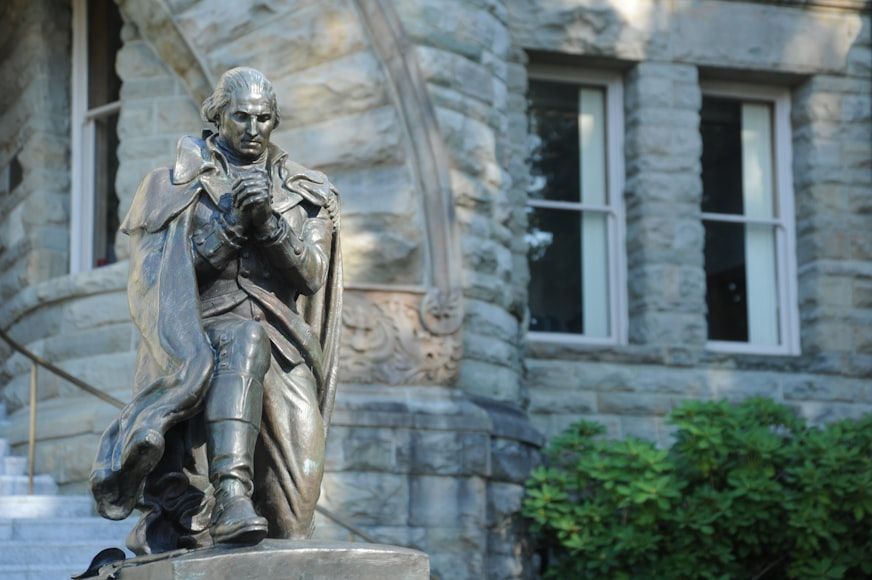
Culture Culture 5 min read

It’s called popular wisdom for a reason

Do you leave your hat anywhere? Be careful not to summon misfortune

Image: Peter Burdon

The United States of America is a melting pot of cultures and traditions, which means many superstitious beliefs can be traced back to other places. Think, for example, of beliefs around black cats or cemeteries. But some superstitions were born here, out of the unique idiosyncrasies of each American region. Why is the color of a porch such a big deal? Why are the woods dangerous? Is it crucial where I place my hat? Popular wisdom has an answer for all these questions, and more.

1
The cowboy hat on the bed
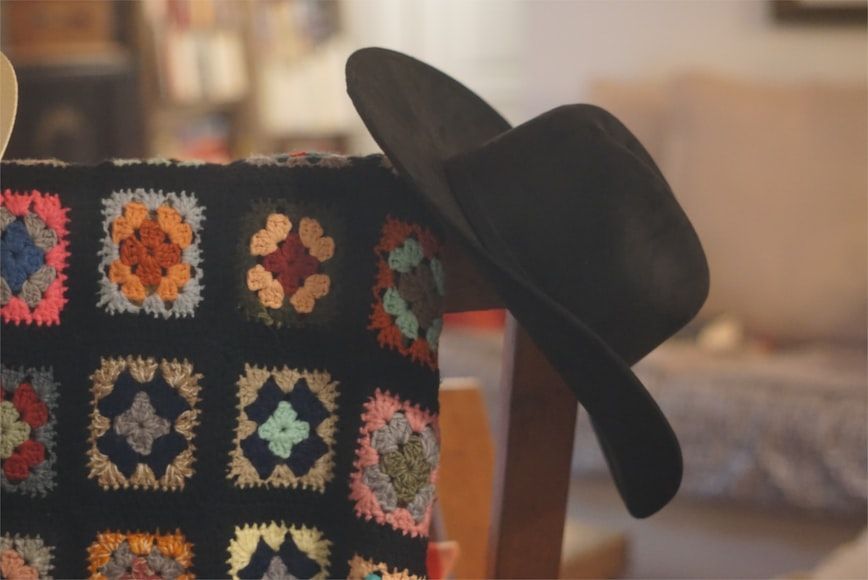
Image: Olivier Piquer

For a proper cowboy, a hat is as important as their horse or saddle. This means that there’s a protocol around this garment that needs to be followed, one important rule being that a hat should never be placed on top of a bed.

Why? There are several explanations, including the idea of bad spirits living in your hair, the old custom of placing a deceased person’s hat on top of their coffin, or the more practical reasoning of wanting to avoid lice. No matter the origin, no respectable cowboy would place his hat on the bed unless he wanted to attract misfortune his way.

2
The Appalachian woods

Image: Elijah Mears

The Appalachian Mountains are filled with myths and legends, and certain rules are passed down and followed by nearly everyone, even those most skeptical about the supernatural. Many of these rules concern the woods and how one should behave in them : don’t go into the woods from dusk till dawn, don’t leave the marked trail, ignore any unknown voice calling you, and don’t look too closely into the trees.

While these rules could be explained by the simple reason of the woods being the hiding place of bandits in the past, and a difficult place to navigate in the dark, they have also been regarded as a place filled with spirits and supernatural beings, which no one wants to come across.

3
Seeing Mothman

Image: James Wainscoat

A local cryptid celebrity in Point Pleasant, West Virginia, the Mothman has allegedly been sighted several times since the 1960s. Many legends and beliefs have formed around his figure, one of them being that coming across the Mothman is a sign of an impending tragedy .

This belief gained strength after several reported sightings occurred just before the collapse of the Silver Bridge in 1967. Since then, the Mothman has been considered a harbinger of doom and a bad omen.

4
A mirror to ward off the devil
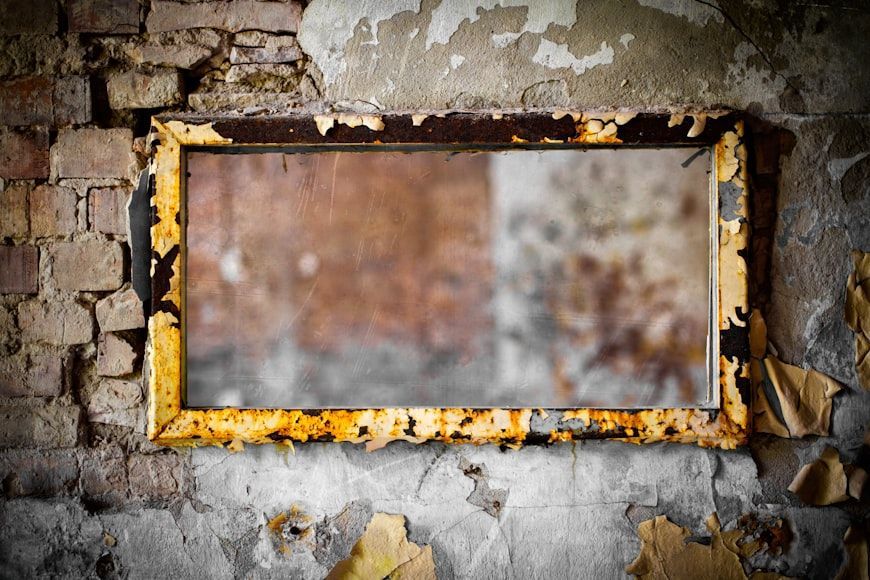
Image: Denny Müller

Louisianans have many myths and beliefs, especially those rooted in Cajun culture. Influences from French Acadia, Spain, and Western Africa have been incorporated into popular wisdom in a distinctly unique way.

One Cajun custom advises the use of a mirror to repel M’su Diable or "Mr. Devil." M’su Diable is known for being very vain, so he will never waste the opportunity to admire himself. If you hang a mirror in the porch, next to the door, he will stay there all night instead of entering the house, and the sunrise will scare him off.

5
Eating black-eyed peas on New Year’s Eve

Image: Nguyen Dang Hoang Nhu

Each holiday has certain foods associated with it, many of which are considered non-negotiable. For many Southern households, New Year’s Eve is synonymous with black-eyed peas, which are said to attract good luck and prosperity for the coming year.

While it’s a popular belief, this custom has distinctly historical origins. After the Civil War, black-eyed peas became a staple food across the South and saved more than one family from starvation. Today, they are often paired with collard greens, which are said to represent dollar bills.

6
Rocking an empty chair
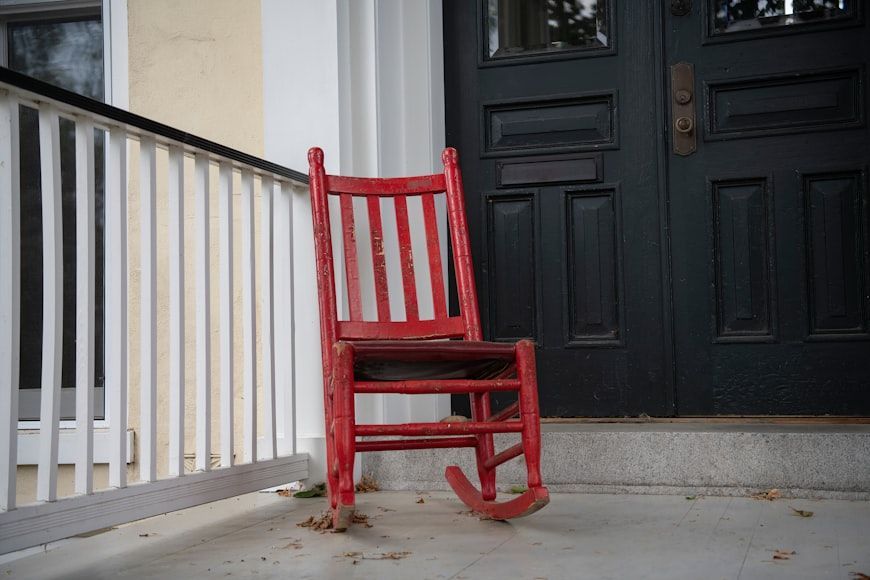
Image: Robin Jonathan Deutsch

Irish and Scottish settlers brought with them a deeply rooted belief: you shouldn’t rock an empty cradle, cause you might wake the spirits. Across the South and the Appalachians, this belief transformed over time and became attached to another object: the rocking chair.

Often placed on porches or near the fire, a rocking chair moving on its own was believed to be occupied by a supernatural being . If someone rocked an empty chair, the spirits might consider this an invitation into the house.

7
The color of the porch

Image: Thomas Park

If you like the look of Southern front porches, you may have noticed that they often feature a pale blue ceiling. The use of haint blue—a collection of pale blue-green shades —is not an aesthetic choice, but a spirit-warding custom stemming from the enslaved Gullah Geechee people.

By painting the ceiling (and sometimes doors, windows, and shutters) blue, spirits might confuse it with the sky and pass through it, or with water, and avoid it. Over time, the tradition of haint blue— haint being an alternative spelling of _haunt_—spread throughout the South.

8
Bananas on a boat
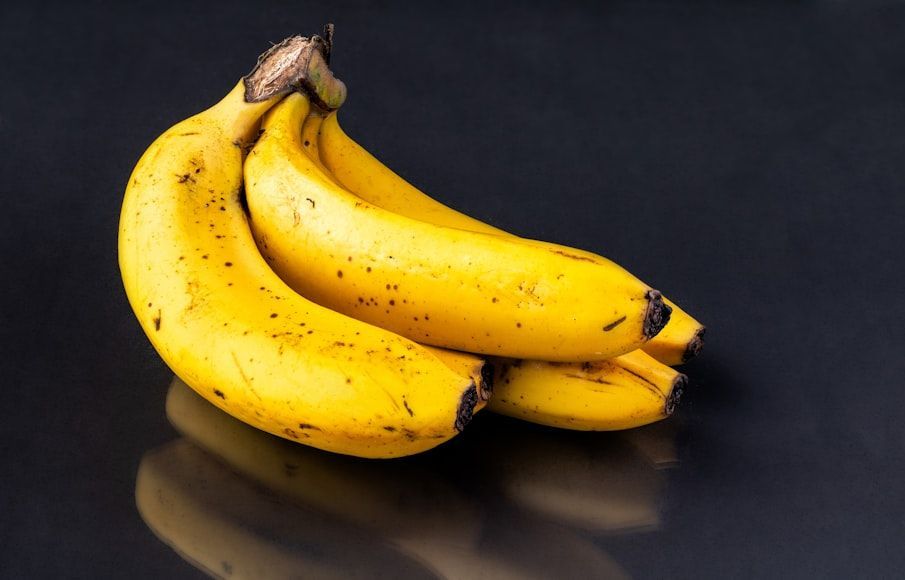
Image: Ian Talmacs

Bananas are a pretty convenient fruit: they’re tasty, nutritious, and come naturally prepackaged. But don’t try saying that to Alaskan fishermen. They’ll tell you that bananas should never be brought on a boat, or no fish will be caught.

There are two possible origins of this belief. Some say the aversion to bananas stems from the old ships that carried this fruit—they sailed as fast as possible to prevent the cargo from spoiling, which disturbed the water and scared away fish. Others say that overripe bananas attract fruit flies and were believed to cause other food to spoil.

9
The tail of the cow
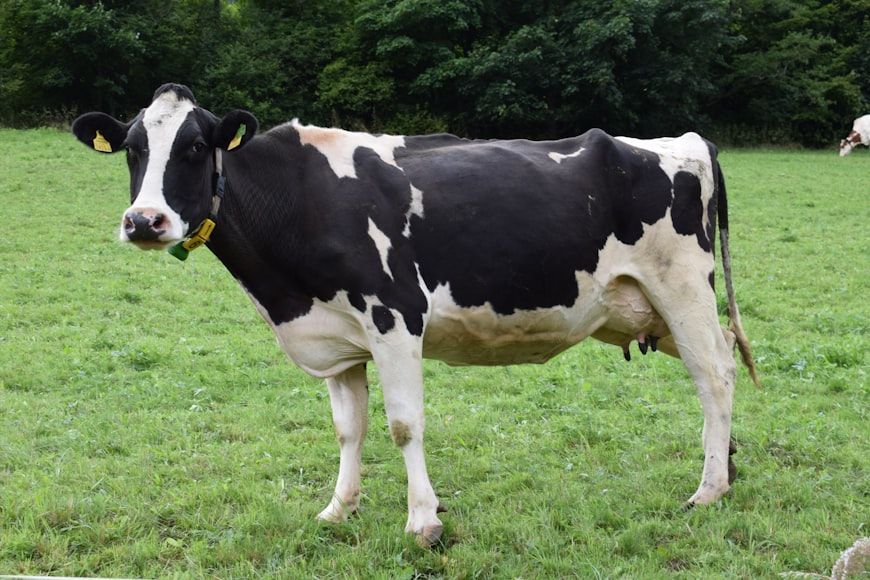
Image: Screenroad

Florida has historically been the state most prone to hurricanes, which has led to the development of superstitions and beliefs around the subject. A common belief involves cows, or more specifically, their tails.

If a cow holds its tail straight up, many Floridians say it means a hurricane is on the way . There are many scientific reasons for cows to hold their tail upright, and none have to do with weather prediction, but as far as we know, Floridians have not been proven wrong yet.

10
Whistling at night

Image: Lukas Robertson

Many cultures across the world refrain from whistling at night to avoid attracting spirits and malevolent beings. For Hawaiians, it is not just any spirit**. A whistle after dark might attract the** Huakaʻi pō or Nightmarchers , the ghosts of ancient Hawaiian warriors.

If you happen to come across them, your only hope is to lie on your stomach and avoid looking at them as a sign of respect. If you are lucky enough to be a descendant of a warrior, they will recognize you and protect you. But just to be on the safe side, it’s best to leave the whistling for daytime.

History History 3 min read

Inside museums

The coconut that saved JFK's life is now in a museum—and you can see it!

Image: Milada Vigerova

Many US presidents are remembered for their service and sacrifices, some even giving their lives for the nation. But sometimes, we forget they were also ordinary people, with lives full of both extraordinary moments and everyday routines, just like the rest of us. And part of that story lives on in these 10 personal items that belonged to presidents and are still on display in museums today.

1
John F. Kennedy’s PT-109 coconut

Image: 🇻🇪 Jose G. Ortega Castro 🇲🇽

In 1943, John F. Kennedy commanded the PT-109, a torpedo boat, in the Solomon Islands during World War II . When a Japanese destroyer sank his boat, JFK carved a rescue message on a coconut, which local islanders delivered to Allied forces, saving him and his crew. 18 years later, Kennedy became the US president and kept the coconut as a paperweight in his office. Today, it’s preserved at the John F. Kennedy Presidential Library and Museum in Boston.

2
George Washington's dentures

Image: BakedintheHole, via Wikimedia Commons

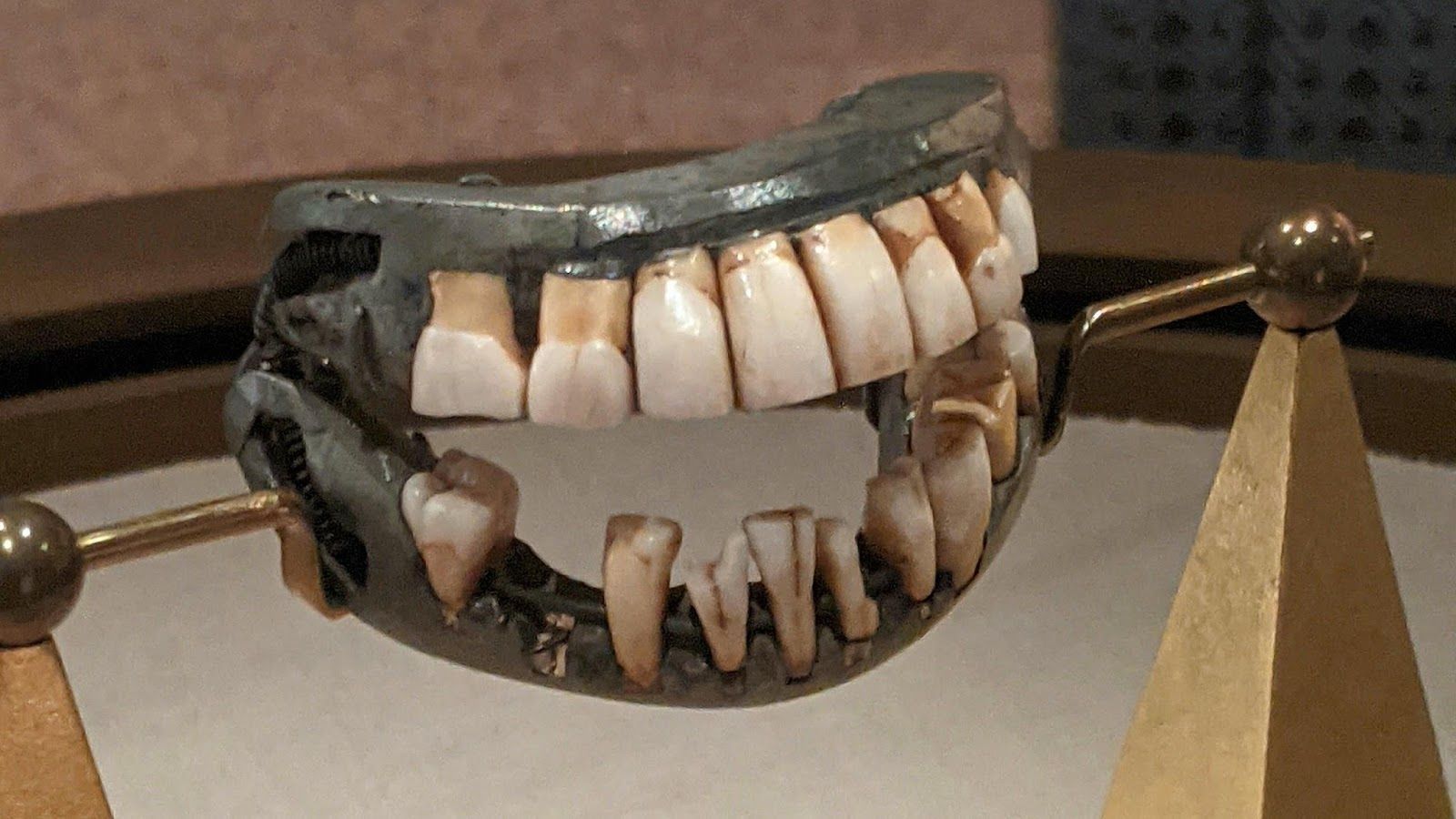
Everyone knows George Washington struggled with dental problems throughout his life. And while the old myth about his wooden teeth isn’t true, our first president did wear dentures made from different materials. One of his most complete sets has been carefully preserved and is now on display at George Washington's Mount Vernon estate and museum.

3
Abraham Lincoln’s top hat

Image: Brewbooks from near Seattle, USA, via Wikimedia Commons

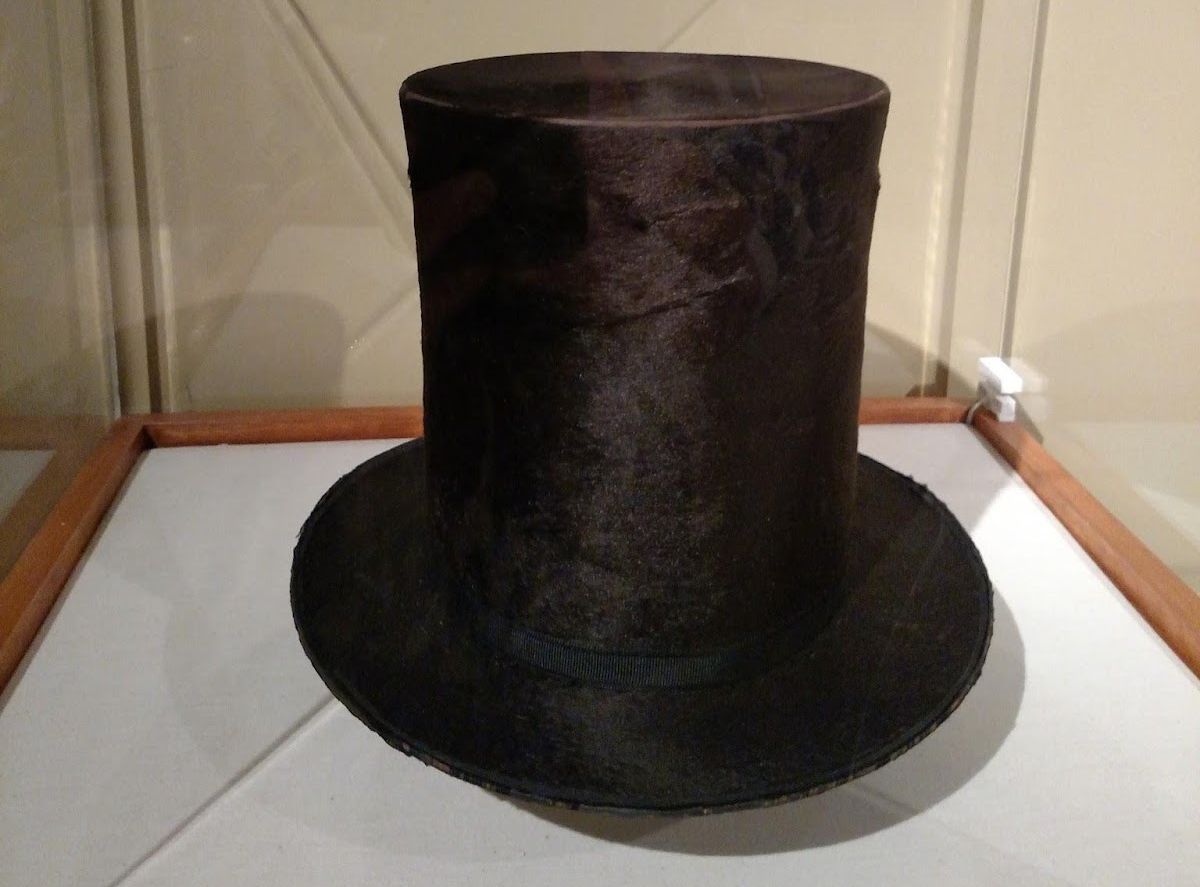
It’s easy to picture Abraham Lincoln with his signature top hat. To get a little closer to Honest Abe, you can visit the National Museum of American History in Washington, D.C., where the very hat he wore the night he was fatally shot is on display.

4
The contents of Lincoln's pockets

Image: Jorien Loman

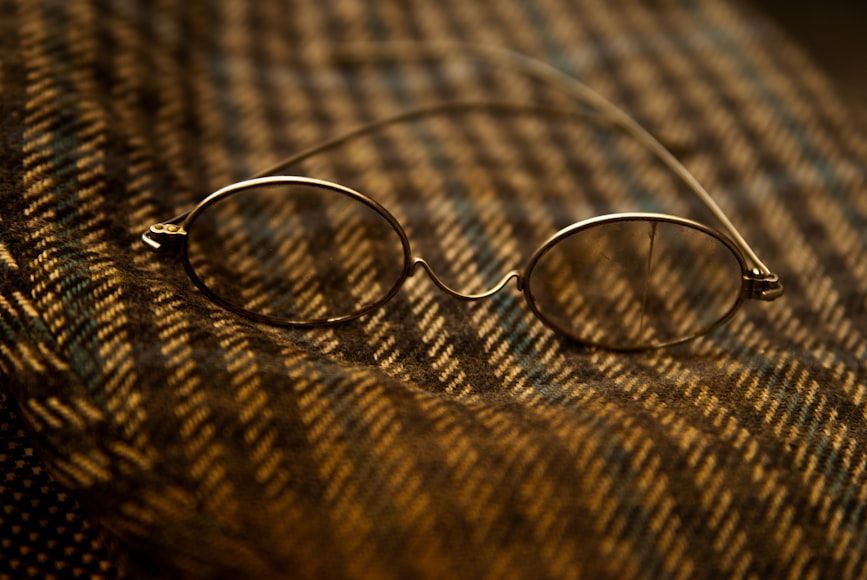
The hat isn’t the only relic that remained from that tragic night. Everything Abraham Lincoln had in his pockets —two pairs of glasses, a pocketknife, a Confederate $5 bill, a linen handkerchief, and a gold pocket watch—is preserved and on display at the Library of Congress in Washington, D.C.

5
Thomas Jefferson’s inkwell

Image: Clark Young

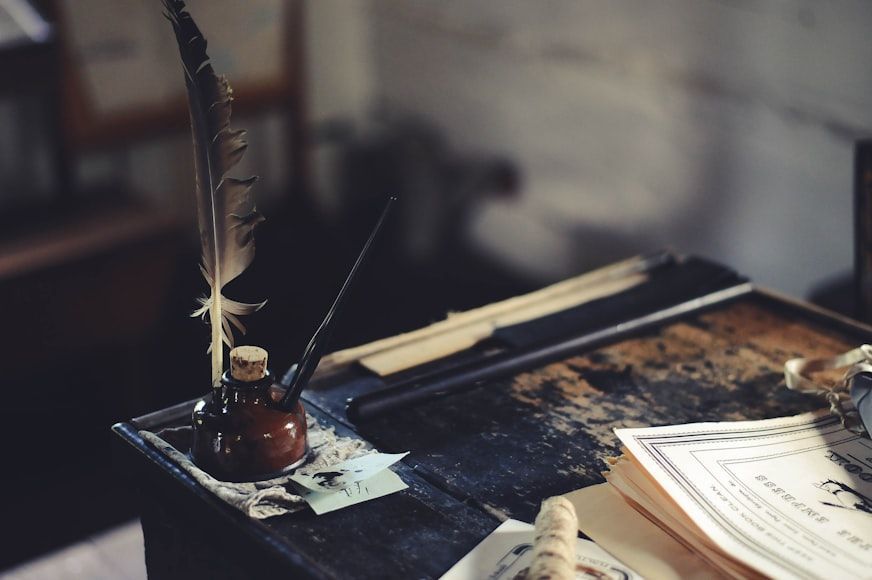
Fortunately, you can still see with your own eyes two of the inkwells that belonged to the man who penned nothing less than the Declaration of Independence. That’s right! The first, a ceramic inkwell shaped like Enlightenment philosopher Voltaire’s head, is housed at the Thomas Jefferson Foundation at Monticello. The second, made of bronze and engraved with "T. Jefferson, 1804," is part of the White House Collection.

6
Theodore Roosevelt's pince-nez glasses

Image: via Wikimedia Commons

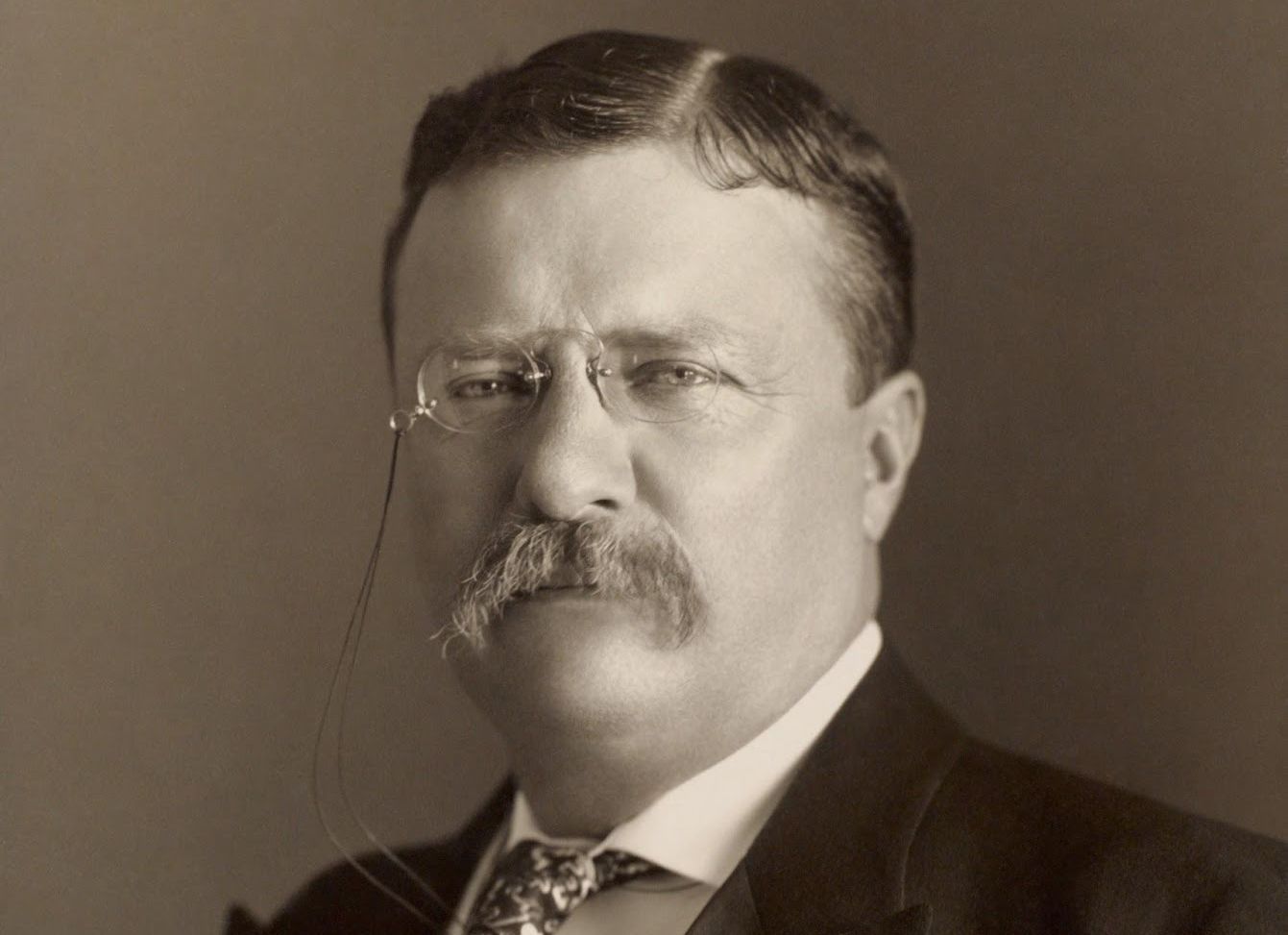
Teddy Roosevelt is practically synonymous with his pince-nez glasses; even the giant sculpture of his face on Mount Rushmore shows him wearing them. But did you know they once saved his life? In 1912, while campaigning, Roosevelt was shot, but the bullet struck the steel case holding his glasses and didn’t penetrate it. Today, both the case and the 50-page manuscript he carried in the same pocket are on display at the Theodore Roosevelt Birthplace National Historic Site in New York City.

7
John F. Kennedy's rocking chair

Image: Abbie Rowe. White House Photographs. John F. Kennedy Presidential Library and Museum, Boston, Public domain, via Wikimedia Commons

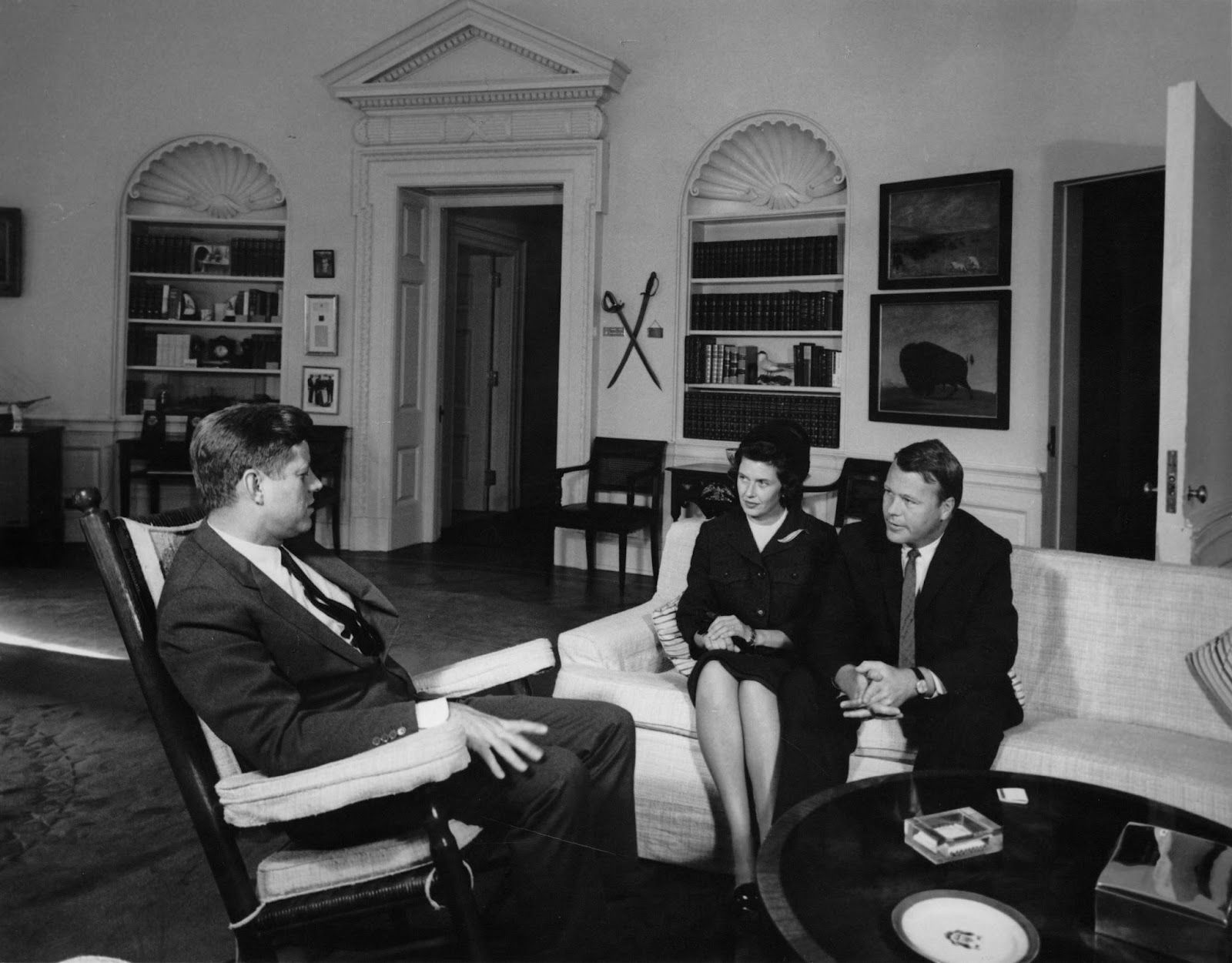
President Kennedy’s rocking chair appeared in many photos of him with important visitors in the White House. Recommended by his doctor to ease his back pain, the iconic chair is now part of the collection at the John F. Kennedy Presidential Library and Museum.

8
George Washington’s Revolutionary War bedstead

Image: Wikimedia Commons

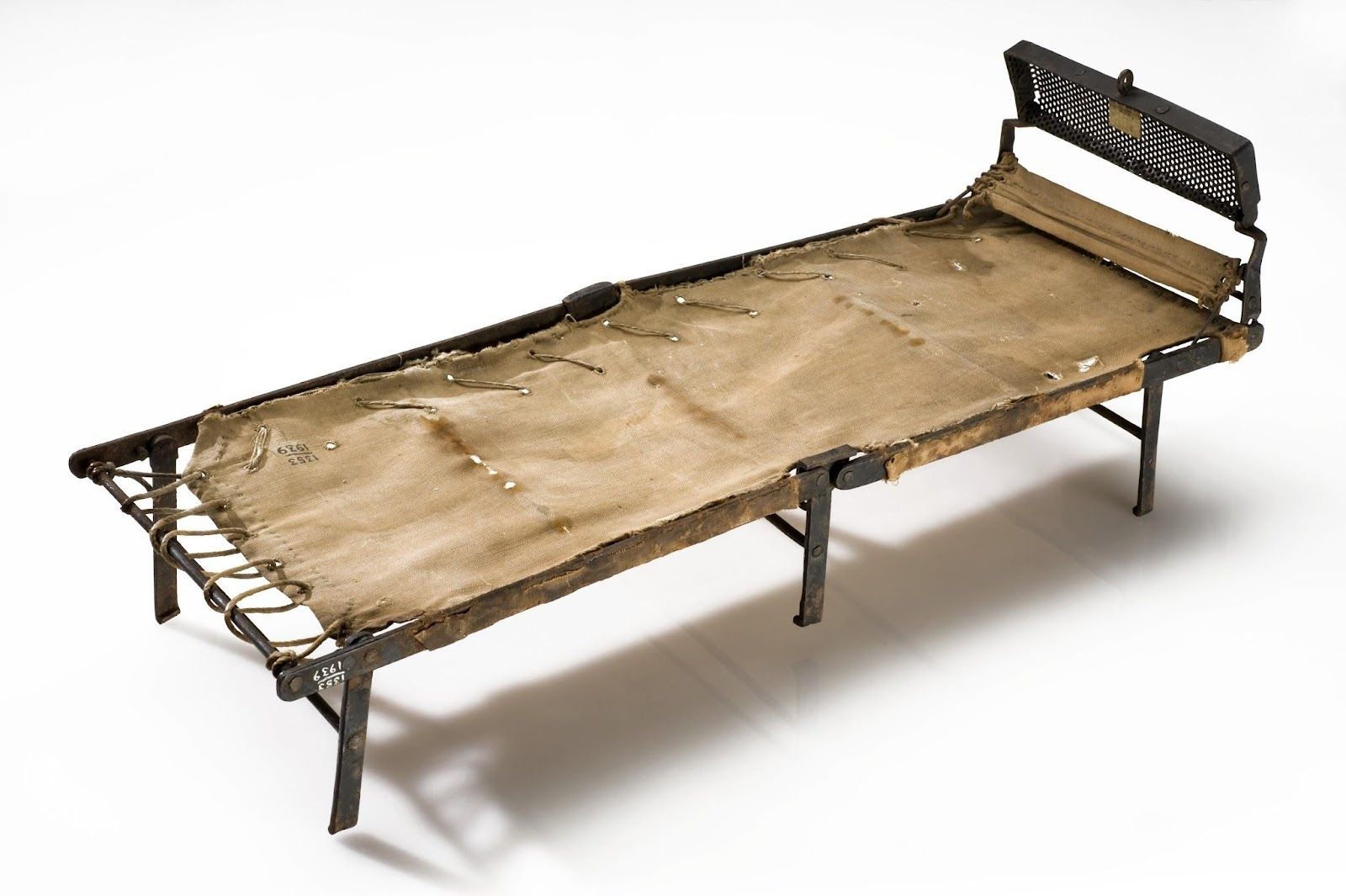
If you thought this list was just about small objects, think again. Two of George Washington’s folding field beds from the Revolutionary War have also been preserved. One is displayed at the Henry Ford Museum in Michigan, and the other can be seen at the Mount Vernon Museum in Virginia.

9
Franklin D. Roosevelt’s stamp collection

Image: Tolga deniz Aran

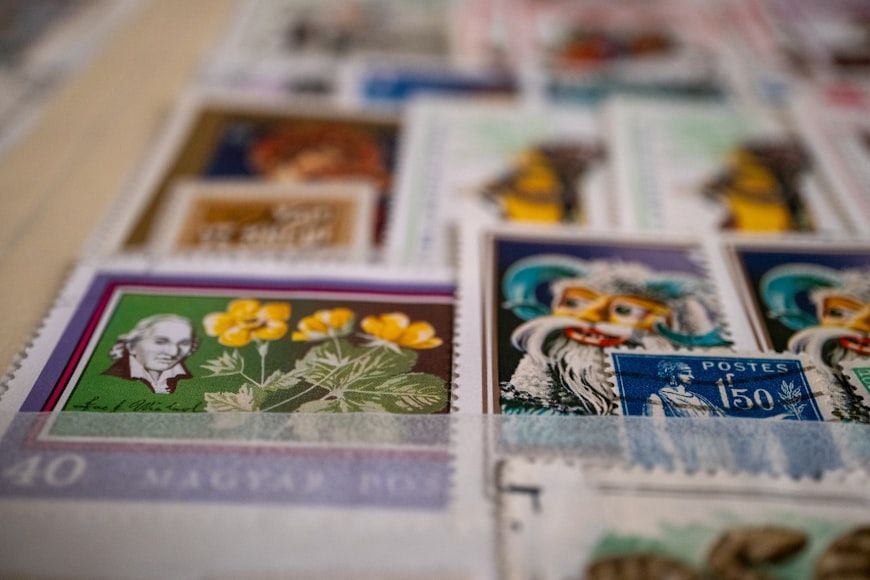
F. D. Roosevelt was an avid stamp collector, amassing a collection of over 1.2 million stamps. After his death, his family sold most of them, but some—especially those he received officially from foreign governments—are preserved at the Franklin D. Roosevelt Presidential Library and Museum in Hyde Park, New York. The museum also houses items related to his hobby, including a magnifying glass, a perforation gauge for measuring stamps, and his portable wooden stamp box.

10
George Washington’s dress sword

Image: Wonderlane

In addition to his dentures, Mount Vernon preserves many other personal items that belonged to George Washington. Among them are several of his swords, and it is believed that one of them may be the very dress sword he wore at his inauguration as the first American president in 1789!

Culture Culture 6 min read

An urban musical journey

The ultimate New York playlist: 12 iconic songs about the Empire City

Image: Olga Fil

New York is a city of luxurious skyscrapers, yellow cabs, and wild dreams. The Big Apple has been the cradle, home, and inspiration for hundreds of musicians who have dedicated lines—and even entire songs—to its spirit and people. In this article, we've selected 12 tunes about New York City that have helped fuel the myth of the world’s most iconic metropolis . Read on to discover songs beyond Sinatra’s "New York, New York"!

1
"New York, New York" - Frank Sinatra

Image: Adrian Falcon

Of course, when we think of songs about the Big Apple, the first that comes to mind is the iconic "New York, New York," popularized by Frank Sinatra. Perhaps this is because it’s the tune that best captures the essence , resilient spirit, and unwavering magnetism of the city that never sleeps.

It was written in 1977 by John Kander and Fred Ebb as the theme song for New York, New York , a film directed by Martin Scorsese and starring Robert De Niro and Liza Minnelli. Minnelli performed the song in the film, but it wasn’t very successful at the time. It was The Voice 's 1980 version that would turn it into the city's unofficial—yet unquestionable—anthem .

2
"Chelsea Hotel #2" - Leonard Cohen

Image: Thought Catalog

The Chelsea Hotel is one of the most emblematic hotels in New York City. Artists such as William S. Burroughs, Bob Dylan, and Chet Baker, among many others, have stayed there. So, it makes perfect sense that some of these stars were inspired by the iconic building to create some of their most famous works.

Such is the case with Leonard Cohen’s "Chelsea Hotel #2," released in 1974. The lyrics not only recount a romantic encounter between the singer-songwriter and Janis Joplin but also capture the city’s bohemian atmosphere at the time.

3
"New York State of Mind" - Billy Joel

Image: Stefano Zocca

In the mid-1970s, after a long stint in Los Angeles, Bronx-born songwriter Billy Joel was terribly missing his hometown. During a return trip to the Big Apple while on tour, the Piano Man wrote his tribute to the city he loved most: "New York State of Mind."

At the time, the song wasn’t even released as a single and went largely unnoticed. However, over time, it became one of Joel’s signature songs . Decades later, the timeless tune would go on to inspire a hip-hop version—the next one on our list.

4
"Empire State of Mind" - Jay-Z & Alicia Keys

Image: ian dooley

With its evocative lyrics, Jay-Z’s modern rhythm, and Alicia Keys’ poignant backing vocals, "Empire State of Mind" captures the essence, energy, and resilient spirit of those who inhabit the city of New York. Released in 2009, the song was an instant hit. It achieved commercial success worldwide and has been featured on multiple critics' top 10 lists of best songs.

As mentioned earlier, the song’s title nods not only to Billy Joel’s "New York State of Mind," but also to rapper Nas’s 1994 single "N.Y. State of Mind."

5
"Autumn in New York" - Billie Holiday

Image: Josh Couch

Did you know that the famous "Autumn in New York" was originally conceived as a poem rather than a song? Its composer, Vernon Duke, wrote it in 1934 while vacationing in Westport, Connecticut, and added the music sometime later. Since then, many artists have recorded their own renditions, including Frank Sinatra, who helped popularize it in 1949.

But perhaps the version that best conveys the haunting melancholy of this iconic jazz standard is Billie Holiday’s, recorded in 1952. With her deep, raspy voice, the Angel of Harlem (see the next song on our list) delivers this love letter to the Empire City like no one else.

6
"Angel of Harlem" - U2

Image: The New York Public Library

"Angel of Harlem," a 1988 single by the Irish band U2, alludes to several New York City landmarks but is also a heartfelt tribute to Billie Holiday.

According to Bono, the song was inspired by the band’s first trip to the Big Apple . When they landed at JFK Airport, a limousine picked them up, and the driver had the radio tuned to Lady Day’s voice. They were so captivated by her sound that they couldn’t help but compose a song in honor of one of the city’s most influential musical figures.

7
"Englishman in New York" – Sting

Image: George Bakos

Bono wasn’t the only foreign artist who was inspired by the Empire City to pen a song. In the late 1980s, Sting released the single "Englishman in New York" as part of his second solo album after the dissolution of The Police. The song quickly became a global hit.

The "Englishman" in question is Sting’s friend, British writer and LGBTQ+ icon Quentin Crisp, who had recently relocated to New York. The singer-songwriter said that the different musical references in the song seek to capture the mood of someone walking down the street and listening to different styles, representing what it's like to walk around New York.

8
"Chelsea Morning" - Joni Mitchell

Image: Dan Braga

One of the most celebrated voices in American folk music, Joni Mitchell, wrote this song about her apartment in New York City’s Chelsea neighborhood. The song was inspired by the colorful reflections that danced on her walls when sunlight filtered through a mobile made of colored glass she had found in the street.

"Chelsea Morning" is part of her second album Clouds from 1969. Her sweet voice, merry acoustic guitar chords, and hopeful lyrics convey the deep emotions of the hippie lifestyle of a young woman living in 1960s New York.

9
"The Only Living Boy in New York" – Simon & Garfunkel

Image: Camila Fernández

Many songs about New York City explore the loneliness of living in a vast metropolis—and "The Only Living Boy in New York" is no exception. Paul Simon wrote the track when his musical partner, Art Garfunkel, left him behind in the city to film a movie in Mexico.

The song is part of the duo's fifth studio album, Bridge over Troubled Water released in 1970. The song blends bittersweet lyrics with a gentle, introspective melody. Its themes of solitude and longing have resonated with many over the years, inspiring a variety of heartfelt covers by artists who connected with its quiet sorrow.

10
"New York City Serenade" – Bruce Springsteen

Image: Danny Lyon, Public domain, via Wikimedia Commons

While Bruce Springsteen is known for being a New Jersey native, his prolific career also allowed him to write about the city across the Hudson River. "New York City Serenade" is part of the 1973 album The Wild, the Innocent & the E Street Shuffle , considered by some critics to be one of the greatest albums in rock n' roll history.

The song tells the tormented love story of Billy and Diamonds Jackie as they wander the dark streets of Gotham in the 1970s. Blending Springsteen’s signature suburban rock with elements of jazz and gospel , "New York City Serenade" is one of his most atmospheric and musically ambitious pieces—a sprawling homage to the city’s grit, soul, and romance.

11
"Rhapsody in Blue" – George Gershwin

Image: rosanna17

Although it has no lyrics, we can all agree that this composition is a true musical portrait of 20th-century New York City. Written by George Gershwin in 1924, the piece blends classical tradition with jazz-inflected flourishes, capturing the vibrant, chaotic spirit of the Big Apple in full swing.

The speed and rhythm of the tune perfectly reflect the frenetic life of one of the world's greatest metropolises. "Rhapsody in Blue" is so quintessentially New York that even Woody Allen used it for the opening sequence of his film Manhattan alongside gorgeous vistas of the most iconic locations and buildings in the city.

12
"Downtown Train" – Tom Waits

Image: Erik Calonius, Public domain, via Wikimedia Commons

You may know this song best from Rod Stewart’s 1989 hit version, but "Downtown Train" was originally written and performed by Tom Waits for his 1985 album Rain Dogs . Without leaving behind his jazz and blues influences —and his trademark avant-garde style—this tune has an unmistakable pop touch.

Set against the backdrop of New York’s restless nightlife, the song paints a wistful portrait of longing and unattainable love—particularly for the elusive Brooklyn girls. Through his gravelly voice and poetic imagery, Waits cements his place as one of the great modern chroniclers of the Big Apple .

Explore more American facts

Choose your favorite category!

General
General

As American as apple pie—the very best America has to offer!

Culture
Culture

Delve into the astounding richness of American lore.

Geography
Geography

Hop in and explore vast and diverse American landscapes.

History
History

Discover the key moments that shaped the United States.