Culture Culture 5 min read

The truth is out there

Attention, humans: Did you know these 10 fictional aliens?

Image: Couleur

Space is often referred as the "Final Frontier": That cold and mysterious place so vast and immense that we can’t possibly explore it in its entirety. The unknown nature of space has inspired countless creative minds to think about which fantastical and bizarre creatures could possibly be found out there, eventually leading to the creation of science fiction’s favorite trope: the alien. In that sense, America is no stranger to countless iconic aliens , so we have decided to select 10 of our all-time favorites for your enjoyment. Live long and prosper!

1
ALF

Image: Erik Mclean

In case you didn’t know, this beloved TV character’s name is not short for "Alfred." It actually comes from the term " A lien L ife F orm," but don’t be alarmed: This alien is as friendly as they come. ALF is the quirky and lovable adopted family member of the Tanner family, who gained the heart of the American public in the 80s and 90s.

ALF’s story begins after this alien’s spaceship crash-landed in the garage of the Tanner’s, a typical suburban American family. Although his many antics often bring trouble for the entire family, ALF’s big heart quickly makes the Tanners fall in love with him, harboring and keeping him hidden from the U.S. government.

2
E.T.

Image: Rick L

Are we in the presence of the most famous film alien in history? While we might not be able to answer this question (the remaining entries on this list might very well be as beloved), E.T. is definitively a heavy contender for this highly-coveted title. It’s been over 40 years since this extraterrestrial’s only on-screen appearance, but he still remains as iconic as he ever was.

Steven Spielberg’s 1982 film tells the story of Elliot, a typical American boy who befriends a lovable alien stranded on Earth. Elliot, alongside his family and friends, helps E.T. go back home, leaving us with a few of the most memorable moments in cinematic history.

3
Mork

Image: photo by Alan Light, CC BY 2.0

Not every alien on this list has to look weird: Leave it to the amazing Robin Williams to portray one of the most beloved TV aliens in history. "Mork and Mindy" shows the adventures of Mindy McConnell, an American teenager who befriends an alien simply known as "Mork from Ork."

Not many know that this now classic TV show was an offshoot of another beloved American show, "Happy Days." Williams's only appearance in a Happy Days episode impressed producers so much that they decided to give this TV legend his first chance.

4
Marvin the Martian

Image: cogdogblog, CC BY 2.0

Marvin the Martian might be the first alien on this list to pose a threat to mankind, but don’t worry: His plans usually backfire in a spectacular fashion, usually thanks to a wisecracking rabbit or to a lisping duck with anger issues.

Originally voiced by the legendary Mel Blanc, perhaps what’s more memorable about Marvin is his unusual design: You wouldn’t expect a creature of outer space to sport a red unitard, green skirt, nor a fashionable broom on his helmet, right?

5
Chewbacca

Image: Kadyn Pierce

If you had to describe Chewbacca to someone who had never seen the film, the image they would form in their head wouldn’t necessarily describe Han Solo’s partner in crime, right? After all, they would probably think of Chewie as some sort of huge and extremely adorable teddy bear, unaware of the danger they would be in if they called this iconic Wookie cute.

However, as ferocious as Chewbacca was to any Storm Trooper that dared to step in his way, he was also an extremely loyal and loving comrade to any of his many rebel friends. Few movie sounds are as memorable as Chewie’s deafening roar.

6
Xenomorph

Image: Hossam el-Hamalawy, CC BY 2.0

First things first: In case you didn’t know, the titular alien species in the " Alien " film series does have a name. Well, sort of. These jet-black monstrosities are actually known as the Xenomorph . However, should you ask an etymology aficionado about what this Ancient Greek word actually means, the answer would simply be "an alien or strange creature." So, in a way, these creatures can simply be called "Aliens.".

In any case, few extraterrestrials have instilled so much fear into the hearts of moviegoers: Their razor-sharp claws, amazing strength, and acidic blood definitively make them one of the most dangerous creatures in film history. In fact, only one fictional alien species has been able to stand their ground against the vicious Xenomorphs and, as luck would have it, they are the next entry on this list!

7
Predator

Image: Anderson Mancini from Sao Paulo, Brazil, CC BY 2.0

Way before the 2001 movie "Alien vs Predator" pitted these two science-fiction juggernauts against one another, the Predator had already established itself as the deadliest hunter in the galaxy. This alien race lives for one thing and one thing only: To prove their skills by tracking and hunting down the most dangerous and exquisite creatures.

The 1987 film "Predator" introduced the world to this cold-blooded hunter by placing him in a terrifying environment: The film follows Vietnam War veteran Major Dutch (played by Arnold Arnold Schwarzenegger) and his efforts to escape the Predator that’s hunting them in the deep jungle. However, the second Predator film saw an even more unnerving scenario: The Predator hunting down prey in the streets of Los Angeles.

8
Mr. Spock

Image: Wonderlane

Is Mr. Spock on this list? It seems only logical. In a list almost entirely comprised of extraordinary and bizarre creatures, it only took a set of pointy ears to turn actor Leonard Nimoy into one of the most instantly recognizable fictional aliens in history.

Mr. Spock has been a staple of the Star Trek universe since the very first episode of the original show aired in the 1960s. Spock quickly became a fan favorite: His highly logical brain, combat skills and passion for science made him extremely interesting to TV audiences. Not only that, Nimoy’s deep voice and magnetic personality added to the depth of this character.

9
Mars Attacks!

Image: Derpy CG

When audiences saw Tim Burton’s 1996 black comedy "Mars Attack!," they were quickly enthralled by the menacing yet funny-looking Martians attacking our country. However, few of them knew that these aliens were actually much older, dating back to a 1960s trading card game produced by Topps.

The lore established by the trading card series and the film is pretty much the same: One day, our planet finds itself invaded by a race of Martians hell-bent on taking over our planet. While the Earth is first unable to defend against their superior technology, our tenacity and grit allow us to battle these hideous space invaders.

10
Superman

Image: Esteban López

We’ll end this article with the last son of Krypton. Sometimes we tend to forget that Superman , a superhero believed by many to be the ultimate American icon, arrived on our planet as a baby from outer space. After his home planet was doomed, Kal-El’s biological father sent him far away across the galaxy, with his small vessel crash-landing into a small farm in Smallville, Kansas.

Baby Kal-El was found by Jonathan and Martha Kent, two farmers who instantly adopted him as their own child. Now known as Clark, the boy that would eventually become the "Man of Steel" found his powers at an early age, and set out to defend our world from all sorts of dangers.

General General 6 min read

Save the date!

National Days: 10 extra (and quirky) reasons to toast!

Image: chicken mackay

Halloween, Thanksgiving, and the 4th of July are the true classics that nobody misses, but life’s too short to skip out on quirky celebrations too, right? While birthdays and anniversaries are wonderful, there’s something uniquely fun about having a random day to honor something totally unexpected! From cow-milking up in the air to imagining pets with thumbs, our country has a national day for nearly everything you can imagine (and some you probably can’t). Let’s dive into 10 fun and bizarre holidays you didn’t know existed, and maybe inspire you to celebrate them, too. Ready for some good laughs and odd facts? Let’s get started!

1
Cow Milked While Flying in an Airplane Day

Image: Adam Sherez

Let’s kick off this list with a day that nobody ever imagined would be a thing, but here we are nonetheless! Have you ever heard of cows taking to the skies? Well, in 1930, that became true. A cow named Elm Farm Ollie became the first to fly in an airplane and be milked while airborne! This curious day, observed on February 18th, honors Ollie’s mile-high milking session.

You might be wondering why they did this in the first place. It was actually a scientific experiment to test the cow’s ability to produce milk during flight. And it was great publicity for the aircraft they used to do it. A classic win-win, and a quirky holiday on the side!

2
Namesake Day

Image: Jamie Street

Do you know that feeling when you walk up to a certain group for the first time and, among the introductions, you discover someone shares your name? You may not have anything else in common with that person, but the invisible string is there and that’s thanks to having the same name.

In our country, there’s even a day dedicated to celebrating our namesakes . That is every first Saturday in March, though the reason or origin behind this day remains unclear. However, it is a perfect opportunity to celebrate our shared identities.

3
Sock Monkey Day

Image: Denisse Leon

This list is getting crazier and crazier and don’t say you weren’t warned! But isn’t it fun to learn that there is a National Sock Monkey Day in our country? This holiday celebrates one of America’s quirkiest homemade toys: the sock monkey!

Traditionally made from Rockford Red Heel socks, these little guys have been around since the 1890s, although some also say that they were the result of the Great Depression.

Regardless, when can you celebrate this charming tradition? March 7th is the official day to honor this cheerful craft. It’s a day for making, gifting, or simply hugging a sock monkey in appreciation. With a little patience and a pair of old socks, you might even make one yourself! Embrace your inner child and get crafty on Sock Monkey Day!

4
National Senior Citizens Day

Image: Clay Banks

This one is not crazy at all! If anything, this one should be a must-celebrate for everyone! August 21st is all about recognizing the wisdom and experience that come with age. Established by President Reagan in 1988, National Senior Citizens Day encourages respect and appreciation for older generations.

Now, what motivated this holiday? As medical technology improved over time, life expectancy increased dramatically. While it was common to live for 30 years in the Late Middle Ages, by the 20th century, people were reaching 50 or even 60 years. That progress alone was reason enough to celebrate—and thus, this special day was born!

5
National Fried Chicken Day

Image: Tyson

If we gave you thirty seconds to name the most American things you can think of, how long would it take for fried chicken to make your list? It would probably be the second or third item on your list, right? Well, now you can see why fried chicken has a national day too!

July 6th is National Fried Chicken Day, a day to revel in one of America’s tastiest comfort foods! From crispy Southern-style to spicy Nashville hot, fried chicken has a place in the hearts (and stomachs) of many. The origins of fried chicken are a blend of Scottish and West African cooking traditions, but today it’s an American staple.

Not that we need much of a reason to have a nice bucket of fried chicken, but isn’t it extra special to indulge on its very own day?

6
Put on Your Own Shoes Day

Image: Nathan Dumlao

Don’t we all do that every single day of our lives? So, what makes this a special holiday? Put on Your Own Shoes Day on December 6th may seem simple, but when you read into it, you’ll find it’s a subtle nod to independence.

The truth is information regarding the origins of this day is not abundant, but we can confidently say that it’s more of a symbolic celebration. It’s a day to help our little ones learn how to tie their shoes, or maybe take their first steps. It’s also a metaphor that, adults as we are, we have made it this far, after all, independence comes in many forms, even lacing up your shoes! So, walk proudly on this quirky holiday and celebrate your strides toward independence!

7
National Ghost Hunting Day

Image: Erik Müller

No, this is not the same as Halloween, of course. But, if you may, it’s kind of a warm-up for the spooky season, since this one takes place on the last Saturday in September, exactly a month before Halloween, making it the perfect prelude to all things eerie.

For those who enjoy a good scare , National Ghost Hunting Day was created in 2016 and is perfect for thrill-seekers and fans of the paranormal. Groups often venture to "haunted" spots armed with flashlights, cameras, and a lot of curiosity. It’s also a chance to explore local legends and folklore about ghosts and spirits. Even if you stay home, you can participate by watching a ghost-hunting show. Get your flashlight ready and have a ghoulishly good time!

8
National Nothing Day

Image: Edwin Splisser

What? That’s right, this one is indeed a National Day and it has been ever since 1973 when Harold Coffin, an American newspaper columnist suggested that there were too many useless commemorative days . This is getting meta, don’t you think?

Anyway, National Nothing Day is celebrated every January 16th, and it is, quite literally, a day to do absolutely nothing! It was originally conceived as a way to avoid celebrations, this day offers a "holiday from holidays." There are no obligations, no parades, and no need to mark the occasion in any way. In short, this day is a license to relax. You may be wondering what should you do to celebrate and the answer is right there: Nothing!

9
National Spaghetti Day

Image: Jeswin Thomas

Spaghetti is not exclusive to America, it’s a dish gifted to the world by the Italians. But America, with its classic intense feelings about the things that make it great, felt the need to create a day specifically designed to have a delicious bowl of Spaghetti . And honestly? We love it!

January 4th is National Spaghetti Day, a pasta dream come true! The best part is that there are as many variations and toppings as there are people who enjoy it. Whether you love it with marinara, meatballs, or pesto, there’s a recipe for everyone.

Many celebrate by whipping up a pasta dish or visiting their favorite Italian restaurant. Whatever you choose, twirl some spaghetti and toast to this delicious day!

10
National If Pets Had Thumbs Day

Image: Jamie Street

Imagine if your cat could open the fridge or your dog could hitchhike! If only, right?

March 3rd is National If Pets Had Thumbs Day in our country, a humorous look at what life would be like if pets had opposable thumbs.

The day makes us all wonder about the possibilities, and maybe even the mischief if we know our furry friends, of a more skillful pet . What would be the first thing you’d do? Some pet owners share funny stories or create scenarios imagining what their pets might do with that extra dexterity.

This holiday is all about celebrating the quirks and charm of our pets. Get ready to laugh, because a thumbs-up from your pet might be closer than ever!

History History 7 min read

Moments that made a difference

The bloodiest battle in the Civil War could have had a different outcome

Image: Unseen Histories

What key moments made America the country it is today? The first to come to mind include the signing of the Declaration of Independence and the Emancipation Proclamation, and the Allies' Victory in World War II. But what if other events had transpired differently? What if a battle had ended with the victors losing and vice versa? Or if a protest had never happened? Here are ten pivotal what-if moments in our history.

1
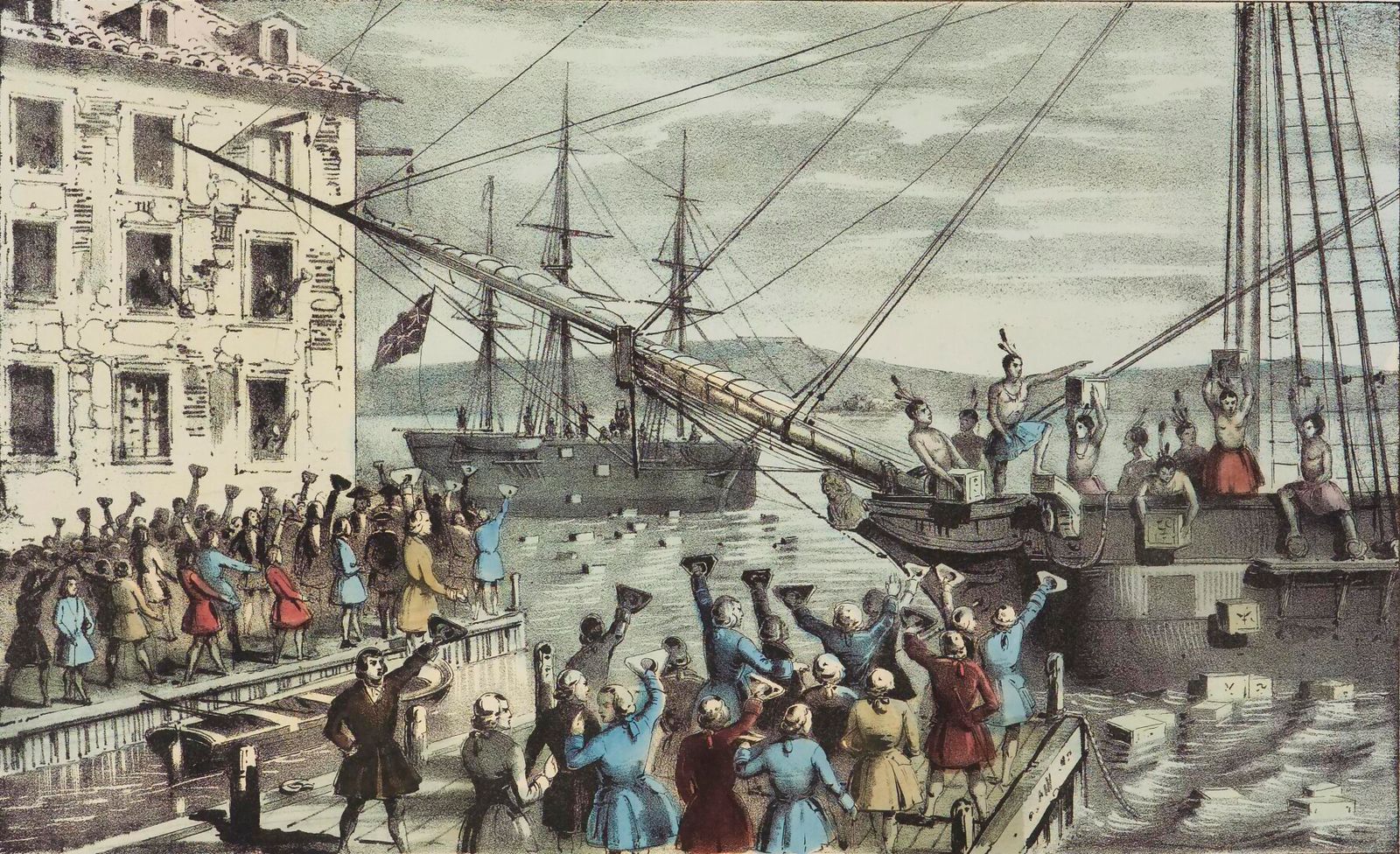
The Boston Tea Party (1773)

Image: Nathaniel Currier, Public domain, via Wikimedia Commons

The political unrest that eventually led to the American Revolutionary War was brewing well before the Boston Tea Party of 1773, but things might have gone a different way had this event not happened. The destruction of the East India Company’s tea by the Sons of Liberty as a protest against taxation was seen as a direct act of defiance by the British Parliament , who retaliated by closing the Boston Port, intervening in the Massachusetts colonial government, and stationing troops in private residences. This was seen as an act of war by the colonists, and it accelerated the gathering of the First Continental Congress and the start of the American Revolution.

2
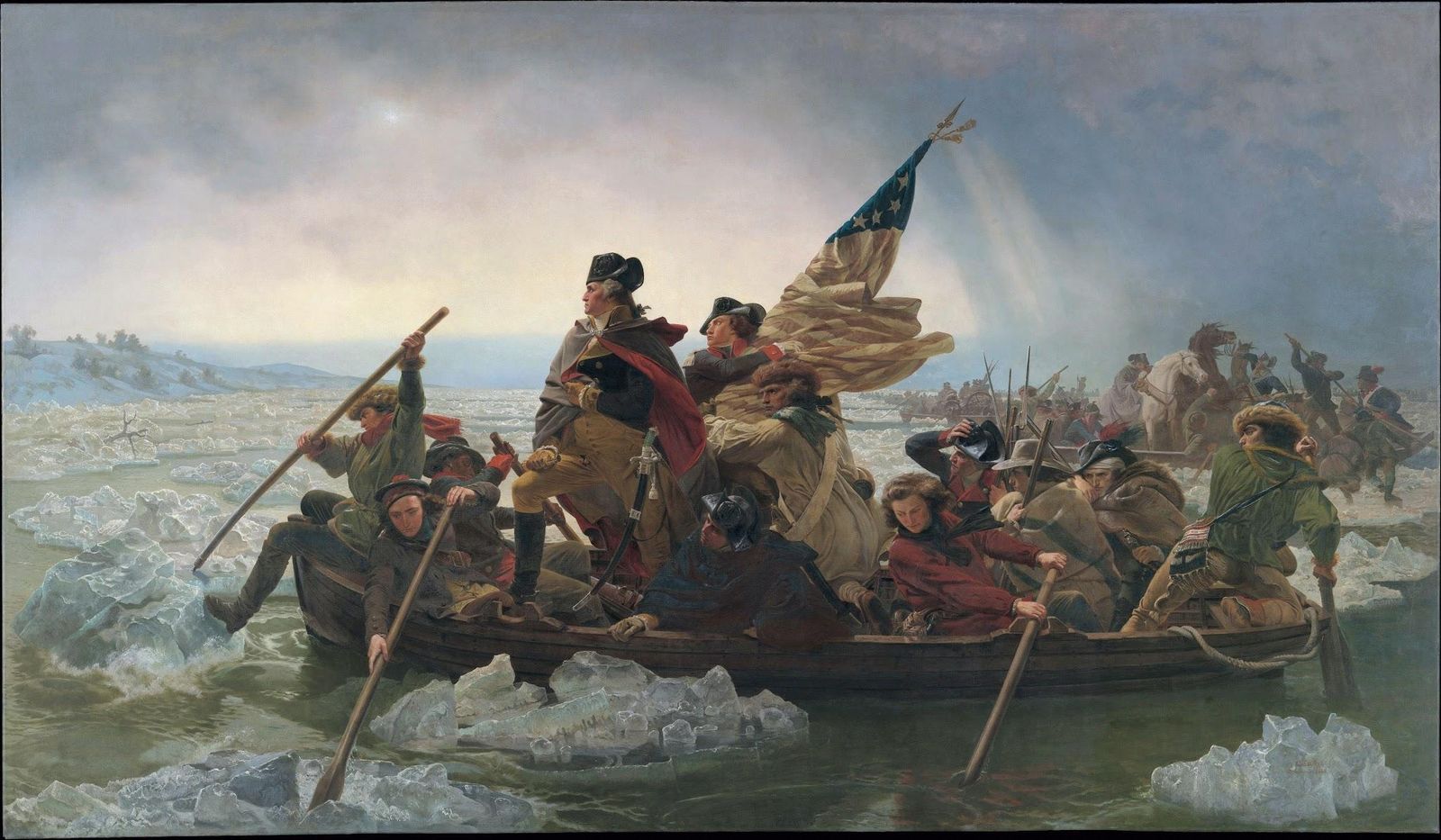
The Crossing of the Delaware (1776)

Image: Emanuel Leutze, CC0, via Wikimedia Commons

By December 1776, the Continental Army was on the brink of defeat after a series of losses. The soldiers’ morale was low, and most enlistments were set to expire by the new year. The British had decided to hunker down for the winter season, instead of chasing the colonists, and General George Washington knew he had to act fast. On the night of December 25th, he led 2,400 across the icy Delaware River in the midst of a blizzard, hoping to catch the British forces garrisoned at Trenton by surprise. The attack was successful, and it was the first of a series of victories that uplifted the revolutionaries’ morale and changed the course of the war.

3
The Whiskey Rebellion (1791)

Image: The National Guard, Public domain, via Wikimedia Commons

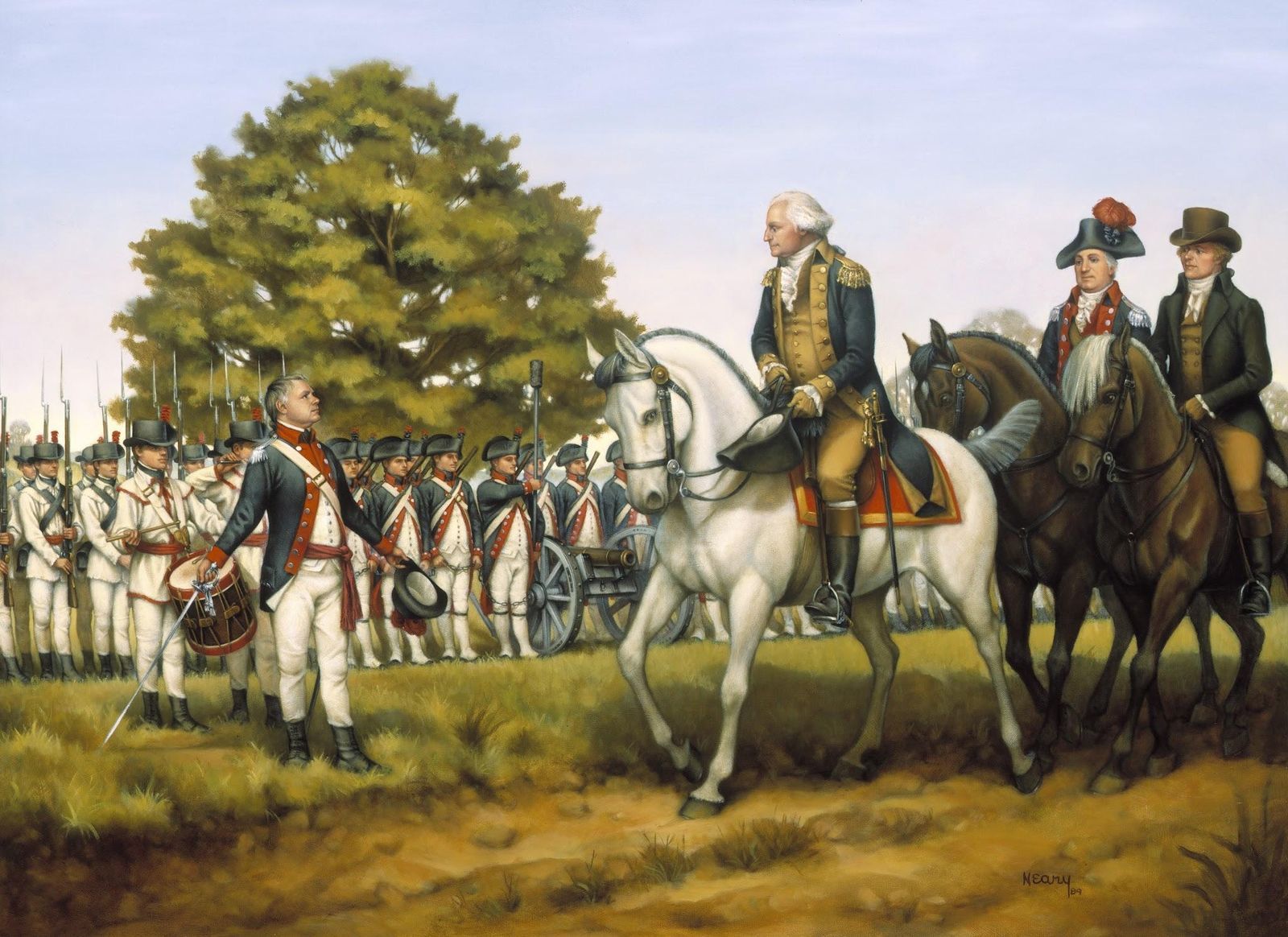
In 1791, the newly formed American government levied its first federal tax on whiskey, with the intention of using the revenue to pay war debts. However, this was met with strong resistance, protests, and even armed insurrection in the state of Pennsylvania. The peaceful suppression of the rebellion not only prevented further conflicts but also cemented the authority of the federal government over the states in matters of taxation. The role of the army led by Washington himself was crucial in the creation of a standing army—strongly opposed by many founding fathers—and it was the origin of the American military as one of the world's strongest.

4
The Bill of Rights (1791)

Image: Howard Chandler Christy, Public domain, via Wikimedia Commons

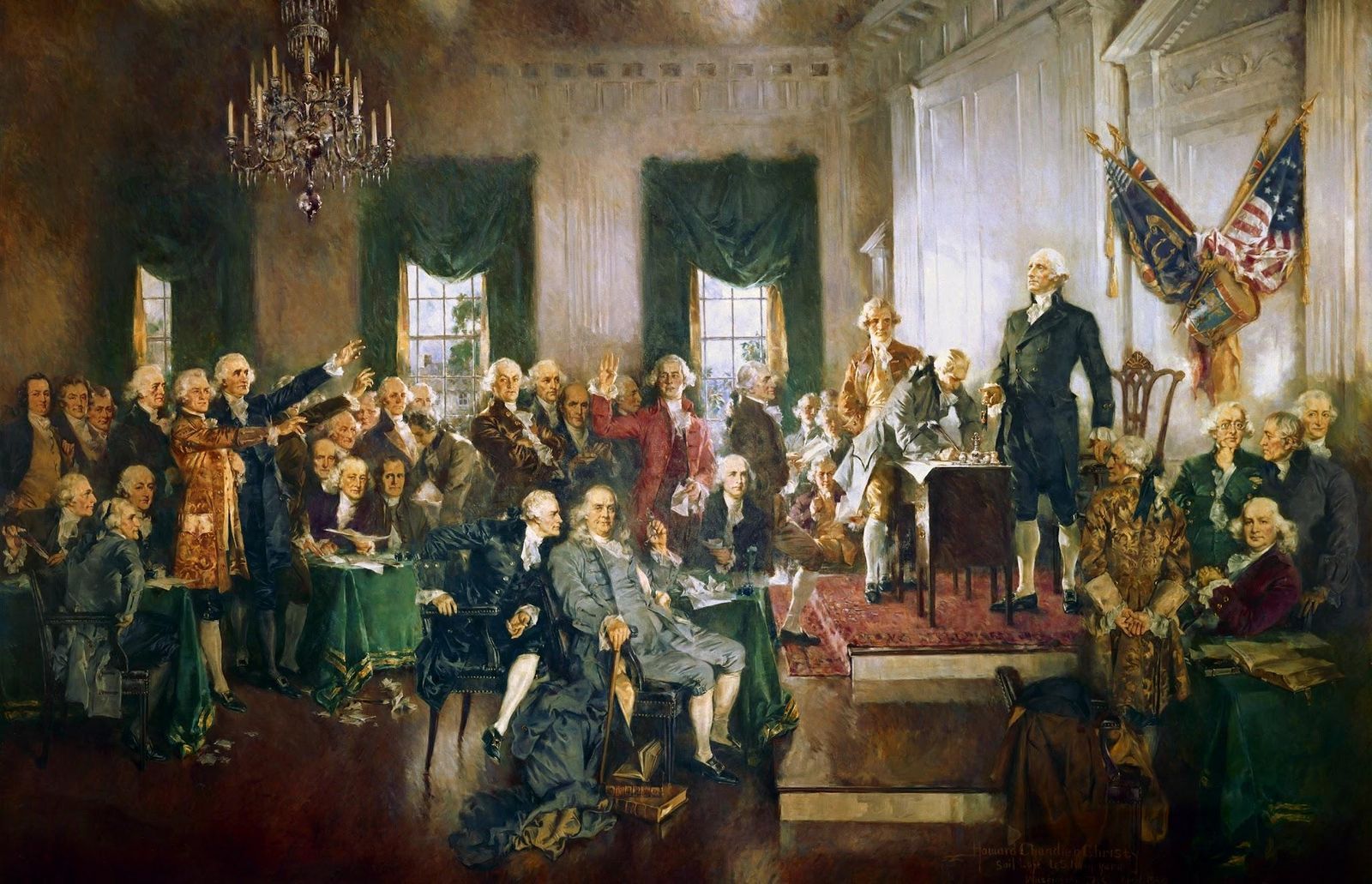
The original U.S. Constitution was met with strong opposition by many states, who saw it as infringing on individual rights and liberties, and as a possible source of government tyranny. A Bill of Rights, establishing and securing fundamental freedoms, was drafted and added as a condition for the ratification of the document. While this compromise was crucial for establishing the bases of the American nation, it also put into practice the mechanism for amending the Constitution, codified in Article V, and set the precedent that the supreme law of the land could evolve with the nation.

5
The Louisiana Purchase (1803)

Image: BioKnowlogy, Public domain, via Wikimedia Commons

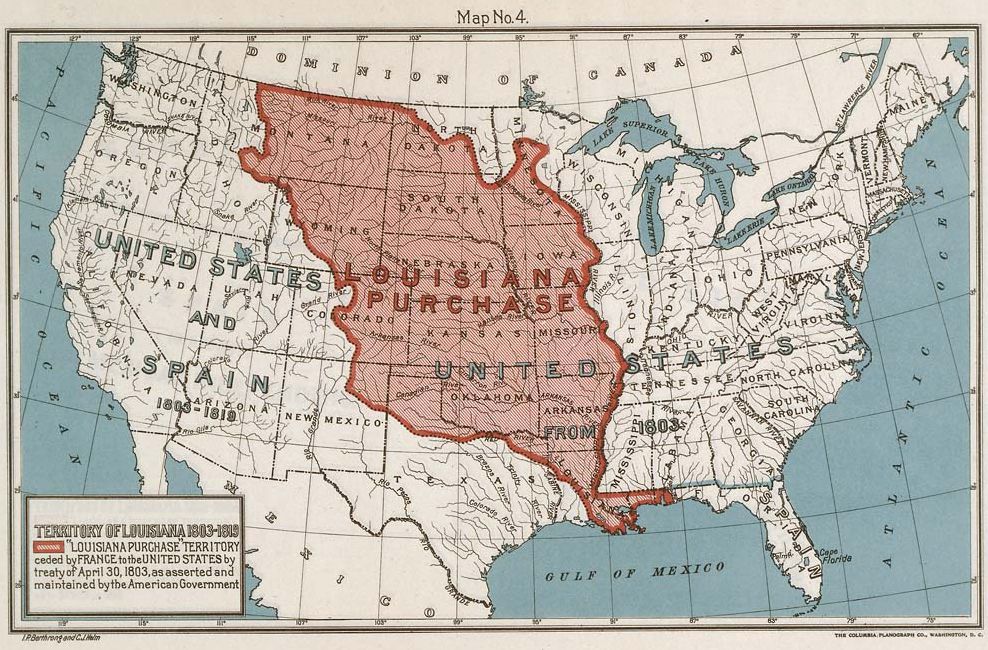
Thomas Jefferson’s purchase of Louisiana from the French in 1803 was much more than a simple territorial acquisition. The 828,000 square miles territory, purchased for roughly 15 million dollars, doubled the size of America, now expanding its initial borders from the Mississippi to the Rocky Mountains. By securing the Mississippi River and the port of New Orleans, the U.S. expanded its agricultural economy and gained access to vast natural resources , while the control over a former French territory diminished the influence of European powers—mainly, the rising Napoleon Bonaparte— in North America. The soon-to-follow Westward expansion would add 13 new states to the Union.

6
The Battle of San Jacinto (1836)

Image: Henry Arthur McArdle, Public domain, via Wikimedia Commons

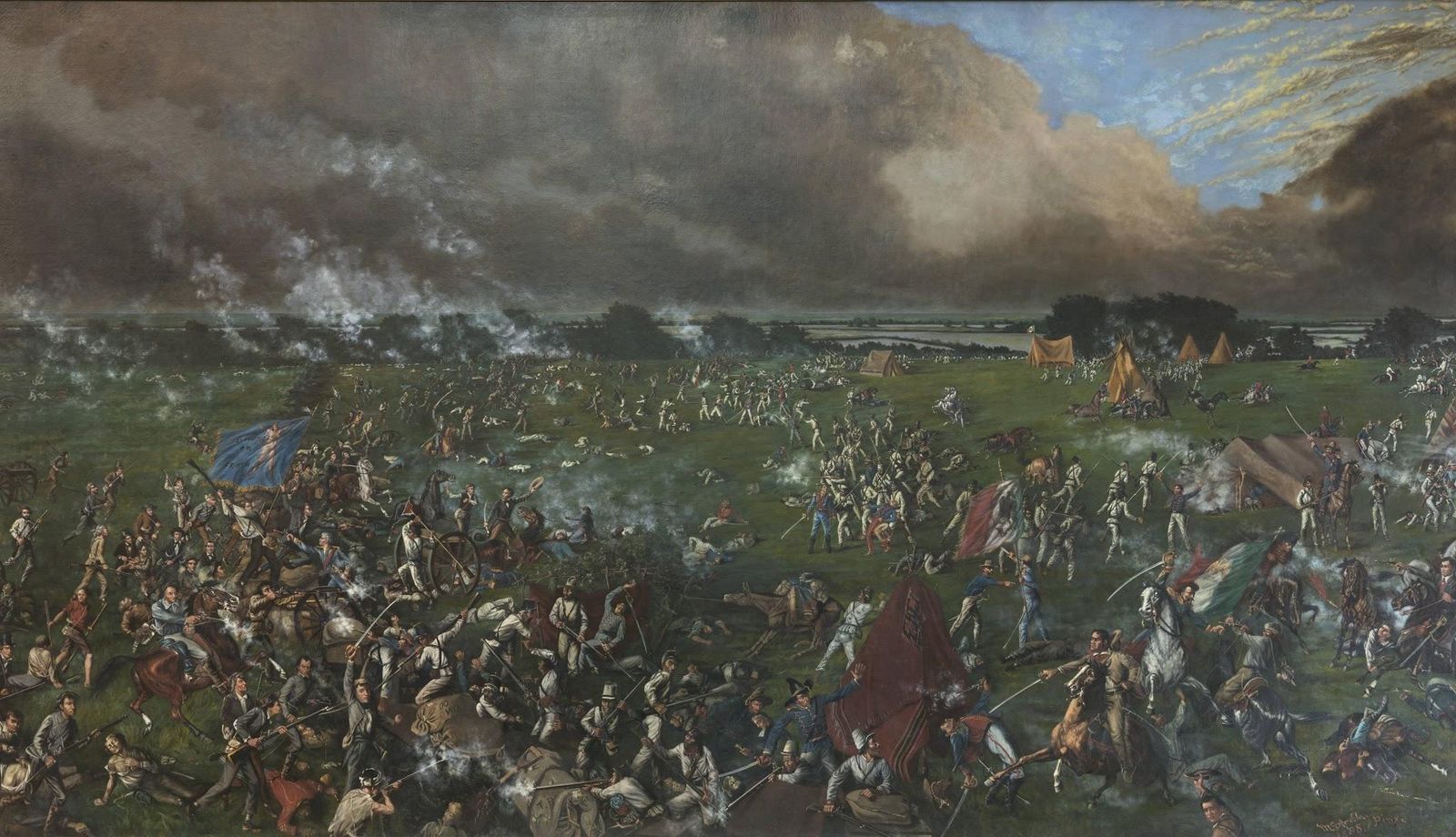
Given its significance in Texan and American history, it is easy to forget that the 1836 Battle of San Jacinto lasted a mere 18 minutes. After the victory of the Mexican army at the Alamo and the massacre of war prisoners in Goliad, Texan morale was low, and the quest for Texas’ independence was nearly ended. Pursuing the remnants of the army led by Sam Houston, Mexican scouts incorrectly reported the route taken by the Texans, which allowed Houston to evade the enemy. After blocking the escape route and while the Mexican soldiers were taking a nap, 900 Texan soldiers attacked by surprise, killing more than half of the Mexican forces (around 1,300 men) and capturing the rest.

7
The Battle of Antietam (1862)

Image: Currier & Ives., Public domain, via Wikimedia Commons

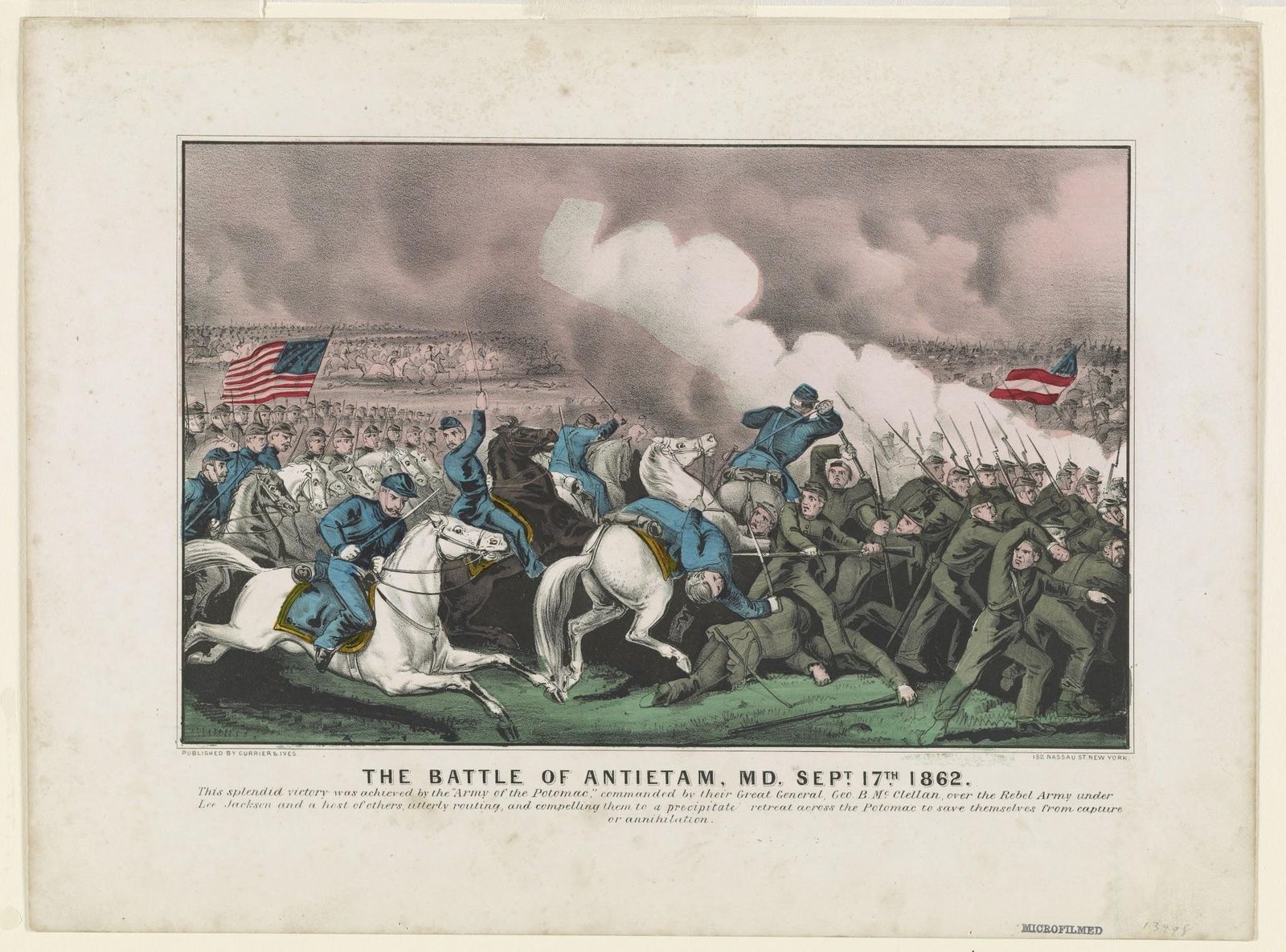
Widely considered to be the bloodiest battle of the American Civil War, with a tally of 22,726 casualties between dead, wounded, and missing people, the 1862 Battle of Antietam ultimately tipped the balance in the Union’s favor. But did you know that the casualties could have been far less? As the Union Army of the Potomac was moving to intercept the Confederate forces of General Lee, two Union soldiers came across a copy of Lee’s battle plans, detailing his intention of dividing the troops , which would allow the Union forces to isolate and defeat the Confederate army. However, Union General McClellan waited 18 hours before deciding to attack, which gave Lee the time to mount a strong defense in Antietam.

8
The New Deal (1932)

Image: Margaret DeMott Brown, Public domain, via Wikimedia Commons

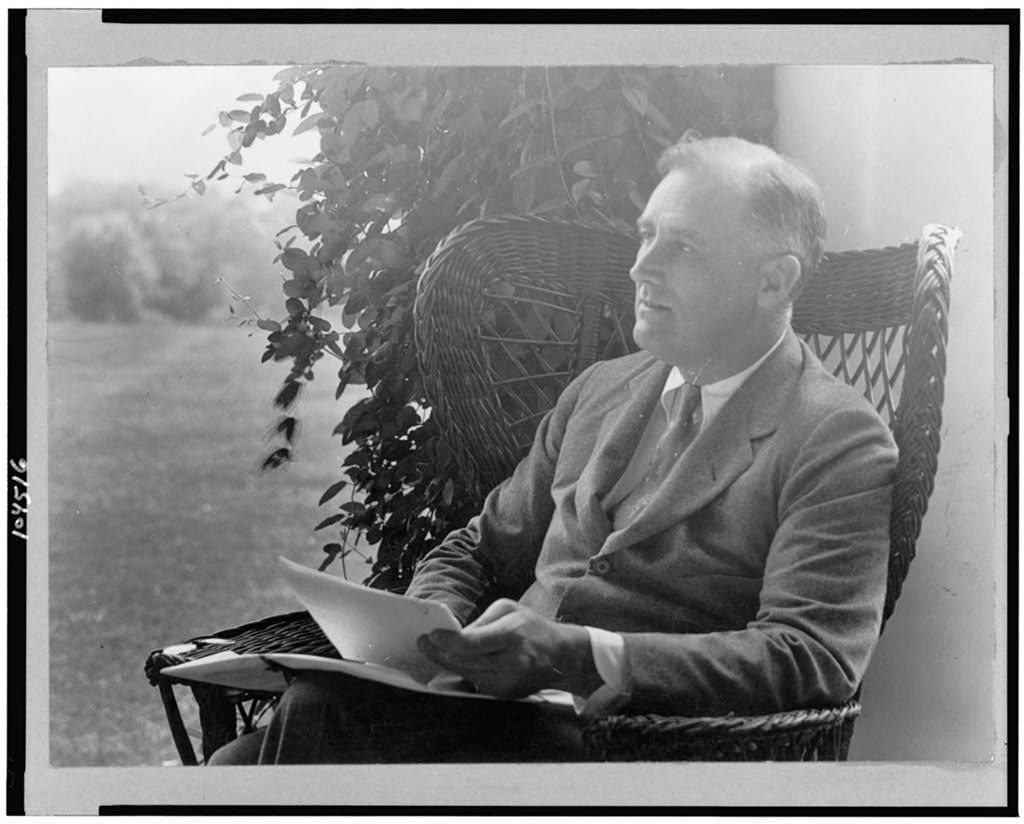
Burdened by the consequences of the Great Depression, Americans overwhelmingly supported the election of Franklin D. Roosevelt as president in 1932. Roosevelt’s main campaign promise, the New Deal, involved a series of economic, social, and political reforms to combat America’s economic crisis and restore the country’s trust in the government. The reforms weren’t entirely successful in ending the Great Depression —it only fully ended with the industrial mobilization for World War II— but they were key to ensuring that America would not suffer such a crisis again by establishing structural changes, relief programs, social security, and safety nets, regulating financial institutions, and ultimately showing American citizens that the government was working to help them.

9
The Cuban Missile Crisis (1962)

Image: Cecil W. Stoughton, Public domain, via Wikimedia Commons

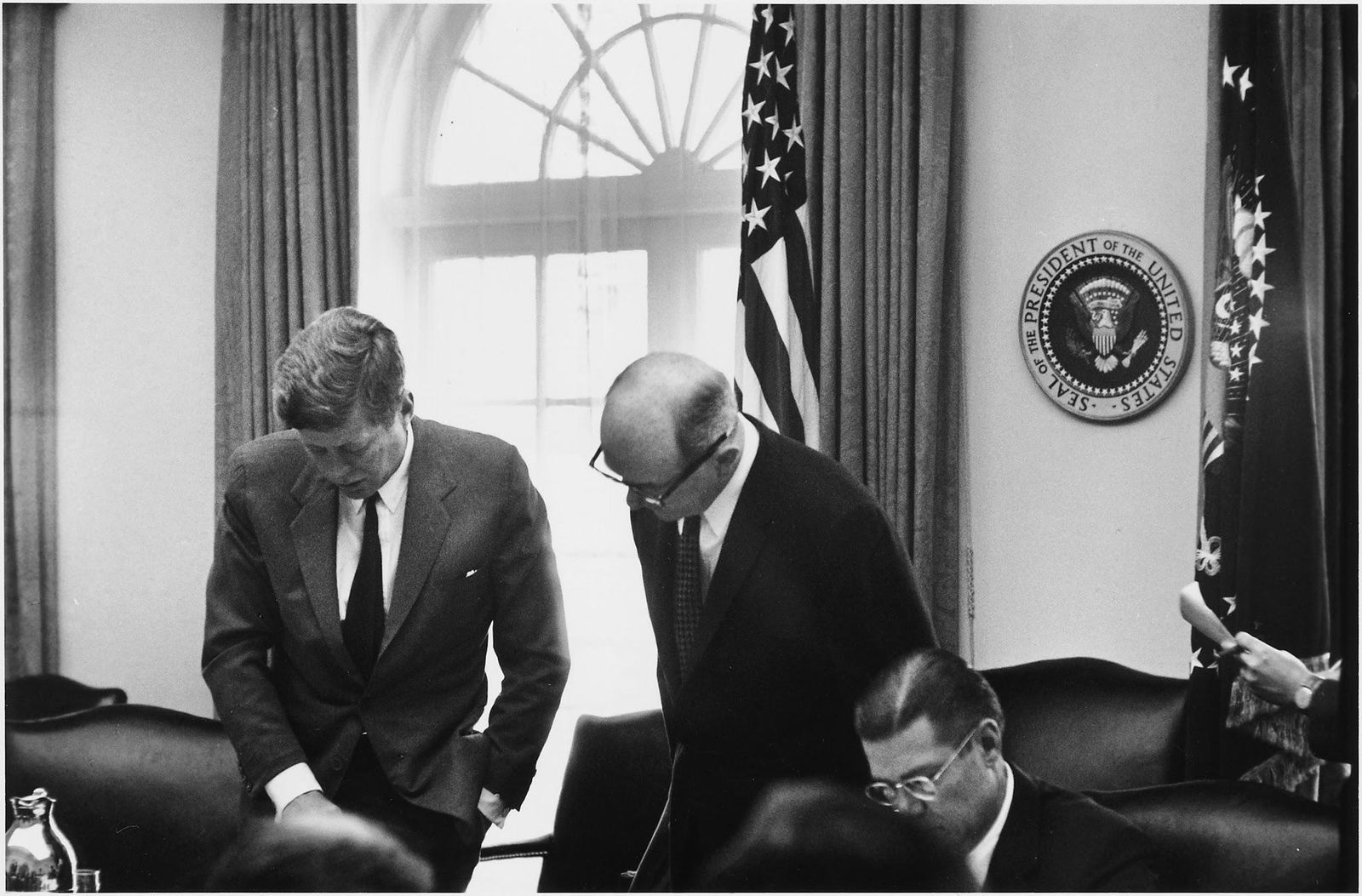
There were several moments during the Cold War Era (1947-1991) when the world thought a nuclear war was imminent, but none as close to it as the Cuban Missile Crisis. In October 1962, the Soviet government deployed nuclear missiles in Cuba as a response to similar deployments made by the U.S. in the UK, Italy, and Turkey. A 13-day crisis ensued, with President Kennedy ordering a naval blockade in Cuba, while his advisors pushed for an air strike and an all-out invasion. While the conflict ended peacefully, the nuclear war had been closer than most imagined: a U.S. Navy ship in the blockade had dropped signaling charges to deter a Soviet submarine, not knowing the submarine carried a nuclear torpedo. The Soviet captain assumed war had started and prepared to attack the ship, but he had to wait for confirmation. Luckily, the attack never happened, and a nuclear war was avoided.

10
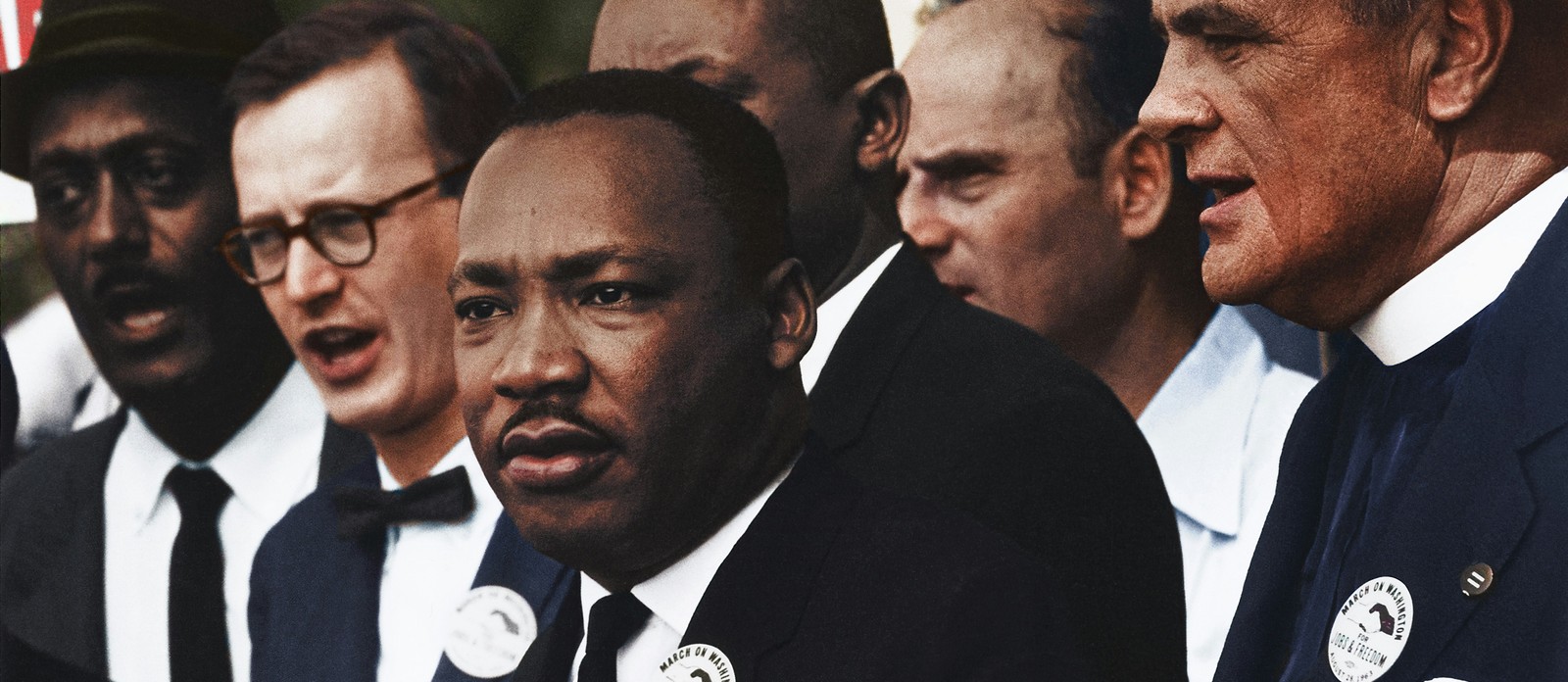
The March on Washington (1963)

Image: Unseen Histories

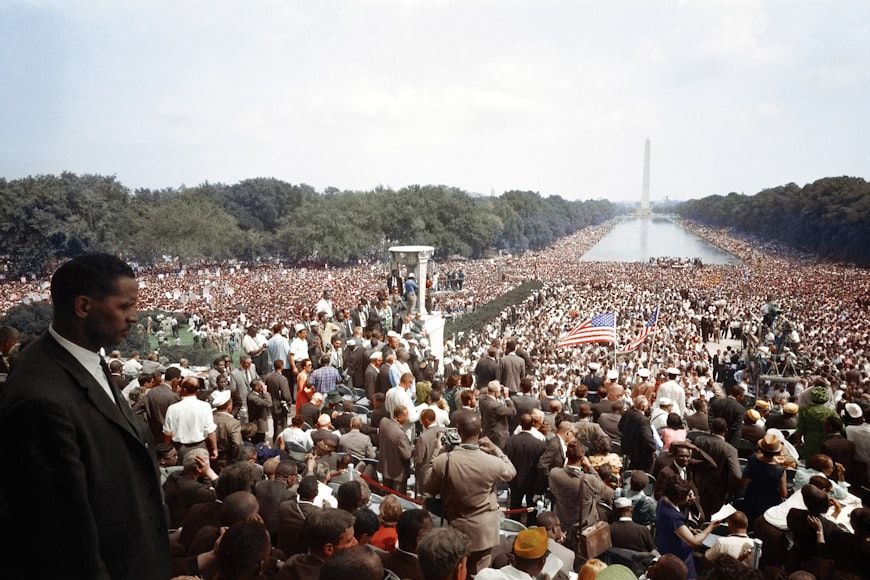
In 1963, at the height of the civil rights movement, social tensions were at an all-time high. Violent confrontations had happened in marches across the country, usually as a result of attacks on peaceful protesters. Still, these incidents had fueled the narrative of Civil Rights activists as violent and dangerous. As President Kennedy announced his intention to push for civil rights legislation, several organizations and leaders came together to organize the ‘March on Washington for Jobs and Freedom’. The march took place on August 28, 1963, and it's considered to have been one of the largest human rights rallies in American history, with an attendance of around 250,000 people. Besides landmark moments—such as MLK’s "I have a dream" speech— the march was crucial in showing peaceful protest and in pressuring the government to advance in what would later become the Civil Rights Act of 1964 and Voting Rights Act of 1965.

Explore more American facts

Choose your favorite category!

General
General

As American as apple pie—the very best America has to offer!

Culture
Culture

Delve into the astounding richness of American lore.

Geography
Geography

Hop in and explore vast and diverse American landscapes.

History
History

Discover the key moments that shaped the United States.