General General 5 min read

20th-century marvels

Architecture in the Jazz Age: 10 Art Deco buildings that shaped America
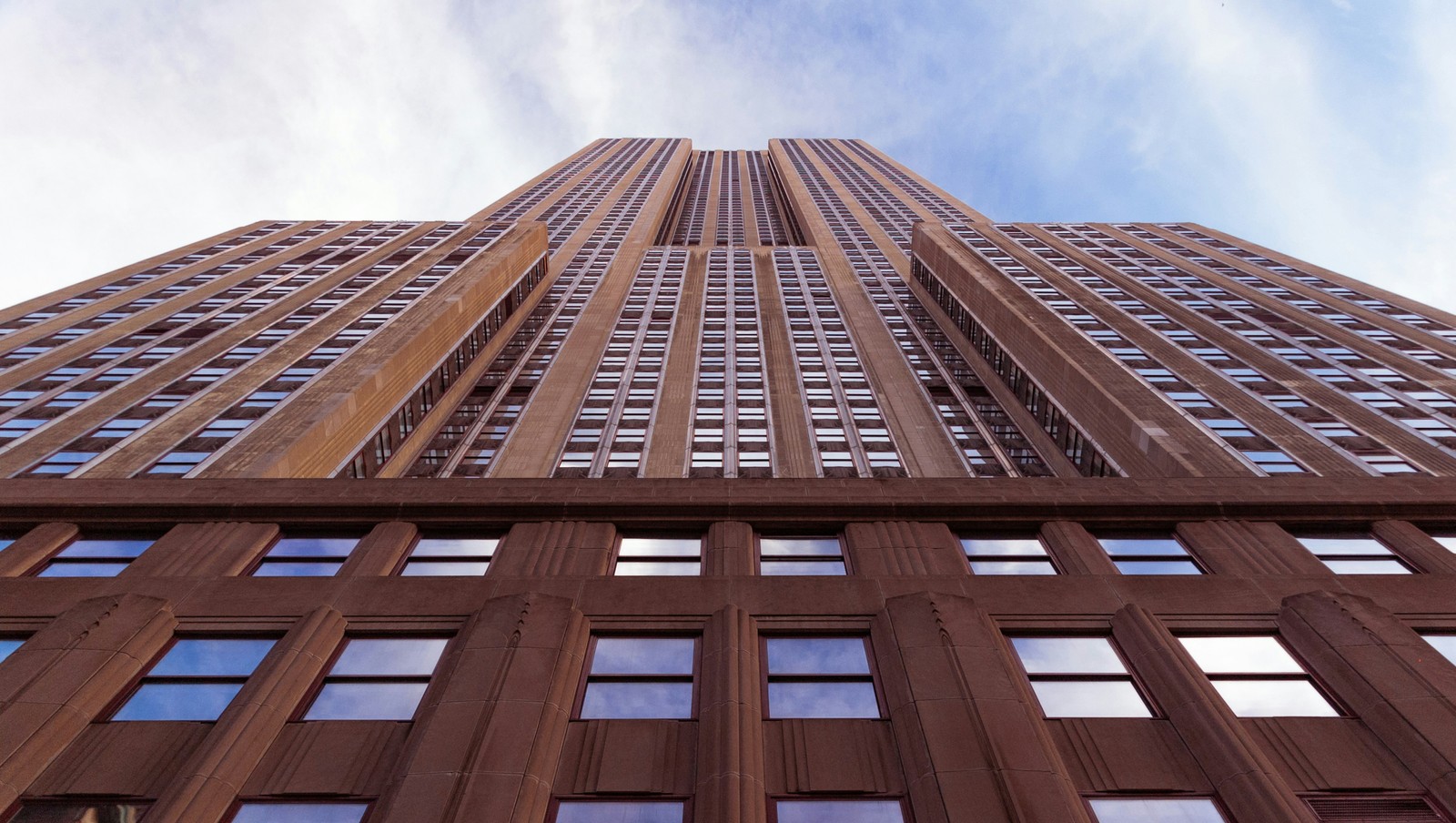
Image: Kit Suman

Characterized by sleek lines, geometric shapes, and luxurious materials, the Art Deco style was a favorite among American architects during the 1920s and 1930s. They designed opulent skyscrapers and glamorous buildings that celebrated progress and modernity. Join us to learn more about this Jazz Age style, explore its fascinating history, and tour 10 of the most beautiful Art Deco buildings in the United States.

1
Empire State Building, New York City

Image: William Wachter

Undoubtedly, the Empire State is the most famous building in New York City. Every year, about 2.5 million people visit it, and it has been featured in countless movies and TV shows. Designed by American architect William F. Lamb, it was inaugurated in 1931.

For forty-one years, the Empire State Building was the tallest skyscraper in the world. The symmetry, limestone façade, huge windows, and the monumental and luxurious lobby are some of its main features. The design of this Art Deco masterpiece is so spectacular and breathtaking that in 1986 it was designated a National Historic Landmark.

2
The Carlyle, Miami Beach
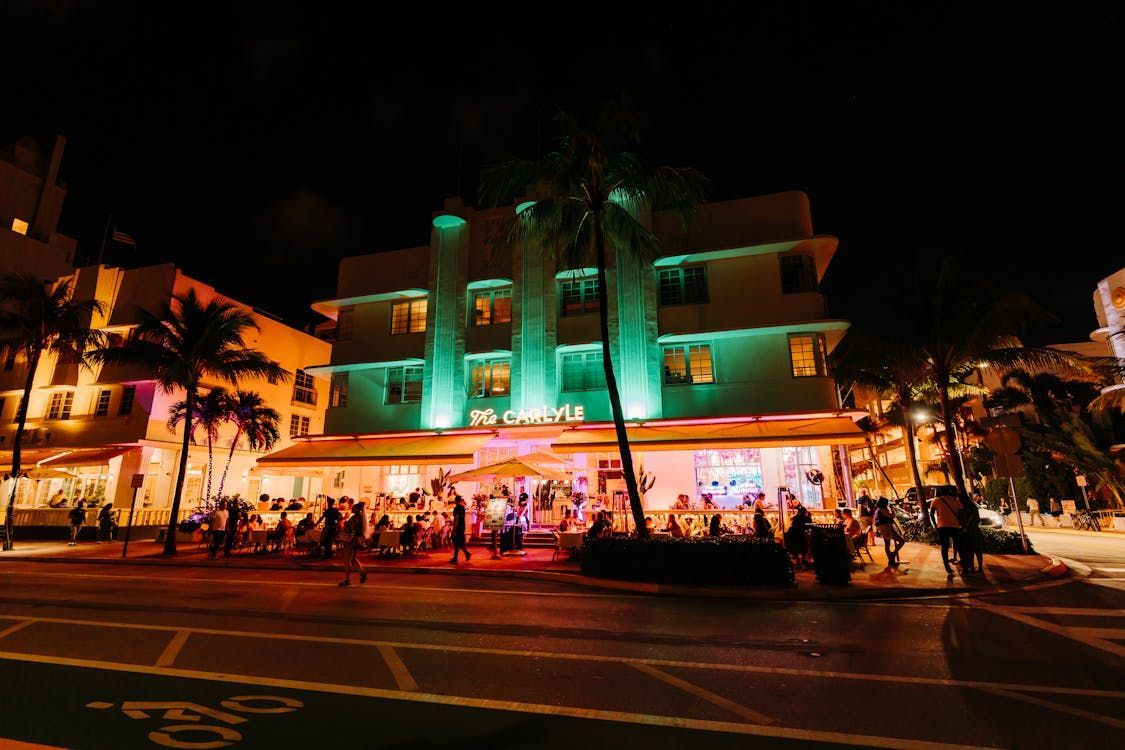
Image: Luis Erives

Miami has the largest concentration of Art Deco buildings in the world. The city has a remarkable collection of around 800 structures built in this style. Visiting the Art Deco district along Collins Avenue, Ocean Drive, and Washington Avenue is like traveling back in time. And perhaps the Carlyle, for its sophisticated combination of horizontals and verticals, is one of the most emblematic.

It was built in 1939 by German-American architect Richard Kiehnel, and its façade has barely changed since then. Its interior, on the other hand, went from hotel rooms to apartments.

3
Boston Avenue United Methodist Church, Tulsa
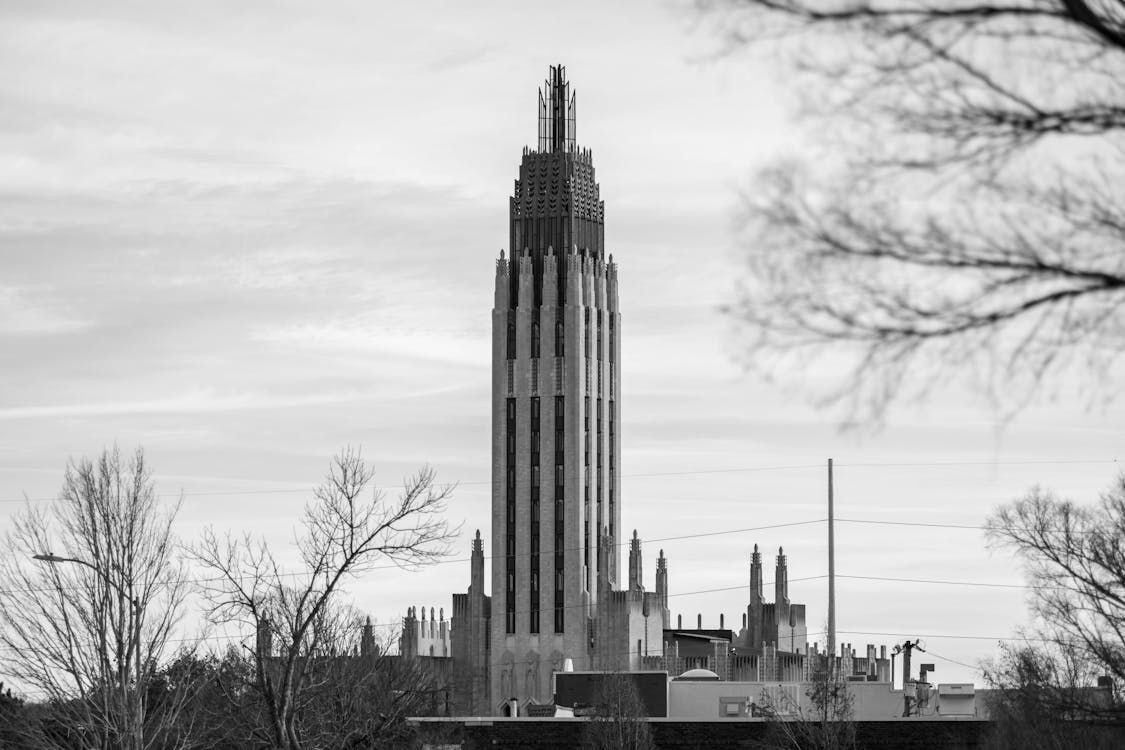
Image: Quang Vuong

The Boston Avenue United Methodist Church in Tulsa, Oklahoma, is one of the few examples of an Art Deco church. Beginning in the 1920s, little Tulsa became the oil capital of the U.S., and the sudden influx of resources encouraged investors to build increasingly grandiose buildings. Thus, this church is considered the first ecclesiastical building strictly designed for an emerging automobile culture.

Constructed from Indiana limestone, the church features a steel-frame tower topped with a copper and glass lantern. A seven-pointed star symbolizes seven virtues: patience, purity, knowledge, suffering, kindness, love, and truth. The complex also includes a sanctuary, a small chapel, and offices, while the lobby serves as a social center.

4
Union Terminal, Cincinnati
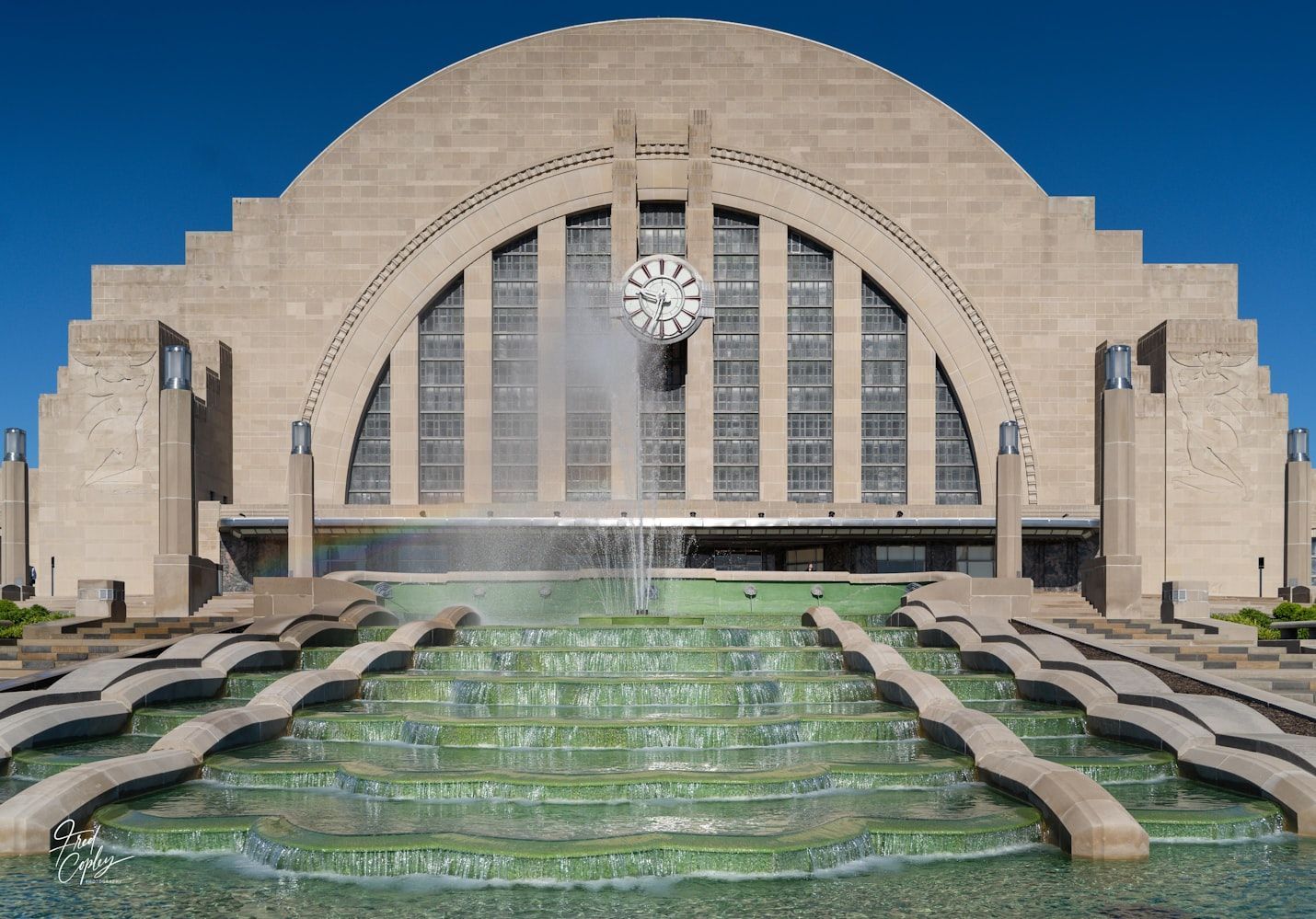
Image: Fred Copley

Cincinnati Union Terminal in Ohio is one of the finest examples of Art Deco architecture in the United States. Its green terrazzo floors, fine-grained Indiana limestone façade, and vast rotunda adorned with industrial murals by Winold Reiss make the station a true architectural masterpiece. In fact, it is considered the pinnacle work of Alfred T. Fellheimer, who had previously designed Grand Central Terminal in New York.

Unfortunately, Union Terminal began construction in 1928, during one of the worst periods in the country's economic history. The Great Depression was marked by a decline in train travel, and the opulent Union Terminal was considered a white elephant. In 1972, it was finally closed. Years later, however, the building regained its former luster. Today, it is served by Amtrak’s Cardinal line, while the rest of the complex houses several museums.

5
Carbide & Carbon Building, Chicago
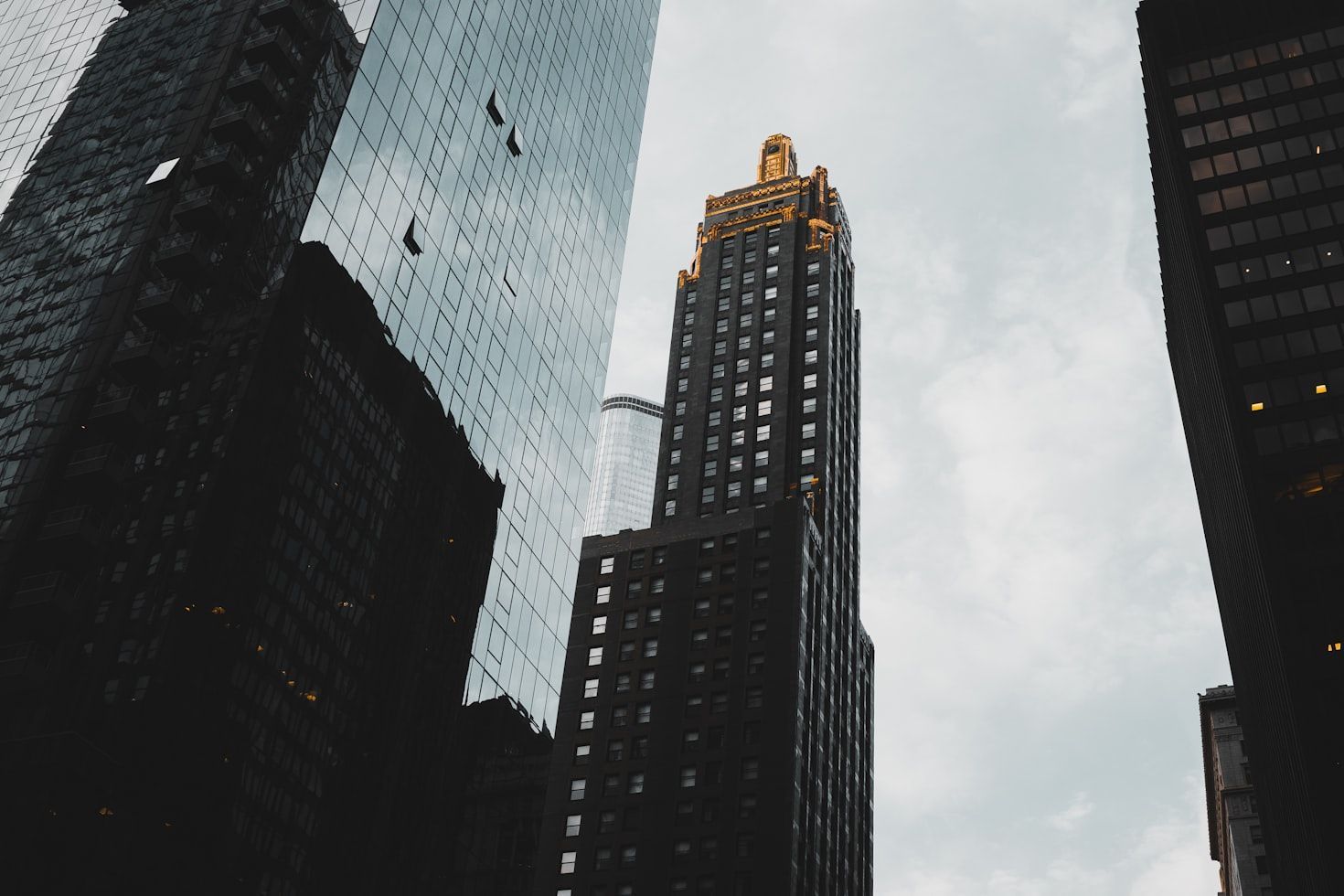
Image: Anthony Fomin

The Carbide & Carbon Building, a 37-story skyscraper completed in 1929, is one of Chicago's most striking architectural achievements. A bold example of Art Deco design , the building is clad in black granite and green terra cotta, with genuine gold leaf adorning its tower.

It is so luxurious that the Burnham Brothers architectural firm is said to have designed it to resemble a champagne bottle. In 1996, it was designated a Chicago Landmark, and in 2021, it was renovated and reopened as the Pendry Chicago Hotel.

6
The Guardian Building, Detroit
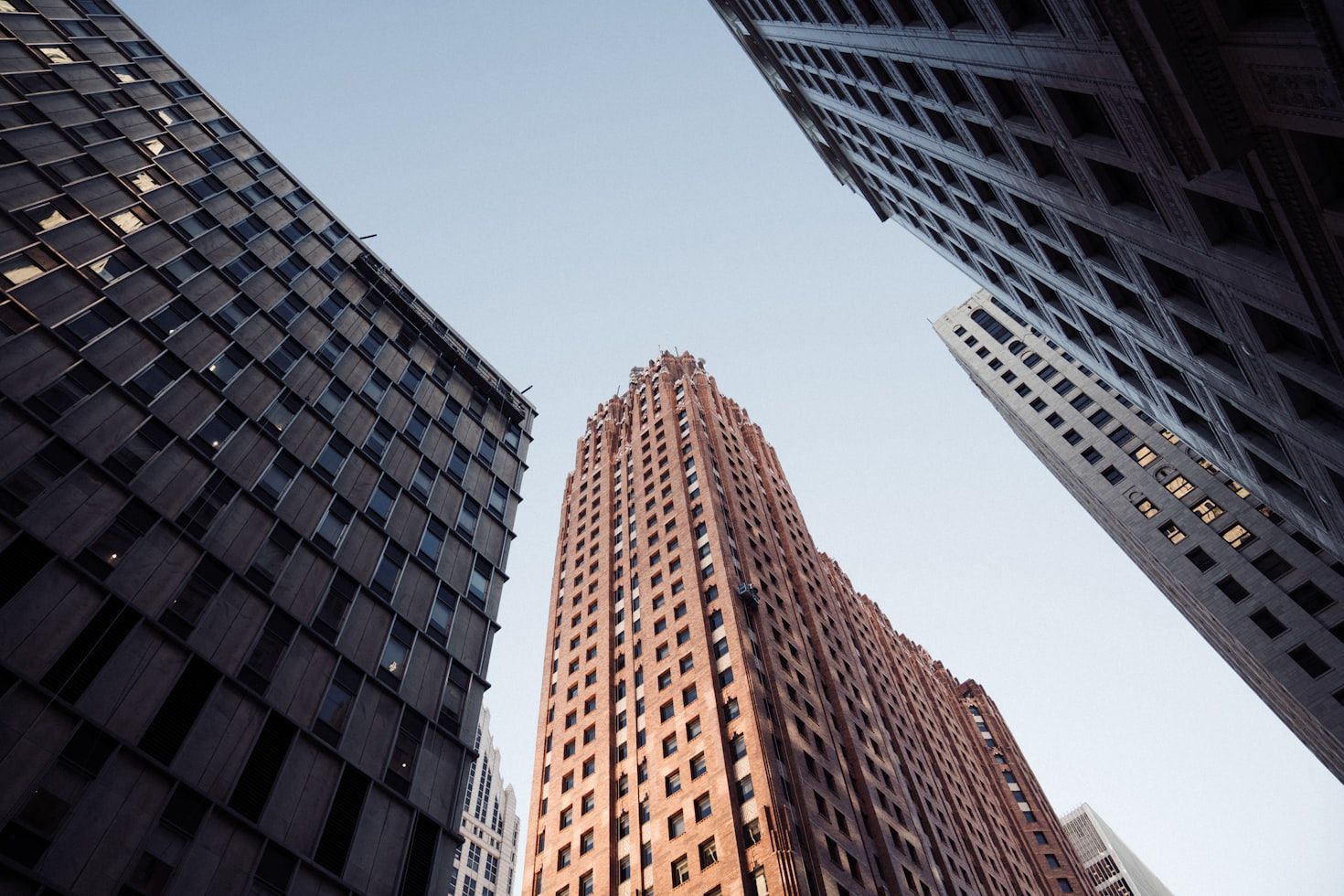
Image: G + L

This 43-story Art Deco skyscraper is located in downtown Detroit, Michigan. Nicknamed the Cathedral of Finance , it was planned by architect Wirt C. Rowland and completed in 1929. Both the interior and exterior feature numerous modern decorative elements, including mosaics, murals, stained glass, and even a historic Tiffany clock.

Forty craftsmen worked on its design and construction, which required granite, stone, terra cotta, and more than two million distinctive "Union Guardian Orange" bricks. In 1989, the Guardian Building was designated a National Historic Landmark.

7
Chrysler Building, New York City
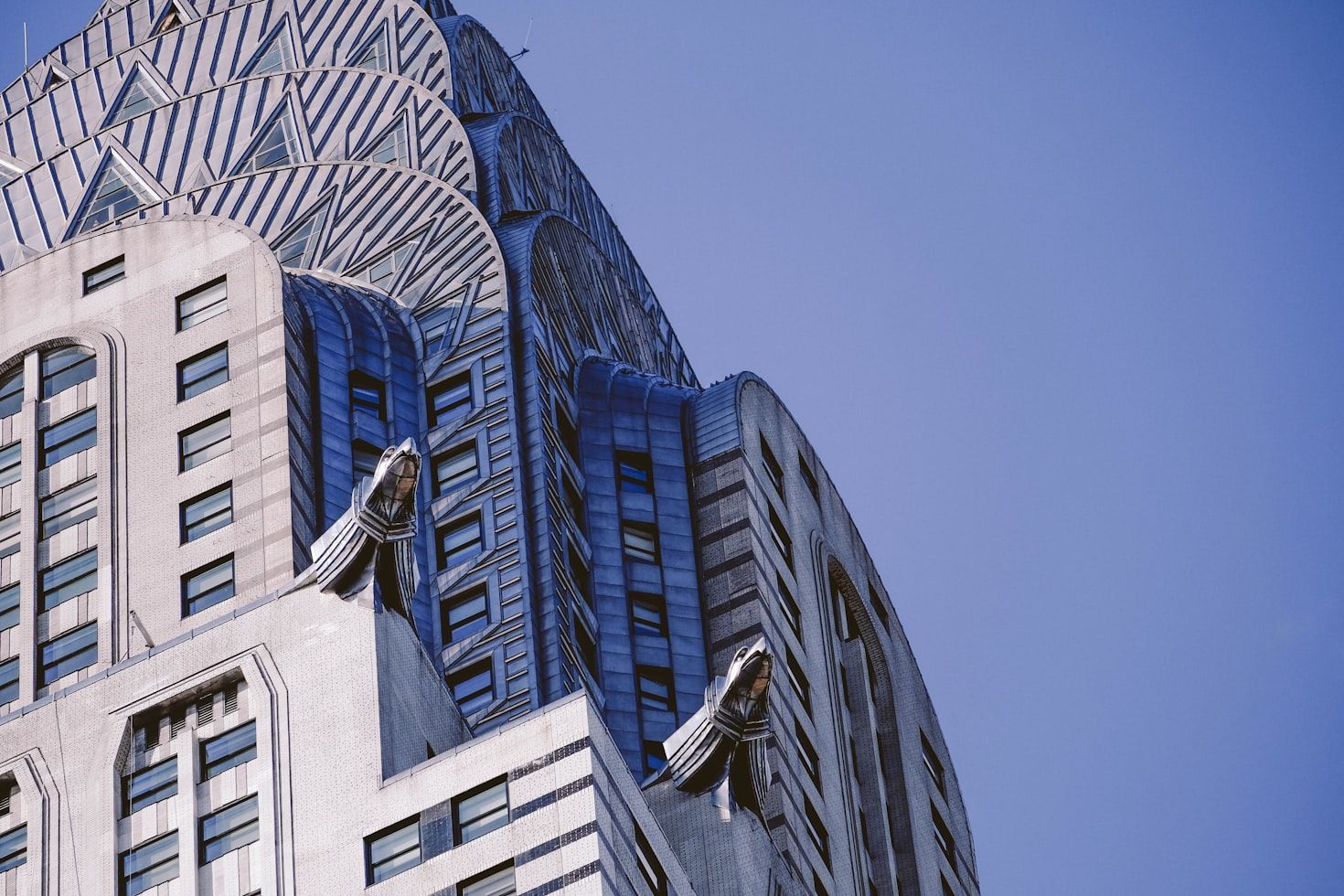
Image: William Wachter

The Chrysler Building in New York City is one of the greatest examples of the Art Deco style in the world. It was designed by architect William Van Alen at the request of industrial magnate Walter Percy Chrysler and completed in 1930.

The building exhibits great attention to detail, featuring many elements that mimic Chrysler automobile pieces, such as the ostentatious ornamentation of the tower. In the lobby, the ceiling mural—once the largest in the United States—was painted by artist Edward Trumbull. Following the building’s automotive theme, it depicts scenes of progress, transportation, and energy.

8
Eastern Columbia Building, Los Angeles
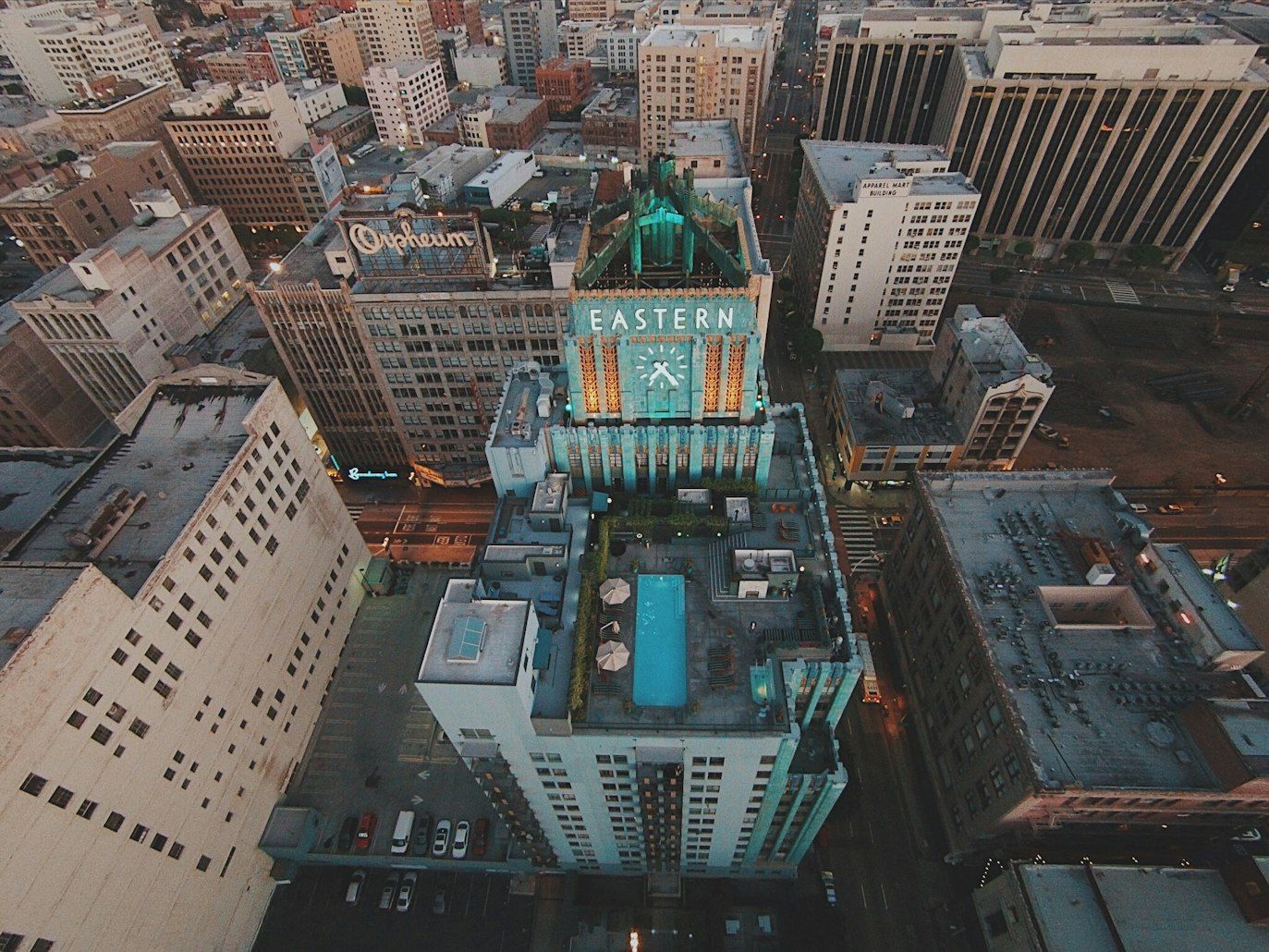
Image: Jordan Rubin

Located in downtown Los Angeles, this emblematic 1930s building features a striking turquoise terra cotta exterior. The Eastern Columbia Building was designed by renowned architect Claud Beelman, who also created several of the city’s notable Art Deco structures. At the time of its construction, the building was so unique that the city allowed it to exceed the maximum height limit.

Its unique color, majestic vertical lines, iconic clock, and golden ornamentation attracted Hollywood moguls and stars from the beginning. It was first used as office space and was later converted into luxury apartments. In 1985, the Eastern Columbia Building was declared a Historic-Cultural Monument.

9
Circle Tower, Indianapolis
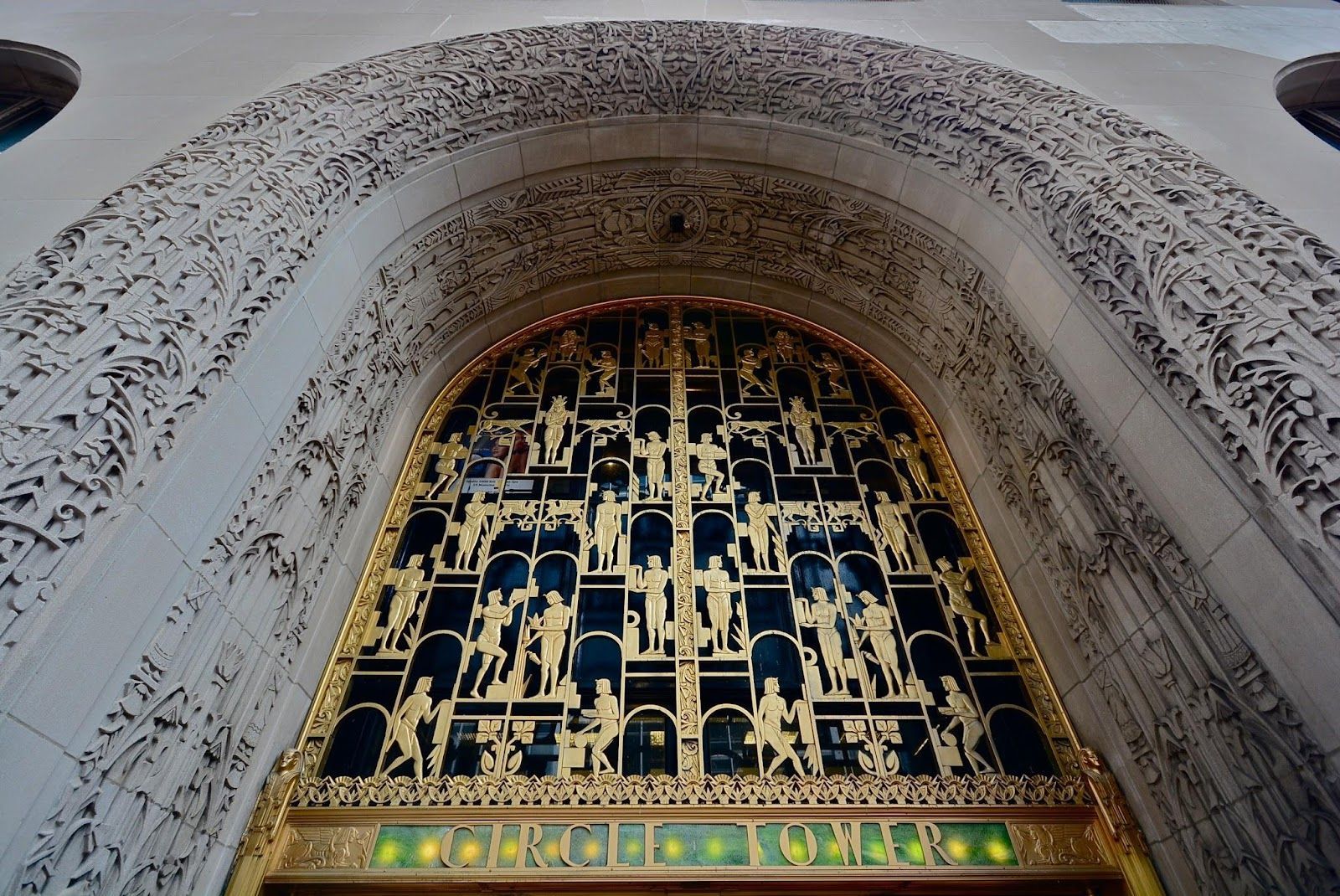
Image: Alejandro, CC0, via Wikimedia Commons

The construction of a 14-story skyscraper in Indianapolis was a major news event in the early 20th century. "Circle Tower Is Rising," declared the Indianapolis Times in 1929. Circle Tower stands as a magnificent example of Art Deco architecture.

Built of ornately carved granite and limestone and decorated with Egyptian figures, Circle Tower has a unique, trapezoidal shape. This unusual silhouette was promoted as an icon of luxurious office space. The interior, on the other hand, features marble and terrazzo floors, bronze elevator doors, geometric flowers, zigzags, and concentric swirls. Details in the lavishly marble-clad lobby exude elegance.

10
Griffith Observatory, Los Angeles
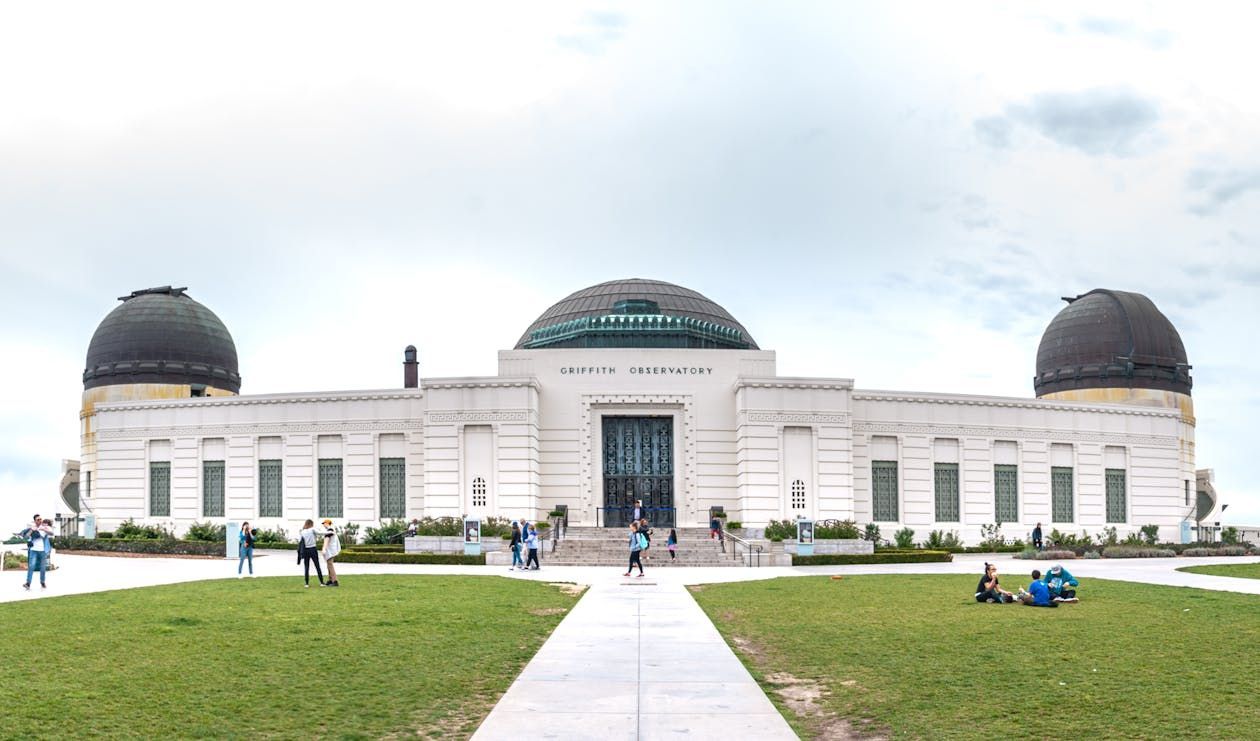
Image: David Vives

The Griffith Observatory is one of Los Angeles’ most important cultural attractions. This Art Deco icon opened in 1935 and was designed with a revolutionary idea in mind: the cosmos should be accessible to everyone, not just astronomers.

Built of reinforced concrete on a 3,015-acre site donated by Colonel Griffith J. Griffith, it is a blend of modern design and Greek and Beaux-Arts influences. The building's most emblematic feature? The planetarium in the central dome!

Geography Geography 3 min read

Carved in stone

Who nearly replaced Roosevelt? 10 truths about Mount Rushmore!

Image: Takefreebies

We've all seen Mount Rushmore, whether in person or on screen. But this monumental landmark is more than just four giant heads carved into granite. If you want to discover some surprising facts they don't teach in schools, read on!

1
A tough decision

Image: Spencer James Lucas

While the first three figures —Washington, Jefferson, and Lincoln— were almost unanimously agreed upon, there was some debate over who should be the fourth face on Mount Rushmore. Gutzon Borglum, the sculptor, advocated for Theodore Roosevelt, but others believed Woodrow Wilson should be included. In the end, Borglum stuck with his original choice, and that's why today we see Teddy Roosevelt up there on America's Shrine of Democracy.

2
The original plan

Image: Jon Sailer

While it's hard to picture the Black Hills without the iconic faces of Washington, Jefferson, Roosevelt, and Lincoln, the original idea for Mount Rushmore was actually quite different. At first, Sculptor Gutzon Borglum envisioned a more complex job (yes, even more complicated than it already is!) In his original plan, he imagined not just the presidents' heads but their upper bodies as well! There was even talk of including other key figures from American history, like explorers Lewis and Clark.

3
14 long years

Image: piotr sawejko

We can assume that carving the giant heads of 4 presidents into the granite was no easy task. But do you know how long it took to complete the monument we see today? 14 years! That's right; 14 years of hard work, 400 men, and a whole lot of dynamite went into bringing this colossal project to life.

4
The first

Image: Spencer James Lucas

As the first President of the United States and widely known as the "Father of His Country," George Washington was a must for this incredible monument. In fact, his face was the first to be completed and was officially dedicated in a grand ceremony. In addition, as part of the powerful symbolism behind the work, Washington's sculpture is also the most prominent.

5
Starting over

Image: Raimund Schlager

One of the many unexpected construction challenges involved the placement of Thomas Jefferson's sculpture.

The original plan was to place Jefferson's face to the left of Washington. However, when the dynamiting process began, they found quartz beneath the surface, which made it impossible to continue carving in that spot. After 18 months of work, they "erased" (yes, again, with dynamite) what they had of Jefferson and started over to the right of Washington, where it is today.

6
The secret door

Image: Tommy Bond

Did you know there's a secret room hidden behind the 60-foot-tall heads on Mount Rushmore? The sculptor had big plans for the monument, including a Hall of Records carved into the mountain to store important national documents like the Constitution. And he started to build it! However, when Congress found out that part of the budget was set aside for the Hall of Records, they asked Borglum to focus solely on carving the heads.

7
The last one

Image: caleb weiner

After Washington's, the other faces followed: Jefferson's was dedicated second, and Lincoln's was officially unveiled in 1937. So, which one came last? That's right! The last to be completed was Theodore Roosevelt's, with his iconic mustache included! Of course, members of the Roosevelt family attended the big ceremony.

8
The legacy

Image: Ashim D’Silva

Building Mount Rushmore took many years. Unfortunately, Gutzon Borglum, the mind behind the project, didn't get to see it fully completed, as he passed away just a few months before the work officially ended. However, it was his son Lincoln who stepped in to complete the great work his father had started.

9
An extra foot

Image: Andrew Ling

Borglum believed this monument should stand the test of time, built to inspire and be admired for thousands of years to come. So, how did he achieve that? Some historical sources suggest one of Borglum's techniques was adding extra material to certain angled areas of the sculpture, like Washington's nose, for example. That's right! It's believed that the author added an extra foot to George Washington's nose to help it better withstand erosion over time.

10
The man behind the name

Image: Pamela Huber

Long before the presidents were carved into the Black Hills, a New York lawyer paid a visit to the area, and that visit wouldn't go unnoticed. In 1885, attorney Charles E. Rushmore was at the site for business, and he asked for the name of a particular peak. When they told him it didn't have a name, he jokingly suggested they could call it "Rushmore Peak." Charles E. Rushmore was actually the first person to make a private donation to get the project started: $5,000! And so it was that his name stuck.

History History 4 min read

Stories of Hollywoodland

12 things you didn't know about the Hollywood Sign

Image: Clément Proust

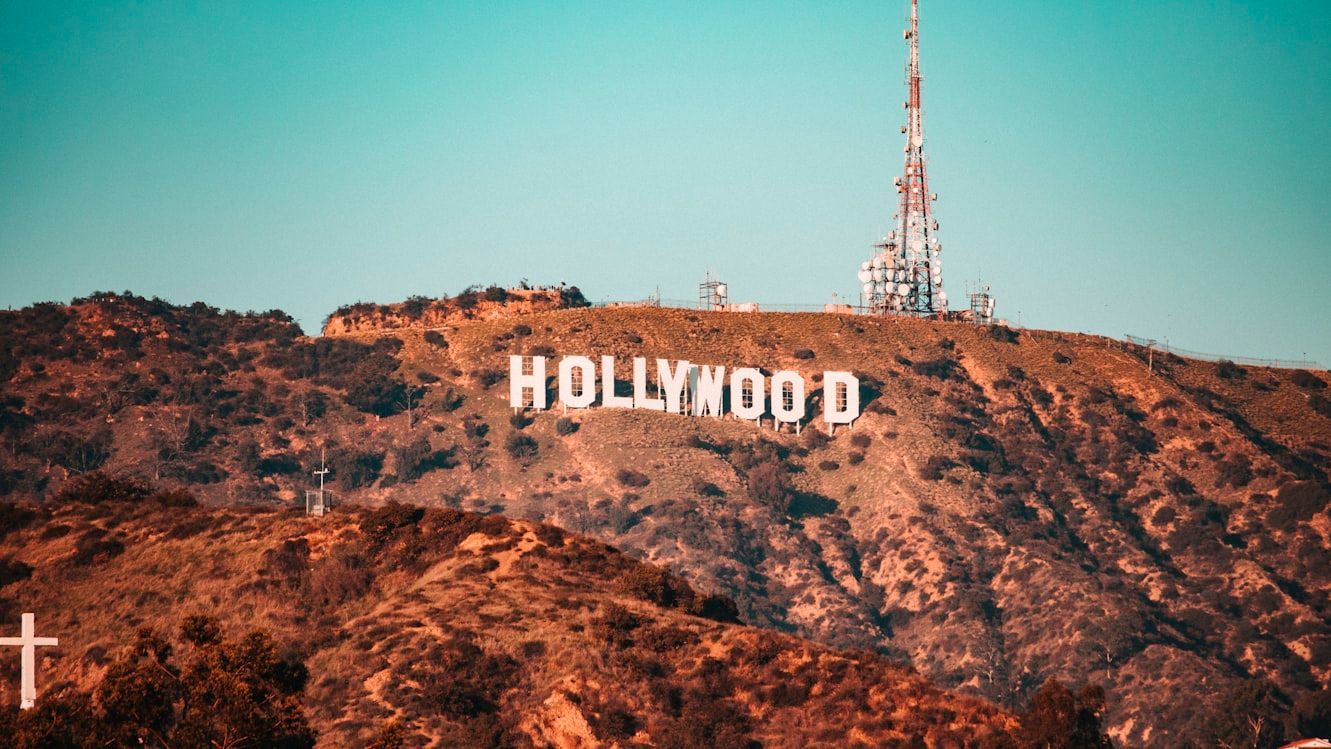
The Hollywood Sign is full of history, sponsorships, drama, and reinventions. Did you know that it was originally not only a longer word but also physically larger? And like the Eiffel Tower, it was originally intended to be a temporary structure. Read on to learn more interesting facts about LA’s most famous backdrop !

1
It was originally an advertisement

Image: Emma Timmers

Have you ever wondered why the sign exists at all? After all, not many cities display neighborhood names on a nearby hill . When the sign was first erected in 1923, it was simply a billboard promoting a real estate development, and it was supposed to stand for only about 18 months.

2
It used to be longer

Image: Sarah Sheedy

The sign originally read "Hollywoodland" , the name of a new housing development that promised wealthy buyers unique views of the sunny hills of Los Angeles. So, they stuck a gigantic sign on Mount Lee. Just temporary , they said. Just for marketing .

Over 20 years later, the district had become more culturally relevant than the housing development, but people had grown used to the sight by then. So, they decided to let go of four letters. Each cost a fortune to maintain anyway.

3
It used to be bigger

Image: Eliot

The original "Hollywoodland" sign was massive. Each letter stood 43 feet tall and stretched 30 feet across. They were made from thin metal panels slapped onto wooden frames and held up by telephone poles.

It dazzled from afar, but up close, it was a wobbly mess . The construction was so flimsy that by the 1930s, some of the letters were already tilting, cracking, or sliding out of place.

4
It’s appeared in more movies than most actors

Image: Ramaz Bluashvili

Doesn’t that fact make you giggle? It’s not Bette Davis, and it’s not Anthony Hopkins—it’s the Hollywood Sign that has more movie credits .

Aliens have blown it up. Earthquakes have toppled it. Sharks have flown right through it. But it’s also been the backdrop for kisses, chases, and friendship montages. Directors love it because it screams "L.A." in three seconds flat.

5
Technically, it’s not in Hollywood

Image: RDNE Stock project

The Hollywood Sign doesn’t actually sit within the neighborhood of Hollywood—it stands atop Mount Lee, inside Griffith Park, which is managed by the City of Los Angeles . So while it may say Hollywood , it’s not technically in Hollywood.

6
It’s been rebuilt twice

Image: Gerald Schömbs

By the 1940s, the city stepped in and gave the sign a minor facelift. After the crumbling "LAND" was scrapped, the remaining letters were patched up.

But by 1978, the sign was in serious trouble again—rusted, leaning, and on the verge of collapse, it was deemed beyond repair. This time, Hollywood did what it does best: rebooted it entirely . A new sign was built from scratch, using steel beams and concrete foundations.

7
Celebrities "sponsored" letters

Image: Joseph Menjivar

When Hollywood cried for help in the late ’70s, it was Playboy founder Hugh Hefner who stepped in. The city didn’t have the funds to rebuild the sign, so Hefner threw a glitzy fundraiser to find sponsors for each of the nine letters, at $27,777 apiece.

And it worked. Alice Cooper funded the "O" in memory of Groucho Marx. Gene Autry sponsored the second "L." Even Warner Bros. chipped in.

8
No public trail leads directly to it

Image: Venti Views

Perhaps you’ve heard a disappointed tourist complain about this before: You can hike near it. You can pose below it. But actually walking up to the letters is a no-go. The trails in Griffith Park will get you close, with plenty of Instagram-worthy views. But conservation efforts mean you’ll never legally stand between the "L"s.

One reason is that decades ago, it was easier to reach the sign—and some fans even climbed the letters.

9
The land surrounding it was once nearly sold for development

Image: izayah ramos

In the early 2000s, developers had their eyes on the land behind the sign. The plan was to construct luxury homes in the hills with killer views. But the public response was pure outrage.

Enter Hugh Hefner (again), along with celebrities and conservation groups , who raised over $12 million to save the land. Today, those hills are permanently protected.

10
It has its own security team

Image: Lukas Geck

As mentioned earlier, you can’t get a selfie next to the "H" because the sign is off-limits to the public. It’s monitored 24/7 with infrared cameras, motion sensors, microphones, and regular patrols. Some hikers still try their luck, but trespassing can lead to citations, fines, and in some cases, arrest.

11
It’s copyrighted; you can’t just slap it on a T-shirt

Image: Simon Ray

Call a lawyer before you print the Hollywood Sign on your merch. Some trademark rights to the sign are owned by the Hollywood Chamber of Commerce. That means any commercial use—like shirts, mugs, or movie scenes— requires a license . Even photographers have to tread carefully.

12
Helicopters were used to move the letters

Image: Somchai Kongkamsri

The letters have been helicoptered off before. In 1978, when the new sign was being installed, the old, rusted letters had to go. But since you can’t exactly wheel 50-foot steel slabs down a hiking trail, helicopters came to the rescue.

One by one, the original letters were airlifted off the mountain in a strange, sky-high farewell. It was quite an event, and crowds gathered to watch.

Explore more American facts

Choose your favorite category!

General
General

As American as apple pie—the very best America has to offer!

Culture
Culture

Delve into the astounding richness of American lore.

Geography
Geography

Hop in and explore vast and diverse American landscapes.

History
History

Discover the key moments that shaped the United States.