Geography Geography 3 min read

Hidden country

10 places in America that still baffle scientists (and tourists love)
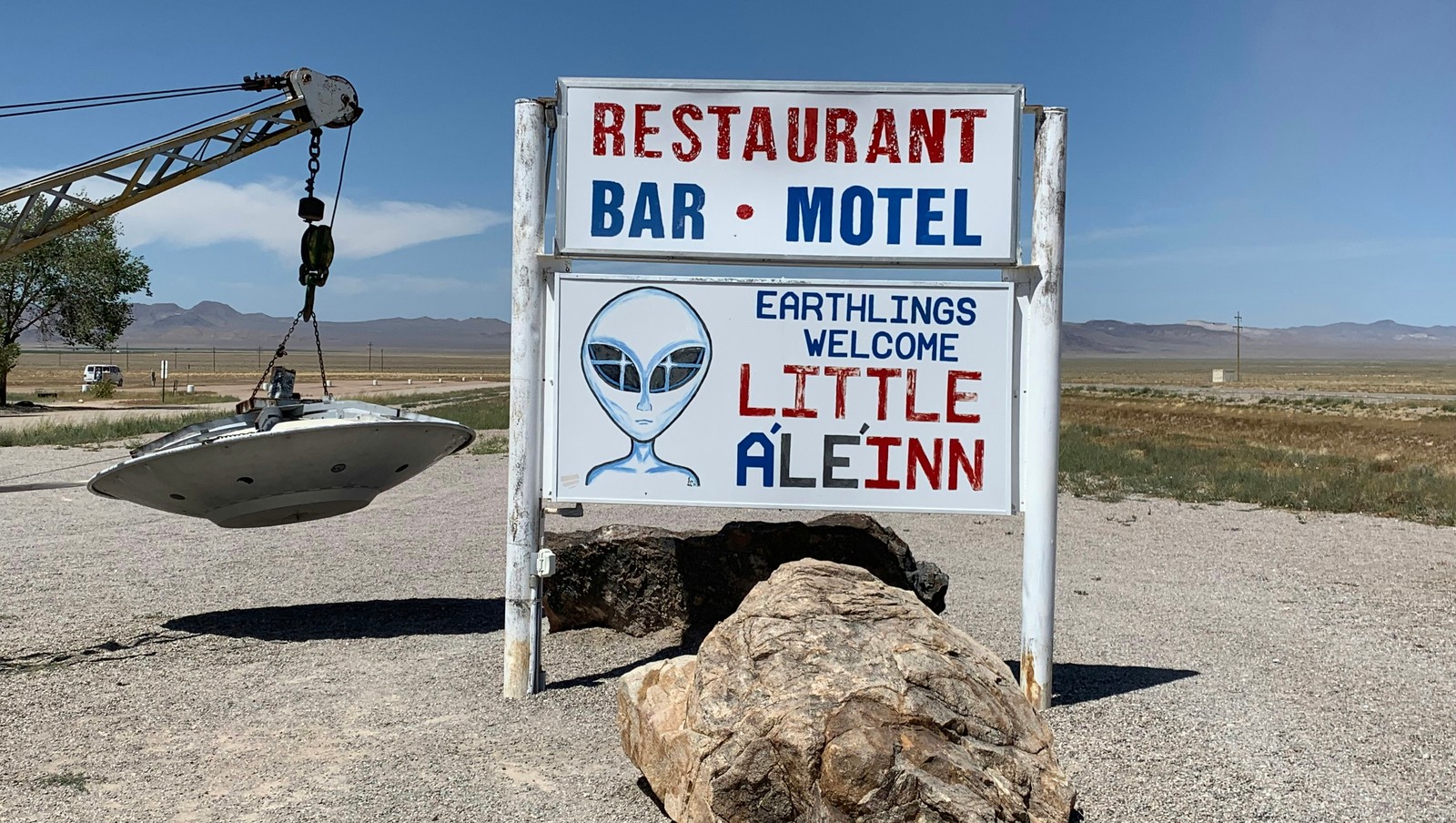
Image: JaZmi

America has no shortage of mysterious places—locations steeped in legend, unexplained science, or just eerie natural beauty. From strange floating orbs to weird geological phenomena, these destinations keep historians, scientists, and thrill-seekers guessing. Whether man-made or naturally puzzling, these 10 U.S. locations refuse to offer simple explanations.

1
Area 51
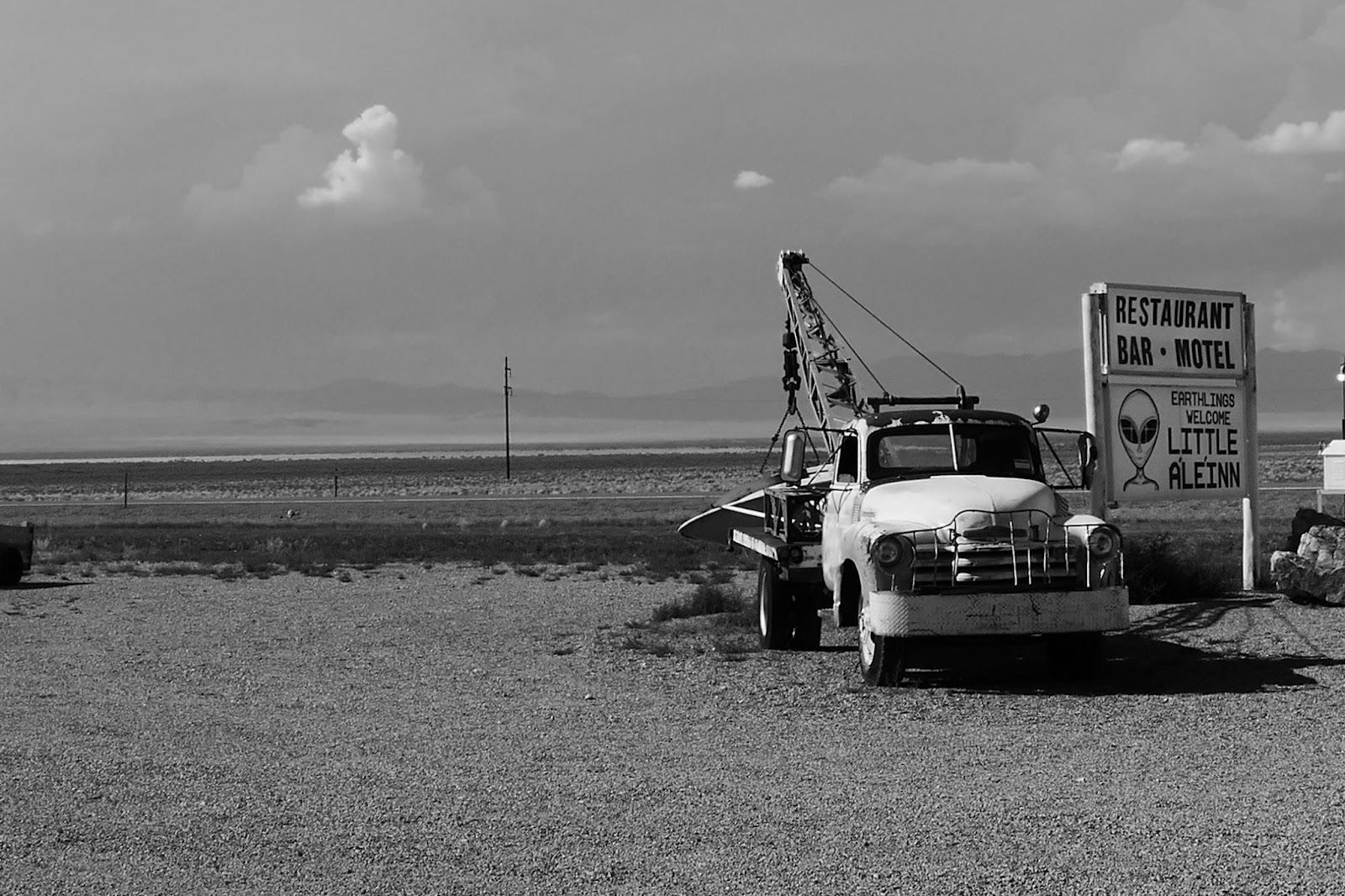
Image: Michael Herren

Location: Nevada

Shrouded in secrecy, this military base has become synonymous with UFOs and government cover-ups. Its official purpose was testing aircraft like the U-2 spy plane and Stealth Bomber, but its classified nature fueled decades of wild speculation, ranging from secret weapons to actual aliens working for the government.

2
Coral Castle
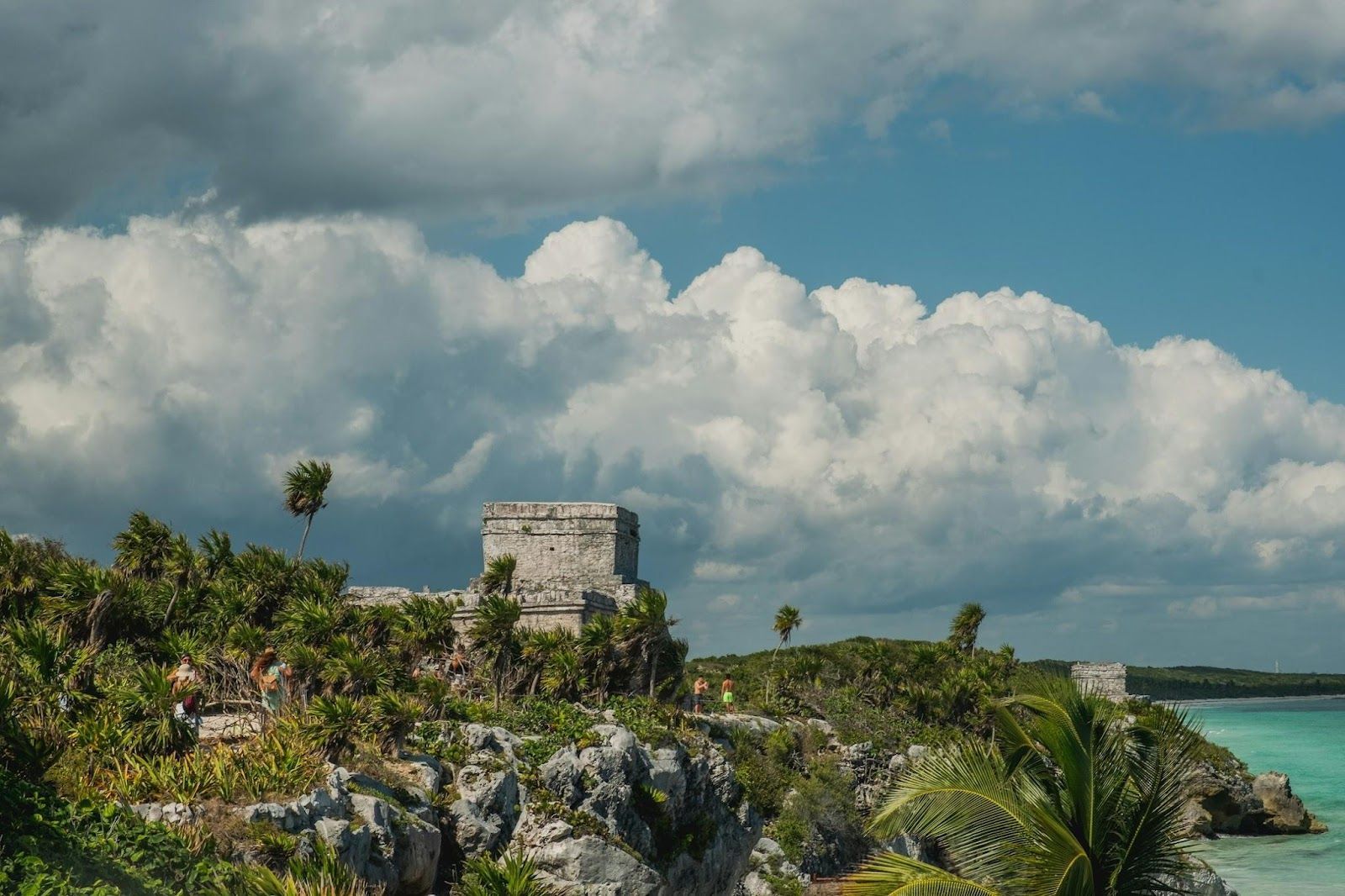
Image: Audric Wonkam

Location: Florida

This massive stone structure was built by a single man, Edward Leedskalnin, using enormous limestone blocks—some weighing 30 tons. According to him, no heavy machinery was ever used during the construction, and he even claimed to know the secrets of the pyramids . To this day, engineers and historians debate how he moved and placed those stones with such precision.

3
Skinwalker Ranch
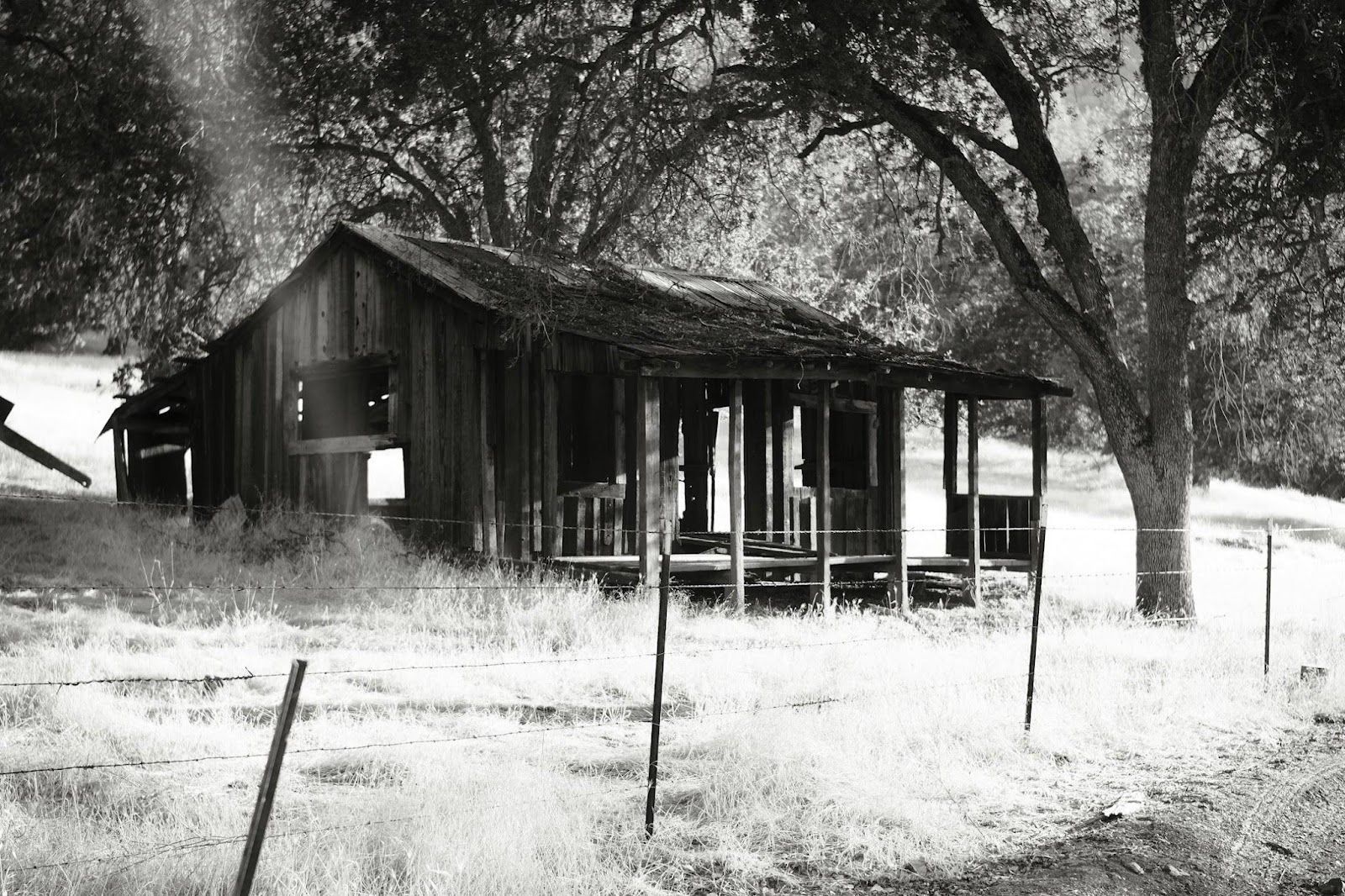
Image: Jacob Padilla

Location: Utah

This 512-acre property has long been at the center of UFO sightings, cattle mutilations , and alleged portals to other dimensions. The stories were so compelling that, in the ’90s, a private research organization purchased the ranch to try and make some scientific sense of the claims, conducting extensive field studies. However, after nearly a decade of research, they found no conclusive evidence.

4
Mammoth Cave
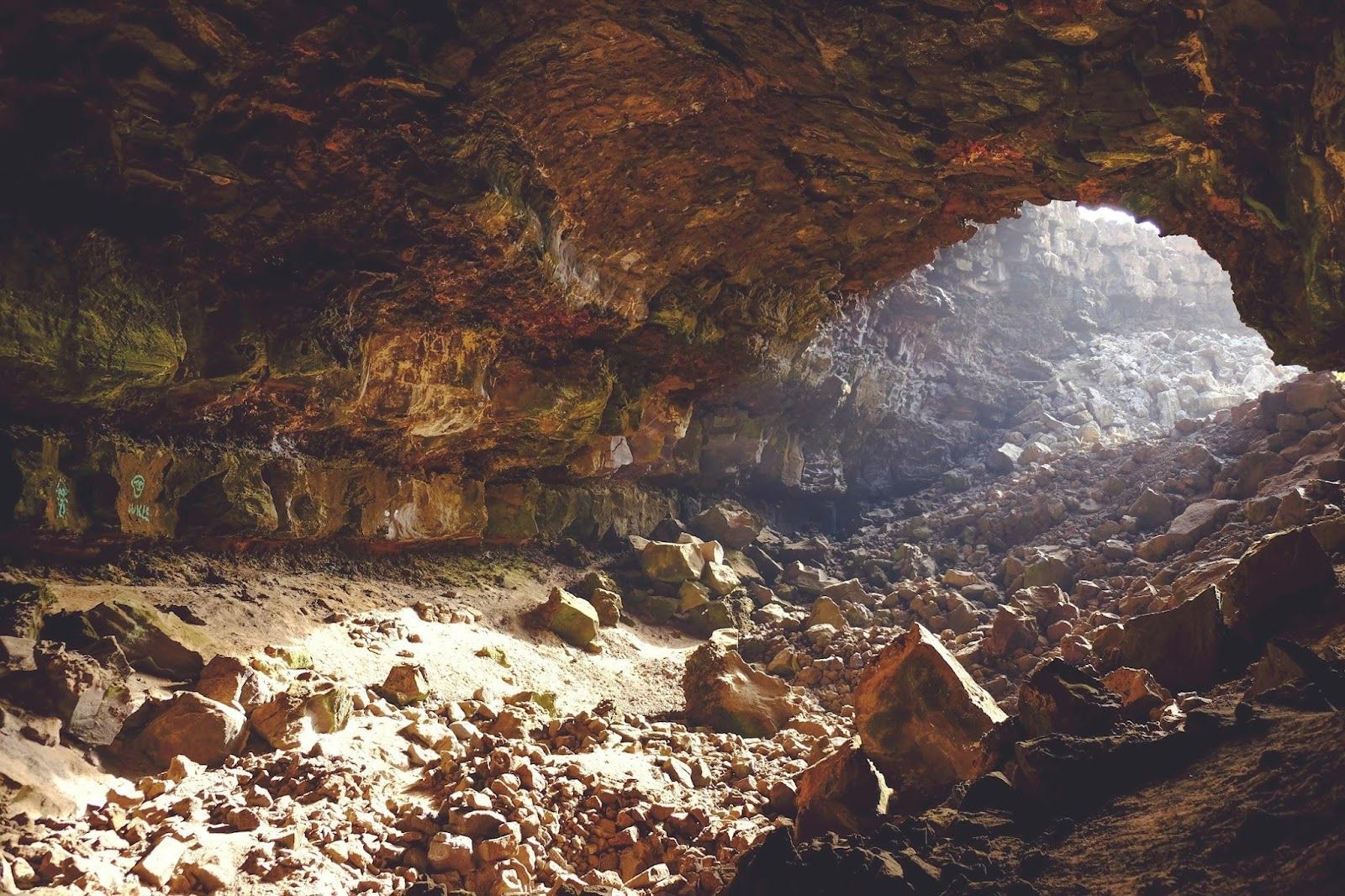
Image: Ksenia Kudelkina

Location: Kentucky

The world’s longest known cave system has its fair share of unexplored tunnels, ghost stories, and strange air currents. More than 400 miles have been mapped , yet many passages remain uncharted. Researchers have yet to fully understand the cave’s underground ecosystem, and new chambers are still being discovered today.

5
The Marfa Lights
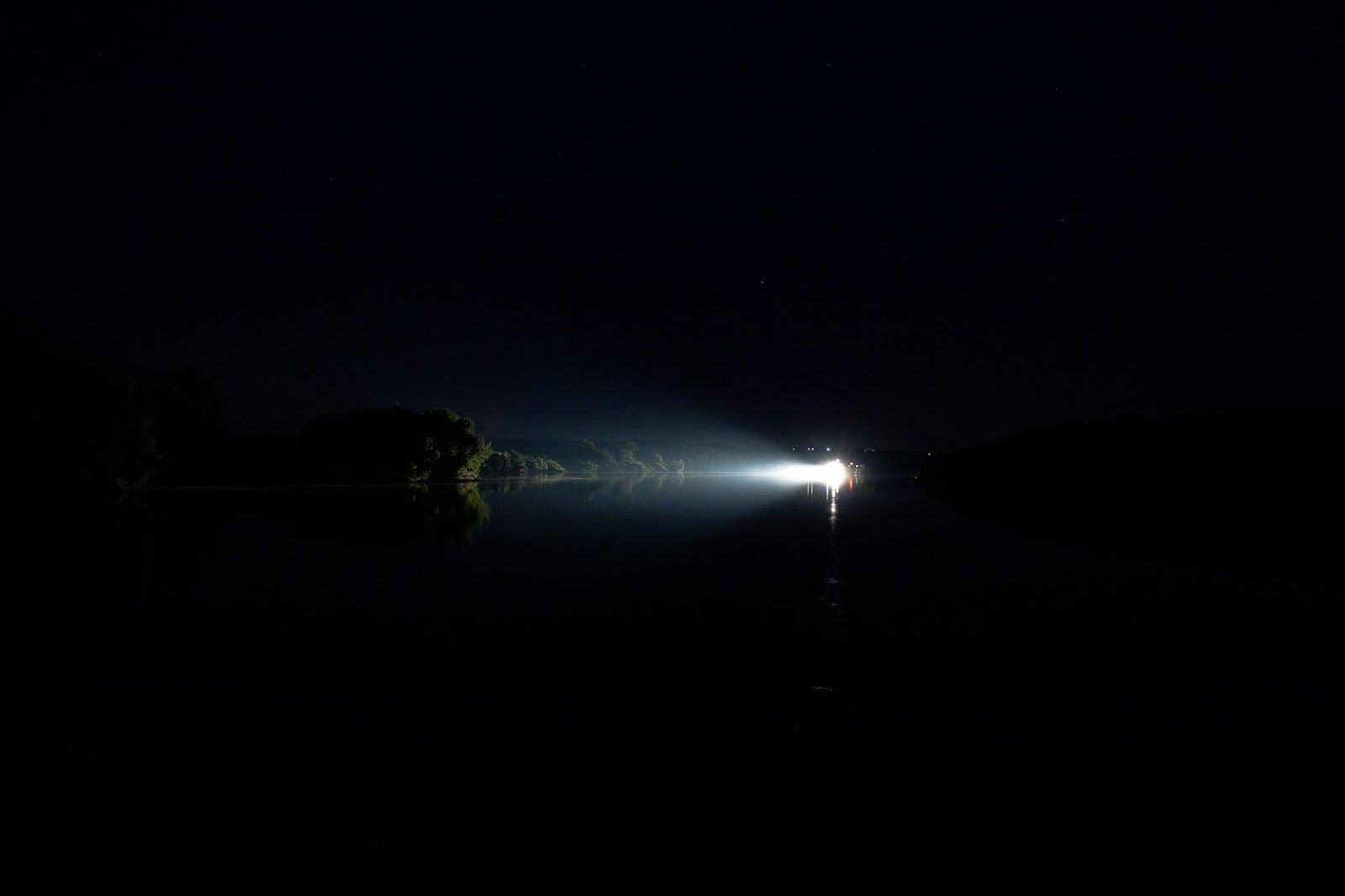
Image: Alexandra Vo

Location: Texas

Reported since at least the late 19th century, floating orbs of light have been seen near this small town with no consistent explanation. Night watchers continue to gather at designated viewing areas along Highway 90, hoping for a glimpse. While scientific studies suggest that distorted car headlights are the most likely cause, many remain convinced otherwise.

6
The Devil’s Kettle
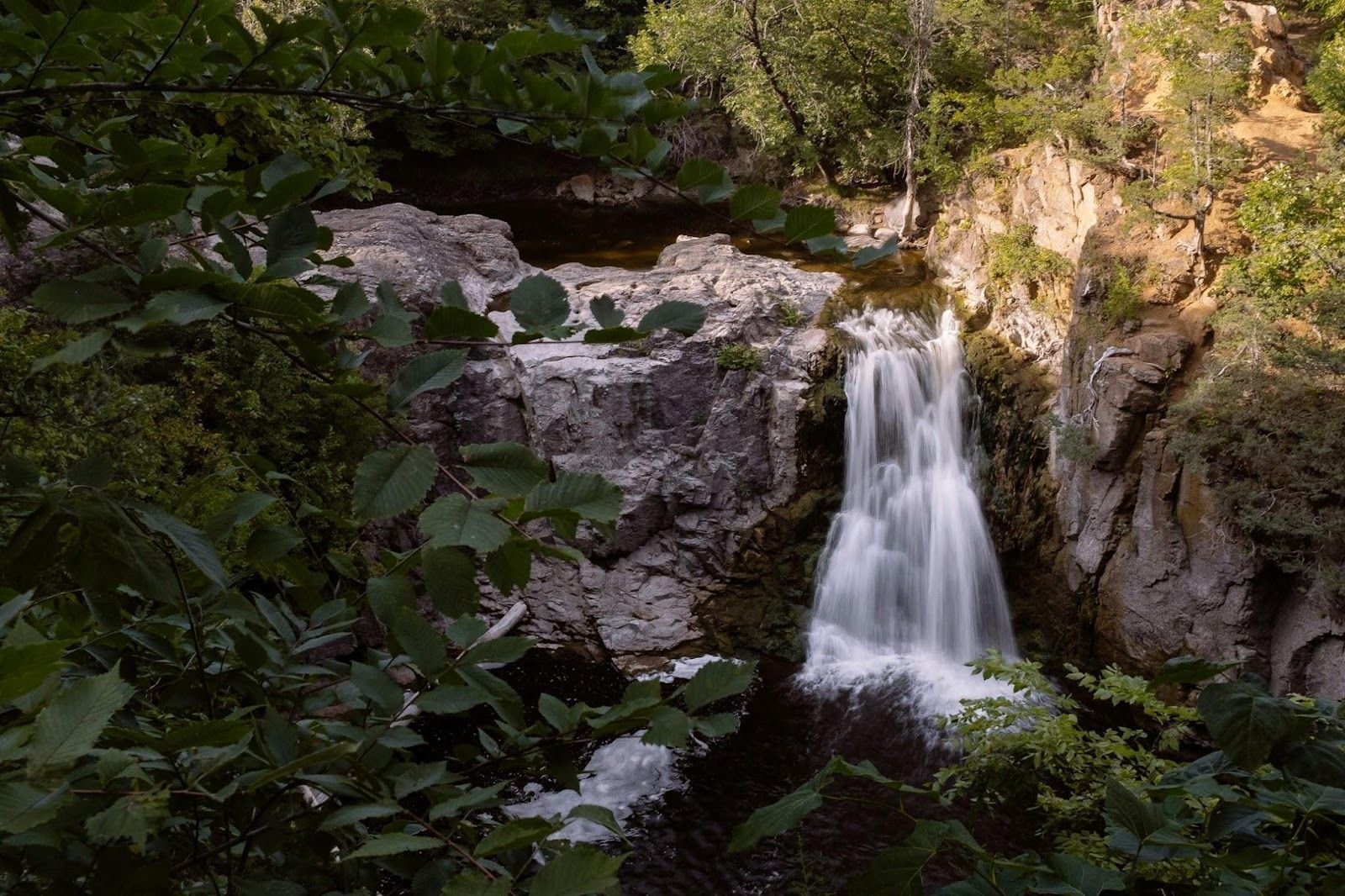
Image: Andrew Ling

Location: Minnesota

This unusual waterfall splits in two—one half flows normally, while the other vanishes into a deep pothole with no known exit. Scientists poured dye, ping-pong balls, and even GPS trackers into the mysterious hole, all to see where the water ends up. While researchers eventually confirmed it rejoins the river underground, exactly how and where remained elusive for decades.

7
Cahokia Mounds
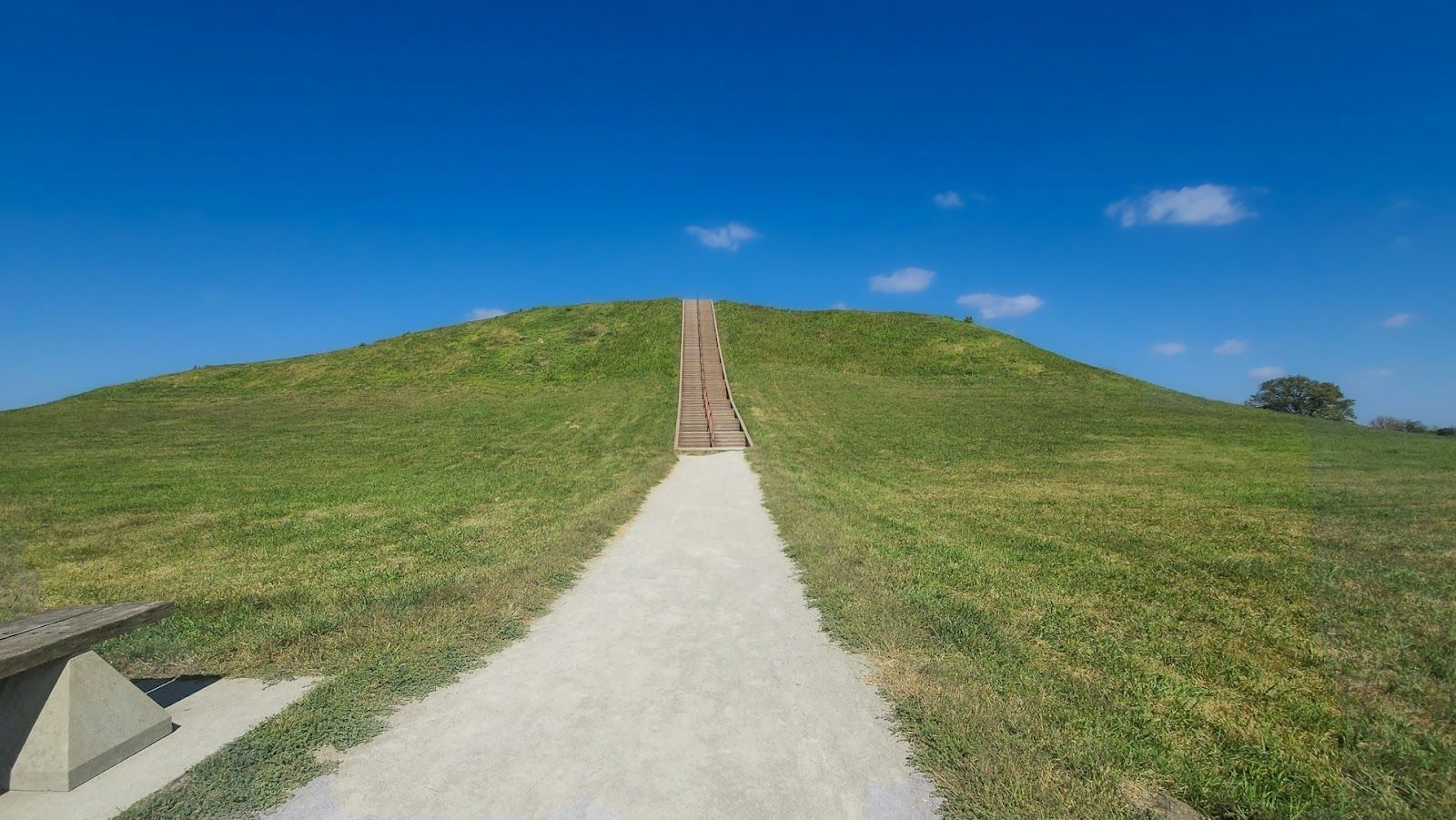
Image: pcrm Dorego

Location: Illinois

Built centuries before Columbus arrived in the Americas, the ancient city of Cahokia featured massive earthen mounds, wooden palisades, and likely formed part of complex trade networks across the continent. Despite having a population rivaling London in the 1200s, according to archaeologists, the city was mysteriously abandoned in the span of a few years. No written records explain its decline, though environmental stress, resource shortages, and internal social factors are often cited as possible causes.

8
Blythe Intaglios
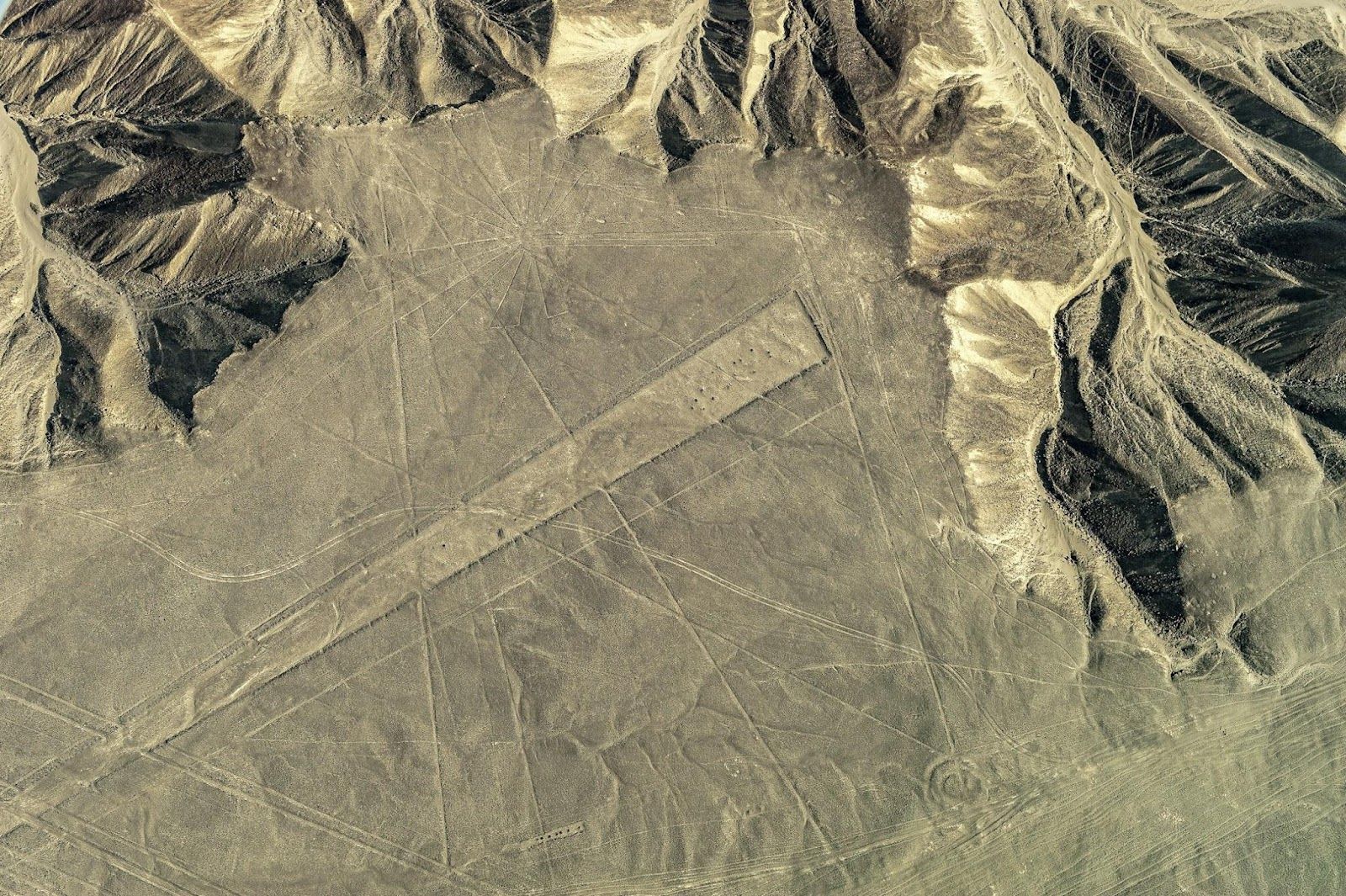
Image: Alexander Schimmeck

Location: California

Similar to Peru’s Nazca Lines, these giant geoglyphs are etched into the desert floor, seemingly visible only from the sky. Created by scraping away dark rocks to reveal lighter earth beneath, the figures are believed to be between 450 and 2,000 years old, depending on the specific design. While their exact purpose remains a mystery, they are believed to have had a ceremonial function.

9
The Spooklight
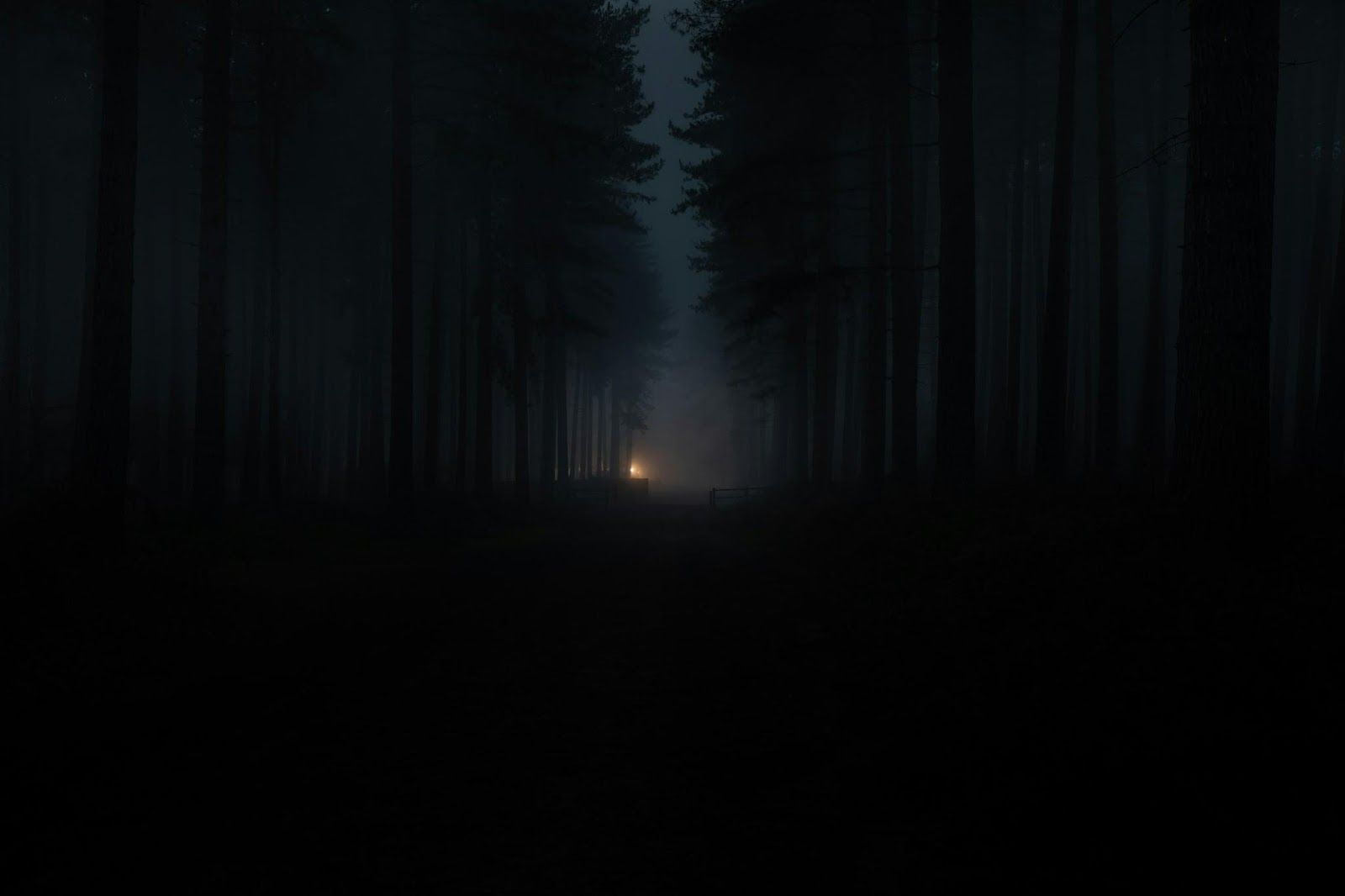
Image: Ben Griffiths

Location: Missouri-Oklahoma Border

Also known as the Hornet Spooklight, this floating orb has been seen since at least the late 19th century. It appears along a rural stretch of road near the small community of Hornet, Missouri, and Quapaw, Oklahoma. While some theorize it could be caused by car lights from miles away, some sightings predate automobiles.

10
Roanoke Island
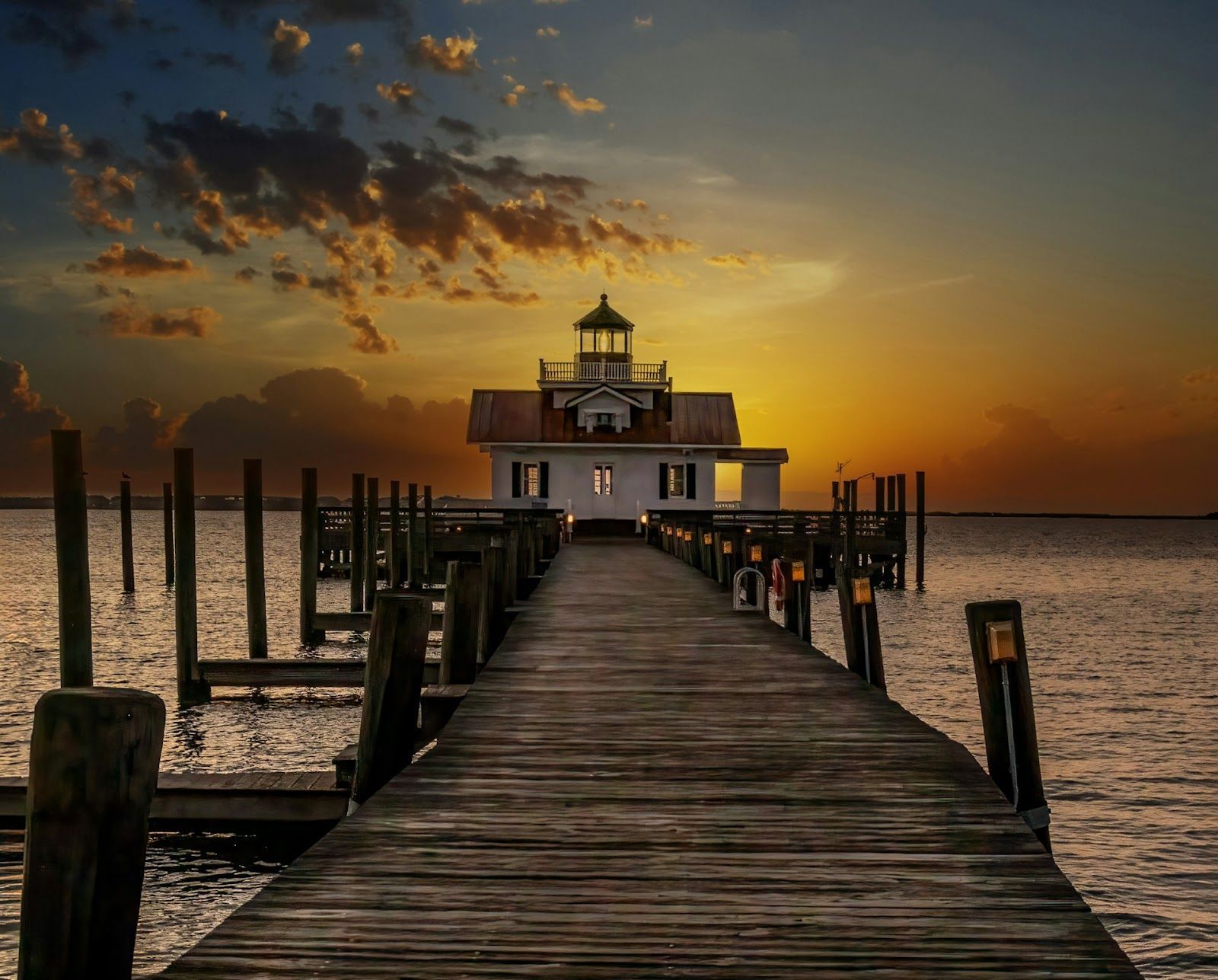
Image: Stephen Crane

Location: North Carolina

In the 1580s, an entire colony vanished overnight, leaving behind only the word "Croatoan" carved into a tree. No graves, no remains—just an eerie disappearance that sparked centuries of theories, from disease and starvation to assimilation with local tribes. Modern archaeology uncovered European artifacts at sites associated with Native groups miles away, but no definitive evidence has ever solved the mystery.

Culture Culture 7 min read

CHILDHOOD WONDERS

Relive Your Childhood With 10 Of The Most Popular Toys!

Image: Vanessa Bucceri

Toys are usually a child’s first companions: They were there when we were lonely or bored, they taught us through playtime and maybe even allowed us to meet our first real-life friends with whom to share the treasures in our toy box. Since the dawn of our country, a myriad of toys and games have defined each decade, creating wonderful memories in the minds of generations of American children.

We have selected ten of the most iconic toys that have truly defined the lives of countless Americans. Is your favorite toy from your childhood on this list? Keep on reading and enjoy!

1
Teddy bear

Image: Oxana Lyashenko

We’ll start with the surprising origins of a global icon. While there is some debate as to the country of origin of the teddy bear, there’s absolutely no doubt as to where the furry companions of our childhood got their names. And, considering that the source of the teddy bear’s name comes from the highest office in the United States government , we think we can safely state that this toy is truly an American icon.

In 1902, President Theodore Roosevelt was invited on a hunting trip to Mississippi, on which his group cornered and tied a black bear to a tree for the president to shoot. Displeased by what he thought was unsportsmanlike behavior, the President refused and the bear was freed. This story was published in many national newspapers, and it quickly became extremely popular. So much so, that a Brooklyn businessman designed a small, cuddly bear and advertised it on his shop as "Teddy’s bear" . And just with that, our 26th President unwillingly named this quintessential toy.

2
Super Soaker

Image: Steward Masweneng

If you were a kid during the 80s or 90s, you probably played with the extremely refreshing Super Soaker on a hot summer day. This reimagined water gun featured an innovative design that added pressurized air for longer and stronger water bursts. Showcasing a futuristic design, the Super Soaker felt like shooting a sci-fi laser gun, which seems only reasonable considering it was created by a former NASA engineer.

In 1982, engineer Lonnie Johnson, who specialized in aerospace design, came across the idea of the Super Soaker while conducting an experiment in his house. Johnson’s prototype combined household items like a PVC pipe and a two-liter soda bottle. While rudimentary, this first design successfully shot powerful streams of water. The rest is history: Johnson was able to mass-produce his design, and the Super Soaker became the summer toy for millions of American children.

3
Slinky

Image: Adam Valstar

Just like with the Super Soaker, the man behind this iconic toy was a successful American engineer. In 1943, while investigating a way to suspend sensitive equipment aboard ships, naval engineer Richard T. James accidentally dropped a torsion spring he was working with. James noticed the curious way in which the spring kept on moving after hitting the ground, and with that, the idea of one of the most beloved toys of the 20th century was born.

Richard and his wife Betty initially made 400 "Slinkys", which were first carried by a department store in Philadelphia for Christmas 1945. This first production was sold in less than 90 minutes , and the Slinky quickly proved to be an instant success. To this day, approximately 300 million Slinkies have been sold all over the world.

4
Rubik’s cube

Image: Olav Ahrens Røtne

Let’s deal with the elephant in the room first: No, the Rubik’s Cube is not an American invention. However, just like the rest of the world, this tricky puzzle took the United States by storm during the 70s and 80s, so it seemed only fair to add this beloved toy to this list. In the 1970s, Hungarian architecture professor Ernő Rubik designed the first prototype of the Rubik’s cube, as a way to create a system with parts that could move independently. However, he realized he had built a rather entertaining puzzle when he tried to restore the sides of his cube. Rubik applied for a patent in Hungary and started selling his "Magic Cube" by 1975.

By the 1980s, the Rubik’s Cube became a global sensation. It is reported that over 200 million cubes were sold between 1980 and 1983. In America, this puzzle immediately gained status as a cultural icon: In 1981, the Museum of Modern Art in New York exhibited a Rubik’s cube, while the 1982 World's Fair in Knoxville, Tennessee featured a six-foot version of the toy.

5
G.I. Joe

Image: Justin Wilkens

In 1963, Manhattan inventor and licensing agent Stanley Weston came up with the idea of a military action figure . Perhaps unbeknownst to him, Weston’s prototypes would soon inspire G.I. Joe, the first toy to teach American children about how every U.S. soldier can be a superhero to treasure and admire.

Produced by Hasbro, the G.I. Joe series encompasses countless action figures throughout their almost 60 years of history. Most of the toys feature the titular "G.I. Joe Team", a league of military heroes that defends the world from the evil deeds conducted by the "Cobra" organization.

6
Frisbee

Image: Patrick Reynolds

If any kid playing around with a cool stick they found lying can teach you anything, it doesn’t take much to make a fun toy that children will enjoy. Case in point: In 1937, Walter Frederick Morrison and his future wife Lucille realized how fun it was to toss a popcorn can lid back and forth. After WW2, Morrison worked on several designs until, in 1955, he designed "the Pluto Platter" , the very first version of what we now know as the Frisbee.

The story behind the name of this iconic toy is rather interesting. Wham-O, the company behind the commercialization of the Pluto Platter, realized that Yale University students were calling their product by another name. Since the plastic discs resembled empty pie tins , they called them "Frisbies" after the Frisbie Pie Company, a pie supplier for the university.

7
Barbie

Image: Elena Mishlanova

Barbie truly needs no introduction : She’s definitely the world's most famous doll, selling over six billion units in its 60-year history. She has been featured in a myriad of TV shows and movies, including an Academy Award-winning live-action film in 2023. With such a prolific and wondrous career, it’s easy to forget how Barbie's story started: With an innovator watching her daughter play.

One evening in the 1950s, businesswoman Ruth Handler noticed that, whenever her daughter played with paper dolls, she enjoyed pretending they were adults. At the time, most dolls depicted infants and babies, so Handler created the prototype of an adult-bodied doll, which she named "Barbie" after her daughter Barbara. On March 9, 1959 (a date which is now Barbie’s official birthday), the very first Barbie doll was presented at the American International Toy Fair in New York City.

8
Hula hoop

Image: Patricia Prudente

The hula-hoop is definitively the oldest toy on this list: Archaeologists believe that children and adults played with hoops of some kind since at least 500 BC. However, in 1958, a plastic hoop launched by American toy company Wham-O became insanely popular, and with that, the hula-hoop mania was born.

Named after its resemblance to the hip movements of the traditional Hula dance, the hula-hoop is still a remarkably popular toy . Not only that, hooping is considered an excellent and fun exercise, promoted as an excellent way to improve cardiovascular health.

9
View-master

Image: Girl with red hat

Just like the Slinky, the View-Master wasn’t originally conceived as a kid’s toy. And, to be perfectly honest, at its core it is truly an entertainment experience for all ages: An innovative and fresh way of enjoying beautiful images and scenery. However, it wouldn’t be right not to include this wonderful device in this list, since it has touched the hearts of thousands of American children since 1939.

Created by pharmacist Edwin Mayer in Portland, Oregon, the View-Master was introduced at the 1939 New York World's Fair. While its original intent was to provide an alternative to postcards, over time it included cartoons and short stories aimed at children. Famously, the View-Master’s most popular reels featured Disney and Hannah Barbera characters.

10
Legos

Image: Xavi Cabrera

We’ll end this list with an absolute classic . With over 75 years of history and no sign of slowing down, Legos have truly shaped the lives of millions of children around the world. The true beauty of these colorful bricks is that they are only limited by children’s imagination which, we are sure you’ll agree, is definitively limitless. In the right hand, a single plastic brick can be the start of a giant dinosaur, a spaceship, or a bell tower.

The humble beginnings of Lego come from the town of Billund, Denmark, where a carpenter named Ole Kirk Christiansen started making wooden toys in 1932. Christiansen named his company "Lego" after the Danish phrase leg godt , which translates to "play well". By the end of the 1940s, the company was already producing an early version of its iconic interlocking bricks, now considered a completely ubiquitous cultural icon.

General General 4 min read

DID YOU KNOW THESE 10 REGIONALISMS?

Asking for a pancake in Michigan: 10 American foods with varying names

Image: charlesdeluvio

Like love, food is a universal language that bonds us together through shared experiences. However, much like love, the world of food and dishes can also change its names from place to place. Listed below are ten examples of everyday foods that are known by different names in various parts of the country. Stick around until the end, and you will learn some curiosities, including where you should ask for a mango if you want a bell pepper!

1
Pancakes

Image: Ala

Imagine you are a tourist in Michigan and decide to go for pancakes. You enter a suitable establishment, sit at the counter, and ask… what, exactly? Yes, most people call them pancakes, and there is a fair chance that you will receive just that without further questions, but if you want to speak like a local, you will ask for flapjacks .

The "flap" part of flapjack is derived from the word the British used to mean "flip." As for the "jack" part, historians say it may refer to the small size of the pancake because "jack" referred to something that was small. You’ll hear pancakes more in the North and flapjacks in the South, but there are exceptions, such as the Flapjack Shack in Traverse City, Michigan.

2
Dessert Toppings

Image: Kate Trysh

For many Americans, dessert toppings for ice creams and milkshakes are like cheese on a pizza: a must. If you happen to be one of them and are visiting New England, you should know that the local word for toppings is " with jimmies. "

Jimmies are a subgroup of the larger category of dessert toppings known as sprinkles, although people across the U.S. might use the terms interchangeably. Jimmies are cylindrical sprinkles, but some people use the word to refer specifically to chocolate or colored varieties. As for round sprinkles, they are technically marketed as nonpareils.

3
Cold Sandwiches

Image: Allen Rad

The word "sandwich" has come to represent practically any food that is stuffed between two pieces of bread and can be eaten—usually—with your hands. But in certain regions of America, this ubiquitous food item goes by different names.

Pennsylvania has its own term: hoagie . Back in the day, the Italian-American community lived in an area called Hog Island, and local cooks were known for their big "Hog Island Sandwiches," which eventually became known as "hoagies." In New England, many people call a sandwich a grinder . That’s because it’s traditionally made from Italian bread, which has a thicker crust than the typical sandwich bread.

4
Stuffing or Dressing?

Image: Louis Hansel

In the northern parts of the U.S., stuffing refers to the thick mixture of seasoned breadcrumbs or croutons often used to fill poultry dishes.

But, in the southern parts of the country, the word used to describe that is dressing . Yes, the same word that is used in the North to describe any kind of liquid topping for salads. It can be confusing, right?

5
Pop or Soda?

Image: Taylor Swayze

Soft drinks are referred to by different names in different parts of the country. If you are on the East Coast, along the Illinois-Missouri border, in southeastern Wisconsin, California, or nearby areas, you probably call it soda .

However, if you are from the Great Plains region or the Midwest, you likely refer to it as pop . And, if you refer to it as Coke or cola —whether it’s Coca-Cola or something else—you’re most likely from the South.

6
Jelly donuts as Bismarck

Image: Leon Ephraïm

Jelly donuts are quintessentially American. These delicious pastries filled with sweet jelly are everywhere—and for good reason. However, in the midwestern region of the country, as well as in Alberta and Saskatchewan in Canada, jelly donuts have a different name altogether.

That is because the German immigrants who settled in the region named the dessert "Bismarck" after the 19th-century Prussian chancellor, Otto von Bismarck because those pastries were a favorite snack of his.

7
Milkshakes as "frappes"

Image: Sebastian Coman Photography

A milkshake and a frappe are pretty much the same thing across most of the country—and even the world, we dare say. However, that’s not the case in New England. If you were to ask for a milkshake in that area, you would receive a slightly different—but equally delicious—beverage.

Nearly everywhere else in the U.S., a milkshake is made with milk, ice cream, and syrup blended together. But in New England, that's a recipe for a frappe . A milkshake in that part of America consists of just milk and syrup, shaken or blended until a foamy head appears.

8
Casseroles as a hotdish

Image: sheri silver

A casserole is a warm dish made by layering meat, vegetables, and noodles, along with a can of condensed soup thrown into the mix and then taken to the oven. However, in Minnesota, that same recipe is called a hot dish.

According to Howard Mohr, author of How to Talk Minnesotan , "A traditional main course, hotdish is cooked and served hot in a single baking dish and commonly appears at family reunions and church suppers."

9
Poached Egg vs. Dropped Egg

Image: Unsplash

New England has appeared a couple of times already on this list, and it’s about to make another appearance. In most parts of the country, the cooking technique of gently dropping an egg into boiling water is called "poaching an egg."

But in New England, the name for this technique has a much more literal term, calling this particular preparation a dropped egg .

10
Peppers and Mangoes

Image: Paul Morley

We’ll close this list with perhaps the most curious case of regional naming we came across. In the Midwestern region of the country, a "mango" does not refer to the tropical fruit commonly known as a mango.

Instead, if a midwesterner asks for a mango at a local grocery store, they will receive a mild, green bell pepper . The suggested explanation for this is that as green bell peppers ripen, they develop red-gold splotches that make them look similar to mangos.

Explore more American facts

Choose your favorite category!

General
General

As American as apple pie—the very best America has to offer!

Culture
Culture

Delve into the astounding richness of American lore.

Geography
Geography

Hop in and explore vast and diverse American landscapes.

History
History

Discover the key moments that shaped the United States.



